
10 Illinois Bridges That Are More Interesting Than You’d Expect
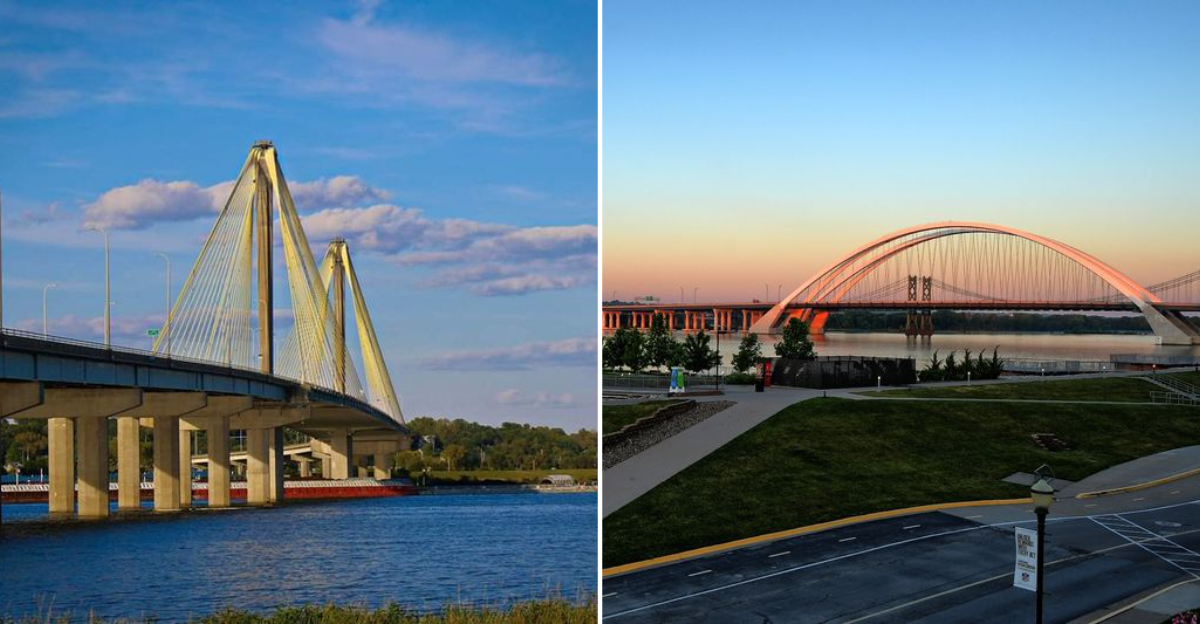
Illinois has a lot going for it, but bridges probably aren’t the first thing you think of. That’s kind of what makes them so interesting.
You’ll find them in cities, along rivers, and tucked into forest preserves, each one with more going on than you might expect. Some show off impressive engineering, others connect to real pieces of American history, and a few have become local favorites for their views and atmosphere.
Most people pass over them without thinking twice, but once you start paying attention, it’s hard not to notice the details. This list is all about those moments, the places that turn a simple crossing into something you actually remember, and offer a different way to see Illinois.
1. Fabyan Forest Preserve East Channel Bridge, Geneva
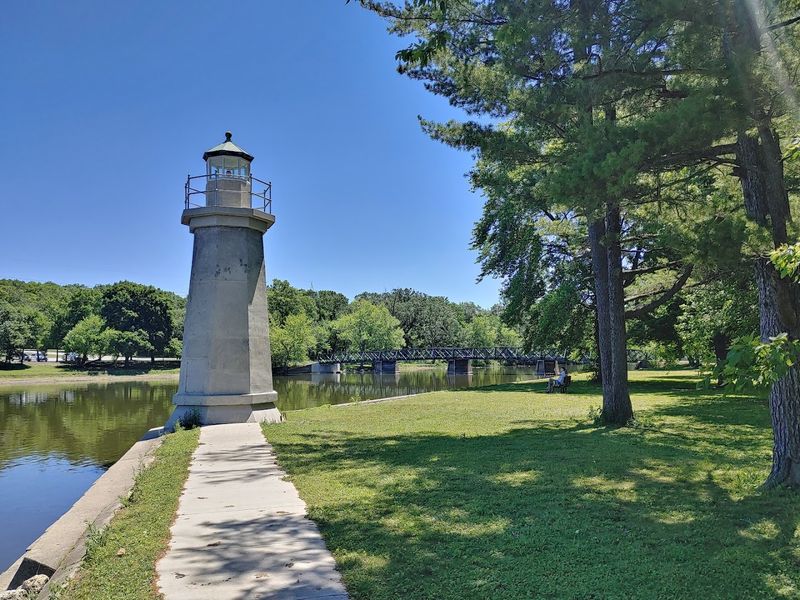
One of the most charming surprises in the Fox River Valley, the Fabyan Forest Preserve East Channel Bridge in Geneva, Illinois, is a pedestrian bridge within a historic park setting that most locals have walked past without fully appreciating what they’re looking at.
Built in the late 1800s, this bridge is one of the few remaining covered wooden bridges in the entire state, which already puts it in rare company.
The bridge sits inside Fabyan Forest Preserve, a sprawling green space that also features a working Dutch windmill and a Japanese garden. That combination alone makes the preserve worth a visit, but the bridge is the quiet centerpiece that ties it all together.
Walking across the bridge, you can take in views of the Fox River and the surrounding landscaped grounds that define this section of the preserve. It’s a genuinely peaceful experience, and photographers love it during fall when the surrounding trees turn gold and orange.
The preserve is open year-round, and parking is free. If you’re exploring the western suburbs of Chicago, this is a stop that rewards curiosity with real historical charm.
2. Old Stone Arch Bridge, Marshall
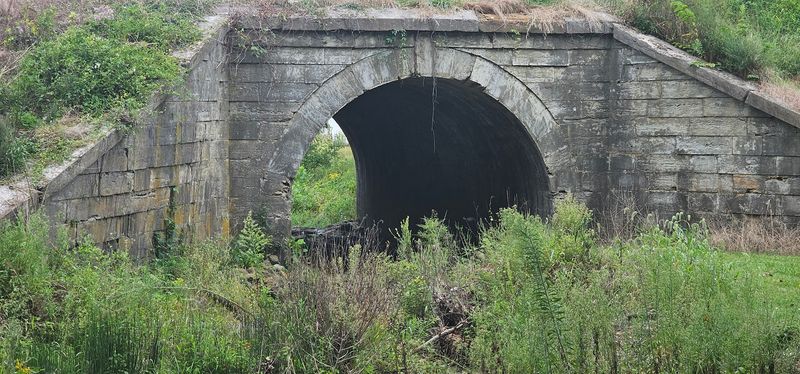
Marshall, Illinois, is a small town near the Indiana border that most people pass through without stopping. That’s a mistake, especially if you know about the Old Stone Arch Bridge hiding just off the main roads.
Built between 1834 and 1837, this limestone structure is considered one of the oldest bridges still standing in the state of Illinois, and its age alone makes it worth a detour.
The bridge was constructed using hand-cut limestone blocks fitted together with early masonry techniques, which makes the fact that it’s still standing feel almost unbelievable.
It spans a small creek with a gentle single arch, and the surrounding landscape is quiet and largely undeveloped, giving the whole spot a time-capsule quality.
History buffs will appreciate knowing that this bridge predates the American Civil War and served traffic along the historic National Road, one of the earliest major routes connecting the eastern United States to the Midwest.
Clark County has preserved the site well, and it’s accessible to visitors without any admission fee. Bring a camera, because the texture of the stone against the natural surroundings makes for striking photos.
It’s the kind of place that rewards those who take the time to look a little deeper into Illinois history.
3. Gateway Bridge / South Bridge, Fulton
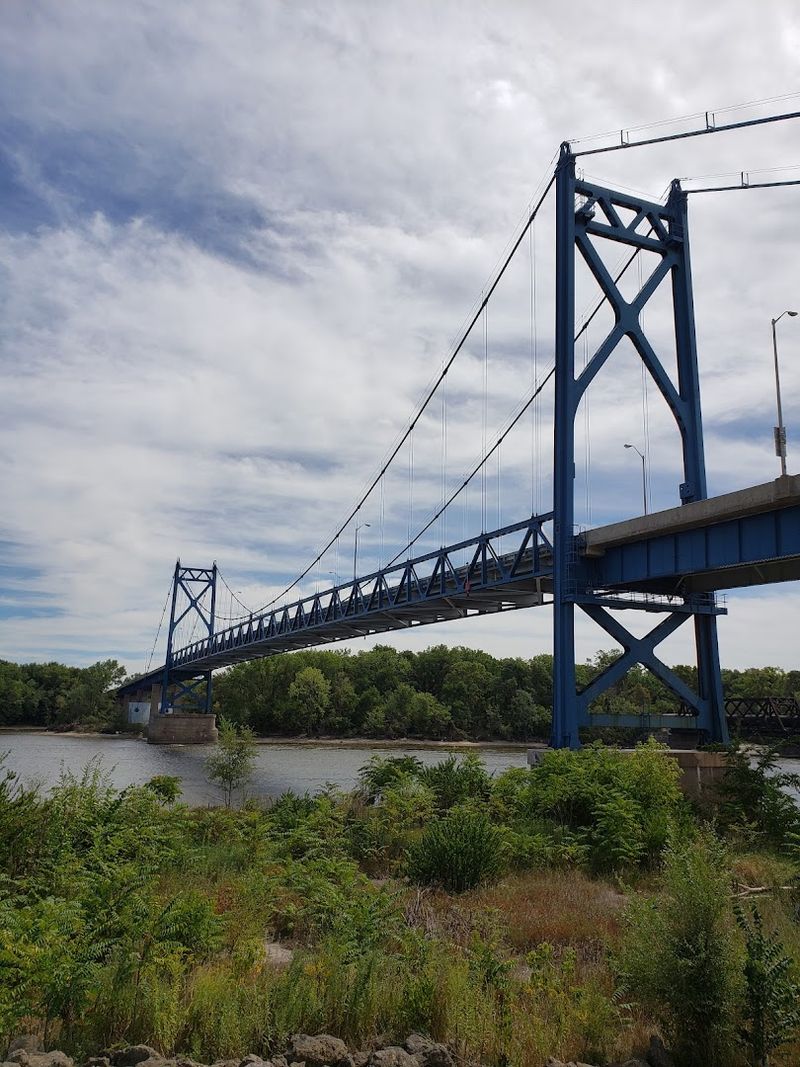
Fulton, Illinois, takes its Dutch heritage seriously, and the Gateway Bridge, also known as the South Bridge, fits right into that identity.
Spanning the Mississippi River between Fulton and Clinton, Iowa, this suspension bridge opened in 1956 and has long served as a key regional crossing. The design is clean and modern, but what makes the view from this bridge genuinely memorable is the Dutch windmill standing on the Illinois riverbank nearby.
That windmill, named De Immigrant, is a fully functional replica of a traditional Dutch windmill and was a gift from the Netherlands. Seeing it from the bridge creates an unexpectedly picturesque scene, one that feels more like a postcard from Europe than a Mississippi River crossing.
The bridge itself carries U.S. Route 30 and handles a steady flow of traffic between the two states.
Fulton hosts an annual Dutch Days festival each spring that draws visitors from across the region.
If you’re road-tripping along the Great River Road, the Gateway Bridge and its windmill neighbor make for a genuinely photogenic and culturally rich stop that you won’t find anywhere else on the river.
4. Government Bridge / Arsenal Bridge, Rock Island
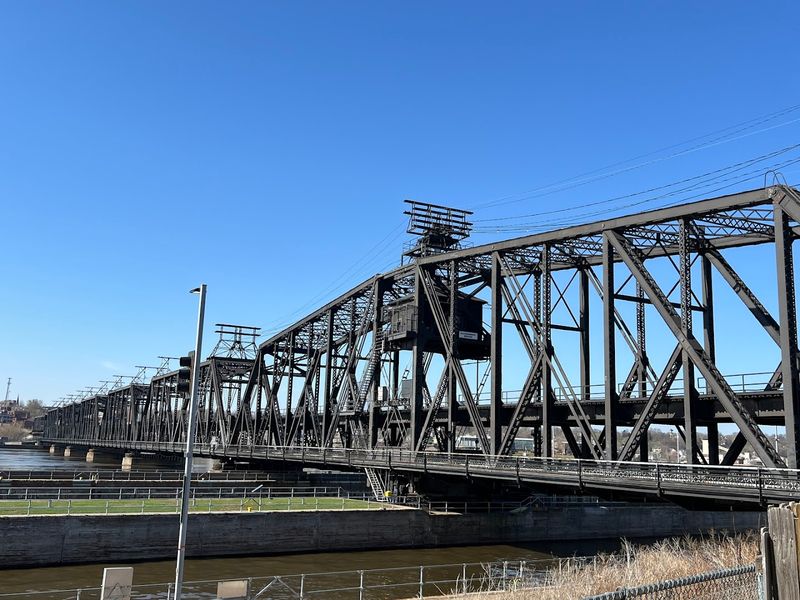
Few bridges in the Midwest carry as much historical weight as the Government Bridge, officially known as the Arsenal Bridge, connecting Rock Island, Illinois, to Davenport, Iowa.
Built in 1896, it replaced earlier crossings at this site, and its double-deck design, with rail on the lower level and vehicles on the upper, remains one of the most distinctive engineering features on the entire river corridor.
The bridge sits adjacent to Rock Island Arsenal, a federally operated military installation on Arsenal Island that has been active since the Civil War era. The island itself is one of the most historically significant military sites in the country, and the bridge serves as one of the main access routes.
Visitors who cross it are passing over a stretch of river that has been strategically important for more than 150 years.
The swing span still rotates to allow river traffic to pass, and watching that operation is genuinely impressive. The mechanism is massive and deliberate, and it’s easy to forget that this bridge was engineered before the 20th century even began.
Rock Island’s riverfront area offers good viewing spots, and the bridge is best appreciated on a clear day when the full scale of the structure is visible from the water’s edge.
5. Centennial Bridge / Talbot Memorial Bridge, Rock Island
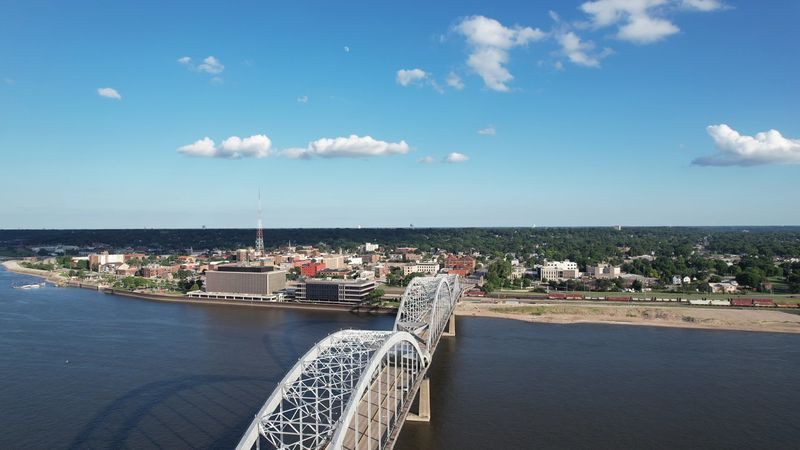
Rock Island surprises a lot of visitors with how much bridge history it packs into one stretch of riverfront, and the Centennial Bridge, formally named the Talbot Memorial Bridge, is the crown jewel of that collection. Opened in 1940 to mark the 100th anniversary of the first railroad bridge at this location, the Centennial Bridge carries Illinois Route 92 across the Mississippi River to Davenport, Iowa.
The tied-arch design is visually striking, especially when viewed from below or from a riverboat.
The bridge stretches 2,624 feet across the water and rises high enough above the river to give drivers a panoramic view of the Quad Cities skyline on both banks. That view alone makes the crossing feel like more than just a commute.
What many people don’t realize is that the bridge was later designated in honor of Illinois State Police Master Sergeant Stanley W. Talbot.
The bridge is best experienced from nearby riverfront viewpoints, where you can take in the full scale of its span and the surrounding river. Rock Island’s riverfront park below offers excellent photos of the bridge’s full span from ground level.
6. I-74 Bridge + Pedestrian Path, Moline
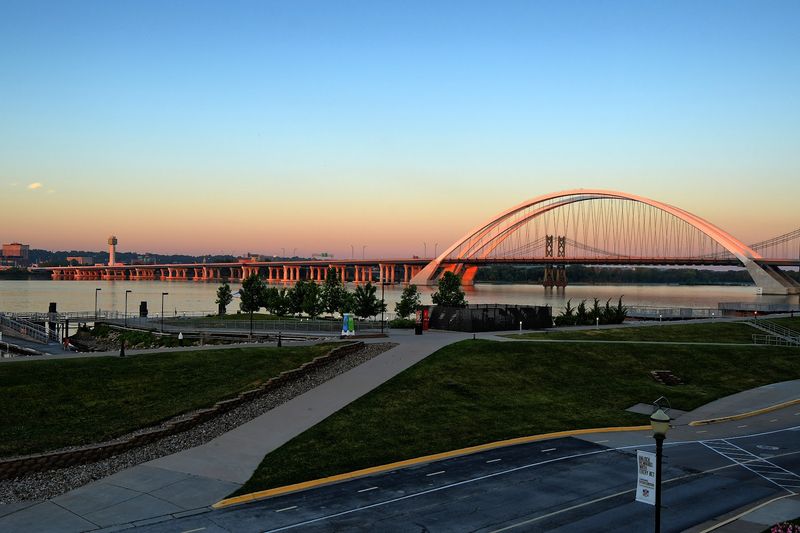
When the new Interstate 74 bridge opened between Moline, Illinois, and Bettendorf, Iowa, it didn’t just replace an aging structure. It set a new standard for what a Mississippi River crossing could look like.
The twin cable-stayed towers rise dramatically above the water, and the design has already become a defining feature of the Quad Cities skyline since the project was completed in phases between 2020 and 2022.
What makes this bridge especially worth talking about is the dedicated pedestrian and cycling path built into its structure. It’s one of the few major interstate river crossings in the Midwest to include a separated path for non-motorized users, and it connects to trail networks on both the Illinois and Iowa sides.
That means cyclists and walkers can now cross the Mississippi River with a view that most people only see from a car window.
The path offers unobstructed sightlines up and down the river, and on a clear day you can see multiple other bridges in both directions. The cable stays create a striking geometric pattern overhead as you walk beneath them.
Moline’s riverfront has been developing steadily, and the I-74 bridge has become a centerpiece of that revitalization effort, drawing foot traffic and attention to the area in ways the old bridge never could.
7. Joe Page Bridge, Hardin
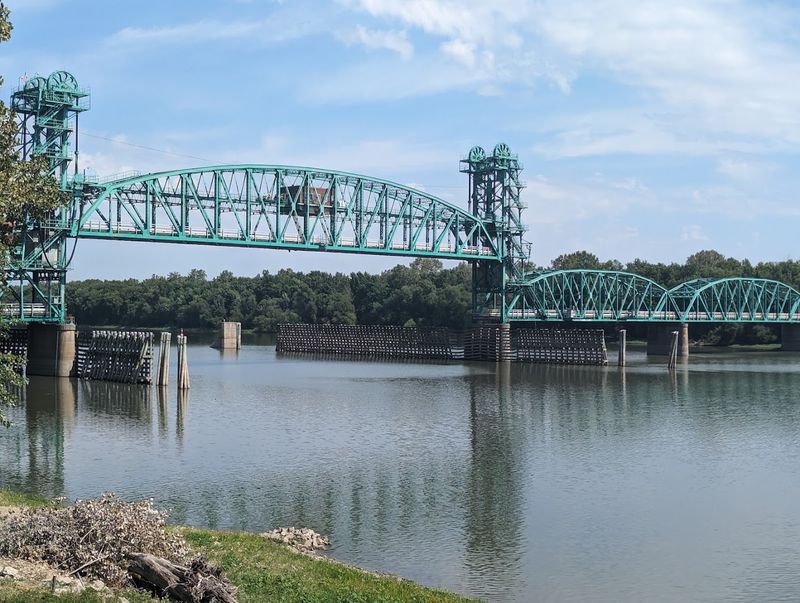
Hardin, Illinois, is the kind of small river town where time moves a little slower, and the Joe Page Bridge fits that mood perfectly.
Spanning the Illinois River in Calhoun County, this steel truss bridge has been carrying traffic between Hardin and the surrounding bluff country for decades, and it remains one of the most scenic river crossings in the entire state.
The bridge was named after Joe Page, a local figure whose legacy became part of the community’s identity along this stretch of river.
What makes the crossing memorable isn’t any single dramatic feature, but rather the combination of the narrow roadway, the open steel truss framework above you, and the wide, unhurried Illinois River below. It feels like crossing into a different era entirely.
Calhoun County is one of the least-visited counties in Illinois, which is actually part of its appeal. The surrounding area is known for apple orchards, river bluffs, and very little commercial development.
The Joe Page Bridge serves as a kind of gateway into that slower, quieter world.
If you’re traveling the Illinois River Road National Scenic Byway, this crossing is one of the most atmospheric moments on the entire route, and the view from the bridge deck at sunrise is genuinely worth setting an early alarm for.
8. Clark Bridge, Alton
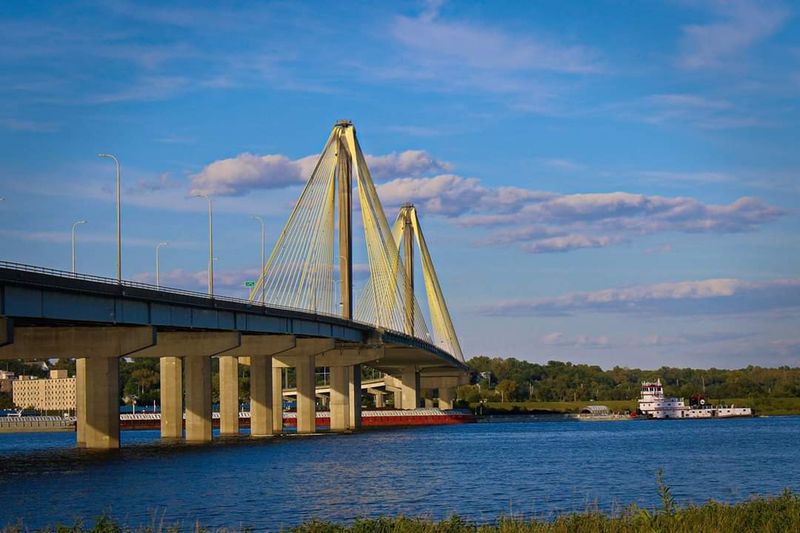
Alton, Illinois, sits at a dramatic bend in the Mississippi River, and the Clark Bridge frames that setting beautifully. Opened in 1994, this cable-stayed bridge replaced a deteriorating structure that had served the crossing for decades, and the new design made an immediate visual impact.
The fan-shaped cable arrangement, with white stays spreading from two tall towers, gives the bridge a distinctive silhouette that stands out clearly against the wide river and the Missouri bluffs beyond.
The bridge was named after William Clark of the Lewis and Clark Expedition, which passed through this area in 1804. That historical connection adds a layer of significance to what is already a visually compelling structure.
Alton’s riverfront has a lot going for it, including a vibrant arts scene, historic architecture, and some of the best Mississippi River views in the region, and the Clark Bridge is a natural anchor for all of it.
Driving across the bridge gives you a sweeping view of the river’s bend, with the tree-lined Missouri shore on one side and Alton’s downtown on the other.
The bridge carries U.S. Route 67 between Alton and West Alton, Missouri.
The bridge corridor also accommodates cyclists, and the view from midspan on a clear morning is one of those experiences that quietly earns a permanent spot in your memory.
9. Chain of Rocks Bridge, Madison County
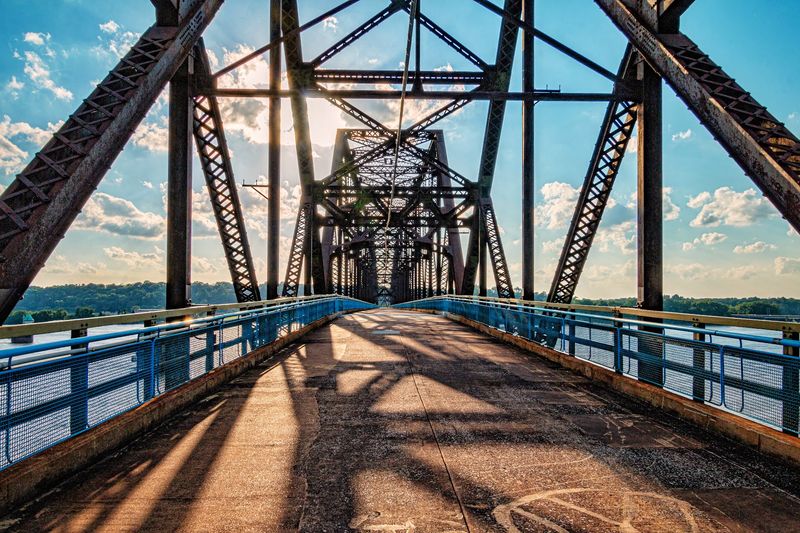
There is no other bridge quite like the Chain of Rocks Bridge, and that’s not an exaggeration. Spanning the Mississippi River near Granite City in Madison County, Illinois, this former Route 66 crossing has a 30-degree bend built directly into its middle section.
It’s a quirky engineering solution to navigate a notoriously rocky stretch of river. That bend makes it instantly recognizable and genuinely unlike any other bridge structure in the country.
Built in 1929, the bridge carried Route 66 traffic for decades before being replaced in 1966. Rather than being demolished, it was eventually converted into a pedestrian and cycling bridge, reopening in 1999.
Today it’s one of the most popular Route 66 heritage sites in the Midwest, drawing visitors who want to walk across a piece of American highway history.
The views from the bridge are expansive, with the river stretching wide in both directions and the St. Louis skyline faintly visible to the south on clear days. The Illinois side connects to a network of trails and the Mississippi Greenway.
Route 66 enthusiasts, cyclists, and history seekers all find something to love here. Parking is available on both the Illinois and Missouri sides, and the bridge is free to walk across, making it one of the most accessible and rewarding stops on the entire Mother Road.
10. Wells Street Bridge, Chicago
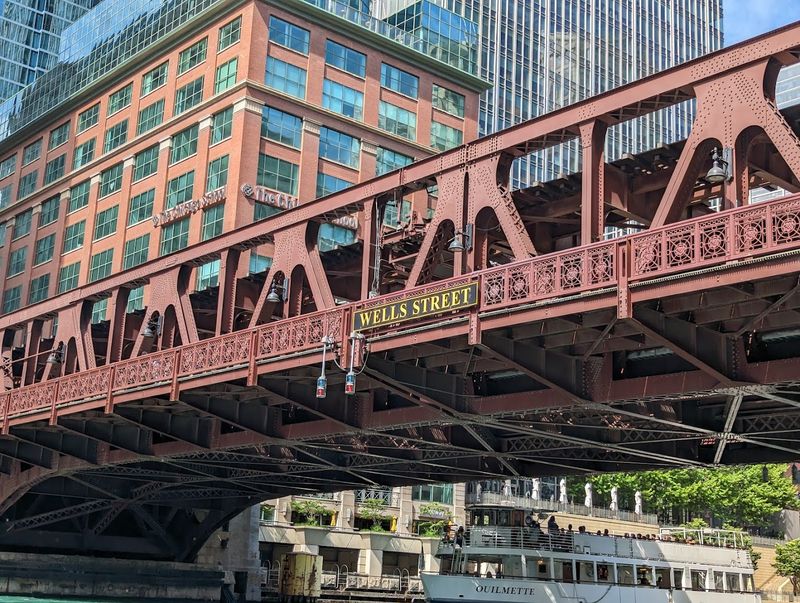
Chicago has no shortage of impressive bridges, but the Wells Street Bridge earns a special place on any list for one reason that most visitors miss entirely: it carries both vehicle traffic and the elevated CTA Brown and Purple Line trains simultaneously.
That dual-use design makes it one of the most functionally complex movable bridges in the country, and watching a train rumble across it while cars pass below is one of those distinctly Chicago moments that never gets old.
The current bridge was built in 1922 and replaced an earlier structure at the same location. It’s a double-leaf bascule design, meaning both halves of the bridge lift from the center to allow river traffic to pass.
The Chicago River at this point runs through the heart of the city, and the Wells Street Bridge sits in one of the most architecturally dense stretches of the entire waterway.
From the Riverwalk below, you can watch the bridge from a perspective that most people never bother to seek out, looking up at the steel framework and the train tracks overhead while boats pass through. The surrounding Near North Side and Loop areas give the location a lively, contemporary energy.
Architecture boat tours often pass directly beneath the Wells Street Bridge, and guides consistently point it out as one of the river’s most mechanically fascinating structures.