
This Ozark Mountain Chapel Might Just Be The Most Peaceful Spot In All Of Arkansas
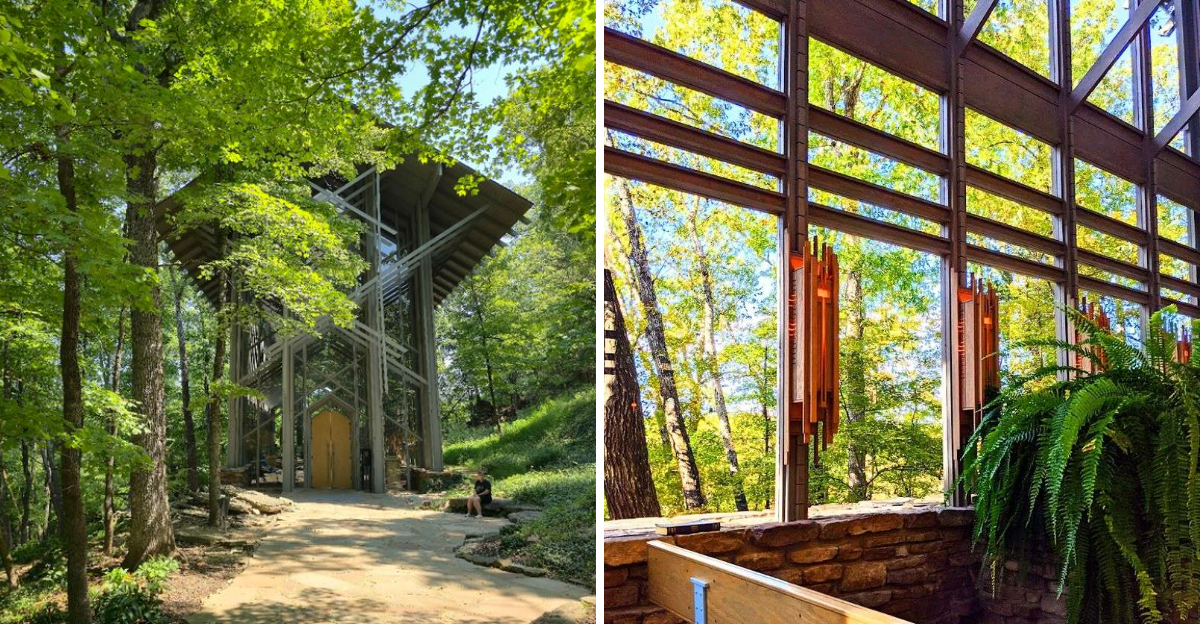
Some places don’t need an introduction. This chapel in the forested hills of northwest Arkansas is one of them.
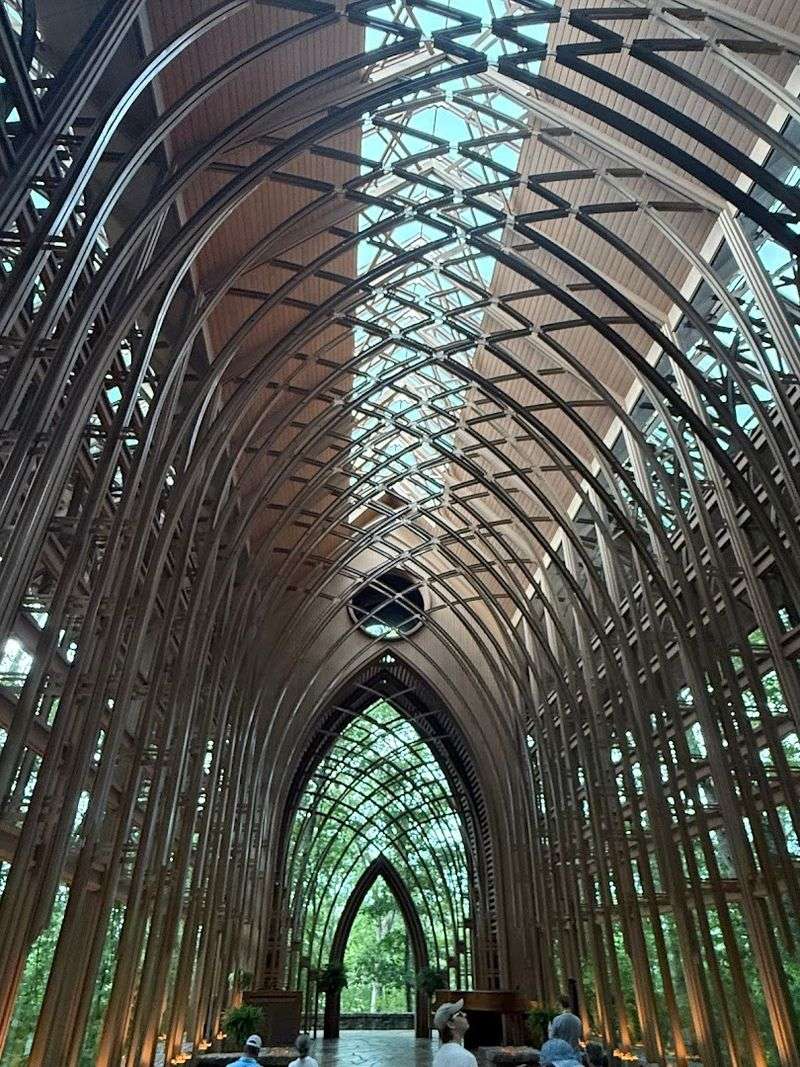
Tall timber frames rise overhead while walls of glass pull the outside world into view. Nothing feels separate. Trees, light, and structure all exist together in a way that feels effortless. Pictures show the design, but not the atmosphere.
That part only makes sense in person. More than nine million visitors have passed through, and many leave saying the same thing.
It’s the feeling that stands out. A kind of calm that settles in without warning. Voices drop. Thoughts slow. You start paying attention to small details without even trying. The light shifting.
The stillness holding steady. It’s subtle, but powerful.
Keep reading for remarkable facts about one of the most admired architectural spaces in the country.
Woodland Glass Chapel In The Ozarks
At the edge of a narrow Ozark trail, everything went quiet before the building revealed itself.
The first glimpse of this structure through the trees is the kind of moment that makes you stop walking and just stare, because nothing quite prepares you for how tall, how transparent, and how alive it feels against the surrounding woodland.
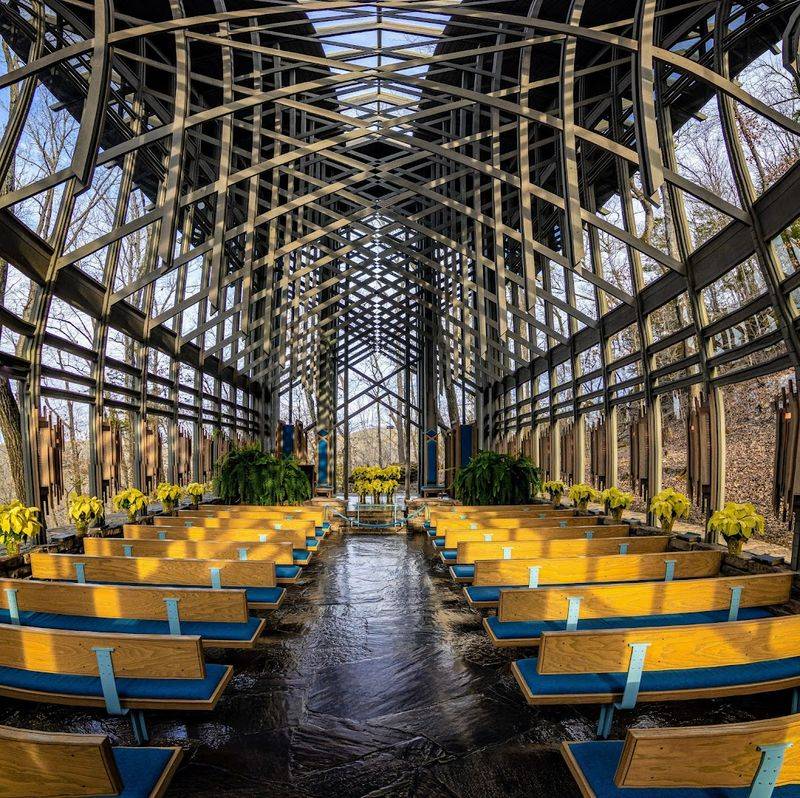
Architect E. Fay Jones, an Arkansas native who studied under the legendary Frank Lloyd Wright, designed the chapel to feel like a natural extension of the forest rather than an interruption of it.
The result is a building that seems to grow upward from the earth itself, its soaring wooden lattice reaching 48 feet into the Ozark sky while 425 individual windows wrap the interior in shifting light and shadow.
The expansive glass walls are positioned to draw the surrounding forest into view, so no matter where you sit, the landscape is always part of the room.
Visitors consistently describe the experience as unexpectedly emotional, and it is easy to understand why upon arriving at Thorncrown Chapel, located at 12968 US-62, Eureka Springs, AR 72632.
Native Stone Beneath Soaring Timber
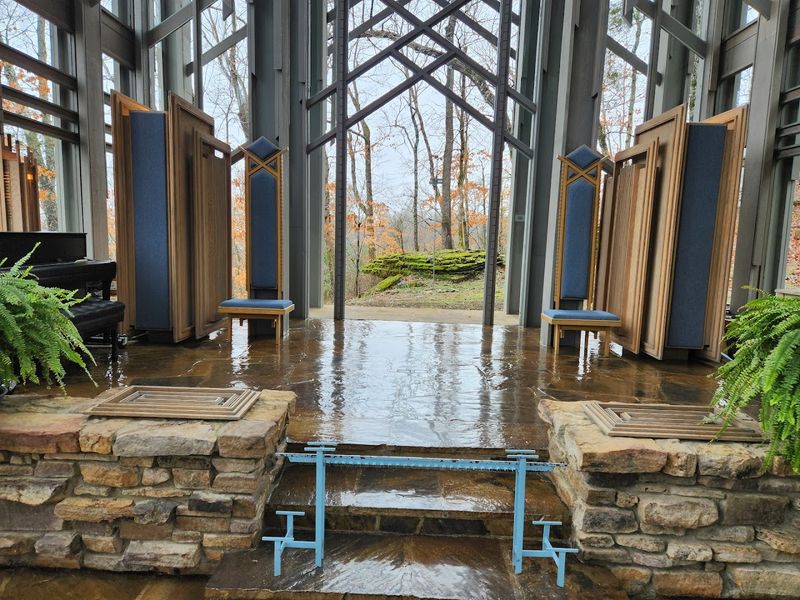
Few architectural details speak as quietly and as powerfully as the floor beneath your feet, and at this chapel, that floor is made of native Arkansas flagstone.
The rough-hewn texture of each stone slab grounds the entire interior, creating a tactile connection to the land that the building sits on.
E. Fay Jones made a deliberate choice to use indigenous materials throughout the construction, sourcing pressure-treated Southern pine for the structural framework and local flagstone for the walkways and floor surfaces.
That decision was partly practical, since no heavy machinery could navigate the narrow forest path without damaging the trees, so every piece of material had to be carried in by hand.
The constraint turned into a creative advantage, because the modest scale of each structural member, primarily two-by-fours, two-by-sixes, and two-by-twelves, encouraged the intricate lattice design that became the chapel’s signature visual element.
Walking across that flagstone floor while wooden beams crisscross overhead gives you the distinct sense that the building was not placed here so much as it was grown here, stone by stone and beam by beam.
Sunlit Walls Opening To The Forest
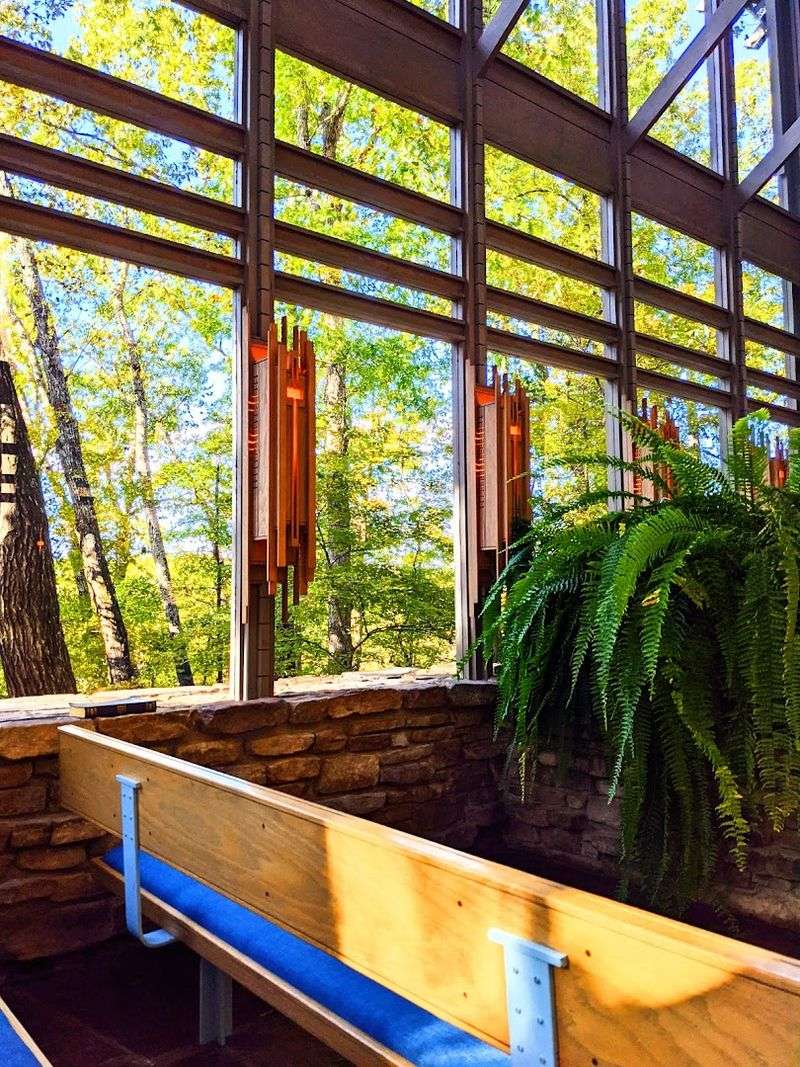
Natural light does something remarkable inside this chapel that no artificial lighting system could replicate, and I spent a long time simply sitting still and watching it move.
The 425 windows that wrap the interior encompass more than 6,000 square feet of glass, which means the walls are almost entirely transparent from floor to ceiling on every side.
Morning visits reward you with a golden eastern light that filters through the pine canopy and scatters across the wooden lattice in shifting geometric patterns, while afternoon visits bring a cooler, diffused glow from the west.
Seasonal changes transform the experience entirely, as reviewers who visited in autumn described the surrounding foliage turning the glass walls into a living tapestry of red, orange, and gold.
Spring visits bring a tender green softness to every window, and winter visits, when the trees are bare, reveal a stark and skeletal beauty that feels almost meditative.
The chapel does not compete with nature for your attention but instead uses every pane of glass as a carefully composed frame, turning the surrounding Ozark forest into the most breathtaking wallpaper you have ever seen.
Architecture Rising Into The Trees
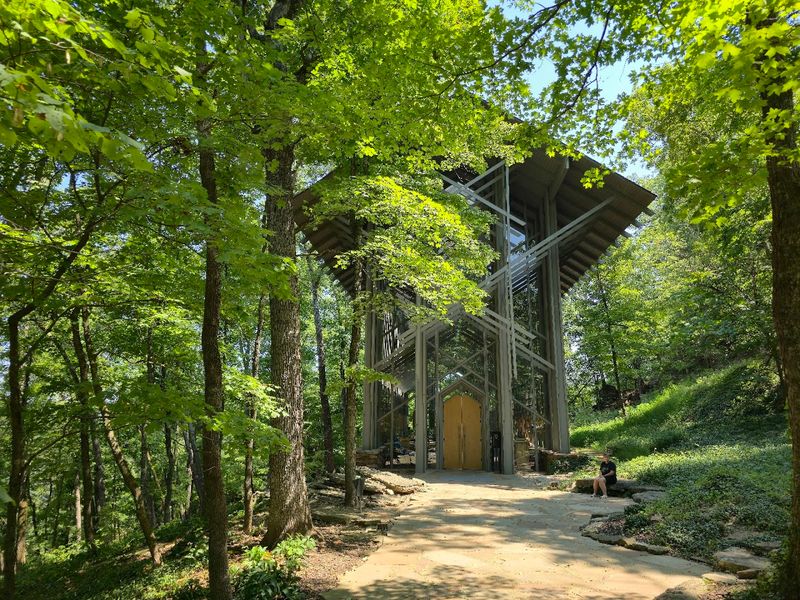
At 48 feet tall, this chapel does not sit modestly in the forest so much as it reaches upward through it, trading the usual sense of religious enclosure for something far more vertical and open.
The structural system that makes this height possible is a marvel of engineering economy, built from a repeating pattern of small wooden members that lock together into a rigid lattice strong enough to support the entire glass envelope.
Because no single piece of lumber was wider than a standard two-by-six, every component could be carried into the woods by a small construction crew without disturbing the surrounding trees.
The resulting framework looks delicate from a distance, almost like lacework stretched between the trunks, but the engineering behind it is precise and deliberate.
The chapel received a 1981 AIA National Honor Award and later the AIA Twenty-five Year Award in 2006, recognizing its lasting architectural significance.
Looking up from inside and watching the wooden grid dissolve into the treetops above is the kind of architectural experience that makes you reconsider everything you thought you knew about what a ceiling is supposed to feel like.
A Sacred Space Of Wood And Glass
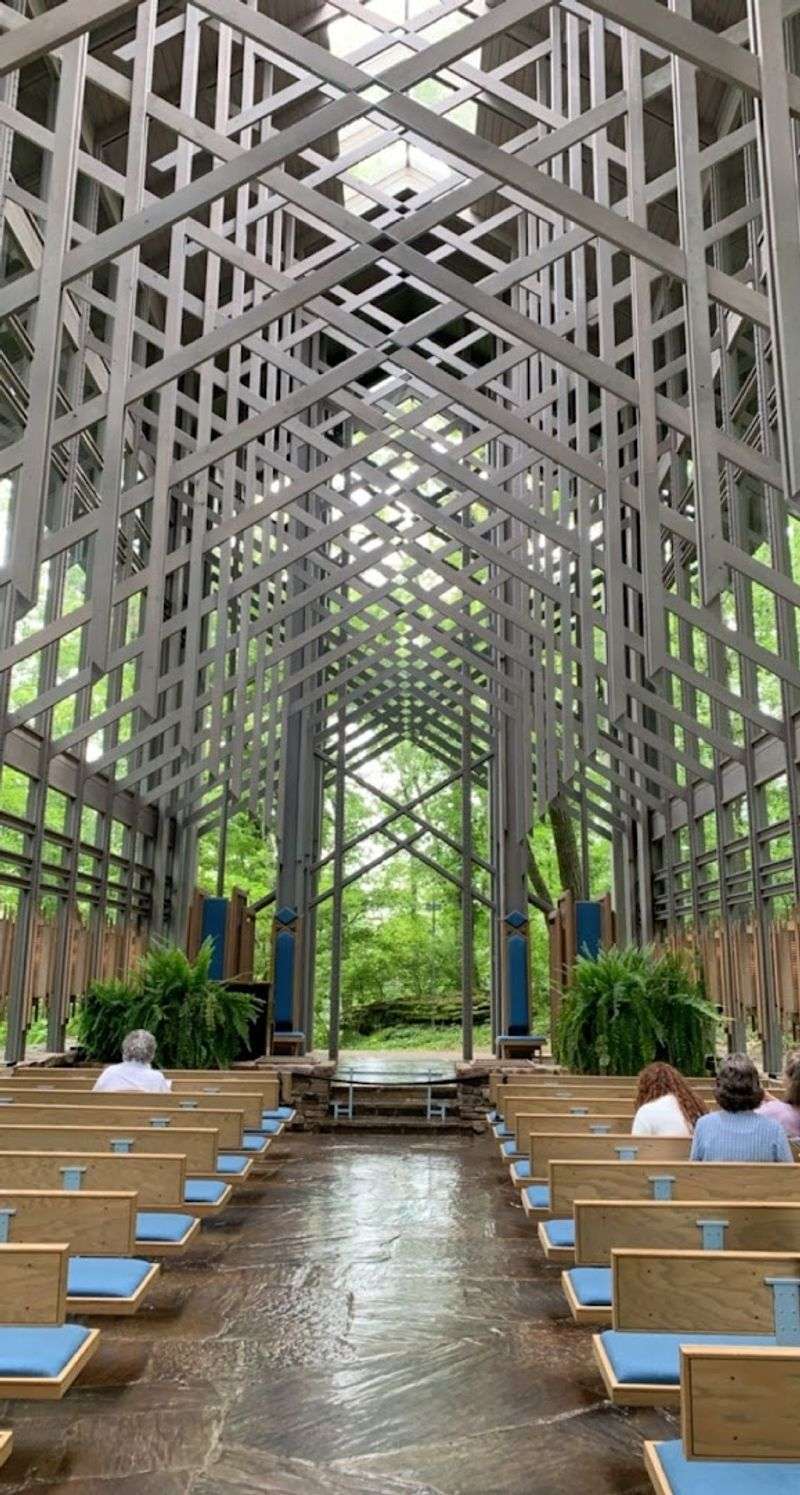
There is a quality of silence inside this chapel that feels different from ordinary quiet, the kind that arrives when a space has been used for sincere reflection by millions of people over many years.
Since opening its doors in 1980, the chapel has welcomed more than nine million visitors, making it one of the most visited chapels in Arkansas.
Non-denominational Sunday services are held at 9:00 AM and 11:00 AM from April through October, and at 11:00 AM from November through mid-December, welcoming anyone regardless of background or belief.
Visitors will find a simple, quiet setting intended for reflection, with seating available throughout the space during open hours.
Admission is free, with donations welcomed, which means the chapel remains accessible to anyone who makes the trip to the Ozarks.
Whether you arrive as a person of deep faith, a lover of architecture, or simply someone who needs a few quiet minutes away from the noise of everyday life, the chapel offers an unhurried, calming experience.
Stillness Within A Woodland Setting
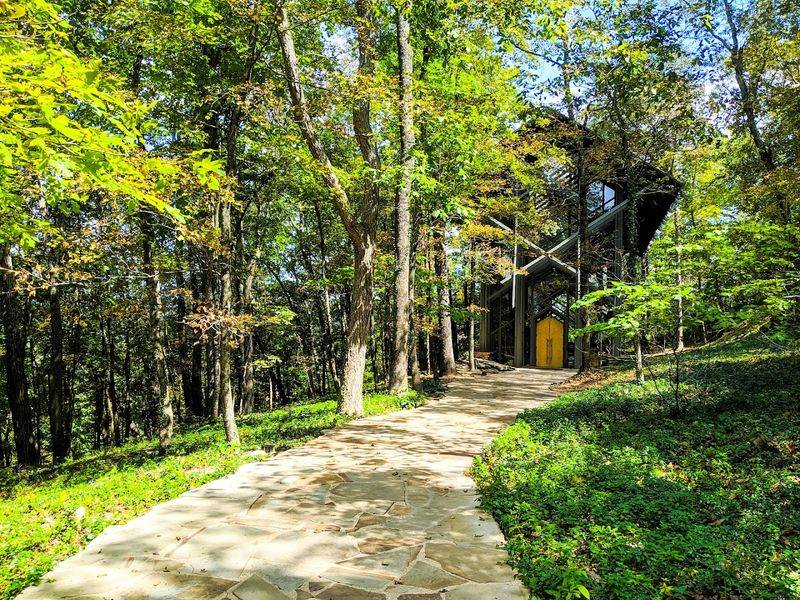
The walk from the parking area to the chapel entrance is short and accessible to visitors with mobility considerations, but do not rush it.
That brief forest path is part of the experience, a gentle transition zone where the sounds of the highway fade and the sounds of the woods take over, preparing you for what waits at the end of the trail.
Tall pines line the walkway, their canopy filtering the sky into soft, irregular patches of light that shift with the breeze, and the air carries that particular resinous coolness that only deep forest can produce.
Some visitors describe arriving during a Sunday prayer service and being asked to wait quietly outside until the service concludes, an experience many find meaningful rather than inconvenient.
During open hours, visitors may encounter staff or volunteers who can provide general information about the chapel and its history.
That combination of natural setting and unhurried atmosphere creates a visitor experience that feels intentional without ever feeling commercial, which is a genuinely rare quality in a place that sees this many people each year.
Rock And Trees Framing The Chapel
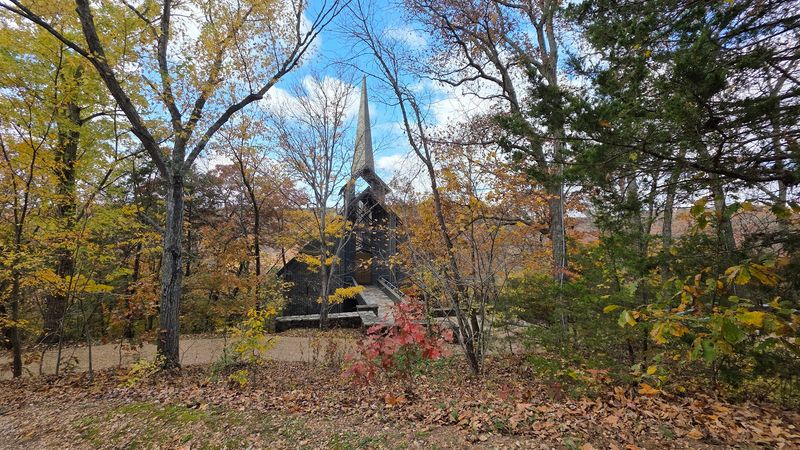
The Ozark Mountains surrounding this chapel are not the dramatic, jagged peaks of the Rockies but something older, rounder, and more intimate, a landscape of layered sandstone, dense hardwood forest, and narrow creek hollows that feel almost secretive.
That setting gives the chapel a context that a flat or open landscape could never provide, because the building is always partially hidden, always partially revealed, always in dialogue with the rock and timber around it.
The flagstone used inside the chapel echoes the native geology visible in the hillside just beyond the glass walls, creating a visual continuity between interior and exterior that feels entirely intentional.
E. Fay Jones studied under Frank Lloyd Wright, whose philosophy of organic architecture insisted that buildings should arise from and respond to their specific site rather than being imposed upon it.
That philosophy is visible in every detail here, from the way the structural posts seem to root themselves into the ground to the way the roofline follows the slope of the surrounding terrain.
Standing outside and watching the late afternoon light warm the stone and timber simultaneously, you realize the building and its landscape are not two separate things at all but one continuous composition.
A Design That Melds With Nature
Completed in 1980 and listed on the National Register of Historic Places in 2000, this chapel earned that designation relatively early, reflecting how quickly the architectural world recognized its significance.
The National Register listing was unusual because it was granted to a building that was only twenty years old at the time, a recognition typically reserved for structures that have stood for half a century or more.
That early recognition reflected a consensus that had already formed among architects, critics, and ordinary visitors alike: this building did something genuinely new by refusing to separate the human-made from the natural.
The glass walls do not merely look out at the forest but actively incorporate it, so the trees visible through the windows become structural and aesthetic elements of the interior space itself.
Rain streaking down the glass panels, snow settling on the roofline, autumn leaves pressing briefly against the windows before falling away, all of these become part of the chapel’s ever-changing interior design.
Every season delivers a completely different version of the same building, which means that no matter how many times you visit, the experience of standing inside this extraordinary space never quite repeats itself.