
11 Illinois Places That Are Perfect For Photography In 2026
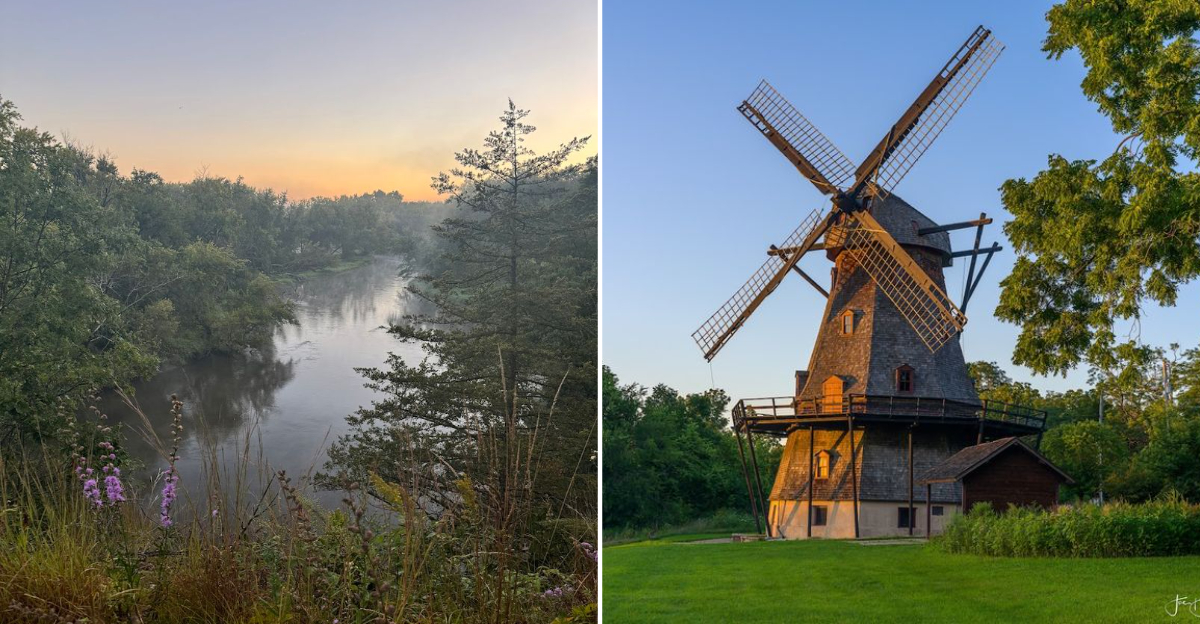
Illinois has a way of catching you off guard. You might expect endless farmland or just the Chicago skyline, but there is a lot more hiding in plain sight, with river bluffs, ancient earthworks, quiet gardens, and even a few bridges that look like they belong on a postcard.
Time spent exploring these lesser-known corners shows just how much variety exists in one place. Patient photographers discover scenes that feel unexpected and often overlooked.
I have tracked down some of the most photogenic corners over time, and what stands out is how rewarding it feels when you find a place that does not get much attention.
This list brings together spots around Illinois that offer something a little different, with strong light, interesting textures, and scenes that are well worth the effort to capture in 2026.
1. Illinois River Bluff Trail (Buffalo Rock Area), Ottawa
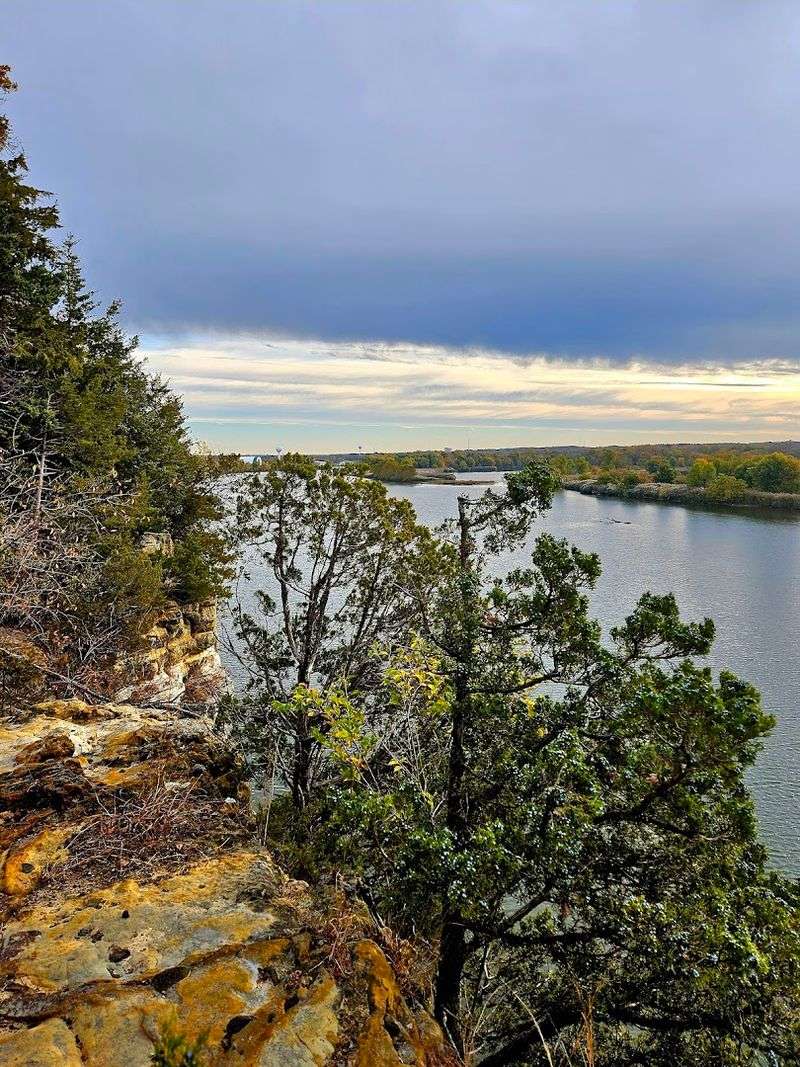
Perched above the Illinois River valley, the Buffalo Rock area near Ottawa delivers the kind of panoramic views that make you stop mid-step and reach for your camera before you even think about it.
The limestone bluffs rise sharply above the river, and when the light hits at golden hour, the whole scene turns into a warm, layered painting of orange, amber, and deep green. Buffalo Rock State Park is located along Illinois Route 6 between Ottawa and Utica in LaSalle County, and it is free to visit year-round.
Spring and fall are the standout seasons here. Spring brings wildflowers along the trail edges, while autumn coats the bluffs in fiery reds and burnt oranges that reflect beautifully off the river below.
Wide-angle lenses do wonders for capturing the full scope of the valley, but a telephoto can pull in the river bends and distant tree lines with satisfying detail.
The trail itself is relatively easy to navigate, making it accessible for photographers carrying gear. Early morning fog settling over the river adds a moody, atmospheric quality that serious landscape photographers will absolutely love chasing.
2. Montrose Point Bird Sanctuary, Chicago
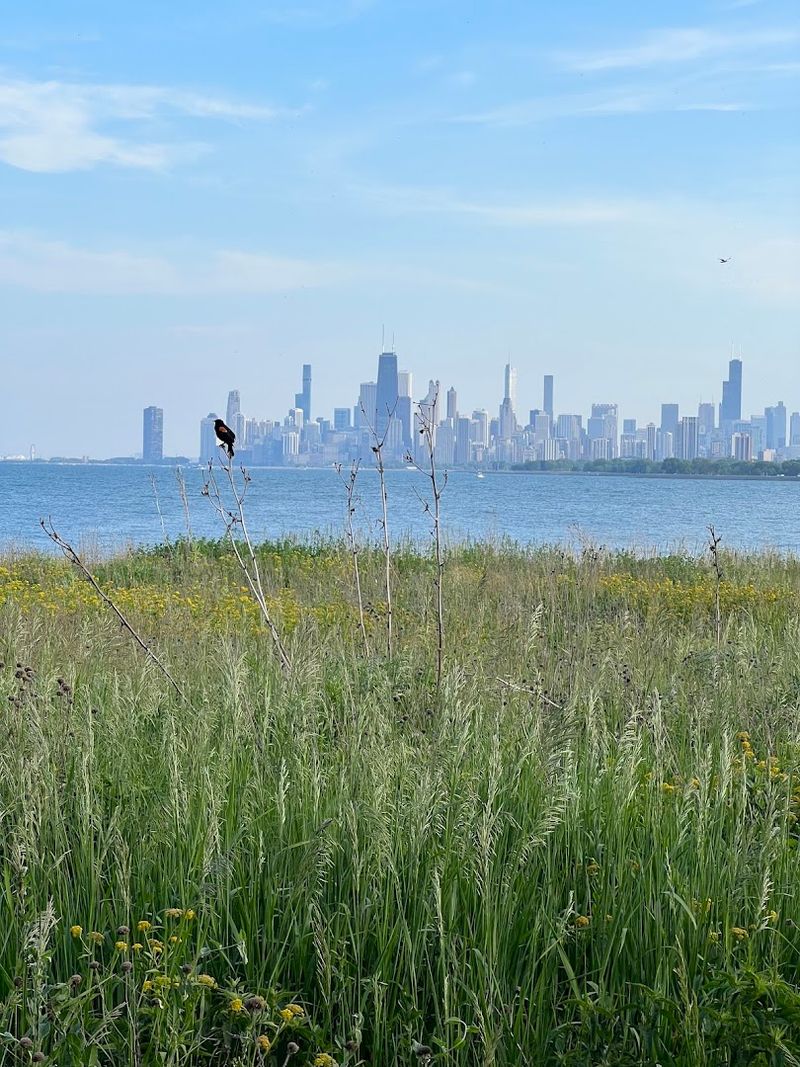
Few places in Chicago reward a photographer quite like the Magic Hedge at Montrose Point Bird Sanctuary. During spring and fall migrations, this narrow strip of dense shrubs along the Lake Michigan shoreline becomes a temporary home for hundreds of bird species passing through the region.
It sits at 200 West Montrose Harbor Drive in Chicago, right where the city meets the water in a surprisingly wild way.
Wildlife photographers treat this spot like a secret weapon. Warblers, thrushes, and orioles land so close to the trail that a standard 300mm lens feels almost too powerful.
The contrast between the birds in the foreground and the Chicago skyline rising in the background creates a composition you simply cannot manufacture anywhere else.
The best light arrives in early morning, when the sun climbs over the lake and bathes the hedge in warm, directional glow. Midweek visits in May tend to offer the most action with fewer crowds.
Beyond birds, the shoreline itself offers excellent long-exposure opportunities, especially when wave action picks up and the city lights reflect across the water at dusk. Pack patience and a solid pair of walking shoes.
3. Rend Lake Spillway And Dam, Near Benton
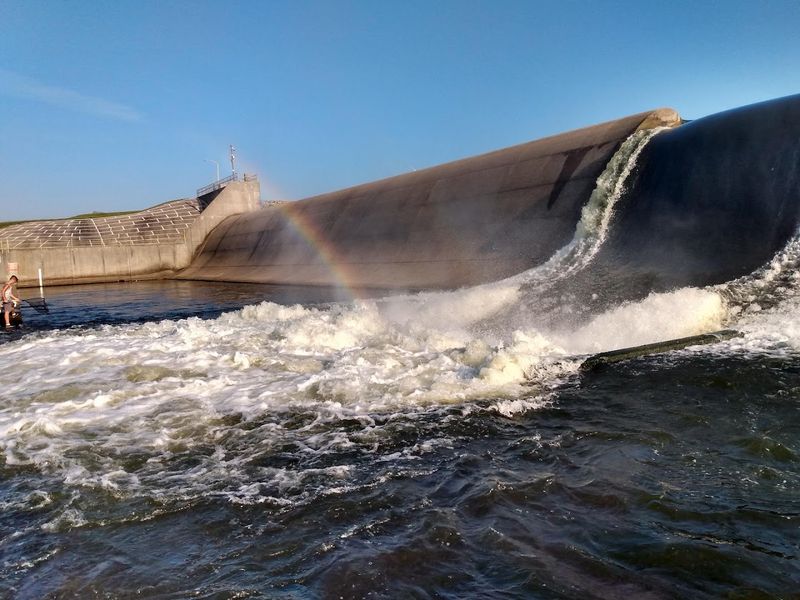
Water and concrete rarely look this photogenic together, but the Rend Lake Spillway near Benton in southern Illinois is genuinely one of the most underrated photography locations in the entire state.
The spillway creates a powerful rush of white water that practically begs for a long-exposure treatment, turning the flow into silky ribbons against the hard geometry of the dam structure. Rend Lake is located in Franklin and Jefferson counties, managed by the U.S.
Army Corps of Engineers.
The surrounding landscape adds serious depth to any shot. Tall hardwood trees frame the water on both sides, and the reservoir stretches wide behind the dam, offering calm reflections of the sky that contrast beautifully with the churning spillway below.
Sunrise visits reward photographers with soft pink and lavender tones spreading across the still water.
Autumn is arguably the finest season to visit, when the surrounding forest shifts into full color and the reflection in the reservoir doubles every golden leaf. The area also supports a healthy population of bald eagles during winter months, making it a compelling year-round destination.
Bring a tripod for smooth water shots and a telephoto for any eagle sightings along the shoreline.
4. Cahokia Mounds, Collinsville
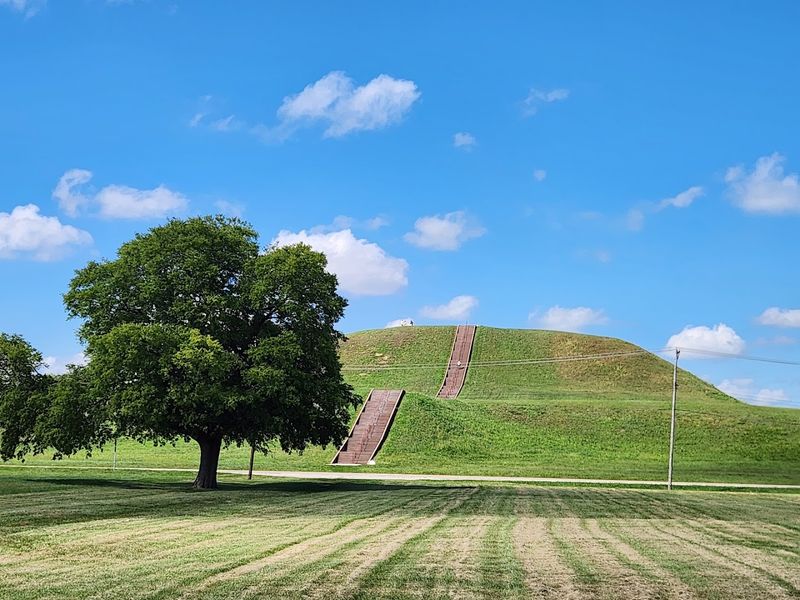
Cahokia Mounds in Collinsville, Illinois, is the kind of place that puts the sheer scale of ancient human ambition right in front of your lens.
The site, located at 30 Ramey Street in Collinsville, was once the largest pre-Columbian city north of Mexico, and Monks Mound at its center still stands as one of the largest earthen structures ever built. The flat surrounding plain makes the mound look almost impossibly large against the open sky.
Photography here is all about light and timing. Sunrise is particularly spectacular, especially on misty mornings when low fog drifts across the grounds and the first rays of sun rake across the mound’s broad terraces.
The soft shadows that develop across the earthwork’s surface during low-angle light reveal the structure’s massive size in a way that flat midday light simply cannot.
Cahokia Mounds is a UNESCO World Heritage Site, and the grounds cover over 2,200 acres with more than 70 surviving mounds to explore.
Autumn evenings, when the sky turns deep orange and the mounds cast long shadows across the prairie, offer some of the most dramatic compositions available anywhere in the Midwest. Photographers who arrive before the crowds get the whole ancient landscape to themselves.
5. Fabyan Windmill And Japanese Garden, Geneva
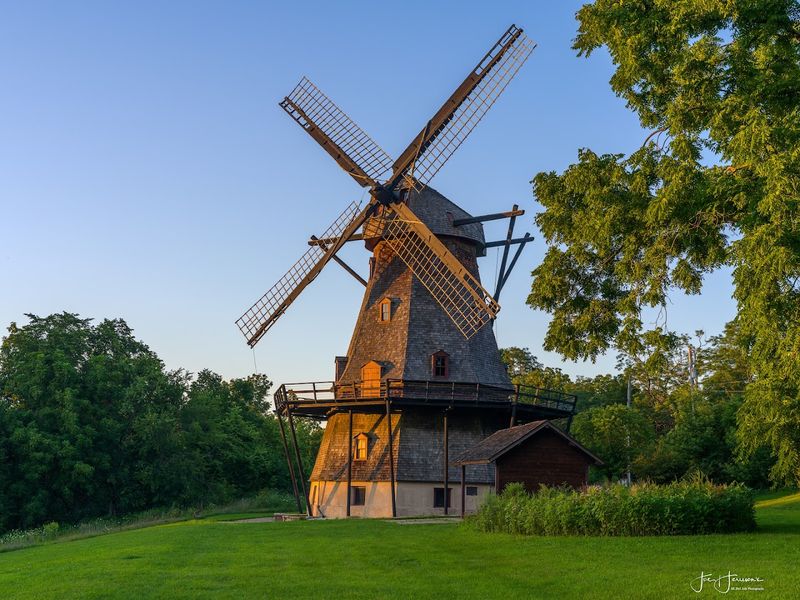
Geneva, Illinois, holds a quiet little surprise along the Fox River that most photographers outside the Chicago suburbs have never heard of.
The Fabyan Forest Preserve spans multiple areas along the Fox River in Geneva, with the Fabyan Windmill located at 1500 Crissey Avenue and the Japanese Garden at 1925 South Batavia Avenue, offering two distinct photography subjects within the same preserve system.
The contrast alone makes for a genuinely unusual photo session.
The windmill, built around 1850 in the Netherlands and relocated to the property, rises above an open green lawn that provides a clean, uncluttered foreground. Morning light from the east hits the structure at a flattering angle, and the white sails against a blue sky create a crisp, graphic image.
The Japanese garden nearby features a wooden bridge, koi pond, stone lanterns, and carefully trimmed shrubs that reward macro and detail photography.
Spring cherry blossoms and autumn foliage both transform the Japanese garden into something extraordinary. The Fox River running along the preserve’s edge adds a third photography option, especially at dusk when the water reflects the fading colors of the sky.
Visit times are limited, as the Japanese Garden and windmill operate on seasonal and restricted public hours, so checking current schedules in advance is essential.
6. Fulton Windmill and De Immigrant Park, Fulton
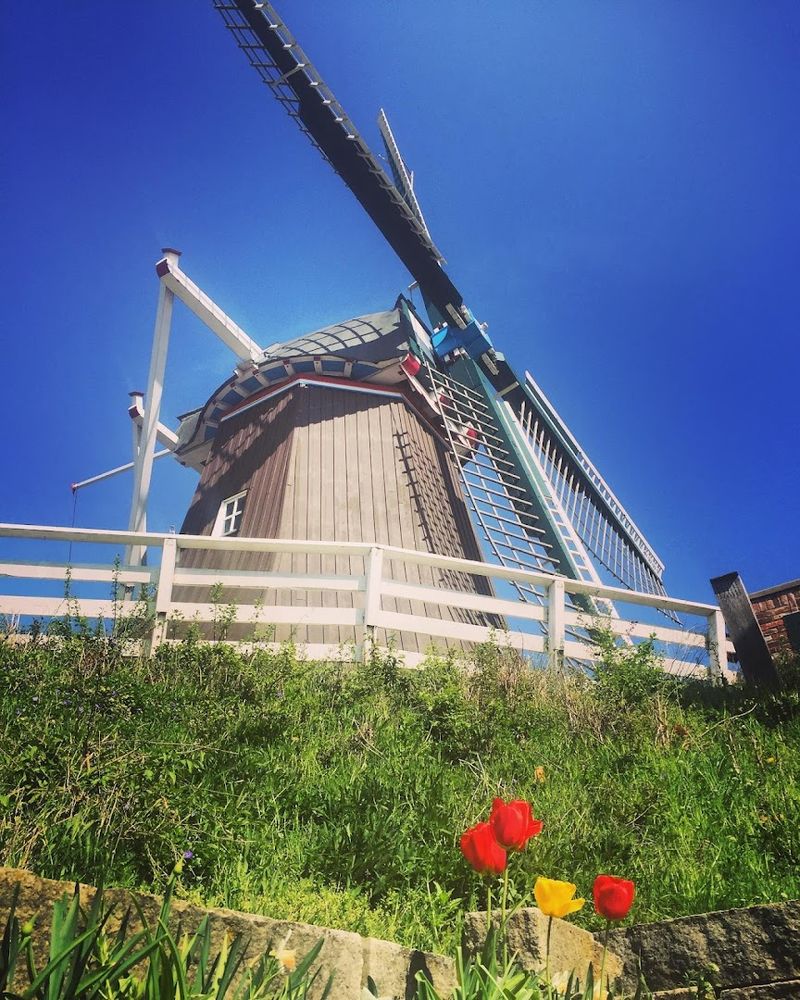
Right on the banks of the Mississippi River in Fulton, Illinois, stands one of the most authentically Dutch windmills in North America.
The De Immigrant Windmill at 10th Avenue and 1st Street in Fulton is a fully functional traditional Dutch windmill, built in the Netherlands and assembled in Fulton in 2000 as a tribute to the city’s Dutch heritage.
It towers over the surrounding park at five stories tall, which means even a standard kit lens can capture the full structure with ease.
Spring is the undeniable peak season here. The park surrounding the windmill fills with tulip beds in brilliant reds, yellows, and purples, creating a foreground that feels almost too vibrant to be real.
Photographing the windmill with the tulips in full bloom and the wide Mississippi River stretching behind it offers a layered, postcard-perfect composition that shoots beautifully in both portrait and landscape orientation.
The windmill’s traditional dark wooden structure catches light well at almost any time of day, though cloudy skies help manage contrast and preserve detail in the wood grain. The nearby riverfront trail provides additional vantage points, including elevated views of the river and the Iowa shoreline beyond.
The annual Tulip Festival in May draws visitors from across the Midwest and is the single best time to photograph this remarkable site.
7. Chicago Riverwalk, Chicago
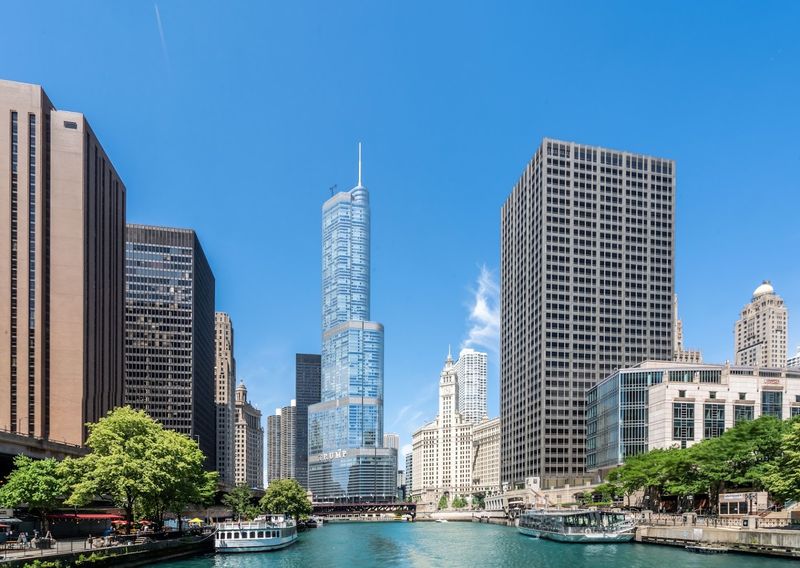
Urban architecture photography does not get much more rewarding than the Chicago Riverwalk. Stretching along the main branch of the Chicago River from Lake Shore Drive to Lake Street in downtown Chicago, this wide pedestrian promenade puts you at water level in the heart of one of the world’s great skylines.
The canyon of glass, steel, and stone rising on both sides creates a natural frame that works beautifully for both wide-angle and telephoto compositions.
Blue hour is the magic window here. The period just after sunset, when the sky deepens to a rich indigo and every building lights up from within, produces reflections on the river that look almost impossibly perfect.
A tripod and a remote shutter release are worth carrying for these shots, as even slight camera movement will blur the reflections during longer exposures.
Daytime photography along the Riverwalk has its own rewards. Kayakers on the water, architectural boat tours passing through, and the famous Chicago architectural details visible from street level all contribute to a constantly changing set of scenes.
The Trump Tower, Marina City corncob towers, and the 333 West Wacker Drive curved green glass facade are standout subjects that photograph differently depending on the season and light conditions.
8. The Rookery Building, Chicago
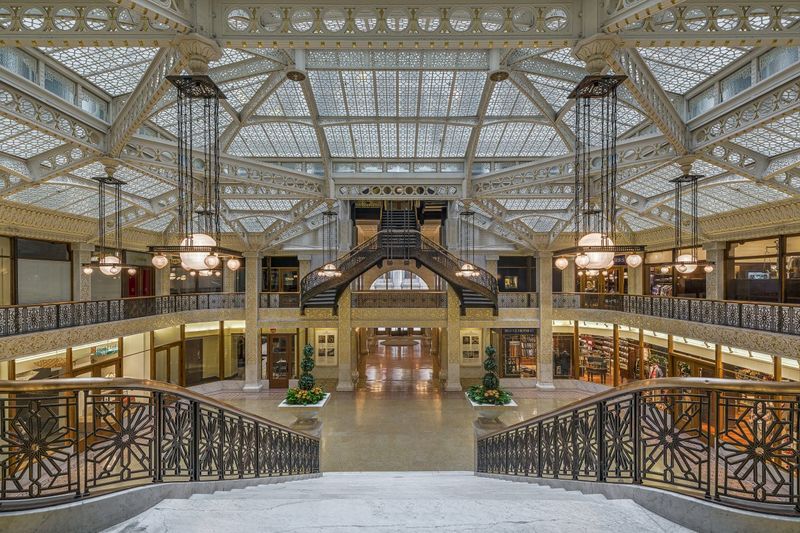
Architecture photographers who have not visited the Rookery Building in Chicago are missing one of the finest interior photography subjects in the entire country.
Built in 1888 and located at 209 South LaSalle Street in Chicago’s Loop, the Rookery is a National Historic Landmark that combines Romanesque exterior stonework with one of the most breathtaking interior atriums you will ever point a camera at.
The light court was redesigned by Frank Lloyd Wright in 1905, and it remains one of his most celebrated early works.
The atrium glows. Natural light pours through the glass ceiling and floods the white-painted iron filigree, illuminating the intricate geometric staircases and balconies in a way that feels almost otherworldly.
Wide-angle lenses used from ground level looking upward produce dramatic perspective lines that converge at the glass ceiling, and the symmetry of the space rewards careful composition.
Midday visits maximize the natural light flooding through the skylight, which reduces the need for high ISO settings and keeps images clean and detailed. The building is open to the public during business hours on weekdays, and the lobby itself is free to enter.
Few photography subjects in Illinois combine history, artistry, and sheer visual drama as completely as the Rookery’s famous interior court.
9. Colored Sands Forest Preserve, Shirland
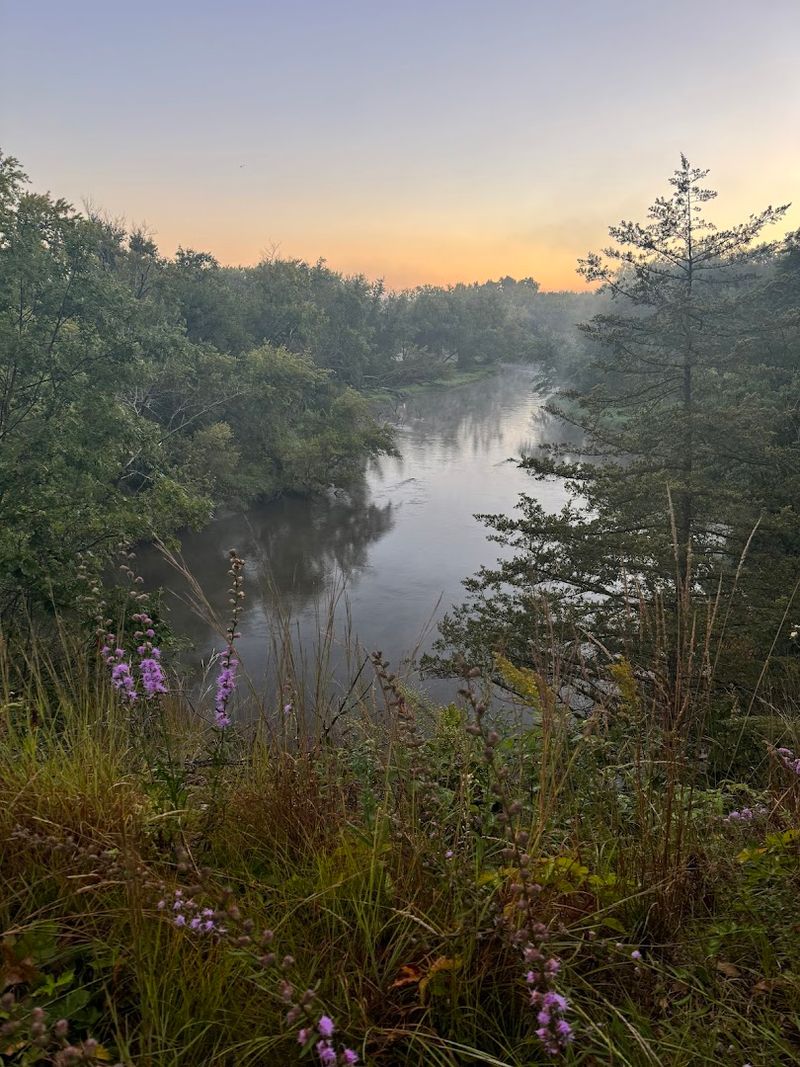
Not many people outside of northern Illinois know that Shirland is home to one of the most visually unusual natural formations in the entire state.
The Colored Sands Forest Preserve, located along the Sugar River in Winnebago County, features sandy soils, open prairie, and scenic river views shaped by glacial geology. These geological layers, shaped by thousands of years of glacial activity, create a natural color palette that looks almost painted.
The bluffs reflect beautifully in the calm sections of the Kishwaukee River below, doubling the visual impact of the scene and offering excellent reflection photography when the water is still.
Afternoon light from the west strikes the bluff faces directly, bringing out the warmth in the red and orange clay layers with vivid intensity. Overcast days actually work surprisingly well here too, as the diffused light prevents harsh shadows from obscuring the fine detail in the geological strata.
The preserve is small and relatively quiet, which means you can spend time working different angles without navigating around other visitors.
Spring and early summer keep the surrounding vegetation lush and green, providing a rich contrast against the warm earth tones of the bluffs. This is one of those places that photographs better in person than any preview image suggests.
10. Chain Of Rocks Bridge, Mississippi River
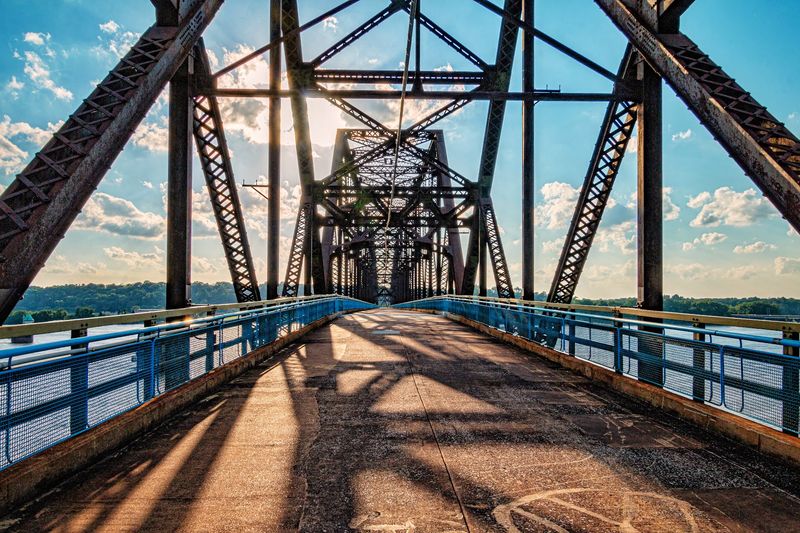
There is something quietly thrilling about walking across a bridge that once carried Route 66 traffic over the Mississippi River.
The Chain of Rocks Bridge stretches 5,353 feet across the Mississippi between Madison, Illinois, and St. Louis, Missouri, and its most distinctive feature is a 22-degree bend in the middle of the span, an engineering quirk that makes it one of the most photographically interesting bridges in the country.
The Illinois trailhead is accessible from the Madison side near the old Chain of Rocks intake towers. Sunset is the prime time to photograph here.
The bridge’s long perspective lines draw the eye toward the horizon, and when the sky lights up in shades of orange and crimson above the wide river, the effect is genuinely spectacular.
The intake towers rising from the water midstream add strong vertical elements that balance the horizontal sweep of the bridge and the river.
The bridge is now a pedestrian and cycling path, so you can walk to the midspan bend for a completely unique camera angle. From that central position, you can photograph back toward both the Illinois and Missouri shorelines simultaneously, capturing the full width of the Mississippi in a single frame.
Early morning fog over the river during spring adds an atmospheric quality that elevates already strong compositions.
11. Lincoln Memorial Garden And Nature Center, Springfield
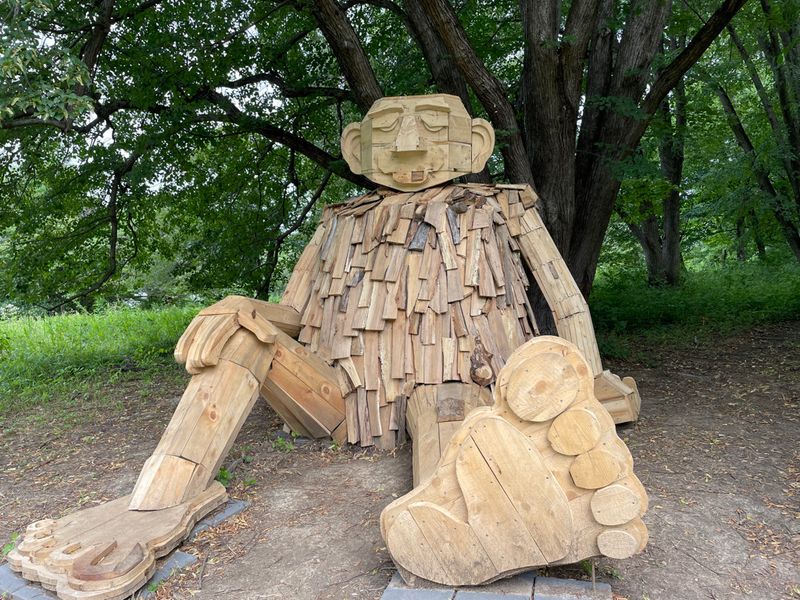
History and nature combine in a quietly beautiful way at the Lincoln Memorial Garden and Nature Center in Springfield, Illinois.
Located at 2301 East Lake Drive on the shores of Lake Springfield, this native woodland garden was designed by landscape architect Jens Jensen in the 1930s as a living memorial to Abraham Lincoln.
The garden features plants native to the regions where Abraham Lincoln lived, particularly Kentucky, Indiana, and Illinois, which gives the entire landscape a historically rooted, purposeful feel.
Autumn transforms the garden into a photographer’s dream. The native maples, oaks, and hickories shift into deep reds, golds, and burnt oranges that reflect across the calm surface of Lake Springfield in compositions that feel genuinely timeless.
The winding stone council rings and rustic wooden benches scattered throughout the garden provide natural focal points that add human scale to the landscape shots.
Spring wildflowers are another highlight, with trillium, Virginia bluebells, and wild ginger carpeting the forest floor in late April and early May. The garden’s more than six miles of trails allow photographers to explore different light conditions and woodland compositions throughout a single visit.
Morning visits on calm days produce the clearest lake reflections, and the overall tranquility of the space makes it one of the most relaxing photography sessions you will find anywhere in central Illinois.