
The Enchanting Arizona Forest Trail That Looks Too Magical To Be Real
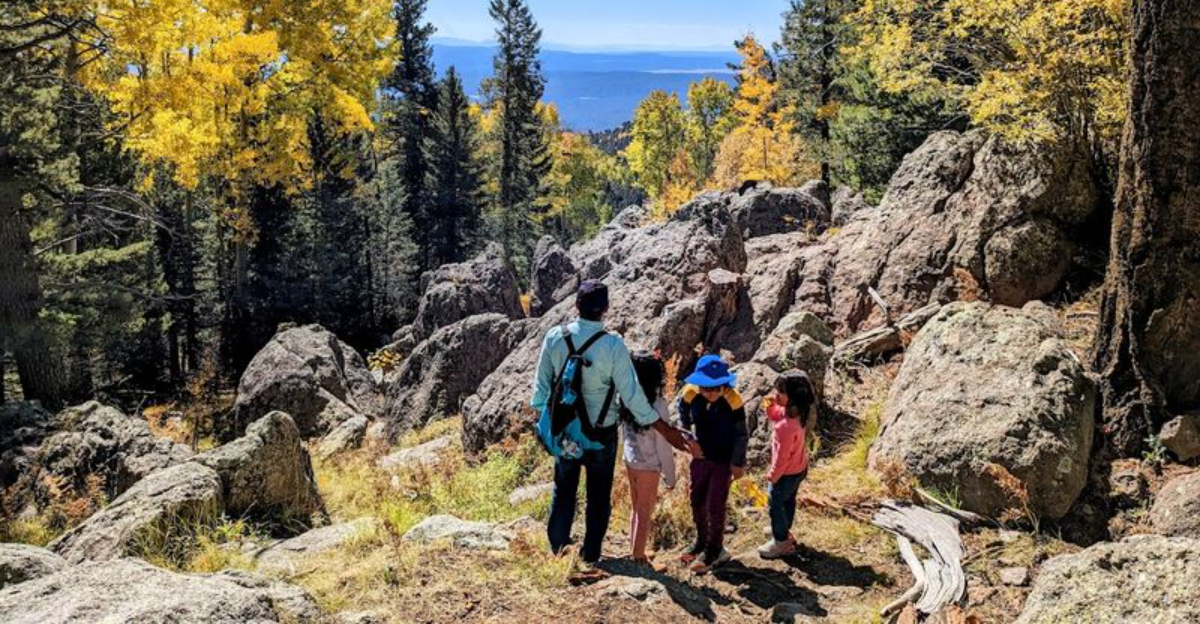
There is a specific moment during this hike when the forest opens up, and you realize you aren’t just walking through nature-you are wandering through a waking dream.
I found myself lingering at nearly every turn, unable to decide if the vibrant colors surrounding me were real or a trick of the mountain sun. Every moss-covered stone and reaching branch feels curated by magic rather than biology.
If you are looking to escape the noise of the modern world, this is where you go, it is a hidden cathedral of pine and wildflower where Arizona paints its most breathtaking masterpiece against the vast, open sky.
I hiked this 5.2-mile trail on a crisp October morning, and I can honestly say it rewired something in my brain about what a forest walk can feel like.
If you have ever wanted a hike that rewards you with scenery, wildlife, geology, and pure peaceful joy all at once, this trail near Flagstaff delivers every single one of those things and then some.
The Setting That Stops You In Your Tracks
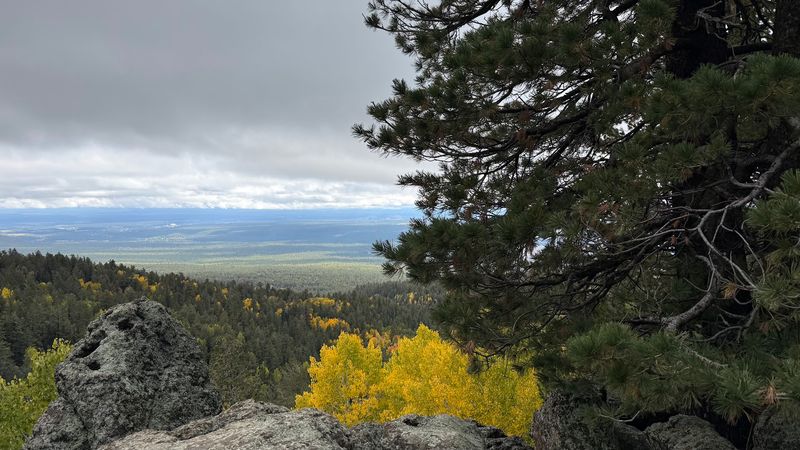
Standing at the Kachina Trailhead inside the Arizona Snowbowl Resort parking area, the first thing that hits you is the scale of everything. The trees are enormous, the sky is wide, and the air at nearly 9,000 feet elevation carries that crisp, cool bite that immediately tells your lungs something special is happening.
The trailhead sits at the south end of the Snowbowl parking lot, reached by driving north on U.S. Highway 180 for about 7.5 miles from downtown Flagstaff and then turning right onto Snowbowl Road for another 7 miles.
The trail runs along the south face of the San Francisco Peaks within the Kachina Peaks Wilderness Area, a protected stretch of mountain terrain that feels worlds away from the city.
Dense stands of limber pine and Engelmann spruce frame the path as it winds gently at first, easing you into the experience before the terrain gets more adventurous further along.
Few trails anywhere in Arizona offer this kind of immersive alpine environment from the very first step. There is something almost cinematic about the way the landscape opens up here, with every direction feeling bigger and quieter than the last.
Even before you get very far, the trail gives you that rare sense that you have stepped into one of Arizona’s most extraordinary mountain spaces.
Aspen Groves That Turn The Forest Gold
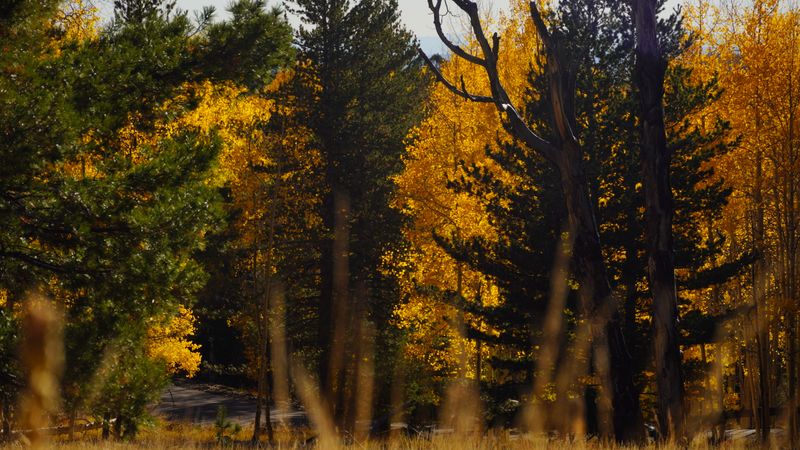
One of the most talked-about features of the Kachina Trail is its aspen groves, and once you walk through them, you completely understand why.
In fall, typically from late September through mid-October, the aspens shift from green to a blazing, almost electric gold that reflects light in a way that makes the whole forest glow.
I walked through one particularly dense grove where the canopy above me was so bright it felt like hiking through a stained-glass ceiling.
Even outside of fall, the aspens offer something worth appreciating. In spring and summer, their bright green leaves tremble in the mountain breeze with a soft rustling sound that is genuinely calming.
The white bark of the trunks contrasts sharply against the darker pines nearby, giving the trail a painterly quality at almost any time of year. Photographers tend to linger here longer than anywhere else on the trail, and after seeing it for yourself, that choice makes complete sense.
Wildflowers, Meadows, and the Colors of Spring
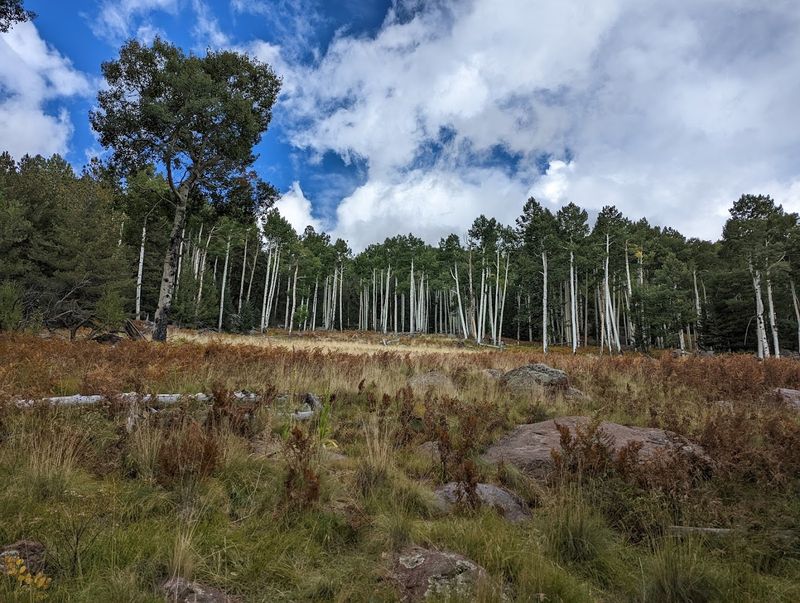
Spring and summer bring a completely different kind of magic to the Kachina Trail. The open meadows that break up the dense forest sections fill with wildflowers in shades of purple, yellow, red, and white, creating bursts of color that feel almost deliberately arranged.
Lupine, Indian paintbrush, and fleabane are among the species that show up during the warmer months, turning the trail into something that looks more like a botanical garden than a wilderness path.
These meadow stretches also offer the best open-sky views along the hike. Without the canopy overhead, you can look out across the surrounding landscape and get a real sense of how high up you are and how far the terrain stretches in every direction.
The contrast between the enclosed forest sections and these open, flower-filled clearings gives the trail a satisfying rhythm that keeps every step feeling fresh.
Hiking poles are helpful here since the meadow grasses can hide uneven ground beneath them.
Volcanic Boulders And The High Lava Cliff
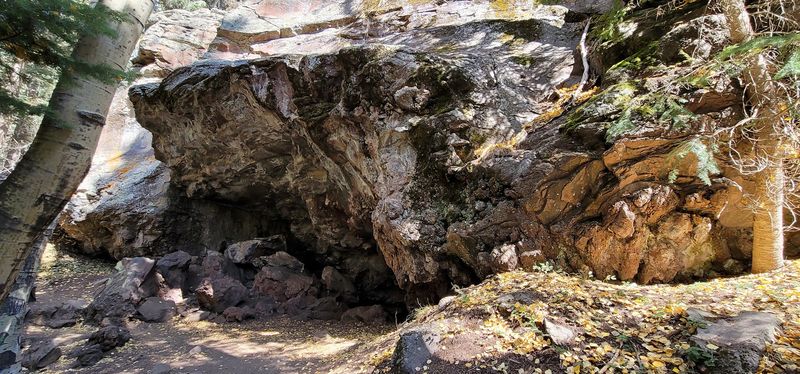
About midway through the trail, the terrain shifts dramatically and introduces one of the most visually striking features of the entire hike: a high lava cliff where massive volcanic boulders sit stacked and scattered like something from an ancient upheaval, which is exactly what they are.
The San Francisco Peaks are part of a volcanic field, and the geology along this section of the trail tells that story in the most vivid possible way.
What makes this area especially surreal is the way trees have pushed up through and around the boulders over many decades. Roots wrap around rocks, trunks lean at odd angles, and entire groves seem to erupt from solid stone.
It looks almost impossible, yet there it is, completely real and growing right in front of you.
This section of the trail tends to slow hikers down considerably, not because it is particularly steep, but because every few feet there is another boulder arrangement or root-and-rock formation that demands a closer look and usually a photograph.
Wildlife Encounters Along The Path
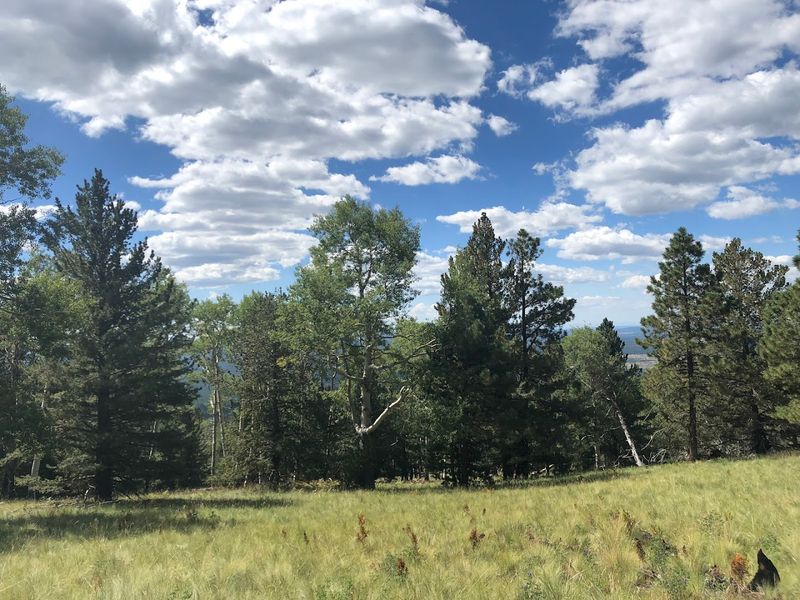
The Kachina Trail passes through active wildlife habitat, and if you hike quietly and stay alert, the chances of a meaningful animal sighting are genuinely good. Elk are among the most impressive residents of this area, and spotting a small herd moving through the trees is the kind of moment that stays with you long after the hike ends.
Mule deer are also common, especially in the early morning hours when they tend to graze near the meadow edges.
Smaller animals add plenty of charm to the experience as well. Gray squirrels dart across the path with impressive speed, and Steller’s jays announce themselves loudly from the branches above, their bold blue feathers flashing against the green forest.
Black bears live in this area too, so carrying bear spray and making reasonable noise as you hike is a smart habit rather than an overreaction.
Mountain lions are present in the peaks area and are most active around twilight, which is a good reason to plan your hike for the earlier part of the day.
Difficulty, Terrain, And What To Expect On The Trail
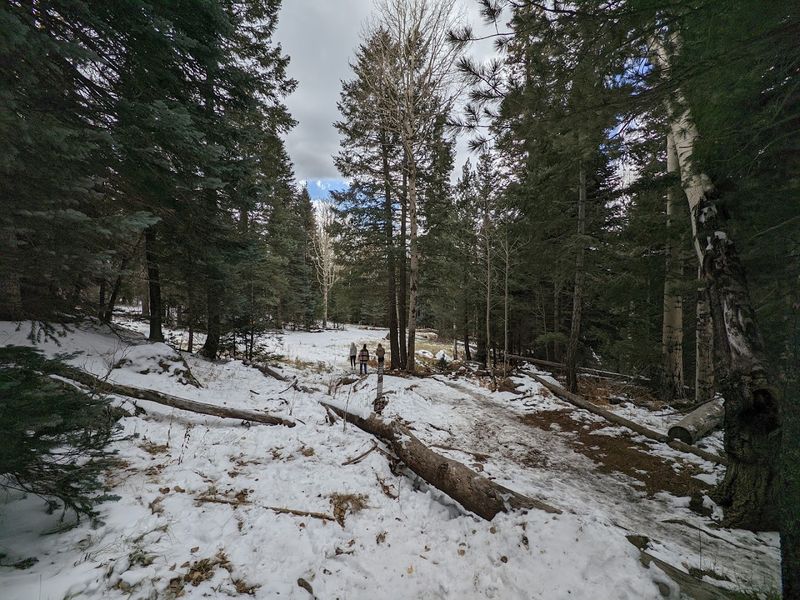
The Kachina Trail is listed as moderate to strenuous, and that description is accurate in the most honest way. The full 5.2-mile route involves an elevation change of roughly 1,188 feet, which sounds manageable until you hit the rocky descents and the small canyon crossings that require some careful footing.
This is not a trail for flip-flops or a casual stroll mindset, but it is absolutely doable for anyone in reasonable physical shape who comes prepared.
Trail shoes with solid ankle support make a noticeable difference on the rockier sections, and trekking poles help considerably on the steeper downhill stretches near the western end. The trail can be hiked as a one-way route if you leave a shuttle vehicle at the Freidlein Prairie Road trailhead, accessed by turning right onto FR 522 about one mile along Snowbowl Road and following it for approximately five miles.
Carrying at least two liters of water per person is strongly recommended since there are no reliable water sources along the trail itself.
The altitude adds an extra layer of effort, too, especially for hikers who are not used to climbing above 9,000 feet. Taking your time on the tougher sections makes the experience far more enjoyable and helps you appreciate the views instead of just pushing through them.
Planning Your Visit: Seasons, Rules, And Final Tips
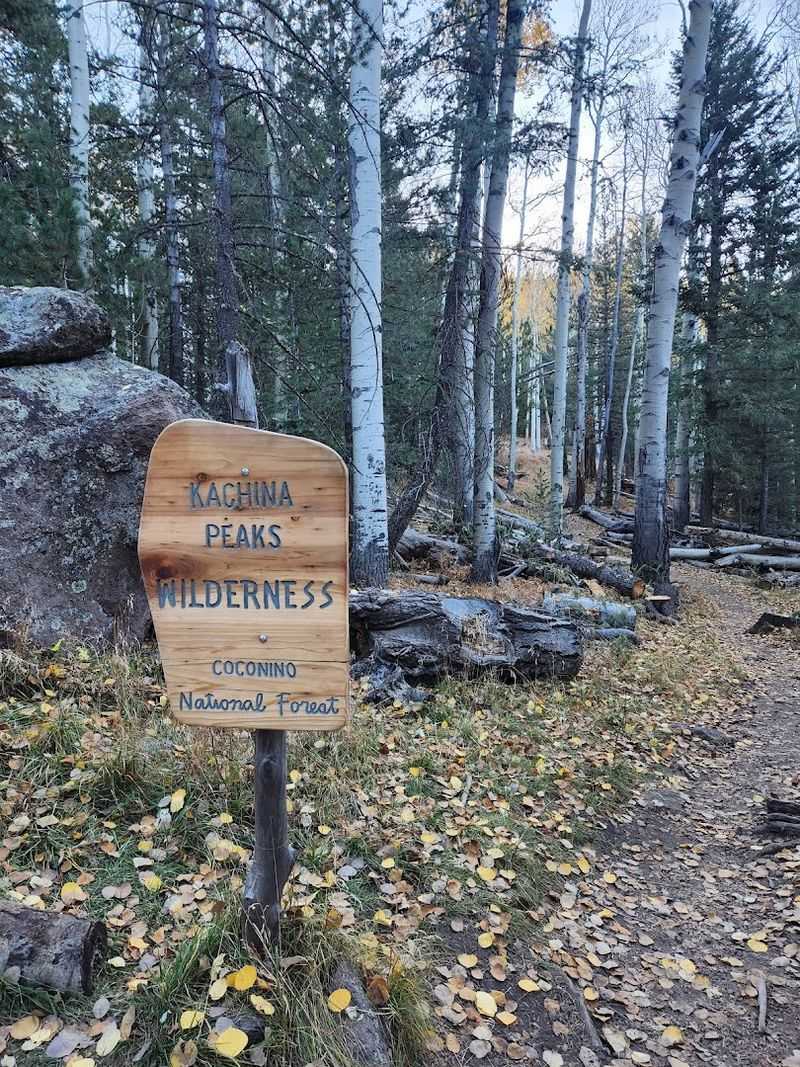
The Kachina Trail is accessible from May through November, with the window on either end depending on snowpack at higher elevations. Fall is the busiest and most visually rewarding season, drawing hikers from across the Southwest specifically for the aspen color display.
Arriving early on fall weekends is genuinely important since the Snowbowl parking area fills up faster than most people expect.
Dogs are welcome on the trail but must remain on a leash at all times. Camping is not allowed in the Inner Basin, and off-trail hiking above 11,400 feet is restricted to protect the San Francisco Peaks Groundsel, a rare plant species found only in this area.
These rules exist for real ecological reasons, so following them is part of being a responsible visitor to this remarkable place.
Cell service is limited once you are up in the peaks, so downloading an offline map before you go is a practical step worth taking. The Kachina Trail rewards those who show up ready, and it gives back everything you bring to it.
Even on cooler days, the elevation can make the sun feel stronger than expected, so carrying more water than you think you need is a smart move. A little preparation goes a long way here, letting you stay focused on the quiet beauty of the trail instead of the basics you wish you had packed.