
The Stunning Underground World Lurking Beneath Rural Washington
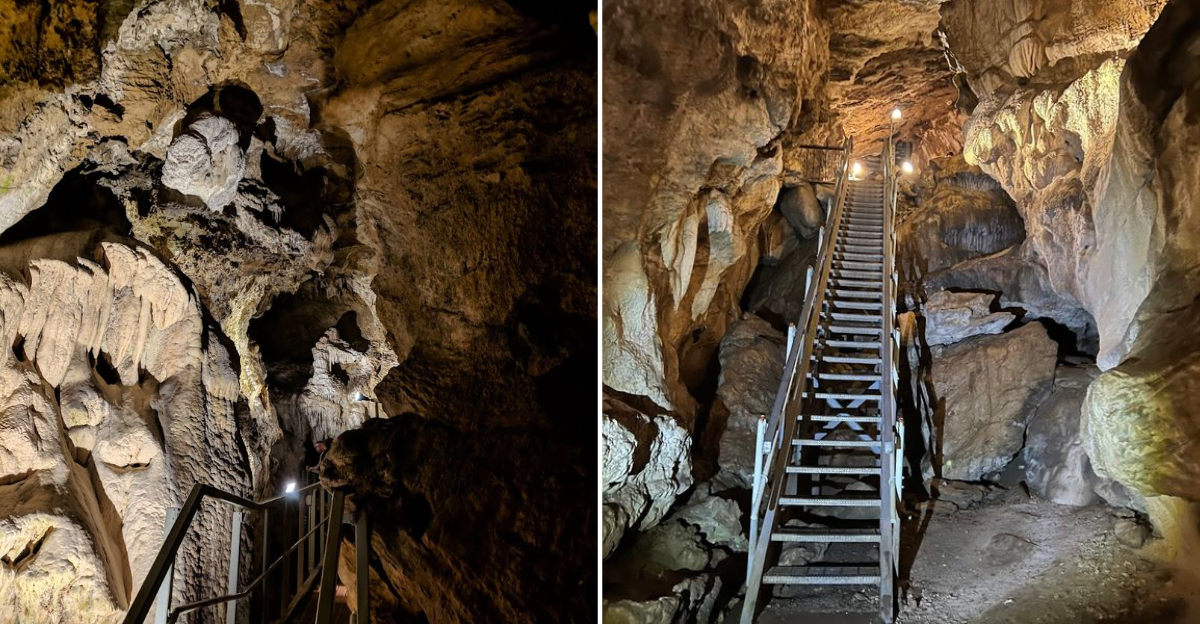
My knees are caked in mud, my breath is a white ghost in front of my face, and I couldn’t be happier. I’ve spent most of my life looking up at the peaks, but I never realized the real magic was happening directly under my boots.
Slipping through these narrow limestone corridors feels like wandering through the belly of a sleeping giant. Everywhere I turn, strange, bulbous rocks hang from the ceiling like melted chandeliers in a haunted ballroom.
It is a jarring, wonderful contrast to the rainy streets and urban bustle of a typical afternoon in Washington, where the ground usually stays politely beneath your feet instead of opening its mouth to swallow you whole.
I’m deep in a subterranean labyrinth now, and the silence is so heavy I can actually hear my pulse.
The Story Behind The Cave’s Name
Back in 1899, a local homesteader named Ed Gardner stumbled upon a remarkable opening in the limestone hillside near Metaline Falls, Washington. Nobody handed him a map or a tour guide. He simply found it, and history quietly took note.
Legend has it that Gardner quickly recognized the cave’s most practical feature: its constant interior temperature of 39 degrees Fahrenheit. That steady chill made it a natural refrigerator, and local stories suggest he used it to store moonshine, keeping his supply perfectly cool year-round without a single electric bill.
In 1921, a man named William Crawford purchased the land and made the generous decision to deed it to Washington State Parks, setting the stage for Crawford State Park to become an official public destination.
That act of generosity is why visitors today get to experience this underground wonder safely and legally. Ed Gardner found it, but Crawford made sure everyone else could enjoy it too.
Washington’s Longest Limestone Cave
Stretching approximately 2,072 feet in length and dropping 295 feet in depth, Gardner Cave holds the title of Washington State’s longest limestone cave. That is nearly four city blocks of underground passage carved by water and time over thousands of years.
Limestone caves form when slightly acidic water slowly dissolves the rock, creating tunnels and chambers that grow larger over incredibly long periods. Gardner Cave sits inside Crawford State Park near Metaline
Falls in northeastern Washington, making it one of the more remote geological treasures in the entire Pacific Northwest.
What makes this cave especially impressive is not just its size but the sheer variety of formations packed inside. Stalactites hang from the ceiling like stone icicles, stalagmites rise from the floor like frozen fountains, and flowstone coats the walls in smooth, rippling sheets.
Rimstone pools add another layer of visual drama. Every corner of this cave seems to show off a different chapter of its geological story.
The Formations That Will Stop You In Your Tracks

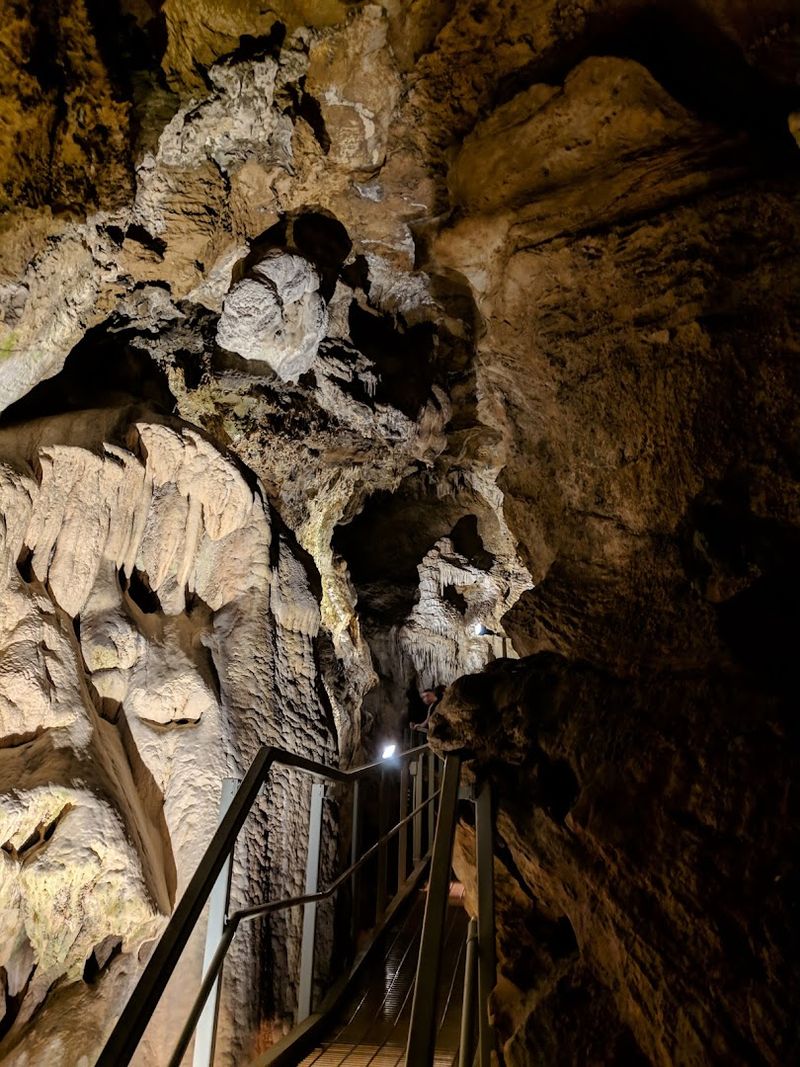
Standing inside Gardner Cave for the first time, I genuinely forgot to keep walking. The ceiling above me was covered in stalactites, each one built drop by drop over thousands of years.
Some were thin and delicate, others thick and ancient-looking, and together they created a ceiling that looked almost architectural.
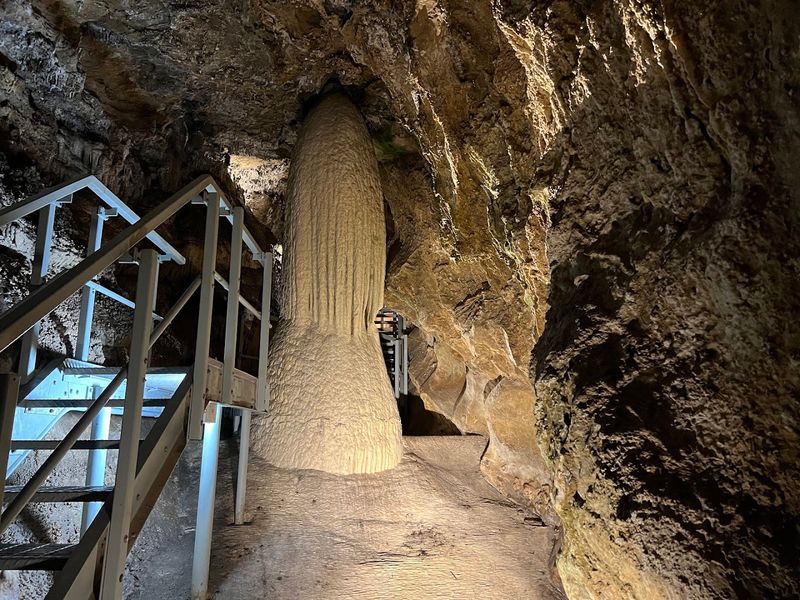
Down on the cave floor, stalagmites rose steadily upward, as if reaching toward their ceiling counterparts. Where stalactites and stalagmites have grown long enough to meet, they form columns, and Gardner Cave has some beautifully developed examples of these.
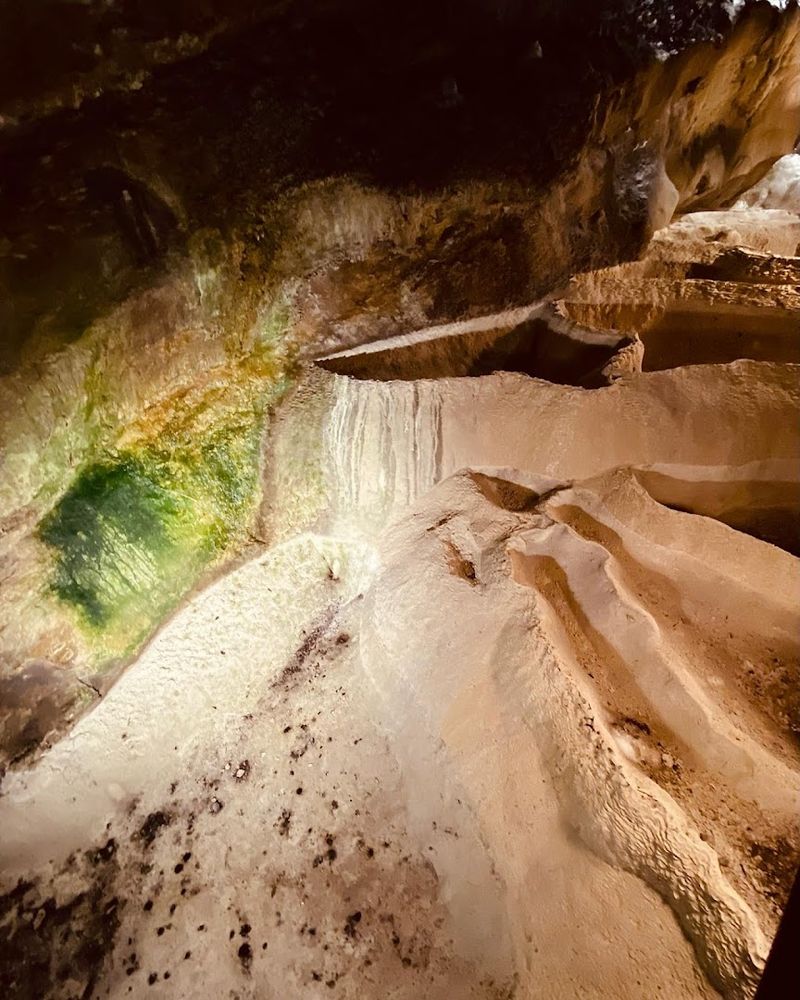
Flowstone covers sections of the walls in smooth, cascading layers that look almost like frozen waterfalls. Then there are the rimstone pools, shallow basins formed by mineral-rich water that deposited calcite along their edges over time.
These small pools sit like natural jewels on the cave floor. Seeing all of these formations together in one space, each created by nothing more than water and dissolved minerals, makes the underground feel genuinely magical rather than just dark.
What To Expect On A Guided Tour
Gardner Cave is not a self-guided experience, and that is honestly one of the best things about visiting. Guided tours run Thursday through Monday at 10:00 a.m., 12:00 p.m., 2:00 p.m., and 4:00 p.m. during the open season, which runs from May 15 through September 15.
Reservations are required and can be made online through Washington State Parks. Before stepping inside, rangers give a quick orientation that covers what you will see and how to move safely through the cave.
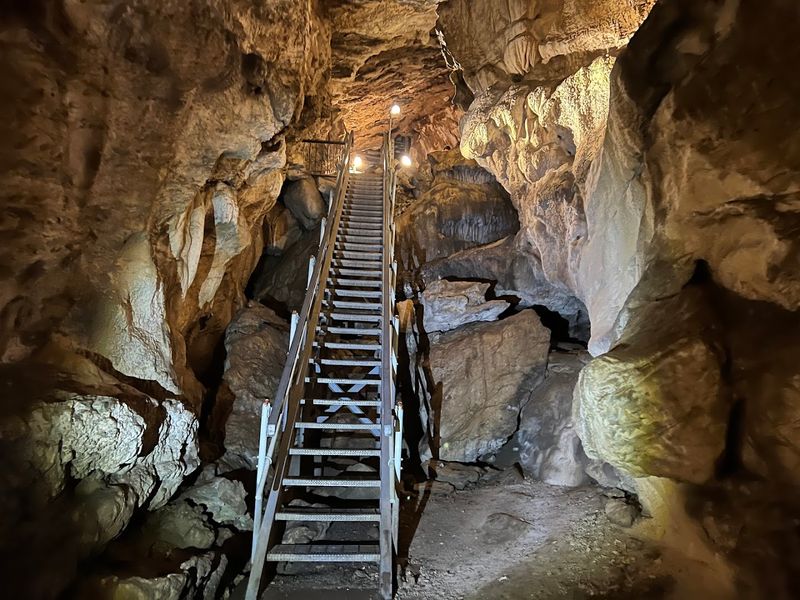
The walk from the parking lot to the cave entrance is a steep 200-yard trail, so wearing comfortable closed-toe shoes is genuinely important rather than just a suggestion. Inside, the tour involves navigating several flights of stairs as you move through different sections of the cave.
The guides share stories about the cave’s history, geology, and the formations you are standing next to. The whole experience lasts long enough to feel satisfying without becoming exhausting. For more information, Crawford State Park can be reached at (509) 446-4065.
Dressing For 39 Degrees Underground
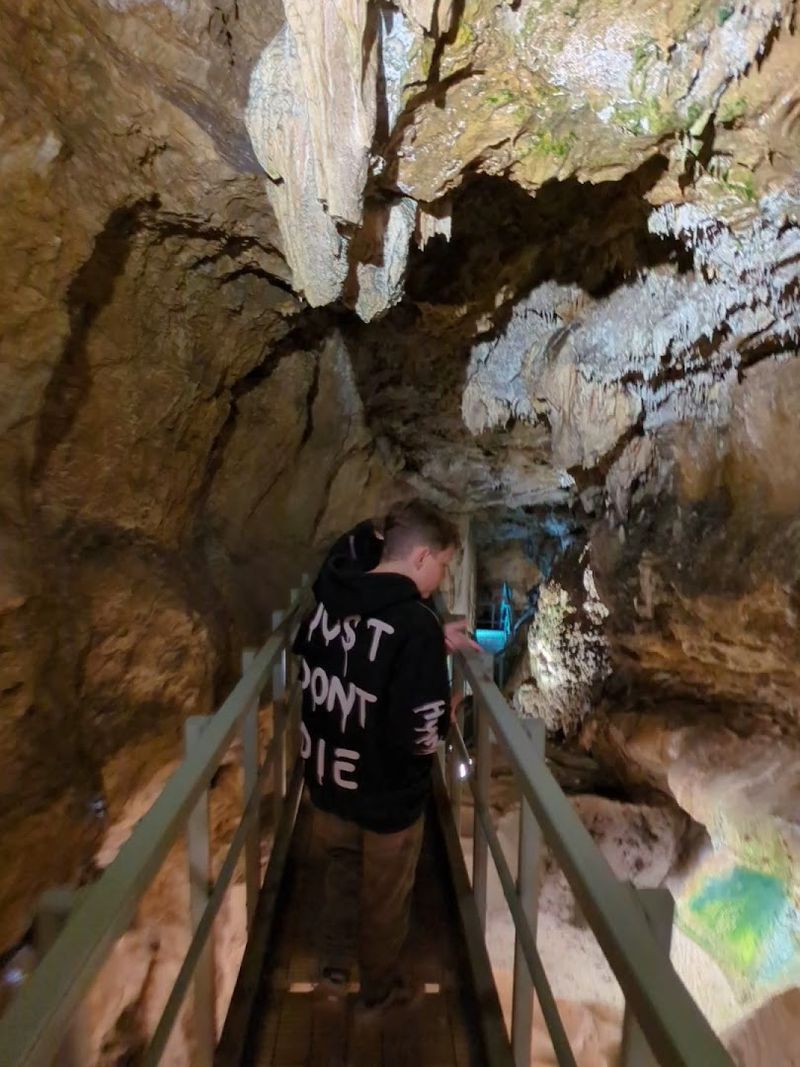
One of the most surprising things about Gardner Cave is stepping out of a warm summer afternoon and immediately feeling the temperature drop the moment you approach the entrance. The cave maintains a constant internal temperature of 39 to 42 degrees Fahrenheit year-round, regardless of what the weather is doing outside.
That consistency is part of what made the cave so useful to Ed Gardner back in the 1800s, but for modern visitors it means one thing: bring a layer. A light jacket or a cozy sweater is all you really need, but skipping it entirely will make the tour feel less enjoyable than it should.
I wore a light fleece on a warm August day and was genuinely glad I had it.
Closed-toe shoes are also strongly recommended because the cave floor can be slick in places, and the stairs inside require steady footing. Comfortable walking shoes or light hiking shoes are ideal.
Sandals and flip-flops belong at the beach, not inside a 39-degree limestone cave where sure footing matters.
Crawford State Park Beyond The Cave
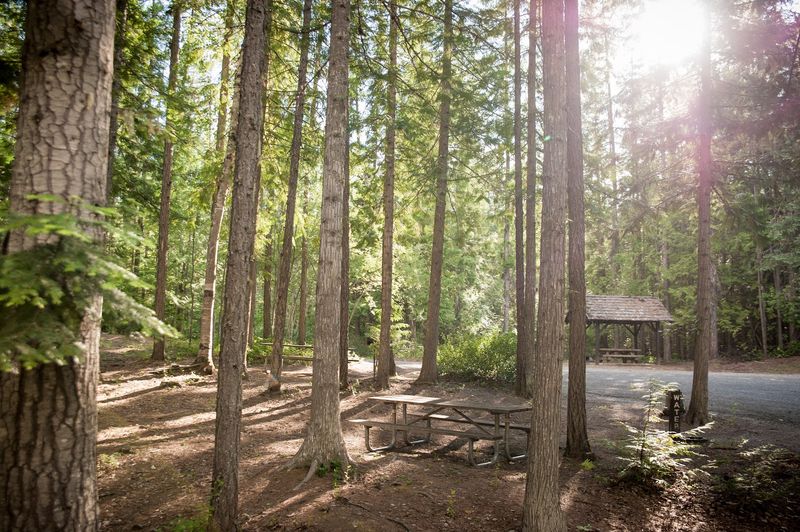
Gardner Cave is the star attraction at Crawford State Park, but the park itself offers a few pleasant extras worth knowing about before you arrive. Above ground, the park has one sheltered picnic table and seven unsheltered picnic tables, all available on a first-come, first-served basis.
Packing a lunch and enjoying the forested surroundings before or after your cave tour is a simple but satisfying way to spend the day.
One of the more surprising features of the park is a short walking trail that leads directly to the Canadian border, just north of the park boundary. Standing at an international border surrounded by quiet Pacific Northwest forest feels oddly peaceful and a little surreal at the same time.
The park is open seasonally, running from May 15 through September 15, which matches the cave tour schedule perfectly. Plan your visit within that window and you get the full experience.
Crawford State Park is located near Metaline Falls in Pend Oreille County, northeastern Washington, making it a worthwhile destination in a beautifully undervisited corner of the state.
Planning Your Visit To Metaline Falls
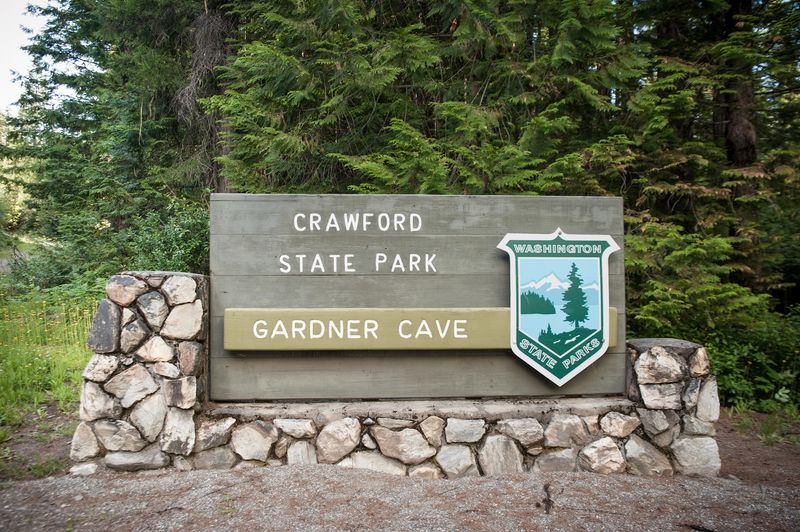
Metaline Falls is not the kind of place you pass through accidentally. Sitting in the far northeastern corner of Washington State, this small town requires a deliberate decision to visit, and that sense of remoteness is a big part of its charm.
The drive through Pend Oreille County is genuinely scenic, with forested ridgelines and river views keeping you company the whole way. Crawford State Park, home to Gardner Cave, is located just north of Metaline Falls off Highway 31.
The nearest larger city is Spokane, roughly 90 miles to the south, so most visitors treat this as a day trip or pair it with an overnight stay in the area. Booking cave tour reservations online before you leave home is strongly advised since spots fill up quickly during the summer season.
The combination of a quiet rural setting, fascinating geology, and a cave that genuinely rewards the effort of getting there makes Gardner Cave one of those Pacific Northwest experiences that stays with you long after you have driven back home.
The Wildlife That Calls The Cave Home
Most visitors come to Gardner Cave for the stalactites and stalagmites, but there are quiet residents living here year-round that rarely make the brochures. Bats have claimed the cave as their own, tucking themselves into crevices and ceiling cracks where the temperature stays perfectly stable.
Several species use the cave for hibernation during the colder months, making it a critical winter refuge in the region.
Rangers take bat protection seriously here. Visitors are asked to stay on the path and avoid disturbing the walls for good reason. White-nose syndrome, a deadly fungal disease, has devastated bat populations across North America, and every precaution helps.
Sharing space with these tiny cave-dwellers makes the tour feel genuinely wild. Some tours even include a quick reminder that the cave is more than a rock formation, it is a living habitat with a delicate balance that depends on careful human behavior.
Knowing these bats are quietly resting just overhead adds an extra layer of wonder to the experience, turning an ordinary cave walk into something far more memorable. It is one of those rare places where geology and wildlife share the spotlight in the most unexpected way.