
The Stunning Views At This Tucked-Away Bridge In Arkansas Will Captivate You
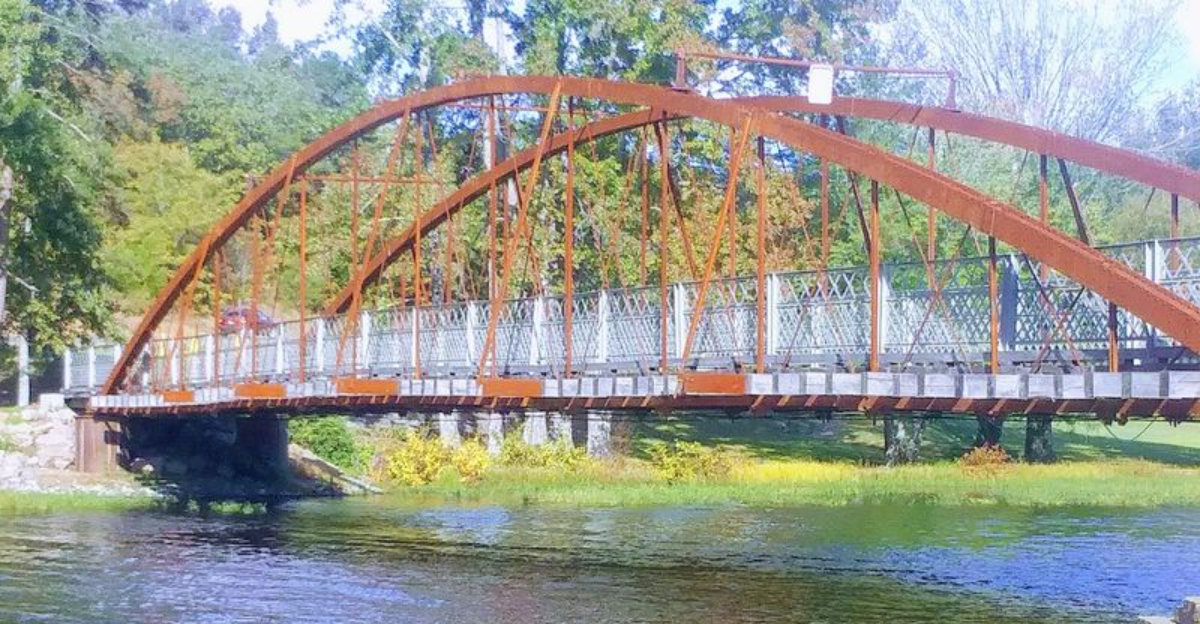
At first, it feels like just another walking path, then the bridge appears and shifts everything. Curved iron, strong lines, and a presence that feels older than anything nearby.
It pulls your attention right away. This structure carries more than 150 years of Arkansas history, and you can sense it with every step across.
It is not flashy, yet it lingers. Carefully relocated and restored, this rare 1870s bowstring arch found a second life in a setting that gives it space to stand out.
Water sits quietly beneath it, catching reflections that make you pause without thinking. You might plan to keep going, but something makes you slow down.
Just for a moment. Then another.
Never heard of it before. That is part of what makes it work.
These facts will stay with you and might just turn into a reason to see it for yourself.
Hidden 1870s Iron Span With Rare Bowstring Arch Design
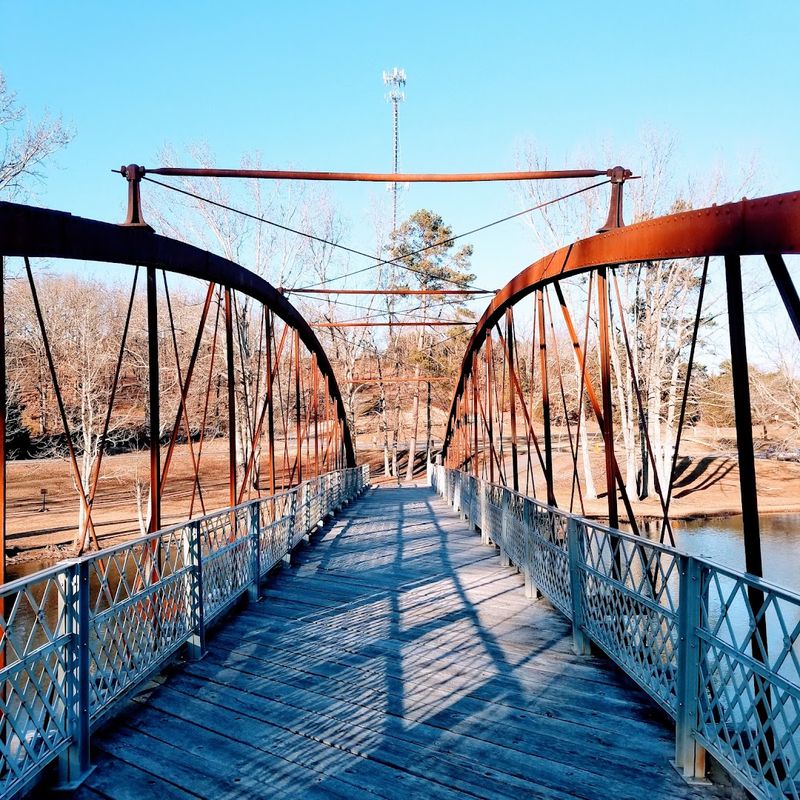
Most bridges fade into the background, but this one stops you in your tracks the moment you see that graceful iron curve rising above the water.
Built between 1871 and 1874, this bridge is the only remaining iron bowstring arch bridge in the entire state of Arkansas, making it a one-of-a-kind structure that bridge enthusiasts and casual visitors alike find genuinely jaw-dropping.
The tubular bowstring truss design was a pioneering innovation in metal bridge construction during the late 19th century, and engineer Zenas King pushed the boundaries of what was possible at the time.
Cast-iron and wrought-iron components work together to form the arch, and standing beneath it gives you a real sense of how ambitious this design was for its era.
The bridge stretches 146 feet in length and sits on stone abutments that have watched decades roll by without complaint.
Seeing it for the first time feels a little like stumbling onto a piece of living history that most people have never had the chance to encounter, and that surprise is exactly what makes it so rewarding to visit. It currently resides at the Springfield–Des Arc Bridge, Beaverfork Lake Park, 20 Kinley Dr., Conway, AR 72032.
Originally Carried Wagon Traffic Across A Bustling Creek Crossing
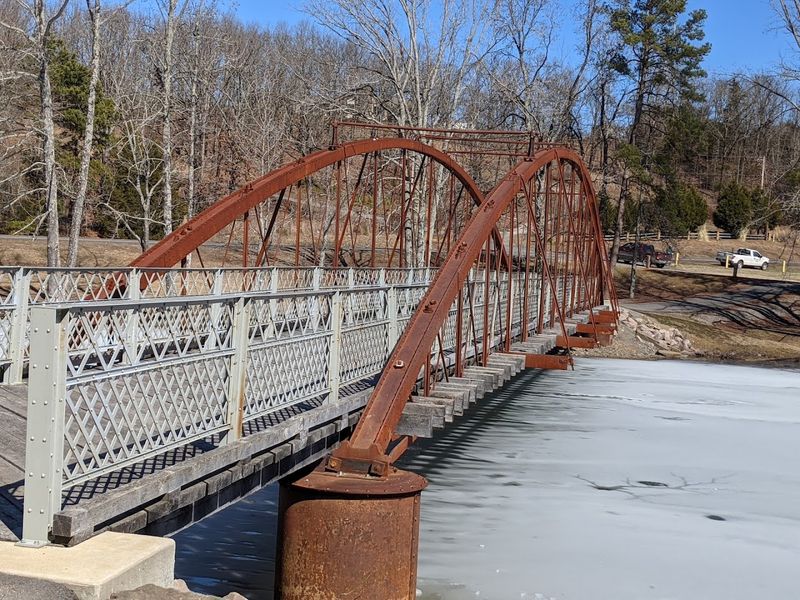
Long before cars and paved highways, this bridge was doing serious work as a key crossing point over Cadron Creek in rural Faulkner County, Arkansas.
Wagon teams loaded with goods, families heading to town, and travelers moving through central Arkansas all relied on this iron span to get safely across the creek without losing cargo to the current below.
That kind of daily use over many decades means the bridge absorbed a remarkable amount of local life, and in a way, it became woven into the rhythm of the communities that surrounded it.
When a concrete and steel replacement bridge was built in 1989, the old iron span was bypassed and left standing quietly beside the new road, no longer carrying traffic but still standing tall.
Rather than let it deteriorate into obscurity, preservationists recognized its value and began working on a plan to give it a future worth having.
It is genuinely moving to think about how many thousands of people once crossed this bridge without giving it a second thought, and how that same bridge now draws visitors who travel specifically just to stand on it and take it all in.
Carefully Relocated To A Quiet Lakeside Park Setting
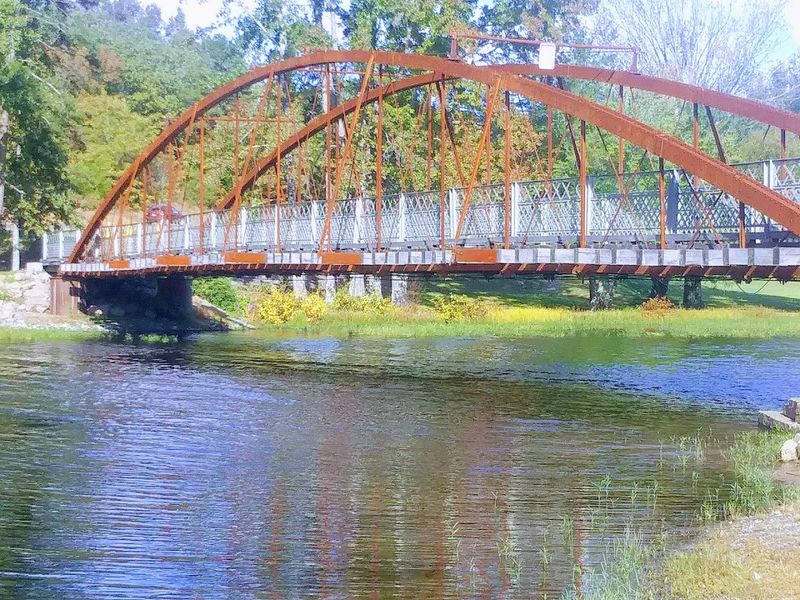
Moving a 188-foot iron bridge from one county to another is not exactly a weekend project, but that is precisely what happened in late 2016 when preservationists dismantled the structure and transported it to its new home.
The bridge was carefully reassembled at Beaverfork Lake Park near Conway, Arkansas, where it now serves as a pedestrian crossing over the lake rather than a vehicle crossing over a creek.
The decision to place it in a public park was a smart one, because it means the bridge is now accessible to anyone who wants to walk across it, photograph it, or simply sit nearby and enjoy the surroundings.
Families with children, photographers hunting for striking compositions, and history lovers all find something to appreciate here, which keeps the park feeling lively and welcoming throughout the year.
The relocation process was completed around 2017, and the park setting genuinely suits the bridge in a way that feels natural rather than forced.
There is something quietly triumphant about the fact that a structure once threatened by neglect and vandalism now stands in a well-maintained public space where people actively seek it out and celebrate its survival.
Weathered Steel Frame Preserved Through Restoration Efforts
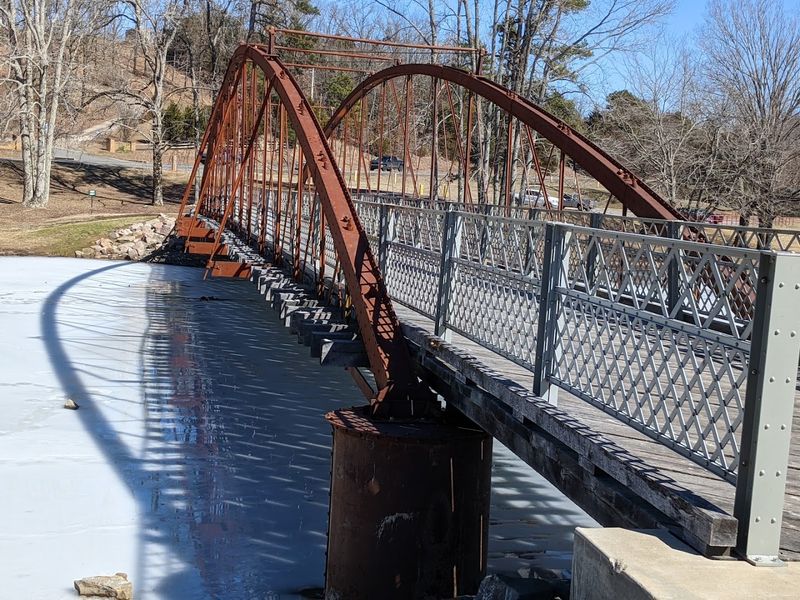
One of the first questions visitors ask when they see the bridge is why it looks so weathered, and the answer turns out to be more interesting than you might expect.
The bridge is constructed from wrought iron, a historic material that develops a surface patina over time that reflects its age without necessarily indicating structural weakness.
That textured, reddish-brown surface is part of what gives the structure its unmistakable character and visual depth.
Restoration efforts focused on stabilizing the structure, reinforcing connections, and making sure the bridge was safe for pedestrian use without stripping away the character that makes it visually compelling.
The National Register of Historic Places recognized the bridge’s significance back in 1988, which helped build the case for investing in its long-term preservation rather than simply letting it fall apart.
Crossing it today, you can run your hand along the iron railing and feel the texture of more than 150 years of Arkansas weather, and that tactile connection to the past is something no museum replica could ever replicate quite as honestly.
Subtle Structural Asymmetry From A Historic Measurement Error
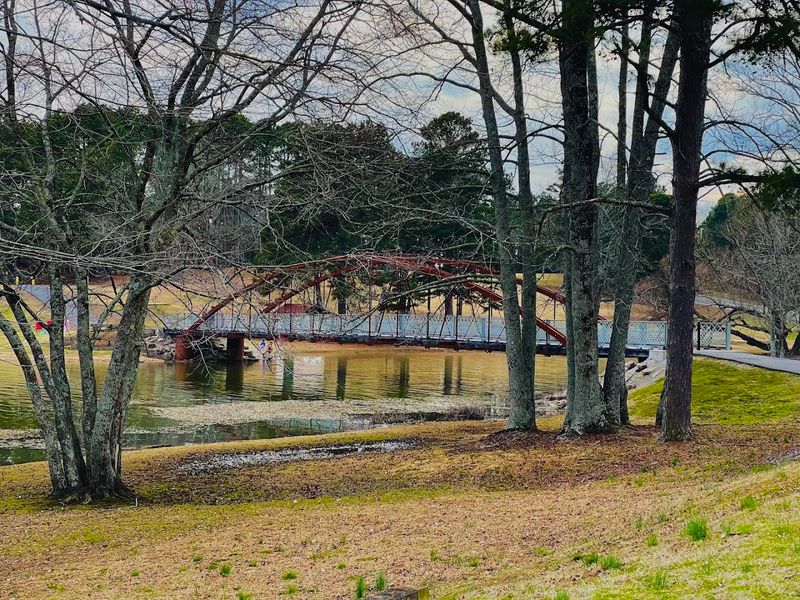
Here is a detail that many visitors walk right past without realizing it, and once you notice it, the bridge takes on a slightly different character.
The Springfield–Des Arc Bridge features small irregularities in its construction that reflect the realities of 19th-century engineering, where field adjustments were sometimes made during assembly.
Rather than undermining the structure, these minor variations highlight the hands-on craftsmanship involved in building iron bridges during that era.
Construction in rural Arkansas during the 1870s did not include modern surveying tools or instant communication, so builders often adapted as they worked.
The result is a structure that carries a sense of human touch within its iron frame, which feels fitting for something that served everyday travel for generations.
Noticing these subtle differences can turn a simple walk across the bridge into a more thoughtful experience that adds another layer to its story.
Reflections On Still Water Create Striking Mirror Views
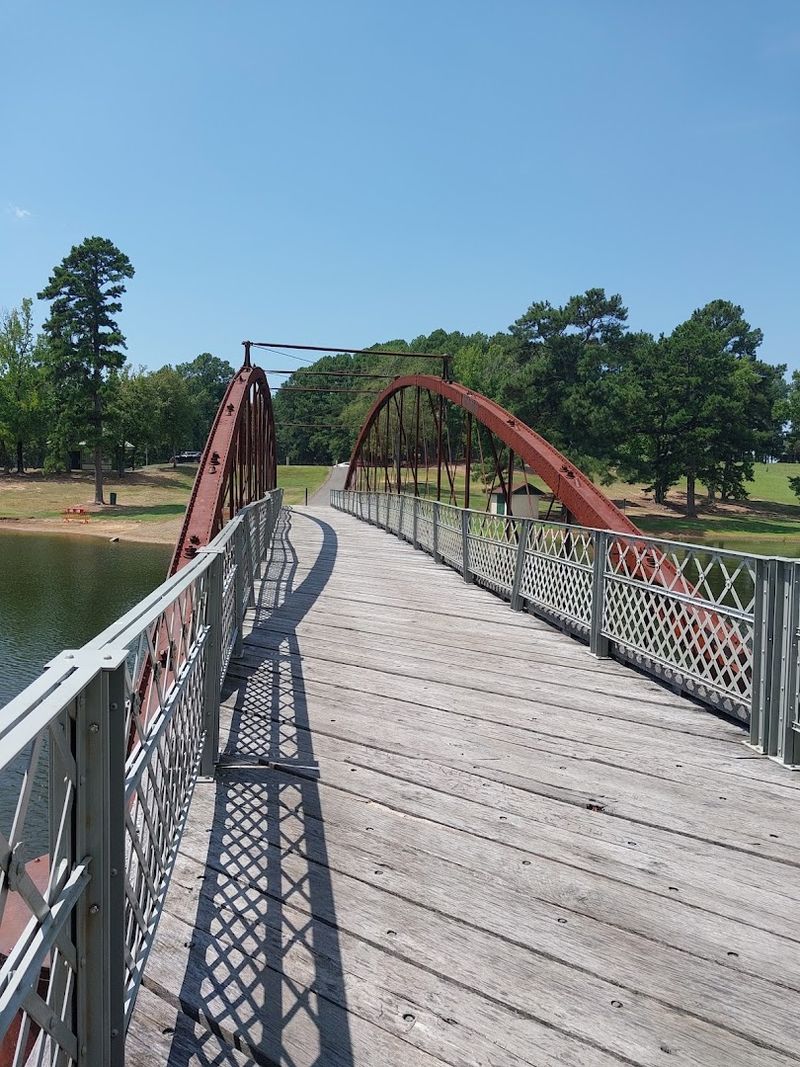
On calm mornings when the lake surface sits completely undisturbed, the bridge produces a reflection so clear and complete that the water seems to hold an entire second bridge beneath it.
That mirror image effect turns what is already a visually striking structure into something that feels almost surreal, and photographers who time their visits for early morning or late afternoon consistently come away with images that are hard to believe were taken at a public park.
The bowstring arch shape is particularly well-suited to this kind of reflection because the curve of the iron arch meets its mirrored twin to form a perfect oval framing the sky above and the water below.
Visitors who have reviewed the spot repeatedly mention how the light shifts throughout the day and how each visit produces a slightly different version of the same scene, which is part of what keeps people coming back.
Sunrise visits are especially rewarding, with soft pink and orange tones washing across the iron frame and rippling gently across the lake in long, warm streaks.
Bringing a camera or even just a phone with a decent lens to this spot is one of those travel decisions that pays off instantly, because the reflection views here are genuinely the kind that earn double-takes from anyone who sees the photos afterward.
Easy Walking Access Along Scenic Shoreline Trails
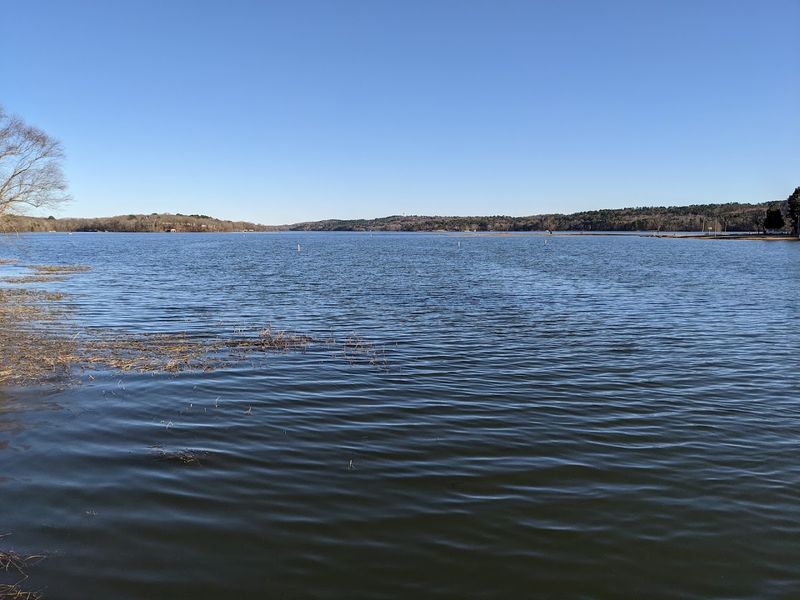
Getting to the bridge requires absolutely no special gear, no trail map, and no serious hiking experience, which is genuinely good news for anyone who wants to enjoy it without a lot of preparation.
Beaverfork Lake Park offers paved paths and well-maintained shoreline trails that lead directly to the bridge, making it accessible for walkers, joggers, cyclists, skateboarders, and families pushing strollers without any difficulty.
Parking is plentiful and conveniently located near the trailhead, so the transition from car to lakeside stroll happens quickly and without the frustration that can sometimes accompany visits to more remote historic sites.
The walk along the shoreline before reaching the bridge is pleasant in its own right, with views across the lake and plenty of spots to pause, breathe in the fresh air, and appreciate the setting before the bridge even comes into view.
Restrooms are available nearby, which is a small but genuinely appreciated detail when you are visiting with kids or planning to spend a longer stretch of time exploring the park.
The whole experience from parking to standing on the bridge tends to take less than ten minutes at a relaxed pace, making this one of those rare historic sites where the barrier to entry is refreshingly low and the reward is immediately high.
Peaceful Atmosphere Far From Crowded Tourist Landmarks
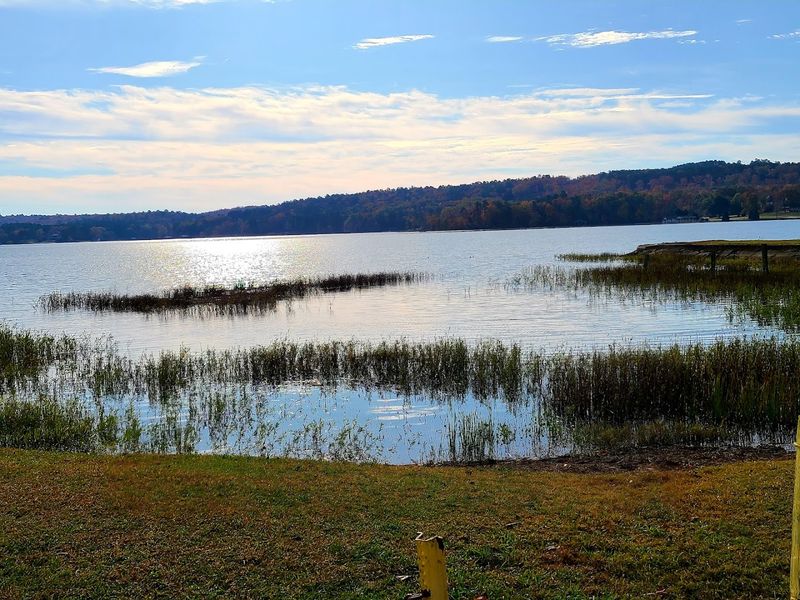
There is a particular kind of quiet that settles over this spot on a weekday morning, the kind where you can hear birds moving through the trees and water lapping softly against the bank without any competing noise.
Unlike heavily promoted tourist attractions that come with gift shops, long lines, and parking lot traffic, this bridge sits in a community park where the pace is unhurried and the atmosphere feels genuinely relaxed and unpretentious.
Regulars at the park come to fish, walk their dogs, let kids run toward the playground, or simply sit on a bench and watch the ducks drift across the water, and the bridge fits naturally into that easygoing backdrop.
Many people appreciate the spot not just for the historic structure itself but for the overall feeling of the place, often describing it as a peaceful retreat that does not feel like it is trying too hard to impress anyone.
That low-key quality is part of what makes the bridge such a satisfying find, because discovering it feels personal rather than packaged.
Arriving here on a golden fall afternoon with the hunter’s moon rising and fish jumping near the bank creates the kind of travel memory that stays with you long after the drive home is done.