
This Hidden Florida Museum Lets You Step Inside America’s Wild Underwater Past

Think of Ariel in The Little Mermaid, floating through a sunken ship, suddenly surrounded by human secrets. Now swap fiction for reality and you get this museum in Panama City Beach, Florida.
No crowds, no beach noise. Just a deep dive into how far humans have gone to survive underwater. Clunky early diving suits that look like sci-fi props.
Real Navy equipment used in ocean missions. Strange, fascinating inventions built for one goal: go deeper, stay longer, push limits.
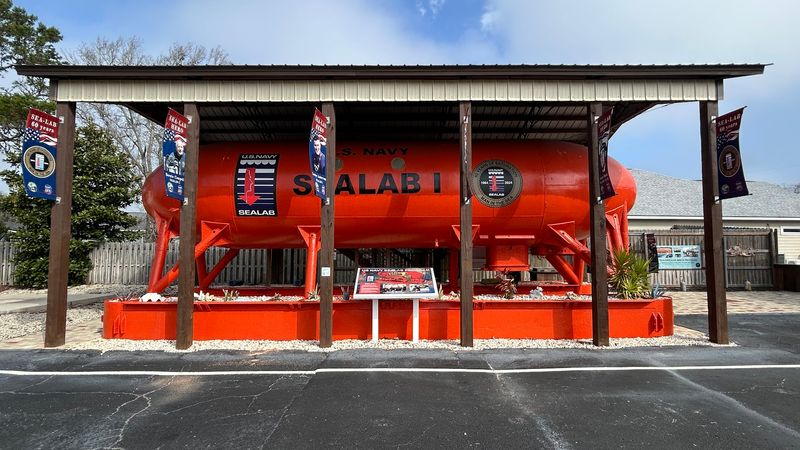
Then it hits you, you’re standing next to a full underwater habitat people actually lived in. This place doesn’t feel like a museum.
It feels like a time capsule from another world. Part science, part adventure, part “how is this real?” If the ocean ever felt mysterious, this is where it gets personal.
The Museum That Built A Legacy
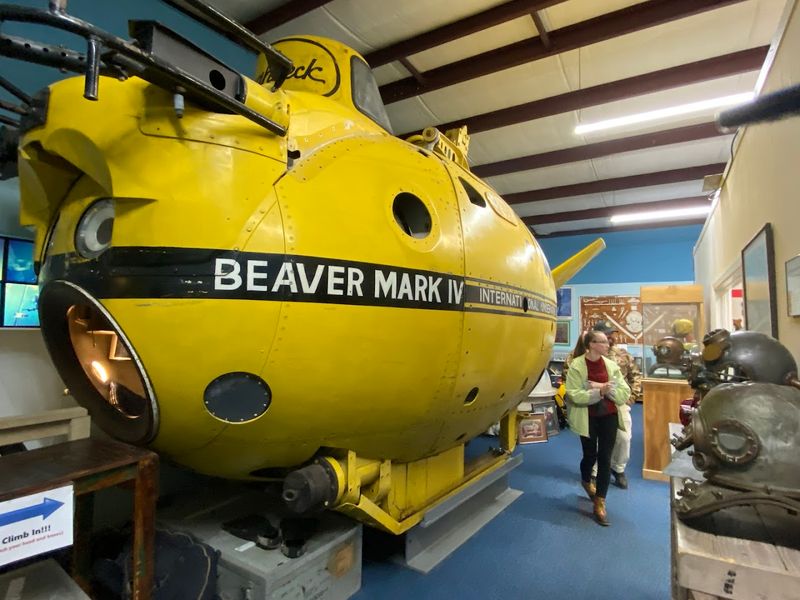
Not every great museum announces itself with a flashy sign or a massive parking lot. The Man in the Sea Museum quietly sits along the stretch of Panama City Beach Parkway, and it has been quietly blowing minds for decades.
Founded in 1982, this museum was created to preserve the history of undersea exploration and the technology that made it possible.
The collection grew out of the work done by the Institute of Diving, which recognized that the tools and stories of deep-sea exploration were in danger of being lost forever.
So they gathered everything they could, from antique diving helmets to full-size underwater habitats, and put it all under one roof. The result is a museum that feels more like a treasure chest than a typical exhibit hall.
What hits you first is how unexpected the whole place is. You might walk in expecting a few old helmets behind glass, and instead you find yourself face to face with a massive pressurized chamber that once helped divers survive at crushing ocean depths.
The exhibits cover centuries of human ambition, risk, and curiosity about what lives beneath the waves. Every corner of this museum holds something that makes you rethink what humans are capable of.
If you have ever underestimated the power of a small museum, this is the place that will permanently change your mind.
Finding It On The Map
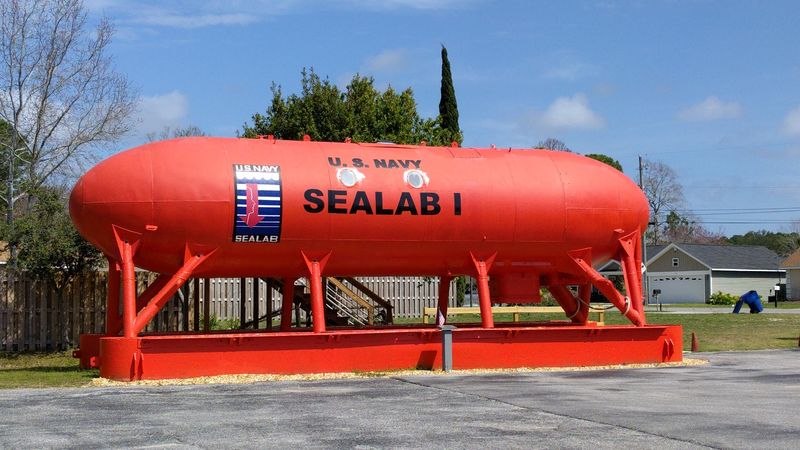
Getting to the Man in the Sea Museum is surprisingly straightforward once you know where to look. The museum is located at 17314 Panama City Beach Pkwy, Panama City Beach, FL 32413, sitting right along one of the main corridors of this beloved beach town.
It is easy to pass it without a second glance if you are not paying attention, but that would be a serious mistake.
Panama City Beach is famous for its sugar-white sand and emerald green water, but the Man in the Sea Museum adds a completely different dimension to a visit here. It is the kind of stop that transforms a beach vacation into something with real depth, pun very much intended.
The location makes it convenient to pair with a day at the beach, since you are already in the neighborhood.
Parking is easy, the entrance fee is refreshingly affordable, and the experience inside is worth far more than the ticket price suggests.
The museum is open Tuesday through Saturday, so planning ahead is a smart move. It is also a great option for those days when the weather is not cooperating with your beach plans.
Rain or shine, the stories held inside this building are always worth exploring. Sometimes the most memorable part of a trip is the place you almost skipped, and this museum fits that description perfectly.
Ancient Diving Gear That Will Make Your Jaw Drop
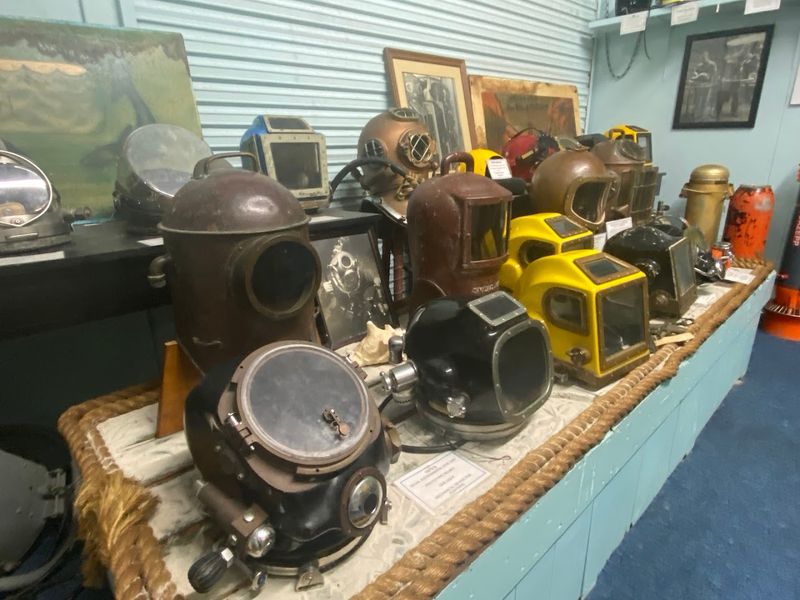
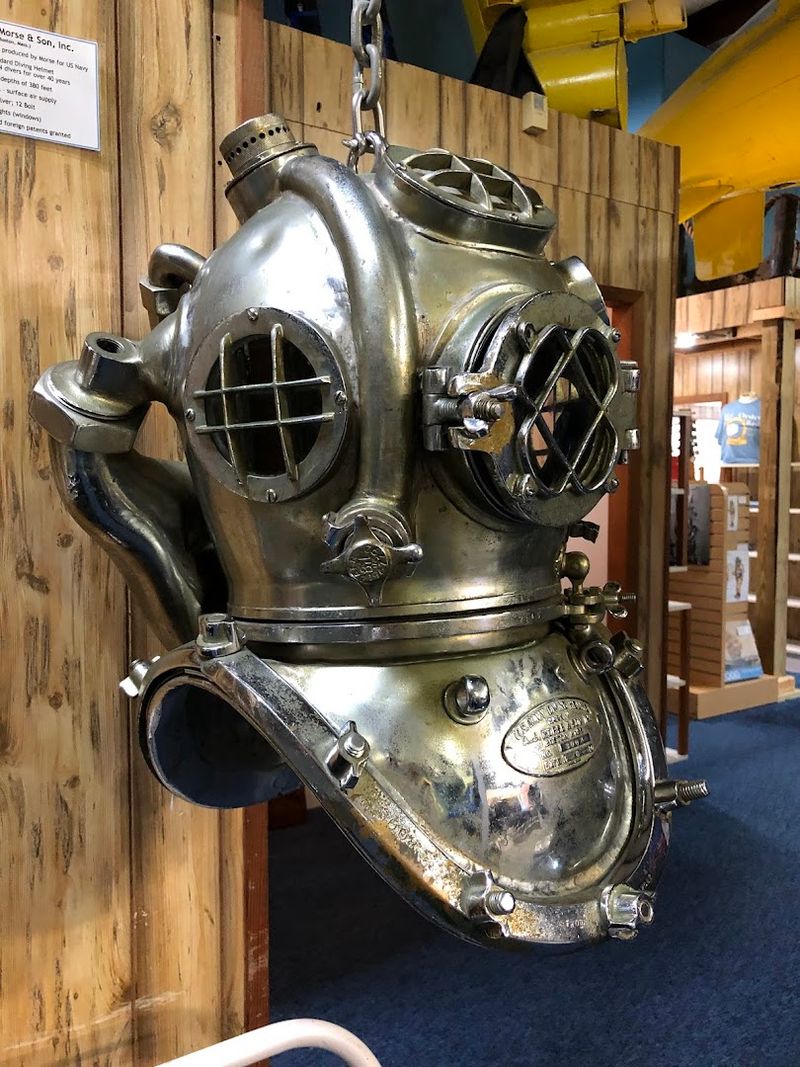
Imagine strapping yourself into a copper helmet that weighs more than a small child, pulling on a rubber suit that has zero flexibility, and then jumping into the ocean.
That was the reality of early diving, and the Man in the Sea Museum has the actual gear to prove it. The collection of antique diving equipment here is genuinely jaw-dropping in the most delightful way.
Early diving suits were called standard dress or hard hat diving gear, and they look exactly like what a steampunk inventor would dream up on a creative afternoon.
The helmets are made of heavy copper and brass, bolted onto a corselet that sits on the diver’s shoulders. Air was pumped down through a hose from the surface, and the diver had very little freedom of movement.
It was dangerous, physically demanding, and somehow people did it anyway.
The museum displays these suits in a way that lets you really appreciate both the engineering and the sheer courage involved.
Standing next to one of these helmets, you get a sense of just how determined early divers were to explore a world that was never designed for human visitors.
The craftsmanship on some of these pieces is extraordinary, with intricate valves and fittings that were made entirely by hand. History and engineering meet in the most visually striking way imaginable right here in this exhibit.
The Navy Diving Legacy On Full Display
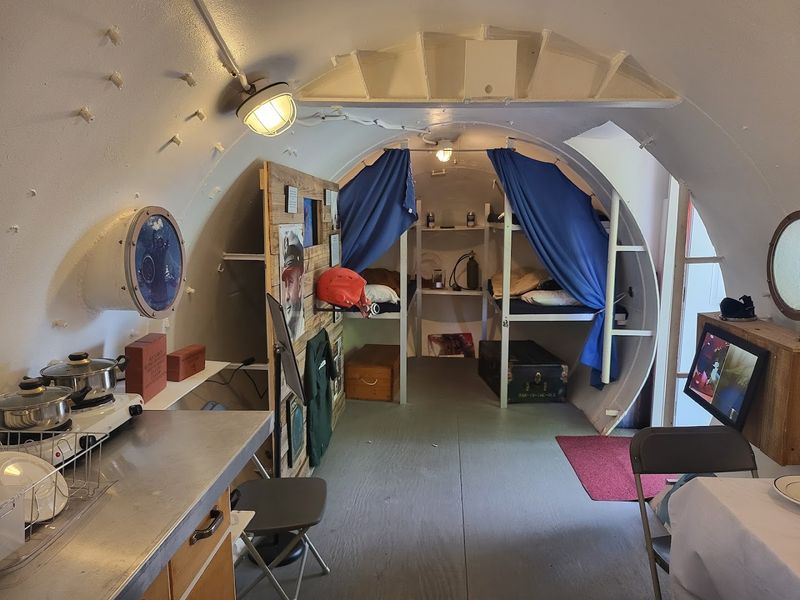
The U.S. Navy has one of the most storied histories in underwater exploration, and the Man in the Sea Museum gives that legacy the spotlight it deserves.
Navy divers have been operating in extreme underwater environments for well over a century, and the equipment and missions documented here read like the greatest adventure stories you have never heard. These were not casual swims.
These were high-stakes operations at serious depths.
Navy divers were responsible for salvage operations, ship repairs, mine clearance, and classified missions that often pushed the limits of what human bodies could survive underwater.
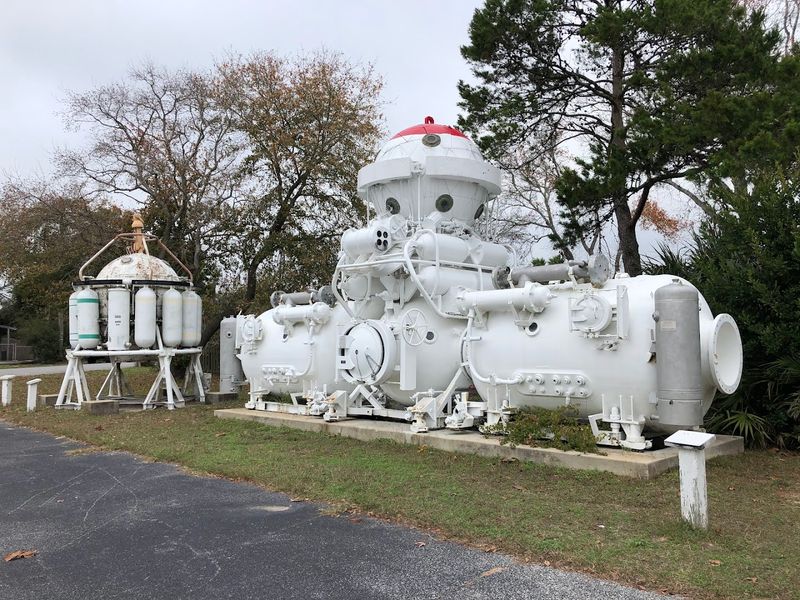
The museum displays actual Navy diving gear, decompression chambers, and related equipment that bring these stories to life in a powerful way. The decompression chamber alone is a fascinating piece of engineering history.
Decompression sickness, also known as the bends, was one of the most dangerous risks facing early divers. If a diver ascended too quickly after spending time at depth, nitrogen bubbles could form in the bloodstream with devastating consequences.
Decompression chambers allowed divers to safely return to surface pressure in a controlled environment. Seeing one up close makes you appreciate just how much science and courage went into every single Navy dive.
The military’s investment in underwater technology shaped not just naval history but the entire field of commercial and recreational diving as we know it.
Saturation Diving And The Science Of Surviving The Deep
Saturation diving sounds like something from a superhero origin story, but it is a real and highly specialized form of commercial and military diving.
The Man in the Sea Museum has one of the most comprehensive displays on saturation diving you will find anywhere, and it is genuinely fascinating once you understand what the whole process involves. The basic idea is that divers live under pressure equal to their working depth, which means they only have to decompress once at the end of a job.
This approach makes long underwater jobs far more efficient. Instead of decompressing after every shift and losing hours to the process, saturation divers can work for days or even weeks without ever returning to surface pressure.
They live in a pressurized habitat on the surface or on a ship, and they travel to and from the work site in a pressurized diving bell. It is an extraordinary logistical operation.
The gas mixture that saturation divers breathe is another wild part of the story. At extreme depths, regular air becomes toxic, so divers breathe a special mix of helium and oxygen called heliox.
One interesting side effect is that helium makes voices sound high-pitched and cartoonish, which is a detail that somehow makes the whole thing feel even more surreal.
The museum explains all of this clearly and with enough detail to leave you genuinely in awe of the people who do this work.
The Submersibles That Opened The Ocean Floor
There is something almost poetic about a machine built to carry humans into one of the most alien environments on Earth.
The Man in the Sea Museum features exhibits on submersibles, those small, pressurized vessels designed to carry people or equipment to depths far beyond what any diver could survive. These machines opened the ocean floor to human observation in a way that was simply not possible before.
Early submersibles were basic by modern standards, but they were engineering marvels for their time. The pressure at great ocean depths is crushing, so every component of a submersible had to be designed to withstand forces that would collapse ordinary materials instantly.
The thick porthole windows, the reinforced hulls, and the life support systems all represent decades of trial, error, and refinement. Looking at these vessels, you get a real sense of how much engineering ambition went into making them work.
Famous submersibles like the Alvin, operated by the Woods Hole Oceanographic Institution, helped discover hydrothermal vents and surveyed the wreck of the Titanic.
The Man in the Sea Museum connects visitors to this broader history of deep-sea exploration through its exhibits on submersible technology. It is the kind of context that makes you realize how much of the ocean is still unexplored and how many discoveries are still waiting to be made beneath the surface.
This Museum Deserves A Spot on Your Florida Bucket List
Florida has no shortage of things to see and do, from theme parks to nature preserves to some of the most beautiful beaches in the world. But the Man in the Sea Museum occupies a completely unique space in that lineup.
There is nowhere else in the state, and arguably in the country, where you can get this specific combination of maritime history, underwater science, and hands-on exploration all in one place.
The museum is small enough to feel personal and big enough to fill a solid few hours with genuine wonder. Every exhibit rewards close attention, and the overall experience leaves you with a much deeper understanding of how humans have pushed into one of the planet’s last great frontiers.
It is the kind of place that sparks real curiosity, the type that follows you home and sends you down research rabbit holes for days afterward.
Panama City Beach is already a destination worth visiting for its natural beauty alone, but adding the Man in the Sea Museum to your itinerary gives the whole trip an extra layer of meaning.
History and adventure are baked into every display, every artifact, and every story told within these walls. So the next time you are planning a Florida trip and wondering what to do beyond the beach, ask yourself this: when was the last time a museum genuinely surprised you?
Because this one absolutely will.