
This Underwater Ghost Town In Arkansas Is A Must-See Experience
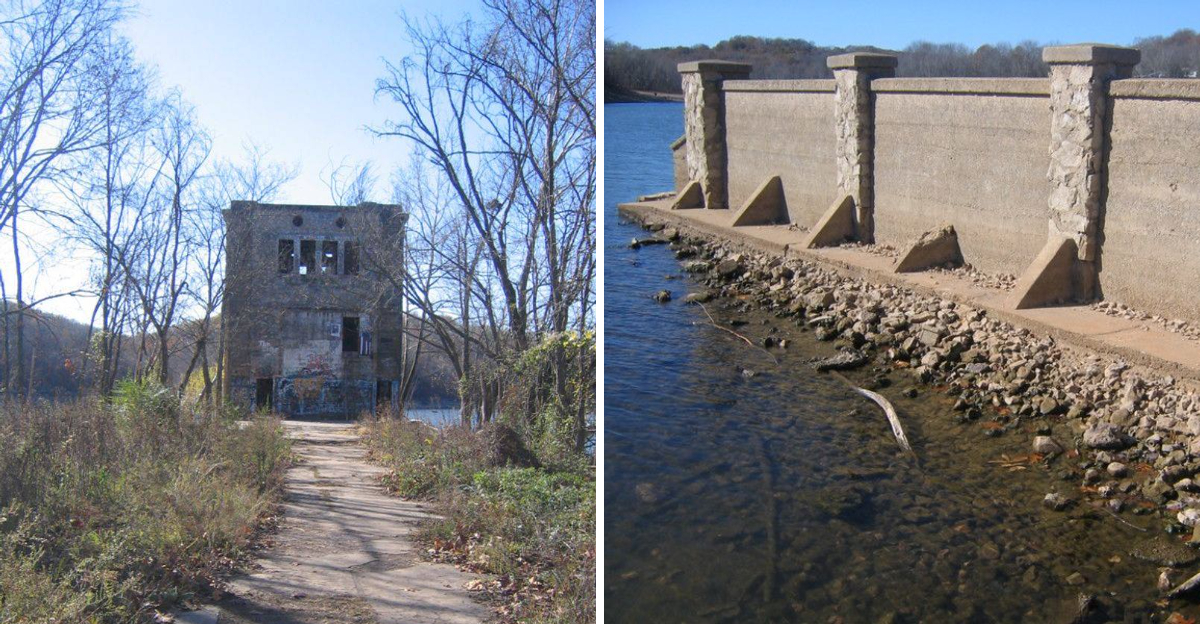
There’s a place beneath Beaver Lake where a resort town still lingers, just out of reach. I didn’t believe it at first.
It sounded like one of those stories people pass around for fun. Then I saw it.
Concrete rising out of calm water, quiet and a little unsettling. No movement, no sound, just a reminder of what used to be there.
This wasn’t small either. It had grand hotels, boat rides, and a vision that aimed far beyond its time.
The man behind it dreamed big, maybe too big. Standing near the edge, I kept imagining the past layered over the present.
People walking, talking, living. Now it’s all beneath the surface, hidden in plain sight.
Arkansas holds stories you don’t expect, and this one sticks with you long after you leave. If places that blur past and present catch your attention, this is one you’ll want to explore further.
Origins Of A Visionary Lakeside Resort
Few people in American history dreamed bigger than William Hope Harvey, the man behind one of the most ambitious resort projects the Ozarks had ever seen.
Harvey was already a well-known financial writer and political figure by the time he set his sights on a quiet valley near Rogers, Arkansas, around 1901.
He envisioned a full-scale health and leisure destination, complete with hotels, a golf course, tennis courts, and what would become the first indoor swimming pool in the entire state.
What made his plan stand out was not just the amenities but the theatrical flair woven into every detail, including imported Italian gondolas that ferried guests across a scenic lagoon to reach the resort entrance.
Harvey believed the natural springs and mountain air of the Ozarks had genuine healing properties, and he marketed that idea aggressively to attract visitors from across the country.
He named the place Monte Ne, a blend of Spanish and Native American words roughly meaning “mountain water,” a name that perfectly captured his poetic vision for the land.
Standing at the edge of Beaver Lake today, near Rogers, Arkansas, it is almost impossible not to feel the ghost of that original dream still hovering just below the surface of Monte Ne, Arkansas.
Rise Of Grand Hotels And Leisure Culture
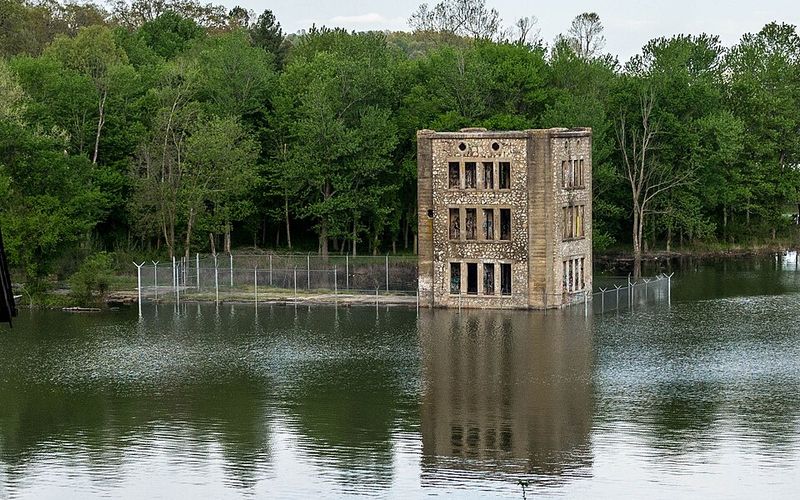
When the hotels finally opened at Monte Ne, they were not modest little cabins tucked into the hillside but record-breaking structures that turned heads across the country.
Missouri Row and Oklahoma Row, two of the resort’s flagship buildings, ranked among the largest log structures anywhere in the world at the time they were built.
Guests arrived by rail and were then swept across the lagoon by gondola, stepping off into a world that felt more like a European spa retreat than anything rural Arkansas had offered before.
The resort buzzed with activity during its peak years, drawing in tourists, politicians, and curious travelers who had read about Harvey’s grand experiment in the pages of national newspapers.
A full social calendar kept visitors entertained, with swimming, boating, and outdoor recreation filling the days while evening gatherings filled the grand dining halls.
Harvey understood that luxury was not just about physical comfort but about the feeling of being somewhere special, and Monte Ne delivered that feeling with theatrical confidence.
Those golden years represented a genuinely rare chapter in Ozark history, when a remote valley briefly rivaled the most fashionable resorts in the American South.
Economic Collapse And Sudden Abandonment
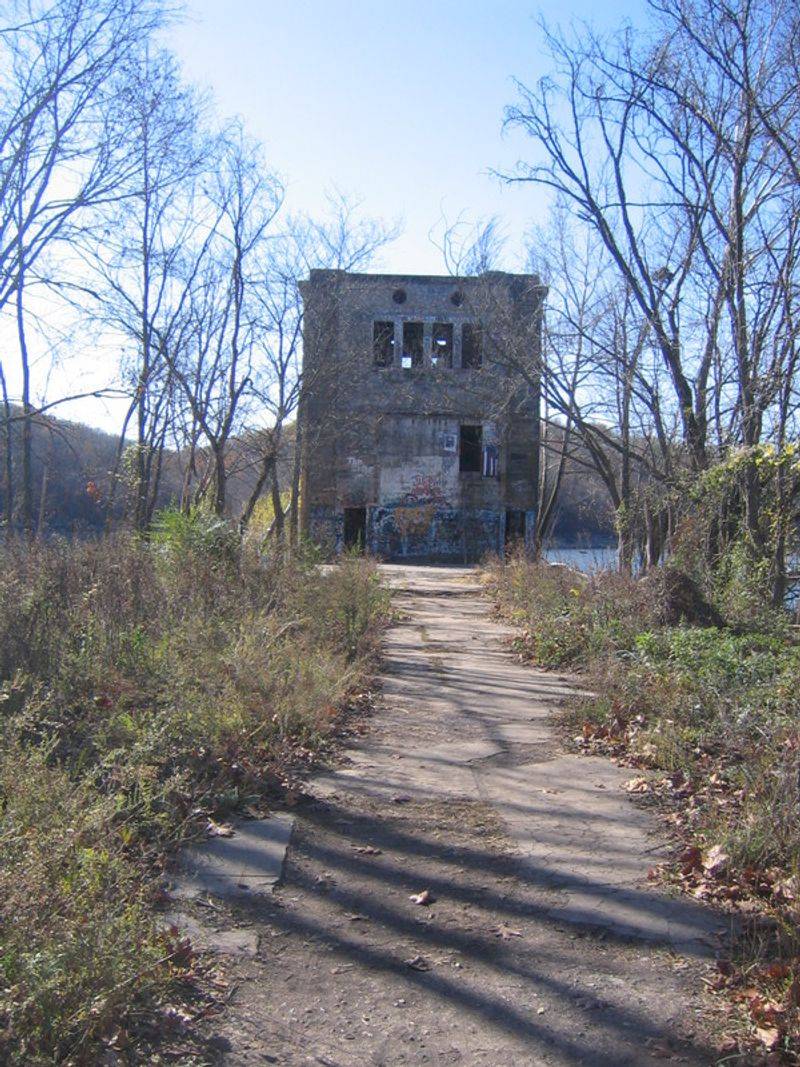
Not every bold dream survives contact with economic reality, and Monte Ne’s story took a painful turn in the years following its peak.
Harvey poured enormous personal wealth into the resort, but the financial pressures of the early twentieth century, combined with shifting travel trends, began to drain his resources faster than visitors could replenish them.
The Panic of 1907 hit hard, and the resort’s momentum stalled as Harvey struggled to keep up with maintenance costs, staffing, and the sheer ambition of his original vision.
By the 1920s, what had once been a buzzing social destination had grown quieter, the grand hotels showing their age and the carefully manicured grounds slowly returning to nature.
Harvey shifted his energy toward political causes, eventually organizing a presidential convention at Monte Ne in 1931 for his own Liberty Party, a last burst of national attention for a fading place.
He also began work on a massive 130-foot obelisk he called the Pyramid, intended to preserve books and artifacts for future civilizations, but financial difficulties halted construction long before it was finished.
The resort that had once sparkled with gondolas and laughter was left to silence, its buildings slowly swallowed by the encroaching landscape.
Dam Construction And Deliberate Flooding
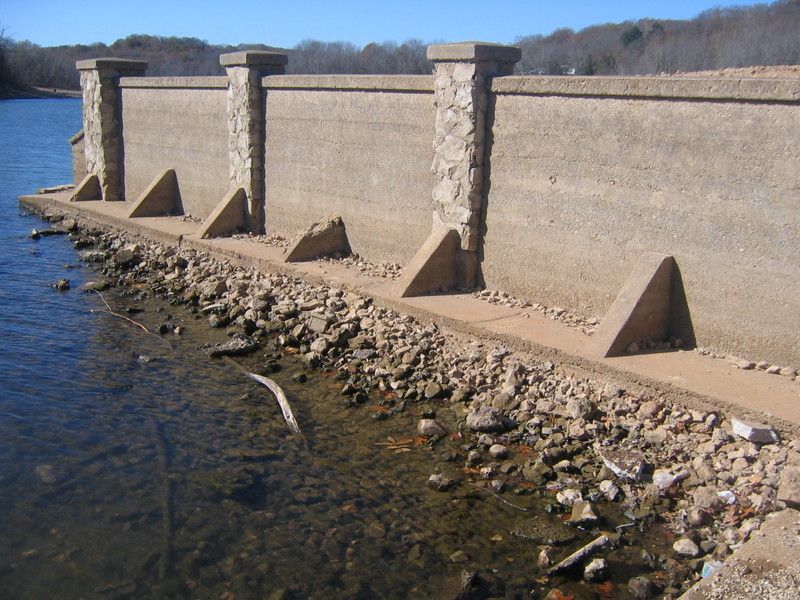
Sometimes the final chapter of a place arrives not with a quiet fade but with something as unstoppable as a rising tide.
In the 1960s, the United States Army Corps of Engineers moved forward with plans to dam the White River in northwest Arkansas, a project designed to create a reservoir for flood control, water supply, and recreation.
The resulting body of water, Beaver Lake, would eventually stretch across more than 28,000 acres, reshaping the landscape of the entire region in a matter of years.
Monte Ne sat directly in the path of the rising water, and the decision to flood the valley was made with full knowledge that Harvey’s old resort would be permanently submerged.
Residents and property owners in the area were relocated, and structures that could not be moved were left in place to meet the water as it climbed steadily up the valley walls.
The dam was completed in 1964, and Beaver Lake began filling shortly after, covering the ruins of the hotels, the lagoon, the amphitheater, and nearly every trace of Harvey’s original vision.
What had taken decades to build was swallowed in a matter of months, sealed beneath a layer of cool, clear Ozark water that has kept its secrets ever since.
Submerged Foundations Preserved Beneath Still Waters
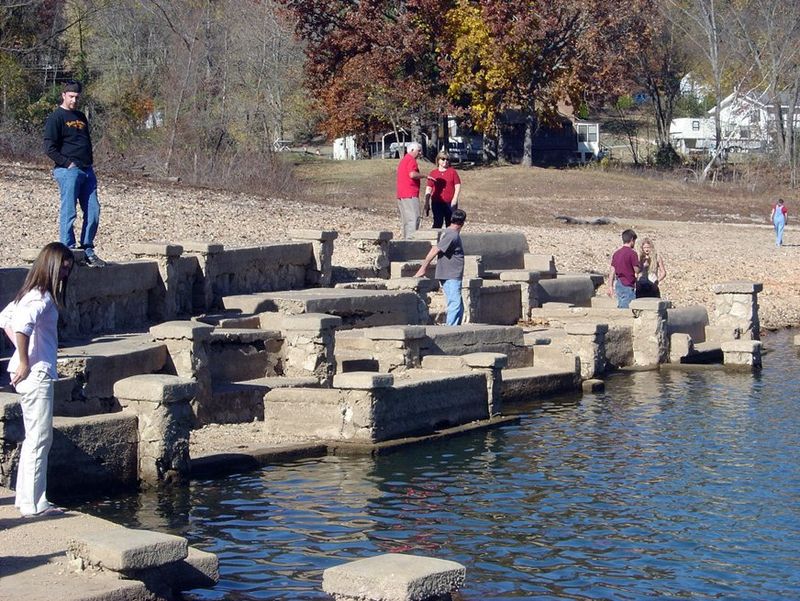
There is something quietly remarkable about the way cold, still water can preserve what time and weather would otherwise destroy.
Beneath Beaver Lake, the concrete and stone foundations of Monte Ne have sat largely undisturbed for more than half a century, protected from the freeze-thaw cycles and weathering that would have crumbled them on open ground.
Divers who have explored the site report finding walls still standing at recognizable heights, staircases leading nowhere, and floor plans that match the original architectural drawings of the resort.
The amphitheater, which Harvey used for political speeches and public gatherings, is one of the most intact structures below the waterline, its curved seating area still tracing the shape of a crowd that has not gathered there in generations.
The base of Harvey’s unfinished Pyramid is also visible during certain conditions, a hulking concrete stub that hints at the monumental scale of his original ambition.
Sediment has settled gently over some areas, softening the edges of walls and filling in gaps, but the overall layout of the resort remains surprisingly legible to anyone willing to look closely.
Floating above those foundations on a clear day, peering down through the green water, I felt like I was reading a story written in stone.
Seasonal Changes Revealing Silent Ruins
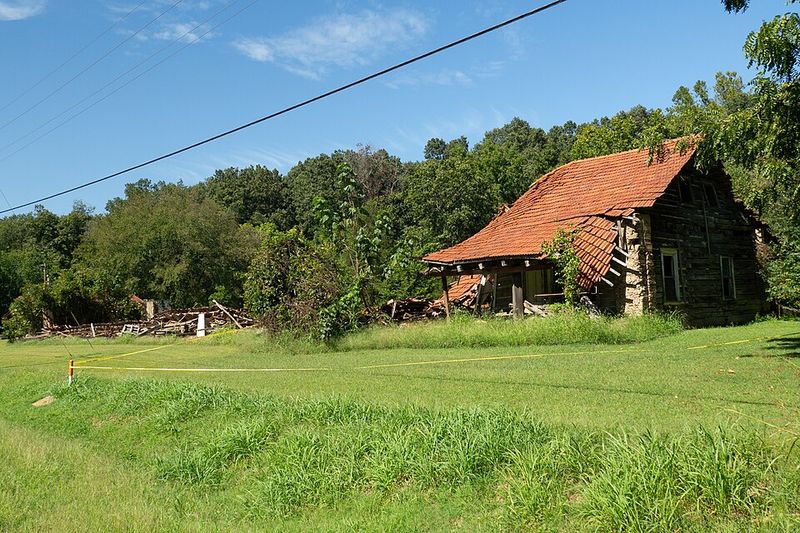
Beaver Lake does not keep its secrets all year long, and that is exactly what makes Monte Ne one of the most unpredictable and rewarding destinations in Arkansas.
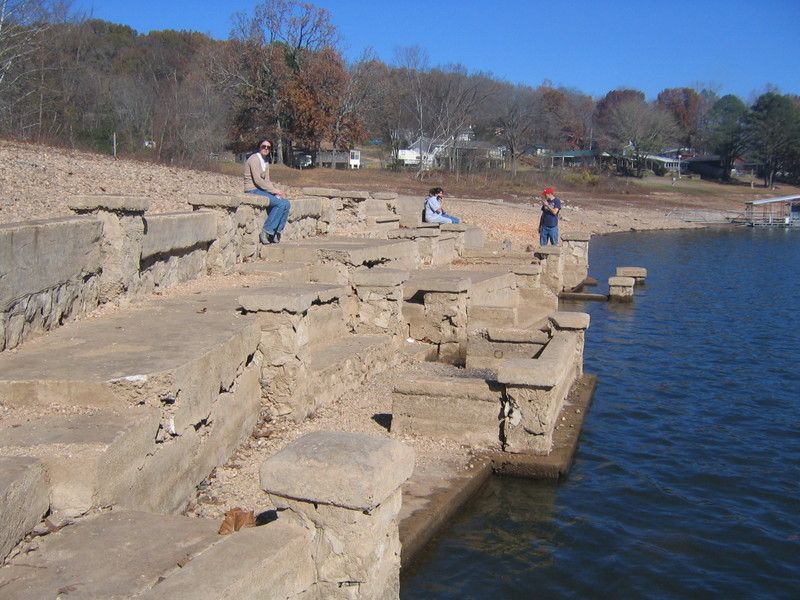
During periods of drought or controlled water releases, the lake’s surface drops enough to expose portions of the old resort that are normally hidden well below the waterline.
Fragments of concrete walls and sections of the amphitheater are among the most striking features to emerge, their shapes breaking through the surface in quiet, unexpected ways.
Rough surfaces often appear during low-water periods, marked with lines that trace years of shifting water levels.
I visited in late summer during a dry stretch, and the difference from what I had expected was striking, with multiple wall sections rising above the calm surface at sharp, irregular angles.
Planning a visit for better visibility often depends on extended dry conditions and ongoing water management rather than a single predictable season.
Each time the water recedes, Monte Ne offers a slightly different face, which means no two visits ever feel quite the same.
Diving Through Sunken Walls And Forgotten Streets
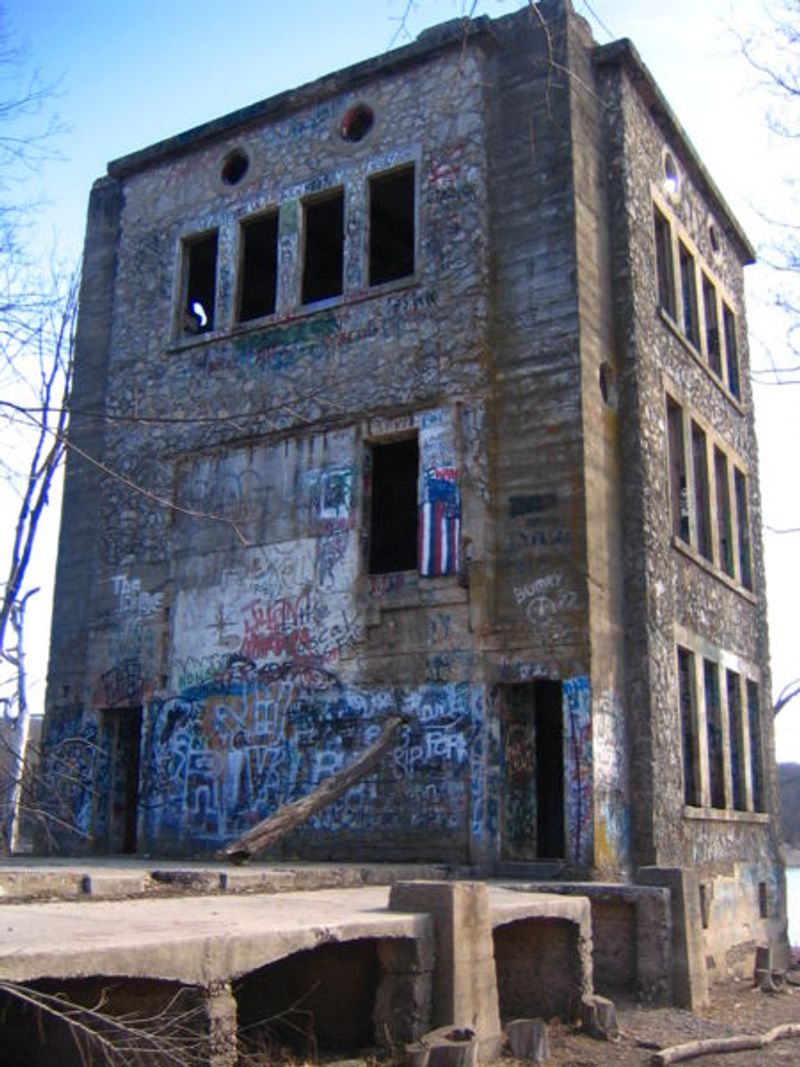
For visitors who want more than a surface-level look at Monte Ne, Beaver Lake offers one of the more unusual freshwater diving experiences in the American South.
Visibility in Beaver Lake can be surprisingly good, particularly in cooler months when algae growth slows and the water clears enough to reveal the outlines of submerged structures.
I explored the site with a local dive guide who had made the trip many times, and even with that preparation, the first glimpse of a standing wall appearing out of the blue-green haze was unforgettable.
Passing through what was once part of a hotel structure creates a surreal impression that is difficult to fully capture in photographs.
Fine silt covers the floors and lifts into soft clouds with each movement, making slow, careful motion essential to maintaining visibility.
Fish move easily through the ruins, weaving between openings and resting along submerged walls as if they have always belonged there.
Hovering above a staircase that once led to a hotel lobby, I found myself reluctant to leave, aware that this experience reflects personal observation rather than a universal one.
Eerie Atmosphere Of A Town Suspended In Time
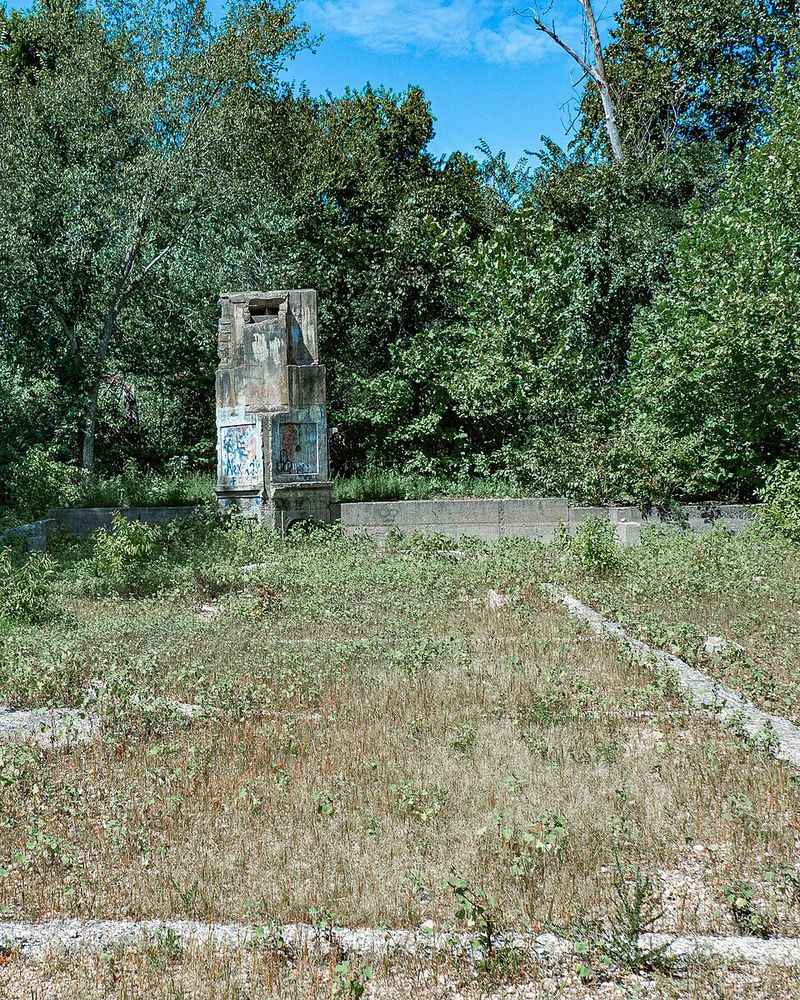
Monte Ne carries a presence that goes beyond its history, settling in as soon as you reach the shoreline and consider what rests beneath the surface.
Some local stories describe unusual sounds near the area and occasional lights seen after dark, though these accounts are part of regional folklore rather than verified events.
I am not someone who actively seeks out those stories, but standing near the shoreline at dusk with exposed ruins silhouetted against the sky made it easy to understand how they began.
The atmosphere feels deeply affecting, shaped by both the surrounding landscape and the awareness that a once-active place now sits below view.
Kayakers who move slowly across the area on calm mornings often describe a quiet, reflective experience, with only natural sounds breaking the stillness.
That sense of calm defines Monte Ne today, a quiet that feels settled rather than empty, as if the place is simply paused within a much longer story.
Visitors arriving by kayak, diving gear, or on foot often leave with an impression that lingers well beyond the moment.