
This Little-Known Maine Historic Gem Feels Like Another World
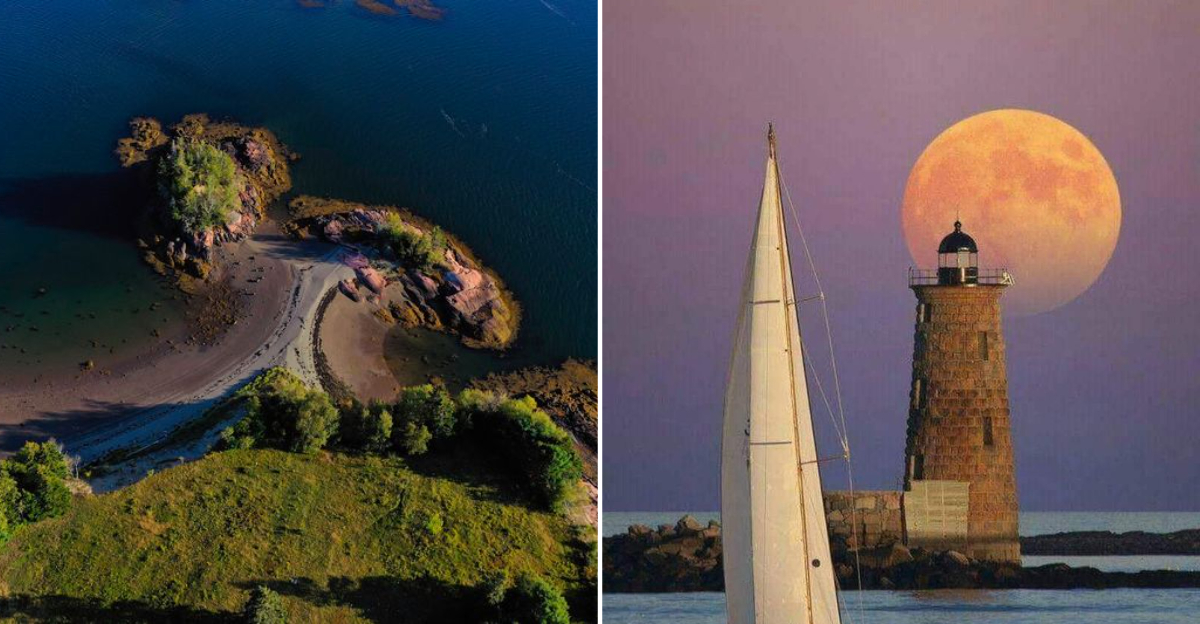
I had no idea a small, uninhabited island on the border of the United States and Canada could hold so much history. Set in the St. Croix River near Calais in Maine, this quiet spot preserves a story many Americans rarely hear.
In 1604, French explorers launched one of the earliest European settlement attempts in North America here, three years before Jamestown, though Jamestown later became the first permanent English settlement.
The effort lasted only a single harsh winter, yet its impact shaped future exploration in the region.
Today, the island remains untouched and protected, visible only from the mainland. For anyone drawn to history, nature, and places that feel quietly significant, this site offers a powerful connection to an early chapter of North America’s past.
The 1604 French Settlement That Predates Jamestown
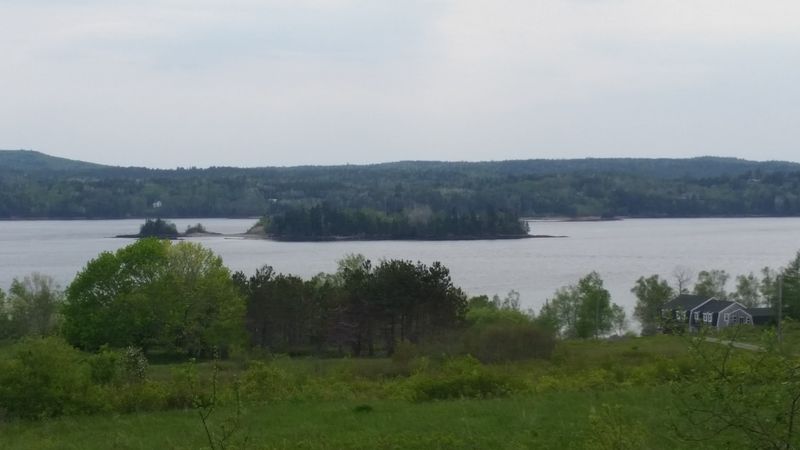
Most American history classes start the colonial story at Jamestown, Virginia, in 1607. But The Saint Croix settlement predates Jamestown by three years, though Jamestown was the first permanent English settlement and earlier European settlements existed elsewhere in North America.
In 1604, explorer Pierre Dugua de Mons led an expedition of more than 100 people to a small island in the St. Croix River, with 79 remaining there for the winter, making it one of the earliest European settlement attempts in North America.
Samuel de Champlain, who later became famous for mapping much of northeastern North America, was part of that very same expedition. He helped plan the settlement and even drew detailed maps of the island and surrounding coastline.
Those maps still exist today and are considered remarkable for their accuracy.
The settlement only lasted one brutal winter before the survivors relocated to Nova Scotia, but its historical significance never faded.
Today, Saint Croix Island International Historic Site near Calais, Maine, about 8 miles south of the city on U.S. 1, honors that bold attempt. It stands as a reminder that North American colonial history is far more layered than most textbooks suggest.
A Shared Historic Site Between Two Countries

Saint Croix Island holds a rare distinction in North America: it is jointly recognized as an international historic site by both the United States and Canada. That kind of cross-border cooperation in preserving history is genuinely uncommon, and it speaks to how meaningful this little island is to both nations.
The site is managed by the U.S. National Park Service on the American side, while Parks Canada acknowledges its importance from across the river.
Visitors approaching from the Calais, Maine side can view the island from a designated area along the riverbank, complete with interpretive exhibits and bronze statues that bring the 1604 story to life.
Standing at the water’s edge and knowing that Canada is literally right across the river adds a fascinating layer to the visit. Two countries, one shared memory, and one small island that quietly holds a cornerstone moment in the history of European exploration in the New World.
Why The Island Itself Is Off-Limits To Visitors
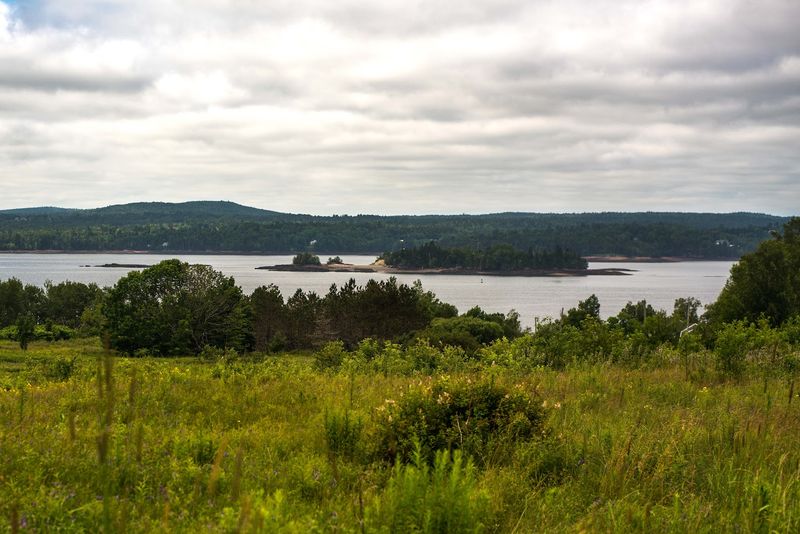
Here is something that surprises nearly every first-time visitor: you cannot actually set foot on Saint Croix Island. Federal law protects the island from public access, which means all viewing happens from the mainland shore near Calais, Maine.
At first, that sounds like a letdown, but the experience from the bank is surprisingly powerful.
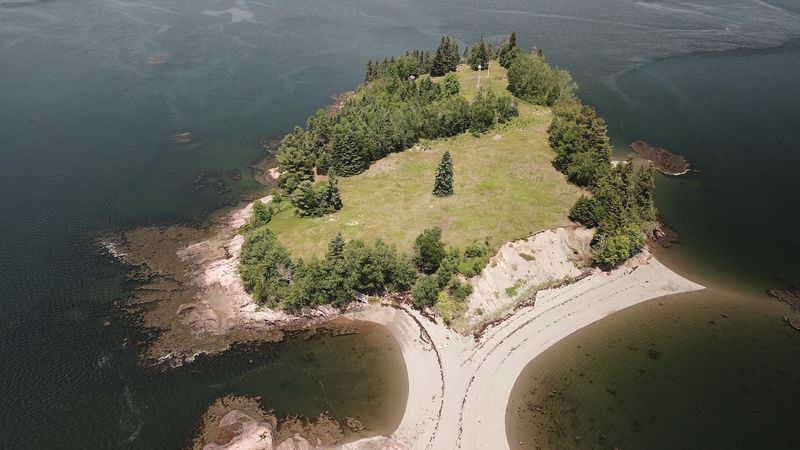
The island sits close enough to the shore that you can see its tree line clearly and get a real sense of its small scale. That intimacy makes the 1604 story feel even more dramatic.
Imagine 79 people trying to survive a harsh northeastern winter on a piece of land barely large enough to hold a modern neighborhood.
The restricted access also means the island remains completely undisturbed, which has an appeal of its own. No footpaths, no visitor facilities, no noise.
Just a forested island in the middle of a river, holding centuries of history in silence. That kind of untouched stillness is increasingly hard to find.
The Role Of Samuel De Champlain At This Site
Samuel de Champlain is often celebrated as the founder of Quebec City, but his connection to Saint Croix Island came even earlier in his career. At 34 years old, he was already an experienced navigator and cartographer when he joined the 1604 expedition to this very site in what is now Calais, Maine.
Champlain used his time on and around the island to create some of the most detailed maps of the northeastern coastline that Europeans had ever produced.
His work documented the St. Croix River, the surrounding landscape, and even the Indigenous settlements in the region. Those maps gave future explorers and settlers a much clearer picture of the land.
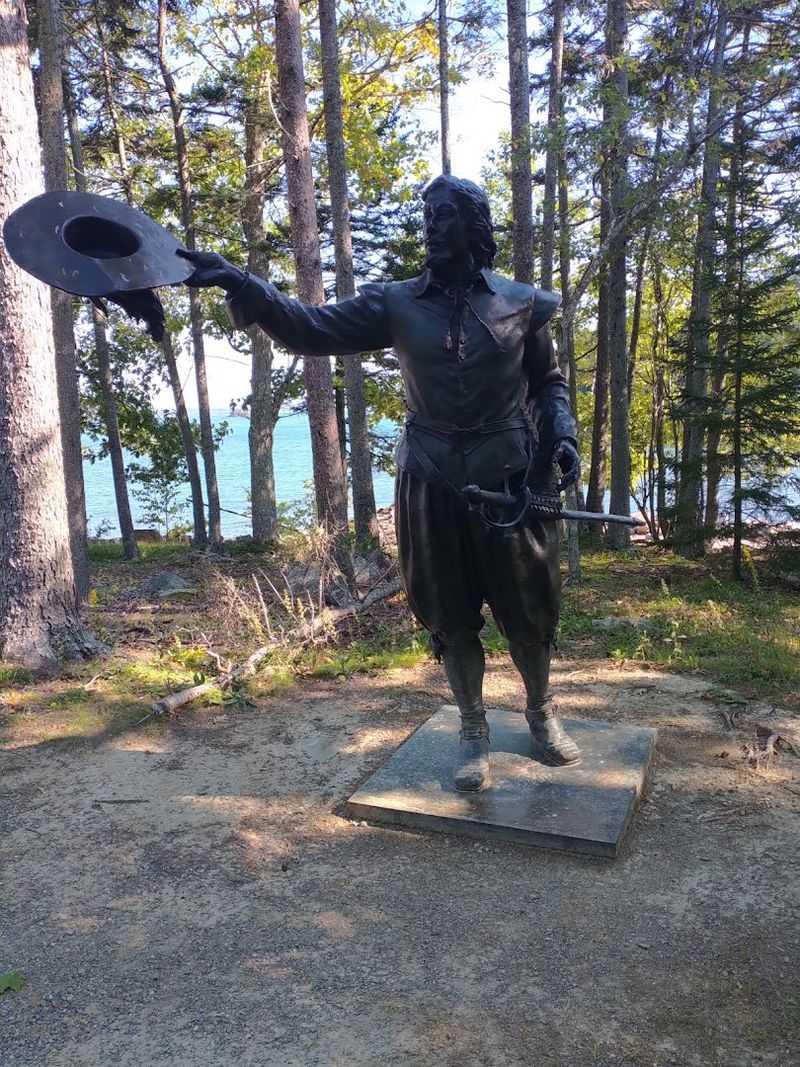
A bronze statue of Champlain stands at the mainland viewing area today, giving visitors a tangible connection to the man behind the maps. Seeing that statue beside the river where he once worked makes the whole story feel remarkably close, not like ancient history at all.
The Brutal Winter That Changed Everything
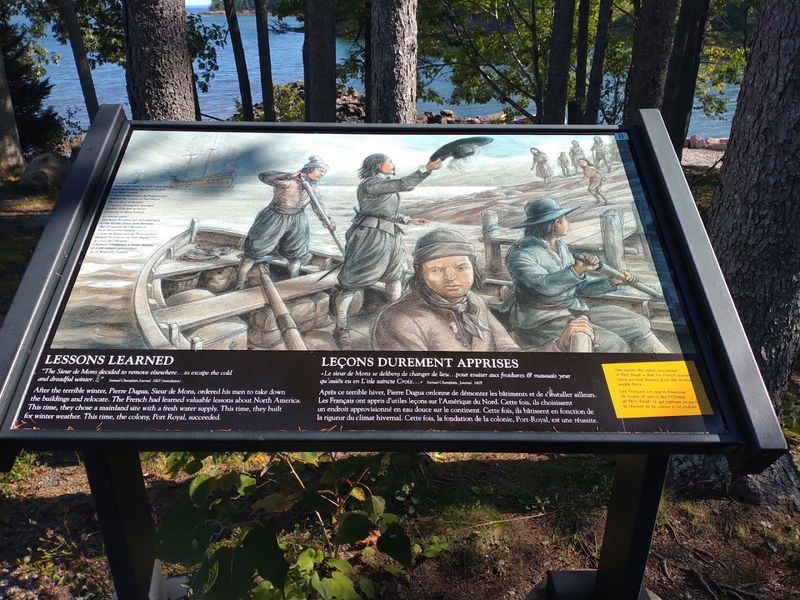
The winter of 1604 to 1605 was catastrophic for the French settlers on Saint Croix Island. Of the 79 people who attempted to survive there, 35 did not make it through the season.
Scurvy, extreme cold, and limited access to fresh water during winter conditions made survival nearly impossible.
The settlers had chosen the island partly for its defensive advantages, since the water surrounding it made it easier to protect against potential threats. But that same water became a barrier when they needed to gather firewood and fresh water from the mainland during frozen, dangerous conditions.
That single devastating winter became a turning point. The survivors, led by Pierre Dugua de Mons and Champlain, relocated to Port-Royal in present-day Nova Scotia the following year.
The failure at Saint Croix was not the end of French ambitions in North America; it was a hard lesson that shaped every decision that came after. Hardship, it turns out, can be a surprisingly effective teacher.
What The Mainland Viewing Area Actually Looks Like
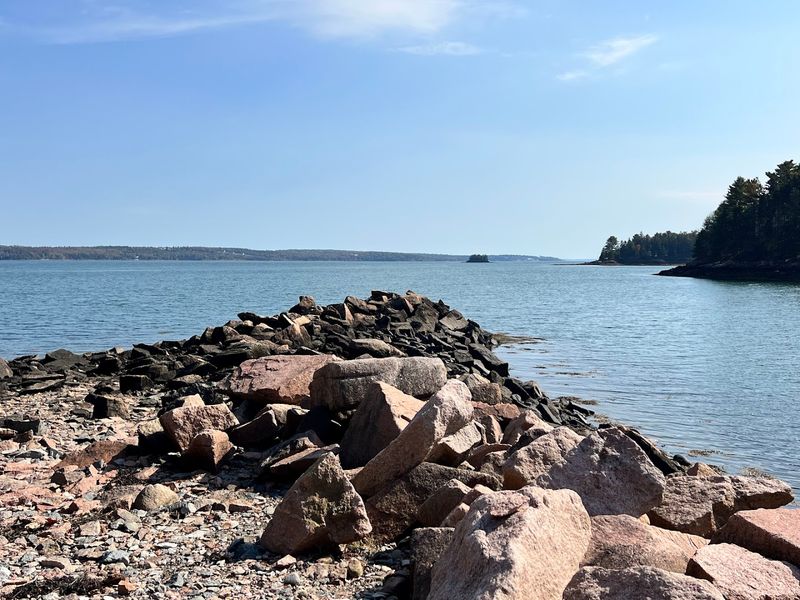
The mainland visitor area for Saint Croix Island International Historic Site is located along the St. Croix River, accessible from Calais, Maine.
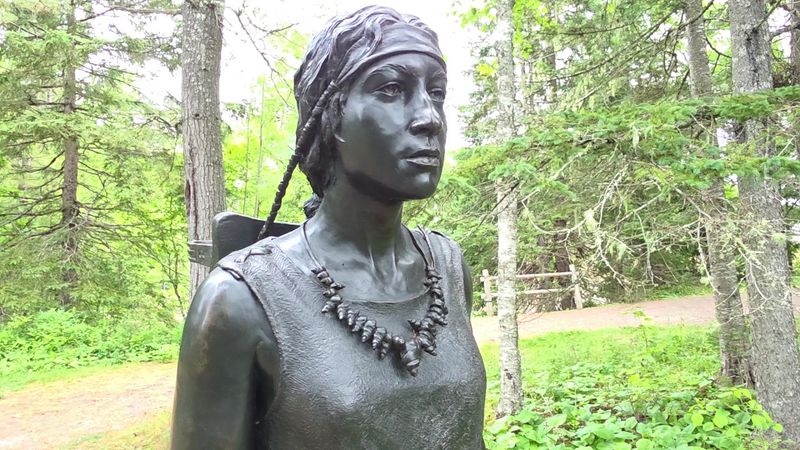
The site includes a short walking path, several large interpretive panels, and a set of bronze statues depicting the French settlers and Indigenous Passamaquoddy people who lived in the region
The statues are remarkably detailed and emotionally resonant. They show figures in period clothing, some appearing weary, others resolute, all of them telling a story without a single word.
Paired with the interpretive signage, they give visitors a thorough understanding of the 1604 expedition without needing a guided tour.
The setting itself is beautiful in a quiet, understated way. The river is wide and calm at that point, the trees on both banks are lush in warmer months, and the island is clearly visible from the viewing area.
It is the kind of place where you find yourself standing longer than you planned, just taking it all in.
The Indigenous Passamaquoddy Connection To This Land
Long before French explorers arrived in 1604, the Passamaquoddy people had lived along the St. Croix River for thousands of years.
The river and its surrounding lands were central to their way of life, providing food, transportation, and community. Their presence is an essential part of the full story of Saint Croix Island.
The interpretive exhibits at the mainland viewing area acknowledge this history directly. The bronze statues include representations of Passamaquoddy individuals, recognizing that the French settlers did not arrive in an empty land.
Early interactions between the two groups ranged from cooperative trade to tension, shaped by the enormous cultural differences between them.
Understanding the Indigenous context of this site adds real depth to the visit. Saint Croix Island is not just a story about European ambition; it is also a story about a land that already had a rich, complex human history.
Honoring that full picture makes the site feel far more honest and meaningful than a simple colonial narrative ever could.
Getting To Calais And Planning Your Visit
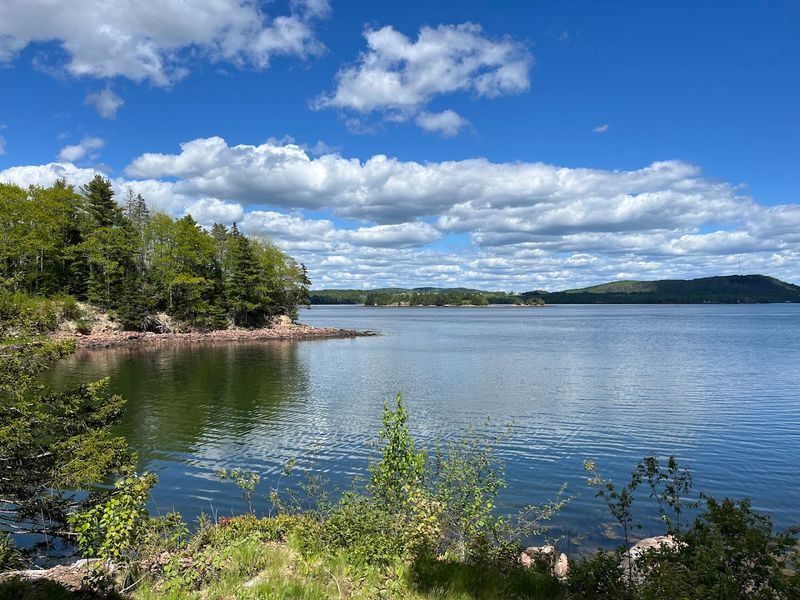
Calais, Maine sits in Washington County, right on the northeastern edge of the state along the Canadian border.
It is a remote destination by most standards, which means getting there requires a bit of planning. The nearest major city is Bangor, Maine, roughly two and a half hours away by car, making a day trip very doable if you start early.
The site itself is free to visit, which is one of many reasons it deserves more attention than it gets. There are no entrance fees, no reservations required, and no crowds to navigate.
The parking area is modest but functional, and the short walking path to the viewing area is accessible and easy to navigate.
The best time to visit is late spring through early fall, when the weather along the river is pleasant and the foliage is full. Winter visits are possible but the road conditions in Washington County can be challenging.
Arriving in the morning gives you the best light for viewing the island across the water.
How This Site Fits Into The National Park System
Saint Croix Island International Historic Site is an official unit of the U.S. National Park System, which means it carries the same federal protection as places like Yellowstone or the Grand Canyon.
That designation might seem surprising for such a small and quiet site, but the historical significance absolutely justifies it.
Being part of the National Park System means the site benefits from ongoing maintenance, interpretive programming, and preservation efforts. The National Park Service works to keep the mainland viewing area informative and welcoming, updating exhibits as new historical research emerges.
For passport stamp collectors and National Park enthusiasts, this site is a worthy addition to any list. It may not have the dramatic landscapes of western parks, but it offers something equally valuable: a direct, unfiltered connection to a pivotal moment in the early history of North America.
Few places in the entire park system can claim a story quite this old or quite this layered with international significance.
Why This Place Deserves Far More Attention
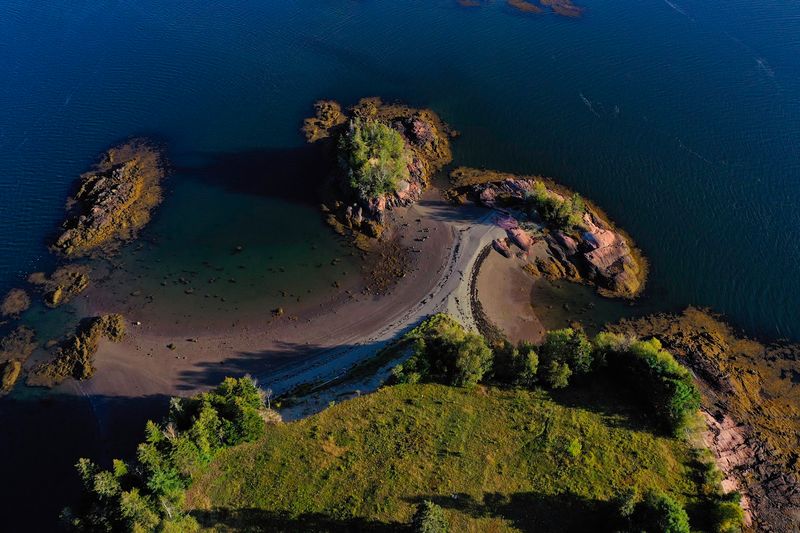
There is something genuinely moving about visiting a place that most people have never heard of, especially when that place carries a story this significant.
Saint Croix Island sits quietly on the border between Maine and New Brunswick, Canada, largely overlooked by mainstream travel itineraries, and that obscurity is honestly baffling.
The 1604 French settlement attempt here predates many of the events that fill American history textbooks. The cross-border recognition between the U.S. and Canada is rare and meaningful.
The Indigenous history layered beneath the colonial narrative adds even more depth.
And the simple act of standing at the riverbank and looking out at that small island creates a feeling that is hard to put into words.
History does not always announce itself with grand architecture or famous landmarks. Sometimes it sits quietly in the middle of a river on the Maine-Canada border, waiting for curious travelers to show up and pay attention.
Saint Croix Island rewards that curiosity in ways that far busier destinations rarely manage to match.