
This Ohio Arboretum Is A Dream Visit In May When Spring Color Takes Over
May in Ohio has a way of showing off, but some places make spring look like it trained for this all year. At this arboretum, the season arrives in full color across thousands of acres, with flowers, fresh green hills, and the kind of scenery that makes you stop walking for a second just to take it in.
I had heard people rave about it for years, so I showed up with high expectations and fully expected reality to do that rude thing where it falls a little short. It did not.
Within the first few minutes, I understood why so many people make a point of coming back in May, when the grounds feel especially vivid and alive.
This is the kind of Ohio place that rewards a slow visit, whether you are here for the famous rhododendrons, the treetop views, or simply an afternoon surrounded by spring at its most convincing. If May had an official fan club, this spot would be on the board.
A Living Legacy Born From Loss
The story behind this place is one of the most quietly moving origin stories I have come across at any garden or nature preserve.
The Holden Arboretum was created by Albert Fairchild Holden as a living memorial to his daughter Elizabeth, who passed away in 1908 at the age of 12.
When Holden passed away in 1913, funds from his estate were placed in a trust for the development of an arboretum, and the first 100 acres in Lake County were donated in 1931 to establish its core.
That founding purpose, creating a place of beauty and reflection in someone’s honor, shaped everything about how the property feels today.
You sense it in the quiet corners, the memorial benches tucked along wooded paths, and the obvious care that goes into every cultivated space.
The arboretum sits at 9550 Sperry Rd, Kirtland, OH 44094, and that winding drive along Sperry Road through the trees before you even reach the main entrance already sets the tone perfectly.
What 3,600 Acres of Spring Actually Looks Like
Most people picture a garden as something contained, a few neat rows of flowers behind a fence.
The Holden Arboretum is nothing like that.
With 3,600 acres of land, it is one of the largest arboretums in the entire United States, and in May, that scale becomes something you feel in your legs as much as your eyes.
Open meadows stretch out between dense woodland sections, and every turn on the trail system reveals a completely different kind of landscape.
I walked for nearly four hours on my first visit and still did not cover everything on the map.
The property includes multiple lakes, ponds, cultivated garden areas, and miles of natural hiking trails that range from easy paved paths to more rugged woodland routes.
Spring layers the whole thing in color, with flowering trees, native wildflowers, and ornamental shrubs all competing for attention at once.
It is genuinely hard to know where to look first, and that is a very good problem to have.
Rhododendron Season Is the Main Event in May
Ask anyone who visits regularly what the single best reason to come in May is, and they will almost certainly say the rhododendrons.
The Holden Arboretum holds one of the most impressive rhododendron collections in the Midwest, with hundreds of varieties planted across dedicated garden areas that turn into a wall-to-wall color show each spring.
Deep purples, bright pinks, soft whites, and vivid reds all bloom in overlapping waves throughout the month, meaning the display evolves week by week rather than peaking all at once.
I visited in mid-May and the garden was at what felt like its absolute loudest, every shrub covered in clusters of blooms so thick they almost hid the leaves beneath them.
The fragrance alone is worth the trip, especially on a warm afternoon when the air sits still between the hedgerows.
If you are planning a visit and want to time it right, call ahead or check the arboretum website to ask about current bloom conditions before you make the drive.
The Emergent Tower View You Will Not Forget
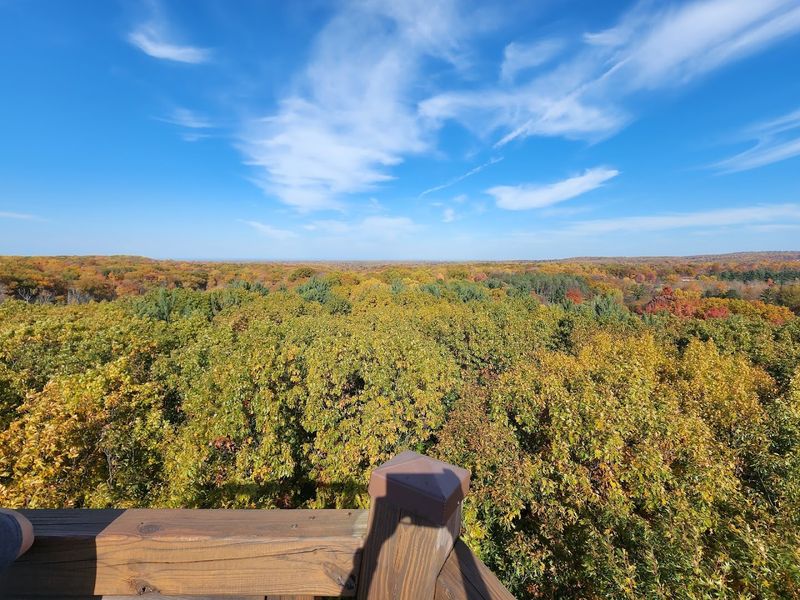
There are 202 steps between the ground and the top of the Emergent Tower, and every single one of them is worth it.
This structure rises above the tree canopy and gives you a 360-degree view across the arboretum that is genuinely hard to describe without sounding like you are exaggerating.
On a clear day in May, when the canopy below is in full leaf and every flowering tree is doing its thing, the view stretches out in layers of green and color all the way to Lake Erie on the horizon.
The tower has rest areas along the climb, so you do not need to be in peak athletic condition to make it up.
Attendants monitor the number of visitors on the structure at any given time, which keeps things safe and surprisingly peaceful even when the arboretum is busy.
I stood at the top for a good fifteen minutes just taking it in, and the only thing that eventually pulled me away was the canopy walk waiting just below.
Walking Above the Trees on the Canopy Walk
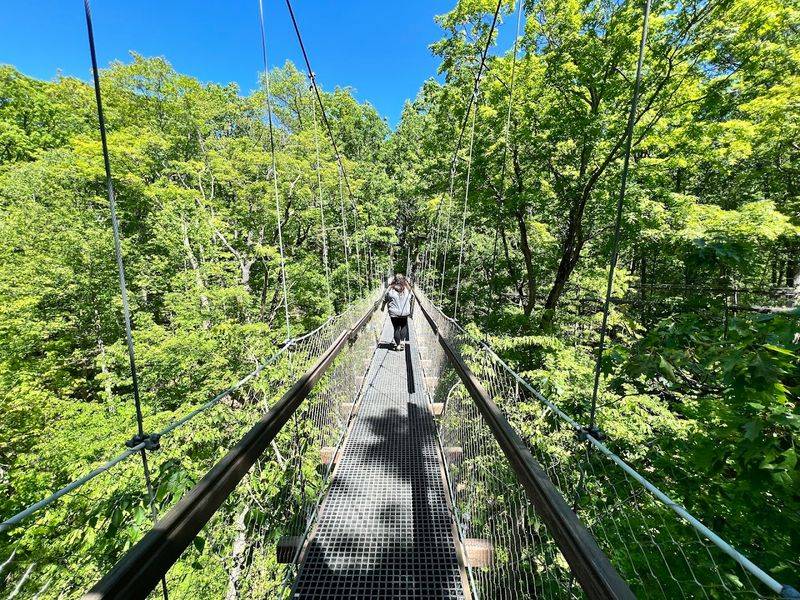
Before my visit, I had seen pictures of the canopy walk and thought it looked fun in a mild, pleasant sort of way.
Actually being on it was a completely different experience.
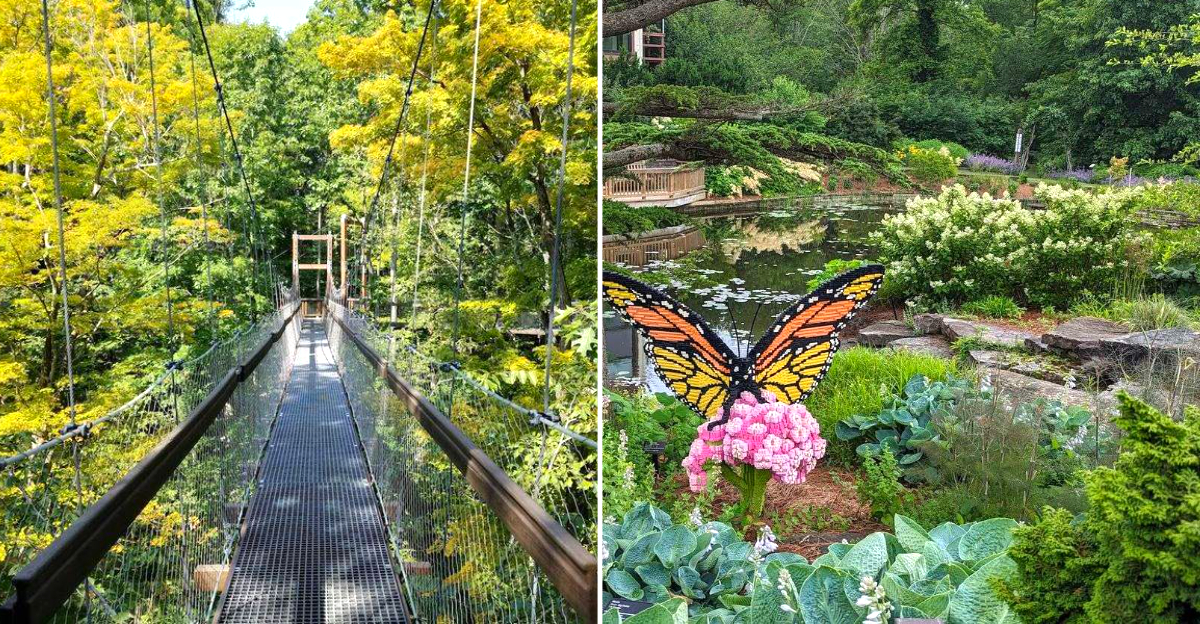
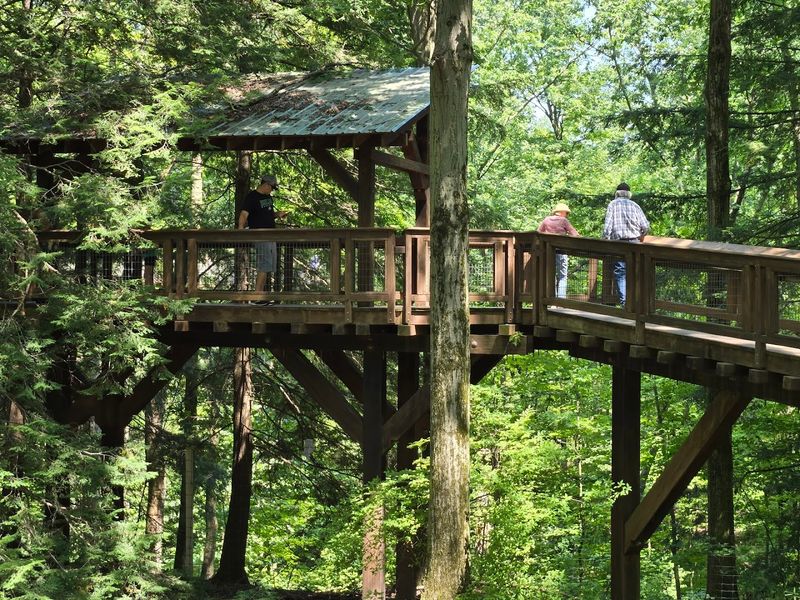
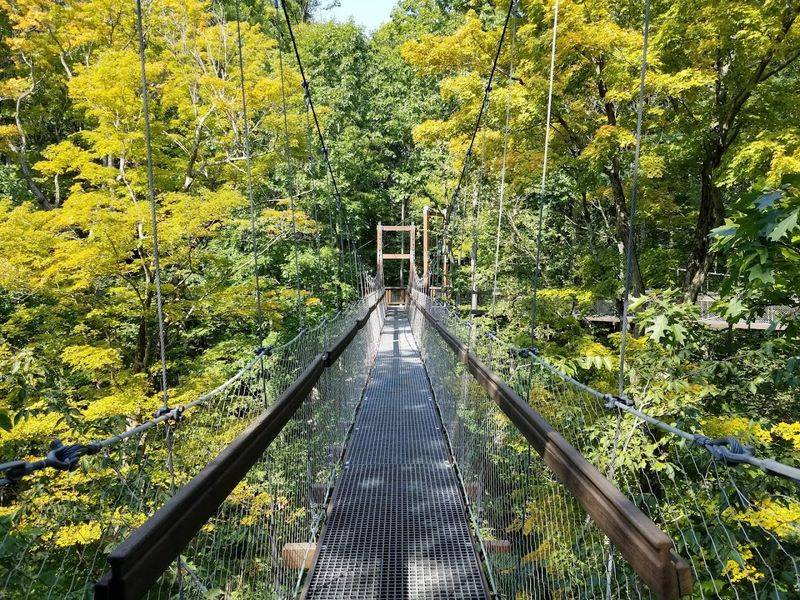
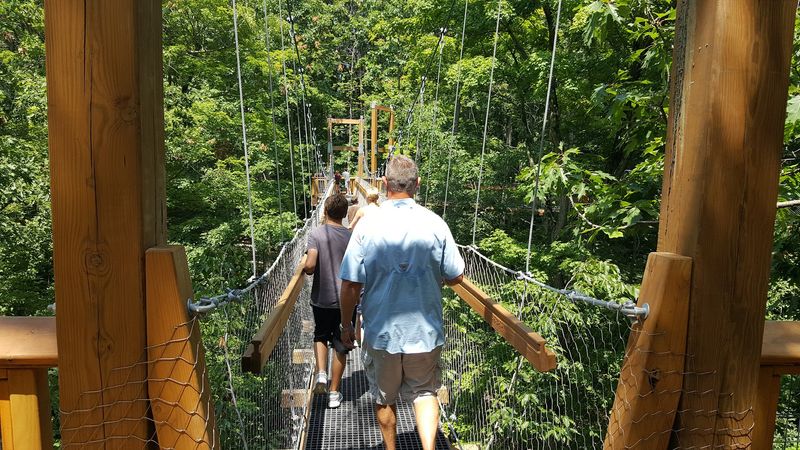
The suspended walkway winds through the upper branches of mature trees, putting you at eye level with the leaves and birds rather than looking up at them from the ground.
In May, that means you are walking through a tunnel of fresh green growth with flowering branches occasionally brushing past on either side.
The structure sways gently as you move, which sounds alarming but actually adds to the sense that you are genuinely inside the forest rather than just observing it from a safe distance.
Educational signs along the route explain what you are seeing, from tree species identification to information about the insects and pollinators living in the canopy.
I found myself stopping every few feet to read a sign or just lean on the railing and watch a bee work its way through a cluster of blossoms directly at face level.
The Cultivated Gardens Worth Slowing Down For
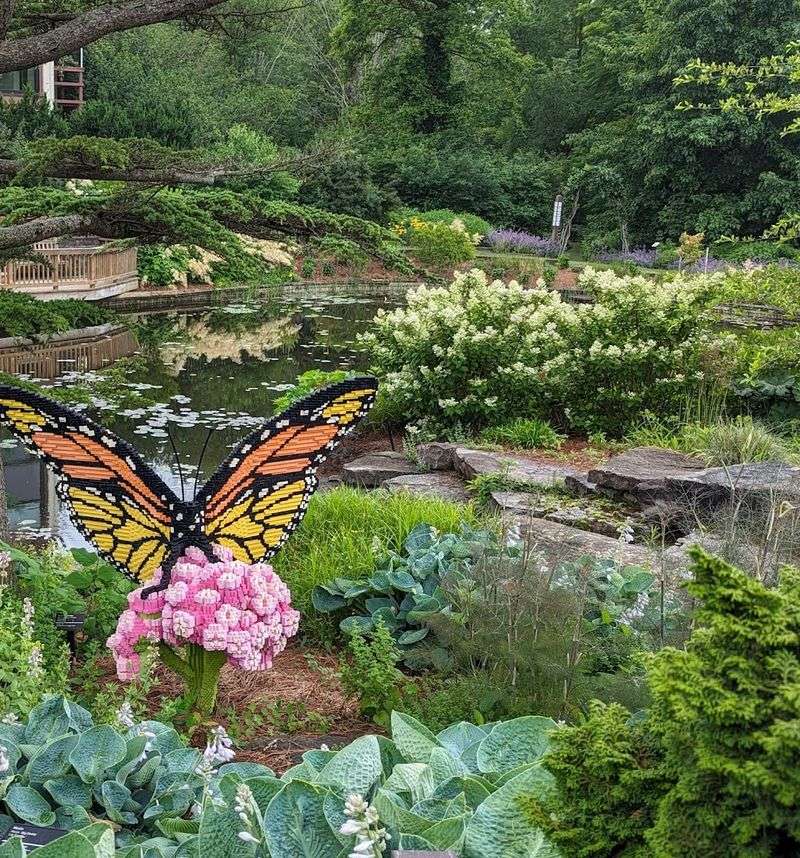
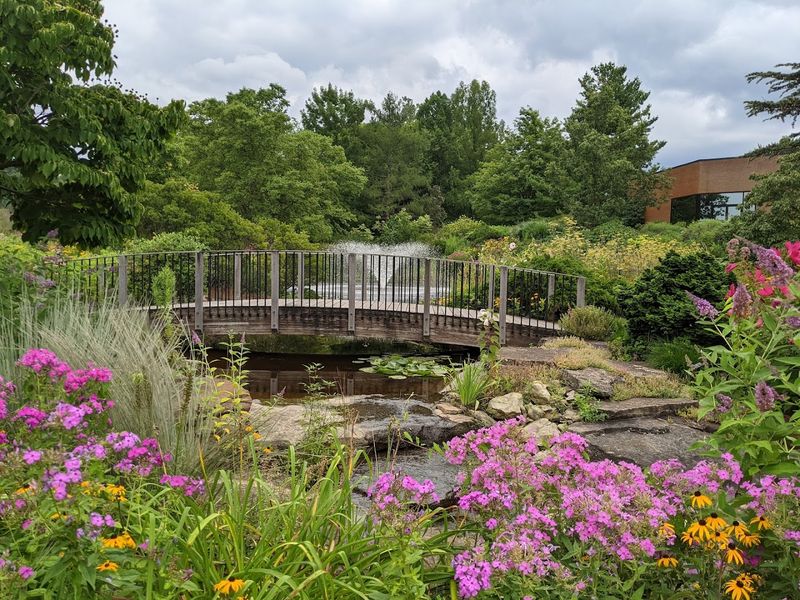
Beyond the wilder trail sections, the arboretum maintains a series of carefully designed cultivated gardens that reward anyone willing to slow their pace and pay attention to the details.
The Butterfly Garden stood out to me as a particular highlight, with its combination of flowering plants arranged around a central pond that creates a setting almost too pretty to feel real.
Pollinators were everywhere during my May visit, with bumblebees, butterflies, and other insects moving methodically from bloom to bloom in a way that felt more like a nature documentary than a casual afternoon walk.
Each garden bed is clearly labeled with plant names and information, so you can actually learn something while you wander rather than just admiring colors you cannot identify.
The paths through these sections are paved and well-maintained, making them accessible and easy to navigate even for visitors who are not big hikers.
Benches appear at regular intervals throughout, and I watched more than a few people simply sit and read in the middle of all that blooming beauty.
Hiking Trails That Take You Into the Real Woods
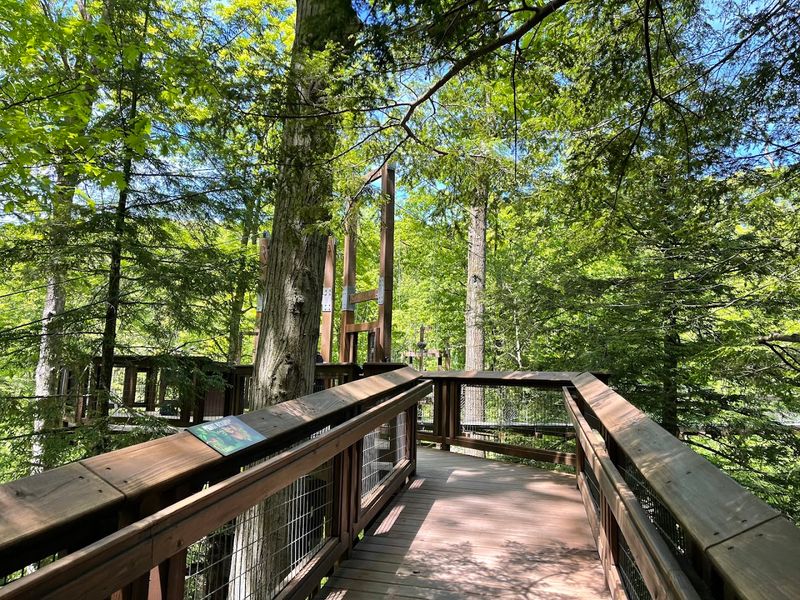
The manicured gardens are spectacular, but some of my favorite moments at the arboretum came on the more rustic trails that push deeper into the wooded sections of the property.
These paths feel genuinely wild compared to the paved garden routes, with uneven terrain, tree roots crossing the trail, and the kind of dense canopy overhead that filters sunlight into shifting patterns on the ground.
In May, the forest floor along these trails comes alive with spring wildflowers, the kind of native plants that bloom briefly and brilliantly before the full summer canopy blocks out the light above them.
Trilliums, wild geraniums, and Jack-in-the-pulpit plants appear in clusters along the trail edges if you know to look for them.
The arboretum also has small tucked-away benches in these quieter sections, built into little clearings where you can sit completely alone with the sound of birds and wind for company.
After the busier garden areas, these woodland stretches felt like a reward for putting in a bit more walking effort.
Corning Lake and the Water Features That Calm Everything Down
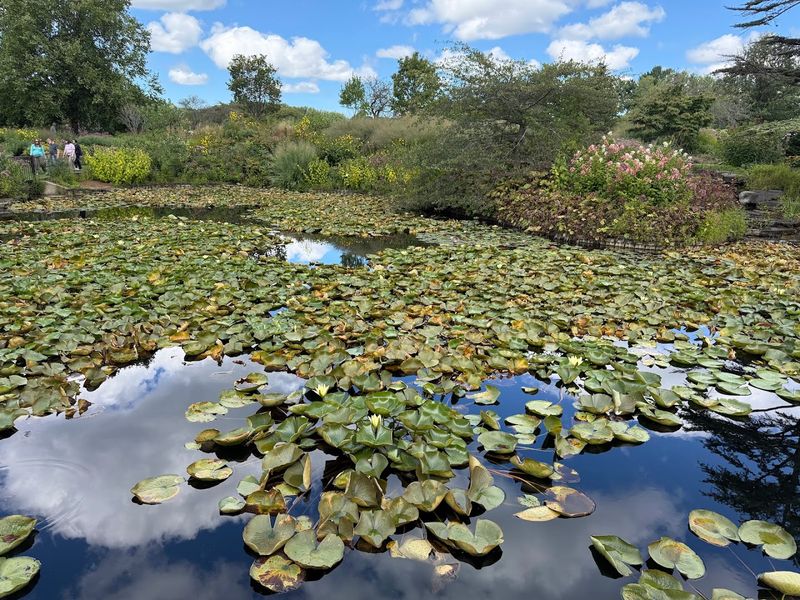
Water has a way of changing the energy of a landscape, and Corning Lake does exactly that at the arboretum.
The lake sits within the property as a natural centerpiece, with trails running along its edges and open views across the water that give your eyes a chance to rest after all the floral intensity of the garden sections.
On the May morning I walked the lake path, the surface was perfectly calm and reflecting the pale green of the newly leafed-out trees on the opposite bank.
Several smaller ponds are scattered across the property as well, each one drawing its own collection of birds and creating small ecosystem pockets worth pausing at.
A great blue heron stood motionless at the edge of one pond for so long that I initially thought it was a garden sculpture.
These water features give the arboretum a sense of natural balance, breaking up the trail system in a way that makes long visits feel varied rather than repetitive.
Spring reflections on still water might actually be the most underrated detail of a May visit here.
Planning Your May Visit for the Best Experience
A few practical details can make a significant difference between a good visit and a truly great one.
The arboretum is open Tuesday through Sunday from 9 AM to 5 PM and is closed on Mondays, so plan accordingly and give yourself a full day rather than arriving in the early afternoon.
Adult admission runs around $21 for non-members, but a membership pays for itself quickly if you plan to return, and it includes reciprocal access to other botanical gardens and conservatories across the country.
The Visitor Center has a gift shop and clean restrooms, and grab-and-go food and drinks are available Thursday through Sunday from April through mid-November while supplies last, so you do not need to pack a full picnic unless you want to.
Dogs are welcome on the grounds, though check current rules before bringing them to specific structures like the tower or canopy walk.
May is genuinely the most rewarding month to visit, when the rhododendrons, flowering trees, and native spring plants all overlap into one long, glorious bloom that makes every corner of this remarkable Ohio landscape worth exploring.