
This Thrilling Washington Suspension Bridge Hike Belongs On Your Bucket List
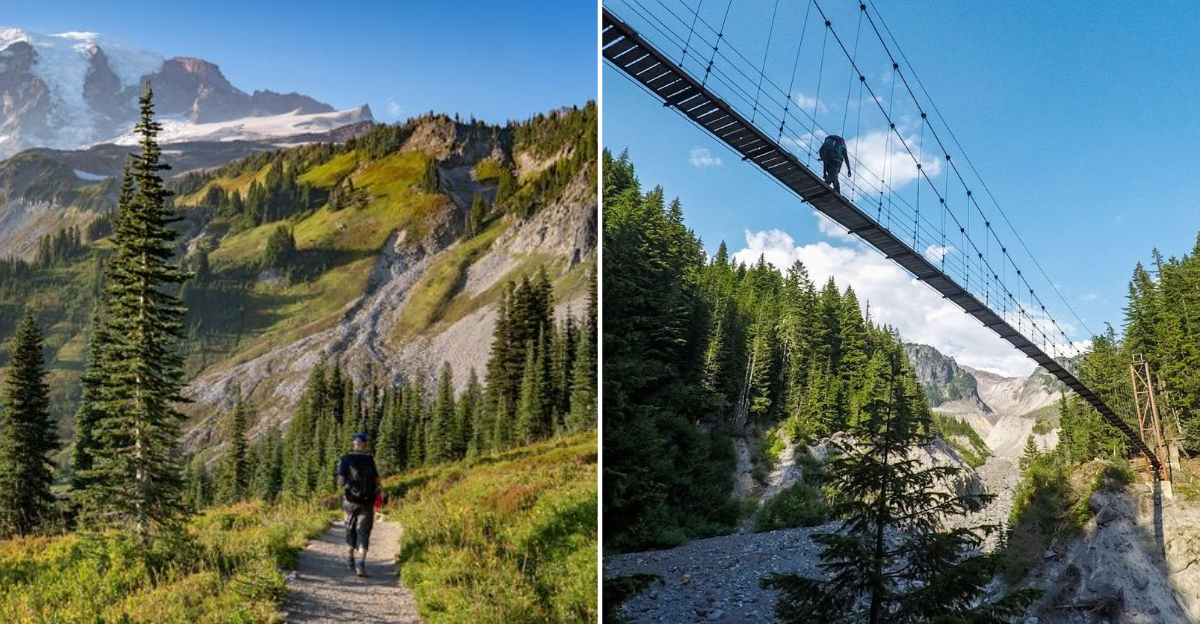
My heart was doing a frantic little tap-dance against my ribs as I took that first, shaky step onto the narrow steel wire. Let’s be honest: I’m not exactly a mountain goat, but there’s something about a swaying walkway suspended high above a churning glacial river that makes you feel incredibly alive.
As I ventured further out, the wooden planks hummed under my boots and the entire world started to wobble just a bit.
Looking down, the milky white water felt like it was miles away, crashing over boulders like a scene from a high-stakes adventure movie.
This corner of Washington is famous for its rugged beauty, but crossing this particular narrow span feels like a secret rite of passage. It’s a bit wobbly, a lot thrilling, and exactly the kind of “did I really just do that?” moment your soul is craving.
The Trail That Earns Its Reward
Not every great trail rolls out a welcome mat. The Tahoma Creek Trail, which begins at the end of Westside Road in Mount Rainier National Park, Washington, is the kind of path that asks something real from you before it gives anything back.
The route covers approximately 6.4 miles round-trip with around 1,381 feet of elevation gain, and it earns its “hard” difficulty rating honestly. Sections of the trail are unmaintained, meaning downed trees, washed-out stretches, and creek-bed crossings are all part of the experience.
I found myself scrambling over logs and second-guessing the path more than once.
That said, every obstacle only made reaching the suspension bridge feel more satisfying. Bring a GPS device or a downloaded map because trail markers are sparse and the terrain can genuinely confuse even experienced hikers.
The challenge is real, but so is the payoff waiting at the end of every hard-won step forward. It has the kind of rugged, half-forgotten feel that makes the entire trek seem even more adventurous.
Getting There Without Getting Lost
Finding the trailhead is its own small adventure, and knowing exactly where to go saves a lot of frustration. From the Nisqually entrance to Mount Rainier National Park, drive east on Nisqually-Longmire Road for about one mile, then turn left onto Westside Road.
Follow it for 3.2 miles to the end, where a parking area sits ready for trail-bound visitors. From the parking area, hikers walk or bike approximately 1.8 miles along Westside Road before reaching the unmarked Tahoma Creek Trailhead.
That extra distance before the actual trail begins catches some visitors off guard, so factor it into your timing and energy budget. I started early in the morning, which meant the road walk felt peaceful rather than tedious.
Arriving before 8 a.m. on weekends is a smart move because the parking area fills up faster than you might expect during summer months. A national park pass or entry fee is required, so have yours ready at the gate before you even think about lacing up your boots.
That early stretch helps ease you into the day before the tougher terrain begins. It is also a good reminder that this hike asks for a little more planning than the average trail.
A Forest Walk Worth Every Step
Once you leave the road and step onto the Tahoma Creek Trail itself, the mood shifts immediately. Tall Douglas firs and western red cedars close in around you, and the sound of the creek becomes a constant companion.
The trail climbs steadily for about 2.1 miles, and somewhere along that stretch, a small waterfall appears beside the path like a quiet reward for paying attention.
I remember pausing at that waterfall longer than I planned to, just listening to the water and watching the light move through the canopy. Moments like that are what separate a great hike from a merely good one.
The forest here feels genuinely wild, not manicured, and that rawness adds something special to the atmosphere.
After passing the waterfall, the trail connects with the Wonderland Trail, one of the most celebrated long-distance routes in the entire Pacific Northwest.
Turning north on the Wonderland Trail leads you closer to the suspension bridge, and the terrain opens up just enough to build real anticipation for what comes next.
The Bridge That Stops You In Your Tracks
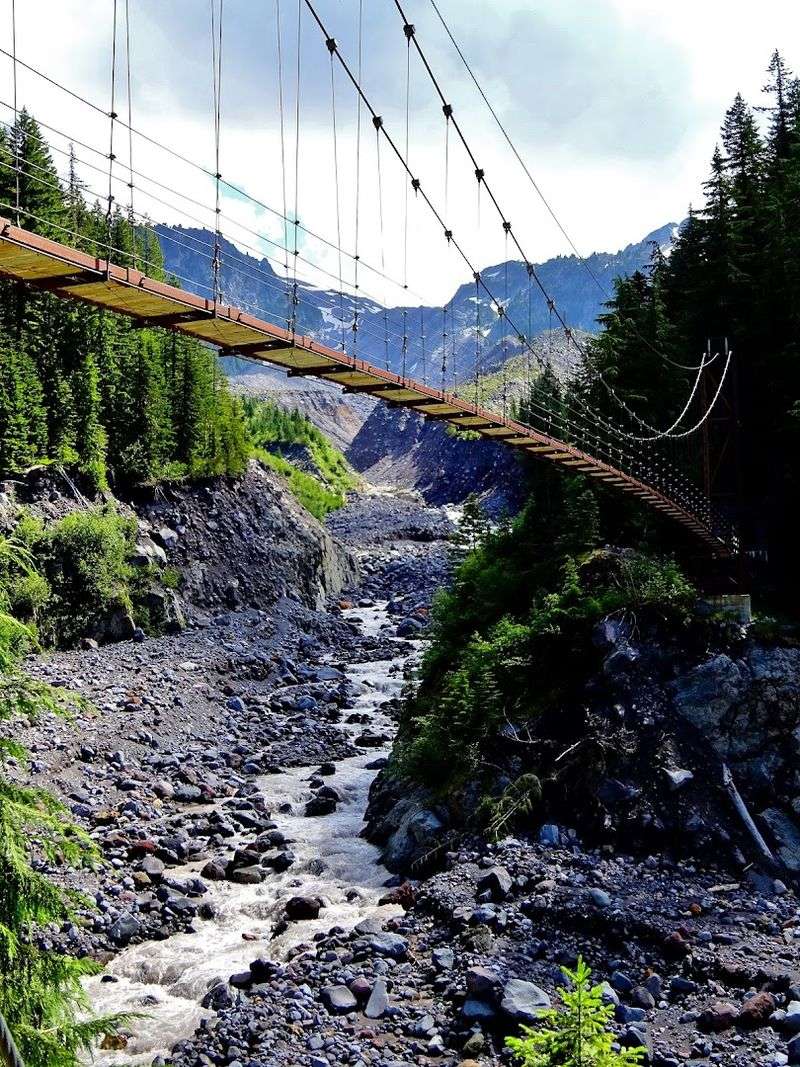
Standing at the edge of the Tahoma Creek Suspension Bridge for the first time, I understood immediately why people make the entire journey just for this moment.
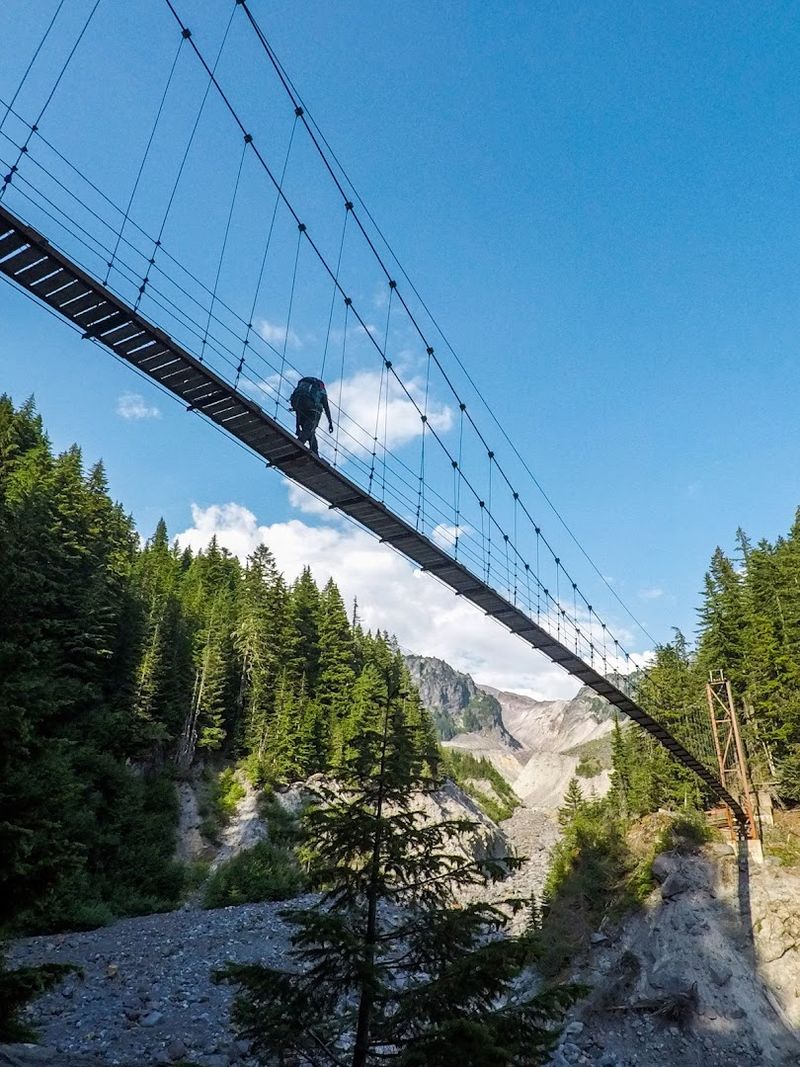
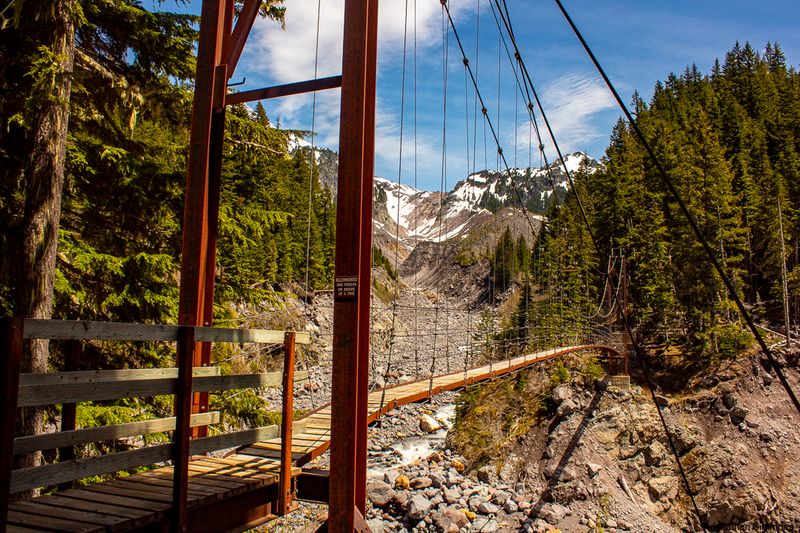
The bridge stretches 165 feet across Tahoma Creek, and the water below moves fast and cold, carrying the pale blue-grey color that only comes from glacial melt.
The bridge sways slightly underfoot, which is completely normal but still sends a pleasant jolt of adrenaline through your whole body. Gripping the cable railing and looking straight down at the rushing creek is one of those experiences that feels vivid and immediate in a way that a photograph cannot fully capture.
The bridge is sturdy and safe, but its movement reminds you that you are standing over something powerful and untamed. That contrast between engineered structure and wild nature is part of what makes this crossing so memorable.
Most hikers stop mid-span to take photos and soak in the view, and I highly recommend doing exactly that. The surrounding peaks and the roar of the water below create a sensory combination that is genuinely hard to find anywhere else in Washington State.
Reading The Weather And Trail Conditions
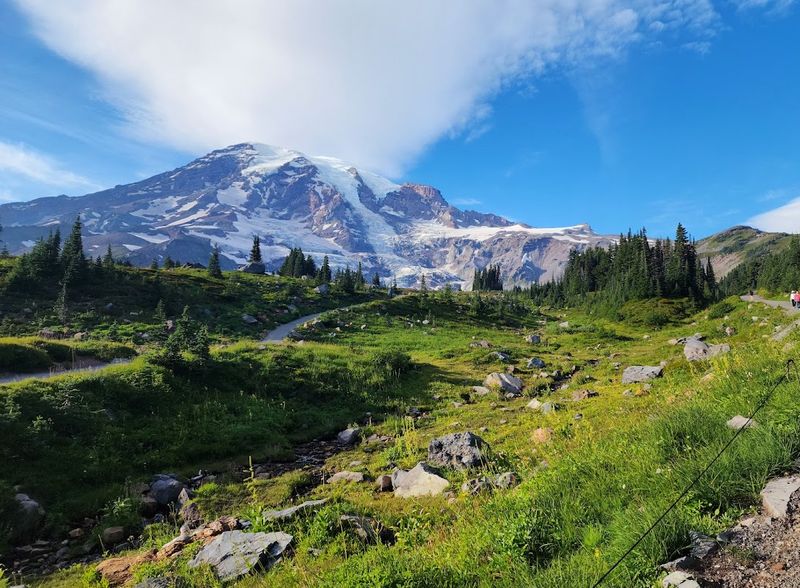
Mount Rainier creates its own weather, and the Tahoma Creek area has a particular reputation for rapid changes in conditions. Before heading out, checking the National Park Service website for current trail reports is not optional, it is essential.
The Tahoma Creek Trail is prone to debris flows and washouts, and conditions that were passable one week can change dramatically after a rain event.
I checked conditions the evening before my hike and again the morning of, and I still encountered a section where the trail simply disappeared into the creek bed for about thirty feet. Having a GPS track saved me from wandering in the wrong direction.
The Washington Trails Association website also posts recent trip reports from hikers who have been out in the last few days, making it one of the most useful planning tools available for this route.
Summer and early fall are generally the best windows for this hike, with July through September offering the most reliable conditions. Snow can linger on higher sections well into June, so patience pays off when planning your visit to this spectacular corner of the park.
What To Pack For A Wild Mountain Hike
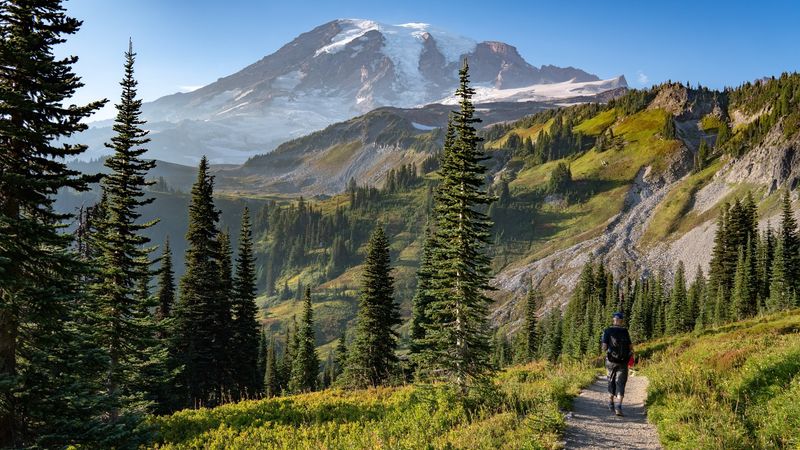
Packing smart for the Tahoma Creek hike makes a bigger difference than it does on most trails. Because the route is unmaintained and can involve unexpected route-finding, a GPS device with a downloaded offline map is at the top of the essential list. a
I, used a dedicated GPS unit rather than relying on my phone, and that turned out to be the right call when the signal got spotty in the dense forest sections.
Water is plentiful along the trail, but the creek water needs to be filtered before drinking. A lightweight water filter or purification tablets take up almost no space and give you the freedom to stay hydrated without carrying heavy loads from the start.
Trekking poles are also worth bringing because the creek crossings and muddy sections benefit enormously from that extra stability.
A rain jacket should always come along on any Mount Rainier hike regardless of the forecast. Layers, sturdy waterproof boots, snacks with real caloric density, and a basic first aid kit round out a pack that is ready for whatever the trail decides to throw at you on any given day.
Why This Hike Belongs On Every Bucket List
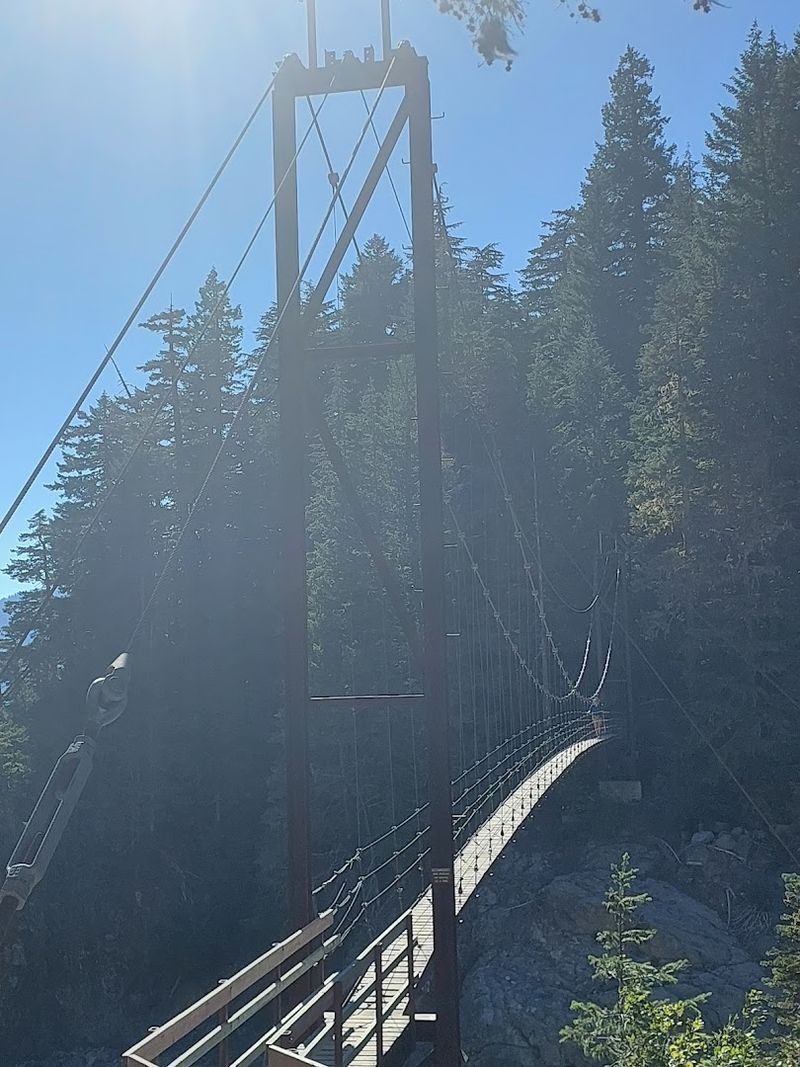
Some hikes are popular because they are easy and photogenic. The Tahoma Creek Suspension Bridge hike earns its reputation through something more honest, which is the combination of genuine challenge, raw wilderness, and a payoff moment that few trails in Washington can match.
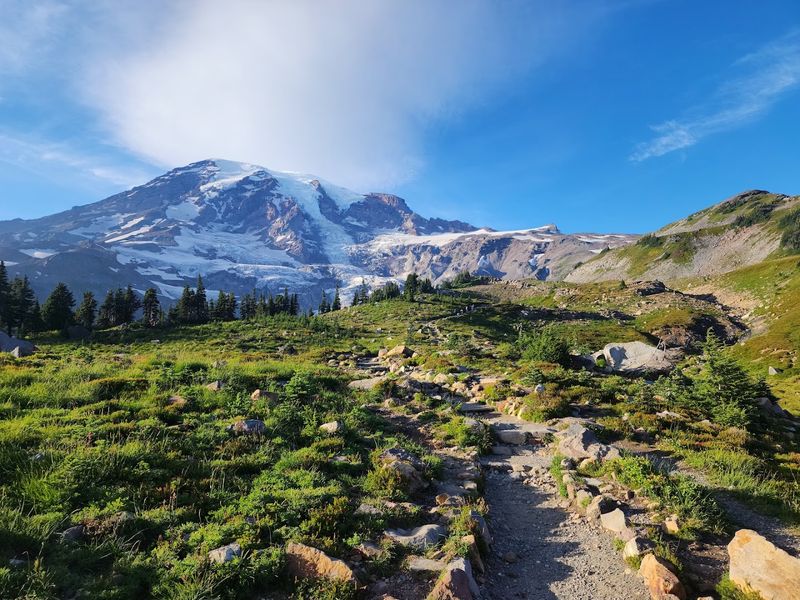
Crossing that swaying bridge over a glacial creek with Mount Rainier looming somewhere above the tree line is the kind of experience that stays with a person for years.
I have recommended this hike to friends who wanted something beyond the usual tourist trail, and every single one of them came back with the same look on their face: tired, muddy, and completely satisfied. The trail does not pretend to be something it is not.
It is wild, it is demanding, and it rewards people who show up prepared and curious.
Mount Rainier National Park offers many trails, but the Tahoma Creek Suspension Bridge hike stands apart because it delivers adventure in its most unfiltered form. If your bucket list needs a hike that actually makes your pulse quicken, this is the one to add right now.