
This Stunning New Mexico Town Looks Straight Out Of A Hallmark Film
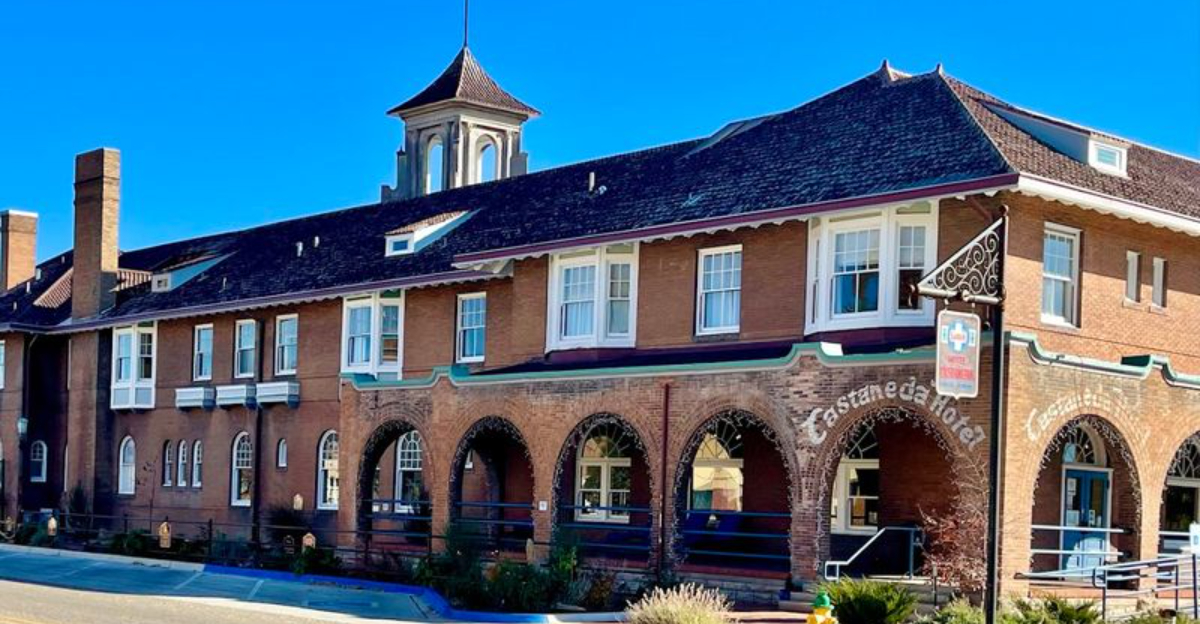
You hear “Las Vegas” and your brain jumps straight to neon, and Elvis impersonators on caffeine. But slow down.
This isn’t Nevada. Las Vegas, New Mexico is the quieter twin.
The one that skipped the bright lights and kept the old soul. Instead of mega-resorts, you get historic streets, soft colors, and a pace that feels like it forgot to rush anywhere.
Same name as its louder cousin, but that’s where the resemblance politely stops. This Las Vegas doesn’t shout.
It lingers. It lets sunlight do the talking.
And somehow, that’s exactly what makes it hard to forget.
The Heart Of It All
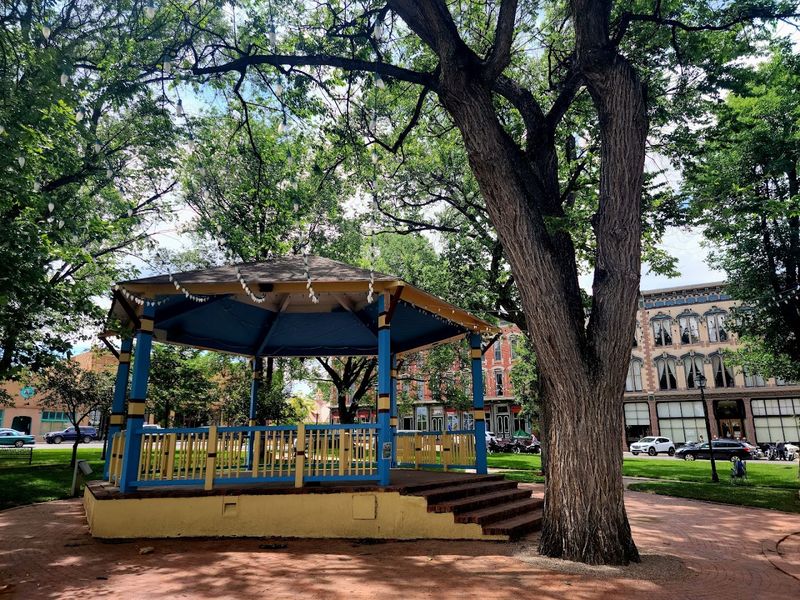
Some town squares feel like museum pieces. The Las Vegas, New Mexico Plaza feels like the living room of the entire community, warm, welcoming, and full of stories.
The plaza dates back to 1835, making it one of the oldest in the Southwest. It served as a trading post stop along the Santa Fe Trail, and later became a key stop for the Atchison, Topeka and Santa Fe Railway.
That kind of layered history gives the plaza a weight and a presence that you can almost feel when you stand in the middle of it.
Surrounding the plaza are beautifully preserved Victorian and Italianate storefronts that have barely changed in over a century.
The architecture here is genuinely jaw-dropping, especially for a town of about 13,000 people. You get the sense that time slowed down here on purpose.
Walking around the plaza feels cinematic in the best possible way. The wide sidewalks, the old-fashioned lampposts, the mix of Spanish Colonial and American frontier styles, it all creates a visual feast.
Grab a bench and just sit for a while.
Watch the world move at a pace that modern cities have completely forgotten. The plaza also hosts local events, markets, and festivals throughout the year, giving visitors a genuine slice of community life.
This is not a backdrop. This is a living, breathing neighborhood that happens to look like a film set.
Where Nature Meets Small-Town Charm
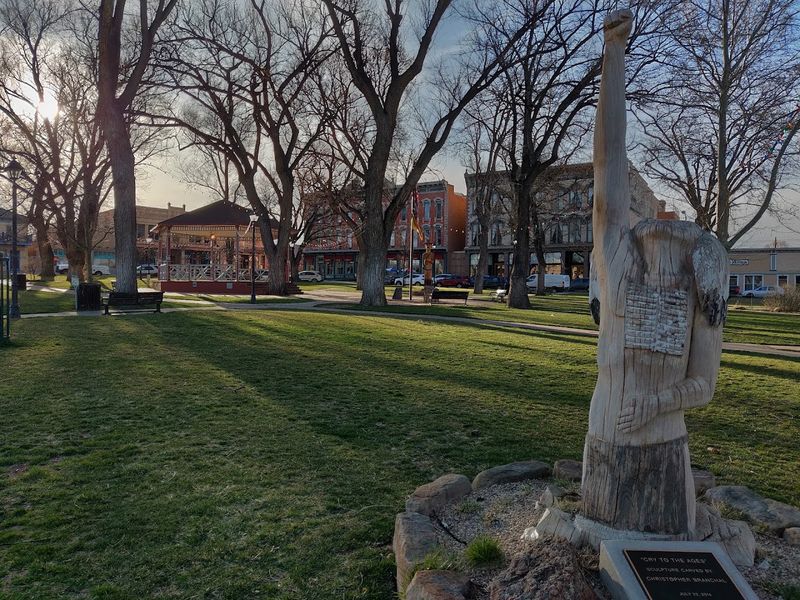
Right next to the historic plaza sits Carnegie Park, a quietly beautiful green space that feels like a reward after a long drive through the desert. It is the kind of park that makes you want to slow down and breathe deeply.
The park is named after the Carnegie Library that once stood nearby, a classic symbol of early 20th-century civic pride.
Today it serves as a shady retreat with mature cottonwood trees, walking paths, and a relaxed atmosphere that perfectly complements the energy of the surrounding plaza. On a warm afternoon, it is genuinely one of the most peaceful spots in New Mexico.
What makes Carnegie Park special is how naturally it fits into the rhythm of the town. It does not try to be flashy.
It simply exists as a green, breathing space in the middle of a historic downtown, and that restraint is exactly what makes it beautiful.
Families picnic here. Visitors wander through.
The light filters through the trees in a way that photographers absolutely adore.
The park also connects you visually to the surrounding mountain landscape, with the Sangre de Cristo range forming a dramatic backdrop on clear days. Standing in the middle of the park with those mountains behind you and the old town around you, it clicks.
You finally understand why filmmakers keep coming back to this corner of New Mexico. Nature and history rarely cooperate this beautifully.
Old-School Elegance With Real Soul
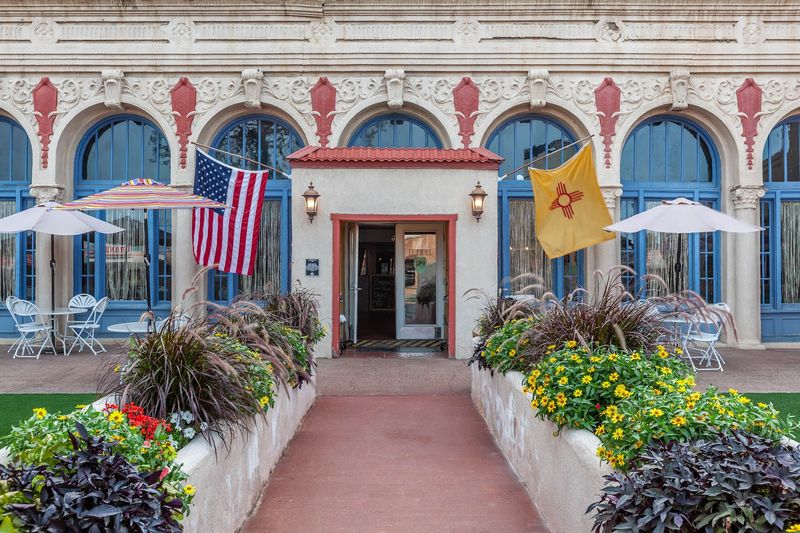
Not every great hotel needs a rooftop pool or a spa menu the size of a novel. Sometimes a place earns its reputation through sheer, unfiltered character, and El Fidel Hotel has that in abundance.
Built in 1923, El Fidel is one of the oldest continuously operating hotels in New Mexico. The building itself is a gorgeous example of Mission Revival architecture, with thick walls, arched windows, and a presence that commands attention on Bridge Street.
It has hosted politicians, travelers, and road-trippers for over a hundred years, and the walls practically hum with accumulated stories.
Staying here feels like stepping into a time capsule, but in the most comfortable way possible. The rooms are simple, the atmosphere is genuine, and the sense of history is overwhelming in the best sense.
You are not just booking a room. You are booking a connection to a century of American travel culture.
The hotel also sits perfectly within walking distance of the plaza, local restaurants, and the main stretch of historic architecture.
So everything you came to see is right outside your door. El Fidel is the kind of place that reminds you why boutique, historic lodging often beats a generic chain hotel by a mile.
It grounds you in a place rather than insulating you from it. If Las Vegas, New Mexico had a heartbeat, it might just be ticking inside these old brick walls.
A Jaw-Dropping Campus
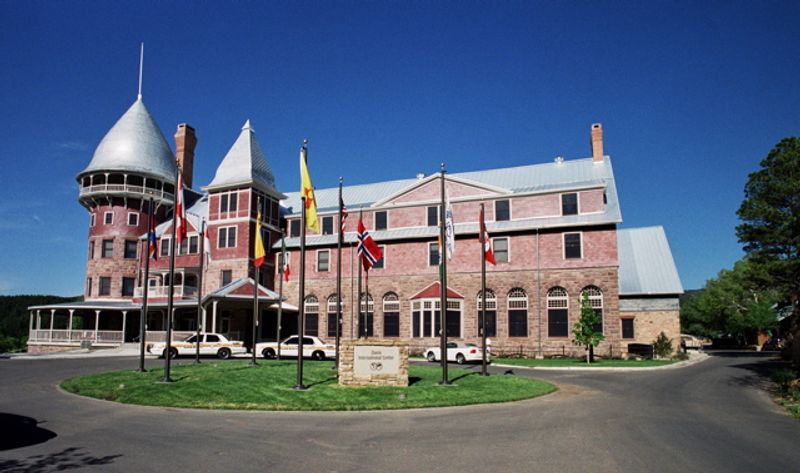
Imagine a castle. Now imagine that castle sitting in the middle of New Mexico, surrounded by pine-covered mountains and a hot springs resort.
That is Montezuma Castle, and it is as surreal as it sounds.
Built in 1886 by the Atchison, Topeka and Santa Fe Railway as a luxury resort hotel, Montezuma Castle is a Romanesque Revival masterpiece that has had many lives. It served as a hotel, a seminary, and is now part of the United World College campus, which is affiliated with New Mexico Highlands University.
The building is a National Historic Landmark and one of the most photographed structures in the state.
The surrounding grounds are equally stunning. Natural hot springs bubble up nearby, and the Gallinas River winds through the property.
The whole setting feels almost impossibly scenic, like someone designed it specifically to make your jaw drop. It is the kind of place that makes you stop mid-sentence just to stare.
New Mexico Highlands University itself is a welcoming campus with a strong community presence in Las Vegas. The university adds an intellectual and cultural energy to the town that balances beautifully with its frontier heritage.
Together, the castle and the campus create one of the most unique educational and historical landscapes in the entire Southwest. Visiting Montezuma Castle is not just sightseeing.
It is a full-on encounter with architectural ambition and natural beauty working in perfect, breathtaking harmony.
A Living History Experience
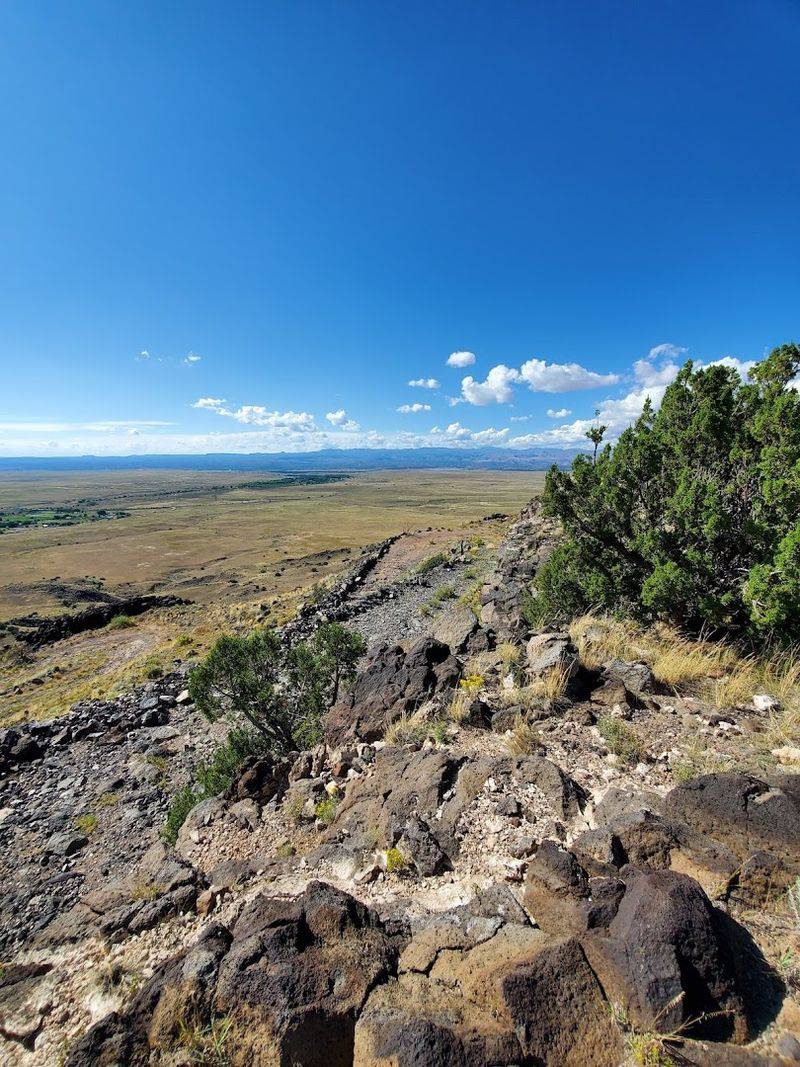
History books are fine, but nothing beats walking through history with your own two feet. The Las Vegas, New Mexico area offers exactly that kind of immersive experience through its connection to living history ranches and cultural landmarks scattered across the region.
The Camino Real, the ancient trade route that connected Mexico City to Santa Fe, passed directly through what is now Las Vegas.
This means the land itself carries centuries of human movement, commerce, and cultural exchange. Standing on that ground, you feel the weight of all those footsteps before yours.
It is humbling in the best possible way.
The region around Las Vegas is dotted with historic ranchos and agricultural landscapes that have barely changed in generations.
Adobe walls, hand-carved wooden gates, acequia irrigation ditches, all of it paints a picture of life that existed long before highways and smartphones. These are not reconstructions.
These are real, working remnants of a way of life that the Southwest has carried forward with remarkable care.
Exploring the rural roads around Las Vegas reveals a landscape that is equal parts beautiful and educational.
You see how communities built themselves around water, land, and tradition. The rolling hills, the adobe homesteads, the distant mountains, it all comes together into something that feels deeply authentic.
This is the New Mexico that does not appear on tourist brochures very often, and that is precisely what makes it so worth seeking out. Go slow.
Look carefully. The details are everything here.
Sunsets That Stop Time
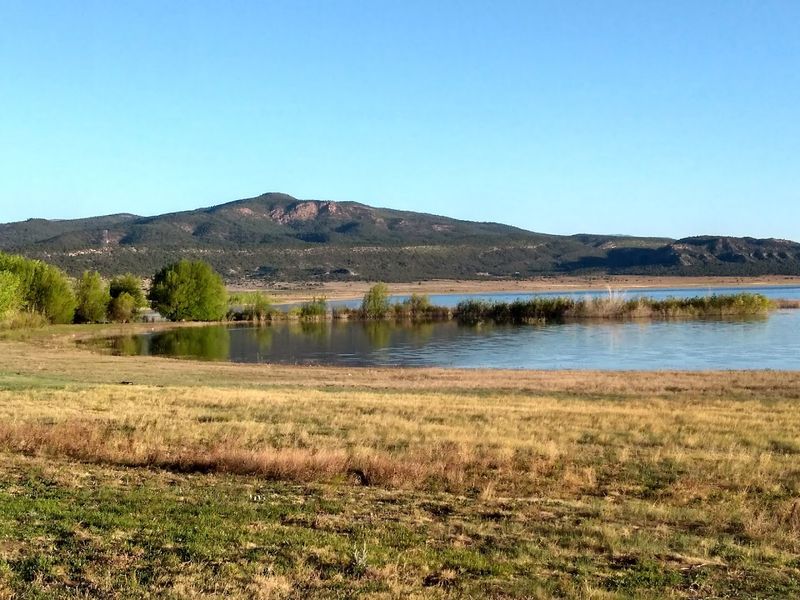
There are sunsets, and then there are Storrie Lake sunsets. The kind that make you put your phone down and just sit there, completely silent, wondering how something this beautiful exists without a ticket price.
Storrie Lake State Park sits just two miles north of downtown Las Vegas and offers a stunning reservoir experience against a backdrop of rolling hills and mountain ridgelines.
The lake covers about 1,100 acres when full, and the surrounding park provides camping, fishing, hiking, and wildlife watching. It is an outdoor enthusiast’s playground that also happens to be extraordinarily photogenic.
Windsurfers love Storrie Lake for its consistent afternoon breezes. Anglers come for the walleye, bass, and rainbow trout.
Birdwatchers have spotted everything from great blue herons to American white pelicans along the shoreline. The diversity of activity here is genuinely impressive for a park this close to a small town.
But the real magic happens in the late afternoon, when the light turns golden and the water catches every color in the sky.
The Sangre de Cristo Mountains glow red and orange in the distance, and the entire scene becomes something out of a landscape painting. Camping overnight means waking up to mist on the water and total, blissful quiet.
Storrie Lake is the kind of place that resets your nervous system completely. After one morning here, the idea of rushing anywhere feels almost comically unnecessary.
Nature’s Best Road Trip
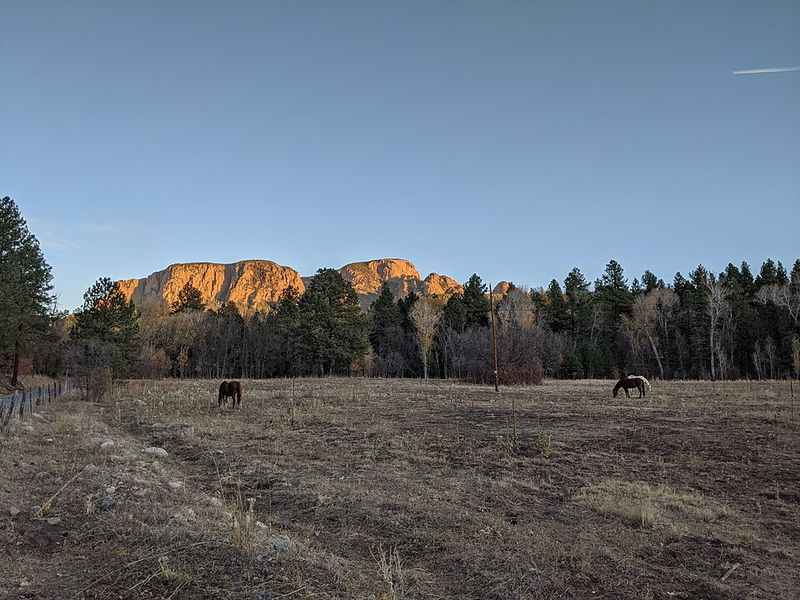
Some roads are just roads. Highway 65 out of Las Vegas, New Mexico is an experience, a slow-building visual crescendo that rewards every mile with something more beautiful than the last.
Heading northwest from Las Vegas along Highway 65 takes you into the Pecos Wilderness area, one of the most spectacular natural landscapes in the entire state.
The road winds through the Gallinas Canyon, following the river through dense pine and fir forests, past red rock formations, and into high alpine meadows that feel worlds away from the desert towns below.
The elevation shift alone is dramatic, climbing from about 6,400 feet in Las Vegas to over 10,000 feet in the wilderness.
El Porvenir Campground sits at the end of the paved road and serves as a trailhead for hikes into the Pecos Wilderness. The trails here lead to pristine mountain lakes, towering peaks, and the kind of solitude that modern life rarely offers.
Hermit Peak, at 10,212 feet, is one of the most iconic hikes in northern New Mexico and rewards the effort with panoramic views that stretch for miles in every direction.
The drive itself, even without hiking, is worth every minute. Pull over at the canyon overlooks.
Listen to the river. Watch the light change on the rock walls as the afternoon moves along.
Highway 65 is the kind of road that makes you fall in love with New Mexico all over again, one breathtaking curve at a time. Is there a better Sunday afternoon plan?
Honestly, probably not.