
Why This Eclectic Louisiana Destination Is A Local Favorite
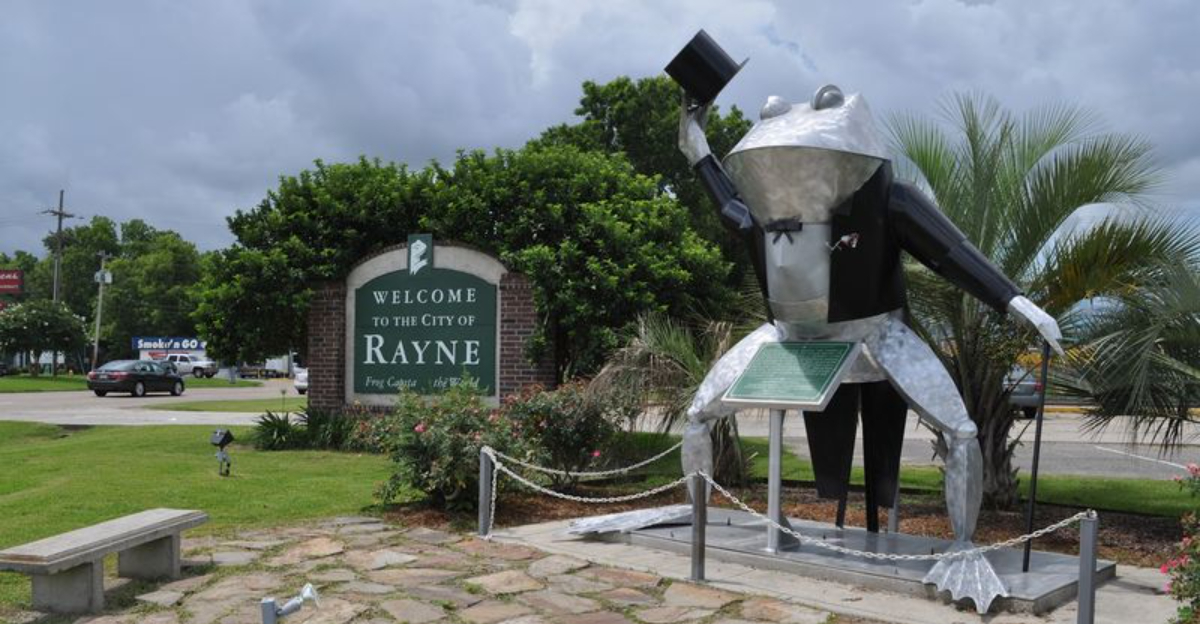
If Schitt’s Creek proved anything, it’s that small towns don’t do “quiet personality.” And this one in Louisiana? It’s got personality on loud.
Sitting in Acadia Parish along I-10, this place looks unassuming at first, until you realize it proudly calls itself the Frog Capital of the World. Yes, frogs.
Real ones. Shipped to fancy restaurants in New York and even Paris back in the early 1900s.
Small town, global appetite. Now it’s all Cajun color and roadside charm.
Murals splash across walls, old buildings lean into history, and the air always seems to carry the promise of something sizzling nearby. Food here doesn’t whisper.
It shows up bold, messy, and unforgettable, usually right when you think you’re “not that hungry.” It’s quirky, loud in its own way, and impossible to forget once you’ve driven through.
The Frog Capital Of The World Title
Rayne has one of the most gloriously unexpected nicknames in the entire country. Back in the late 1800s, two French brothers named Donat and Jacques Weil started shipping live frogs from the local swamps to restaurants in New York and France.
That frog trade put this tiny Cajun town on the international map in the most delightful way imaginable.
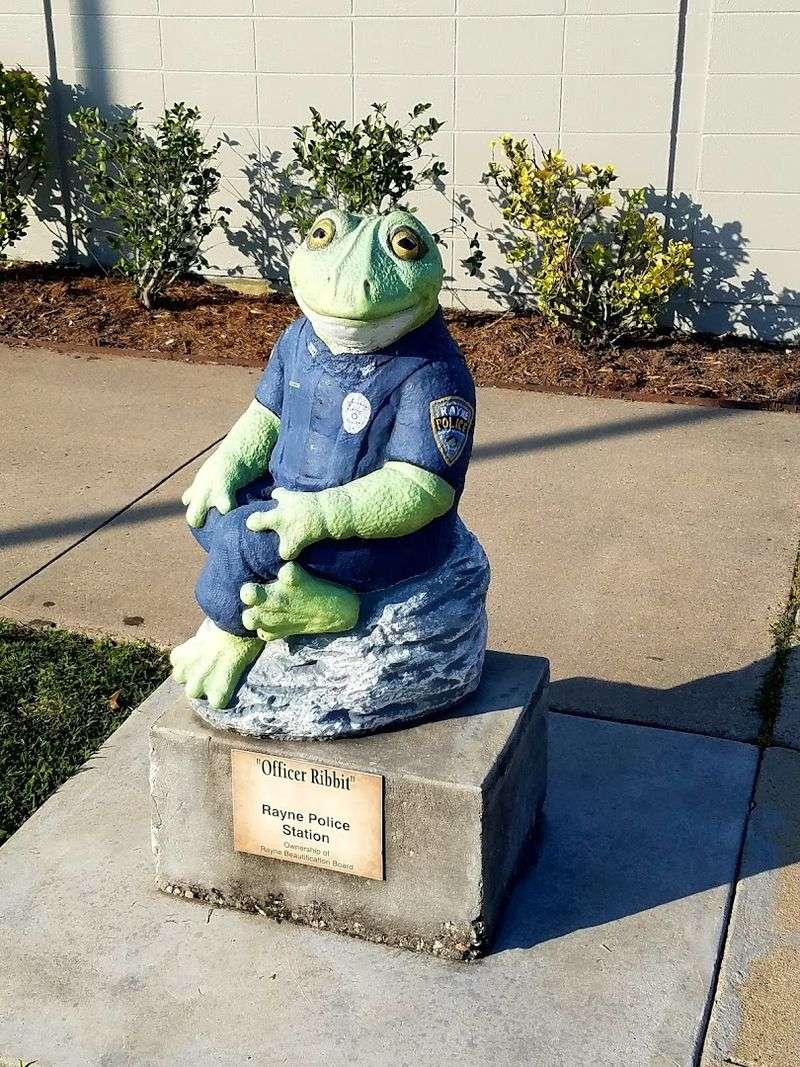
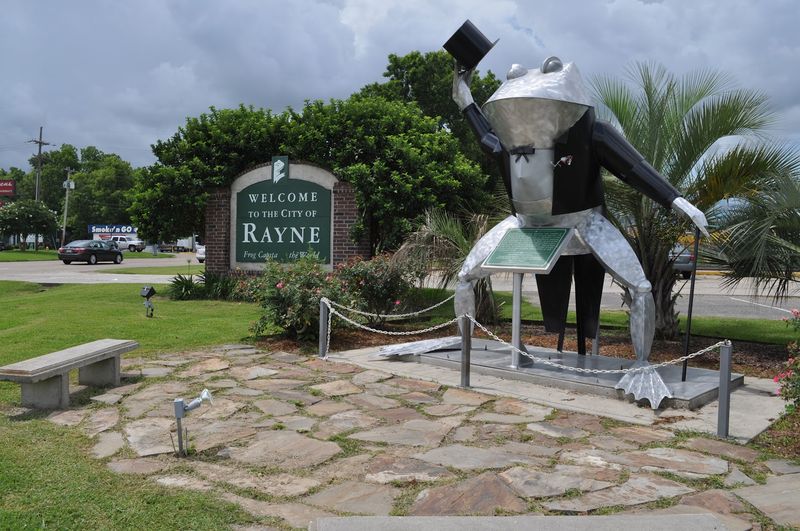
When I first rolled into town and saw the frog statues and murals everywhere, I genuinely laughed out loud. It felt like the whole town leaned into the joke and made it their superpower.
Frog imagery is painted on buildings, stamped on souvenirs, and celebrated during the annual Frog Festival held every September.
The Rayne Frog Festival is a full-blown community celebration with food, music, and frog-jumping contests. It draws thousands of visitors every year and has become one of the most beloved small-town festivals in Louisiana.
I visited outside of festival season, but the energy of that tradition still hummed through every street I walked.
What I loved most was how proudly Rayne owned this identity. There was zero irony in it.
The whole town wore the frog crown with complete sincerity and joy.
Visiting felt like meeting someone who fully knows who they are, and that kind of confidence is genuinely magnetic. Rayne does not apologize for being different, and that is exactly why it works.
The Famous Cajun Murals Of Downtown Rayne
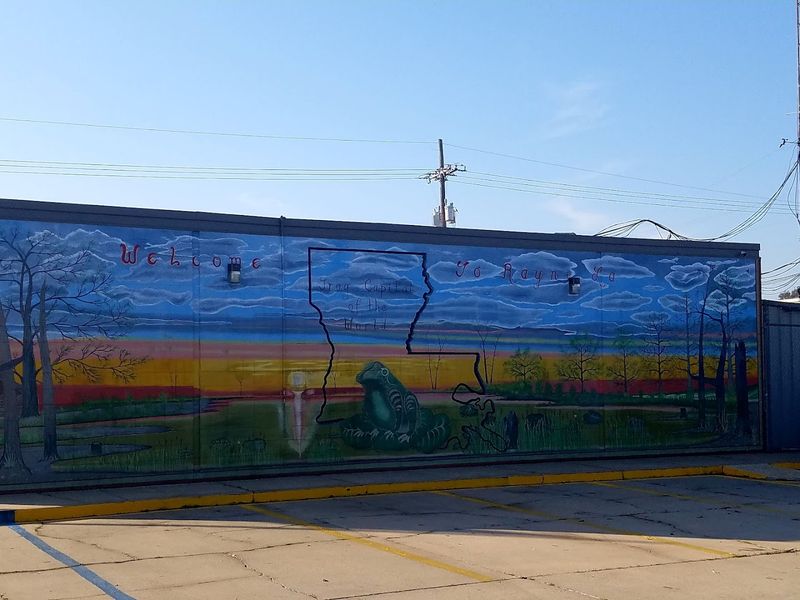
Wandering through downtown Rayne felt like walking through an open-air gallery that nobody charged admission for. The murals here are not just decorations.
They are stories painted directly onto the bones of the town. Every building seemed to have something vivid and alive splashed across its walls.
Rayne’s mural program began decades ago as a way to celebrate local Cajun heritage and bring color to the historic downtown district. The paintings depict everything from bayou landscapes to frog scenes to everyday Cajun life.
Some of the murals are massive, stretching across entire building facades in bold, saturated colors that pop under the Louisiana sun.
I spent an entire afternoon just walking from mural to mural with my camera. Each one told a slightly different chapter of the same story about a community that is deeply proud of where it came from.
The craftsmanship was impressive, and the sheer volume of public art in such a small town genuinely surprised me.
There is something almost cinematic about the way the murals interact with the old architecture around them. The faded brick and painted wood storefronts provide the perfect canvas.
Standing in the middle of Main Street and spinning slowly just to take it all in felt like a moment worth bookmarking. Rayne proved to me that a town does not need a massive budget to create something truly beautiful and worth visiting.
Boudin Stops That Hit Different In Rayne
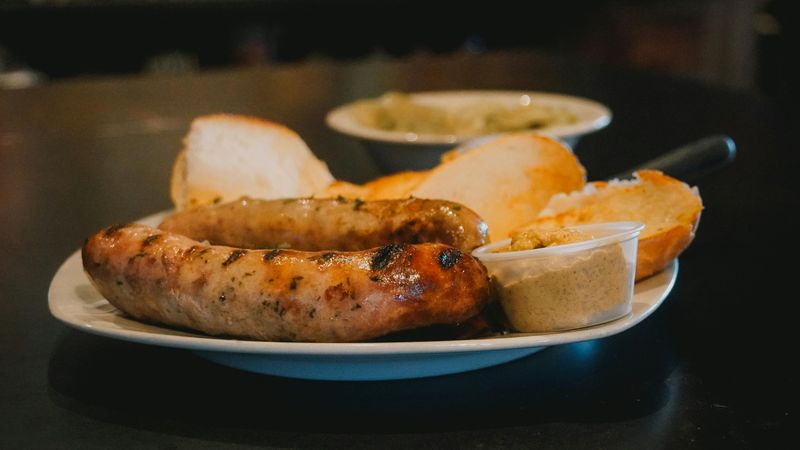
Boudin in Louisiana is not just food. It is a cultural institution, and Rayne sits right in the heart of boudin country.
Driving along the roads near Rayne, I passed more than a few gas stations and meat markets with handwritten signs advertising fresh boudin. I pulled over every single time, and I have zero regrets about that decision.
Rayne-area boudin is the kind that comes in a natural casing, packed with seasoned pork and rice, and steamed until everything melds together into pure Cajun magic.
You eat it standing up, usually next to your car, squeezing the filling out with your fingers. It is messy and perfect and deeply satisfying in a way that a fancy restaurant plating simply cannot replicate.
Cajun boudin has been a staple of this region for generations. The recipes are closely guarded and vary from shop to shop, which means every stop is a slightly different adventure.
Some lean spicier, some pack in more liver, and others go heavy on the green onion. Each version has its own loyal following among people who take their boudin very seriously.
I tried three different spots during my time near Rayne, and ranking them felt almost disrespectful to the craft.
What I can say is that boudin from this corner of Louisiana tastes like it was made by someone who actually cares about every single link. That kind of food stays with you long after the trip ends.
The Historic Architecture Of Old Rayne
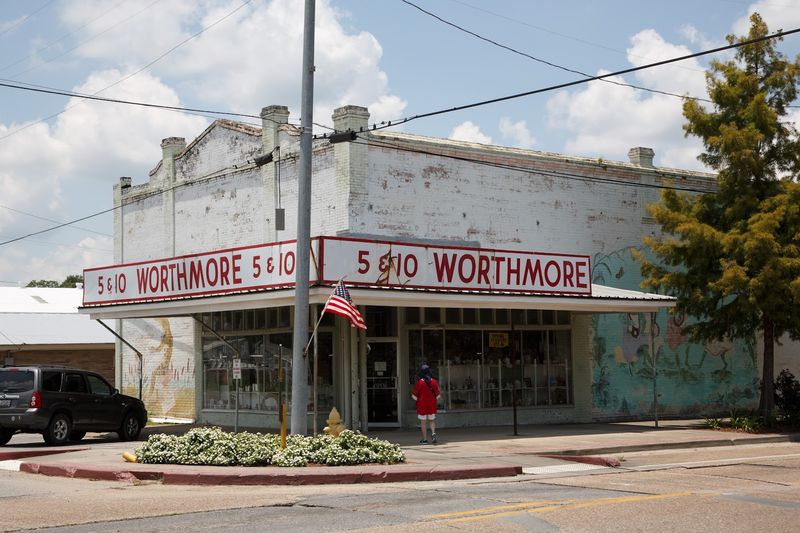
Rayne’s downtown architecture is the kind that makes you stop mid-step and look up. The historic district is lined with early 20th-century commercial buildings that have held their shape and character beautifully.
Walking those streets felt like stepping into a Louisiana time capsule that somehow still felt alive and relevant.
Many of the buildings date back to the early 1900s when Rayne was a thriving railroad town. The Missouri Pacific Railroad helped put Rayne on the map, and the prosperity from that era is still visible in the detailed brick facades and ornate cornices that line the main commercial strip.
It is the kind of architectural detail that modern construction rarely bothers with anymore.
I found myself pausing in front of buildings that had been repurposed over the decades but still carried their original bones. A former hardware store now hosts a small business.
An old bank building anchors a corner with quiet authority.
The layers of history stacked on top of each other gave the whole district a richness that felt earned rather than manufactured.
Preservation efforts in Rayne have helped maintain the integrity of the downtown streetscape in a way that many small towns have struggled to do. The combination of intact architecture and vibrant murals creates a visual experience unlike anything I expected from a town this size.
Rayne’s downtown is proof that history, when treated with care, becomes one of the most compelling attractions a place can offer.
The Rayne Frog Festival Tradition
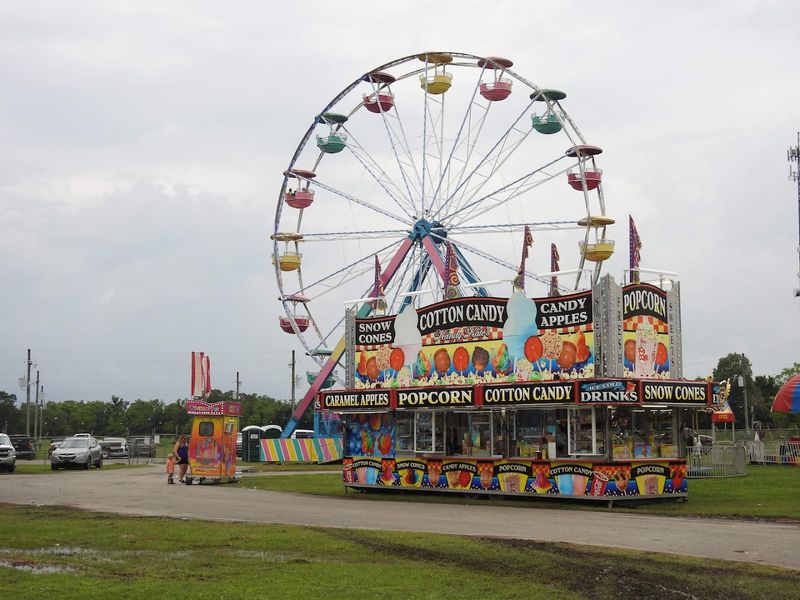
Every September, Rayne transforms into the most joyfully chaotic celebration I have ever heard described by someone who grew up going every single year.
The Rayne Frog Festival has been running since 1973, making it one of the longest-standing community festivals in Acadiana. It is the kind of event that gets passed down through families like a treasured recipe.
The festival features live Cajun and zydeco music, a full lineup of local food vendors, a carnival, and the legendary frog-jumping contest that anchors the whole weekend. People travel from across Louisiana and beyond just to watch frogs compete for glory in a dirt ring.
It sounds absurd, and it absolutely is, and that is precisely what makes it unforgettable.
Food at the festival leans deep into Cajun tradition. Crawfish, jambalaya, fried frog legs, and boudin are all part of the spread.
The air smells like a combination of fried everything and live music, which is honestly my personal version of paradise. Vendors set up along the main streets and the whole town buzzes with a warmth that feels completely genuine.
Even though I visited Rayne outside of festival season, talking to people around town about the Frog Festival felt like hearing someone describe their favorite childhood memory.
The pride and nostalgia in their voices told me everything I needed to know. Some traditions stick because they deserve to, and the Rayne Frog Festival has clearly earned its place in Louisiana’s cultural calendar.
Rayne’s Deep Cajun Cultural Roots
Rayne sits in the heart of Acadiana, the region of Louisiana settled by Acadian exiles who were expelled from Nova Scotia in the mid-1700s. That history runs deep in everything from the food to the music to the way people greet each other on the street.
Spending time in Rayne felt like getting a genuine cultural education without ever sitting in a classroom.
Cajun French was the primary language spoken in this region for generations, and traces of it still surface in local place names, family surnames, and occasional phrases dropped into everyday conversation.
There is a linguistic texture to Rayne that reminded me how much of Louisiana’s identity is rooted in a story of resilience and cultural survival against serious historical odds.
The food traditions here are inseparable from that cultural story. Dishes like gumbo, etouffee, and rice dressing were not invented in a test kitchen.
They evolved over centuries in home kitchens where resourcefulness and flavor went hand in hand. Eating in Rayne felt like participating in something that stretched back much further than the restaurant itself.
What struck me most about Rayne’s Cajun identity was how unselfconscious it felt. There was no performance of culture for tourists.
People here simply live it every day, and that authenticity is something you can genuinely feel.
Rayne reminded me that the most powerful cultural experiences are the ones that were never designed to impress anyone in the first place.
The Unexpected Charm Of Rayne’s Side Streets
The main drag of Rayne gets most of the attention, but the side streets are where I found the real soul of the place. Wandering away from the murals and into the residential blocks felt like finding bonus content that the guidebooks forgot to mention.
Rayne’s neighborhoods are filled with classic Louisiana vernacular cottages, shotgun houses, and Creole bungalows that sit behind thick oak trees and flowering yards.
The residential architecture here has a lived-in warmth that is hard to fake. Porches loaded with rocking chairs, garden beds spilling over with color, and screen doors that bang shut in the breeze.
Every block felt like a scene from a Southern novel that I wanted to keep reading. I genuinely lost track of time just walking and looking.
Small towns in Louisiana have a way of revealing themselves slowly, and Rayne was no different. The longer I spent wandering, the more I noticed.
A hand-painted mailbox here.
A wind chime made from old spoons there. Tiny details that added up to a portrait of a community that takes quiet pride in its surroundings.
Getting off the main street and into the neighborhoods gave me the clearest picture of what makes Rayne special. It is not one single attraction or landmark.
It is the accumulated texture of a town that has been living its own story for over a century.
Have you ever stumbled into a place that felt like it was made just for people who pay attention?