
This Little Michigan Park Carries A Huge Piece Of History
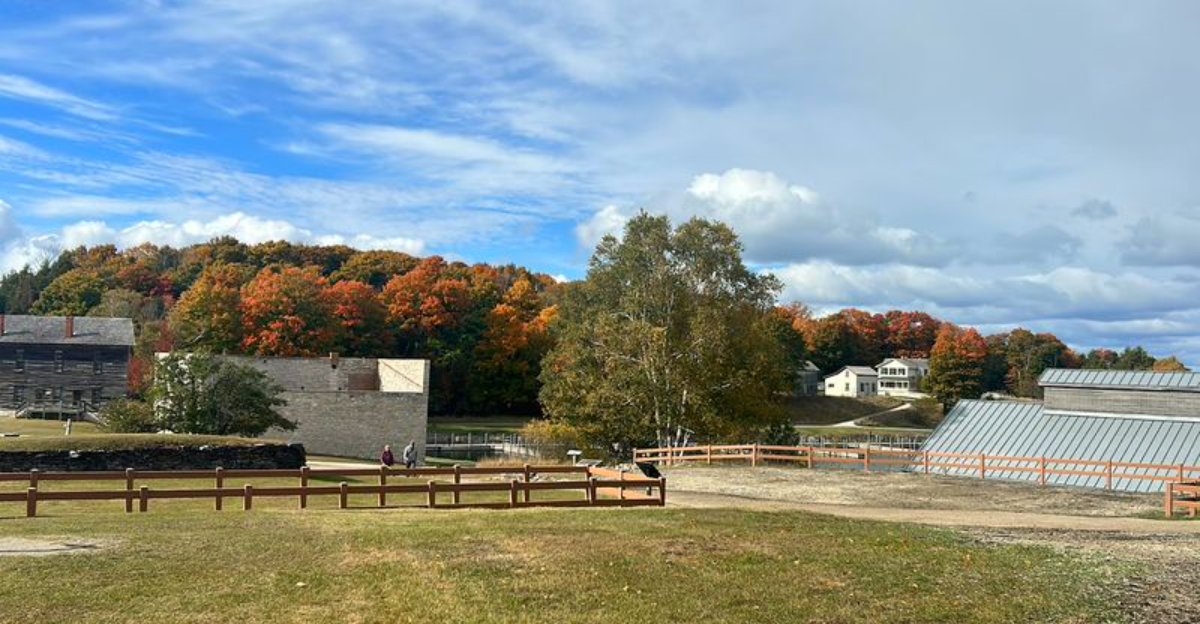
Landing at this tip of the Garden Peninsula feels like stumbling onto a movie set where the crew just walked off for lunch and never came back. It’s a quiet, beautiful argument between towering limestone cliffs, the turquoise glass of Snail Shell Harbor, and the skeletal remains of a 19th-century iron-smelting empire.
I’ve spent hours just tracking the light across the harbor, feeling like I’ve discovered a secret pocket of the Upper Peninsula that time simply forgot to update.
Explore one of the best Michigan ghost towns at this historic iron-smelting village, featuring scenic harbor overlooks, 19th-century ruins, and limestone cliff hiking trails.
Come for the views, seriously, the white cliffs rival anything you’ll find on the coast, but leave ample room for the human stories tucked into the company office and the machine shop.
I am giving you the lowdown on the trails that offer the best panoramic shots and why you should look for the thousand-year-old cedars clinging to the bluffs.
Start At The Visitor Center Before Wandering
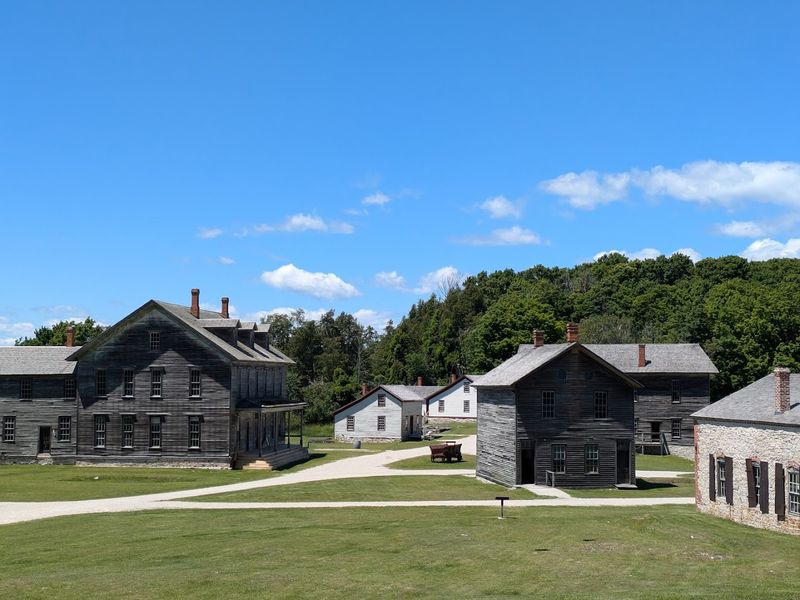
The visitor center is the smartest first stop, even if your feet are already itching for the old streets. Its exhibits and townsite diorama help you understand how Fayette looked in the 1880s, when this harbor town held homes, shops, industry, and roughly 500 residents.
That context makes every doorway feel less like scenery and more like evidence. You begin noticing who lived near the furnace, who lived higher up, and how a company town organized comfort, labor, and status.
Give yourself a few unhurried minutes here before the self-guided walk. The park rewards patient visitors, not speed walkers collecting buildings like stamps.
A Ghostly Glow Of Iron And Stone
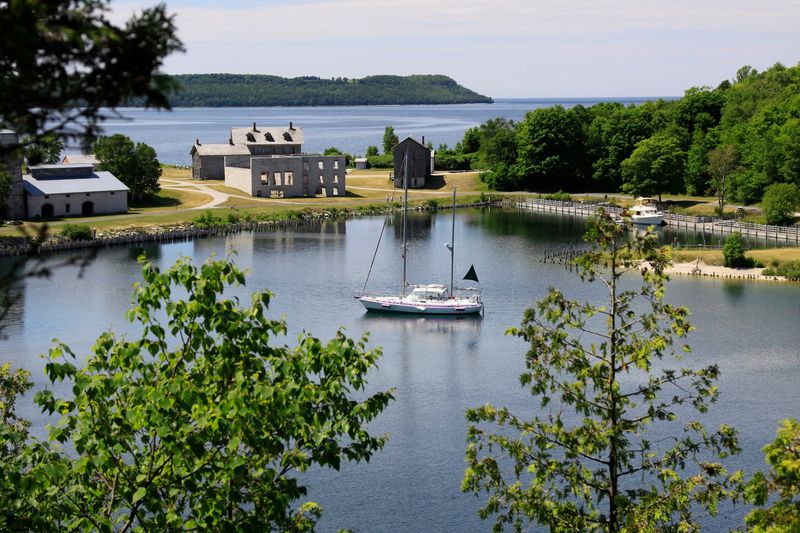
The air at Fayette Historic State Park is a crisp blend of Cedar-infused Lake Michigan breeze and the faint, lingering scent of damp limestone. Stepping onto the site, you are met with the hauntingly beautiful sight of massive, skeletal blast furnaces and roofless stone buildings, all set against a backdrop of towering white cliffs and the deep blue of Snail Shell Harbor.
The move is to walk the “ghost town” perimeter, where you can peer into the well-preserved hotel, townsite, and machine shops that once fueled a booming iron-smelting industry in the late 1800s.
The space is a silent, sun-drenched monument to a vanished community, offering a rare look at Michigan’s industrial past in a setting that feels more like a cinematic set than a traditional park.
You’ll find this historical treasure at 4785 II Rd, Garden, MI 49835, perched on the edge of the Garden Peninsula. The transition from the narrow, winding country roads to the sudden opening of the harbor and its industrial ruins marks your arrival at a place where the 19th century still feels remarkably present.
Respect The Furnace Complex Closures
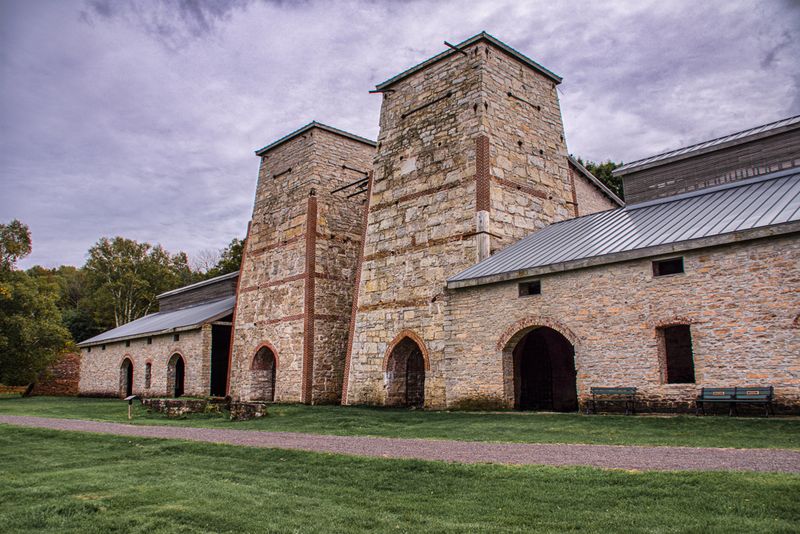
The furnace complex is the park’s heavyweight, even when parts of it are closed for structural improvements and visitor safety. Those massive remains hint at the heat, noise, and ambition that once defined Fayette’s iron-smelting operation from 1867 to 1891.
It is tempting to treat closed areas as mere inconvenience, but here the barriers are part of the preservation story. Keeping fragile industrial structures upright after more than 150 years requires patience, funding, and a public willing to look without climbing.
Use the interpretive signs nearby and take your time along open paths. The scale still comes through, even from a safe distance.
Compare The Homes Without Rushing Judgment
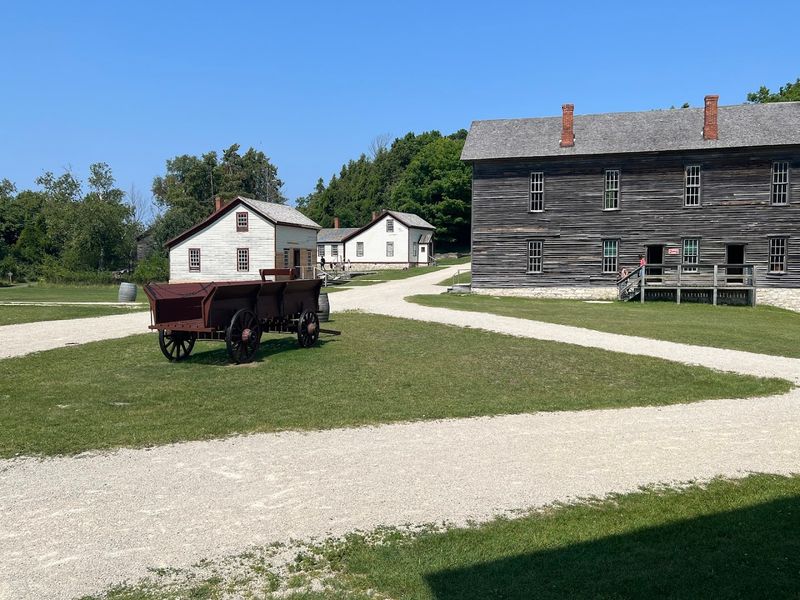
One of Fayette’s sharpest lessons is domestic, not industrial. The superintendent’s and doctor’s homes feel worlds apart from the reconstructed laborer’s cabin, and that contrast quietly explains how a company town sorted people’s lives.
These buildings are not just charming old rooms with creaky floors. They show differences in privacy, comfort, responsibility, and social standing among the residents who came from places including Canada, the British Isles, and Northern Europe.
Move slowly through the interiors when they are open, usually during the main visitor season from mid-May to mid-October. Small details, not grand displays, do the emotional work here.
Notice The Town Beyond The Smokestacks
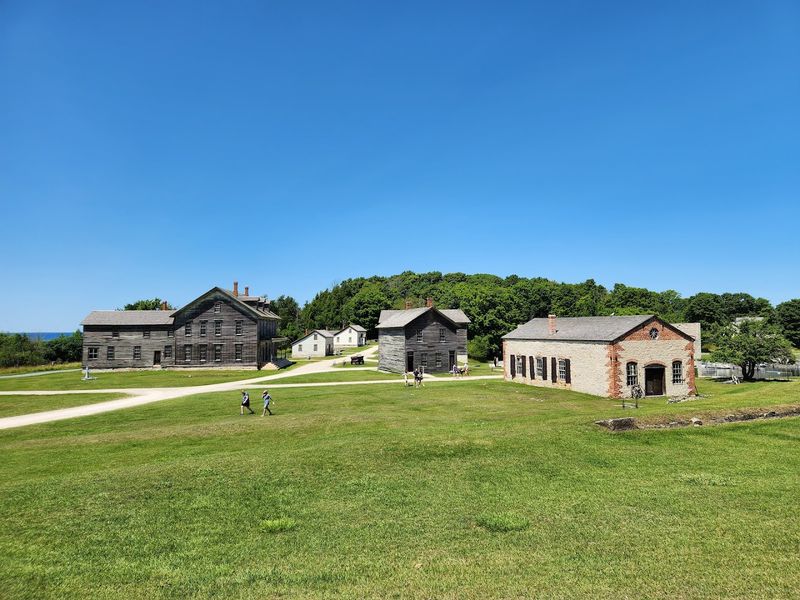
Fayette was not only furnaces and freight. The community had a hotel, company office, machine shop, homes, a coronet band, a baseball team, and even a horse racing track, which makes the place feel unexpectedly social.
That human texture matters because industrial sites can flatten people into job titles. Here, you can imagine errands, music practice, arguments, children moving between buildings, and workers measuring their days by more than smoke and shifts.
The preserved townsite includes over 20 historic buildings, so do not spend all your energy at the first impressive structure. The quieter corners often carry the most revealing clues.
Walk The Trails For The Long View
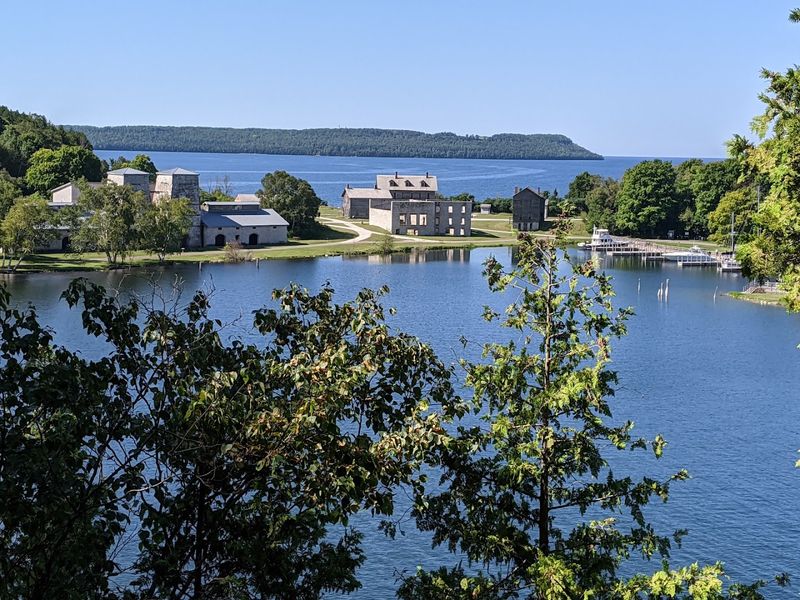
The trails pull the story outward from brick and timber into forest, bluff, and water. Fayette Historic State Park has about five miles of trails, with routes through hardwoods and along viewpoints that show why this landscape shaped the town’s fate.
From higher ground, Snail Shell Harbor looks neatly tucked beneath the limestone cliffs, almost too scenic for a former industrial center. That contradiction is the park’s quiet magic: beauty and extraction occupying the same shoreline.
Wear decent shoes, especially after rain, and carry water in warm months. The trails are approachable, but the best views deserve a little attention underfoot.
Look Up At The Limestone Cliffs, Not From Them
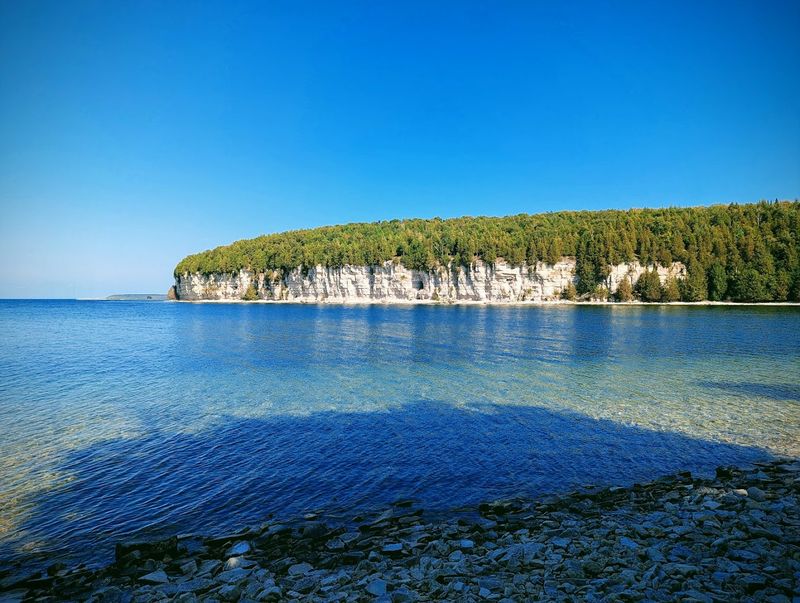
The white limestone cliffs rise around Snail Shell Harbor like a geological stage set, except they are very real and far older than the town. Some support ancient eastern white cedars, with ages reported up to about 1,900 years in Michigan state park information.
That fact changes the scale of your visit. Fayette’s industrial life lasted from 1867 to 1891, while the cliffs and trees measure time in a far stranger, longer rhythm.
Climbing on the cliffs is generally not part of the visitor experience, and that is for good reason. Admire them from trails and viewpoints, where preservation and wonder can coexist.
Plan Around The Open Building Season
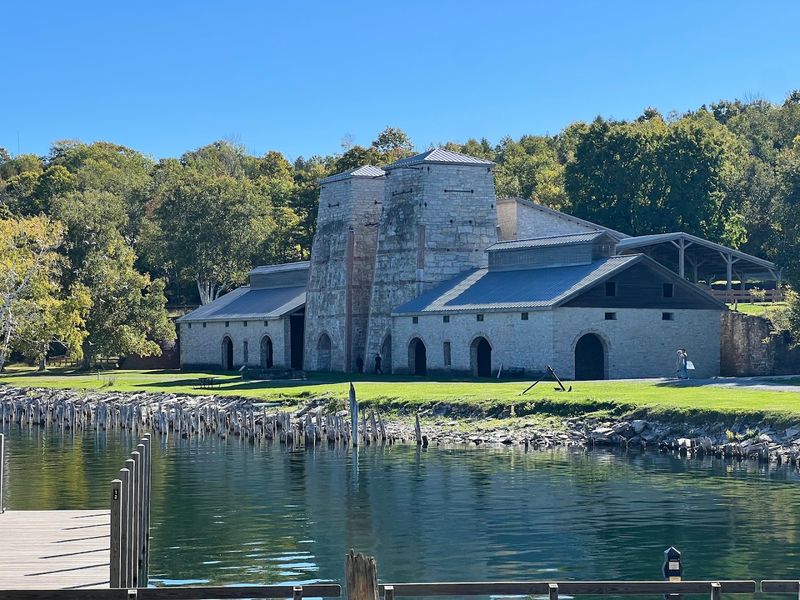
Timing matters at Fayette more than many first-time visitors expect. The historic townsite buildings are typically open for self-guided and guided tours from mid-May to mid-October, when you can step inside many preserved structures rather than only admire exteriors.
Outside that window, the park still has atmosphere, trails, shoreline, and views, but the interpretive experience changes. If interiors are important to you, check current state park information before making the drive to Garden Peninsula.
At least two hours is a sensible minimum for a first visit. Add more if you like reading signs, wandering slowly, or staring at harbors with unnecessary seriousness.
Return In Winter If You Like Quiet With Edges
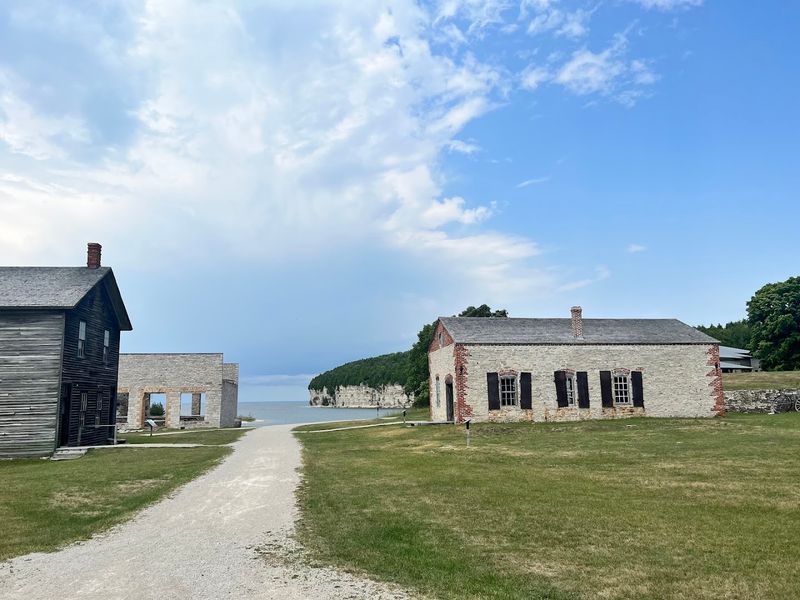
Winter changes Fayette from open-air museum to hushed, snow-padded memory. The same five miles of trails used by hikers and bikers in warmer seasons are groomed for cross-country skiing and are also open to snowshoers.
Occasional lantern-lit evening events add a different mood to the abandoned townsite, softer and stranger than a summer afternoon. The buildings seem to hold their breath when snow gathers on roofs and paths narrow between drifts.
Check event schedules and winter conditions before you go, because this is still the Upper Peninsula. When weather cooperates, the quiet feels earned rather than empty.
Remember Preservation Is Still Happening
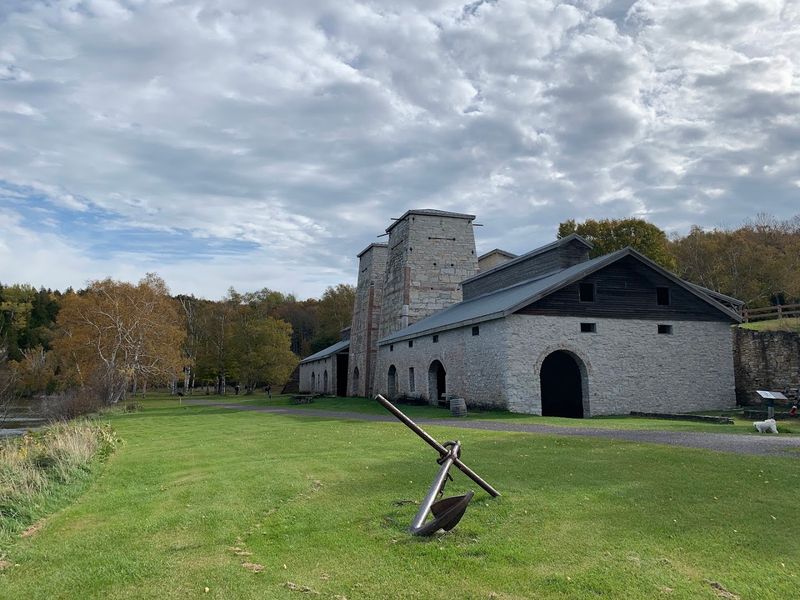
Fayette looks remarkably intact because preservation did not happen by accident. The State of Michigan acquired the townsite in 1959, recognizing that these buildings and industrial remains deserved more than slow disappearance into weather and vegetation.
Recent funding has supported structural improvements and preservation work across the historic townsite, including the furnace complex. That may mean temporary closures, altered routes, or scaffolding, but it also means the place is being cared for instead of merely displayed.
Think of those interruptions as proof of stewardship. A living preservation site sometimes wears work boots, and Fayette is better for it.
Leave Harbor Artifacts Where They Belong
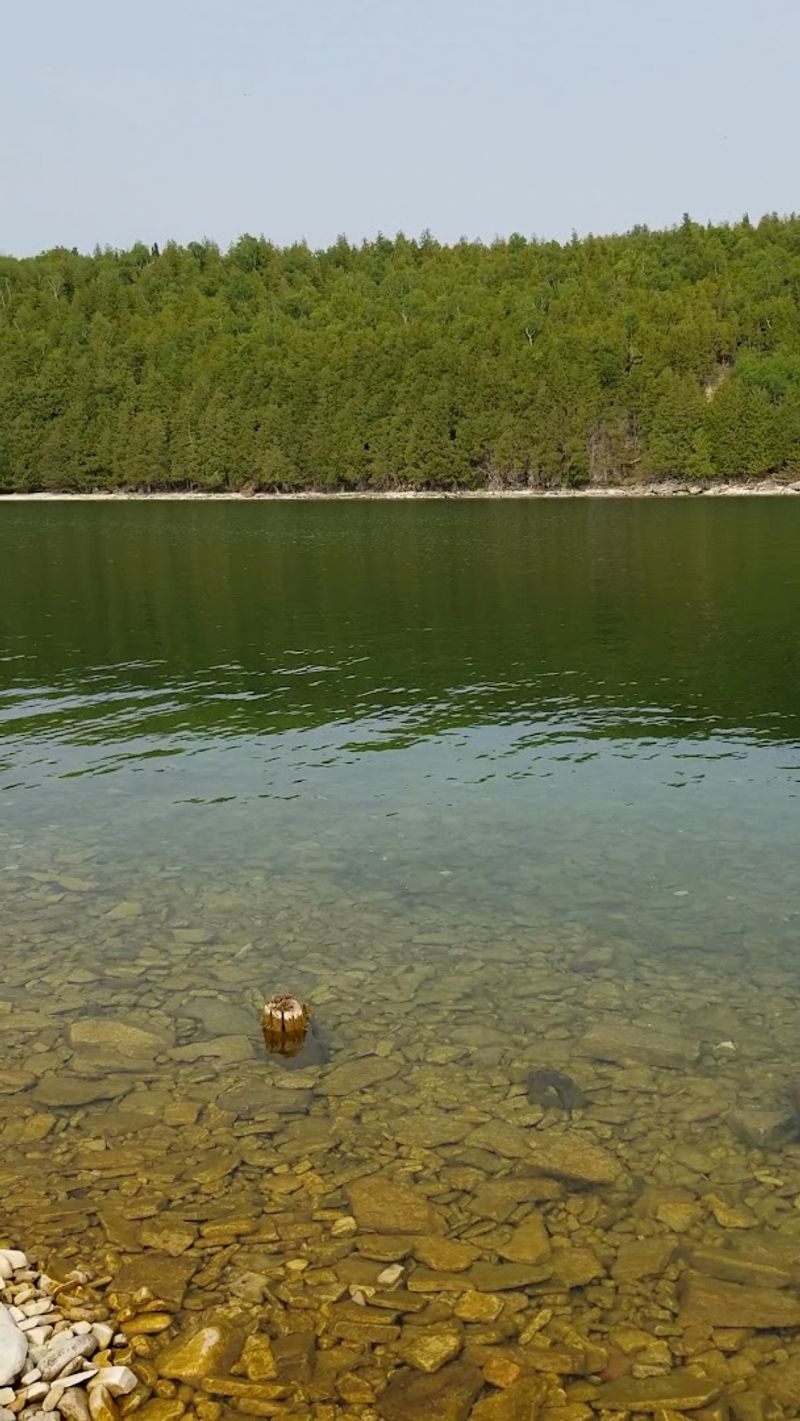
Snail Shell Harbor holds history below the surface too. Scuba diving is permitted with the proper permit, and divers may encounter remnants connected to Fayette’s working waterfront, though anything found must be left undisturbed.
Beneath the glassy, turquoise ripples lies a submerged museum of industrial discarded iron, timber, and everyday artifacts that have rested in the cold depths since the town went dark. That rule is not fussy bureaucracy.
Objects on the harbor bottom belong to the shared record of this place, and moving them would strip away context that helps historians and visitors understand the site. Each piece of debris is a frozen data point in the timeline of the iron smelting era, providing a physical link to the laborers who once stood on these very shores over a century ago.
Even if you never dive, knowing the harbor has layers changes how you look at it. The water is not just pretty scenery. It is part archive, part mirror, and entirely worth respecting.
As you stand on the white limestone cliffs looking down, the realization that a vanished world still exists beneath the waves adds a haunting, profound depth to the landscape, making the silence of the abandoned town feel even more deliberate.