
The Incredible Story Of Charleston’s Historic Angel Oak Tree In South Carolina
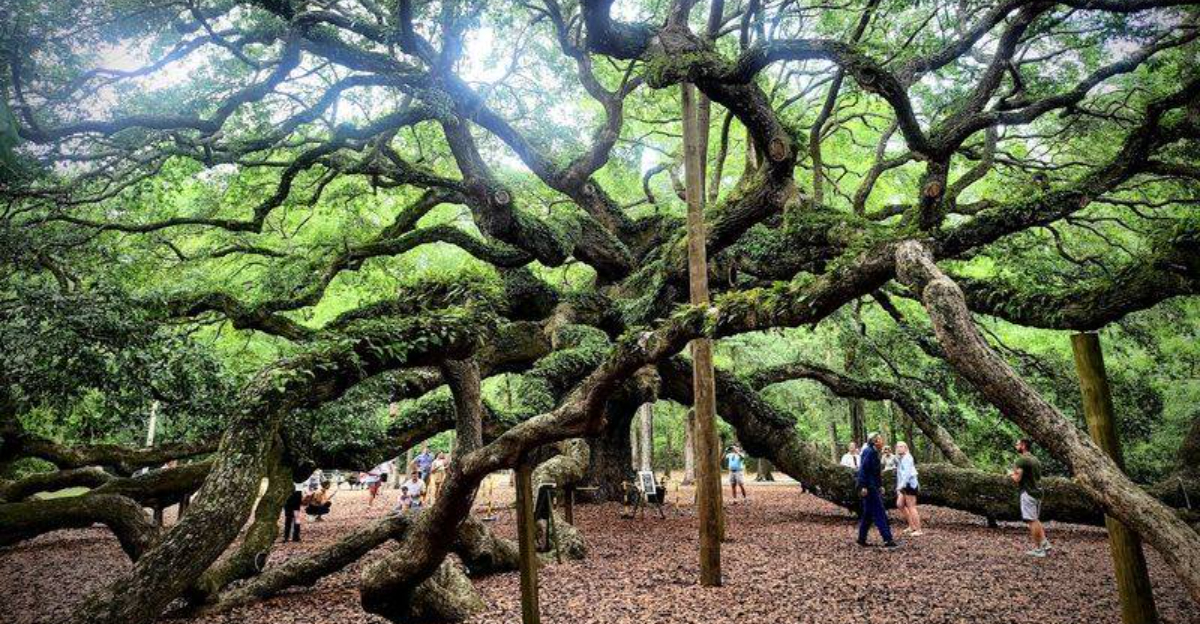
You don’t really understand how big it is until you’re standing right beneath it. From a distance, it looks impressive.
Then you step closer, and the scale shifts completely. Branches stretch in every direction, low and wide, creating a space that feels more like a natural structure than a single tree.
In South Carolina, there aren’t many places that make people stop talking the moment they arrive, but this is one of them. It’s not just the size.
It’s the way it spreads, the way the light filters through, the feeling that it’s been here long before everything around it. People move differently here.
Slower, quieter, looking up more than they usually do. Some walk around it once, then go again just to take it in.
You don’t rush a place like this. You take your time, even if you didn’t plan to.
And once you’ve seen it, South Carolina feels like it holds onto moments that don’t need explaining.
An Age That Defies Imagination
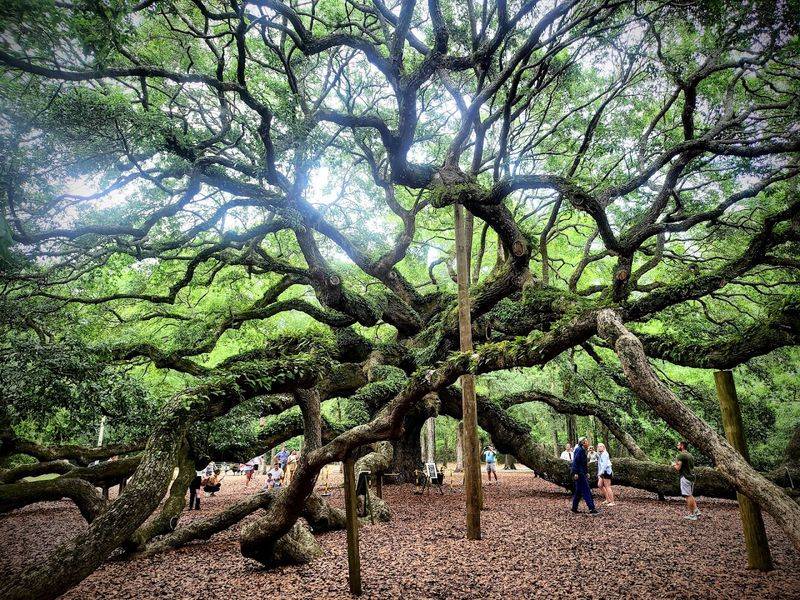
Four to five centuries ago, this tree was already putting down roots while history was being written around it.
The Angel Oak is estimated to be between 400 and 500 years old, making it one of the oldest living things east of the Mississippi River.
To put that in perspective, it was likely a young sapling when European explorers first arrived on the shores of the Americas.
Standing beside it, you genuinely feel the weight of all that time pressing gently down on your shoulders.
Most visitors go quiet the moment they step under the canopy, almost instinctively showing respect for something that has outlasted empires, wars, and generations of families.
Scientists and arborists continue to study the tree carefully, and while the exact age remains a careful estimate, every ring of its massive trunk tells a story worth listening to.
A Size That Stops You Cold
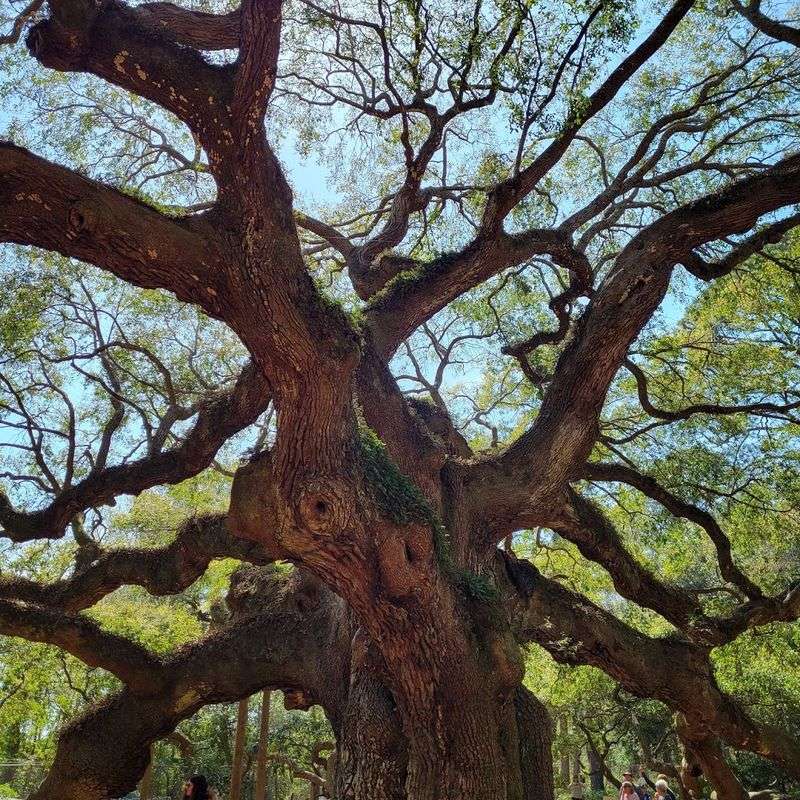
Nothing in any travel brochure truly captures what it feels like to stand next to a tree that is nearly 67 feet tall with a trunk circumference of 28 feet.
The Angel Oak produces a shade canopy covering roughly 17,200 square feet, which is large enough to shelter hundreds of people at once.
Its longest individual branch stretches an extraordinary 187 feet from end to end, drooping so close to the ground in places that it almost seems to be reaching out for a handshake.
I remember my first glimpse of it through the tree line and genuinely stopping mid-step because my brain needed a moment to process the scale.
Photos simply do not do the job, and every single visitor I spoke with during my visit said exactly the same thing.
You have to be there in person to understand why people return again and again just to stand quietly in its shade.
The Name Behind The Legend
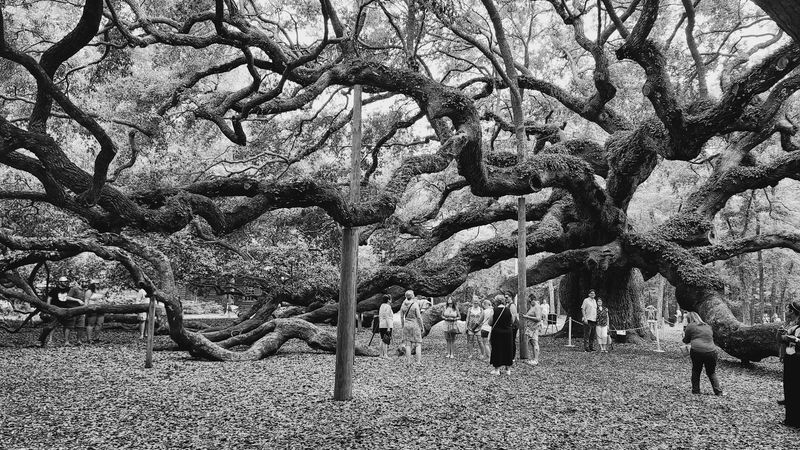
The name Angel Oak carries a quiet romance that perfectly matches the tree’s otherworldly appearance.
Most historians believe the tree was named after Justus Angel and his wife Martha Waight Tucker Angel, who owned the land in the early 19th century as part of a larger plantation property on Johns Island.
Some local folklore, however, suggests that the name comes from the spirits of formerly enslaved people who are said to appear as angels in the mist around the tree at certain times of year, adding a layer of haunting beauty to its story.
Whether you follow the historical record or the folk legend, both versions of the name feel entirely fitting for a tree this grand and this old.
Local storytellers on Johns Island have kept these tales alive for generations, and hearing them in person adds a richness to the visit that no guidebook can replicate.
Free to Visit, Priceless To Experience
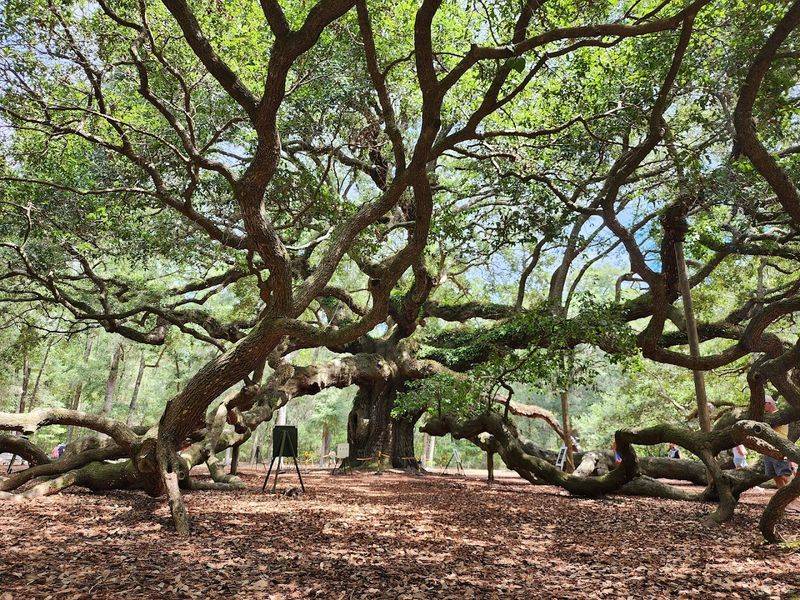
One of the best surprises about visiting the Angel Oak is that admission is completely free, which feels almost too good to be true for a landmark this extraordinary.
Parking is also free, though spots inside the gate are limited and reserved for visitors with disabilities, so most people park along Angel Oak Road and walk a short distance to the entrance.
The park is managed by the City of Charleston and is open Monday through Saturday from 9 AM to 5 PM, and on Sundays from 1 PM to 5 PM, so checking the hours before you go is a smart move.
A small gift shop on site sells souvenirs, artwork, and keepsakes that make for genuinely thoughtful mementos of the visit.
Portable restroom facilities are available on the grounds, keeping things practical for families and groups who want to spend a little extra time soaking in the scenery.
What Survives Centuries Of Storms
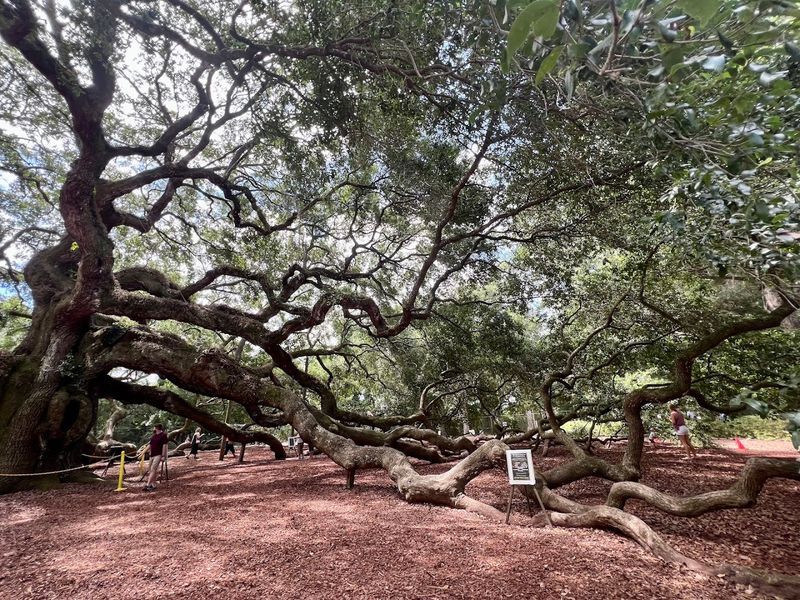
Surviving four to five centuries of Atlantic hurricanes, floods, and fierce coastal storms is not a small achievement for any living thing.
The Angel Oak has weathered some of the most powerful storms to ever strike the South Carolina coast, including significant hurricane damage that at various points in its history left observers wondering if the tree would recover.
Each time, it came back, sending out new growth and reclaiming its extraordinary shape with a stubbornness that feels almost personal.
The tree’s survival is partly due to its species, the Southern live oak, which is known for its dense, flexible wood and its ability to bend dramatically under wind pressure without snapping.
City of Charleston conservation teams actively monitor the tree’s health, maintaining the surrounding soil and restricting foot traffic near the root system to protect it from compaction damage.
Resilience, it turns out, looks a lot like an ancient oak quietly outlasting everything the weather can throw at it.
The Roots Run Deep, Literally
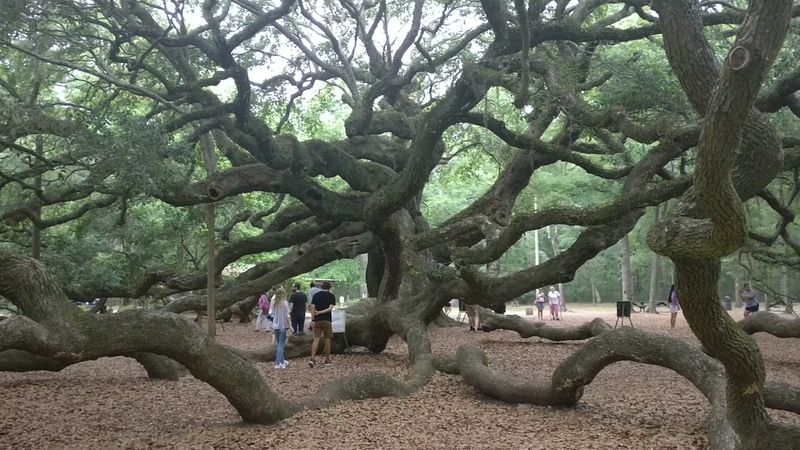
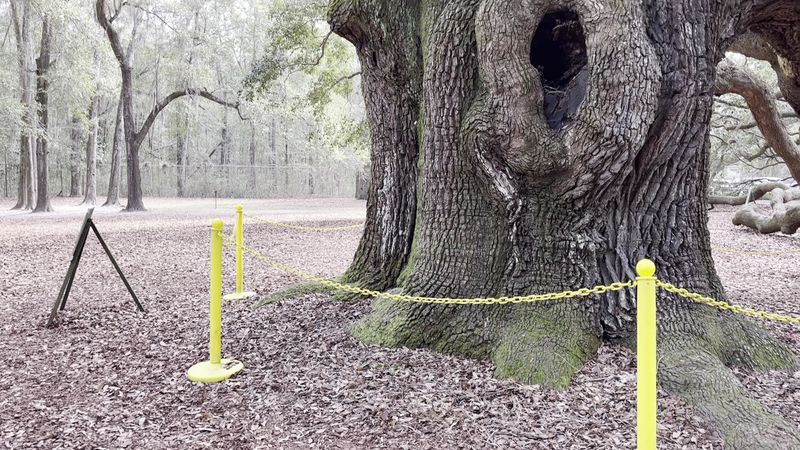
Beneath the soil around the Angel Oak lies a root system so vast and so carefully protected that visitors are asked to stay behind a designated rope barrier to avoid compacting the ground above it.
Southern live oaks develop enormous lateral root systems that can extend far beyond the visible canopy, anchoring the tree against wind and drawing nutrients from a wide area of soil.
The visible surface roots near the base of the Angel Oak are themselves impressive, twisting and curling across the ground like something from a storybook illustration.
Park staff explained to me that even well-intentioned foot traffic can damage the delicate feeder roots just below the surface, which is why the barriers exist and why following the rules genuinely matters here.
Dogs are welcome at the park but must stay behind the rope line as well, keeping the experience enjoyable for everyone while protecting the tree for future generations.
A Photographer’s Quiet Paradise
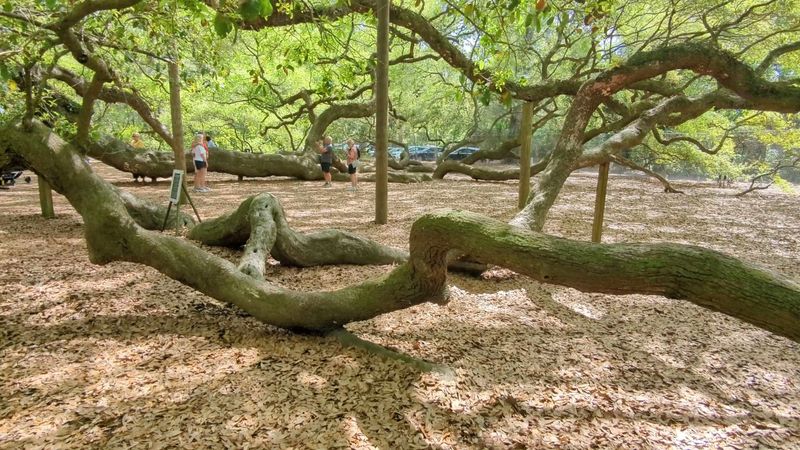
Every angle of the Angel Oak offers something worth photographing, from the sweeping canopy silhouette against an open sky to the tight, textured details of bark and branch where light filters through in shifting patterns.
Early weekday mornings are the sweet spot for photographers who want clear sightlines without crowds filling the frame, and the soft morning light at that hour does extraordinary things to the Spanish moss that drapes from the lower branches.
Local artists often set up near the park to sell paintings and prints inspired by the tree, and watching someone translate this living giant onto canvas is a quiet pleasure all its own.
My favorite shot from my visit was taken from the far eastern side of the park where a long, ground-hugging branch curves almost parallel to the earth, creating a natural frame that pulls the eye straight toward the trunk.
Plan for at least 30 to 45 minutes if photography is your main goal, because the light keeps changing and so does your idea of the perfect shot.
Getting There From Downtown Charleston
The drive from downtown Charleston to the Angel Oak takes roughly 40 to 45 minutes depending on traffic, and the route carries you through the beautiful South Carolina Lowcountry landscape of Johns Island.
You will find the tree at 3688 Angel Oak Rd, Johns Island, SC 29455, and while GPS navigation generally works well for the route, a few visitors have noted that mapping apps occasionally suggest slightly confusing turns near the final approach.
The road leading directly to the park is narrow, and during peak seasons the street fills up with cars parked along both sides, so arriving early in the day on a weekday dramatically improves the parking situation.
Johns Island itself is worth a slower drive if you have the time, with farmland, marshes, and local roadside stands adding a genuine Lowcountry flavor to the outing.
The park phone number is 843-559-3496 if you need to confirm hours or ask questions before making the trip out from the city.
A Place With Rules Worth Respecting
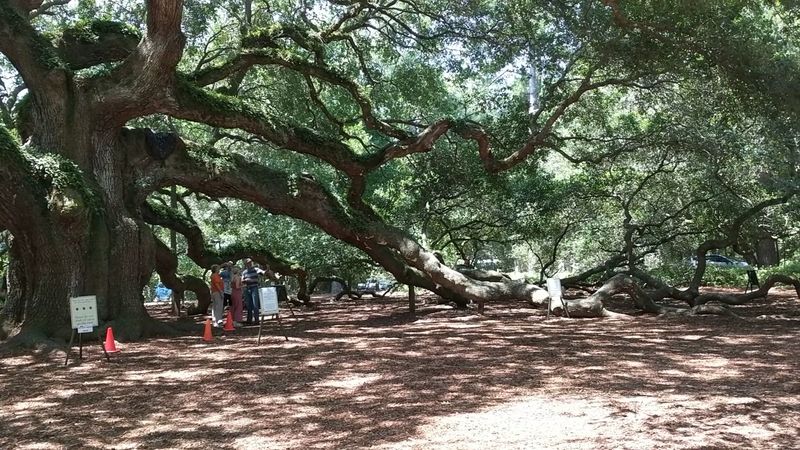
Visiting the Angel Oak comes with a short list of rules that exist entirely to protect the tree, and understanding them before you arrive makes the whole experience smoother and more enjoyable.
Climbing on the tree is strictly prohibited, as is performing yoga poses, handstands, or other activities that involve direct physical contact with the bark or branches.
Smoking and vaping are not allowed anywhere within the park boundaries, which is a reasonable precaution given that the entire site is essentially one enormous, irreplaceable living organism.
Staff members are present during open hours to guide visitors and gently remind anyone who drifts too close to the protected zone around the trunk and roots.
Most visitors I observed took the rules in stride and seemed genuinely glad that someone was looking out for the tree’s long-term health rather than simply letting the crowds do as they pleased.
Treating the space with care is the simplest and most meaningful thing any visitor can do here.
Why People Keep Coming Back
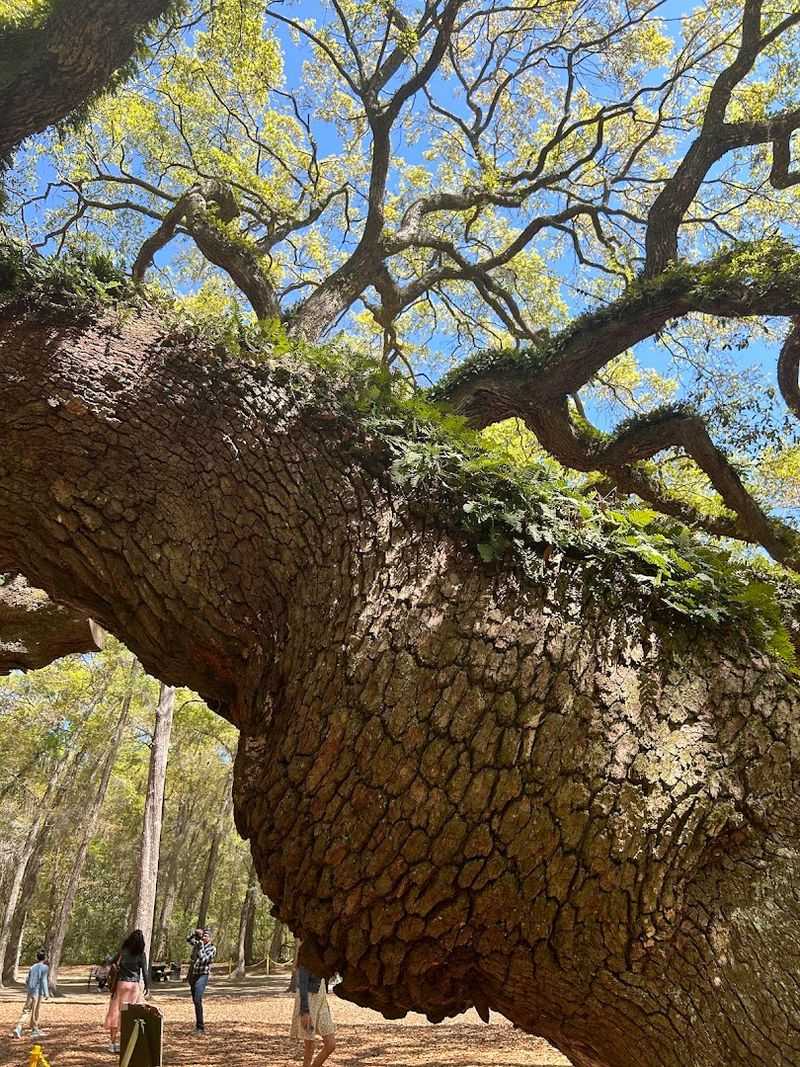
With a 4.7-star rating across more than 11,000 reviews, the Angel Oak has clearly earned its reputation as one of the most beloved natural landmarks in the American Southeast.
Visitors come from across the country and around the world, and an unusually high number of them make the trip more than once, which says something powerful about what this tree does to a person.
One reviewer captured it perfectly by noting that the tree feels steady and grounding in a way that puts modern life into perspective, a feeling I personally recognized the moment I stepped under those enormous branches.
The combination of free admission, a peaceful atmosphere, a small gift shop, and the sheer visual drama of the tree itself creates an experience that punches far above its weight for something that costs nothing to see.
If you find yourself anywhere near Charleston, South Carolina, the Angel Oak is not just a worthy detour but a visit you will quietly carry with you long after you have driven away.