
Going-To-The-Sun Road In Montana Showcases Some Of The Best Views In The United States
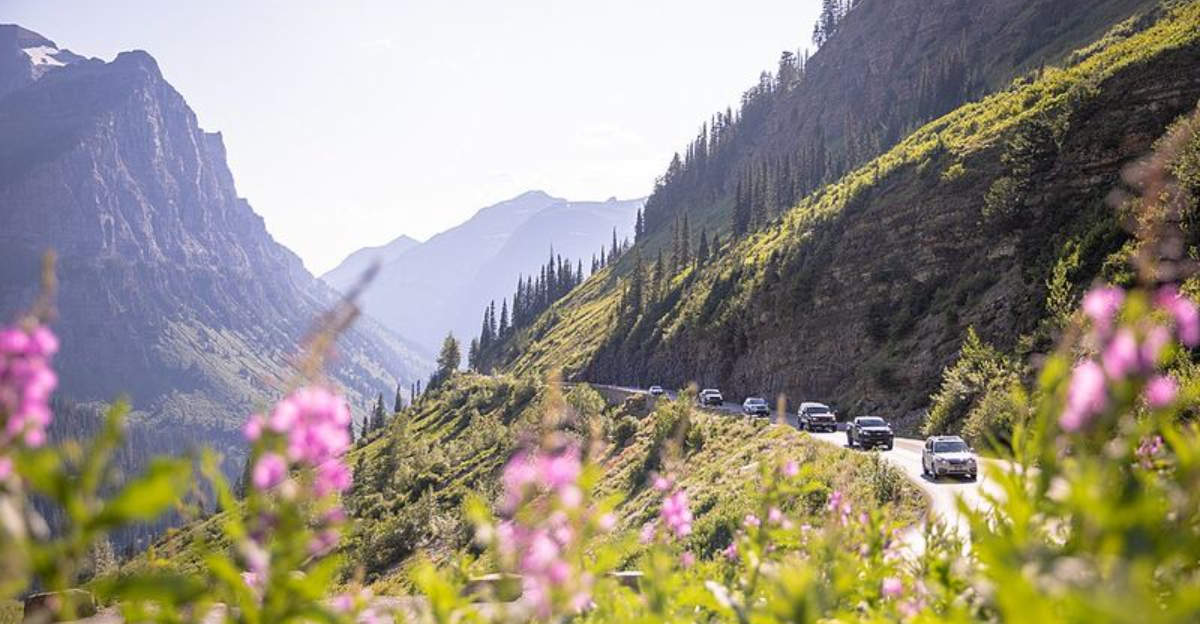
This isn’t just a road. It’s a front-row seat to nature showing off.
Winding through the heart of Glacier National Park, the Going-to-the-Sun Road doesn’t quietly pass through the mountains. It dances across them.
One moment you’re hugging cliffs that drop into endless valleys, the next you’re skimming past icy peaks that look like they belong in another world entirely.
It’s dramatic, it’s wild, and it feels almost unreal, like someone turned the “wow” setting all the way up and forgot where the dial was.
If there’s a road in the United States that knows how to steal the show, this is it.
Where The Drive Begins And The Magic Starts
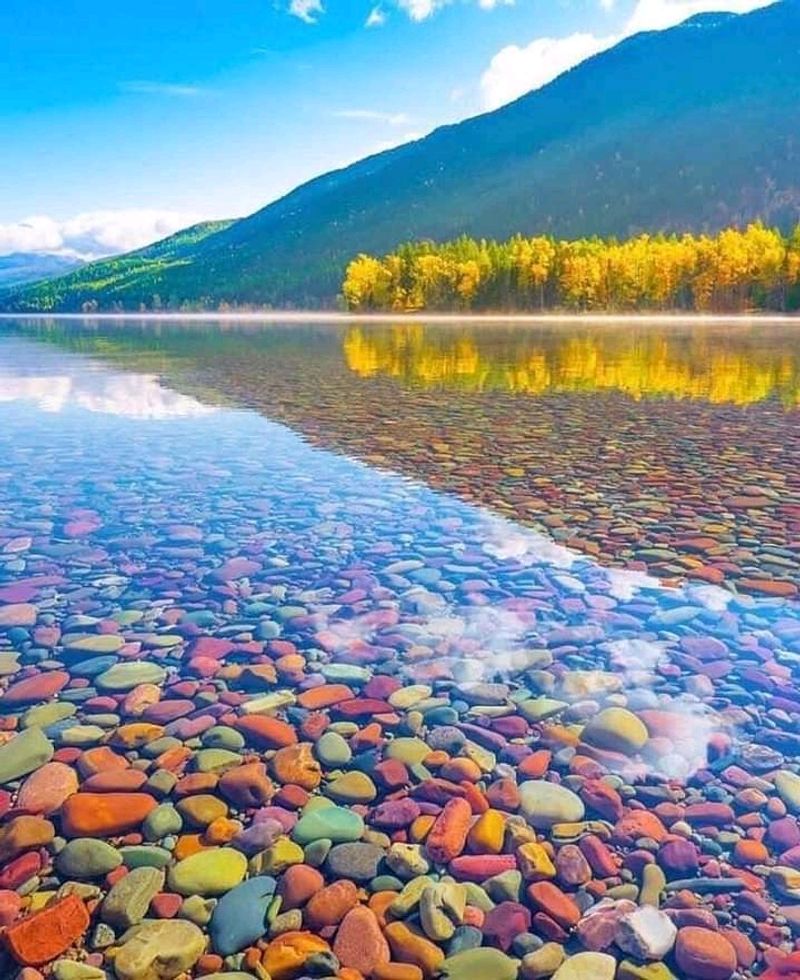
There is something almost unreal about seeing Lake McDonald for the first time. Stretching 10 miles long and plunging 464 feet deep, it is the largest lake in Glacier National Park.
The water is so clear you can see the famously colorful pebbles resting on the lake bed below.
Those pebbles get their vivid red, green, and blue hues from ancient mineral-rich rocks that have been polished smooth over thousands of years.
Photographers absolutely lose their minds here, and rightfully so. The reflections of the surrounding peaks on calm mornings look like someone painted a mirror image directly onto the water.
The western entrance of Going-to-the-Sun Road begins right along the lake’s shoreline, so your adventure kicks off with one of the most scenic stretches imaginable.
Pull over at the Fish Creek Campground area or Apgar Village for unobstructed views and easy access to the water. Early mornings offer the glassiest reflections and the fewest crowds, which is a combination worth setting an alarm for.
Lake McDonald also sets the tone for everything that follows on the drive. Once you see this lake, you realize the rest of the road is not going to disappoint.
It is the perfect opening act for what becomes a full sensory experience of Montana at its most spectacular and wild.
An Ancient Forest Hidden In Plain Sight
Not everything on Going-to-the-Sun Road is about sweeping mountain panoramas. Sometimes the magic is tucked quietly beneath a canopy of ancient trees.
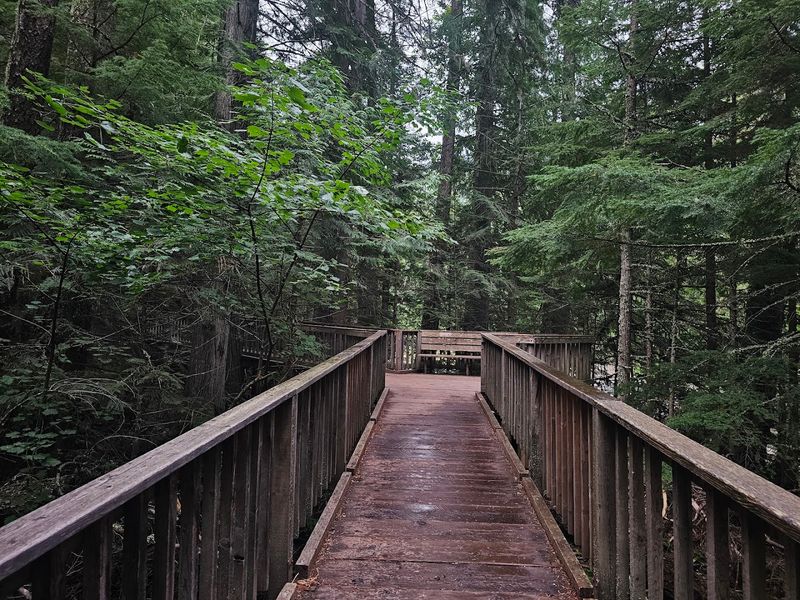
Trail of the Cedars is a 0.8-mile loop that winds through a forest of western red cedars and hemlocks that have been growing here for centuries.
Walking this trail feels like stepping into a completely different world. The air smells rich and earthy, the light filters through in golden shafts, and everything is draped in thick green moss.
It is genuinely one of the most peaceful spots in the entire park, which makes it a wonderful contrast to the dramatic alpine scenery above.
The trail is mostly flat and runs along a boardwalk, making it accessible and easy to navigate. Avalanche Creek rushes alongside the path, adding a constant soundtrack of rushing water that makes the whole experience feel cinematic.
The creek carved out Avalanche Gorge nearby, where turquoise water churns through narrow red rock walls in a display that is almost too pretty to process.
Trail of the Cedars is also a great spot to pause mid-drive and stretch your legs without committing to a serious hike. A short walk through this ancient forest reminds you that Glacier National Park is not just about altitude and vistas.
Sometimes the most memorable moments happen at ground level, surrounded by trees older than anything you have ever stood next to before.
The Waterfall That Literally Drips On Your Car
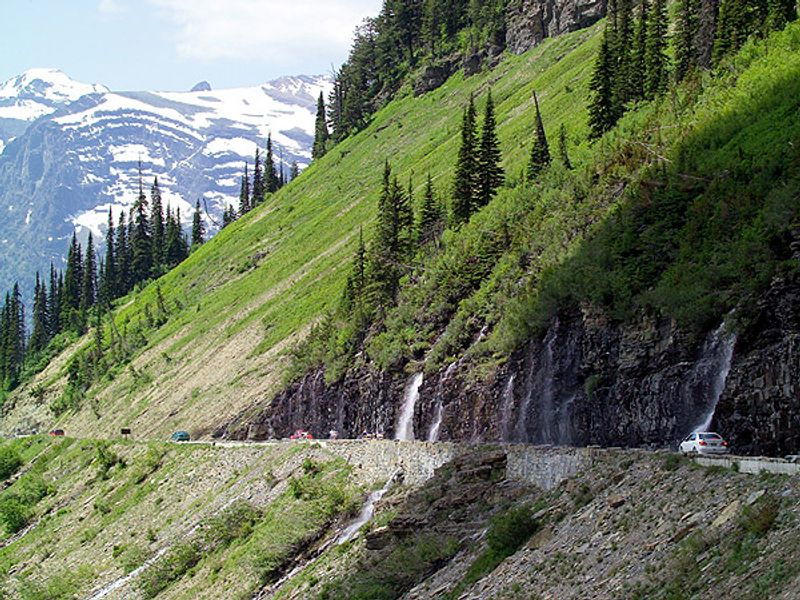
Somewhere between surreal and spectacular, the Weeping Wall is one of those roadside moments that catches everyone completely off guard. As you drive along the narrow alpine section of Going-to-the-Sun Road, water literally streams down the cliff face and splashes directly onto the road and your car.
It is not a waterfall you observe from a distance. It is one you drive straight through.
The Weeping Wall is fed by snowmelt that seeps through the rock above and cascades down in dozens of thin streams.
During early summer when snowmelt is at its peak, the flow can be surprisingly strong. Drivers and passengers routinely roll down their windows just to feel the cold mountain water hit their hands, which honestly feels like the best car wash in the world.
This stretch of road also offers some of the most dramatic cliff-hugging driving on the entire route. The road was carved directly into the Garden Wall, a sharp rocky ridge that separates two drainages.
Looking up from the Weeping Wall, the scale of the cliffs above is genuinely humbling.
Pull over safely and take a moment to stand near the wall if conditions allow. The sound of water hitting rock all around you, combined with views of the valley dropping away below, creates a sensory experience unlike anything else on the drive.
The Weeping Wall is proof that Going-to-the-Sun Road surprises you even when you think you are already prepared for it.
The Crown Jewel At The Top Of The World
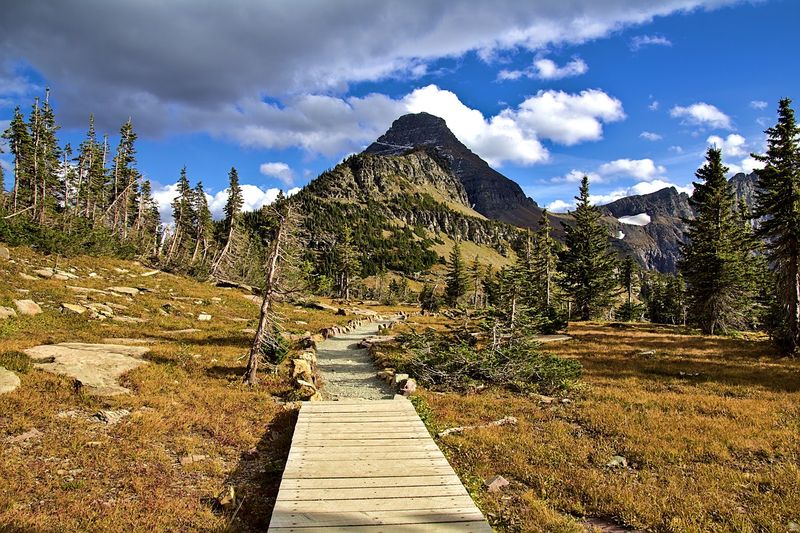
Standing at 6,646 feet above sea level, Logan Pass sits at the highest point on Going-to-the-Sun Road and marks the crossing of the Continental Divide. On one side, water flows toward the Pacific Ocean.
On the other, it heads toward the Atlantic.
You are quite literally standing at the backbone of North America.
The views from Logan Pass are the kind that make your brain temporarily stop working. Alpine meadows stretch in every direction, bursting with wildflowers during peak summer.
Rocky peaks jut skyward around you, and the sky feels enormous and impossibly close at the same time.
Mountain goats frequently wander the parking lot and surrounding rocks with zero concern for personal space.
The Hidden Lake Overlook Trail begins right at the Logan Pass Visitor Center. It is a 2.7-mile round trip hike that rewards you with a view of Hidden Lake nestled in a glacially carved basin below.
The trail crosses open meadows where bighorn sheep graze casually, making the hike feel like walking through a nature documentary.
Logan Pass is the emotional and geographic centerpiece of the entire drive. Everything before it builds anticipation, and everything after it carries the glow of having stood somewhere truly extraordinary.
Arriving at the pass on a clear day, with wildflowers swaying and peaks all around, is one of those travel moments that permanently reshapes your sense of what beautiful actually means. Go early to secure parking.
Driving Along The Edge Of The Continent
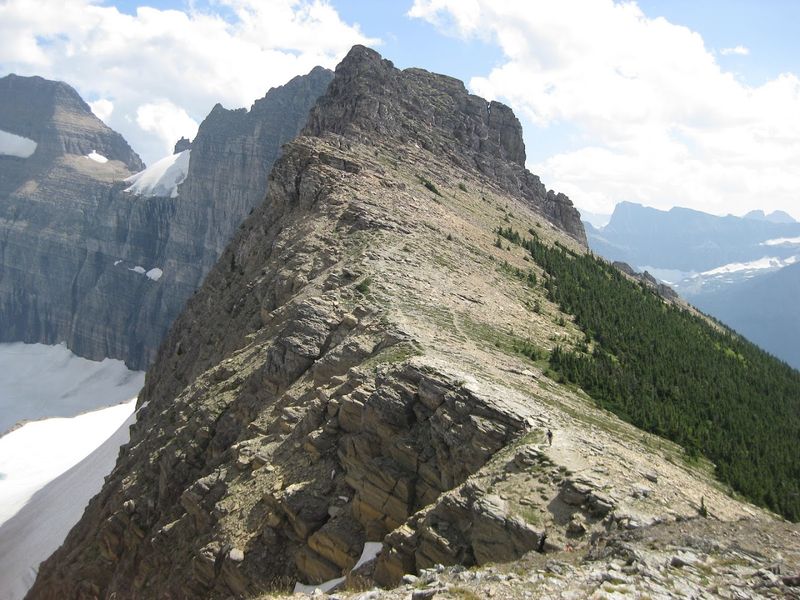
If you have ever wanted to feel like you are driving on the edge of the world, the Garden Wall section of Going-to-the-Sun Road delivers exactly that.
This sharp, narrow ridge was carved by glaciers on both sides, creating a dramatic fin of rock that the road clings to with almost theatrical boldness.
The engineering required to build this section in the early 1930s was extraordinary. Workers blasted and carved the road directly into near-vertical cliff faces, often hanging from ropes to do so.
The result is a stretch of highway that feels both impossible and inevitable, like it was always meant to be there.
Driving along the Garden Wall, the drop on one side is steep and the cliff rises sharply on the other. The views open up across the McDonald Creek Valley below, with layers of peaks stretching toward the horizon.
On a clear day, visibility extends for dozens of miles in every direction, revealing the true scale of Glacier National Park.
This section is also where you will find some of the best pullouts for photography along the entire route. The Big Bend pullout offers a particularly wide view of the surrounding terrain and is a favorite spot for watching wildlife move across the slopes above.
The Garden Wall is not just a road feature. It is a geological showpiece that reminds you exactly how powerful ancient ice can be when it decides to reshape a mountain range.
A Rare Chance To See A Living Glacier
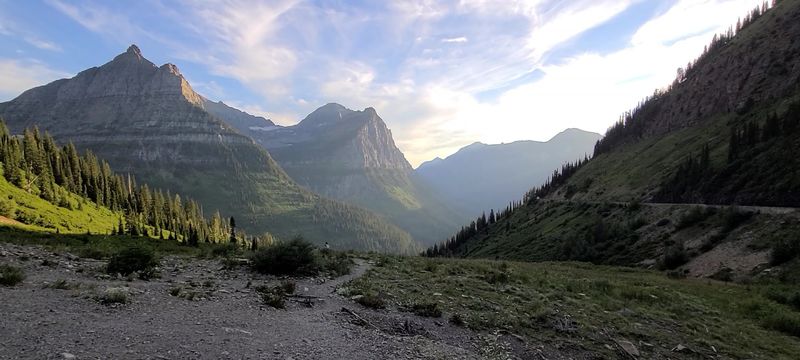
Here is something worth wrapping your head around: you can see an actual glacier from your car window on Going-to-the-Sun Road. Jackson Glacier Overlook is one of the few places along the entire route where a glacier is clearly visible without any hiking required.
Just pull over, step out, and look up.
Jackson Glacier sits in a rocky cirque high above the road, its icy surface visible even from the overlook far below. Interpretive signs at the pullout explain the glacier’s history and the ongoing changes in its size over recent decades.
The context makes the view feel both awe-inspiring and genuinely thought-provoking.
Glacier National Park originally had around 150 glaciers when it was established in 1910. Today, fewer than 30 remain active.
Standing at the Jackson Glacier Overlook and looking up at one of these surviving ice fields gives the whole drive a deeper layer of meaning.
You are not just seeing scenery. You are witnessing something ancient and irreplaceable.
The overlook sits on the eastern side of Logan Pass, making it a natural stopping point as the road begins its descent toward St. Mary.
The surrounding peaks here are sharp and dramatic, framing the glacier in a way that looks almost composed. Bring binoculars if you have them.
The extra detail they reveal on the glacier’s surface and the surrounding rock makes an already remarkable stop feel even more vivid and memorable.
The Most Photographed Spot In The Park
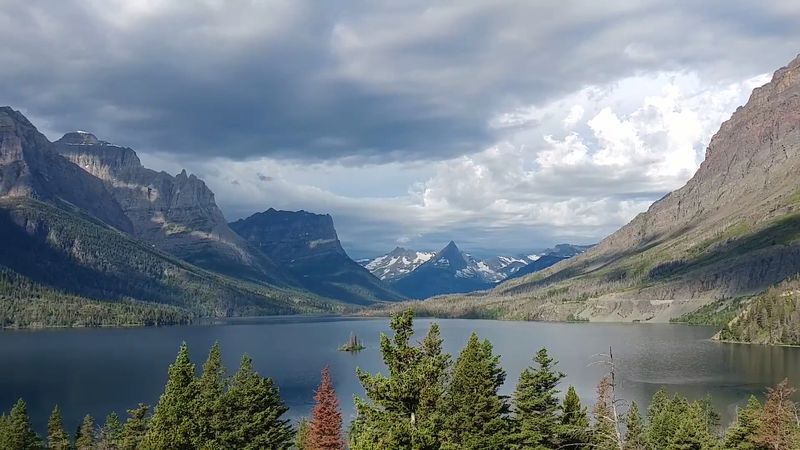
Ask any photographer who has visited Glacier National Park which shot they absolutely had to get, and Wild Goose Island comes up almost every single time.
This tiny, tree-covered island sits in the middle of St. Mary Lake, surrounded by deep blue water and framed by some of the most dramatic peaks in the park. The composition practically arranges itself.
St. Mary Lake is the second largest lake in Glacier National Park, stretching nearly 10 miles long. The water takes on an intense blue-green color that shifts depending on the light and time of day.
At sunrise, when the peaks behind the lake catch the first warm light, the reflection on the water creates a scene that looks genuinely surreal.
The overlook itself is right along Going-to-the-Sun Road on the eastern side of the park, making it an easy and essential stop.
There is a paved pullout with room for multiple vehicles, and the view requires zero effort beyond simply stepping out of your car and looking. The island is small enough to feel intimate but striking enough to anchor the entire panorama.
Wild Goose Island Overlook has appeared in countless travel publications, photography contests, and Montana tourism campaigns.
Seeing it in person, with the wind coming off the lake and the peaks towering above, confirms that no photograph fully captures what it actually feels like to stand there. This is the kind of view that earns Glacier National Park its reputation without needing any explanation.
Mountain Goats, Bears, And Bighorn Sheep
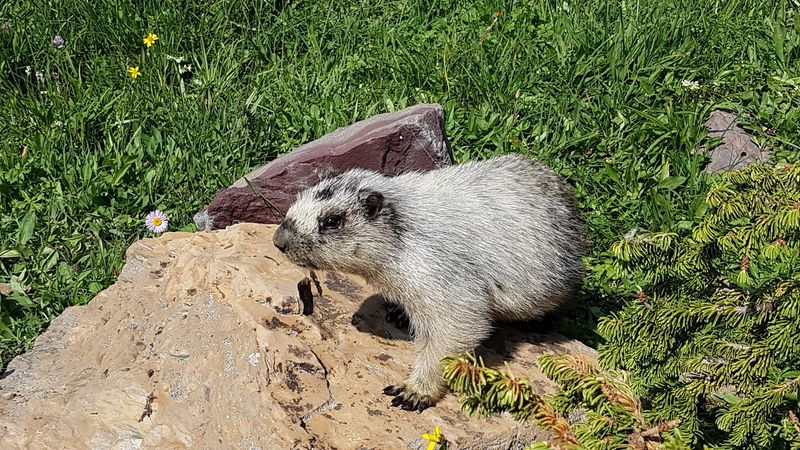
Going-to-the-Sun Road is not just a feast for the landscape lover. It is a legitimate wildlife corridor that puts you in proximity to some of North America’s most iconic animals.
Mountain goats are practically a given, especially near Logan Pass, where they roam the rocky slopes with complete confidence and absolutely no road anxiety.
Bighorn sheep are frequently spotted grazing on steep hillsides along the eastern section of the road. Their ability to navigate near-vertical terrain at full speed is one of those things that seems physically impossible until you witness it firsthand.
Grizzly bears also inhabit the park and are occasionally spotted from the road, particularly in meadows and along forested stretches during early morning hours.
The key to wildlife viewing along this route is patience and timing. Early morning and late afternoon are peak activity periods for most animals.
Keeping binoculars handy and scanning the slopes above the road regularly increases your chances of a sighting dramatically. Pulling over safely and staying inside or near your vehicle is always the right approach when wildlife is nearby.
Glacier National Park is one of the few remaining places in the lower 48 states where all the original native species still exist together in a functioning ecosystem.
Driving Going-to-the-Sun Road and spotting a mountain goat perched on a cliff above you is not just a cool moment. It is a reminder that some places on this planet have been carefully protected, and that protection is absolutely worth celebrating on every visit.
Timing, Seasons, And What To Know Before You Go
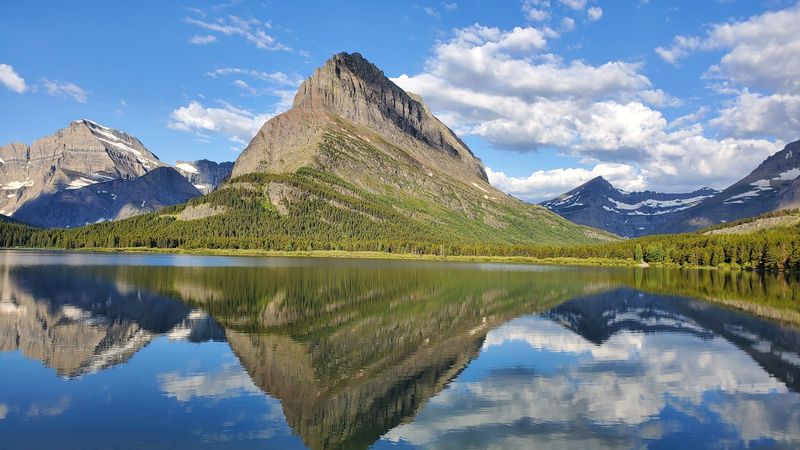
Timing a trip on Going-to-the-Sun Road takes a little planning, but the payoff is absolutely worth the effort. The full alpine section of the road, including the Logan Pass crossing, typically opens in late June depending on how much snow fell the previous winter.
Snowplows work for weeks clearing the route, and opening dates vary each year. Checking the Glacier National Park website for current road conditions before your visit is genuinely the smartest thing you can do.
The road generally remains open through mid-October, with the best conditions for driving typically falling between July and early September. Wildflower season peaks in July at Logan Pass, which is also the busiest period in the park.
Visiting in late August or September offers slightly fewer crowds while still delivering spectacular scenery and fully accessible road conditions.
For 2026, vehicle reservations are not required for Going-to-the-Sun Road, which makes planning significantly more flexible than in recent years. Arriving early in the morning is still a smart strategy for securing parking at popular stops like Logan Pass, which fills quickly on summer days.
The park’s free shuttle system also covers the entire length of the road, making car-free travel a genuinely enjoyable option.
Going-to-the-Sun Road rewards those who prepare for it, but it also has a way of exceeding every expectation no matter how much research you do beforehand.
So what is stopping you from putting Glacier National Park on this year’s road trip list and finding out for yourself?