
This Michigan Boardwalk Is One Every Local Should Walk At Least Once
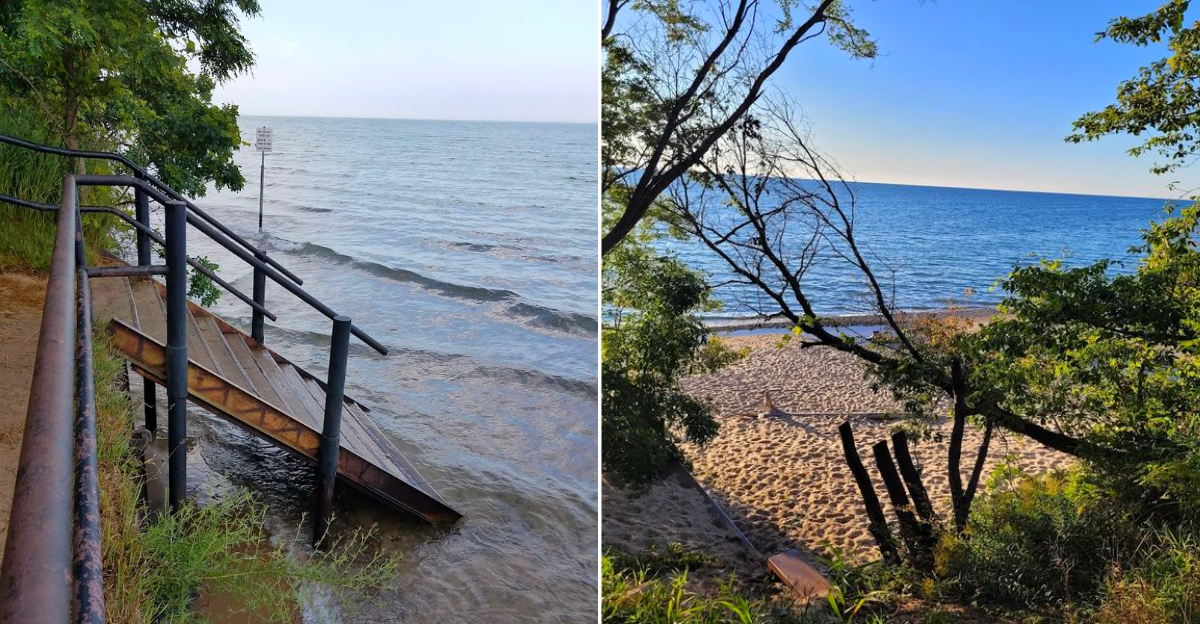
Most Lake Michigan beaches act like loud, over-caffeinated tourists, all massive parking lots and neon signs screaming for your attention.
This spot on Lakeshore Drive does the exact opposite; it whispers. You slip off the road and find yourself on a crisp, recently improved boardwalk that feels more like a private invitation than a public park.
I love the way the woods suddenly give up and let the coast take over, revealing a tiny, layered pocket of shore where a creek cuts through the sand to meet the big lake.
There aren’t any flashing lights here, just rebuilt stairs that actually feel sturdy underfoot and a shoreline littered with stones for the obsessive rock hunter.
The best hidden beaches in Southwest Michigan are hiding at this quiet lakeshore park, with scenic boardwalk trails, creek-side rock hunting, and historic 19th-century coastal views. Ready to see why the best parts of the Mitten are often the ones tucked behind a simple wooden rail?
Start With The Approach
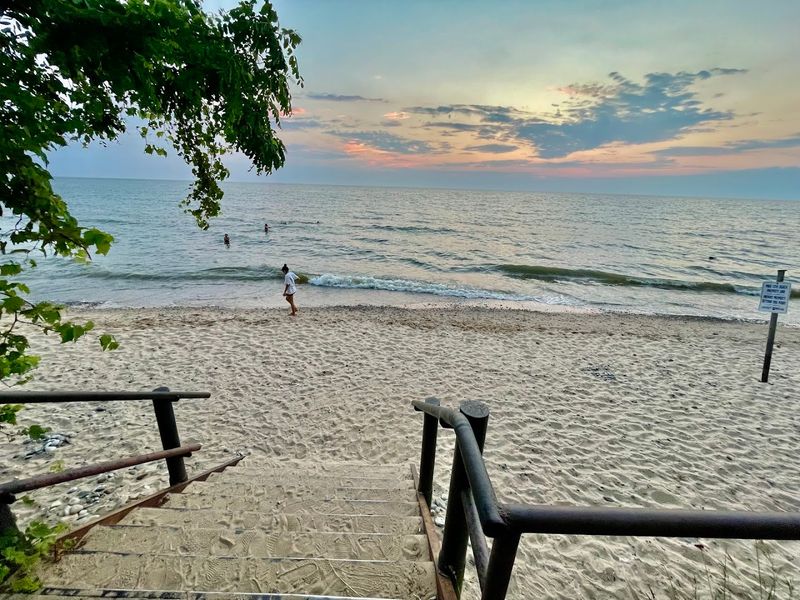
The approach at Pier Cove Park is part of the pleasure, not just a means to the water. From the small parking area on Lakeshore Drive, new walkways lead you toward the lake in a way that feels calm and deliberate. The path creates a gentle transition from roadside practicality to open shoreline.
Recent improvements focused on safety and accessibility, including walkways that separate pedestrians from traffic. That design choice sounds modest, but on site it changes the whole mood. You arrive less rattled, more observant, and ready to notice the dunes, sky, and shifting light.
If you value entrances that set a tone before the scenery fully appears, this one quietly succeeds.
Finding It

Reaching Pier Cove Park at 2290 Lakeshore Dr, Fennville, MI 49408 involves a scenic drive along the Lake Michigan shoreline, utilizing the winding stretches of Blue Star Highway or M-63. The route takes you through the heart of the “Art Coast,” where the landscape is a mix of dense fruit orchards, coastal dunes, and small, creative communities.
As you approach the destination, the drive transitions onto Lakeshore Drive, a narrow and shaded corridor that runs parallel to the lake. The pace slows significantly here as the road curves through residential wooded lots, with occasional glimpses of the water appearing through the trees to signal your proximity to the shore.
The final arrival is marked by a modest, easily missed turnoff toward a small parking area overlooking the ravine. Stepping out of the car, the transition from the quiet residential road to the steep wooden stairs and boardwalk of the park marks your arrival at this historic cove, where the path leads directly down to the water’s edge.
Take The Stairs Slowly
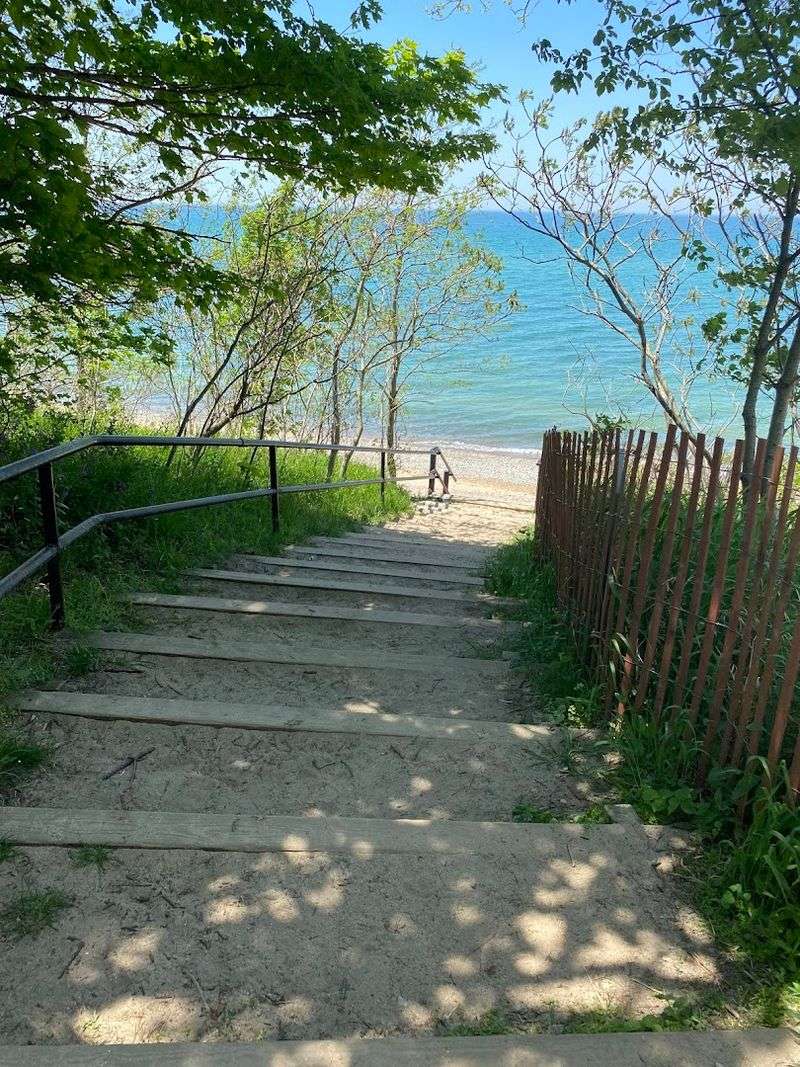
The rebuilt stairs are one of the park’s most useful improvements, and they shape the whole experience. They carry you from the upper park down to the beach with wide, sturdy footing and handrails. The rise has been described as relatively shallow, which makes the descent and climb feel more manageable than many bluff accesses.
Views open gradually as you move down, and that sequence is part of the charm. You do not get one dramatic reveal so much as a series of widening glimpses of blue water, pale sand, and the creek mouth. It rewards an unhurried pace.
If stairs are difficult for you, note that this is still a stair access rather than a ramp.
Notice The Name’s Backstory
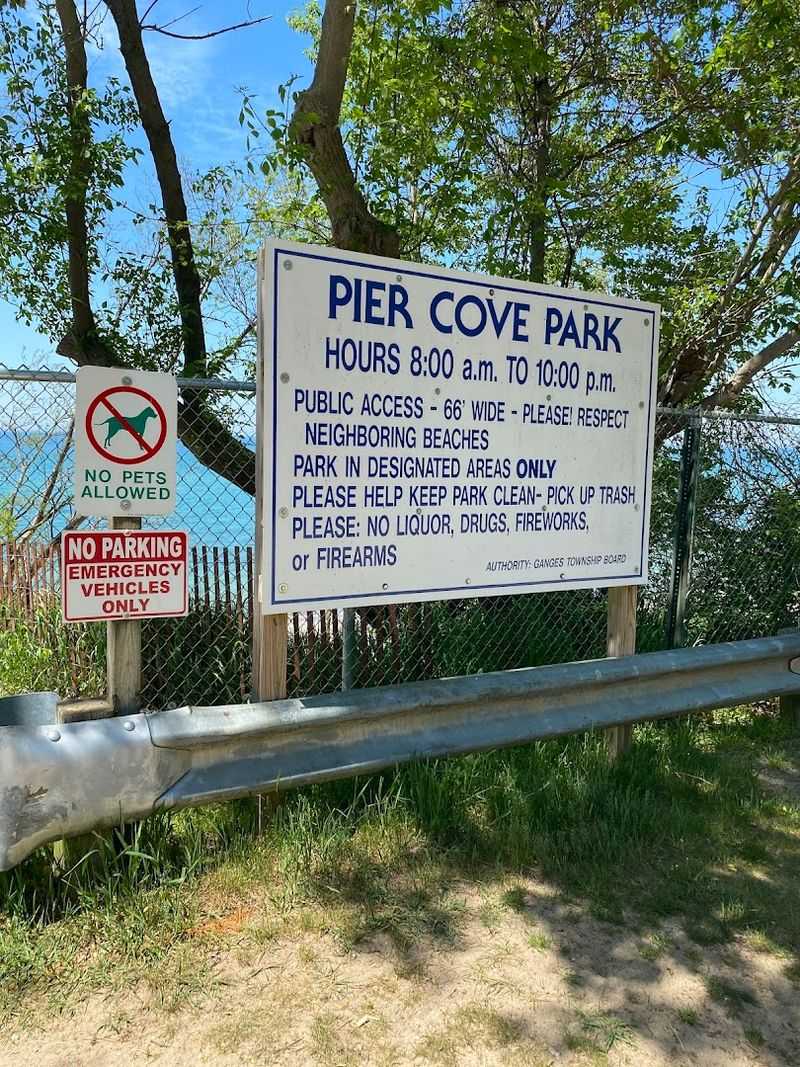
Names can preserve more history than landscapes do, and Pier Cove is a good example. In the 1800s, shipping piers here supported the local logging and fruit industries, and the area developed as a small village and port. Storms eventually erased those structures, but the name still carries their outline.
That history changes how the boardwalk and stairs feel today. What seems like a quiet modern access sits on a shoreline that once handled commerce, labor, and transport. The contrast is striking, especially because the present mood is so gentle.
Planned interpretive signage connected to recent improvements should help visitors understand those layers without turning the place into an outdoor museum.
Watch Where The Creek Meets The Lake
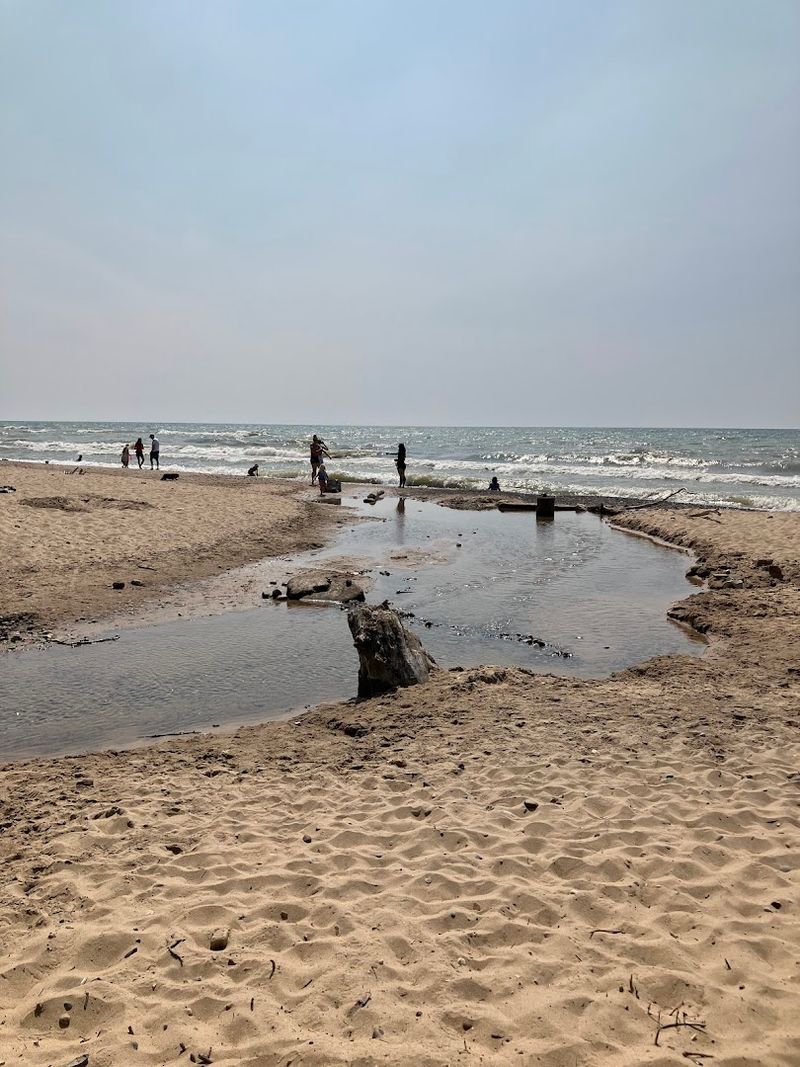
One of the most distinctive details at Pier Cove Park is the place where the Pier Cove River meets Lake Michigan. That moving line of creek water gives the beach a little extra character and changes the way people use the shoreline.
Children often splash there in warmer months, and even adults tend to linger nearby. The water close to shore is often shallow enough for easy wading, though lake conditions always deserve caution. On a calm day, the creek mouth adds texture to the whole scene, visually and acoustically.
It breaks up the broad lake horizon with something smaller and more playful. For a compact beach, it offers a surprising sense of variety in just a few steps.
Look Down For Stones
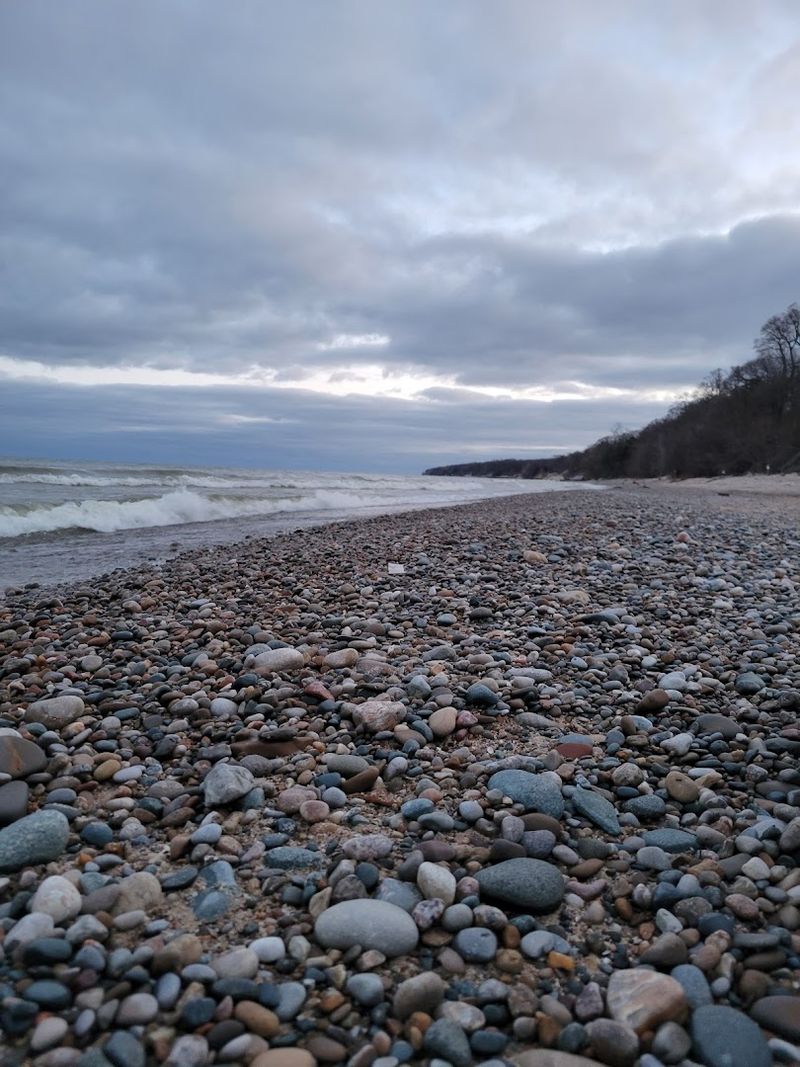
The beach at Pier Cove Park has a loyal following among rock hunters, and it earns that reputation honestly. Smooth stones, beach glass, and septarian nodules often called lightning stones are part of what draws people here.
You do not need expert knowledge to enjoy it, only patience and a willingness to keep looking down. The shoreline is not enormous, which somehow makes the search feel more focused. I like that the hunt becomes a way of slowing your walk rather than turning it into a checklist.
Every few feet, the lake seems to rearrange the collection. Even if you leave empty handed, the textures underfoot make the boardwalk-to-beach transition feel especially rewarding.
Understand The Beach’s Small Scale
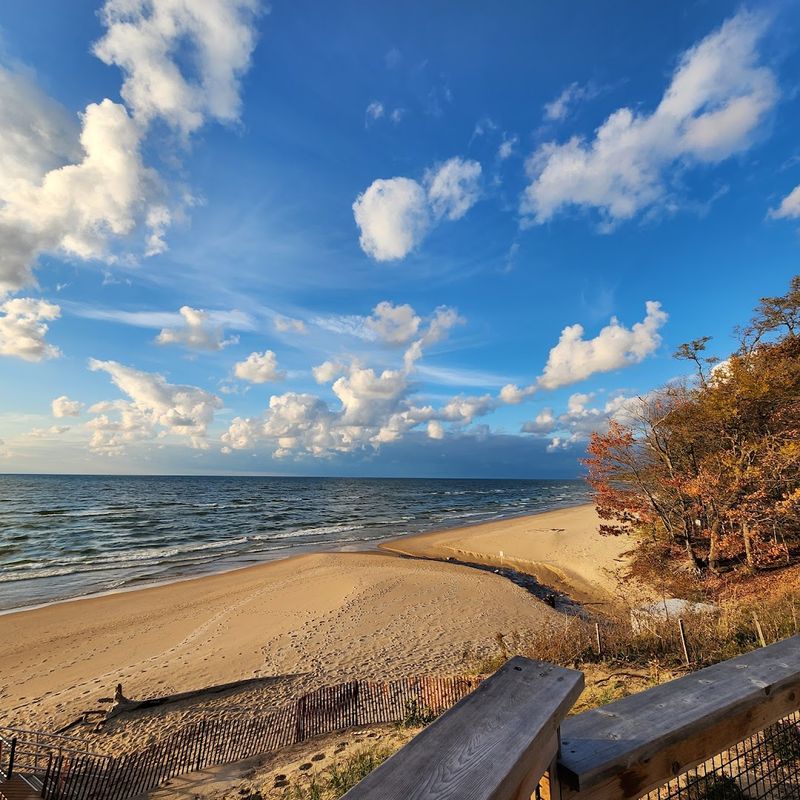
Pier Cove Park works best when you accept its scale instead of expecting a sprawling public beach. The sandy public section is small, with private property on either side, and that shapes how people move through it. On some days, lower water levels can make the shoreline feel roomier, but this is still an intimate access point.
That compactness gives the place a different rhythm from larger beaches nearby. People tend to settle in carefully, wander for stones, or pause at the water rather than spread out endlessly. The boardwalk and stairs feel proportionate to that smaller footprint.
If you are after a quiet, close-framed Lake Michigan experience, the limited size is part of the appeal.
Use The Benches Like They Were Intended
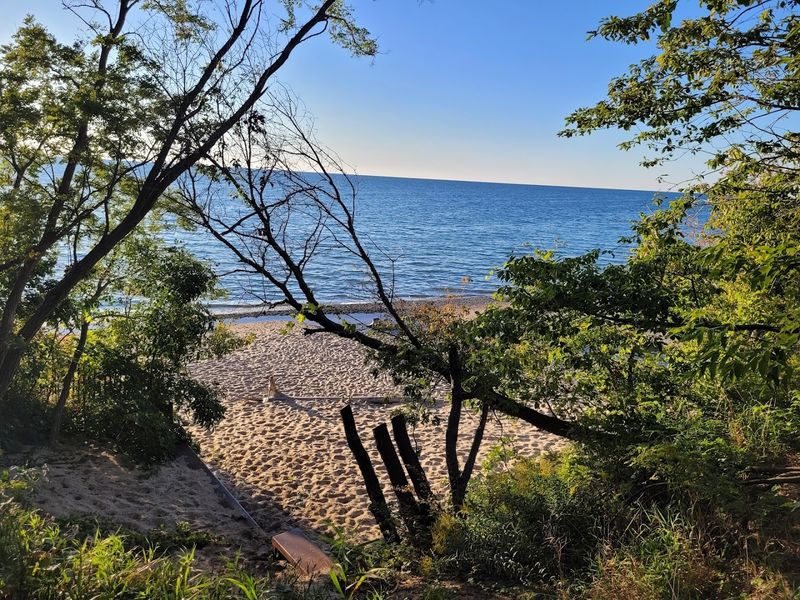
Recent design updates at Pier Cove Park included terrace benches, and they are exactly the sort of simple feature that improves a visit. After the walkways and stairs guide you in, the benches invite you to stop treating the shoreline like a pass through. They turn the park into a place for looking, not merely arriving.
Sunset is the obvious moment to appreciate them, but the seating works just as well on bright afternoon visits or windy shoulder season days. The park’s renovations also improved fencing and signage, helping the site feel cared for without overexplaining itself.
At a place this small, thoughtful infrastructure matters because every element is seen and used.
Choose Your Season Carefully

Pier Cove Park changes personality dramatically with the season, more than its size might suggest. Summer brings fuller parking, more movement on the stairs, and a playful energy around the creek and shallow water. Late fall through early spring can feel nearly opposite: quieter, windier, and more solitary.
Lake effect weather adds another layer of unpredictability, so conditions can shift quickly. That volatility suits the place, giving the boardwalk and beach a sense of motion even on short visits. A warm day invites toes in the water; a colder one sharpens every sound and color.
If you prefer contemplation over bustle, the off season is especially rewarding, provided you dress for the lakeshore rather than the calendar.
Pay Attention To The Quiet Stewardship
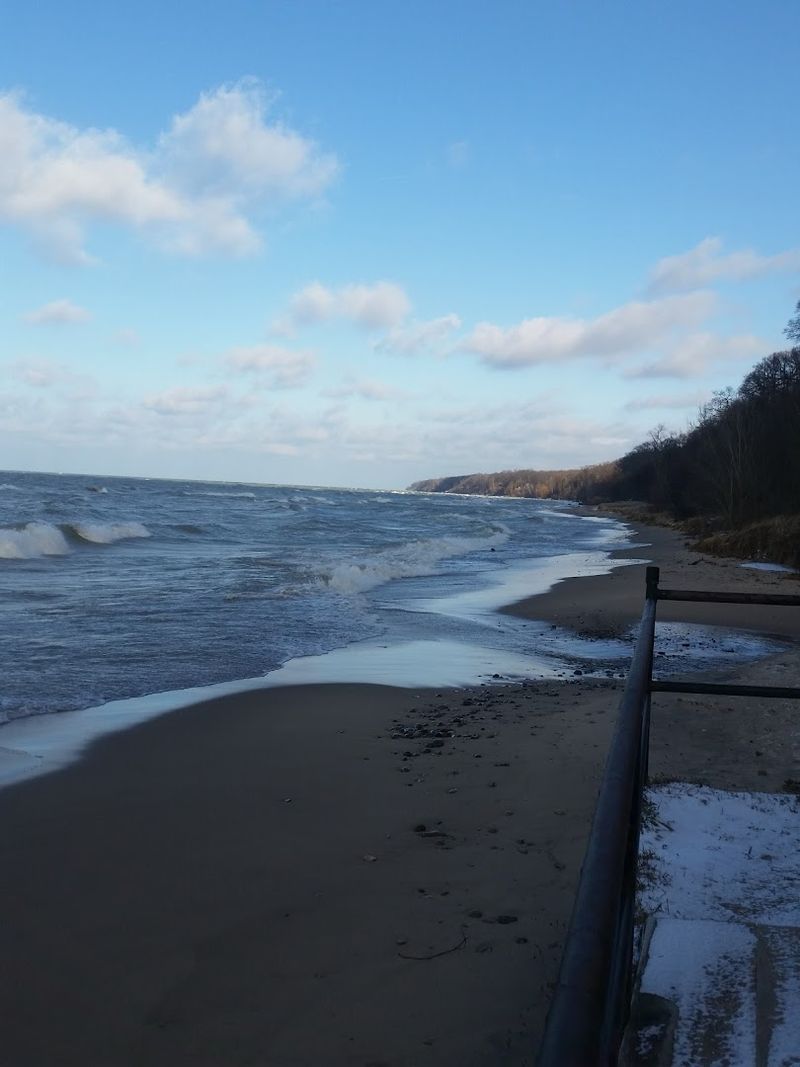
What makes Pier Cove Park pleasant is not just scenery but maintenance that stays mostly in the background. Ganges Township handles ongoing care for facilities, including walkways and restrooms, while volunteers and partner organizations help with vegetation management and invasive species concerns. The result is a park that feels tended rather than manicured.
That distinction matters on a fragile lakeshore. Dune stabilization, native plantings, and periodic replacement of wooden elements all support long term use without overwhelming the natural setting. You can sense the effort in the park’s neatness and in how the access points feel durable.
Places like this keep their charm only when somebody is quietly doing the unglamorous work, year after year.
Treat It As A Walk, Not A Checklist

The best way to experience Pier Cove Park is to let the boardwalk, stairs, and beach unfold as one continuous walk. Start at the upper path, notice how the improvements frame the lake, descend slowly, and give yourself time at the creek mouth and stony shoreline.
Because the park is compact, rushing it misses the point. This is not a place that overwhelms you with scale or amenities. It wins by combining small details: a careful entry, rebuilt access, a pocket beach, clear views, and a history that lingers just beneath the surface.
That mix feels distinctly local and surprisingly complete. Walk it once with patience, and you will understand why so many people return whenever they can.