
A Once-Booming Montana Gold Rush Town That Now Feels Frozen In Time
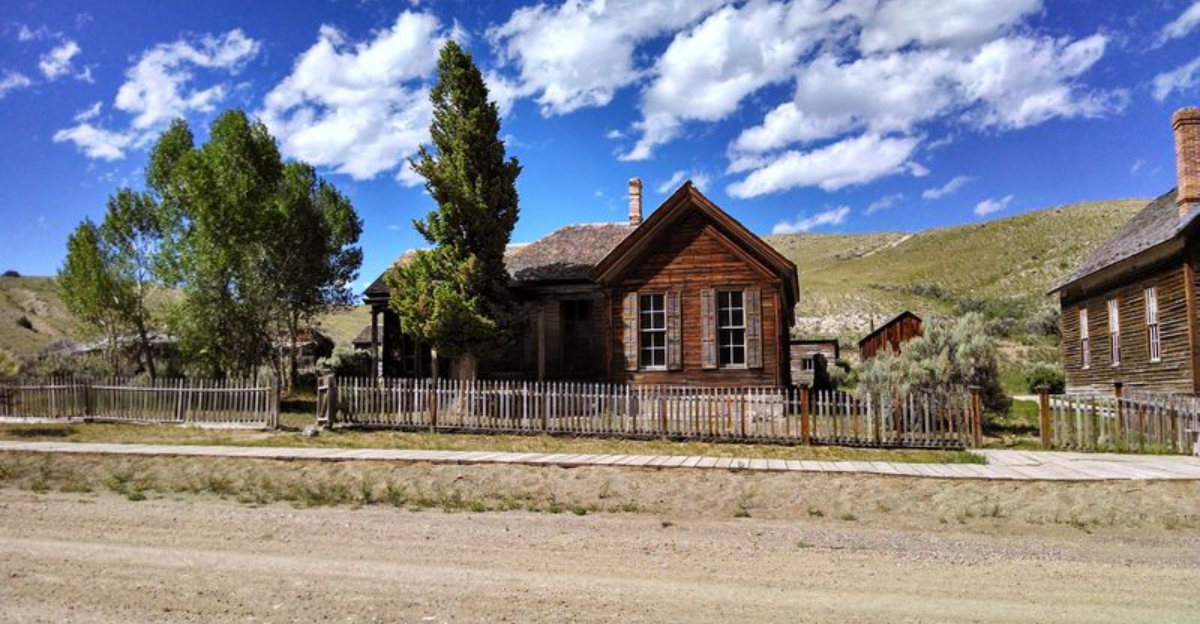
Just imagine, dusty street, creaky old hotel door… and you swear a tumbleweed is about to roll by. For a second, you’re not in 2026, you’re in a Wild West movie.
Hidden deep in a quiet valley of Montana, this place blew up overnight after gold was found. Miners, chaos, classic boomtown energy. 3,000 people at its peak.
Even became a capital for a hot minute. Then? Gold’s gone. People vanish. Silence takes over. Today, it’s frozen in time.
Real buildings. Real stories. Zero Hollywood. If you like history, eerie vibes, or places that feel a little too quiet… yeah, this one’s calling you.
The Gold Discovery That Started It All
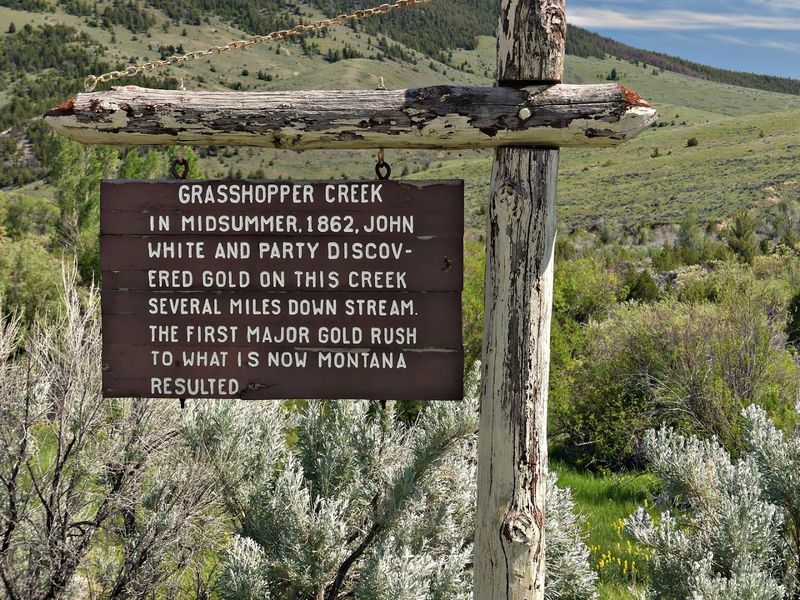
Gold changes everything. On July 28, 1862, John White and his crew made a discovery along Grasshopper Creek that would rewrite the map of the American West forever.
A few glinting flakes in the water set off one of the most dramatic population explosions the Montana Territory had ever seen.
Word spread fast, the way only gold news can. Within months, thousands of prospectors flooded the remote valley, hauling tools, dreams, and questionable life choices along with them.
The landscape went from quiet wilderness to chaotic boomtown almost overnight. Tents became cabins, cabins became storefronts, and storefronts became a whole functioning town.
What makes this discovery so remarkable is how raw and unpredictable it all was. There were no maps, no guarantees, and no safety nets.
Miners worked Grasshopper Creek with nothing but grit and a desperate hope that the next pan would be the jackpot.
Some struck it rich. Most did not.
But the discovery itself lit a fire that shaped Montana’s entire identity as a state. The creek still flows quietly through Bannack State Park today, looking almost exactly as it did back then.
Standing beside it, knowing what happened here over 160 years ago, feels like touching a live wire of history.
From Wilderness To Boomtown In Record Time
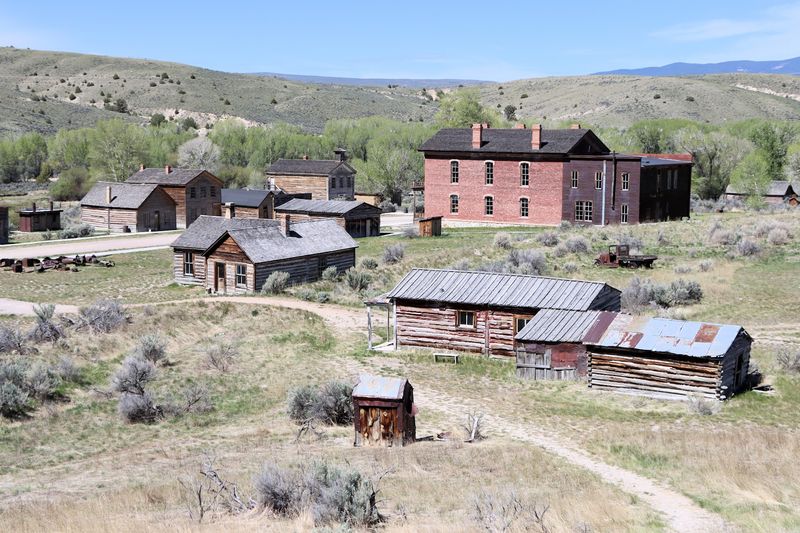
Forget slow and steady. Bannack went from an empty creek bed to a bustling town of over 3,000 people in less than a year.
Some accounts even suggest the population briefly hit 10,000 at its wildest peak. That kind of growth makes modern fast-growing cities look like they’re moving in slow motion.
The town that emerged was surprisingly well-stocked for something built on pure chaos and ambition. Bannack boasted three hotels, three bakeries, two stables, two meat markets, a grocery store, a restaurant, a billiard hall, and four saloons.
For a place carved out of Montana wilderness, that’s a seriously impressive lineup of amenities.
What’s fascinating is how quickly human beings can build community when there’s something worth staying for.
Gold was the magnet, but the businesses, the social structures, and the daily routines that formed around it created something that felt genuinely alive. Bannack wasn’t just a collection of desperate miners.
It was a real town with real ambitions.
Walking its main street today, you can still feel the ghost of that energy humming beneath the quiet. The buildings lean slightly with age, but their bones are strong, and they still tell the story of a place that once believed it had a very bright future ahead of it.
Montana’s Very First Territorial Capital
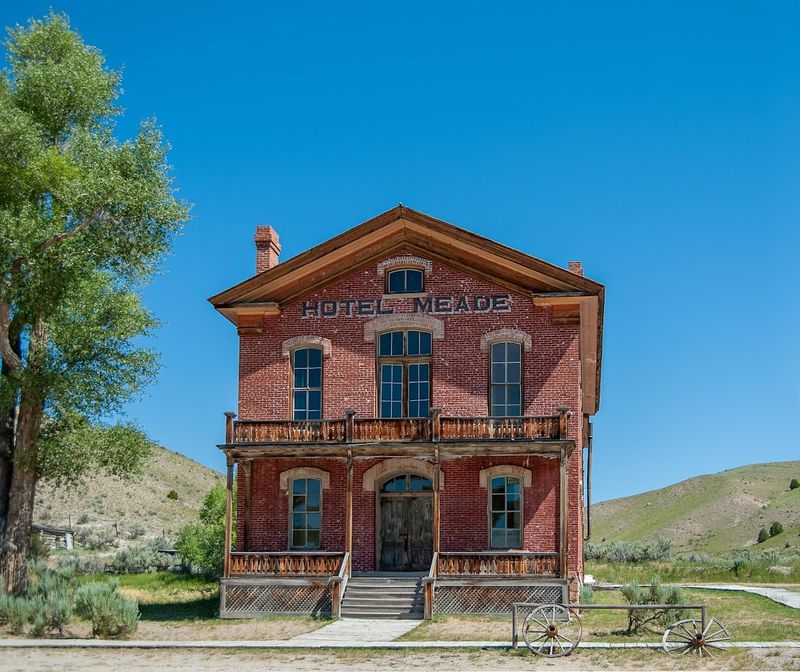
For one brief, shining moment, Bannack was the most important address in all of Montana. In 1864, the newly established Montana Territory named Bannack its very first territorial capital.
That’s a big deal for a town that had only existed for two years and was still figuring out basic things like law and order.
The capital designation didn’t last long. Virginia City quickly rose to prominence after the Alder Gulch gold strike, and the capital moved there the same year.
But that brief window of political significance left a mark on Bannack’s identity that never fully faded. The town had been, however briefly, the beating heart of a brand-new territory.
Standing in what remains of Bannack today, that history feels almost surreal. The weathered buildings and empty streets don’t exactly scream seat of government power.
But that contrast is exactly what makes the place so compelling.
A town that once shaped the political future of an entire territory now sits quietly preserved in a valley, asking nothing of anyone. The Hotel Meade, one of Bannack’s most iconic surviving structures, served as a courthouse and school in its later years.
It still stands today, its faded grandeur a quiet reminder that Bannack once had ambitions far bigger than a gold rush camp. History has a funny way of humbling even the most confident beginnings.
Over 50 Original Buildings Still Standing

Fifty-plus original buildings. Let that number sink in for a second.
Most ghost towns leave behind a few crumbling foundations and maybe a chimney stack if you’re lucky. Bannack offers something far more extraordinary: an almost complete townscape of original 19th-century structures, still standing and largely intact.
The dry climate of the Beaverhead Valley deserves a lot of credit here. Low humidity is basically nature’s preservation system, and it has done remarkable work on Bannack’s wooden and brick buildings over the past 150 years.
The structures include homes, a hotel, a school, a church, a masonic hall, and various commercial buildings, each one a time capsule of daily frontier life.
What makes exploring these buildings so special is the deliberate approach to preservation. Rather than fully restoring the structures to look brand new, the state park focuses on stabilization, keeping them safe while maintaining their authentic, aged appearance.
You see real wear. You see real history.
Paint peels the way it actually peeled. Floors creak under your feet the same way they creaked under the boots of miners and merchants over a century ago.
There’s a honesty to that approach that feels deeply respectful of the place’s story.
Bannack isn’t pretending to be something it isn’t. It’s exactly what it looks like: a town that lived hard, faded slowly, and refuses to fully disappear.
The Dry Climate That Preserved Everything
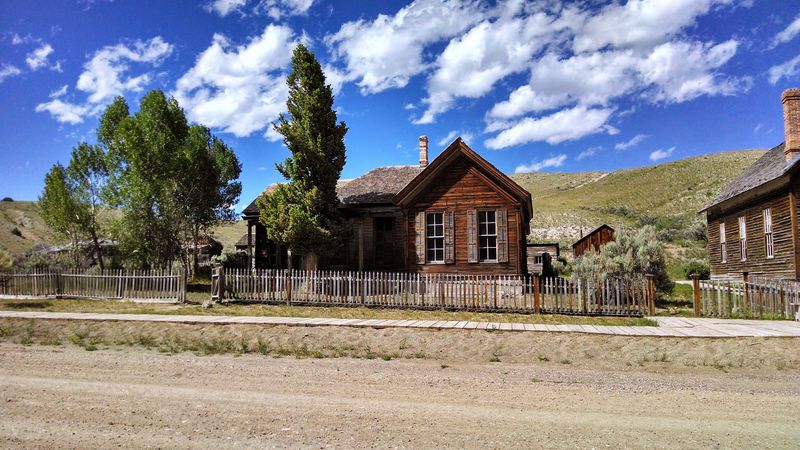
Not all heroes wear capes. Some heroes are dry desert air and low annual rainfall.
The remarkable preservation of Bannack’s buildings owes a significant debt to the climate of the Beaverhead Valley, which sits at about 5,800 feet elevation in a semi-arid region of southwestern Montana.
Wood rots when it gets wet and stays wet. In most parts of the country, a 160-year-old wooden structure left without maintenance would be a pile of splinters by now.
But Bannack’s dry summers and low humidity have slowed that process dramatically. The result is a collection of buildings that look aged and weathered but structurally sound enough to walk through and explore up close.
The valley’s geography also plays a role. Surrounded by mountains that block heavy moisture from the west, Bannack sits in a natural rain shadow that keeps conditions consistently dry.
It’s almost as if the landscape conspired to protect what was left behind. When you walk through Bannack and see original wooden floors, intact window frames, and century-old wallpaper still clinging to interior walls, you’re witnessing a preservation story that no museum budget could fully replicate.
Nature did the heavy lifting here.
The combination of intentional stabilization efforts by the state park and the valley’s climate has created something genuinely rare: a place where the past is not reconstructed but simply still present.
When The Gold Ran Out
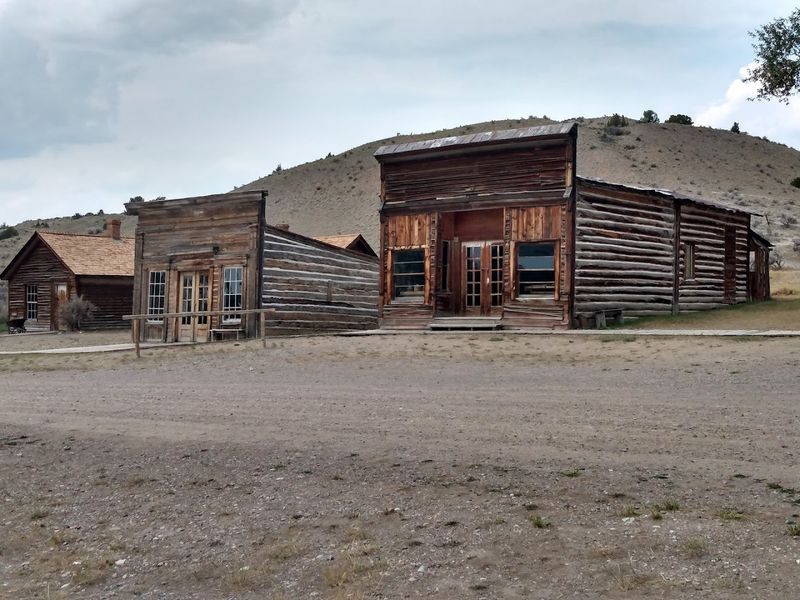
Every gold rush has a beginning, and every gold rush has an end. Bannack’s decline began as early as 1865, when the easier-to-reach surface gold started running thin and miners began packing up for the bigger, shinier promise of Virginia City in Alder Gulch.
The population drained away almost as fast as it had arrived.
The town didn’t collapse all at once. It faded in waves, the way a fire does when you stop feeding it.
Some mining operations continued into the 20th century, but each decade brought fewer residents and more empty buildings.
Then came World War II, which delivered a final economic blow: non-essential mining was prohibited by the government, effectively shutting down what little remained of Bannack’s economic reason to exist.
The last permanent residents left in the 1970s, closing the door quietly on over a century of human presence. There’s something deeply poignant about that timeline.
Bannack wasn’t dramatically destroyed by fire or flood. It was simply left behind, one family at a time, until nobody was left.
The buildings stayed standing because the dry air kept them upright and nobody needed the lumber badly enough to tear them down.
What remained was something accidental and extraordinary: a complete record of a community frozen at the moment of its abandonment. That’s not a sad ending.
That’s actually a remarkable kind of survival.
Where History Lives Outdoors
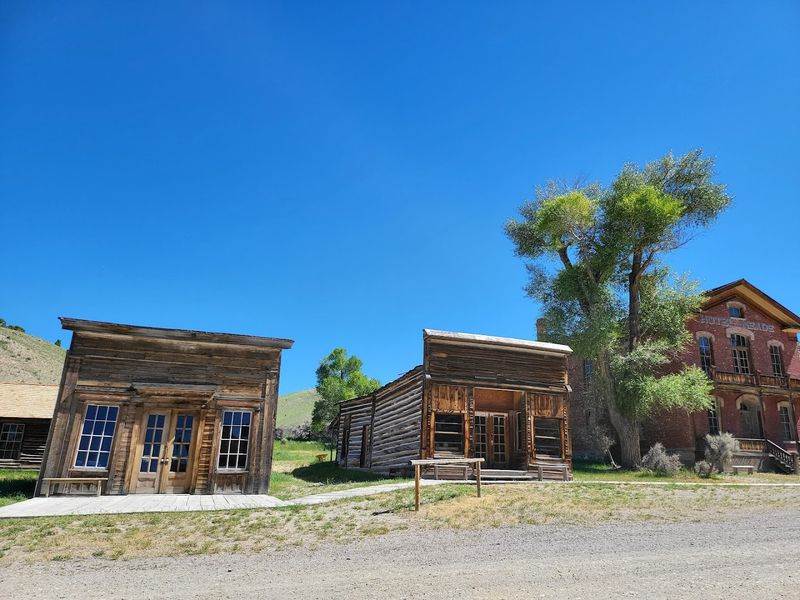
State parks don’t usually come with this much drama baked in. Bannack State Park covers about 1,600 acres in Beaverhead County and offers one of the most immersive outdoor history experiences in the entire American West.
The park is open year-round, though summer brings the most visitors and the best weather for exploring.
Unlike indoor museums where artifacts sit behind glass, Bannack lets you walk directly into and around the historic structures.
You can step through the doorway of the old Meade Hotel, peer into the original schoolhouse, and stand inside the Methodist church that served the community in its earliest years. The experience is tactile and immediate in a way that traditional museum exhibits rarely manage to achieve.
The park also offers camping, picnicking, and access to Grasshopper Creek for fishing, which means you can make a full weekend of it rather than just a quick afternoon stop.
Interpretive signs throughout the town provide historical context without overwhelming the experience. The balance between education and exploration feels just right.
Bannack State Park has also earned recognition as a National Historic Landmark, placing it among the most significant preserved sites in the country. For anyone even remotely curious about the gold rush era, the frontier West, or just great Montana scenery, this park delivers something that goes well beyond what any guidebook can fully capture.
What It Feels Like To Walk Through Bannack Today
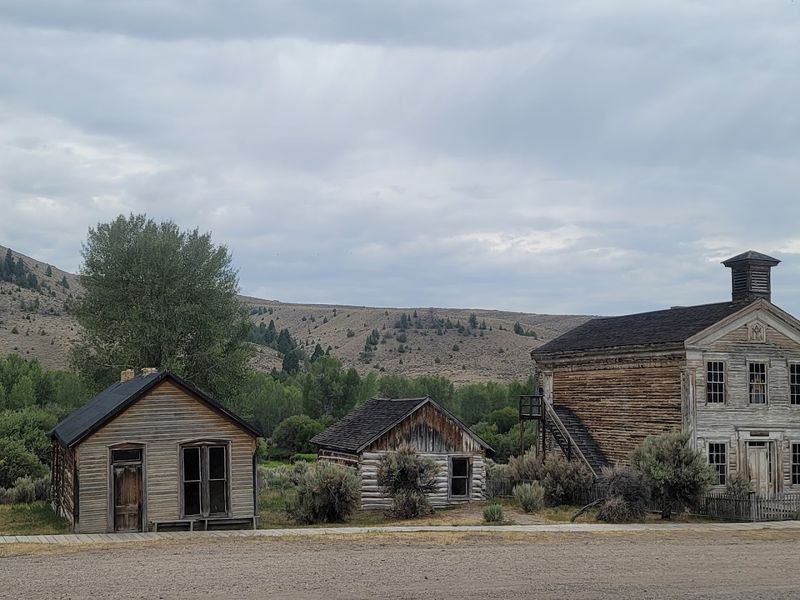
Walking through Bannack is one of those experiences that’s genuinely hard to describe without sounding dramatic. The silence is the first thing you notice.
Not the uncomfortable silence of an empty room, but the deep, layered quiet of a place that has absorbed more than a century of human stories and is holding them very close.
The main street runs along Grasshopper Creek, and the buildings line both sides in a loose, organic arrangement that reflects how the town grew organically rather than by design. Some structures lean slightly.
Others look almost ready to host a business again. The variety of building styles, log cabins beside frame houses beside brick commercial buildings, reflects the rapid, improvised nature of the town’s construction.
What hits hardest is the intimacy of the place.
Bannack was never a huge city, even at its peak. It was a human-scaled community where people knew their neighbors, shared resources, and built lives in extraordinarily challenging circumstances.
Walking through it now, you feel connected to those people in a way that’s hard to manufacture artificially. No souvenir shop or visitor center experience can replicate the feeling of standing in an original 1860s building and simply letting the weight of that history settle around you.
Bannack doesn’t ask you to do anything. It just stands there, patient and permanent, waiting to see if you’re paying attention.
The question is: are you ready to listen?