
This Oklahoma Route 66 Museum Is A Perfect Pit Stop For Road Trip Nostalgia
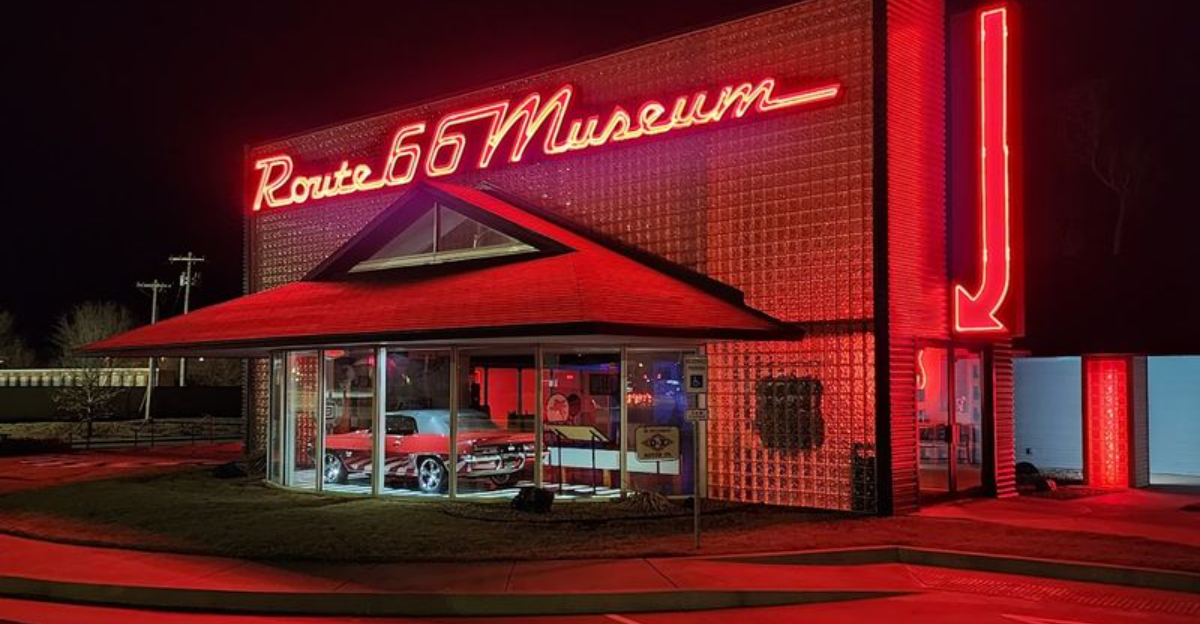
If the open road had a Hall of Fame, Route 66 would be front and center. Velvet rope, spotlight, no debate.
This isn’t just a highway. It’s a whole mood.
Windows down, music up, chasing something you can’t quite name. Right off I-40 in Oklahoma, there’s a spot that bottles that feeling.
Not just a museum. A time machine. You walk in, and suddenly it’s neon lights, chrome bumpers, Dust Bowl grit. Every decade hits.
Every corner tells a story. Born in 1926. Gone by 1985. But somehow? Still alive. Whether you came for history, vibes, or pure curiosity, this is one stop you don’t skip.
The Mother Road’s Official Oklahoma Home
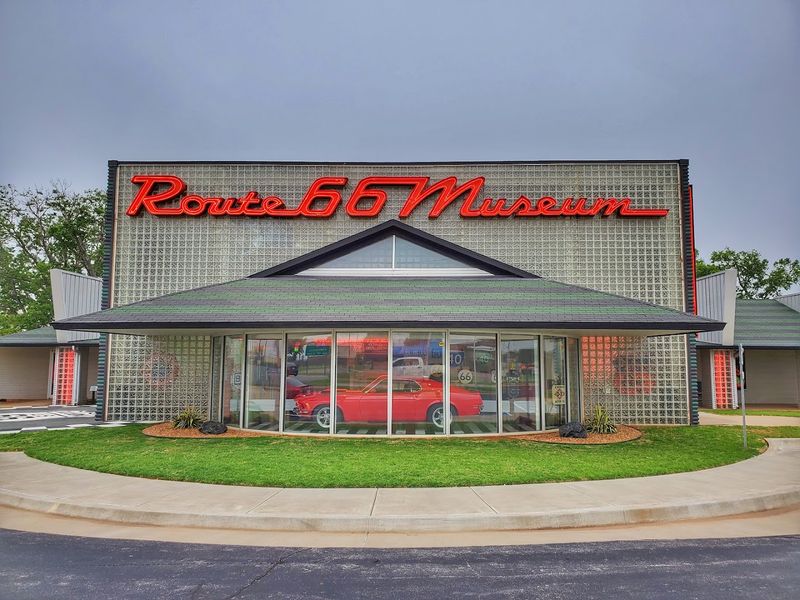
Not every museum earns the title of official state museum, but this one absolutely did. The Oklahoma Route 66 Museum in Clinton holds that distinction proudly, recognized by the Oklahoma Historical Society as the definitive home of Mother Road history in the state.
It was the first state-sponsored Route 66 museum in the entire country when it opened in 1995.
Before it became this beloved landmark, the building actually served as the Museum of Western Trails. The transformation into a Route 66 destination was a natural evolution.
Clinton was already a significant stop along the original highway, drawing travelers from across the country for decades.
The museum traces the full arc of Route 66, from its official designation in 1926 all the way through its decommissioning in 1985. That is nearly sixty years of American highway history packed into one incredibly well-curated space.
Every exhibit feels intentional, like each artifact was chosen to tell a specific part of a much bigger story.
Arriving here feels like pulling into a destination you did not know you needed. The building itself signals that something meaningful is waiting inside.
Clinton may be a small city in western Oklahoma, but this museum gives it an outsized cultural presence. For anyone traveling the Mother Road or simply passing through on I-40, skipping this stop would be a genuine missed opportunity.
Some museums inform. This one genuinely moves you.
Right Off I-40 And Easy To Find
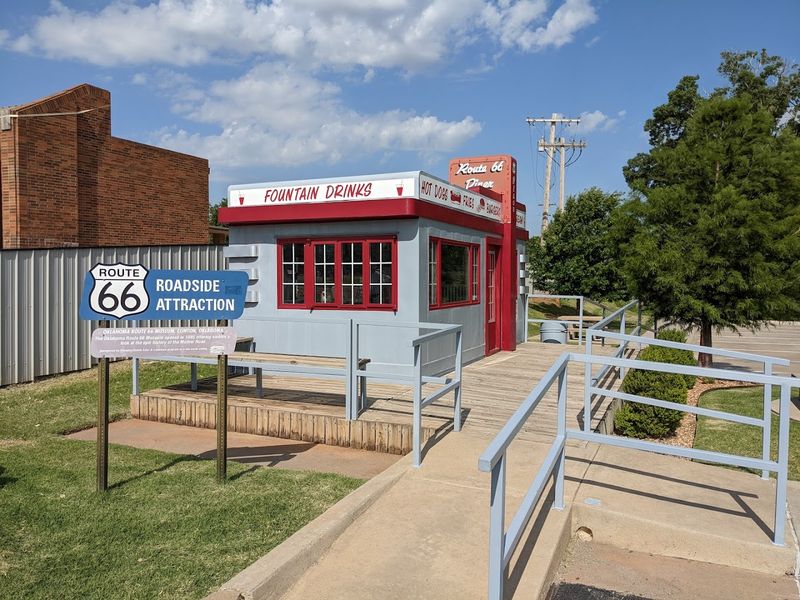
Location matters more than people give it credit for, especially on a road trip. The Oklahoma Route 66 Museum sits at 2229 W Gary Boulevard, Clinton, Oklahoma 73601, just a short hop from Interstate 40.
That placement is not accidental.
Clinton was a major stop on the original Route 66 corridor, and the museum honors that legacy by staying right in the heart of it.
Gary Boulevard itself follows the original Route 66 alignment through Clinton. Driving along it feels like a mini time warp before you even walk through the museum doors.
You pass vintage motels, old signage, and stretches of road that look almost exactly as they did in the highway’s golden age.
The accessibility of this spot makes it a no-brainer for travelers already on I-40. You do not need to detour far or reroute your entire trip.
A quick exit, a short drive, and suddenly you are standing in front of one of the most thoughtfully designed road trip museums in America.
Parking is easy, the area is welcoming, and the museum fits perfectly into a day of driving without feeling like an interruption.
It actually feels like the destination itself. Clinton is roughly halfway between Oklahoma City and Amarillo, which makes this stop a natural midpoint breather.
Sometimes the best pit stops are the ones you almost skipped. This one will make you glad you did not.
Decade-By-Decade Exhibits That Pull You In
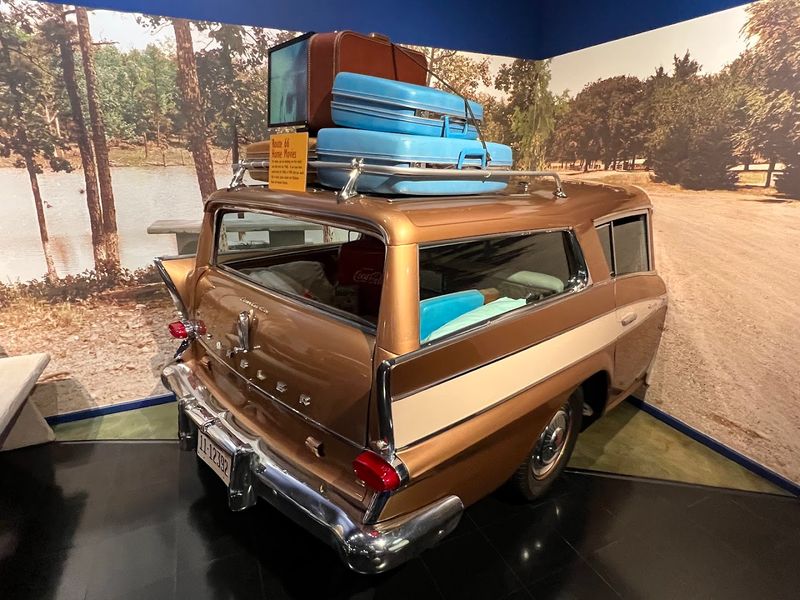
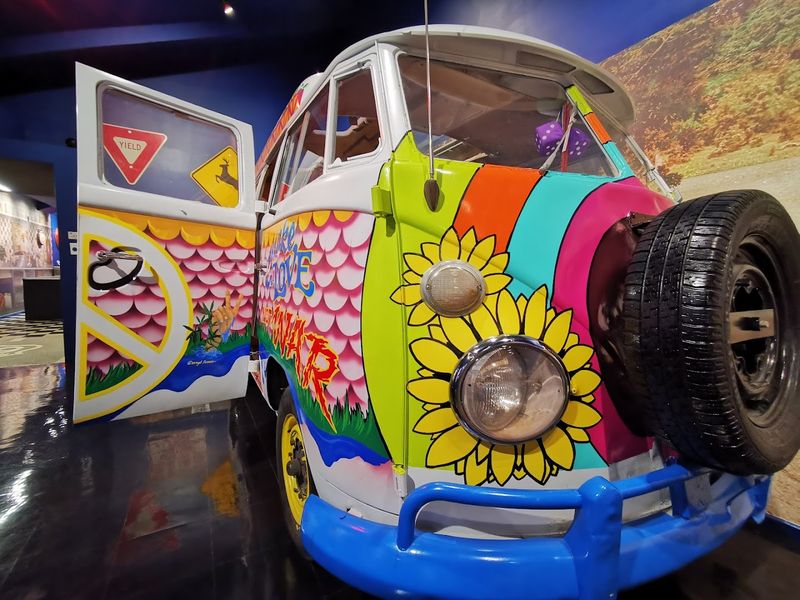
Walking through this museum is like flipping through the most visually stunning history book ever printed. Each room is dedicated to a different era, starting with the raw, desperate energy of the 1930s Dust Bowl and moving forward through the postwar boom, the carefree 1950s, and the counterculture vibes of the 1960s and 1970s.
The exhibit design is genuinely impressive. Curators did not just slap artifacts on a wall and call it a day.
Each room is layered with era-appropriate details, from the color palettes on the walls to the objects on display.
You feel the shift in American mood as you move from one decade to the next.
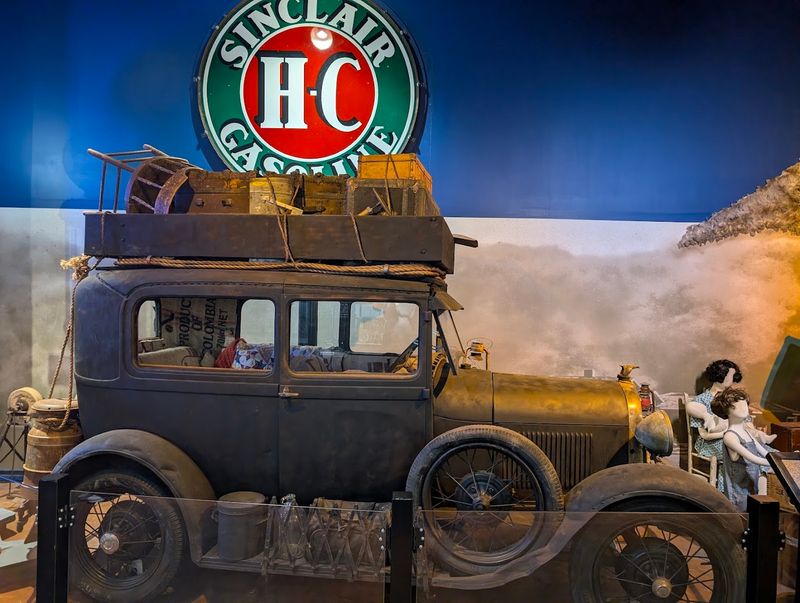
The 1930s section carries a heaviness that feels respectful and honest. Families fleeing the Dust Bowl used Route 66 as their lifeline west, and the museum does not shy away from that difficult chapter.
Then the tone shifts as you enter the postwar years, where optimism practically radiates off the displays.
By the time you reach the 1950s room, the energy is electric. Chrome, color, and confidence define that era, and the museum nails every detail.
Moving through these rooms is not just educational. It is genuinely emotional.
You start to understand why people talk about Route 66 the way they do. It was never just a road.
It was the backdrop of entire American lives.
Classic Cars That Steal The Show
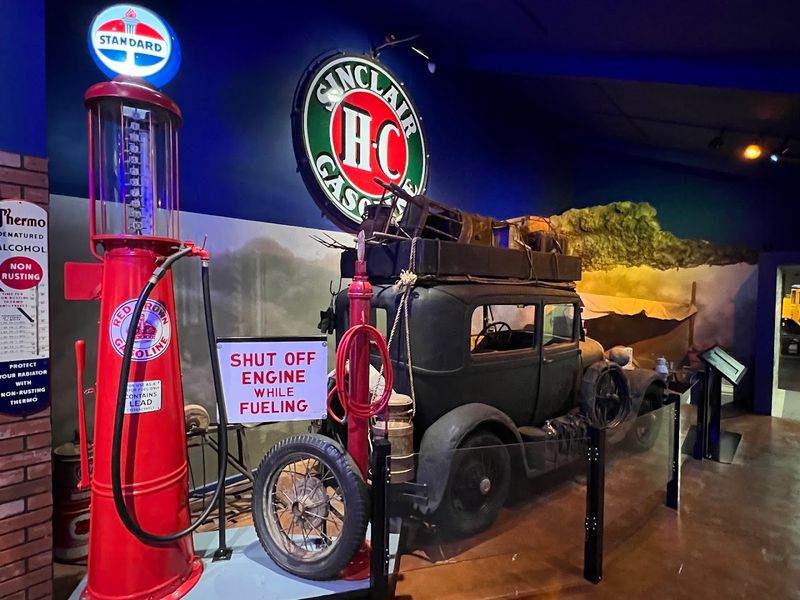
Few things say road trip nostalgia quite like a perfectly preserved classic car gleaming under museum lights. The Oklahoma Route 66 Museum features classic automobiles that anchor the exhibits beautifully.
These are not just pretty props.
They are rolling time machines that represent the cultural obsession with cars that defined mid-century America.
Route 66 was the road that made the American car culture what it became. People did not just drive the Mother Road.
They showed off on it.
Families loaded up station wagons. Teenagers cruised in convertibles.
The car was freedom, status, and adventure all wrapped in steel and chrome.
Seeing these vehicles up close adds a tactile dimension to the museum experience that photos simply cannot replicate. The curves, the colors, the sheer size of some of these machines make you appreciate just how dramatically automotive design has changed over the decades.
Each car on display connects to a broader story about the era it represents. A sleek 1950s coupe speaks to postwar prosperity and the thrill of mobility.
A dusty older model from the 1930s tells a harder story of survival and migration. The cars are conversation starters, memory triggers, and works of art all at once.
Car enthusiasts will linger here longer than anywhere else in the building. Honestly, that is completely understandable.
Vintage Gas Pumps And Neon Signs That Glow With History
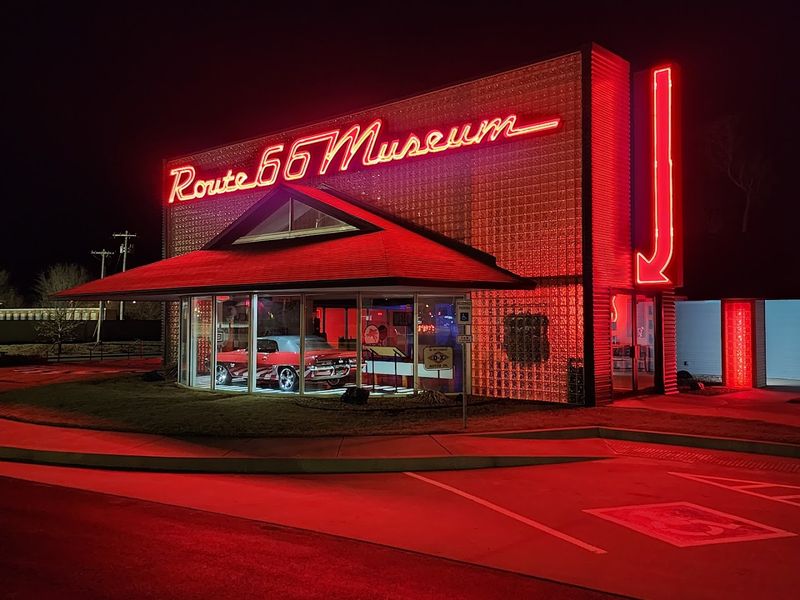
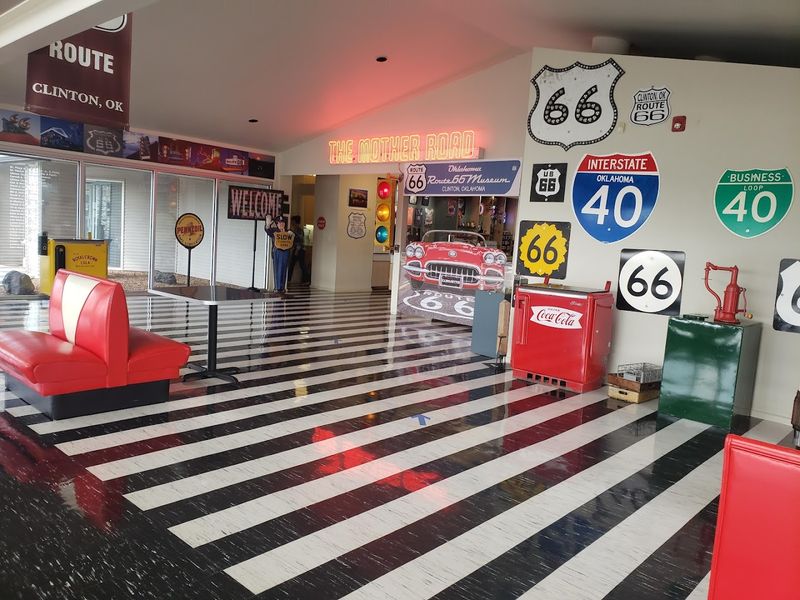
Neon and gasoline: two things that basically built the roadside culture of mid-century America. The museum does a brilliant job of showcasing both.
Vintage gas pumps stand like sentinels throughout the exhibits, reminding visitors of the era when filling up your tank was almost a ritual. Each pump has its own personality and backstory.
The neon signs are an absolute highlight. Bright, bold, and gloriously retro, they represent the visual language of Route 66.
Every motel, diner, and gas station along the highway competed for attention with increasingly creative signage. These signs were not just advertising.
They were art, and they shaped the visual identity of an entire era of American travel.
Seeing these pieces preserved and lit up inside the museum creates an atmosphere that feels genuinely cinematic. You half expect a 1950s convertible to pull up and ask for a fill-up.
The attention to detail in how these objects are displayed shows real curatorial passion.
Together, the gas pumps and neon signs tell a story about roadside commerce and the communities that depended on Route 66 travelers for their livelihoods. Towns along the highway rose and fell with the fortunes of the road.
These artifacts are physical reminders of that economic and cultural ecosystem. They glow with something more than electricity.
They glow with an entire era of American ambition and wanderlust.
The Recreated 1950s Diner That Feels Almost Real
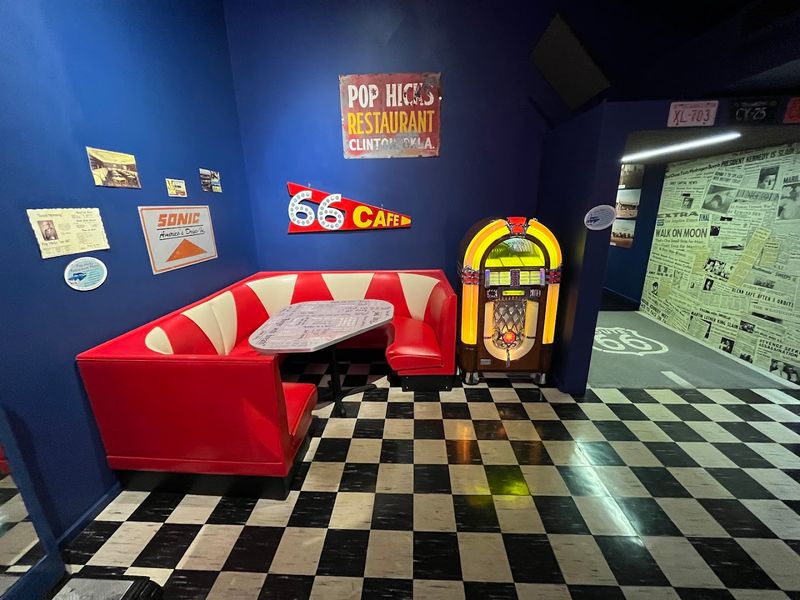
Somewhere between history lesson and daydream, the recreated 1950s diner inside the museum exists in its own magical category. You can actually sit in the booths.
That small detail changes everything. Suddenly you are not just observing history.
You are sitting inside it, at least for a few minutes.
The diner is designed with loving attention to period detail. Checkered floors, retro booth seating, and the kind of decor that makes you crave a milkshake almost immediately.
Diners like this were the heartbeat of Route 66 culture.
They were where travelers stopped, rested, and connected with strangers over simple food and good conversation.
Legends like the Pop Hicks Restaurant in Clinton itself represent the real-world version of this experience. The diner exhibit honors that legacy by recreating the atmosphere so convincingly that it borders on theatrical.
It is one of the most photographed spots in the entire museum, and rightfully so.
Sitting in one of those booths and absorbing the sights and sounds around you is one of those rare museum moments where time genuinely seems to pause.
The era-appropriate music playing throughout adds another layer of immersion that makes the whole experience feel complete. It is the kind of exhibit that makes you wish you could actually order a slice of pie.
The 1950s diner section alone is worth the trip to Clinton.
Music That Makes Every Room Come Alive
Most museums ask you to look. This one asks you to listen, too.
Each exhibit room in the Oklahoma Route 66 Museum is enhanced with music carefully chosen to match the era on display.
It is a detail that sounds simple but completely transforms the experience. Sound design in museums is underrated, and this place gets it exactly right.
Walk into the 1930s room and the music carries the weight of that decade. Move into the 1950s section and suddenly something upbeat and electric fills the air.
The songs shift your emotional register before you even consciously notice it happening. That is masterful curation.
Route 66 has always had a deep connection to American music. From folk songs about westward migration to rock and roll anthems about freedom and the open road, the highway inspired generations of artists.
The museum honors that musical heritage in the most direct way possible: by letting it play.
Hearing period-appropriate music while examining artifacts from the same era creates a sensory experience that sticks with you long after you leave.
You might find yourself humming something from the exhibit while back on the highway an hour later. That is the mark of a truly immersive museum.
The music does not just fill the silence. It tells its own parallel story alongside every display, deepening everything you see and feel inside these walls.
The Gift Shop Worth Every Souvenir Dollar
No road trip is complete without a souvenir, and the Oklahoma Route 66 Museum gift shop delivers on that front with genuine style. This is not a generic museum shop stocked with generic trinkets.
The selection here feels curated and thoughtful, with items that actually connect to the Route 66 story you just experienced.
Books about the Mother Road line the shelves, covering everything from photographic histories to personal travel memoirs.
Route 66 signs in various styles and sizes are popular picks for anyone wanting a piece of highway heritage to hang at home. Postcards, magnets, and other smaller mementos round out the selection for travelers on a budget.
The gift shop also serves as a final chapter in the museum experience. Browsing through items related to everything you just saw and learned reinforces the visit in a satisfying way.
You leave not just with memories but with something tangible to remind you of the stop.
Supporting the gift shop also supports the museum itself and the broader mission of preserving Route 66 history. That feels good in a way that buying a generic souvenir at a highway rest stop simply does not.
The items here carry meaning because of the context surrounding them.
Whether you pick up a book you will actually read or a sign that will look great in your garage, leaving empty-handed feels almost impossible. The gift shop earns its spot as a worthy final stop.
Route 66 Must-Stop
Some places earn their reputation through hype. Others earn it through genuine, irreplaceable experience.
The Oklahoma Route 66 Museum falls firmly into the second category.
It is the kind of stop that road trip veterans recommend without hesitation and first-timers immediately add to their return trip list.
The combination of immersive exhibits, authentic artifacts, classic cars, and atmospheric design creates a museum experience that rises well above the average. Every element works together to deliver something cohesive and emotionally resonant.
You do not just learn about Route 66 here. You feel it.
It is also remarkably accessible. The location just off I-40 means you do not have to plan an elaborate detour.
You can fold this stop into almost any cross-country drive through Oklahoma and come away feeling like the entire trip gained new meaning. That kind of easy access to genuine cultural depth is rare and worth celebrating.
Route 66 has inspired songs, films, novels, and countless personal stories across nearly a century of American life. The museum in Clinton honors all of that with care, creativity, and obvious love for the subject.
Whether you are a die-hard Mother Road enthusiast or someone who just needed a good reason to exit the interstate, this museum delivers every time. So the next time you find yourself rolling through western Oklahoma, ask yourself: can you really afford to drive past this one?