
This Pennsylvania Park Is One Of The Few Places To Hunt 400-Million-Year-Old Fossils
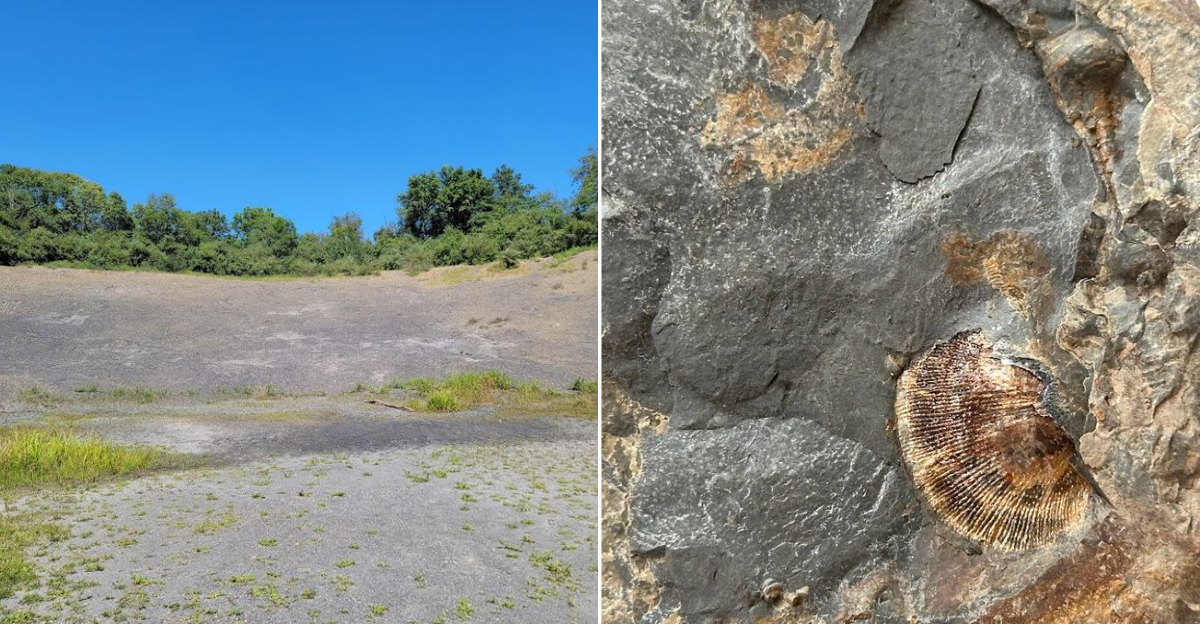
A rock can look ordinary until it starts telling secrets. At this Pennsylvania park, the ground holds reminders of an ancient world, giving curious visitors the chance to search for fossils that are hundreds of millions of years old.
That turns a simple outdoor stop into something much more exciting, like a nature walk with a mystery buried under every dusty layer. Fossil hunting has a quiet thrill to it.
You scan, split, brush, and wonder if the next small shape will be a piece of prehistoric life staring back from the stone.
It is hands-on history, part treasure hunt and part time travel, with just enough dirt involved to make the discovery feel earned.
The best part is that you do not need a fancy science background to enjoy it. Curiosity does most of the work.
I have always liked places that make me feel small in the best way, and finding an ancient fossil would definitely make my afternoon feel legendary.
The Fossil Pit Is Free To Visit
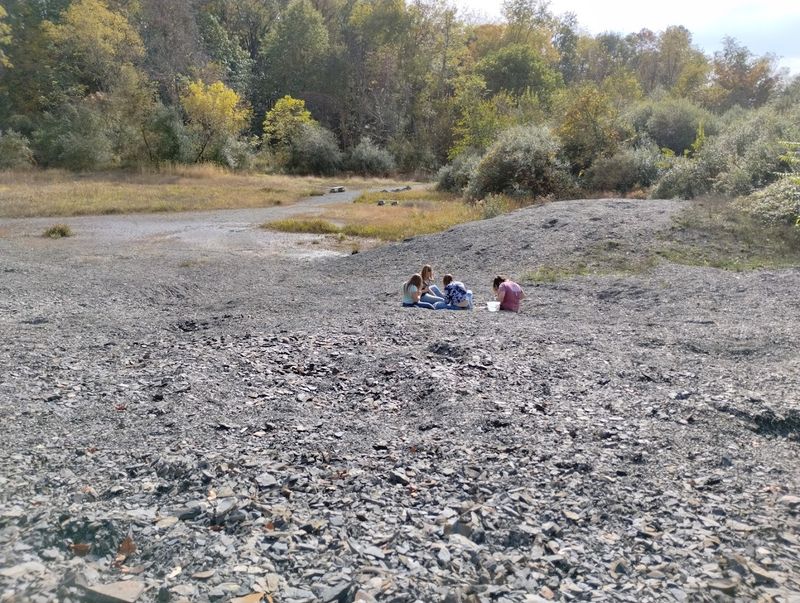
Free admission at a site this scientifically significant is genuinely rare. Most fossil-hunting experiences across the country, including several in Ohio and beyond, charge entry fees or require guided tour bookings.
At Montour Preserve Fossil Pit, located at 160 Sportsmans Rd, Danville, PA 17821, there is no ticket booth and no reservation needed.
You simply show up, grab a fossil guide from the informational board near the entrance, and start exploring.
The site is managed by PPL Corporation as part of the larger Montour Preserve, a conservation area surrounding Lake Chillisquaque.
That means your tax dollars and the company’s land stewardship are essentially funding your prehistoric adventure at zero cost to you.
For families, homeschool groups, or anyone on a budget, that kind of open-access experience is incredibly hard to beat and worth planning a full day around.
The Site Is Genuinely 400 Million Years Old
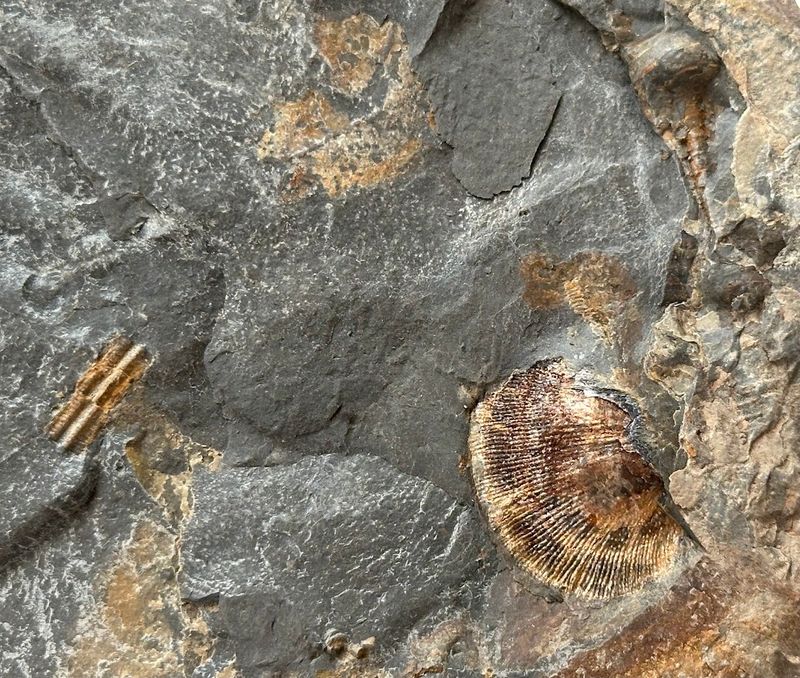
Four hundred million years is a number so large it is almost impossible to wrap your head around. To put it in perspective, that predates the age of dinosaurs by roughly 165 million years.
The shale at Montour Preserve Fossil Pit dates to the Devonian period, a time when much of what is now Pennsylvania was covered by a shallow inland sea.
The creatures that lived and perished in that sea slowly became preserved in layers of sediment that hardened into the rock you can hold in your hands today.
Ohio and other neighboring states share similar geological formations from this era, but few offer a public dig site quite like this one. Finding a fossil here is not just fun.
It is a direct, physical connection to one of Earth’s most ancient chapters, which makes every split rock feel like opening a time capsule.
The Area Covers Several Acres Of Exposed Shale
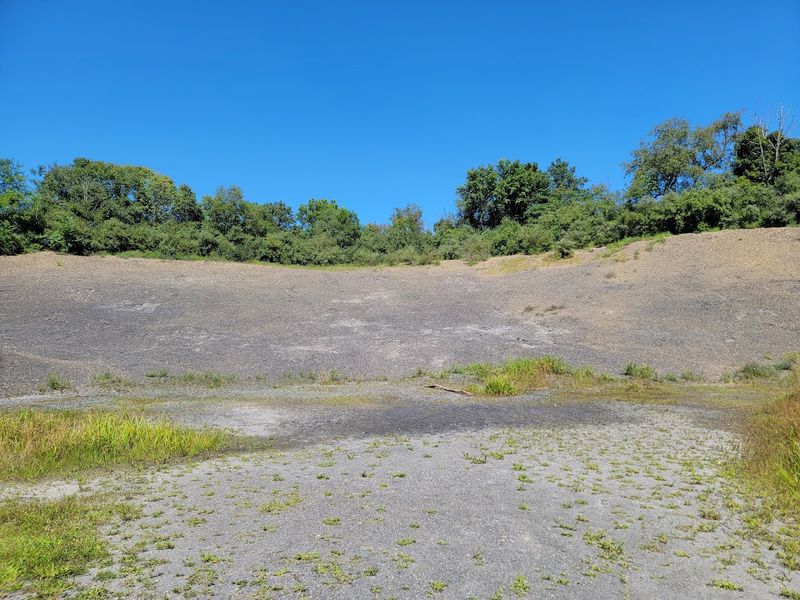
This is not a tiny roadside stop. The fossil pit at Montour Preserve gives visitors a broad exposed area of shale to work through, and the scale of it can surprise first-time visitors.
It is more of a rocky slope than a traditional pit, and that works in your favor.
With so much shale to scan, split, and examine, finding productive sections is very possible, especially if you are willing to move beyond the most immediately disturbed material near the entrance.
Think of it like a puzzle spread across a hillside. The more ground you cover and the more carefully you work, the better your chances.
What makes this place special is not just the age of the fossils, but the fact that the site remains free, public, and welcoming to curious visitors year-round.
Trilobites Have Actually Been Found Here
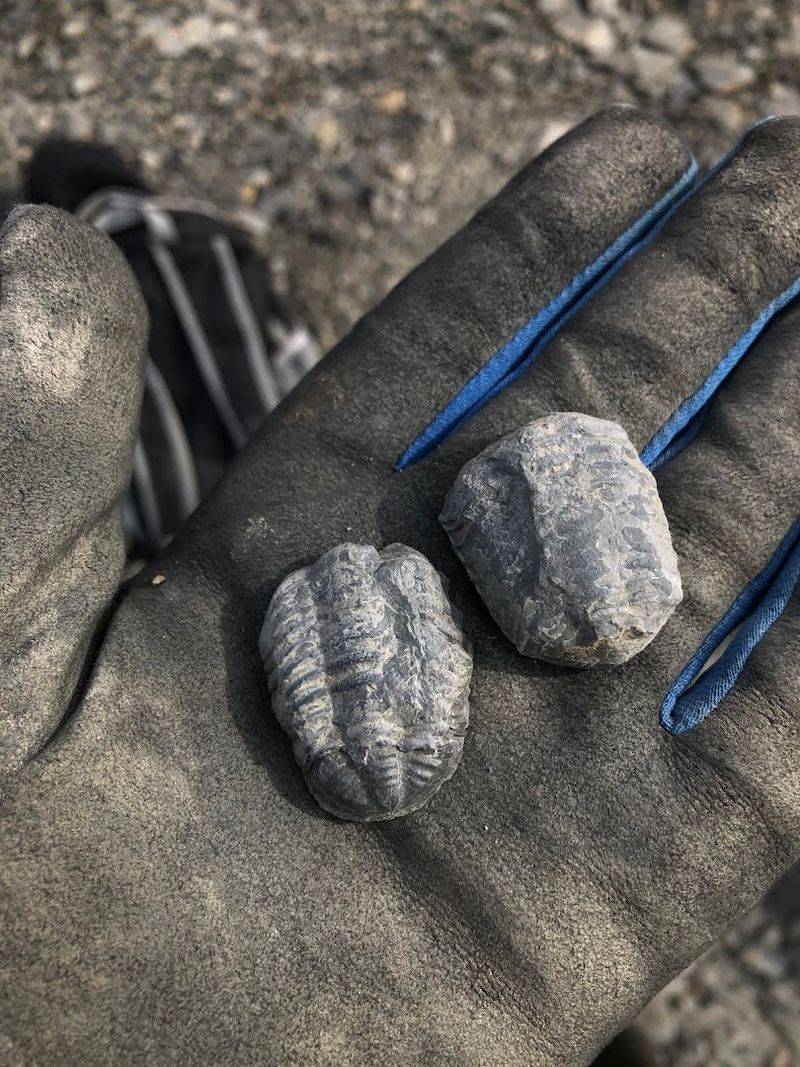
Trilobites are among the most iconic prehistoric creatures ever discovered, and finding one in the wild is the kind of moment fossil hunters talk about for years.
At Montour Preserve Fossil Pit, trilobites have been confirmed finds, though they require patience and the right technique.
One visitor reported uncovering three trilobites in a single four-hour session by targeting the undisturbed shale layers along the cliffside and carefully chiseling off thin sheets to examine what lies beneath.
The key is working the bedrock rather than the loose surface rubble, which has already been picked over by previous visitors.
Ohio fossil sites also occasionally yield trilobites, but having a free public site in Pennsylvania where these ancient arthropods are a real possibility is something special.
Bring a chisel, a detailing brush, and a steady hand. The reward for that kind of careful, methodical work can be a creature half a billion years in the making.
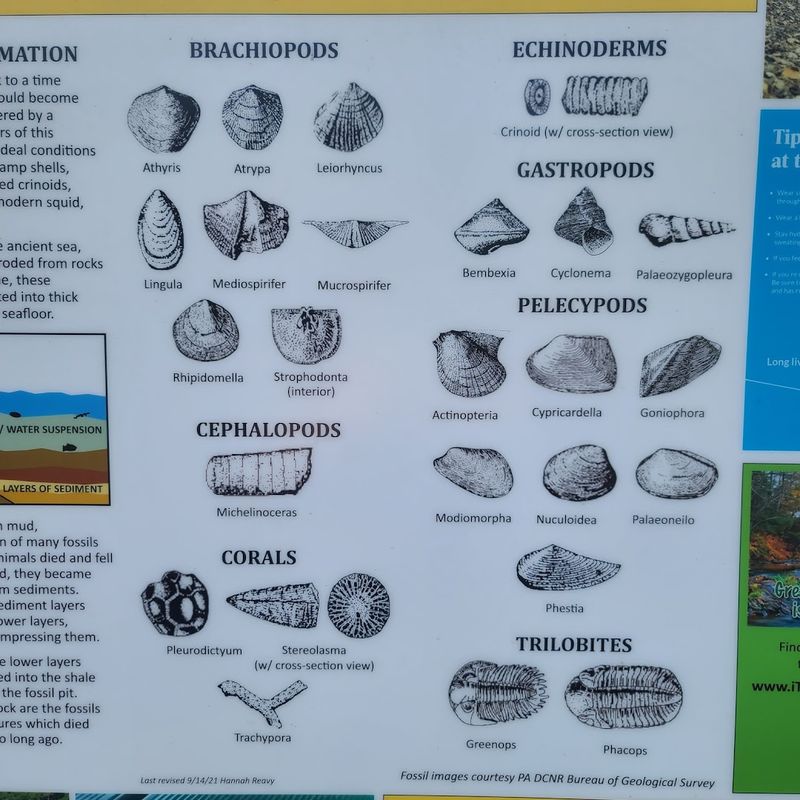
A Graphic Fossil Guide Is Posted Right At The Entrance
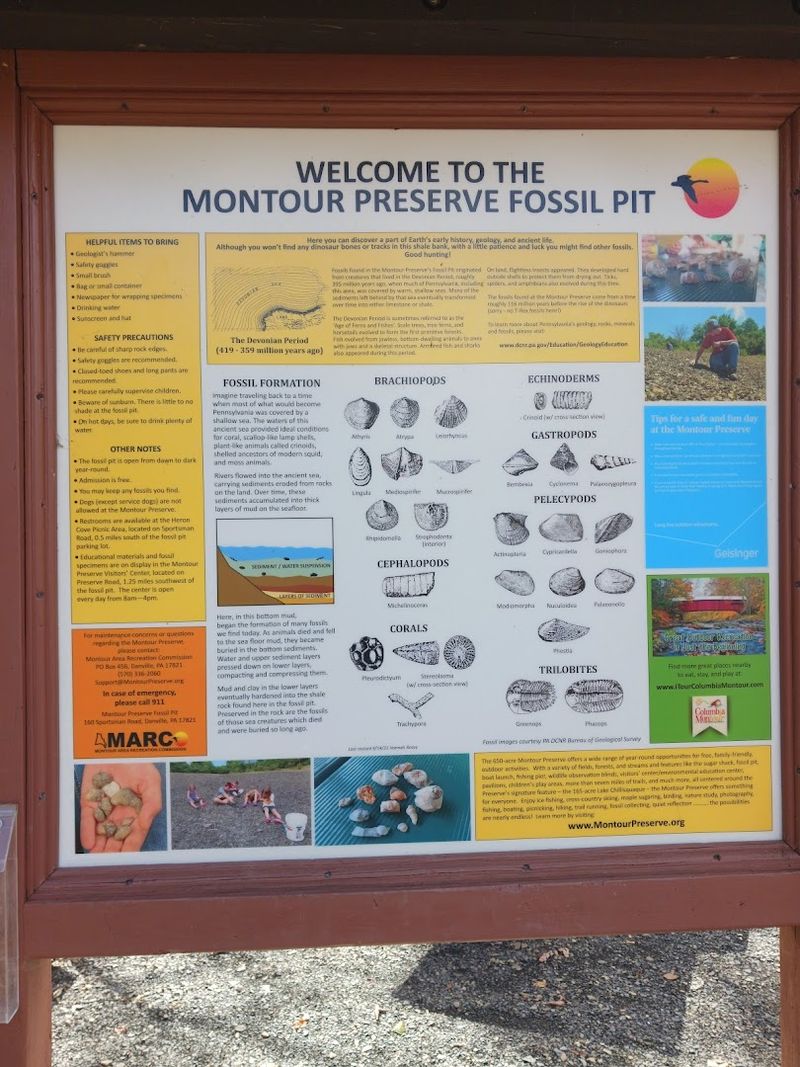
One of the most thoughtful features of this site is the large graphic guide posted near the pit entrance.
It shows exactly which types of fossils have been found in the shale here, with images and names so even complete beginners know what they are looking at.
That guide takes a lot of the guesswork out of the experience. Instead of picking up every random rock and wondering if it matters, you can quickly learn to recognize brachiopods, crinoid stems, bryozoans, and other Devonian marine organisms before you even start digging.
The preserve also offers a downloadable brochure on its website for those who want to study up beforehand.
Compared to fossil sites in Ohio and elsewhere that offer little to no on-site interpretation, this kind of visual resource makes Montour Preserve Fossil Pit genuinely accessible for all ages and experience levels.
Knowledge posted at the trailhead turns a casual outing into a real learning moment.
Fossil Finds Here Reward Patience And Good Technique
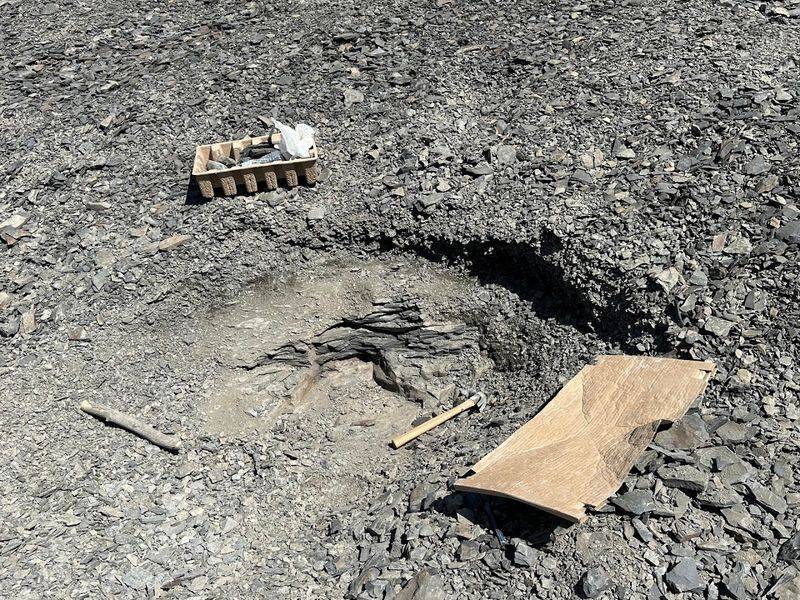
Some of the most exciting moments at Montour Preserve Fossil Pit come from splitting open a piece of shale and seeing a fossil appear where you did not expect one.
That surprise is part of what keeps people coming back.
Visitors commonly search for marine fossils preserved in the Devonian shale, and success often comes down to patience and technique rather than luck alone.
The key is working carefully through promising layers instead of only scanning loose surface rubble that has already been picked over by previous visitors. Bring a chisel, a detailing brush, and a steady hand.
The reward for that kind of careful, methodical work can be a fossil that has been waiting hundreds of millions of years for someone to notice it.
Kids And Beginners Find Fossils Surprisingly Quickly
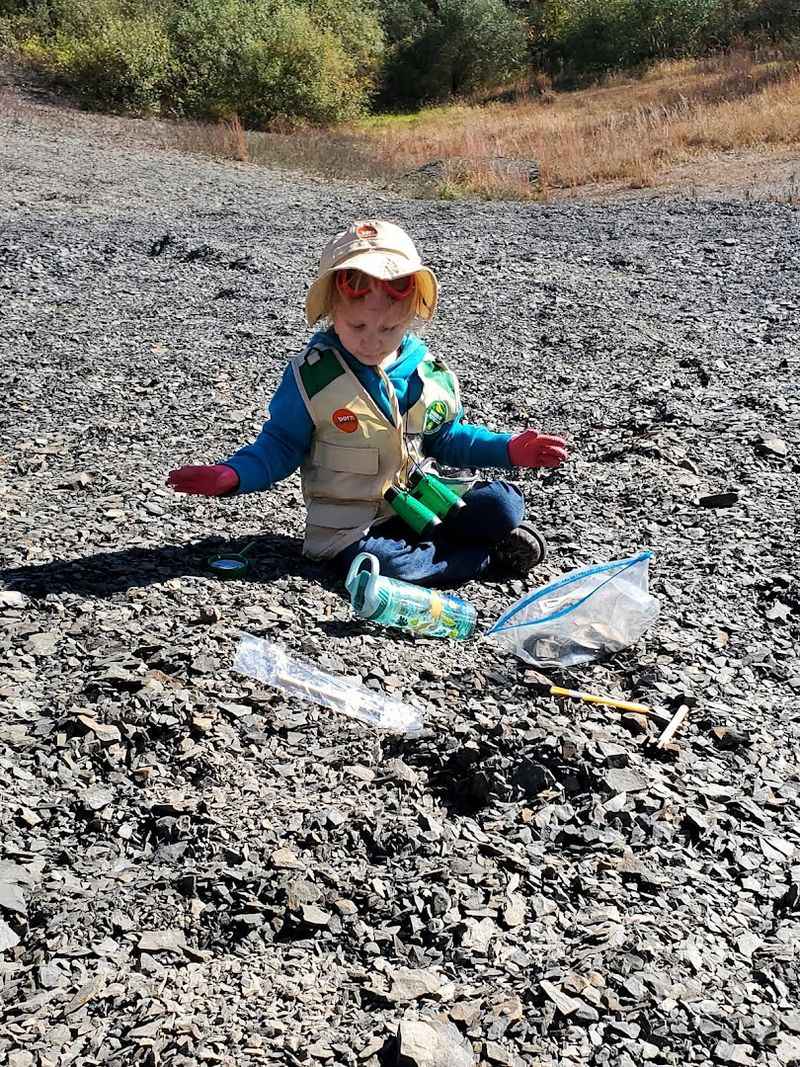
There is a real fear among first-timers that they will spend hours digging and walk away empty-handed. At Montour Preserve Fossil Pit, that fear tends to disappear fast.
Many visitors report finding their first fossil within minutes of arriving, even without any prior experience. One homeschool family noted that their son found his first fossil just minutes after stepping onto the shale.
Another group mentioned finding seashell fossils in under thirty minutes without any specialized tools. The loose surface material alone contains enough fragments to reward a patient and curious eye.
Fossil sites in Ohio and across the Northeast vary widely in beginner-friendliness, and this one consistently ranks among the most rewarding for new hunters.
Part of what makes it so accessible is that you do not need to dig deep to start finding things. Sometimes the best fossils are hiding in plain sight, just waiting for someone to notice them.
The Nearby Nature Center Adds Real Educational Value
Not far from the fossil pit, Montour Preserve also has an environmental education center that adds useful context to a visit. Stopping there before or after your dig can help round out the experience.
Seeing interpretive material about the preserve and its natural history gives you a much clearer sense of the landscape you are walking through.
It turns a fun fossil hunt into something that feels more connected to the broader story of the area.
For families and curious first-timers, that added context makes a difference. The fossil pit is exciting on its own, but pairing it with the preserve’s educational side gives the outing more depth.
Here, the learning component feels like part of the experience rather than an extra chore.
Sun Exposure And Heat Are Real Considerations
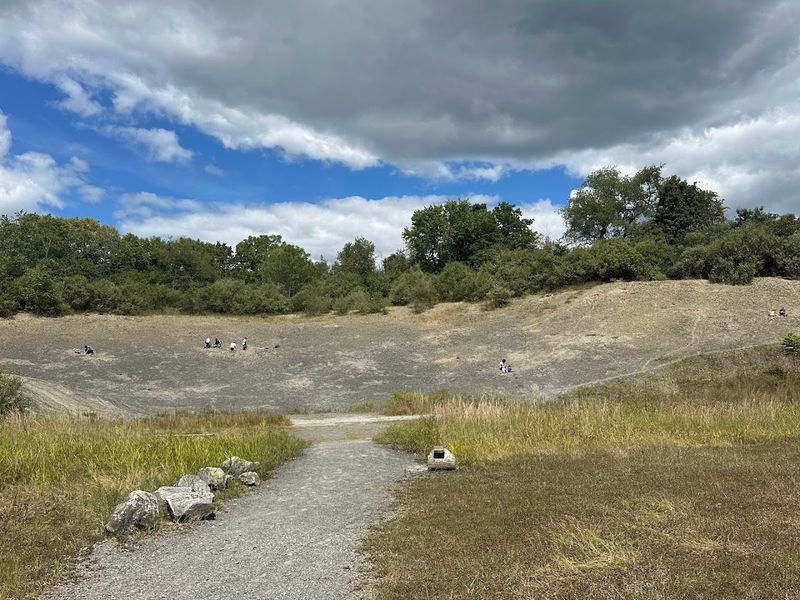
Here is something the photos do not always make clear: the fossil pit has almost zero shade.
It is an open, rocky hillside fully exposed to the sky, and on a summer afternoon, that combination of direct sun and heat-absorbing shale turns the whole area into something resembling a skillet.
Multiple visitors have flagged this as the one thing they wish they had prepared for better. Sunscreen, a wide-brimmed hat, and plenty of water are not optional extras here.
They are essential gear.
If you are visiting with children, planning your trip for morning hours when the temperature is cooler makes the experience much more comfortable.
Ohio fossil hunters and outdoor enthusiasts across the mid-Atlantic know this drill well: sun protection is part of the packing list no matter how short the trip seems.
Bring more water than you think you need, because the combination of physical activity and full sun burns through hydration faster than expected.
The Preserve Offers Much More Than Just Fossil Hunting
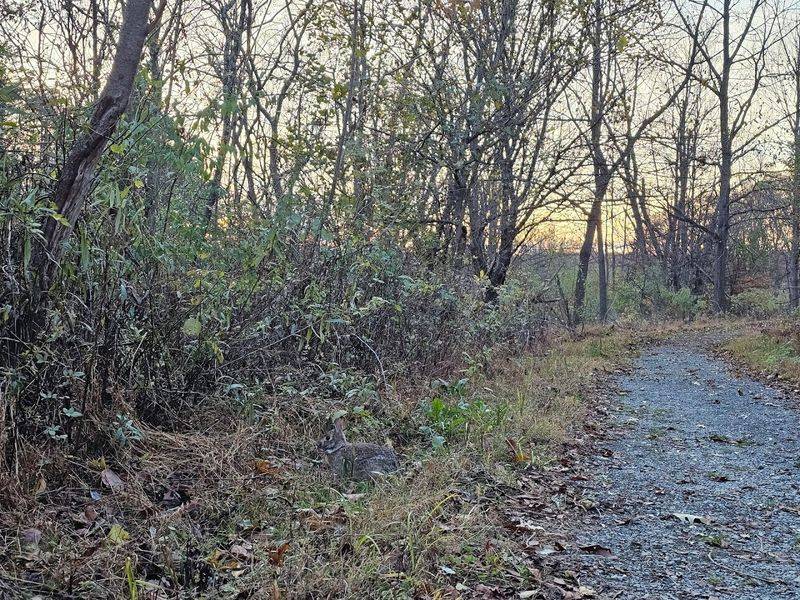
Fossil hunting is the headline act, but Montour Preserve is a larger outdoor destination with more going on than just the shale slope.
The preserve includes trails, water, and additional nature-focused amenities that make it easy to build a longer outing around the fossil pit.
That broader setting is part of the appeal. You are not just visiting one narrow attraction.
You are spending time in a preserve that supports multiple kinds of outdoor exploration.
Wildlife watching, walking, and general sightseeing all fit naturally into the visit, which helps the day feel fuller without requiring much extra planning.
Montour Preserve Fossil Pit might be the main reason most people show up, but the surrounding preserve gives them plenty of reasons to stay.