
This Scenic Train Ride Through Arizona’s Red Rocks Is Truly Unforgettable
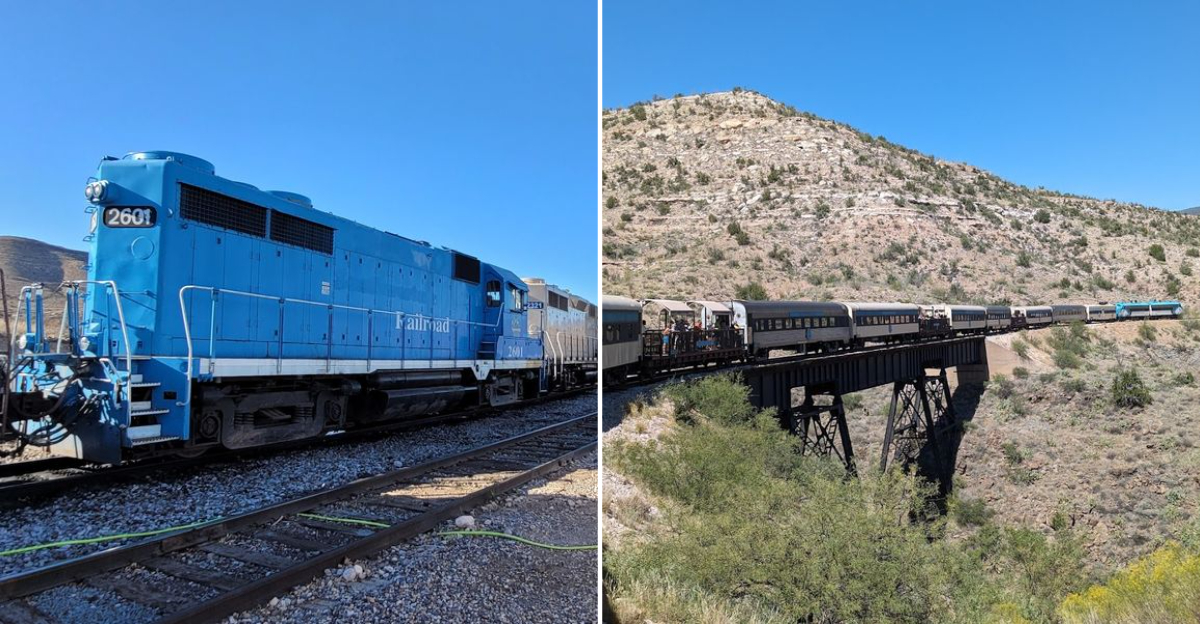
Trading the steering wheel for a window seat was the best decision of the entire vacation. Sitting back with a cold drink while the majestic, rust-colored cliffs of Arizona drifted past the glass felt like watching a high-definition nature documentary come to life.
Rugged canyons revealed hidden passages and ancient rock formations that remain completely inaccessible to cars, offering a rare glimpse into a pristine, untouched world.
Fresh air whipped through the observation cars, carrying the scent of juniper and high-desert sage with every turn of the track. Finding a quiet corner to witness the play of light against those iconic red rocks turned an ordinary afternoon into a cinematic experience.
If the goal is to witness the true, untamed soul of the desert, this is where the journey begins.
I had seen photos before boarding, but nothing prepared me for the actual scale of the cliffs, the silence of the wilderness, or the feeling of traveling through a landscape that most people never get to see up close.
The History Behind The Tracks
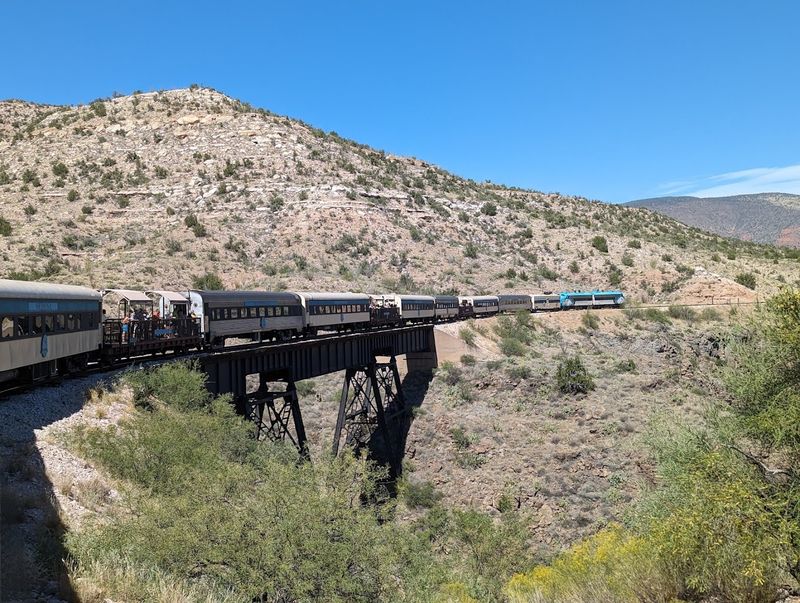
Back in 1912, industrialist William Andrews Clark had a very practical reason for laying these tracks: he needed a way to haul copper ore from the mines in Jerome down to his smelter in Clarkdale.
The railroad was never built with tourists in mind, but the route it carved through the Verde Canyon turned out to be one of the most scenic corridors in the American West.
The Santa Fe Railway operated the line for decades until 1988, when entrepreneur David L. Durbano purchased it and saw something others had overlooked.
By 1990, passenger service had officially launched under the name Verde Canyon Railroad, giving everyday travelers access to a wilderness corridor that had been quietly sitting there for nearly eighty years.
In 2005, Governor Janet Napolitano declared it an Arizona Treasure after the railroad carried its one-millionth passenger. That milestone felt fitting for a line that was born from industry and grew into something far more meaningful.
What started as a working rail line for copper has become one of Arizona’s most memorable ways to experience canyon country, with every mile carrying a little piece of that layered past.
Clarkdale Depot: Where The Adventure Starts
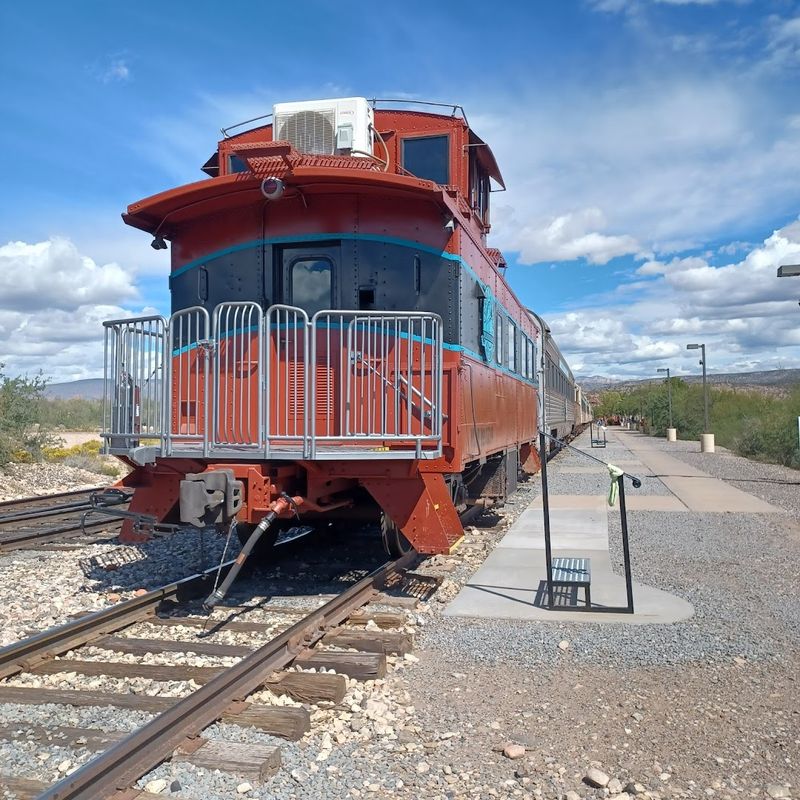
Pulling into the Clarkdale depot parking lot, I honestly expected something small and forgettable. What I found instead was a lively, well-organized hub that sets the right mood before you even step onto the train.
The sprawling depot building houses the Copper Spike Cafe, a Boxcar Gift Store stocked with locally themed souvenirs, and the John Bell Museum, which tells the story of the canyon and the railroad in engaging detail.
The staff here move with the kind of cheerful efficiency that tells you they genuinely love what they do. There is plenty of space to browse, grab a bite, and take in the atmosphere before boarding. I spent about thirty minutes wandering the museum and was surprised by how much I learned before the journey even began.
Arriving early is a smart move, not just for parking but because the depot experience is genuinely worth your time. Think of it as the opening chapter of a story that only gets better from here.
It also helps the trip feel less rushed, especially if you like easing into an experience instead of sprinting straight to boarding. By the time the train is ready, the depot has already done its job, giving you a little history, a little local flavor, and just enough anticipation for the canyon ahead.
The Locomotives That Power The Journey
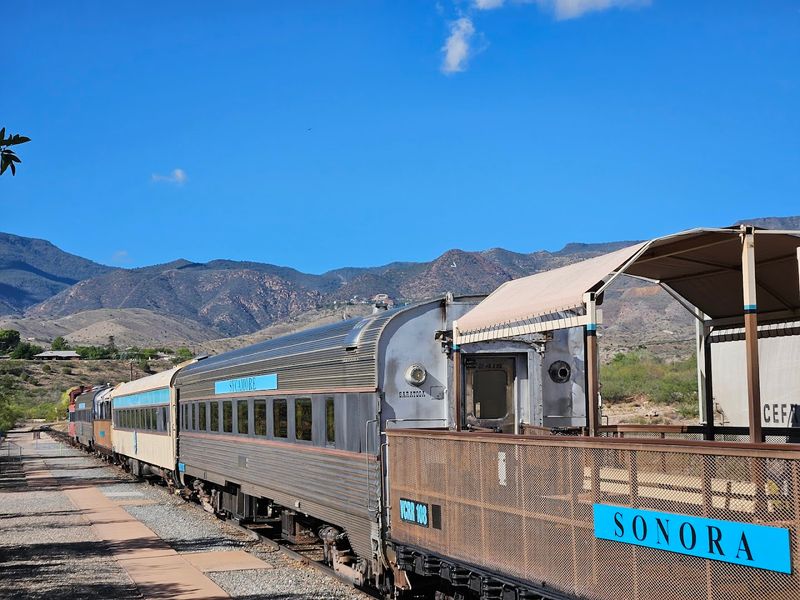
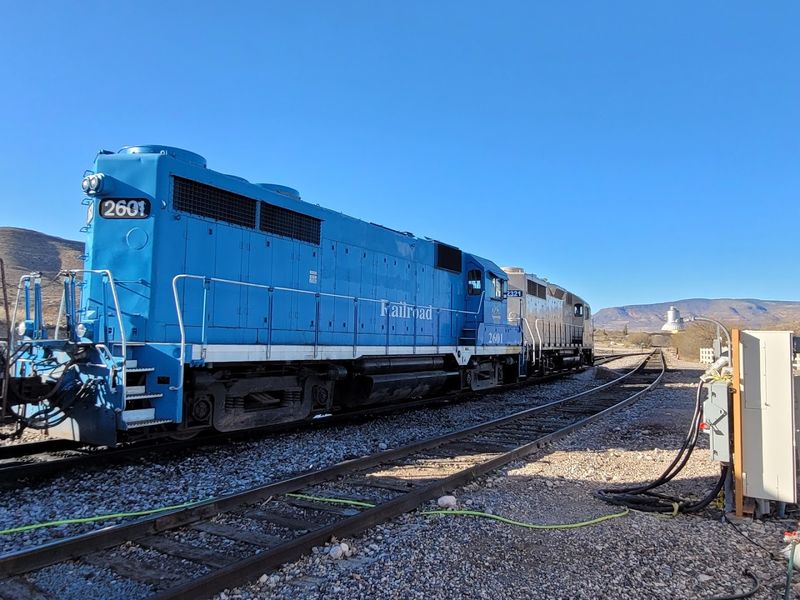
Not every train can claim to be pulled by a piece of living history, but the Verde Canyon Railroad earns that distinction with ease. The two locomotives that haul passengers through the canyon are EMD FP7 units numbered 1510 and 1512, originally built in 1953 for the Alaska Railroad.
Today, only ten FP7s remain in active operation across all of North America, and two of them call Clarkdale home.
Watching these machines come to life at the depot is a moment worth pausing for. There is a deep, resonant rumble when the engines kick in, and you can feel it in your chest before the train even begins to move.
These are not replica machines dressed up for show; they are authentic working locomotives with real history running through every bolt and panel.
For train enthusiasts, standing near the engines before boarding feels like meeting a legend in person. For everyone else, it is simply a cool reminder that some of the best things in travel come with serious mileage already on them.
The Canyon Scenery That Stops You Mid-Sentence
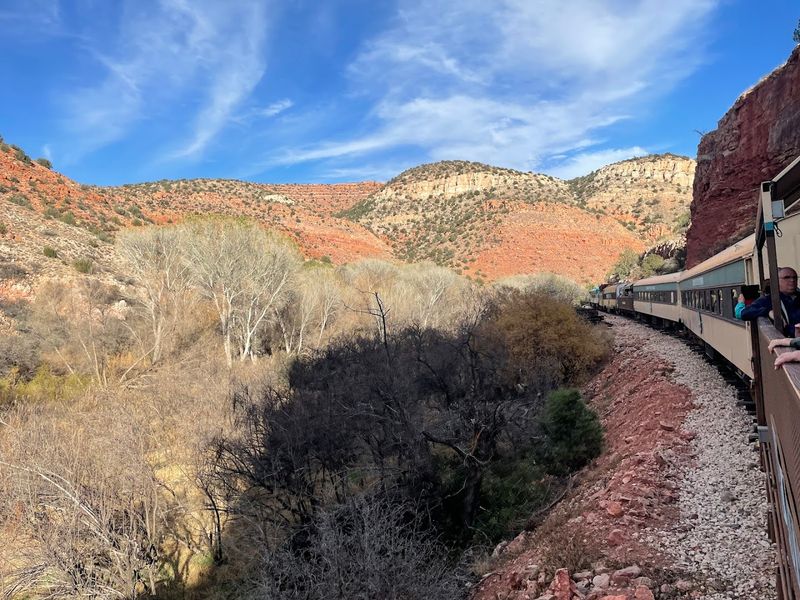
There is a moment somewhere around mile ten when the canyon walls close in on both sides and you genuinely run out of words. The Verde Canyon is sometimes called Arizona’s other grand canyon, and once you are inside it, that nickname stops feeling like a stretch.
Red rock pinnacles rise hundreds of feet overhead, the Verde River winds below through a ribbon of cottonwood and willow trees, and the whole scene feels almost impossibly vivid.
What makes this route so special is the variety packed into a single journey. One minute you are rolling through open desert scrubland with saguaro cacti dotting the hillsides, and the next you are deep inside a narrow canyon with shadows falling across the river below.
The contrast keeps your eyes constantly moving and your camera working overtime.
I found myself leaning out of the open-air car for most of the ride, which is exactly what those cars are designed for. The canyon has a way of pulling you toward it, and resisting that pull would honestly be a waste of a perfectly good train ride.
Wildlife You Can Actually Spot Along The Route
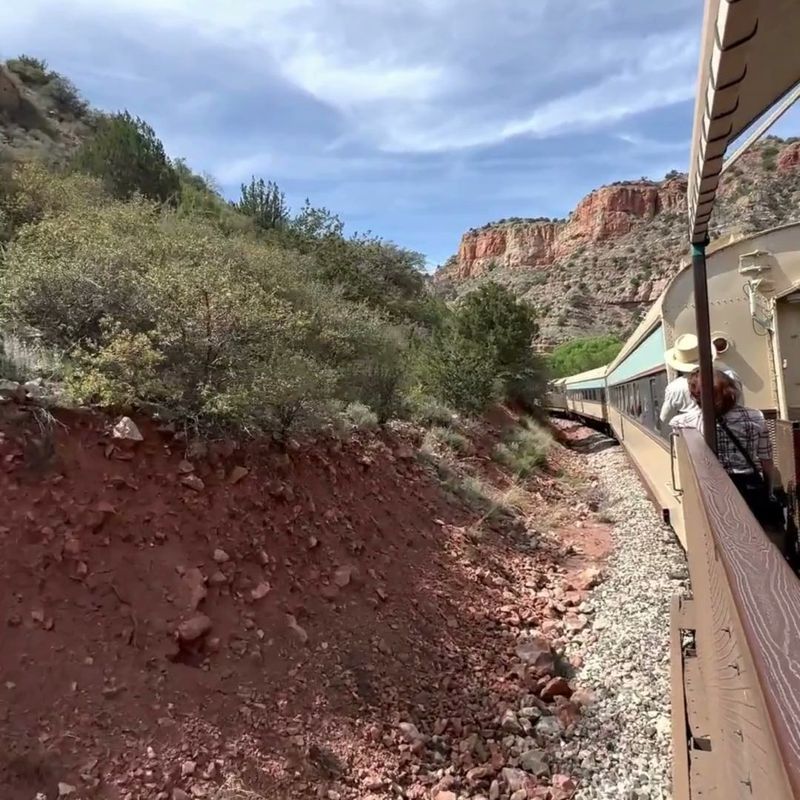
One of the quieter thrills of this journey is that the canyon is genuinely wild, and the animals that live there do not seem particularly bothered by a slow-moving train. Bald eagles are a real possibility, especially in winter months when they gather along the Verde River.
Great Blue Herons stand like statues in the shallows, and if you keep your eyes on the canyon walls, you might spot a hawk riding thermals high above the red rock faces. The riparian corridor along the river supports a surprisingly dense ecosystem for a desert environment.
Cottonwood and willow trees create canopy cover that attracts songbirds, and the water draws deer and other mammals down from the surrounding hills. The narrated tour points out wildlife hotspots, which helps first-time visitors know where to look instead of scanning randomly.
I spotted two bald eagles on my ride, and the collective gasp from the open-air car when the first one appeared was one of those small, shared travel moments that stays with you long after you have returned home.
The Tunnel, The Trestles, And The Engineering Marvels
Among all the visual highlights on this route, the 734-foot tunnel carved through solid rock is the one that gets the loudest reaction from passengers. The train slows as it approaches the opening, the light shifts from warm desert gold to cool shadow, and for a few seconds you are completely surrounded by ancient stone.
It is brief, but it leaves an impression that longer experiences sometimes fail to deliver. The historic bridges and trestles along the route add their own chapter to the engineering story.
Some of these structures date back to the original 1912 construction, and watching the train cross them above the canyon floor gives you a real sense of how ambitious the original project was. Building a railroad through this terrain with early twentieth-century equipment was no small accomplishment.
Standing in the open-air car as the train crosses a trestle with the river visible far below is one of those travel moments that feels cinematic in real time. No filter needed, no editing required.
Practical Tips For Making The Most Of Your Visit
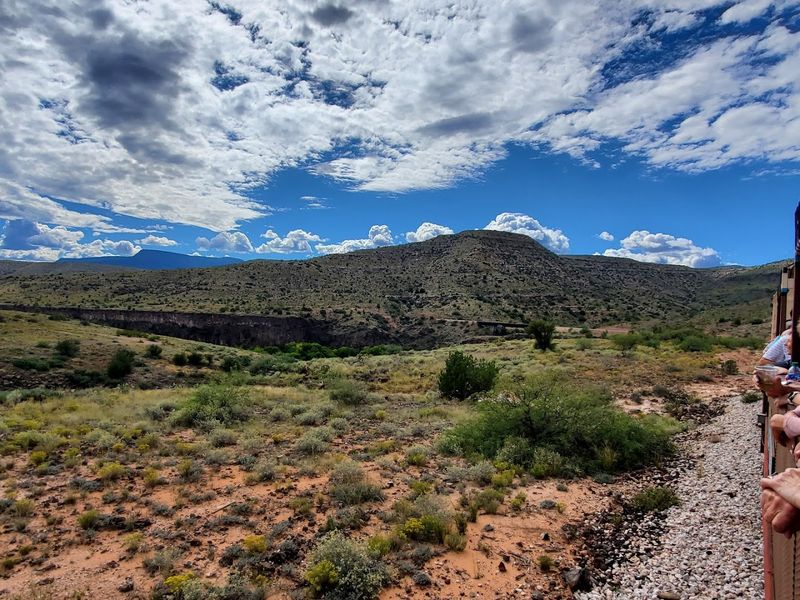
The Verde Canyon Railroad operates year-round, and each season genuinely offers something different. Winter brings bald eagles and crisp, clear air that sharpens the canyon colors. Spring fills the riparian areas with birdsong and fresh green growth.
Fall turns the cottonwoods golden, and summer mornings offer cooler temperatures before the desert heat builds. There is no single best season; it depends entirely on what kind of experience you are after.
Booking in advance is strongly recommended, especially for weekend departures and special seasonal events. The railroad carries roughly 100,000 passengers annually, and popular dates can sell out weeks ahead.
Bringing binoculars for wildlife spotting is a move you will thank yourself for, and layering your clothing makes the open-air car comfortable in almost any weather.
The depot is located in Clarkdale, Arizona, near Sedona in the Verde Valley, at 300 North Broadway, Clarkdale, AZ 86324. Arriving at least thirty minutes early gives you time to explore the museum and cafe before the train departs, which makes the whole experience feel complete rather than rushed.