
This 2,300-Acre Arkansas State Park Is Still A Mystery To Many Travelers
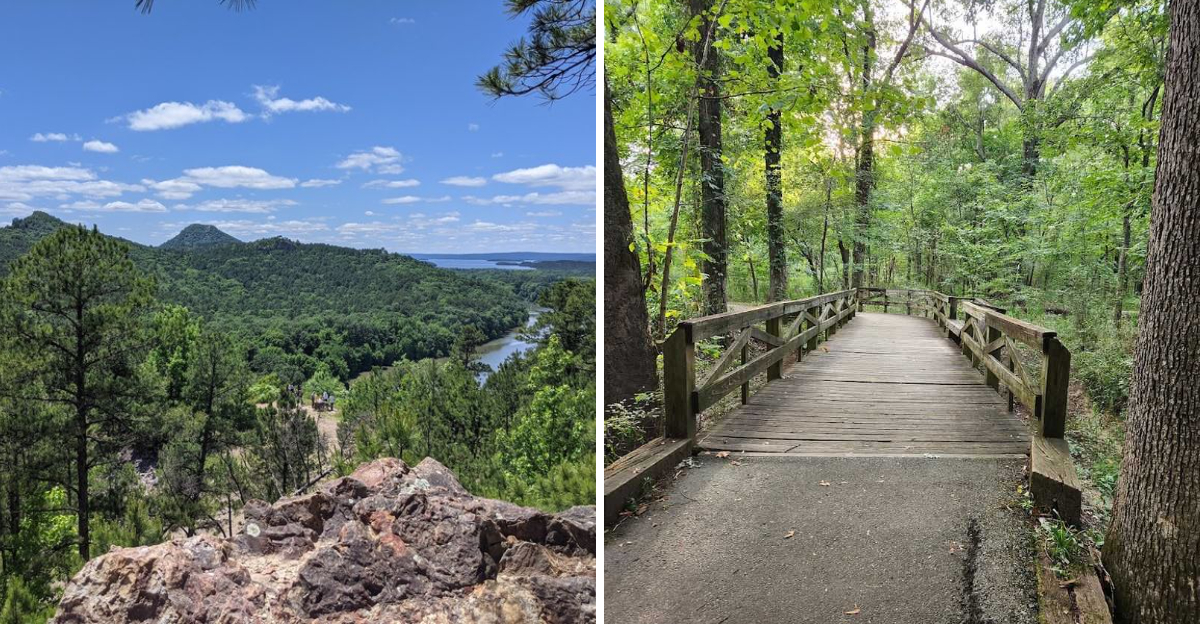
Just west of a major Arkansas city, a steep, cone-shaped mountain rises above a wide river valley, and most drivers never give it much thought. I was the same.
It sat there on my map, easy to ignore, until a friend finally convinced me to go. The climb changed that quickly.
It is steeper than it looks, with sections that pull you onto real rock, not just a dirt path. The view at the top feels like a payoff, but it is not the whole story.
Trails move through forest and lowland areas, and the pace shifts in a good way. I thought I would check it off once and move on.
That did not happen. I kept coming back, noticing new details each time.
You can go for the climb or slow down and explore, and both feel worthwhile. Then you are back in the city, surprised by how close it all is.
A Lone Peak Rising Above A Quiet River Valley
At the base, I craned my neck upward and felt a strange mix of wonder and mild suspicion that the mountain was somehow taller than advertised.
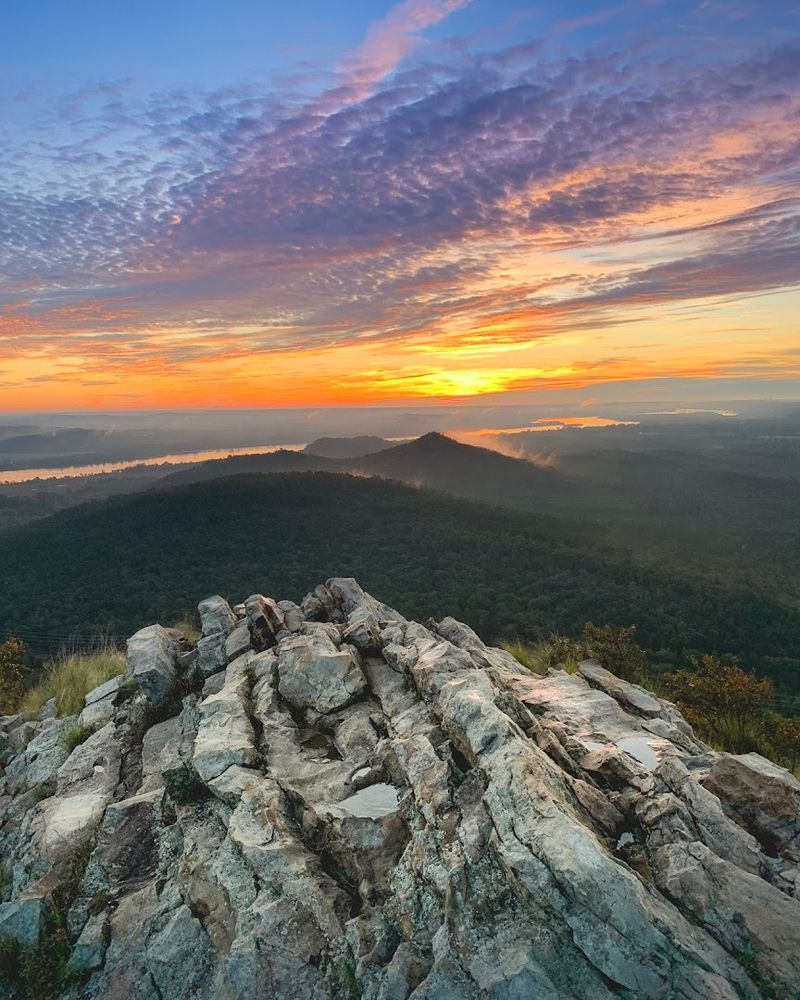
The peak shoots up from the surrounding flat river valley in a way that feels almost theatrical, as if the landscape decided it needed one bold statement piece and committed completely.
Because the valley floor is so level and low, the mountain reads as genuinely imposing even though its summit sits at around 1,011 feet above sea level.
The contrast between the broad, quiet stretch of the Little Maumelle River and that abrupt rocky cone makes for a view that stops most first-time visitors mid-sentence.
On clear mornings, the peak casts a long shadow across the wetland flats, and I watched herons stand completely still in that shadow as if they were posing for a nature documentary.
Geologists describe the formation as an erosion-resistant remnant, left standing after softer surrounding rock wore away over millions of years.
That solitary quality is exactly what drew me back: you can find it at Pinnacle Mountain State Park, 9600 AR-300, Little Rock, AR 72223.
A 2,300-Acre Landscape Blending Forest Wetlands And Stone
Most people hear “state park” and picture a flat meadow with a picnic table and a grill, which is exactly why this place catches visitors off guard.
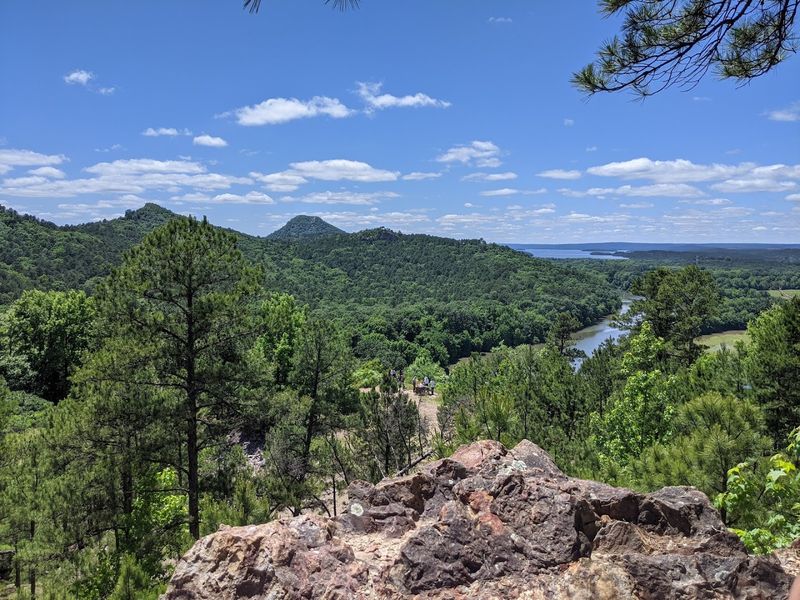
The park covers roughly 2,300 acres, and that land holds an almost unreasonable variety of terrain for a single property so close to an urban area.
I walked from a bottomland hardwood forest full of cypress and water tupelo into a dry rocky slope covered in cedar and oak within the span of about twenty minutes.
The wetland sections along the river feel genuinely wild, with water reflecting tree canopy overhead and the sound of frogs replacing the sound of traffic almost immediately.
Birding is exceptional here because those distinct habitat zones attract completely different species, and I spotted a painted bunting near the visitor center that made several people around me audibly gasp.
Rocky outcrops emerge from the forested hillsides in unexpected places, giving the landscape a rugged texture that feels more like the Ozarks than a flatland park.
The diversity packed into those 2,300 acres is the park’s quietest superpower, rewarding anyone patient enough to explore beyond the main trailhead.
A Summit Climb That Demands Hands As Much As Feet
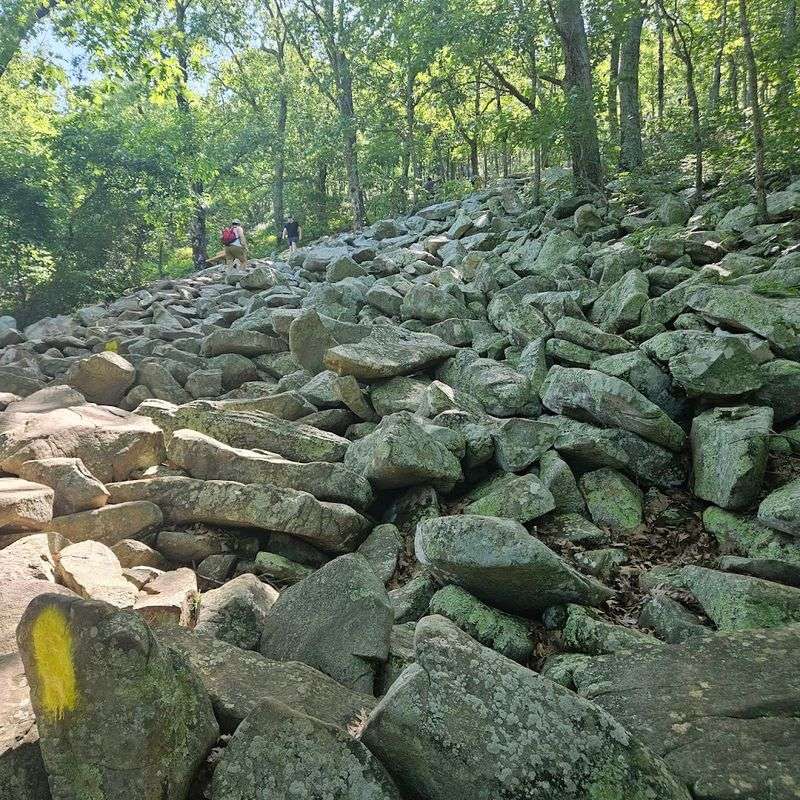
Nobody warned me that the East Summit Trail would turn into a full-body workout somewhere around the halfway point, and honestly I am glad they did not.
The upper section of the trail transitions from a dirt path into a genuine boulder scramble, where the route is marked by painted blazes on the rock face and your hands become just as important as your feet.
I watched a kid of about ten years old absolutely fly up those boulders while several adults behind him quietly reassessed their fitness levels.
The scramble is rated moderate to strenuous, and the park service is honest about it, posting signage that describes the upper section as requiring the use of hands for balance and climbing.
Loose gravel sits on some of the angled rock faces, so footwear with real grip matters more here than on almost any other trail I have hiked near a city.
The physical engagement of the climb shifts the experience from a casual stroll into something that feels genuinely earned, and that distinction changes how the summit view lands emotionally.
Your hands will be dirty, your legs will feel it the next morning, and you will not regret a single step.
Sweeping Views Stretching Across Water And Distant Ridges
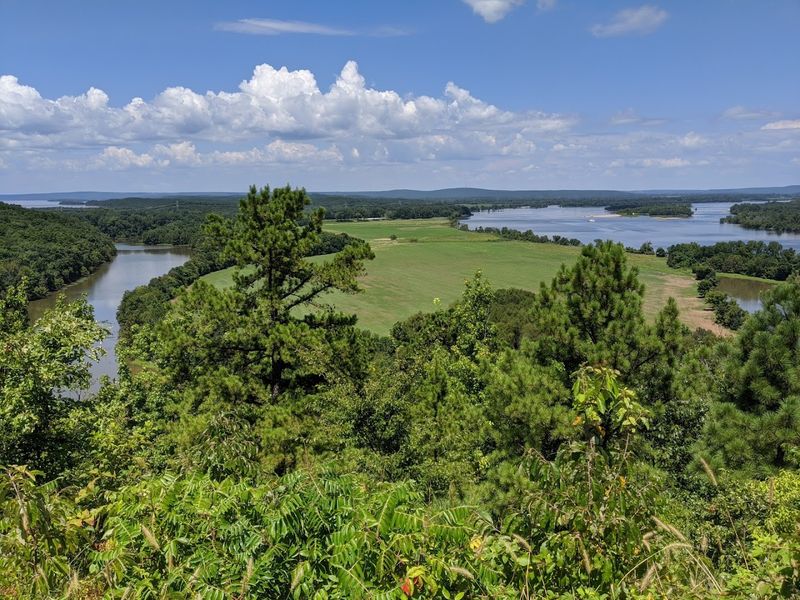
Reaching the summit after that rocky scramble and turning around to face the view felt like the landscape was paying me back for every difficult step.
Lake Maumelle spreads out below in a wide silver sheet, and the forested ridges of the Ouachita Mountains stack up in the distance in shades of blue and green that shift depending on the time of day.
I sat up there for a long time on my first visit, eating a granola bar and feeling a completely disproportionate sense of accomplishment for a two-mile hike.
On my second visit I brought binoculars, and the view expanded into something else entirely, with osprey visible over the lake and the distant highway reduced to a thin gray line through the trees.
The 360-degree perspective from the top reveals just how much undeveloped land still exists west of Little Rock, which surprised me given how close the park sits to the city.
Sunrise visits reward early risers with mist sitting over the lake surface and light turning the rocky summit warm gold before the rest of the valley wakes up.
Few urban-adjacent parks anywhere in the South hand you a view that feels this genuinely remote.
A Landmark Once Known To Early Westward Travelers
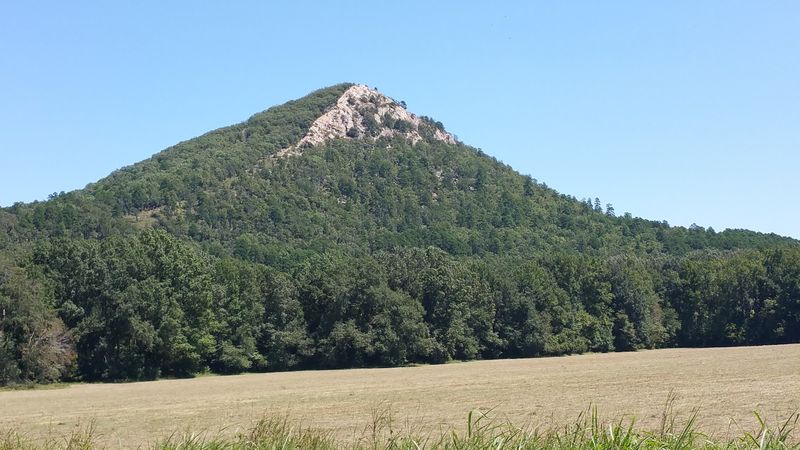
Long before trail maps and GPS, travelers moving west along the Arkansas River used the mountain as a navigation landmark, and that history adds a quiet weight to every visit.
The peak was so distinctive and so visible from the river that early explorers, military expeditions, and settlers heading toward the frontier recognized it from miles away.
I found myself thinking about that on the summit, looking back east toward the city and imagining the same view framed by river flatboats and unbroken forest instead of highways and rooftops.
The mountain appears in historical journals and expedition records from the early 1800s, noted by travelers who used it to confirm their position along the river route.
That practical navigational role gave the peak a reputation that stretched far beyond Arkansas, making it known to people who had never set foot in the state but had read accounts of western travel.
Standing on top of a landmark that guided people through genuinely unknown territory gives the hike a layer of meaning that purely scenic parks rarely offer.
History has a way of making a good view feel even better, and this summit proves that point quietly but convincingly.
A Trail Network Linked To One Of The Longest Routes In The Region
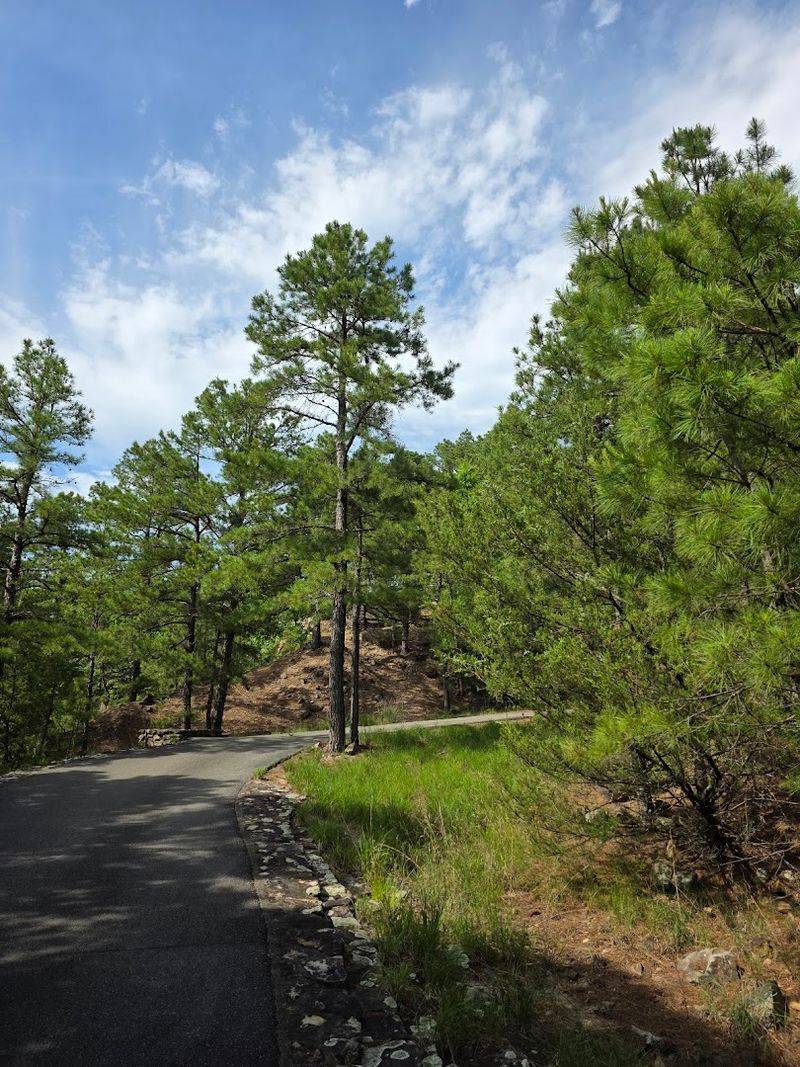
The park does not operate as an isolated pocket of trails; it sits at the eastern terminus of the Ouachita National Recreation Trail, one of the longest hiking trails in the American South.
That 223-mile trail stretches west from Pinnacle Mountain all the way into Oklahoma, passing through the Ouachita National Forest and some of the most remote terrain in the region.
I met a thru-hiker on my third visit who had just finished the full route and was sitting at the trailhead with the specific kind of tired that only long-distance walkers know.
For day visitors, the connection means the trail system here links into something genuinely enormous, and even walking the first few miles west gives you a taste of the deeper wilderness beyond the park boundary.
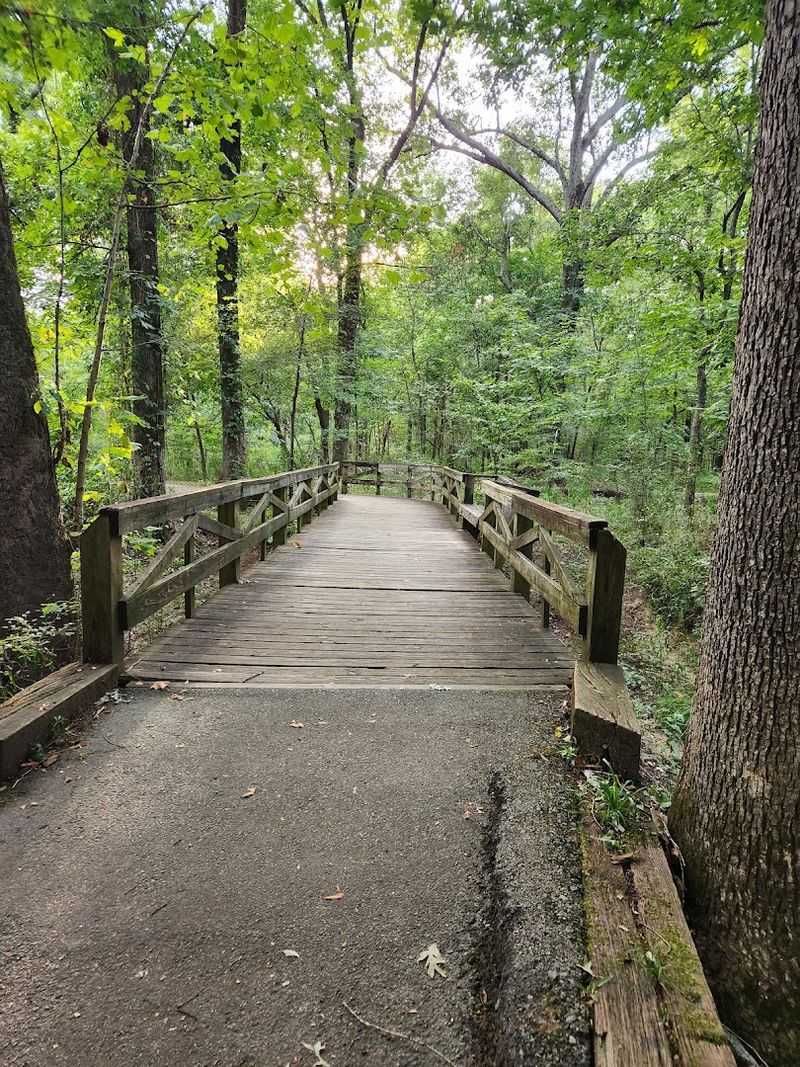
The internal trail network covers multiple loops and connector paths, ranging from the flat and easy Kingfisher Trail along the river to the demanding summit routes.
Trail conditions are generally well-maintained, though the rocky sections near the summit can become slippery after rain, which the park staff will remind you about cheerfully and repeatedly.
Knowing that one trailhead connects to 223 miles of backcountry changes how even a short walk here feels in your chest.
A Landscape Shaped By Ancient Rock And Shifting Earth
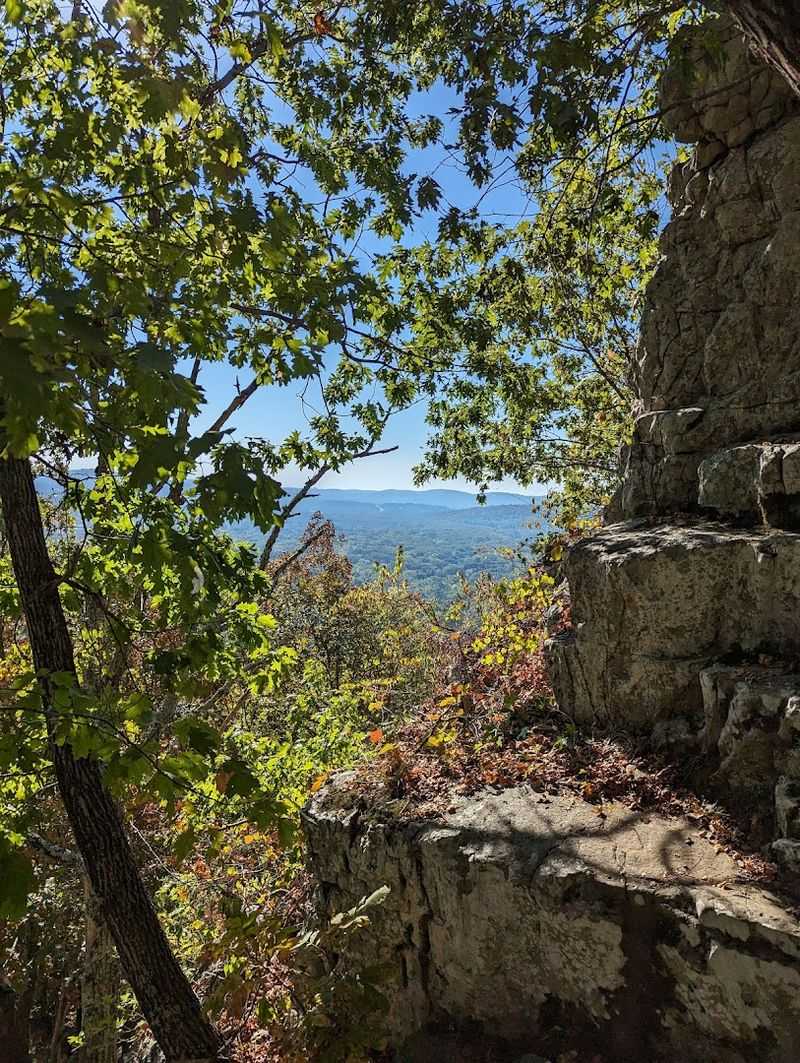
The mountain itself is not just a pretty bump on the horizon; it is a piece of geological storytelling that spans hundreds of millions of years of Earth history.
Pinnacle Mountain is composed primarily of novaculite and quartzite, extremely hard metamorphic rocks that resisted erosion long after the softer sedimentary layers around them wore away.
Novaculite is a rock so dense and fine-grained that Native Americans used it to make cutting tools, and the Ouachita region holds some of the highest-quality deposits in North America.
Near the trail, I picked up a piece of novaculite and turned it over in my hand, genuinely struck by how smooth and almost glassy the surface felt against my palm.
The folded and faulted rock layers visible on the mountain’s slopes tell a story of ancient ocean sediments compressed, heated, and pushed upward by tectonic forces over a timeframe that makes human history feel very brief.
Geologists describe the Ouachita Mountains as one of the most structurally complex ranges in the country, and Pinnacle Mountain sits right at the eastern edge of that complexity.
Every crack and fold in the rock face is a sentence in a story that started long before anything alive walked past it.
A Place Loved Locally Yet Overlooked Far Beyond State Lines
Ask anyone in Little Rock where to take a visitor on a Saturday morning and a huge portion of them will say Pinnacle Mountain without hesitating for a second.
Ask someone in another state to name an Arkansas state park and the silence that follows usually stretches long enough to become its own answer.
That gap between local devotion and national obscurity is one of the most interesting things about this park, and it keeps the trails from feeling overcrowded even on busy weekends.
I have hiked here on a sunny Saturday in October and still found stretches of trail where I was completely alone, which almost never happens at parks with equivalent scenery in more famous regions.
The visitor center is genuinely helpful, staffed by people who know the trails well and will give you honest advice about conditions rather than the cheerful vagueness you sometimes get at busier parks.
Wildlife sightings are common and unhurried here, partly because the animals have not been trained by crowds to disappear the moment a human appears on the path.
Arkansas keeps this park close to its chest like a favorite secret, and for now at least, that quiet reputation is part of what makes the whole experience feel so unexpectedly rewarding.