
This Washington Ghost Town Lets You Explore Buildings Left Untouched For A Century
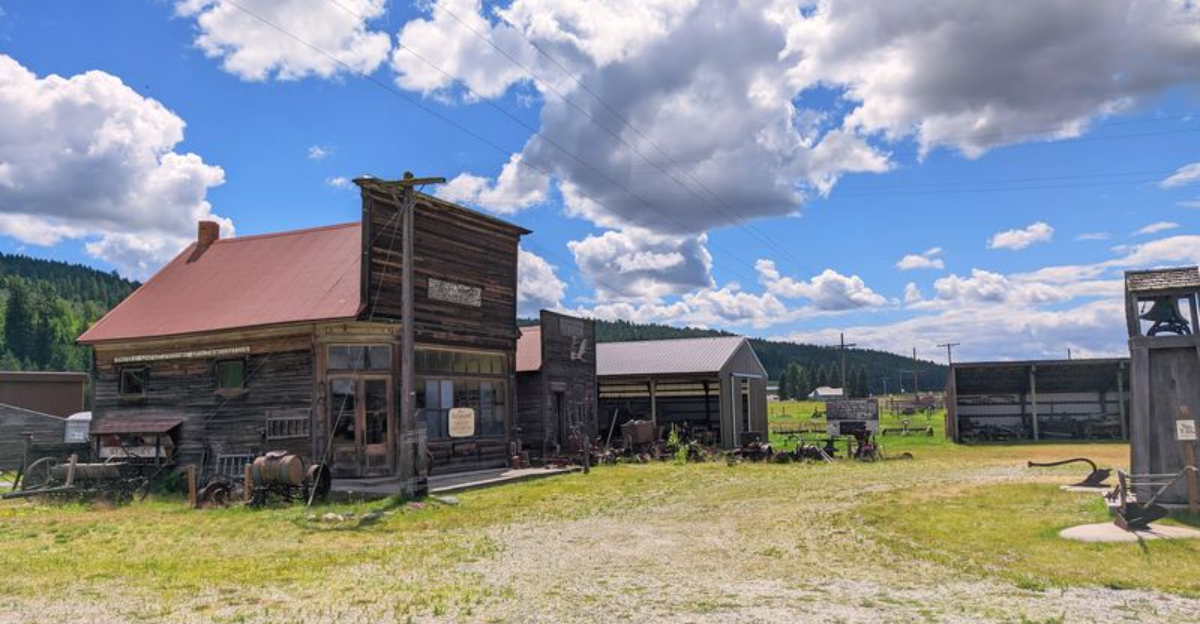
Curiosity usually gets the better of me, especially when it involves exploring places where the echoes of the past are still ringing loud and clear. Venturing into the heart of Washington reveals a hidden gem where buildings have been left exactly as they were a hundred years ago, perfectly preserved in their atmospheric decay.
There is something undeniably electric about standing in a doorway that hasn’t seen a visitor in decades, surrounded by the remnants of a vanished community. It is not just about taking photos, it is about feeling the weight of history in every splintered floorboard and rusted nail.
Prepare to leave the map behind as we dive headfirst into a fascinating, time-capsule journey through a town that time simply decided to forget. Founded during a gold rush around 1900, this outdoor ghost town museum has been carefully preserved by the Molson Historical Society since the 1960s, keeping its frontier character alive for curious visitors.
The Fascinating Origin Story Of Old Molson
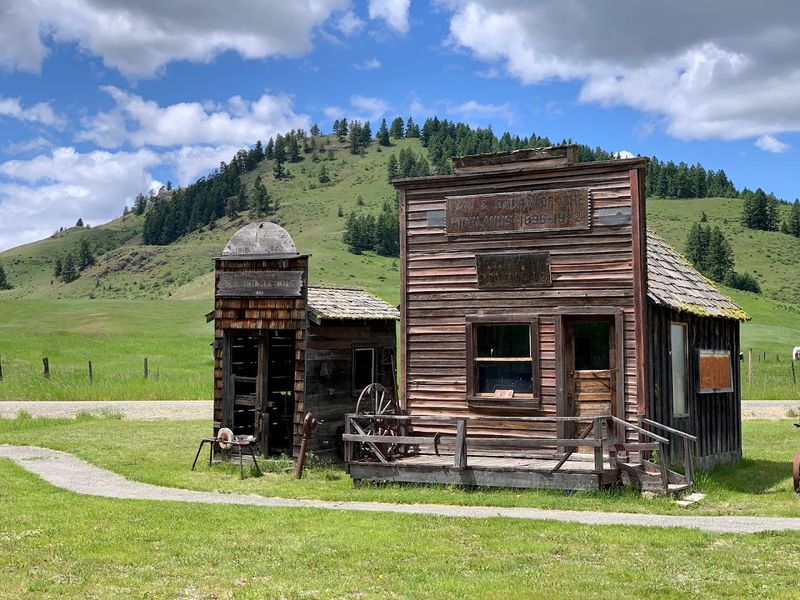
Few towns have a beginning as dramatic as Old Molson’s. Around 1898 to 1900, gold fever brought settlers rushing into Okanogan County in northeastern Washington State, and a new community quickly took shape on land that would soon become the subject of a land dispute that changed everything.
By 1901, a homesteader claimed the original townsite, forcing residents and business owners to pack up and relocate across the railroad tracks to what became known as New Molson. The original settlement, left behind almost overnight, became Old Molson, a name that stuck like a boot in muddy ground.
The railroad’s arrival in 1901 gave the area a brief economic boost, and by 1903 the broader Molson community had grown to more than 300 residents.
Understanding this layered origin story makes every building you walk past feel even more meaningful, because each one survived a community upheaval that most towns simply would not have endured.
The Open-Air Museum Experience You Will Not Find Anywhere Else
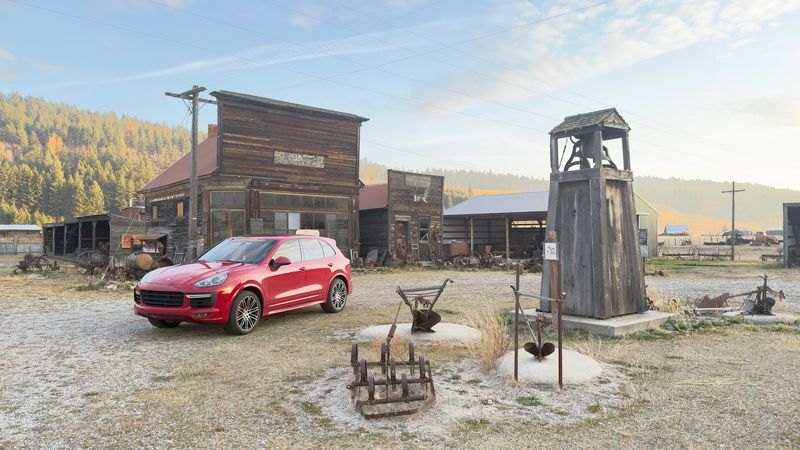
Most museums ask you to stand behind a rope and squint at something behind glass. Old Molson throws that idea out the window entirely. The site functions as a completely open-air museum where you are free to walk right up to original pioneer structures, peer through doorways, and soak in the atmosphere at your own pace.
There are no tour guides rushing you along, no timed entry tickets, and no audio devices to fumble with. The experience feels refreshingly personal, almost like you stumbled onto a forgotten film set where the props are all real and a century old.
The outdoor ghost town is generally accessible from April through November during daylight hours, and the outdoor museum exhibit is open year-round. Admission is completely free, though donations are warmly welcomed to help the Molson Historical Society continue its preservation work.
For travelers who want something genuinely different from a standard museum visit, this place delivers in a big way.
The Molson Schoolhouse And Its Perfectly Preserved Classrooms
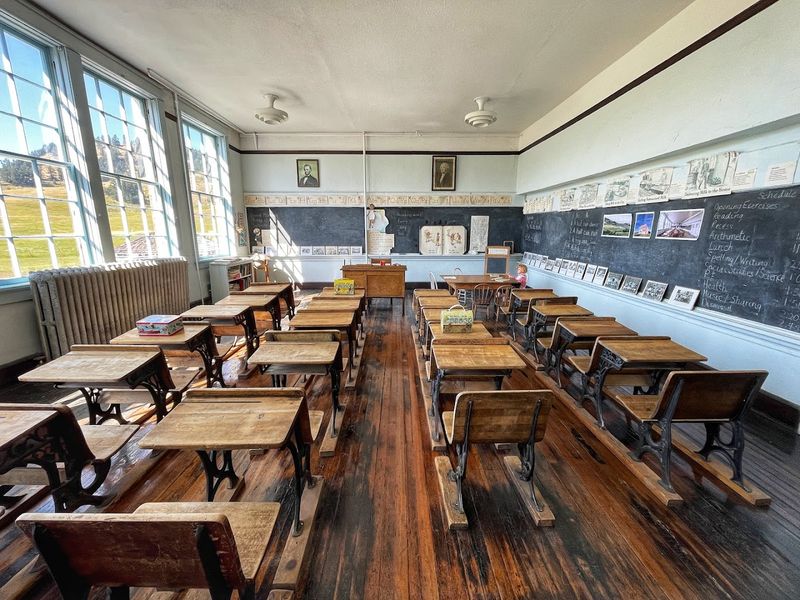
Built in 1914 and used as an actual school until 1962, the Molson Schoolhouse is one of the most emotionally resonant stops on the entire site. Step inside and you will find original student desks still arranged in rows, period furniture exactly where it was left, and historical photographs lining the walls that put real faces to the community’s story.
It is the kind of place where you can almost hear chalk scratching on a board and children reciting lessons out loud.
The schoolhouse now operates as a museum, typically open from Memorial Day through Labor Day, ten in the morning to five in the afternoon, seven days a week, with an extended season running from April through November.
For families visiting with kids, this stop tends to spark genuine curiosity. Children often find it hard to believe that students their age once sat in those same small wooden seats, learning arithmetic and reading with no electricity and no internet in sight.
The Restored Bank Building And What It Tells Us About Frontier Finance
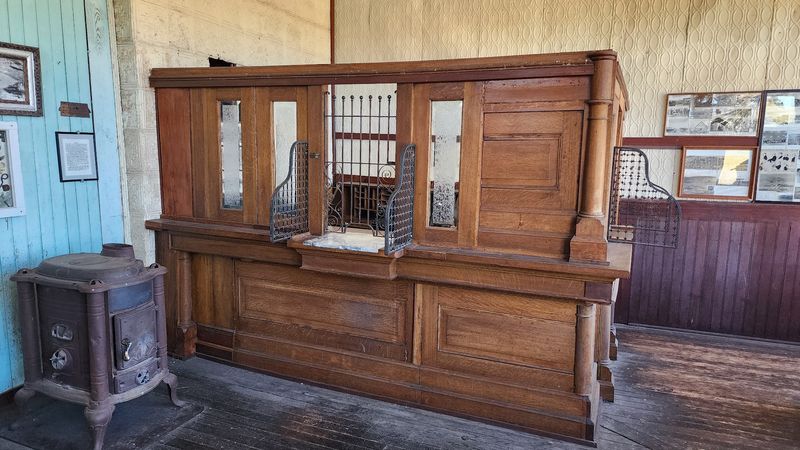
A gold rush town without a bank would have been a chaotic place, and Molson was no exception to that rule. The restored bank building at the Old Molson Historic Site stands as a reminder that even in the wildest frontier conditions, people needed somewhere safe to store their earnings and conduct business.
Walking up to the structure, you notice how solidly it was built compared to some of the surrounding cabins. Frontier banks had to project confidence and security, and the architecture here does exactly that, even after more than a century of weathering the seasons of northeastern Washington.
The building is part of a broader collection of original and relocated pioneer structures that together paint a surprisingly complete picture of what daily commercial life looked like in a mining boomtown.
Seeing it alongside the assay office and the lawyer’s office nearby helps you understand just how organized and ambitious this community once was.
The Assay Office And The Science Behind The Gold Rush
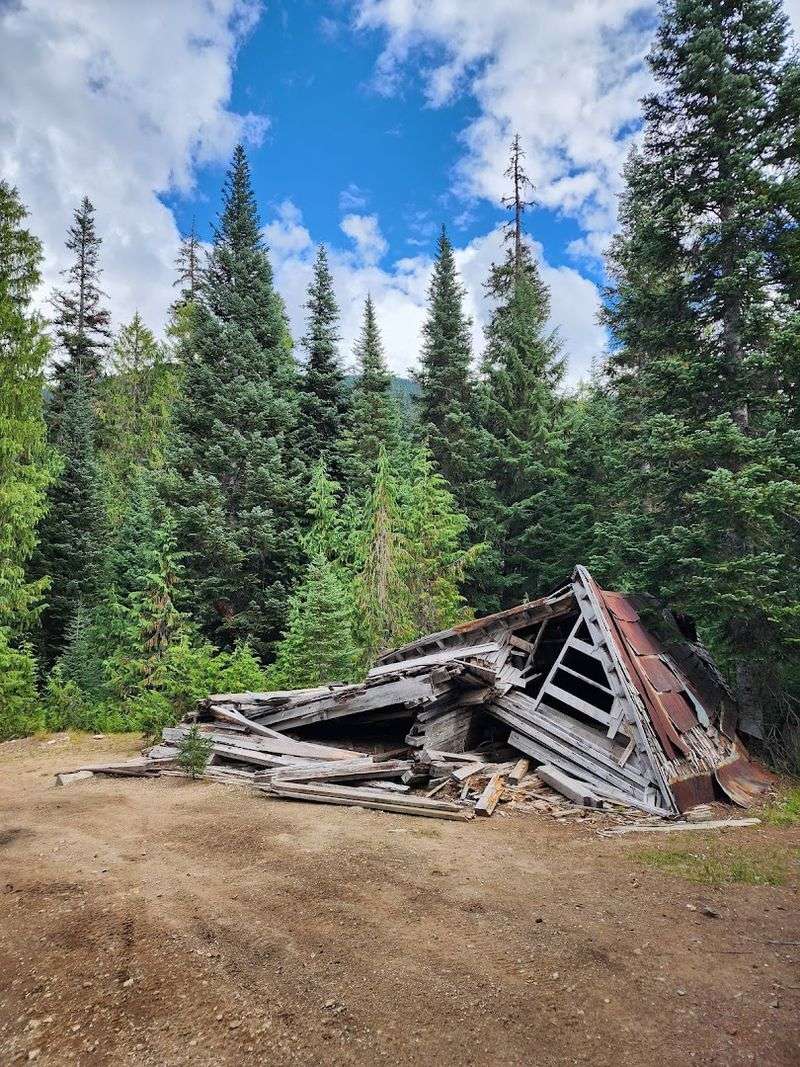
Gold is only as valuable as someone’s ability to verify it, and that is exactly where the assay office came in. At Old Molson, you can visit the original assay office, which was the place where miners brought their ore samples to have the gold content tested and certified before they could sell or trade it.
Think of it as the quality control center of the entire gold rush operation. Without a working assay office, a mining town could not function properly, which tells you a lot about how seriously Molson took its place in the regional mining economy during the early 1900s.
For visitors with a curious mind, this building opens up a fascinating conversation about the science and economics behind mining. It is one thing to imagine men swinging pickaxes in the hills, but seeing the office where the results were officially measured adds a layer of technical reality to the romantic image of the gold rush era.
Pioneer Cabins That Show How Settlers Actually Lived
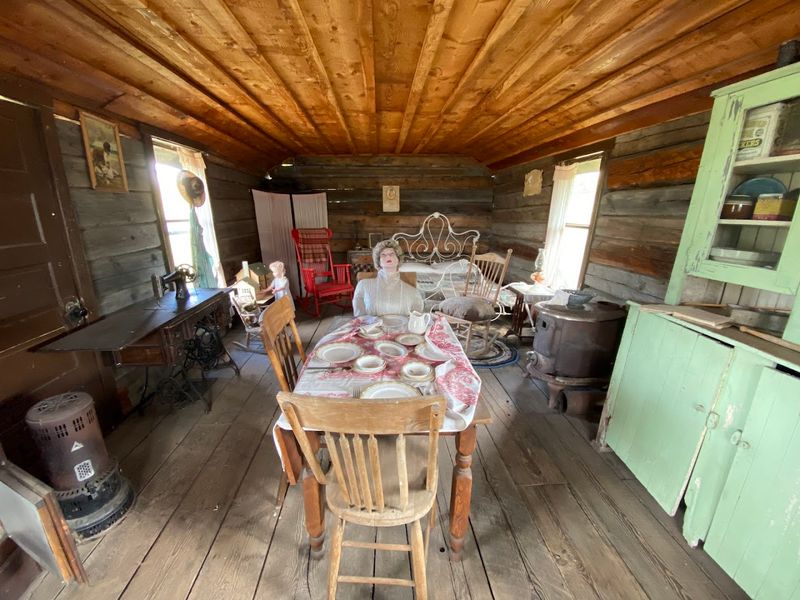
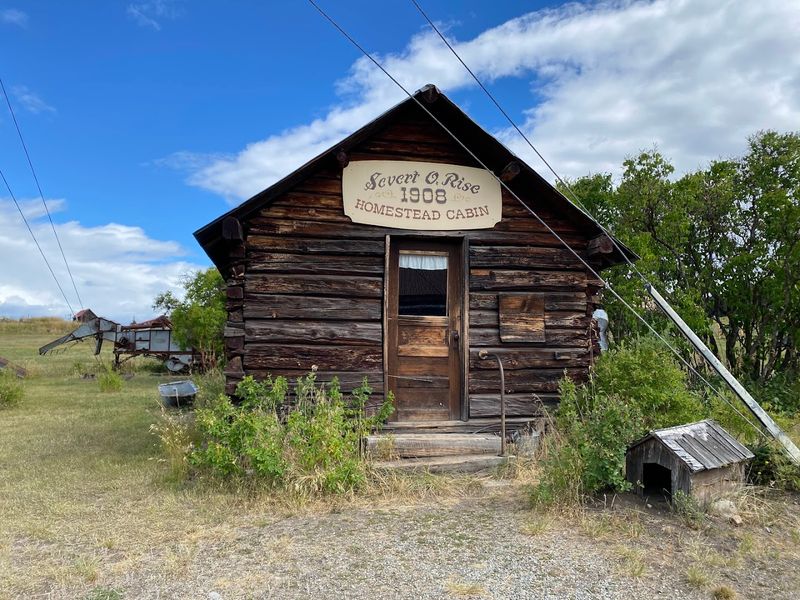
There is something quietly powerful about standing inside a pioneer cabin that has not been renovated or modernized. The pioneer cabins at Old Molson give you an honest look at the living conditions that early settlers accepted as normal, and the experience is both humbling and eye-opening.
These were not large spaces. Most cabins were built for function over comfort, designed to keep out the cold winters of Okanogan County while taking as little time as possible to construct. The walls, the floors, and the simple openings for windows all speak to a lifestyle built around necessity and hard work.
Spending time in these structures makes you reconsider what the word “home” really means. The people who lived here were not just surviving a rough patch.
They were building a community from scratch in a landscape that offered few guarantees and plenty of challenges, and the cabins they left behind carry every bit of that story inside their walls.
The Poland China Mine Office And Its Connection To Local Mining History
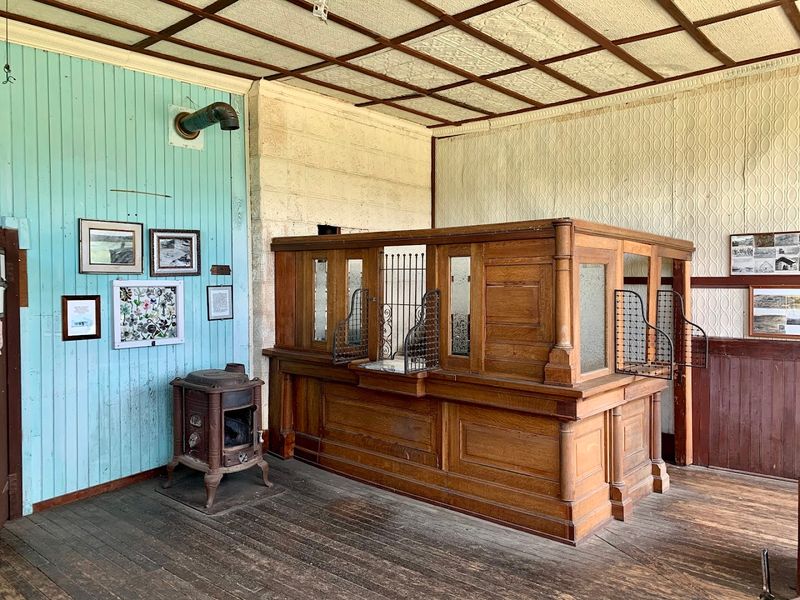
Mining operations in Okanogan County were not small side projects. They were serious industrial efforts that required administrative infrastructure, and the office from the Poland China Mine preserved at Old Molson is a tangible piece of that industrial past.
This structure was moved to the site as part of the broader effort to collect and protect significant artifacts from the region’s mining era.
The name Poland China Mine might sound a little unexpected for a gold mining operation in the Pacific Northwest, but mining claims in the early 1900s often carried colorful and unconventional names chosen by their founders. S
tanding in front of this office, you start to appreciate the organizational effort that went into running a mining claim, from paperwork and payroll to safety records and supply orders.
It is a detail that many visitors overlook in favor of the more photogenic buildings, but the mine office is one of the most historically specific artifacts on the entire site and well worth a few extra minutes of your attention.
The Machine Shed And Its Collection Of Antique Farm Equipment
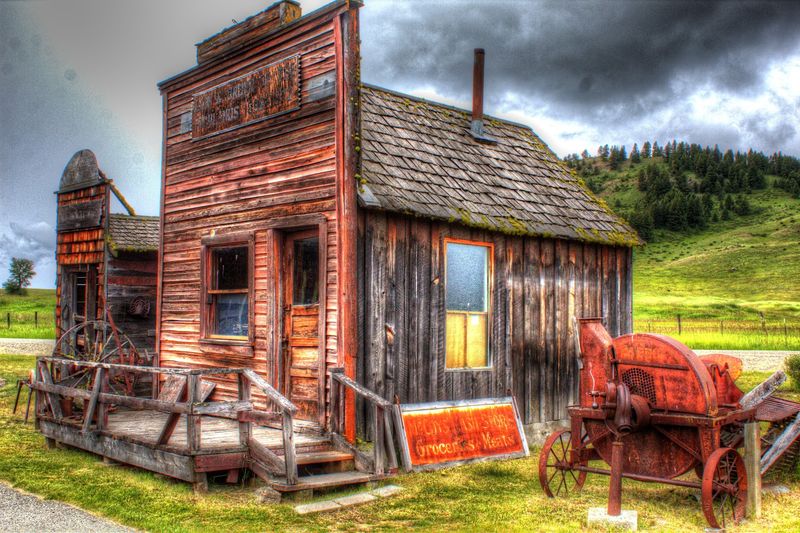
Not everything in Molson revolved around mining. The surrounding land also supported farming families who needed serious equipment to work the high desert terrain of Okanogan County, and the machine shed at the Old Molson Historic Site preserves a remarkable collection of antique farm tools and machinery that reflects this agricultural side of the community.
Rusted plows, old wagon parts, and mechanical equipment from the early twentieth century fill the space in a way that feels more like an honest storage room than a curated exhibit. That authenticity is actually the point.
The Molson Historical Society has worked to keep these collections looking the way they genuinely were, rather than polishing everything up into a sanitized display.
For anyone who grew up around farming or has an interest in mechanical history, this shed is a highlight. Each piece of equipment represents hours of physical labor and problem-solving by people who had no access to the convenience of modern machinery or repair shops.
The Molson Community Church And Its Role As A Living Museum
Churches in frontier towns served as more than places of worship. They were community anchors, gathering spots, and the social heart of settlements that had few other shared spaces.
The Molson Community Church at the Old Molson Historic Site honors that tradition by continuing to serve as an active space, now functioning as a museum that welcomes visitors and tells the story of the community that once filled its pews.
The building itself reflects the practical simplicity of frontier construction, with clean lines and sturdy materials chosen to last rather than to impress. Inside, the atmosphere shifts noticeably from the rest of the outdoor site.
There is a quietness here that invites reflection, even for visitors who are not particularly religious.
The church museum adds context to everything else you see at Old Molson by filling in the human side of the story. Mining records and assay offices tell you what people did for work, but a community church tells you something deeper about who they were and what they valued.