
Plan The Perfect 2-Day Illinois Road Trip With These 12 Stops
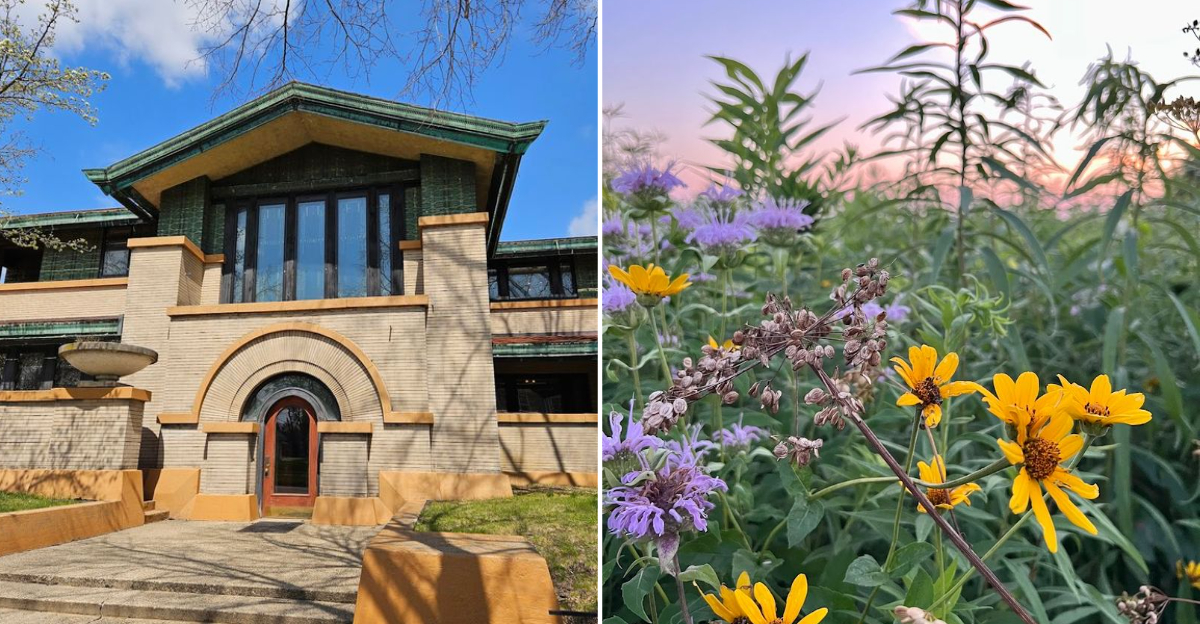
Illinois packs far more variety than most people expect. Start your day beneath a giant mirrored sculpture in a world-famous city, then end it watching sunlight fade behind rugged canyon walls carved into quiet state park land.
This two-day drive through Illinois links vibrant urban energy with open prairie, historic towns, and deeply rooted stories. Along the way, you’ll encounter roadside icons, presidential history, and landscapes that shift dramatically within just a few hours on the road.
It’s a route built for curiosity and contrast, where every stop adds something different to the experience. Bring snacks, keep your camera ready, and settle into the rhythm of the drive as Illinois reveals itself mile by mile.
1. Millennium Park And Cloud Gate, Chicago
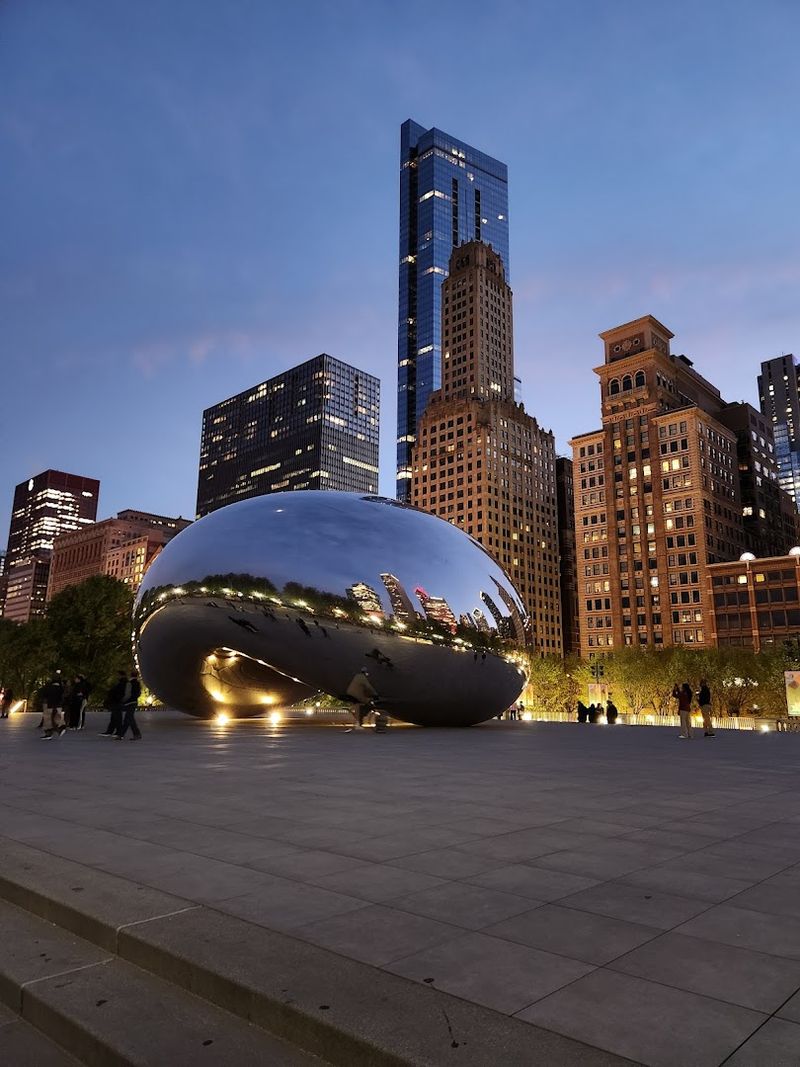
Most road trips start with a slow coffee and a long drive, but this one kicks off with one of the most photographed sculptures in the United States.
Cloud Gate, affectionately nicknamed “The Bean” by just about everyone who has ever seen it, sits at the heart of Millennium Park in downtown Chicago, Illinois. The polished stainless steel surface reflects the skyline, the sky, and your own slightly awestruck face back at you in a way that never gets old.
The park itself is free to visit and open daily from 6 a.m. to 11 p.m., making it a fantastic first stop before the road stretches south.
Beyond the Bean, Millennium Park offers the Jay Pritzker Pavilion, the Lurie Garden, and Crown Fountain, all worth a slow morning walk. Arrive early to beat the crowds and snag the best reflection shots.
Located at 201 E. Randolph Street, Chicago, this landmark sets the tone perfectly for a trip that balances big-city energy with wide-open Illinois landscapes.
It is a strong opening act for everything that follows on this route.
2. Joliet Area Historical Museum And Route 66 Welcome Center, Joliet
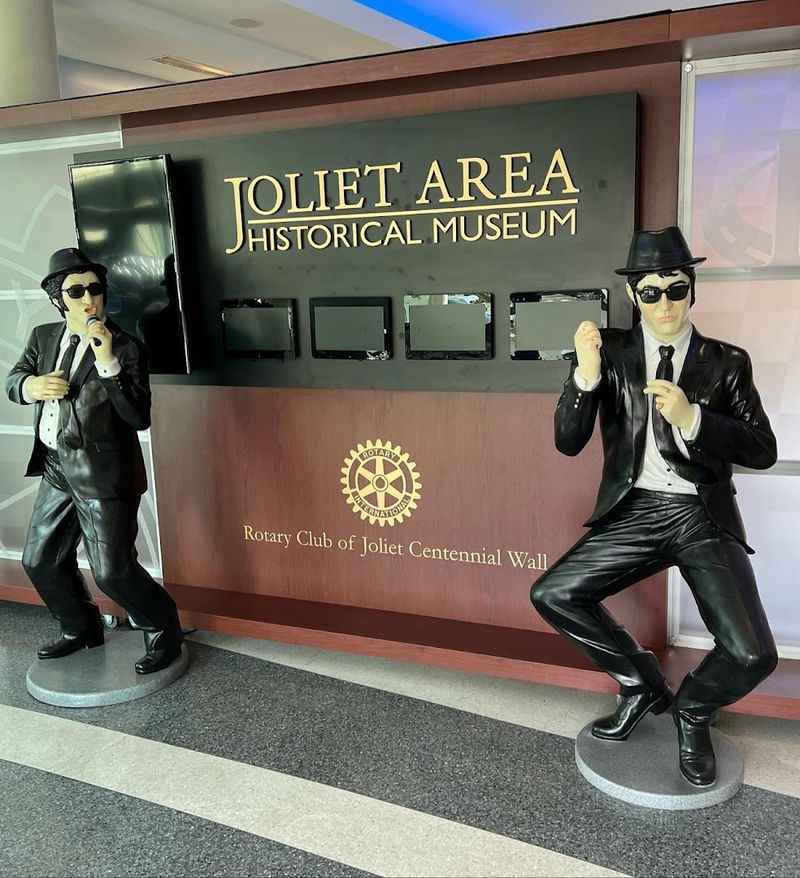
About 30 miles southwest of Chicago, the city of Joliet, Illinois marks the start of the Route 66 stretch on this trip, though the historic route officially begins in Chicago.
The Joliet Area Historical Museum and Route 66 Welcome Center is the ideal place to get your bearings and soak up the backstory of the Mother Road before you start rolling down it.
Housed in a beautifully restored building at 204 N. Ottawa Street, the museum covers local history alongside the cultural legend of Route 66 in a way that feels genuinely engaging rather than textbook-dry.
Open Thursday through Monday from 10 a.m. to 4 p.m., this stop is best planned for a weekday or weekend morning.
Inside, you will find interactive exhibits, vintage road memorabilia, and helpful staff who can point you toward highlights along the route ahead. Picking up a Route 66 map here is a smart move before heading further south.
The Welcome Center aspect of the building means it doubles as a launchpad for the rest of the journey. Think of it as mission control for your Route 66 adventure, where the real road-trip mindset officially clicks into gear.
3. Midewin National Tallgrass Prairie, Wilmington

Somewhere between Joliet and Starved Rock, the landscape opens up in a way that almost stops you mid-sentence.
Midewin National Tallgrass Prairie, located near Wilmington, Illinois, is the largest tallgrass prairie restoration project in the United States, covering over 19,000 acres of rolling grasslands, wildflower meadows, and quiet trails.
It is the kind of place that reminds you just how vast and unhurried the Midwest can feel. Hikers, birdwatchers, and anyone who simply needs a breath of genuinely fresh air will find plenty to love here.
The prairie is home to bison, short-eared owls, and over 200 species of birds, which makes every walk feel like a small wildlife encounter.
Spring and early summer bring spectacular wildflower blooms that paint the trails in purples and yellows. Even a short one-hour walk through the grasslands adds a surprising layer of natural beauty to the road trip and gives everyone in the car a chance to stretch their legs properly before the next stop.
4. Starved Rock State Park, Oglesby
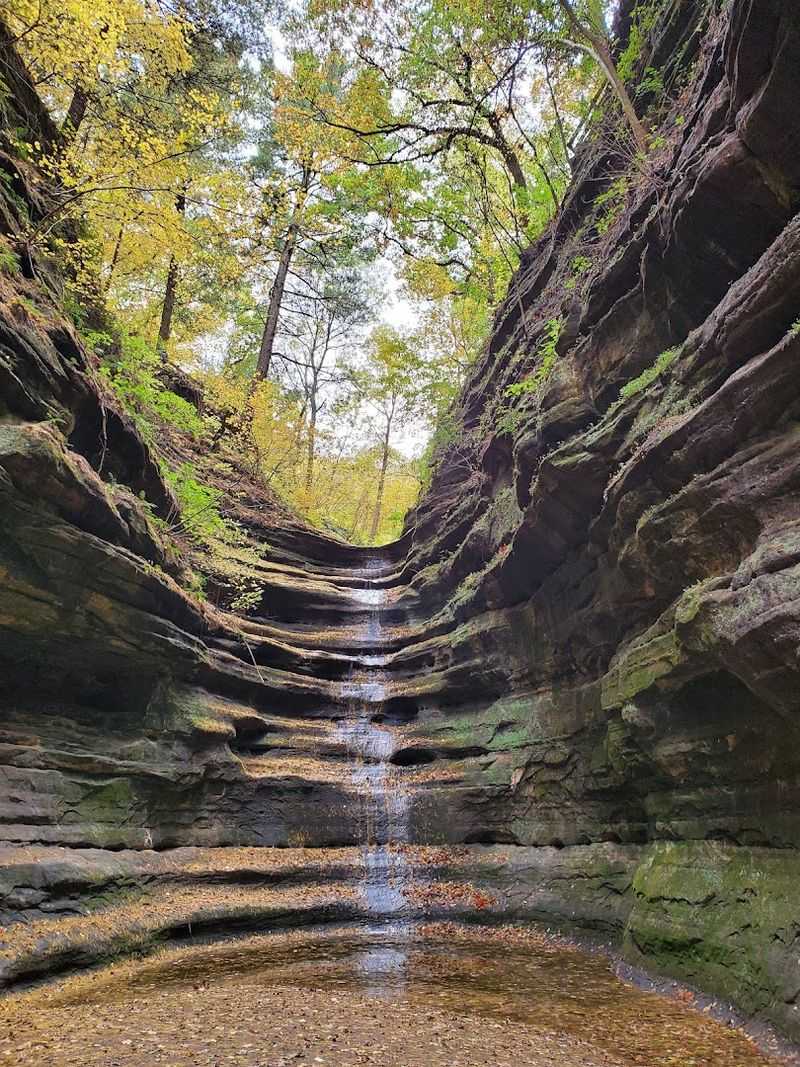
Few places in Illinois generate as much genuine surprise from first-time visitors as Starved Rock State Park. People expect flat farmland and instead find themselves standing in front of 18 sandstone canyons carved by glacial meltwater thousands of years ago.
Located near Oglesby, Illinois, this state park is one of the most visited in the entire state, and for good reason.
The canyon trails range from easy to moderate and lead to waterfalls, moss-covered rock walls, and sweeping views of the Illinois River. Spring is peak waterfall season, but the park holds its own in every season, including winter when frozen waterfalls create stunning ice formations.
Plan at least two to three hours here because the scenery tends to slow your pace in the best possible way. Sturdy shoes are strongly recommended since some trails involve wooden staircases and uneven terrain.
Starved Rock is the kind of stop that earns a permanent spot in your road-trip memory bank long after the drive is over.
5. Route 66 Hall Of Fame And Museum, Pontiac
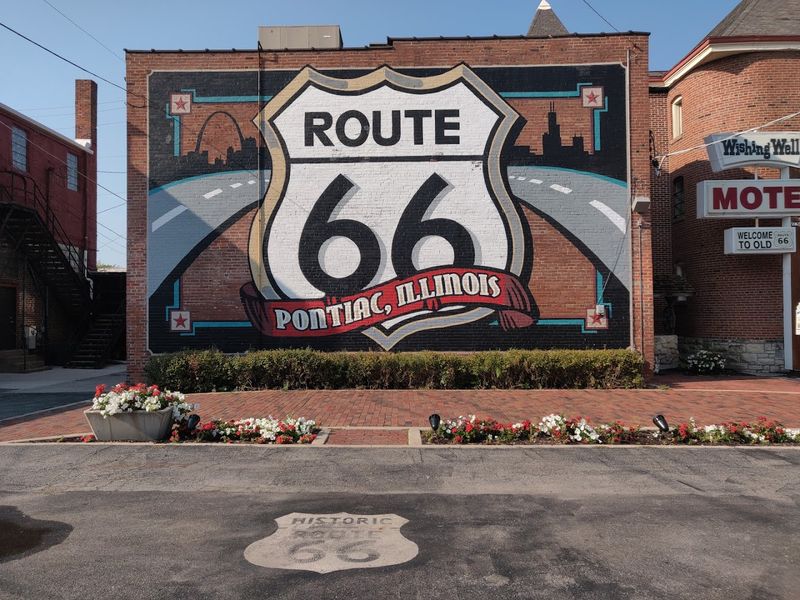
Pontiac, Illinois takes its Route 66 identity seriously, and the Route 66 Hall of Fame and Museum is the proof. Housed inside the historic Pontiac City Hall building at 110 W.
Howard Street, this museum is a love letter to the Mother Road and everyone who ever packed their bags and pointed their car west on it.
Old photographs, vintage signage, memorabilia, and personal stories fill the space with a warmth that feels more like visiting a well-curated family collection than a traditional museum.
Open daily with seasonal hours listed through Pontiac Tourism, the museum is free to enter, which makes it an easy and rewarding stop on the afternoon stretch of Day 1.
The Hall of Fame section celebrates figures who shaped the culture and preservation of Route 66, offering context that makes the road feel richer as you continue driving it.
Pontiac itself is worth a short stroll, with outdoor murals decorating building walls throughout the downtown area. The town leans fully into its Route 66 heritage, and the relaxed, small-town pace is a pleasant shift after the Chicago bustle of the morning.
It is a stop that rewards curiosity with a lot of heart.
6. Cozy Dog Drive In, Springfield
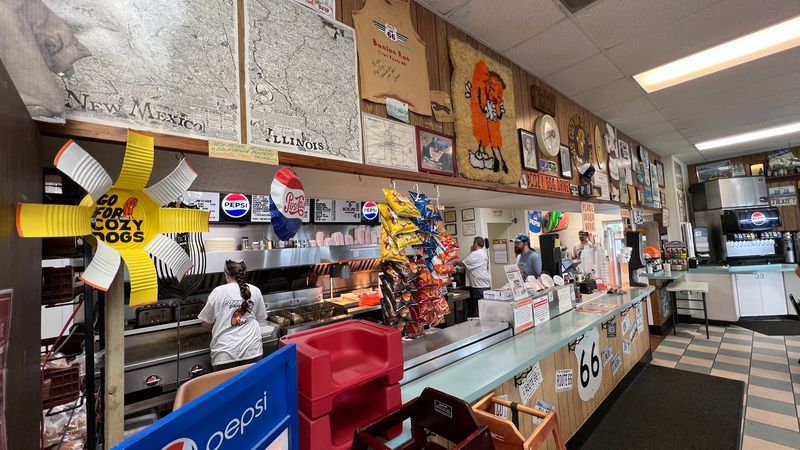
By the time you roll into Springfield at the end of Day 1, your appetite has earned something iconic. Cozy Dog Drive In, located at 2935 S.
Sixth Street in Springfield, Illinois, claims to be the birthplace of the corn dog on a stick, and that is a claim worth taking seriously over a tray of golden, crispy originals.
Since 1946, this Route 66 institution has been serving up its signature cozy dogs to roadtrippers, locals, and curious first-timers alike.
Open Monday through Saturday from 8 a.m. to 8 p.m. and closed on Sundays, the timing works perfectly as a dinner stop capping off Day 1.
The interior is lined with Route 66 memorabilia, vintage posters, and a friendly counter-service setup that has barely changed in decades. It is retro in the best, most unforced way.
Beyond the famous corn dogs, the menu includes burgers, fries, and shakes that hit the spot after a full day of driving and exploring. The staff are warm and chatty, and the walls practically tell their own story.
Eating here feels less like a meal stop and more like completing a rite of passage on the Mother Road.
7. Abraham Lincoln Presidential Library And Museum, Springfield
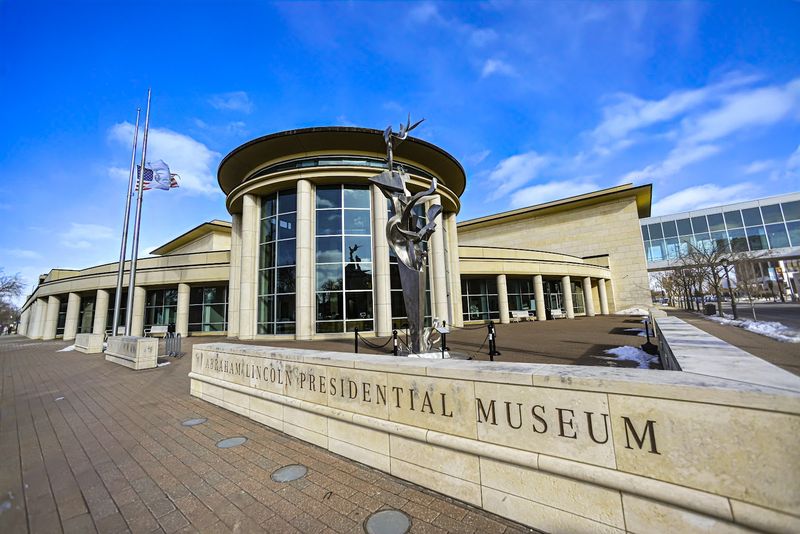
Day 2 opens in Springfield, and there is no more fitting way to start the morning than with the man who defined the city’s legacy.
The Abraham Lincoln Presidential Library and Museum at 212 N. Sixth Street in Springfield, Illinois is one of the most visited presidential museums in the country, and it earns that reputation through genuinely theatrical and immersive storytelling.
This is not a museum where you read plaques quietly and move on.
Open daily from 9 a.m. to 5 p.m., with the last ticket sold at 4 p.m., the museum uses life-size dioramas, special effects, and personal artifacts to bring Lincoln’s life and presidency to vivid life.
From his humble log cabin origins in Kentucky to the weight of leading a country through its most fractured era, every exhibit feels carefully crafted to connect emotionally as much as historically.
Budget at least two hours here, and consider arriving right at opening to avoid the midday crowds. The gift shop is thoughtfully stocked with books and educational materials that make excellent souvenirs.
Whether you are a history enthusiast or just someone who appreciates a well-told story, this museum delivers far beyond expectations.
8. Lincoln Home National Historic Site, Springfield
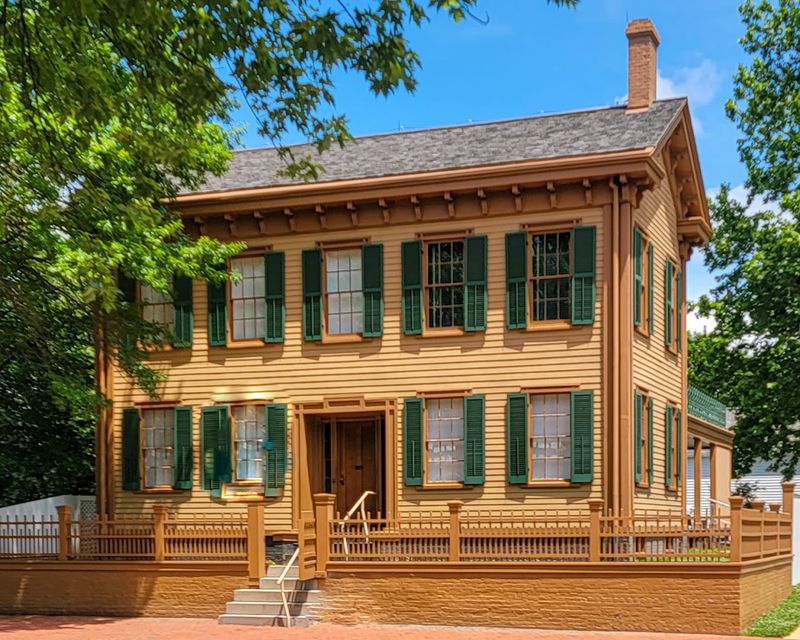
A short walk from the presidential museum sits the house where Abraham Lincoln actually lived, and that proximity makes for a natural and meaningful pairing.
The Lincoln Home National Historic Site at 426 S. Seventh Street in Springfield, Illinois is the only home Lincoln ever owned, and he lived there with his family from 1844 until he left for Washington in 1861.
Standing in the rooms where he read, argued cases, and raised his children adds a layer of intimacy that no exhibit can quite replicate.
The Visitor Center opens at 9 a.m. and closes at 5 p.m., and free home-tour tickets are available there on a first-come, first-served basis.
The surrounding four-block historic neighborhood is also preserved, giving the site a sense of context that goes beyond just the house itself. Walking the brick sidewalks outside feels like stepping into a 19th-century Springfield afternoon.
Rangers lead the tours with enthusiasm and genuine knowledge, often sharing small personal details about the Lincoln family that do not make it into the textbooks. The combination of the house, the neighborhood, and the storytelling makes this one of the most quietly powerful stops on the entire two-day route.
9. Old State Capitol State Historic Site, Springfield
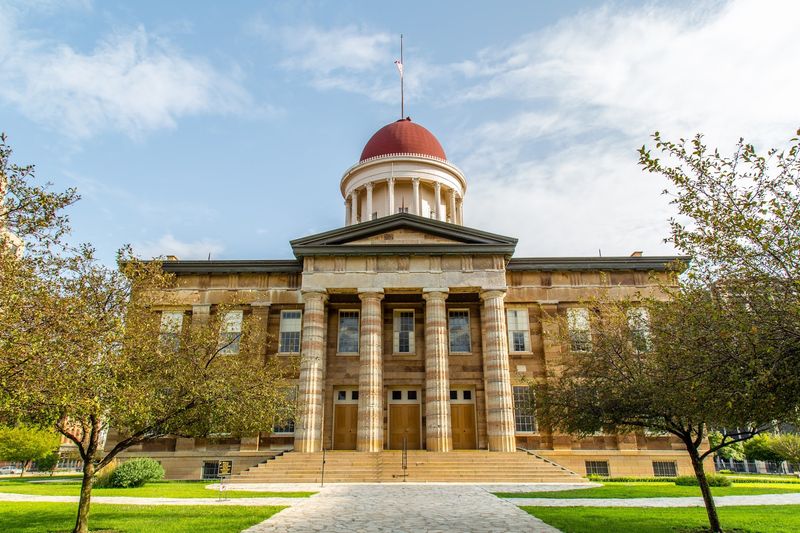
History has a way of stacking up beautifully in Springfield, and the Old State Capitol State Historic Site is another layer worth uncovering.
Located at 1 Old State Capitol Plaza in Springfield, Illinois, this restored Greek Revival building served as Illinois’s seat of government from 1837 to 1876.
It is where Abraham Lincoln delivered his famous “House Divided” speech in 1858, and where Barack Obama announced his presidential candidacy in 2007, giving the building a historical range that few structures anywhere can match.
Open Tuesday through Saturday from 9 a.m. to 5 p.m., the site offers free admission and guided tours that bring the political drama of earlier centuries to life.
The restored legislative chambers look much as they did when Lincoln walked the floors as a state legislator, and the attention to period detail is impressive throughout.
The public plaza surrounding the building is a pleasant spot to pause between Springfield stops, especially on a clear morning. Visitors often find themselves lingering longer than planned, partly because the building is beautiful and partly because the stories attached to it keep unfolding in interesting directions.
It earns its place confidently among the day’s best stops.
10. Illinois State Museum, Springfield
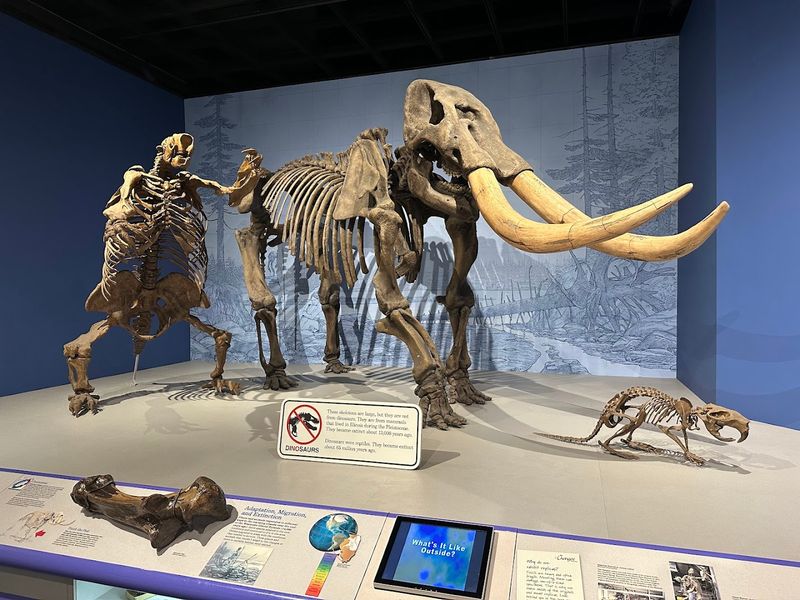
Not every great museum gets the attention it deserves, and the Illinois State Museum is a perfect example of a spot that quietly overdelivers.
Located at 502 S. Spring Street in Springfield, Illinois, this museum covers the full sweep of the state’s natural and cultural history, from prehistoric geology and ancient ecosystems to Native American heritage and contemporary Illinois art.
It is the kind of place where you walk in expecting to spend 45 minutes and end up staying for two hours.
Open Monday through Saturday from 9 a.m. to 4:30 p.m. and Sunday from noon to 4:30 p.m., the museum fits naturally into the Springfield afternoon of Day 2.
Rotating art exhibitions share space with permanent natural history collections, which means repeat visitors often find something new. The geology exhibits alone, featuring mammoth fossils and glacial history, are worth the visit for anyone who finds the physical story of the land as compelling as the human one.
Admission is free, which makes the Illinois State Museum one of the best-value stops on the entire road trip. It rounds out the Springfield experience with a broader, deeper look at the state you have been driving through for two days.
11. Dana-Thomas House State Historic Site, Springfield
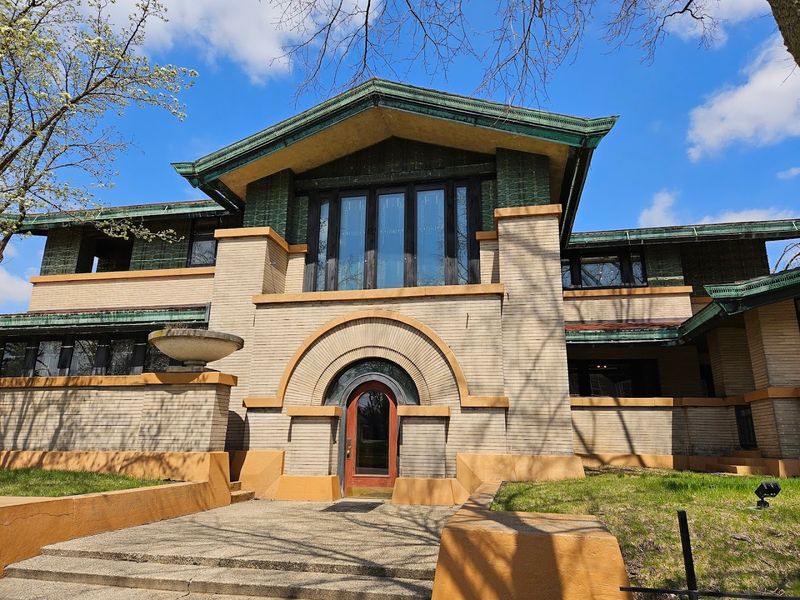
Frank Lloyd Wright designed over 1,000 structures during his career, but the Dana-Thomas House in Springfield, Illinois holds a special place among them as one of the best-preserved examples of his Prairie Style.
Located at 301 E. Lawrence Avenue, this 1902 masterpiece was built for socialite Susan Lawrence Dana and features 35 rooms, 16 murals, more than 100 pieces of original furniture designed by Wright himself, and 250 art glass doors, windows, and light fixtures that fill every room with extraordinary warmth and color.
Guided tours run daily at 9:30, 11:00, 1:30, and 3:00, though holiday closures apply, so checking ahead is wise. The tour lasts about an hour and covers the architectural vision behind each design choice in a way that makes even casual visitors appreciate the genius in the details.
The low horizontal lines, organic forms, and integration of art and architecture feel ahead of their time even today.
For architecture enthusiasts, this stop is a genuine highlight of the entire trip. For everyone else, it is a beautiful and surprising detour into a world where a house feels more like a living work of art than a place to hang your coat.
It is worth every minute of the visit.
12. Cahokia Mounds State Historic Site, Collinsville
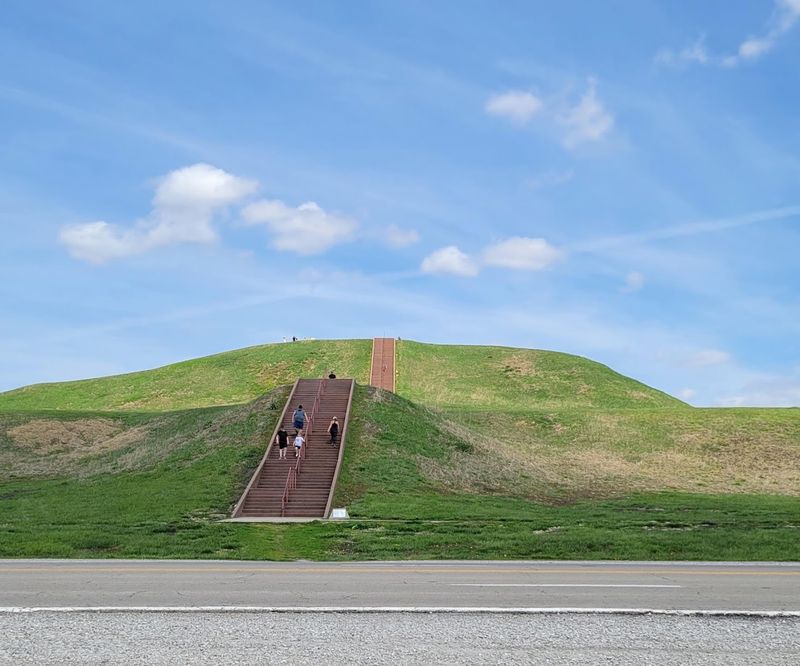
The final stop on this two-day road trip is one of the most humbling and thought-provoking places in all of North America.
Cahokia Mounds State Historic Site, located near Collinsville, Illinois, preserves the remnants of the largest pre-Columbian city north of Mexico. At its peak around 1100 CE, Cahokia was home to an estimated 10,000 to 20,000 people, making it larger than London at the time.
That fact alone tends to stop people mid-step.
The grounds are open daily from sunrise to sunset, and admission to walk the site is free. The Interpretive Center is currently closed for renovations with reopening expected in 2026, so this visit is focused on the outdoor landscape, particularly Monks Mound, the largest prehistoric earthen structure in the Americas.
Climbing to the top of Monks Mound rewards you with sweeping views across the Mississippi River floodplain and a genuine sense of scale that photographs cannot fully capture.
Standing on ground that was once a thriving urban center, surrounded by over 70 surviving mounds, is a powerful way to close out a road trip that has covered so much of Illinois’s story.
The ancient and the modern feel surprisingly close together out here, which is exactly the kind of ending a great road trip deserves.