
This Vintage Illinois Gas Station Feels Frozen In The 1930s
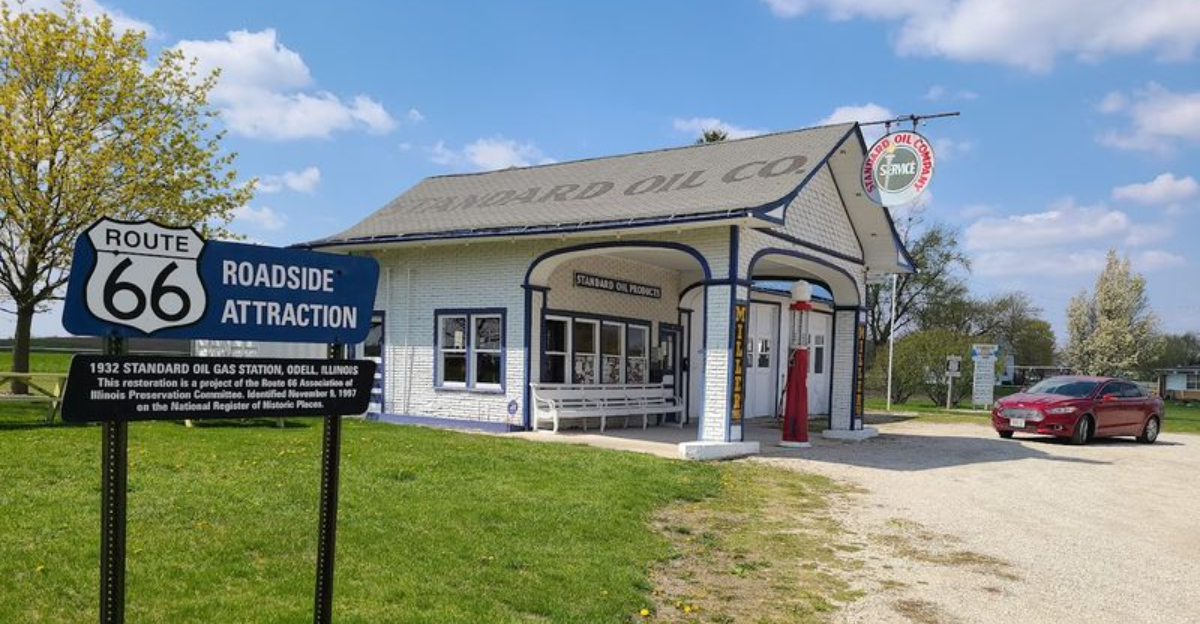
Some places don’t just preserve history. They almost feel like they’ve paused it.
In Odell, Illinois, there’s a small roadside building that does exactly that, with vintage gas pumps out front and details that echo the rhythm of old-school road trips. Set along the legendary Route 66, it offers a glimpse into a time when the journey felt just as important as the destination.
The architecture, signage, and overall atmosphere bring that era back in a way that feels surprisingly real. It’s the kind of stop that makes you slow down for a minute and take it all in.
Built In 1932
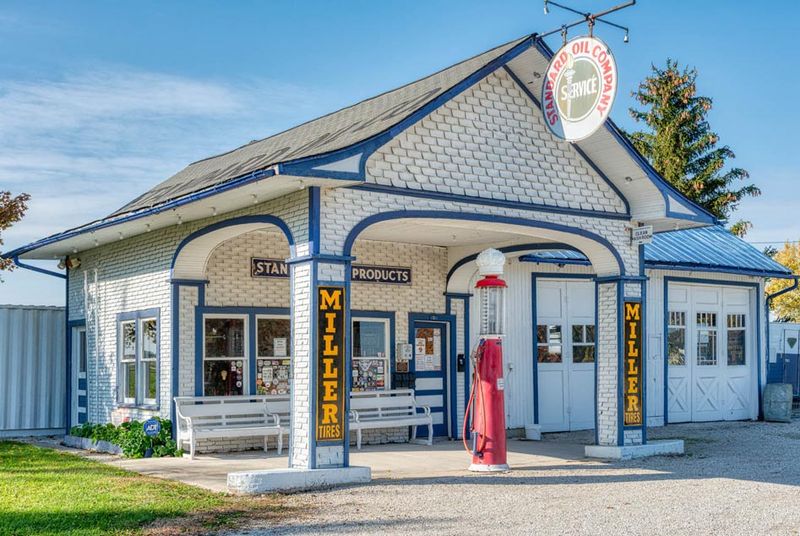
Long before the term “historic landmark” was attached to it, this station was simply a fresh new building on a busy road. Contractor Patrick O’Donnell completed its construction in 1932, giving Odell a tidy, well-crafted structure that travelers would rely on for decades.
The craftsmanship from that era was built to last, and O’Donnell’s work proved that point convincingly. The station was designed with care, using materials and techniques that were standard for quality construction in the early 1930s.
What makes this fact especially satisfying is knowing that a single contractor’s careful hands shaped something that now represents an entire era of American road culture. Nearly a century later, the building still stands firm, a quiet tribute to the skill poured into its foundation and walls.
Right On Route 66
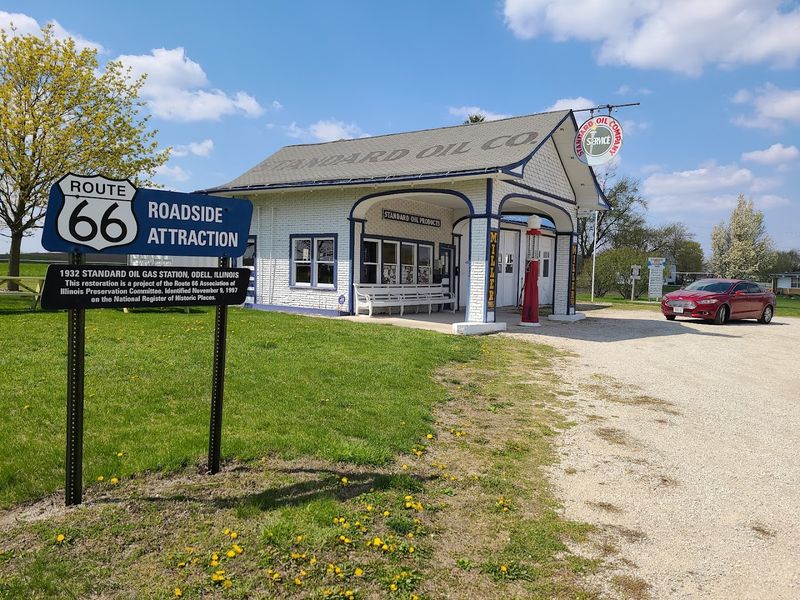
Route 66 was not just a road. It was a lifeline connecting Chicago to Santa Monica across nearly 2,500 miles of American landscape, and the Standard Oil station in Odell sat right on its original alignment.
Being positioned along that famous corridor meant constant traffic during the highway’s peak years. Families heading west, truckers hauling goods, and adventurers chasing the open road all passed by this very building, many of them pulling in to fill up and catch their breath.
That geographic placement is a huge part of why the station carries such cultural weight today. Route 66 tourism has surged in recent years as travelers seek out authentic pieces of mid-century American life, and this station delivers exactly that kind of connection.
Standing at the pumps, it is genuinely easy to picture the steady stream of chrome-bumpered cars rolling through on their way to somewhere new.
The Cozy “House With Canopy” Design
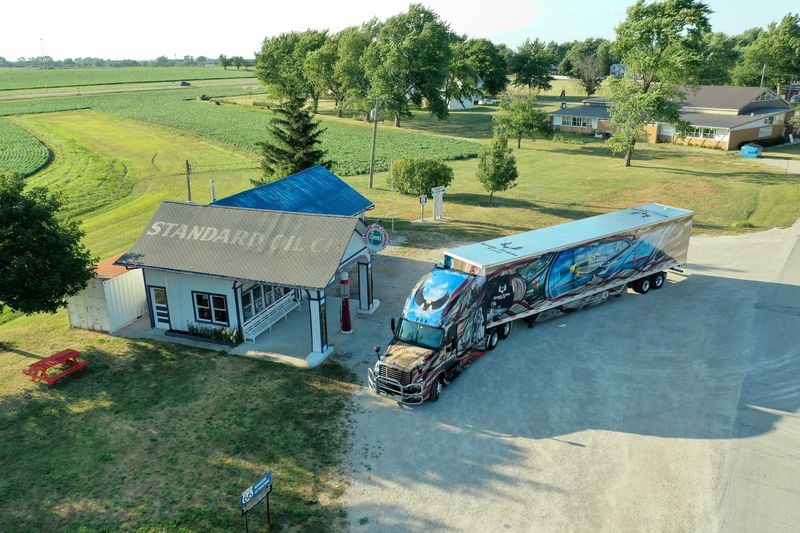
Not every gas station was designed to look like a home, but Standard Oil had a clever idea back in the early 20th century. The Odell station was built using a “house with canopy” or “domestic style” design rooted in a 1916 Standard Oil of Ohio prototype.
The thinking behind this approach was straightforward and smart. Travelers in the early days of motoring were often nervous about stopping at unfamiliar places, so a station that looked like a welcoming home felt far less intimidating than an industrial structure.
That warm architectural philosophy comes through clearly when you see the building today. The pitched roof, the tidy proportions, and the canopy sheltering the pumps all work together to create a sense of comfort rather than commerce.
It is a reminder that good design has always been about understanding how people feel, not just what they need functionally when they pull off the road.
A Classic Full-Service Stop
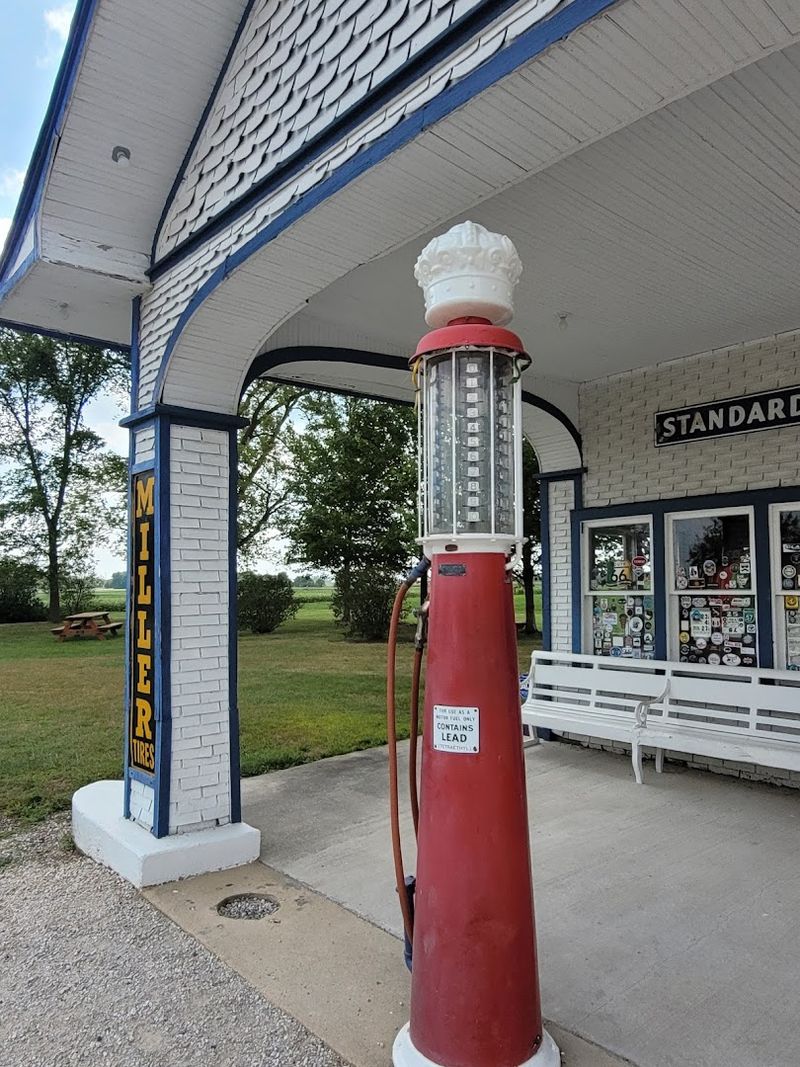
During Route 66’s most vibrant years, the Odell station was a genuine hub of activity. Drivers could pull in, fill their tanks with Standard Oil products, and take a moment to rest after miles of open-road driving through central Illinois.
Full-service stations during that era were a completely different experience from today’s self-serve pumps. Attendants would check your oil, clean your windshield, and send you on your way feeling genuinely looked after.
That culture of road hospitality made stops like this one memorable parts of any journey.
For families traveling with children or drivers unfamiliar with long-distance motoring, having a reliable, welcoming stop on Route 66 was genuinely reassuring.
The station filled a practical need, but it also provided something harder to measure: a sense that the road ahead was manageable, that help was available, and that the journey itself was worth savoring mile by mile.
When The Garage Came Along
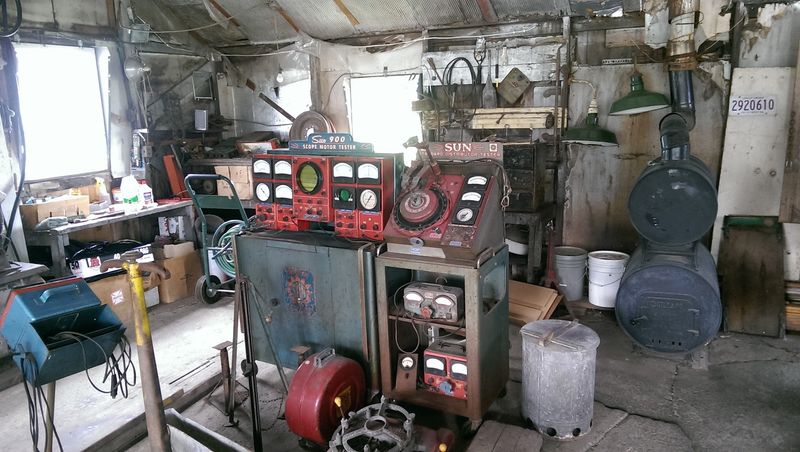
By the late 1940s, simply selling fuel was no longer enough to keep a Route 66 station competitive. A mid-1940s bypass rerouted traffic around Odell, cutting into gasoline sales significantly and forcing the station to adapt.
The solution was practical and forward-thinking. Two repair bays were added to the building, allowing the station to offer mechanical services alongside fuel.
A full-time mechanic kept the operation running and gave drivers a reason to stop even when they were not low on gas.
Those added bays changed the character of the place in an interesting way. What started as a clean, cottage-style fuel stop evolved into a working garage, buzzing with the sounds of engines being tuned and tires being changed.
The expansion speaks to the resilience of small-town businesses along Route 66, constantly adjusting to survive as the highway’s fortunes shifted around them like the Illinois wind.
From Gas Stop To Final Shutdown
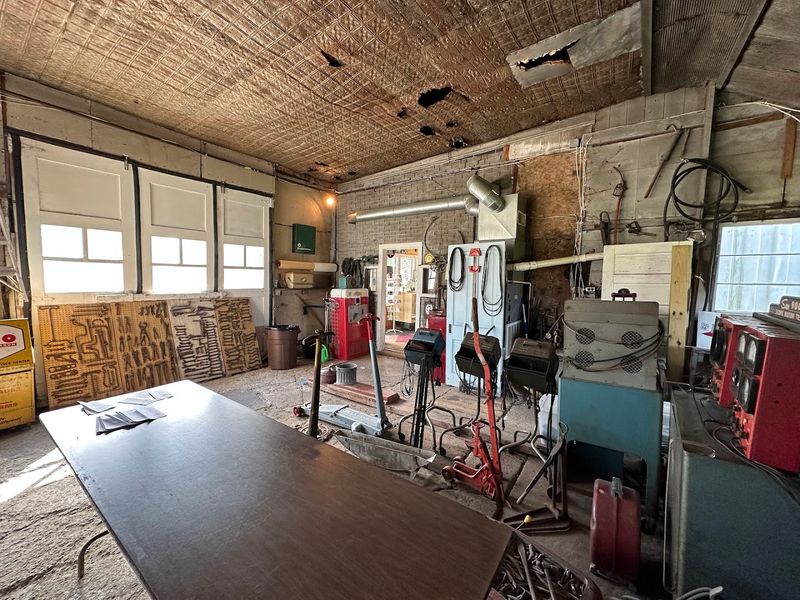
Every great story has a quiet chapter, and for the Odell station, that chapter arrived sometime after the 1960s. Gasoline sales wound down as Interstate 55 drew traffic away from the old Route 66 corridor, leaving the station without its primary purpose.
For a period, the building found new life as an auto body shop, keeping at least some mechanical activity alive within its walls. But that too eventually faded, and after operating as a repair and body shop for years, the station was ultimately closed and fell into disrepair before being acquired by the Village of Odell in 1999.
Seeing photographs from that period of neglect makes the eventual restoration feel even more meaningful. Buildings left without a purpose deteriorate quickly, and the Odell station was no exception.
Weathered paint, silent pumps, and empty bays told a story of a highway era that had simply moved on. Fortunately, the community had not forgotten what the station represented, and the next chapter would be a remarkable one.
National Recognition In 1997
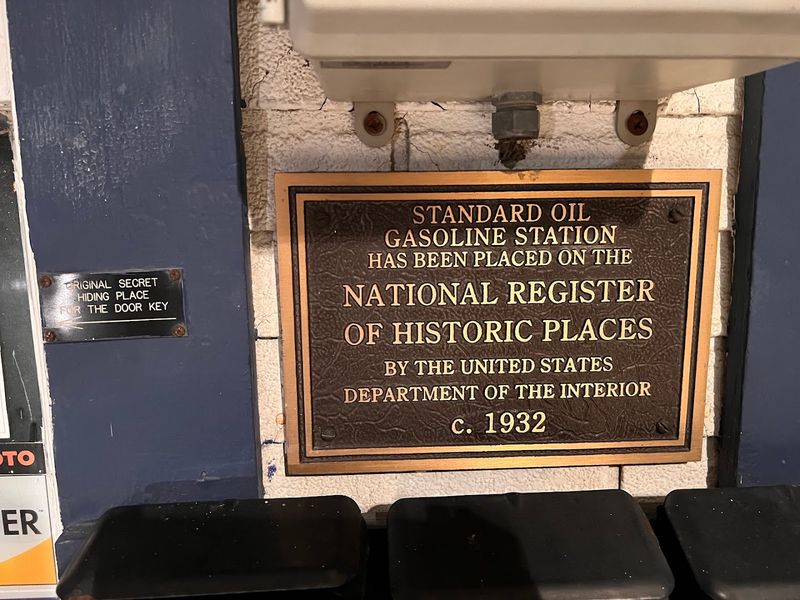
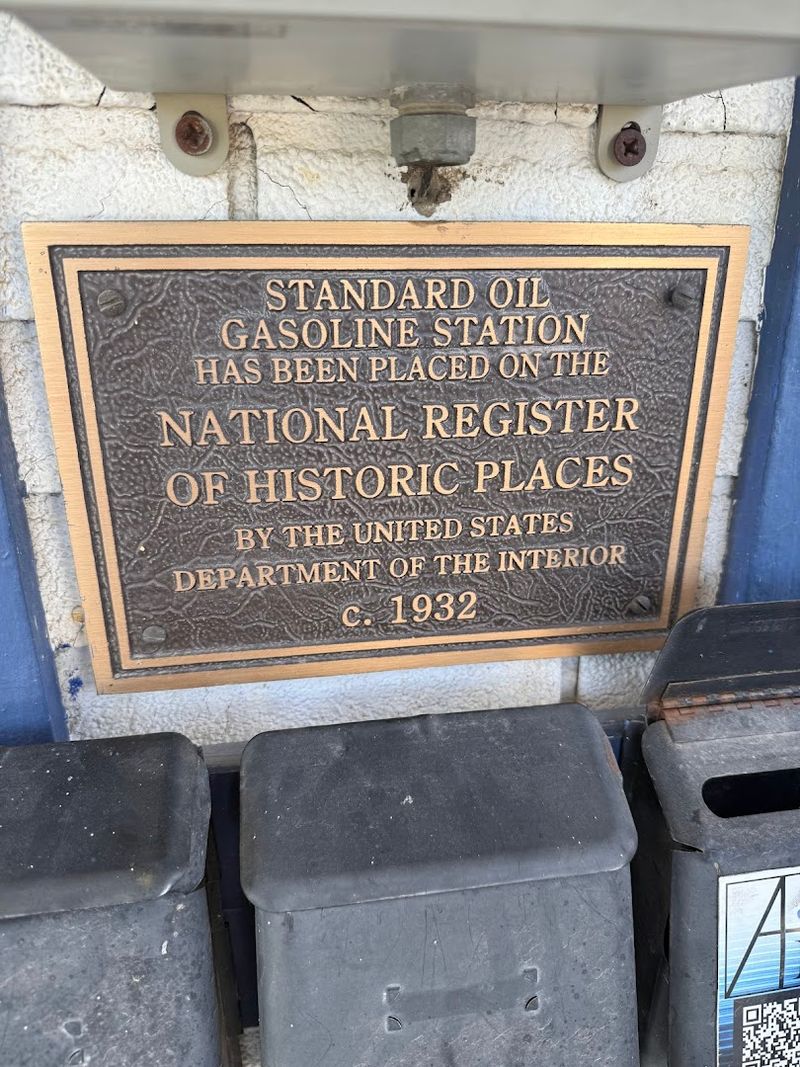
Official recognition does not come easily, and earning a spot on the National Register of Historic Places is a meaningful achievement for any building. On November 9, 1997, the Standard Oil station in Odell received exactly that distinction.
The designation acknowledged what the community already knew: this building was not just old, it was historically significant. It represented a specific moment in American transportation culture, a time when Route 66 was the country’s main artery and roadside stops were central to how people experienced travel.
Being on the National Register also opened doors for preservation funding and increased public awareness. It gave the restoration effort a formal framework and a level of credibility that helped attract support from organizations and volunteers.
For a small town like Odell, having a nationally recognized landmark is a source of quiet pride, the kind that does not need a billboard because the building itself says everything worth saying.
Carefully Brought Back To Life
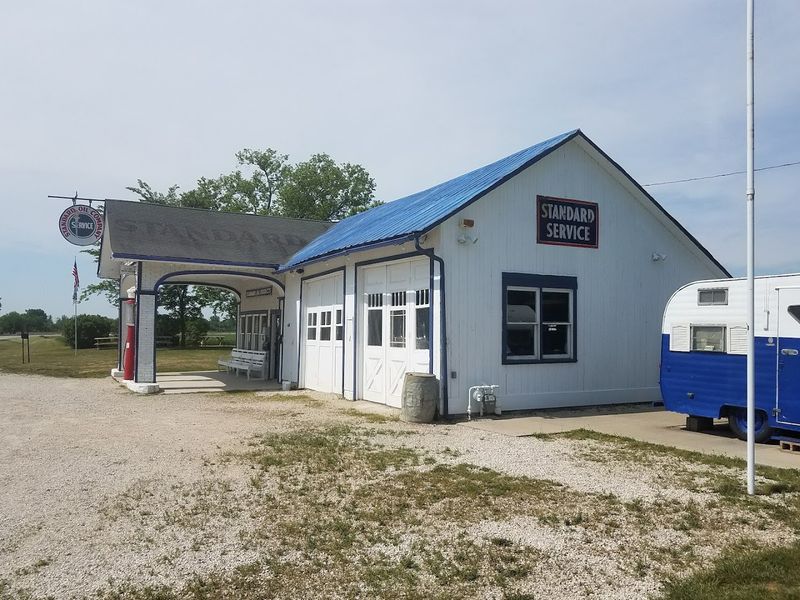
Restoration projects can go wrong in many ways, but the effort put into the Odell station was handled with remarkable attention to detail. The Illinois Route 66 Association and the Village of Odell collaborated to bring the building back, targeting an early 1940s appearance as the benchmark.
That meant researching period-accurate colors, sourcing appropriate signage, and ensuring that every visible element matched what the station would have looked like at its peak. The result is a building that feels genuinely authentic rather than like a polished replica designed for tourists.
Walking around the restored station, you notice small details that reveal the depth of care invested in the project. Paint colors, pump styles, and even interior display arrangements were chosen to reflect real history rather than a romanticized version of it.
The team behind the restoration clearly understood that honoring the past means getting the details right, and they delivered something the entire community can stand behind with real confidence.
A 2002 Preservation Honor
Cyrus Avery was one of the key figures behind the creation of Route 66, earning him the nickname “Father of Route 66.” Having an award in his name go to the Odell station in 2002 carries a kind of poetic rightness that is hard to ignore.
The National Historic Route 66 Federation presents the Cyrus Avery Award to recognize outstanding preservation efforts along the historic highway.
Receiving it placed the Odell project in distinguished company and confirmed that the restoration met the highest standards set by Route 66 preservation experts.
For the volunteers, organizers, and community members who put time and resources into bringing the station back, the award was a tangible acknowledgment that their work mattered beyond Odell’s town limits.
Preservation on this scale requires sustained effort and genuine passion, and the Cyrus Avery Award stands as permanent proof that both were present in abundance throughout the entire restoration journey.
A Living Route 66 Stop Today
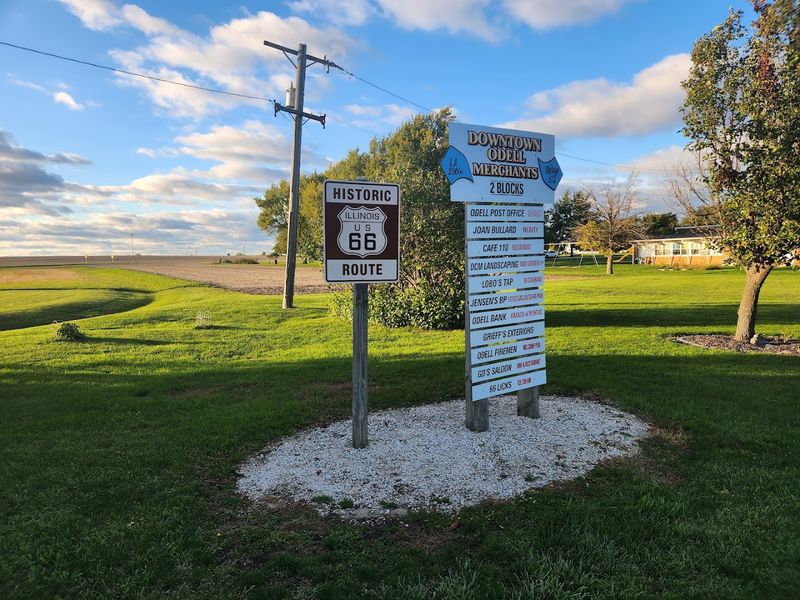
Today, no fuel flows through the pumps outside the Odell station, but the building is very much alive. Serving as a welcome and visitor center for Route 66 travelers, it offers something more valuable than gasoline: a tangible connection to the road’s golden era, with restored historic features and period displays.
Inside, an original cash register still sits on the counter, period-accurate displays fill the space with authentic character, and Route 66 souvenirs give visitors something to carry home.
A guestbook near the entrance invites travelers to leave their names and where they came from, creating a living record of everyone the highway has drawn to this small Illinois town.
The station is open daily from 10 AM to 4 PM, and visitors can reach it at 400 S West St, Odell, IL 60460, or call ahead at +1 815-998-2133.
Even if you arrive after hours, a recorded historical message plays at the push of a button, making sure no traveler leaves without learning something worth knowing.