
This Hidden Western Colorado Canyon Feels Like Colorado’s Best Kept Spring Secret In May
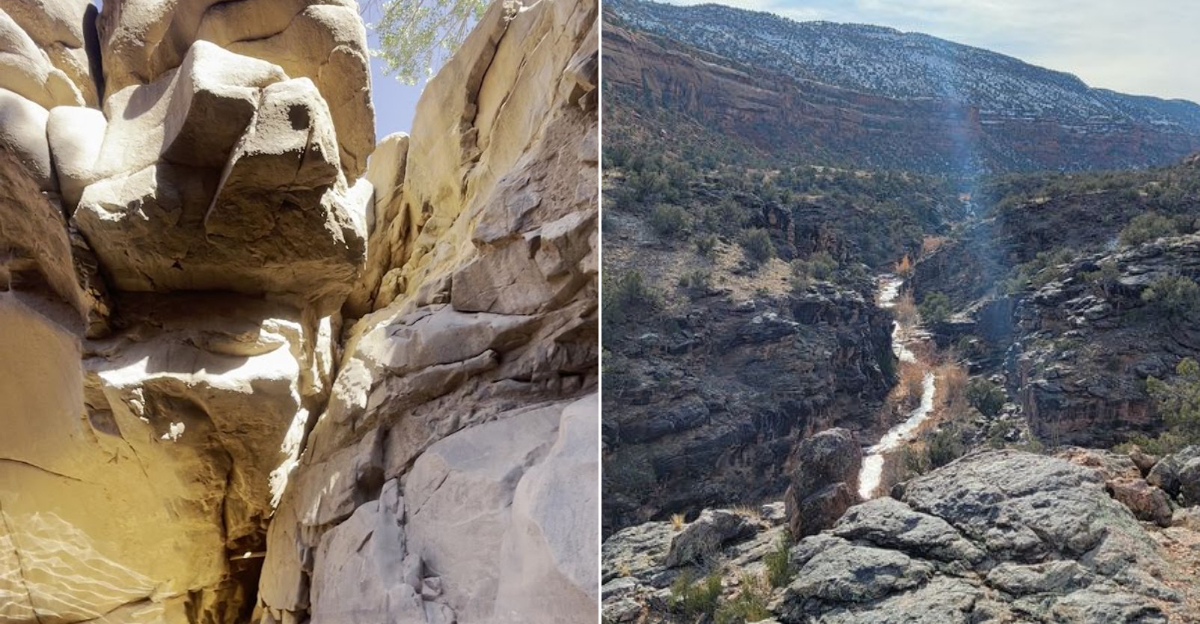
Tucked into the high desert of western Colorado, this trailhead feels like a secret waiting at the end of a dusty road. The drive in takes a little patience, but that is part of the magic, because every bump and bend makes the arrival feel earned.
In Colorado’s canyon country, the best spring surprises often appear where pavement gives up and curiosity takes over. By May, the wildflowers start adding pops of color against the rugged rock, the temperatures stay friendly, and the whole landscape feels wide open without feeling overwhelming.
This is the kind of hike that rewards attention more than athletic drama, with quiet views, gentle adventure, and just enough remoteness to make your everyday worries seem very far away. It is peaceful, photogenic, and wonderfully under-the-radar.
Colorado hides some of its finest trail days in places like this, where the reward is not bragging rights, but breathing room.
The Road In Sets the Tone Before You Even Lace Up
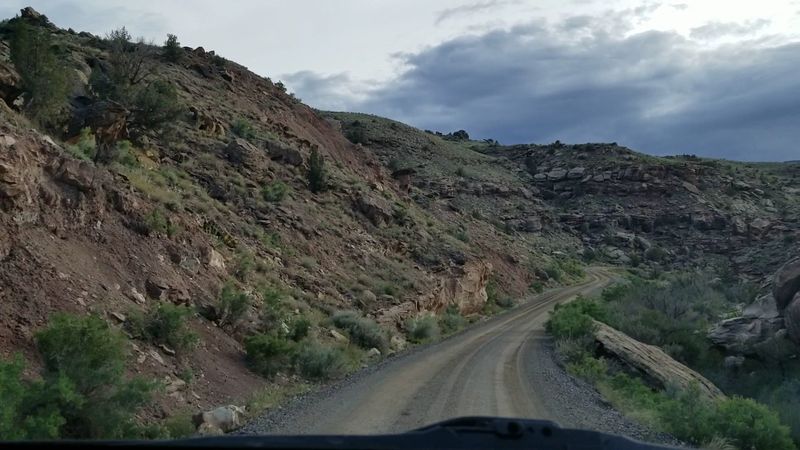
Getting to this spot at Bridgeport Trailhead, Bridgeport Road, Whitewater, Colorado 81527 is half the adventure, and not in a punishing way. The roughly eight miles of unpaved road from US-50 West does involve some washboarding on the public stretch, but once you clear that section, the surface smooths out considerably.
Standard passenger cars handle the dry-condition drive without drama.
Think of the road as a slow decompression chamber between highway life and wilderness silence. By the time you reach the upper parking area, your shoulders have already dropped two inches from where they were at the office.
The drive itself passes through open high desert terrain with views that start doing the work before you ever reach the trailhead.
Pro Tip: If your vehicle sits low and the road has seen recent rain, give it a day to dry out. Visitors who arrive in dry conditions consistently report no issues, but wet washboard is a different negotiation entirely.
Cell service exists at the upper parking lot, so check conditions before you commit to the full drive.
Best For: Anyone who considers the journey part of the experience and does not mind trading pavement for payoff.
Two Miles Along the River Before the Canyon Swallows You Whole
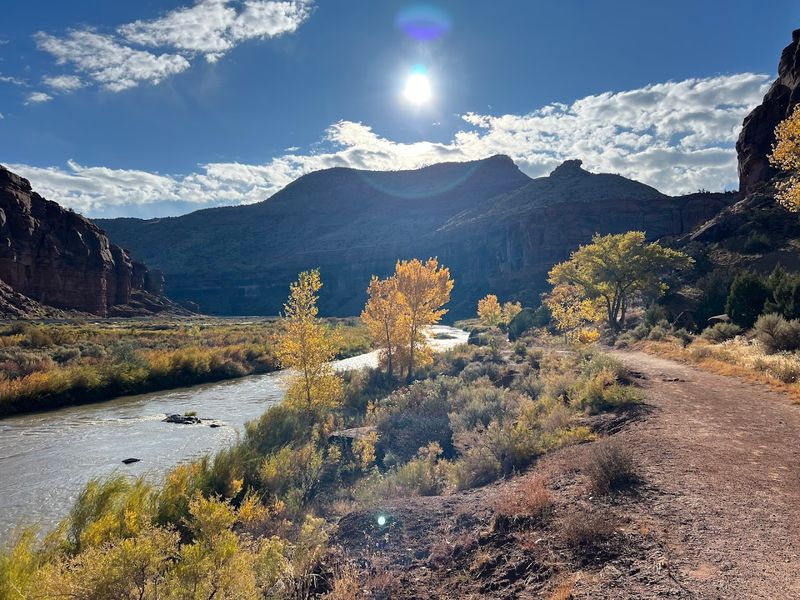
The trail from the Bridgeport Trailhead begins on mostly smooth, hard-packed dirt that runs along the Gunnison River for roughly two miles before the canyon walls start closing in around you. It is the kind of opening act that feels almost too easy, which is exactly the point.
You are being lured deeper, and it works every single time.
Visitors note that the path starts near the train tracks and eventually crosses them, adding a small industrial-meets-wilderness moment that feels oddly cinematic. The trail is fairly flat along the canyon bottom, making those first miles accessible to a wide range of fitness levels, including families with kids as young as six who have been reported completing the hike without complaint.
Quick Tip: Take the ridge trail on the way out instead of retracing the railroad bed. The elevated views add a completely different dimension to the same terrain, and several visitors have called it the better of the two options for first-timers.
Who This Is For: Hikers who want genuine wilderness payoff without a brutal elevation profile. The distance is the main challenge here, not the grade.
Waterfalls That Earn Their Reveal the Longer You Walk
Nobody hands you the waterfall at the trailhead. You earn it, and that is precisely what makes finding it feel like a minor personal triumph.
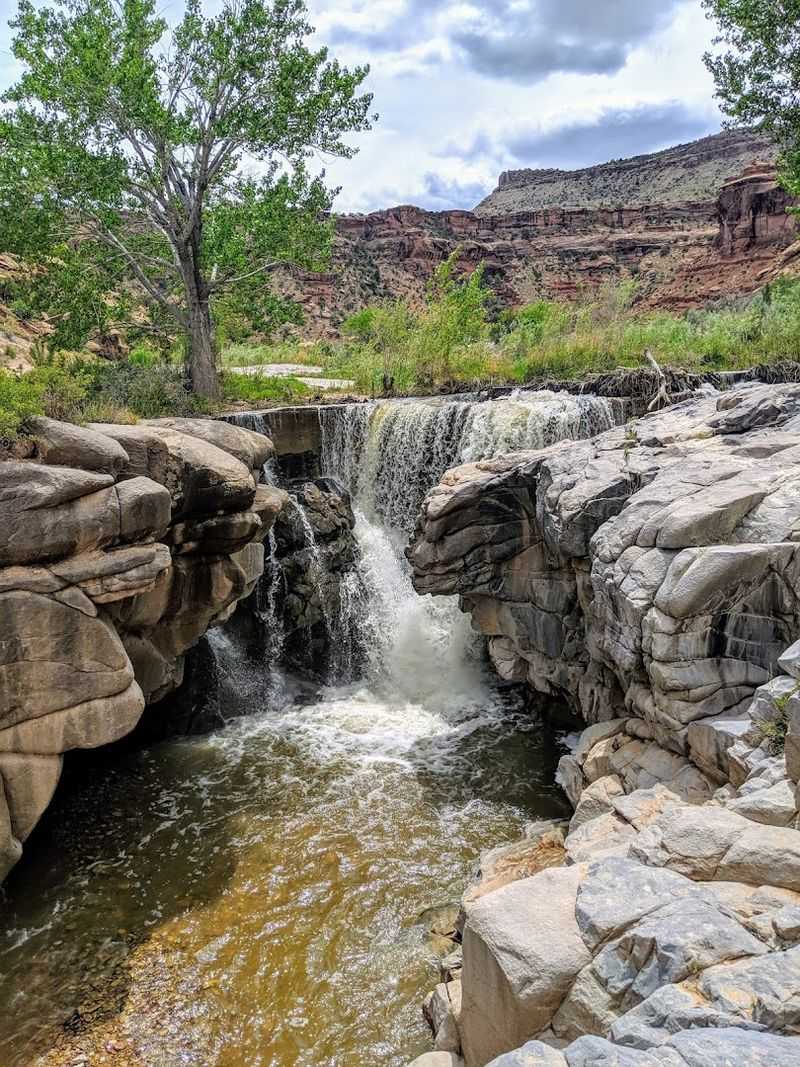
The first small waterfall appears roughly two miles in, just past a footbridge crossing. Visitors have reported finding at least three waterfalls on longer out-and-back routes, each one tucked into the canyon at intervals that reward continued walking.
In May, the snowmelt and spring rainfall keep the water flowing at its most photogenic. The waterfall near the bridge is the most reliably visited, but the further ones require a willingness to keep moving and a solid water supply in your pack.
The canyon narrows in ways that make each new feature feel like a separate discovery rather than a single long corridor.
Insider Tip: One visitor noted that the waterfall on Big Dominguez Creek is harder to see unless you cross to the other side of the creek. Worth the short scramble if conditions allow.
Wear shoes you do not mind getting slightly wet in May.
Why It Matters: Waterfalls in a high desert canyon are not a given. Finding multiple on a single trail in western Colorado is genuinely unusual and worth the extra mileage.
Petroglyphs Carved Into Sandstone That Predate Every Trail Sign
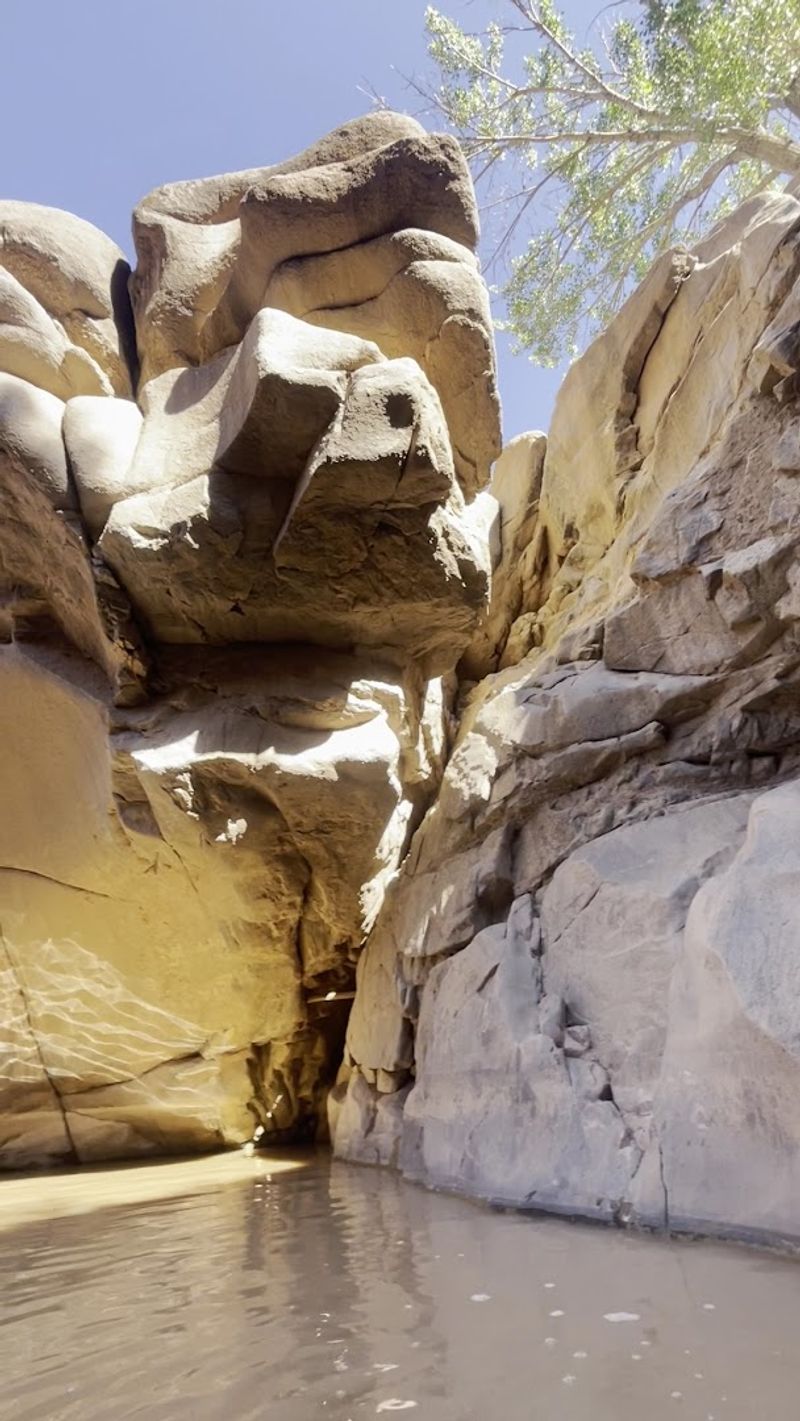
Somewhere along the towering sandstone walls of Dominguez Canyon, the trail stops being just a hike and becomes something closer to a history lesson written in stone. The petroglyphs here are real, undated by any posted sign, and entirely dependent on your willingness to look carefully at the canyon walls rather than just the path ahead.
That attentiveness is rewarded.
Visitors consistently describe the petroglyphs as one of the trail’s standout features, appearing both along Big Dominguez and in various spots deeper into the canyon. Sadly, some graffiti has been added over the years by people who apparently missed the point entirely.
The ask here is simple: look, photograph, and leave everything exactly as you found it.
Common Mistakes to Avoid: Do not touch the rock art. Even oils from hands accelerate deterioration.
Keep a respectful distance and use your camera’s zoom rather than your reach.
Planning Advice: Petroglyphs appear at various points rather than at one designated stop, so this is not a feature you can rush to and check off. Build in enough time to walk slowly and scan the walls.
Bring binoculars if you have them; they make a genuine difference.
Spring Wildflowers Turn the Desert Into Something Unexpected
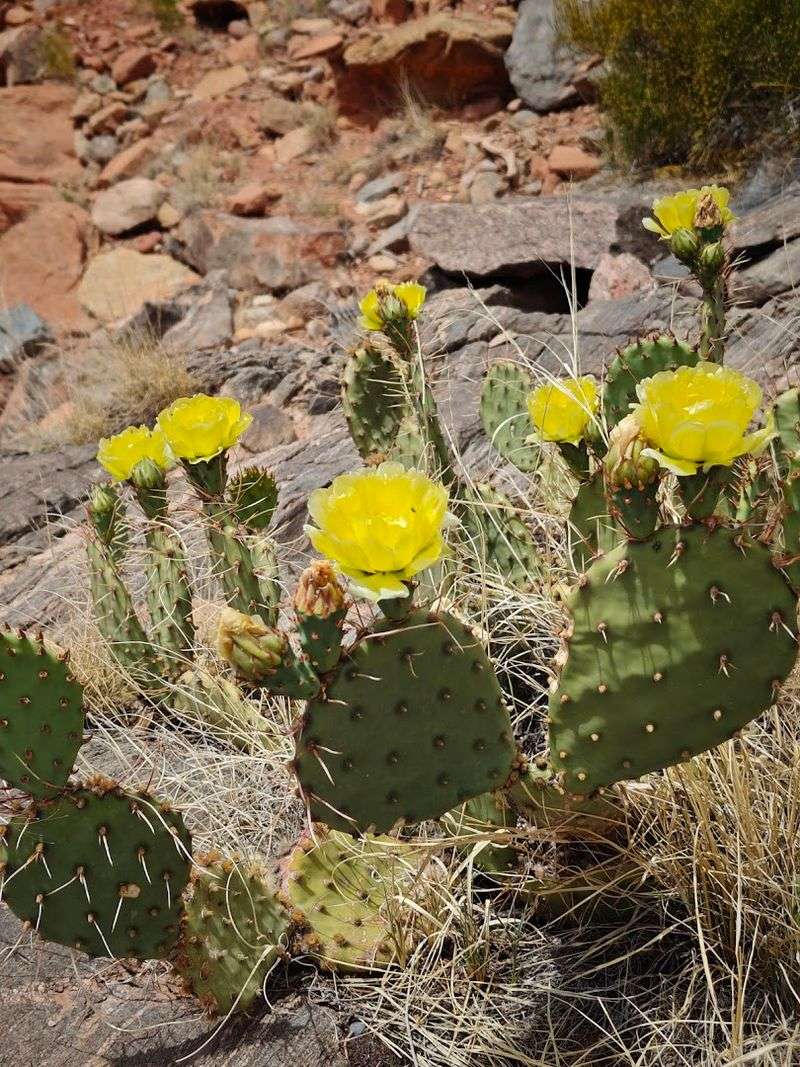
May is not the month most people associate with flowers and a Colorado desert canyon. That assumption is exactly why showing up in spring feels like catching the place in a private moment.
Cacti bloom in vivid bursts, low-growing desert plants line the trail edges, and the overall effect is one of unlikely abundance in a landscape that looks, at first glance, like it should be austere.
Visitors who have hiked in early spring consistently mention wildflowers as a highlight that caught them off guard. The arid climate and rocky canyon floor support plant life that has adapted to thrive in conditions most flowers would refuse.
That resilience produces something genuinely striking when the timing is right.
Best Strategy: Arrive in the morning when light angles are lower and the canyon walls glow. The combination of blooming desert plants against red sandstone in May morning light is the kind of scene that makes people stop mid-sentence and reach for their phones.
Fun Fact: The canyon supports a mix of desert and riparian plant communities side by side, which is why the trail can shift from cactus-lined rocky terrain to lush riverside vegetation within a short stretch of walking.
Camping Under Canyon Walls With Zero Competition for a Spot
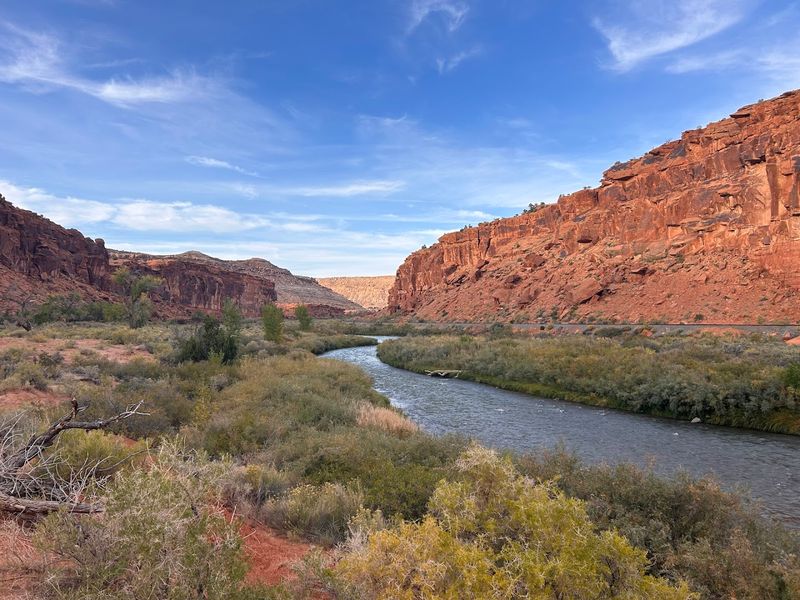
Free camping near a river inside a wilderness canyon in western Colorado sounds like the kind of thing that requires a permit, a lottery, and a minor act of bureaucratic patience. At Dominguez Canyon, the campsites near the river and creek are available and, by most accounts, genuinely underused.
Visitors have expressed surprise at discovering the overnight option exists at all.
The upper parking lot accommodates horse trailers as well, which gives you a sense of the scale of the operation. There is a pit toilet at the trailhead, which sets a clear expectation for the level of infrastructure you are working with.
That is fine. This is backcountry camping with a capital B, and the tradeoff for a zero-dollar site beside moving water in a sandstone canyon is, by most reasonable calculations, an excellent one.
Planning Advice: Carry more water than you think you need. The canyon can get surprisingly warm even in May, and water sources along the trail require treatment before drinking.
A personal locator beacon is a genuinely smart addition to any overnight kit here, as cell service disappears once you move past the upper parking area.
Best For: Backpackers, equestrians, and anyone who enjoys the sound of a creek at 5 a.m. more than an alarm clock.
Final Verdict: The Canyon That Earns Its Quiet Reputation
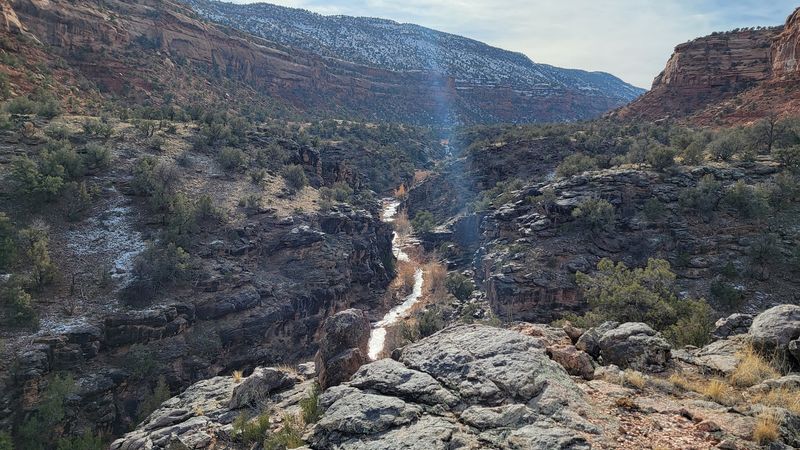
Dominguez Canyon Wilderness near Whitewater, Colorado holds a 4.7-star rating across 166 visitor reports, and the consistency of that enthusiasm across years of visits is telling. This is not a trail that benefits from hype or Instagram exposure.
It benefits from preparation, reasonable expectations, and a genuine appetite for desert canyon wilderness.
The trail offers flexible distance, meaning you choose how far you go and what you find along the way. Waterfalls, petroglyphs, wildflowers, river access, and canyon geology all appear at different points, rewarding hikers who push further while still giving shorter walkers something worth the drive.
That scalability is rare and genuinely useful for groups with mixed energy levels.
Key Takeaways: Bring significantly more water than feels necessary. Wear sun protection without exception.
Dogs are welcome on leash. The road is manageable in dry conditions for standard vehicles.
May offers wildflowers, moderate temperatures, and flowing water that make it arguably the strongest month to visit.
Quick Verdict: If you are within reasonable driving distance of western Colorado in spring and you have not added this canyon to your list, you are leaving one of the region’s most satisfying half-day or full-day hikes sitting unclaimed. That seems like a situation worth correcting.