
This Historic Michigan Lighthouse Has Guided Great Lakes Sailors For Nearly 200 Years
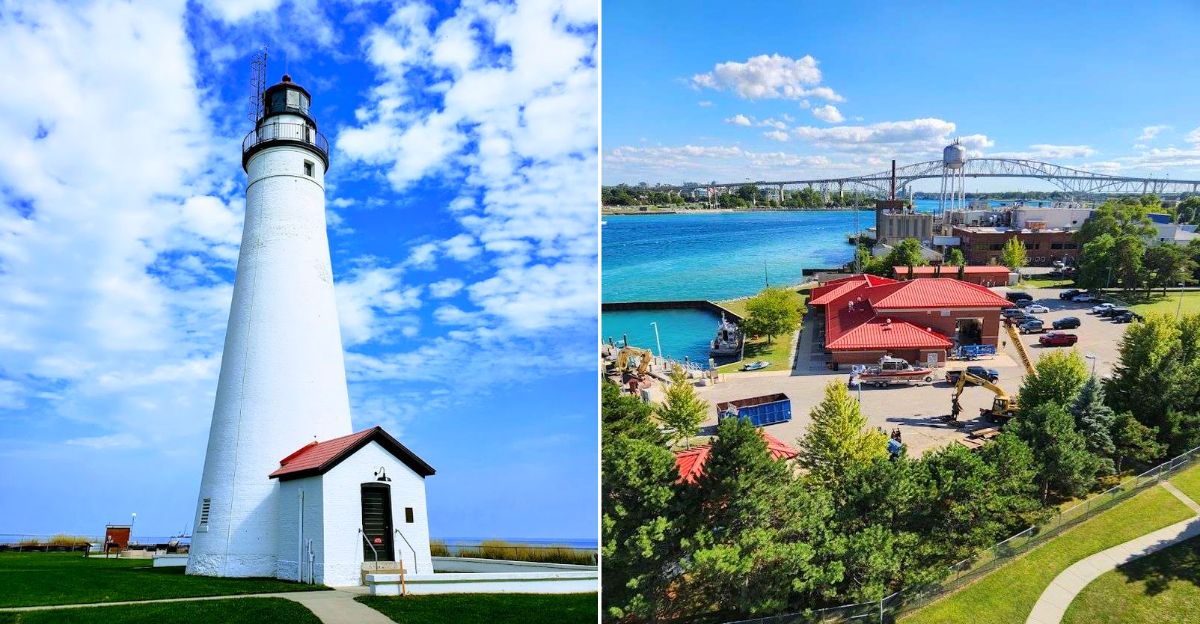
At the edge of Lake Huron, this place does not just sit there looking pretty for photos, though it absolutely knows how to do that too.
It feels like a piece of Great Lakes history still standing its shift, watching the water, the ships, and the weather with the calm patience of something that has seen a lot. I liked that it did not feel overly polished or staged. It felt useful, weathered, and honestly more interesting because of that.
Michigan travelers will find Lake Huron views, Port Huron history, Great Lakes maritime heritage, and one of the state’s most memorable lighthouse stops here.
The best part is how the visit keeps opening up as you move around. One minute you are admiring the tower, the next you are thinking about ship traffic, storms, repairs, and all the practical work behind a place this old. It is scenic, yes, but it also has backbone.
Start With The Location, Not Just The Tower
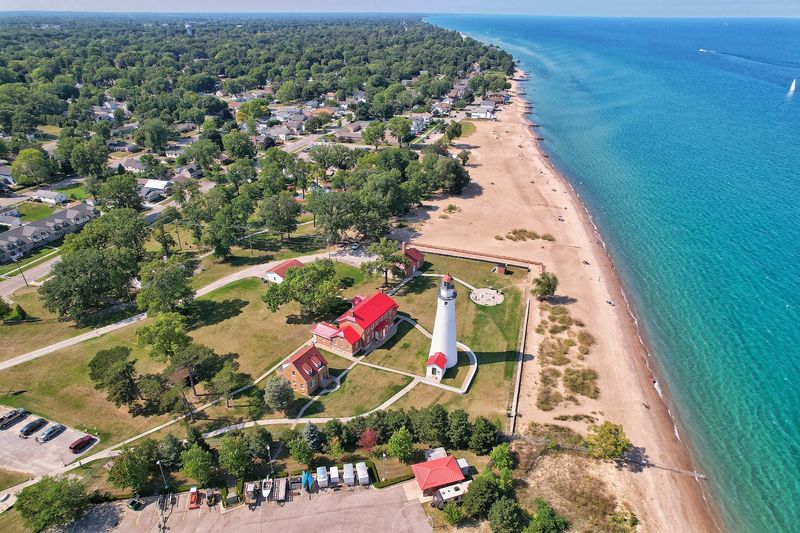
The first thing to understand is placement. Fort Gratiot Lighthouse stands at the meeting point of Lake Huron and the St. Clair River, which makes its purpose instantly legible once you see the water moving around it. Ships are not passing through abstract history here, this is still a strategic entrance.
That practical setting gives the whole visit its charge. I liked that the lighthouse never feels isolated from the working landscape around it, even when the grounds are calm and breezy. You are looking at beauty, yes, but also at maritime problem solving.
Arrive ready to walk the grounds slowly. The view lines toward the river, lake, and Blue Water Bridge help everything else on site make more sense.
Navigating To The Beacon At The Strait
To reach Fort Gratiot Lighthouse at 2802 Omar St, Port Huron, Michigan 48060, take I-94 East or I-69 East until they merge and terminate at the Blue Water Bridge area. Follow the signs for M-25/Pine Grove Avenue heading north.
The destination is situated at the northern entrance of the St. Clair River, directly adjacent to the Coast Guard station. If you are traveling south from the Thumb region via M-25, turn east onto Omar Street to bypass the busier intersections near the international bridge.
Ample parking is available in a paved municipal lot located directly at the end of Garfield Street, offering easy access to the station grounds and the beach. A small secondary lot is also accessible via the Omar Street entrance.
Look Up At The Height And The Reason For It
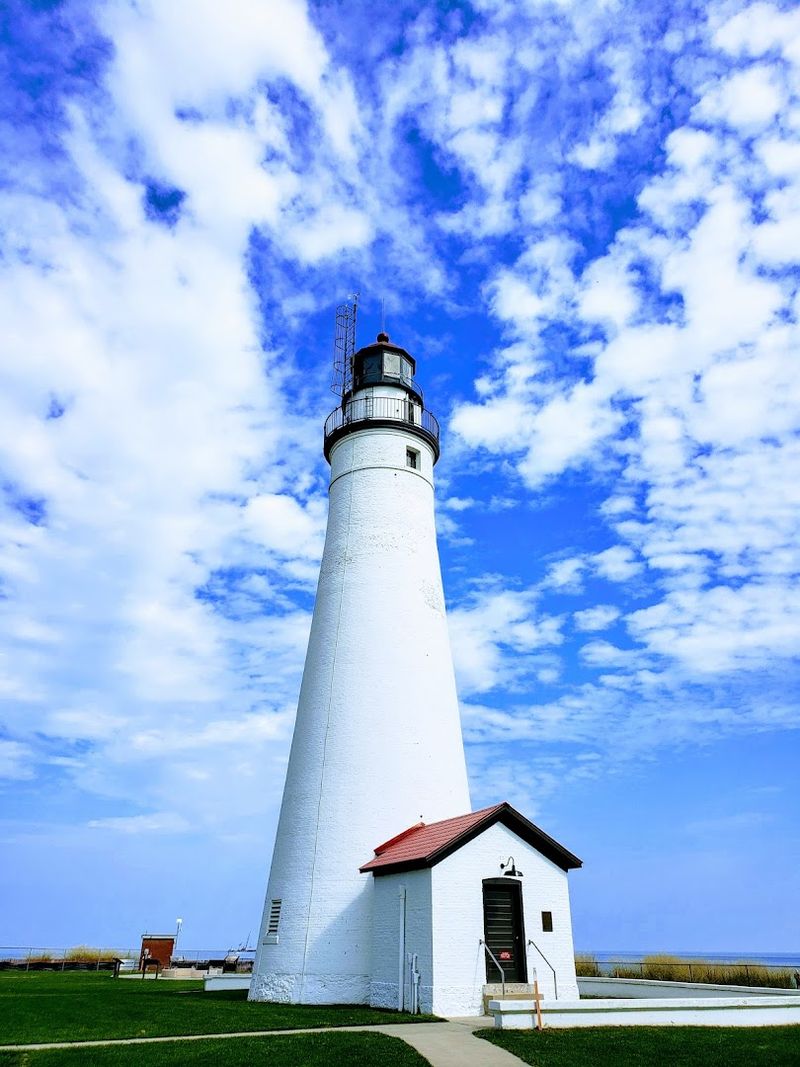
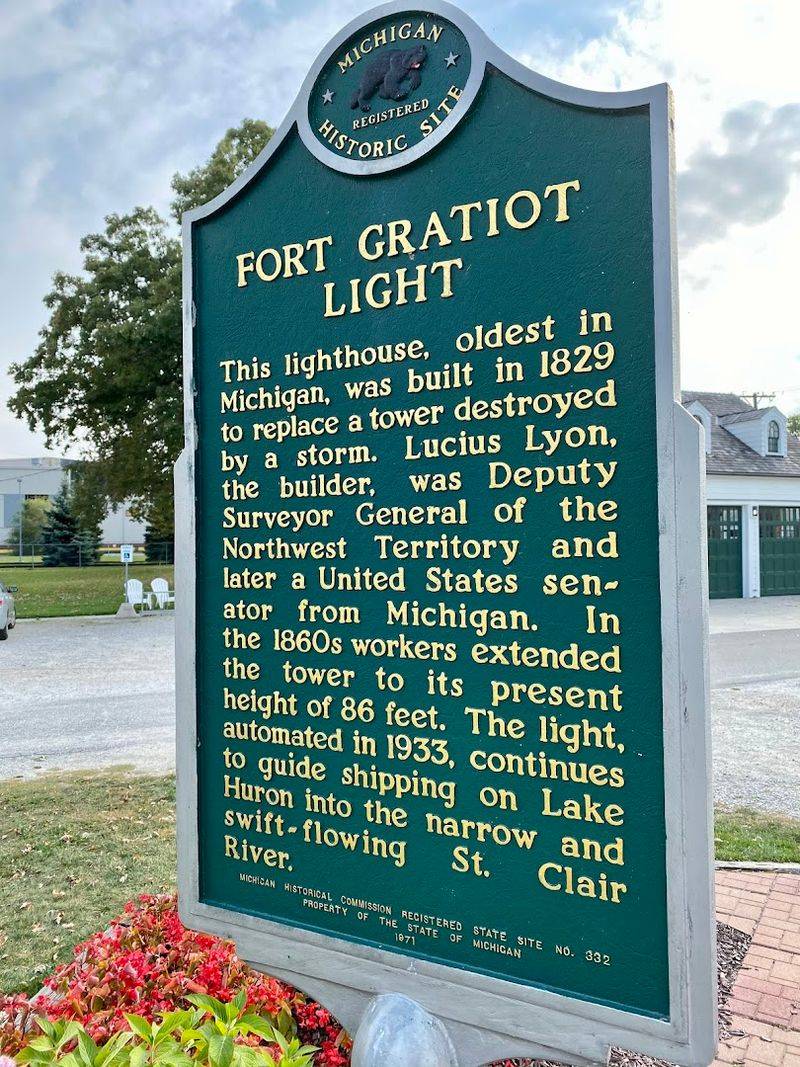
From below, the tower looks elegant, but its proportions tell a technical story. The 1829 lighthouse rose 65 feet, then in 1862 it was extended to 82 feet so a stronger third order Fresnel lens could be installed. That change was not cosmetic – greater height and better optics meant better guidance for ships.
You can feel that engineering logic in the silhouette. The tower has a clean, almost severe confidence that comes from being shaped by function first. It is handsome because it had work to do.
Pause far enough back to take in the full vertical line. The extension helps explain why this lighthouse feels taller and more commanding than many visitors expect.
Climb If You Can, But Treat The Stairs Honestly
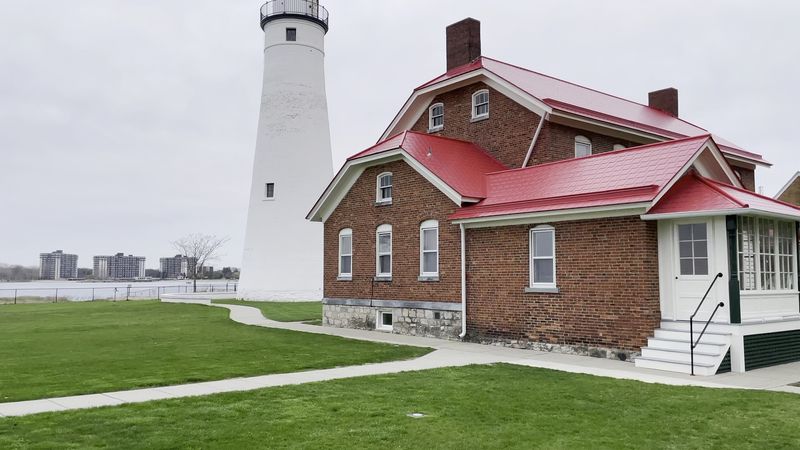
The climb is the part people remember, and for good reason. The tower has 94 steps, and while the ascent is manageable for many visitors, it is still a narrow, warm, vertical experience inside a historic structure. I would not call it strenuous, but I would call it real.
That honesty is part of the appeal. By the time you reach the top, the view feels earned rather than delivered, and the small landing gives you a sharper sense of what lighthouse work demanded daily. The descent can feel spookier than the climb.
Wear shoes you trust and avoid rushing. If heights make you tentative, taking your time is the smartest strategy, not a compromise.
The Views Connect Three Different Stories At Once
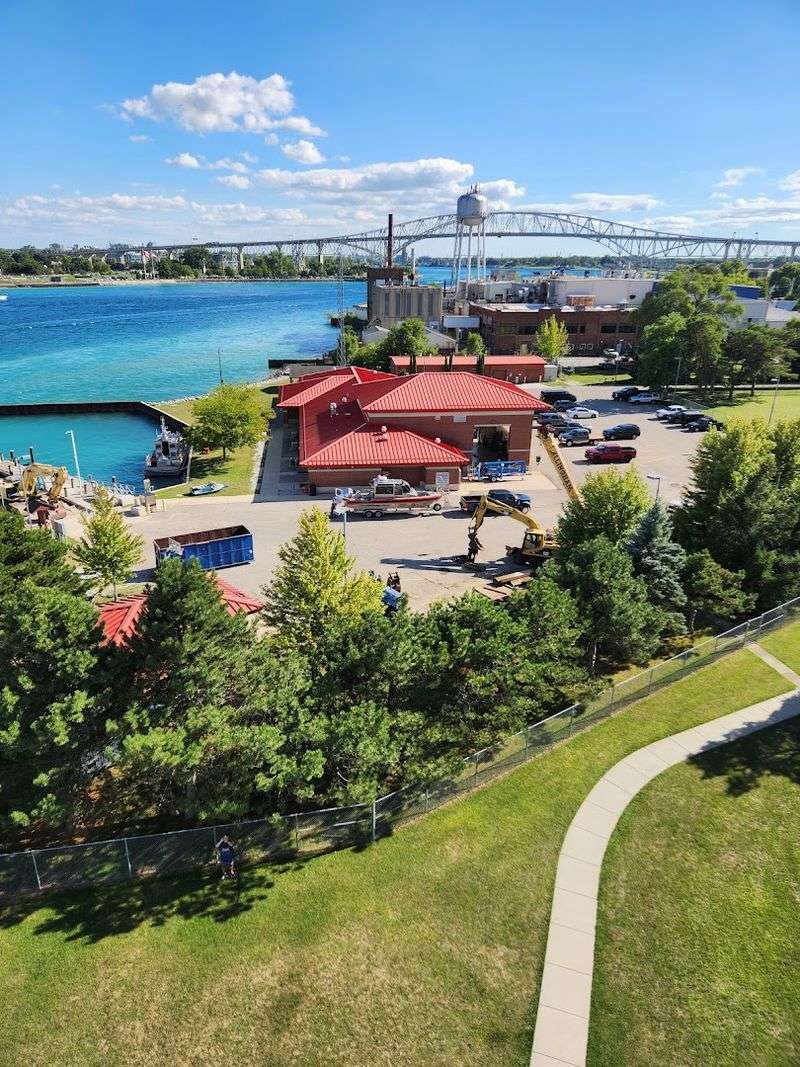
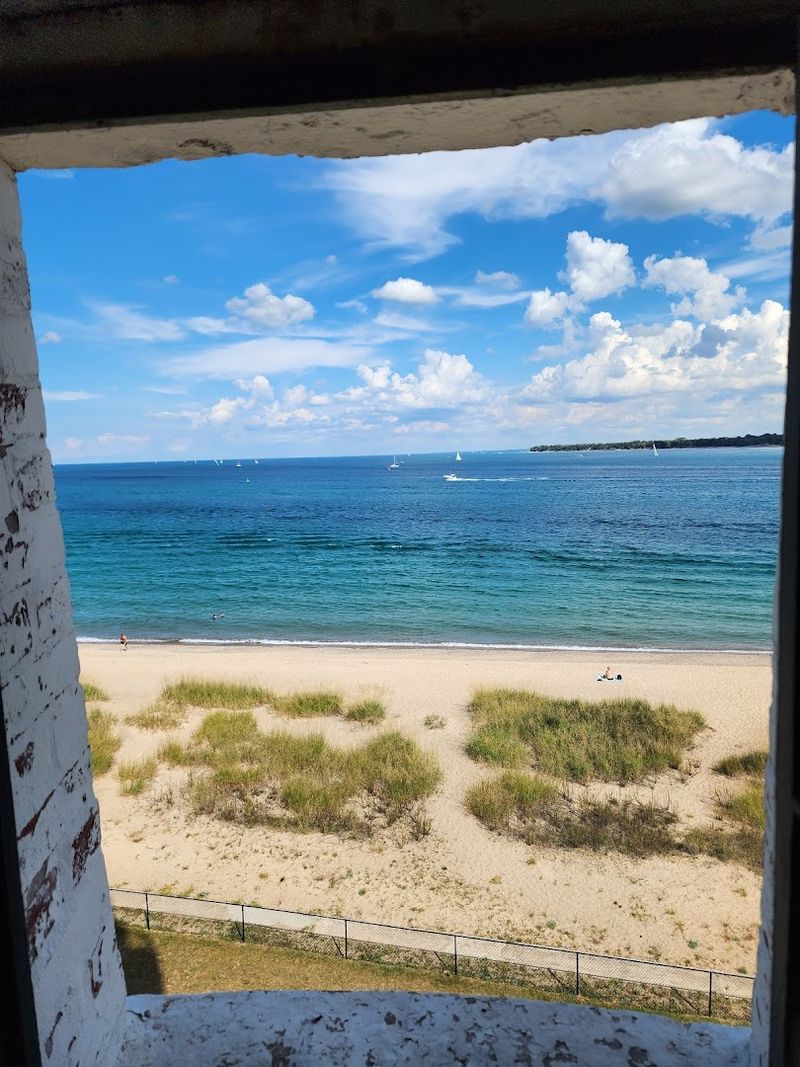
At the top, the landscape arranges itself into a neat lesson in geography. You can see Lake Huron opening wide, the St. Clair River beginning its southward run, and the Blue Water Bridge anchoring the modern horizon. Canada sits right there too, which adds a subtle international edge to the panorama.
What I liked most was how the view collapses eras together. The same vantage that once mattered for lenses and weather now frames freighters, shoreline parks, and cross border infrastructure in one sweep. It feels active, not nostalgic.
Bring binoculars if you enjoy ship watching. Even without them, the top gives you a strong sense of why this exact point has mattered for nearly 200 years.
Do Not Skip The Rest Of The Station Complex
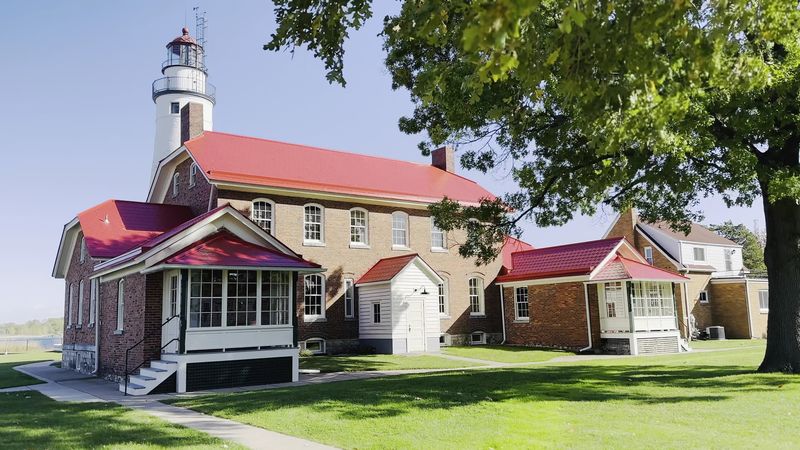
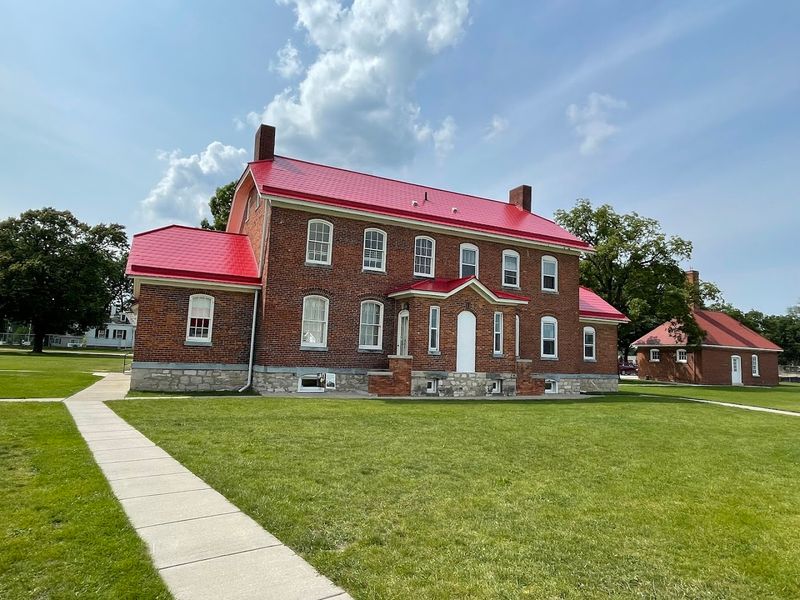
The tower is the headline, but the grounds are the fuller argument. Fort Gratiot Light Station includes the lighthouse, a Light Keeper’s Duplex from 1874, a Fog Signal Building from 1900, a Single Keeper’s Dwelling and former Coast Guard Station from 1932, plus an Equipment Building from 1939.
Those dates show a site that kept adapting instead of freezing in one era. That layered campus feeling is what gives the visit depth. You are not just seeing one heroic structure but the support system behind lighthouse life and later federal operations.
The buildings make the job feel human. Give yourself time beyond the tower slot. Even a brief look around the compound changes the visit from scenic stop to working history lesson.
Pay Attention To The Restoration Details
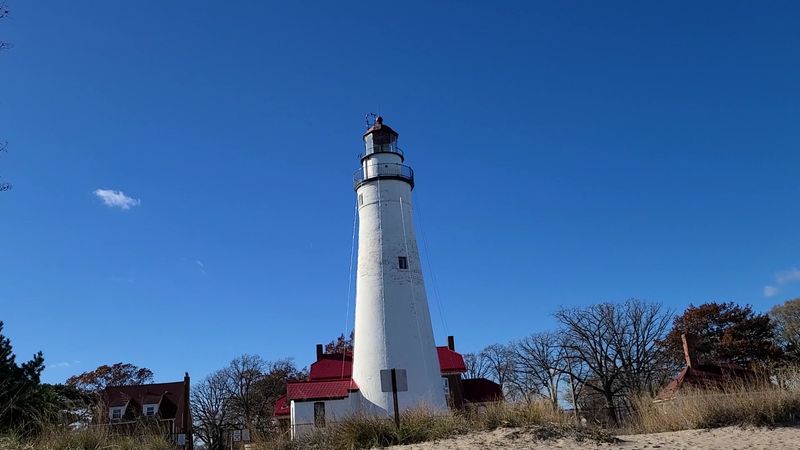
One of the most satisfying things here is that preservation is visible, not hidden behind vague heritage language. Extensive restoration work completed in 2022 returned the Lantern Room, Watch Room, and Landing areas to their original historic appearance. That matters because these are the spaces where the lighthouse shifts from symbol back into equipment.
I found the restored upper sections especially clarifying. Clean lines, purposeful materials, and tighter historical accuracy make it easier to imagine the station in service, rather than as a generalized old building. Good restoration sharpens meaning.
If you visit with someone who thinks preservation is mostly cosmetic, bring them here. The work helps explain how a lighthouse functioned, not just how it photographed.
Remember That The Light Is Still Active
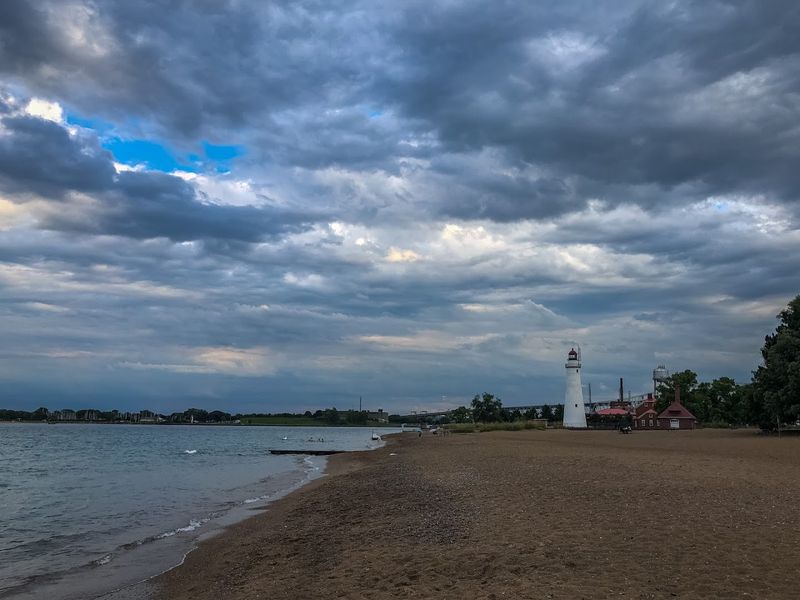
Many historic lighthouses feel retired even when they are beautifully maintained. Fort Gratiot is different because it remains an active navigational aid, now using a modern DCB-224 aero beacon. That single fact changes the tone of the place from memorial to ongoing utility.
The active status gives the tower a faintly unsentimental energy. It has a museum dimension, certainly, but it also still participates in the waterway it was built to serve. I always appreciate historic sites that have not been reduced to pure atmosphere.
Ask about the light technology if tours allow time for questions. Understanding the shift from Fresnel lens era to modern beacon makes the site’s long continuity much easier to grasp.
Tours Add Texture That The Exterior Cannot
The grounds are attractive on their own, but the site opens up when you take a tour. Since 2012, Port Huron Museums has partnered to provide public tours and tower climbs, which means interpretation is part of the experience rather than an afterthought. The result is a visit with narrative shape.
That structure helps because Fort Gratiot is rich in details that are easy to miss alone. Keeper life, changing light technology, building functions, and the relationship to local maritime traffic all become clearer when explained in sequence. The place starts talking back.
Check hours and tour availability before you go. If interiors are open, the visit becomes much more than a quick photo stop on the Lake Huron shore.
Use The Lakeshore Setting To Pace Your Visit
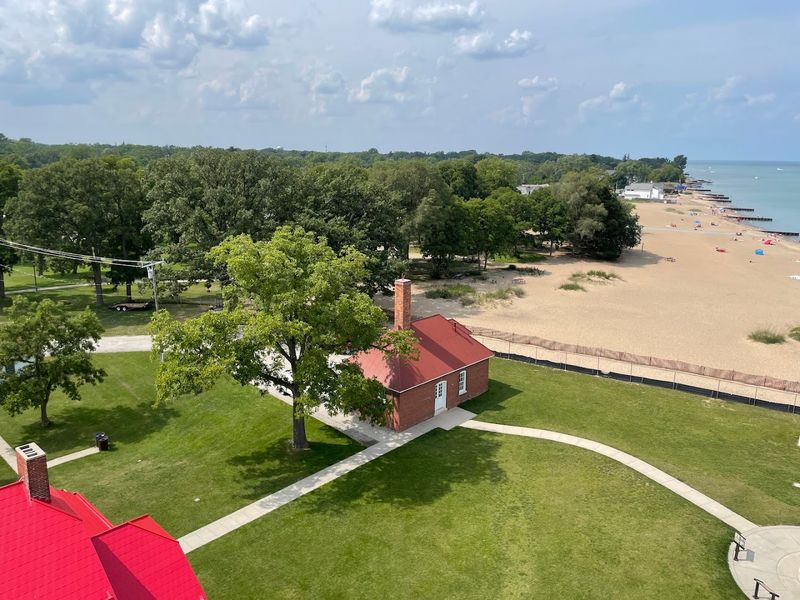
One pleasant oddity of Fort Gratiot is how seamlessly serious history meets ordinary shoreline leisure. The lighthouse sits beside a public beach area, so the day can move from keeper houses and tower stairs to water, stones, and wind off Lake Huron without feeling disjointed.
Port Huron gets to be both educational and easygoing at once. I liked using the beach adjacency as a pacing tool. After concentrating on dates, restorations, and the climb, a shoreline walk made the site feel less like a checklist and more like part of local daily life. That balance is unusual.
Plan for both modes. Even if your focus is history, the nearby lakeshore gives your visit room to breathe and settle.
Go With Respect For Weather, Scale, And Time
The Great Lakes are excellent at correcting romantic assumptions, and this lighthouse embodies that lesson. Wind, heat, glare, and sudden weather shifts all feel plausible here, which makes the station’s long survival more impressive. You are standing at a place shaped by storms, shipping pressure, and repeated adaptation.
Because of that, the best approach is unhurried respect. Let the tower be tall, let the grounds take time, and let the practical history matter as much as the photogenic angles. Fort Gratiot rewards attention more than speed.
Come prepared for conditions, especially in warmer weather when the climb can feel hotter than expected. The visit is not difficult, but it is better when treated as a real place rather than a quick backdrop.