
This Traverse City Michigan Tavern Still Draws Crowds After More Than A Century
I am suspicious of restaurants that call themselves historic too loudly, because sometimes that just means old photos, creaky floors, and average fries.
This place feels different. It has the confidence of a room that has watched generations pass through, argue over dinner, celebrate small victories, and keep coming back anyway. In Traverse City’s Slabtown neighborhood, the age is not a costume.
It is in the ceiling, the rituals, the comfort food, and the slightly odd traditions that make a meal feel like you have wandered into someone else’s family memory.
This Michigan tavern makes history feel deliciously usable, with Slabtown character, steady American comfort food, local rituals, and a dining room that still knows its job.
That is what I like about it. Nothing feels desperate to impress you. It just keeps being itself, which is harder than it sounds, and somehow that becomes the most convincing argument to stay.
The Age Is Real, And The Room Lets You Feel It
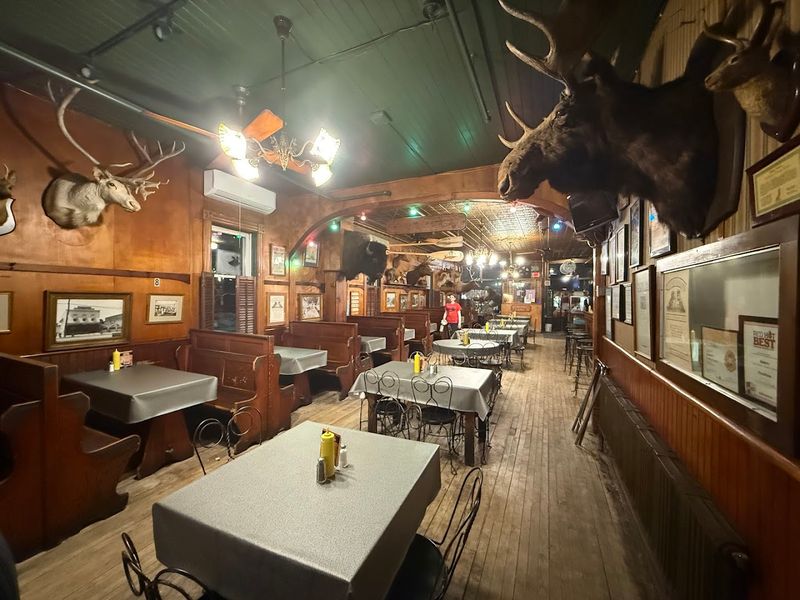
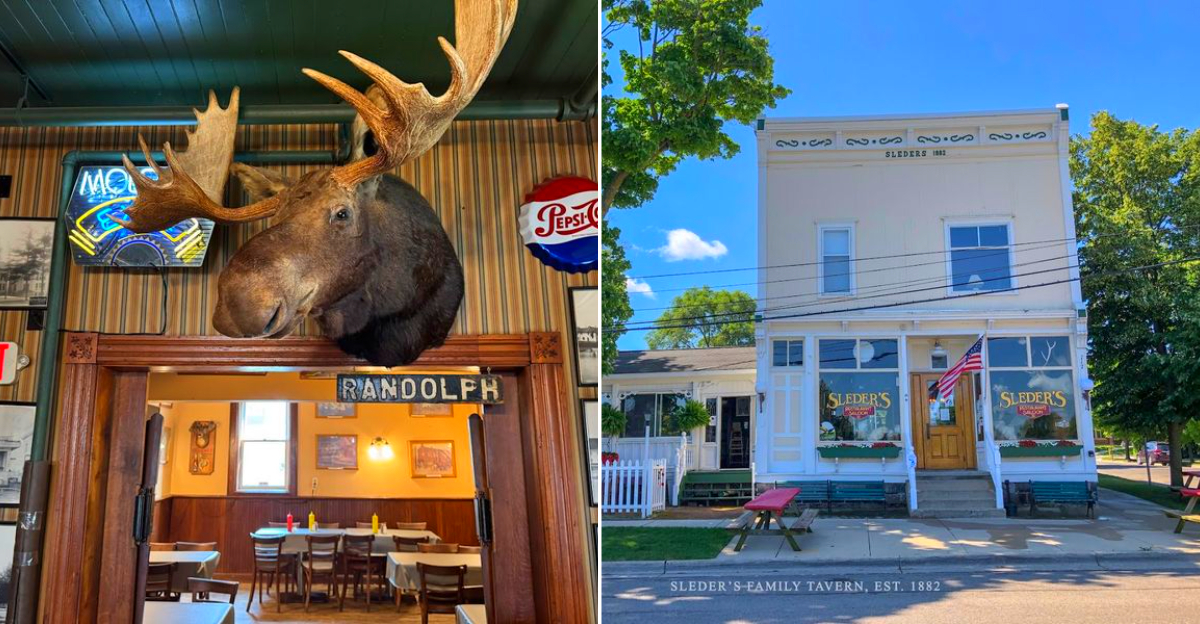
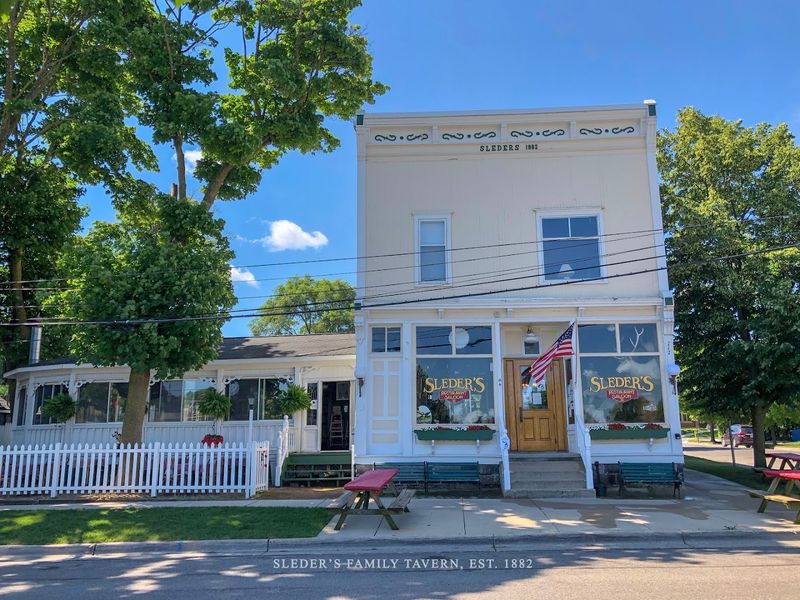
The first thing that lands is not the menu but the room itself. Sleder’s, established in 1882, is recognized as Michigan’s oldest continuously operated restaurant, and the interior wears that fact without turning theatrical.
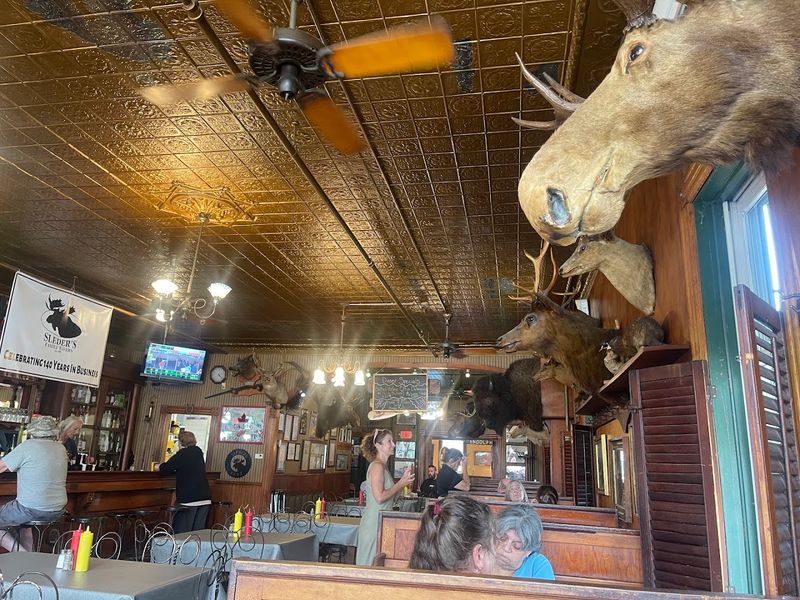
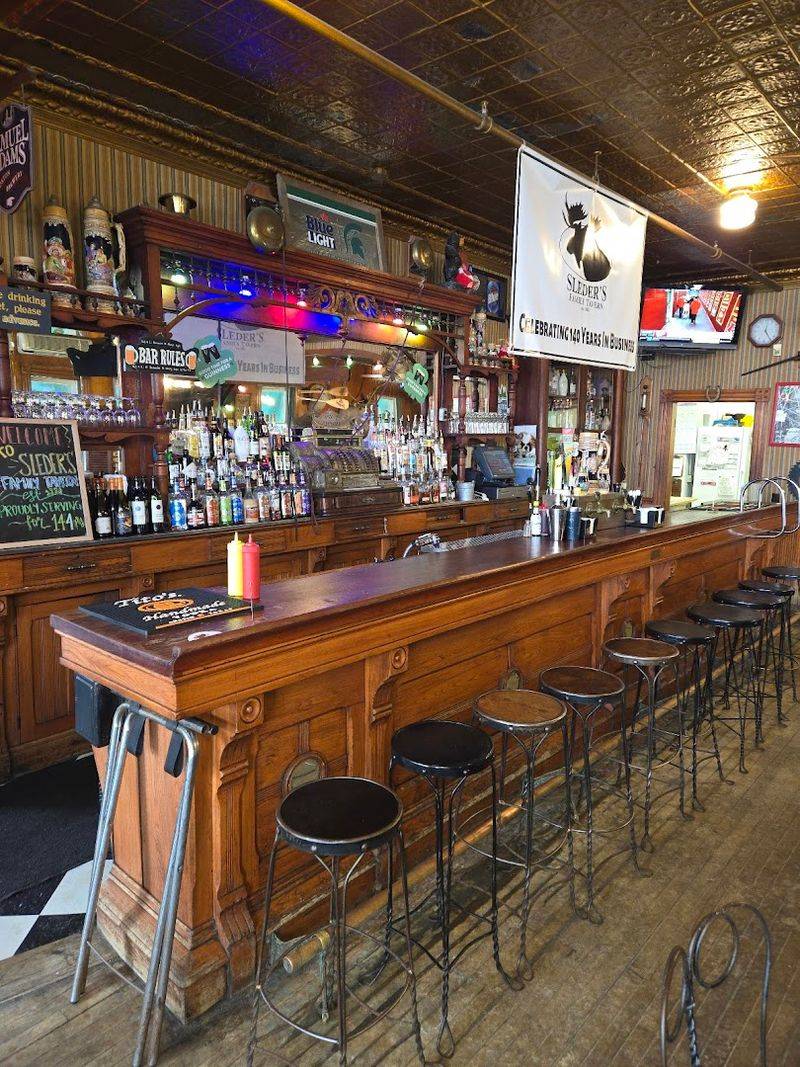
The stamped tin ceiling, antique fixtures, old booths, round oak tables, and long mahogany bar give the space a texture newer places spend money trying to imitate. That history matters because it shapes the meal before anything arrives.
A burger and fries in a generic dining room can feel ordinary, but here the setting quietly frames simple food as part of a longer local tradition. Slabtown was once a working neighborhood, and the tavern began as a practical place to gather after the day’s labor.
If you care about atmosphere with actual roots, this is the first reason the crowds still show up.
How To Get To This Historic Traverse City Tavern
Sleder’s Family Tavern sits at 717 Randolph Street in Traverse City, just west of downtown in the historic Slabtown neighborhood. It is close enough to the main downtown area that the trip feels simple, but far enough away to give the place its own old-neighborhood character before you even step inside.
If you are coming from Front Street, the drive is quick and straightforward, especially compared with busier waterfront stops. Randolph Street has that calmer, local feel, so arriving here feels less like chasing a tourist attraction and more like finding a long-running Traverse City institution tucked into everyday life.
The easiest move is to plan ahead for parking, especially during busy dining hours or peak travel season. Once you arrive, take a second to notice the older homes, the neighborhood scale, and the lived-in setting, because that approach is part of the appeal.
Randolph The Moose Gives The Place Its Own Ritual
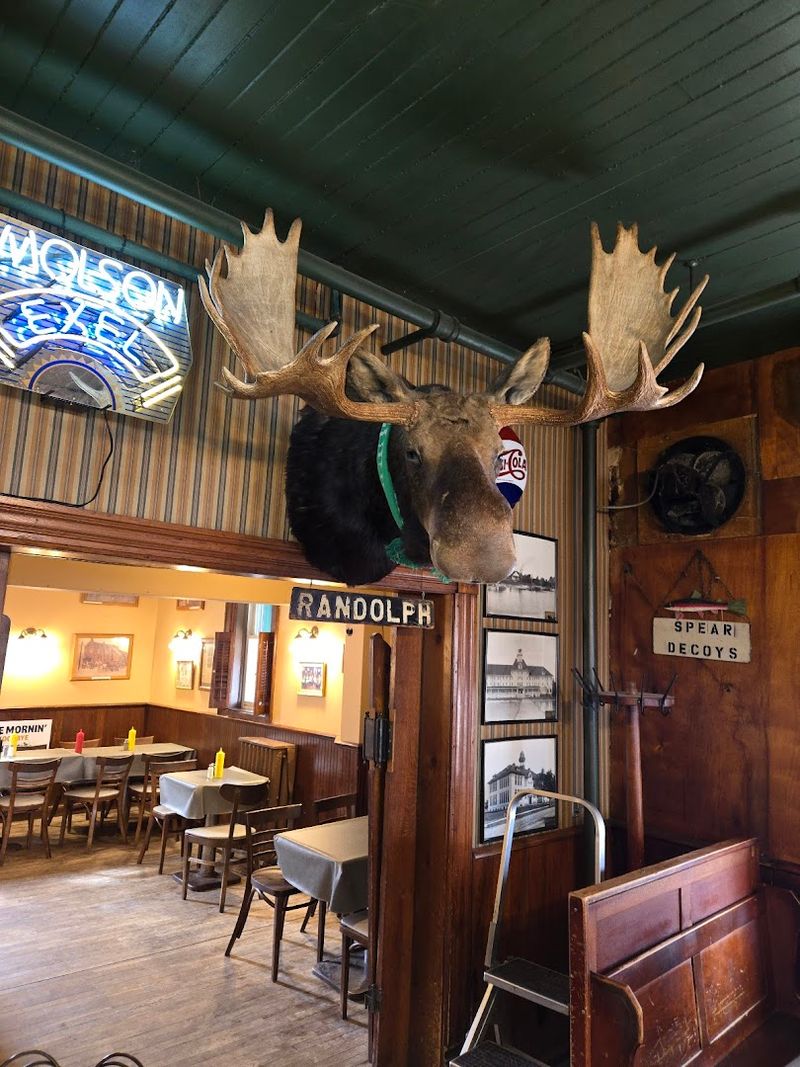
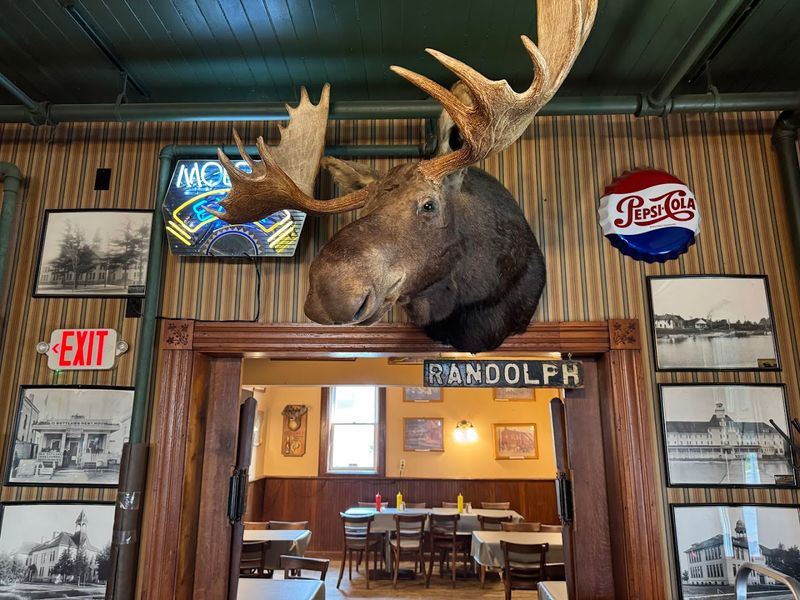
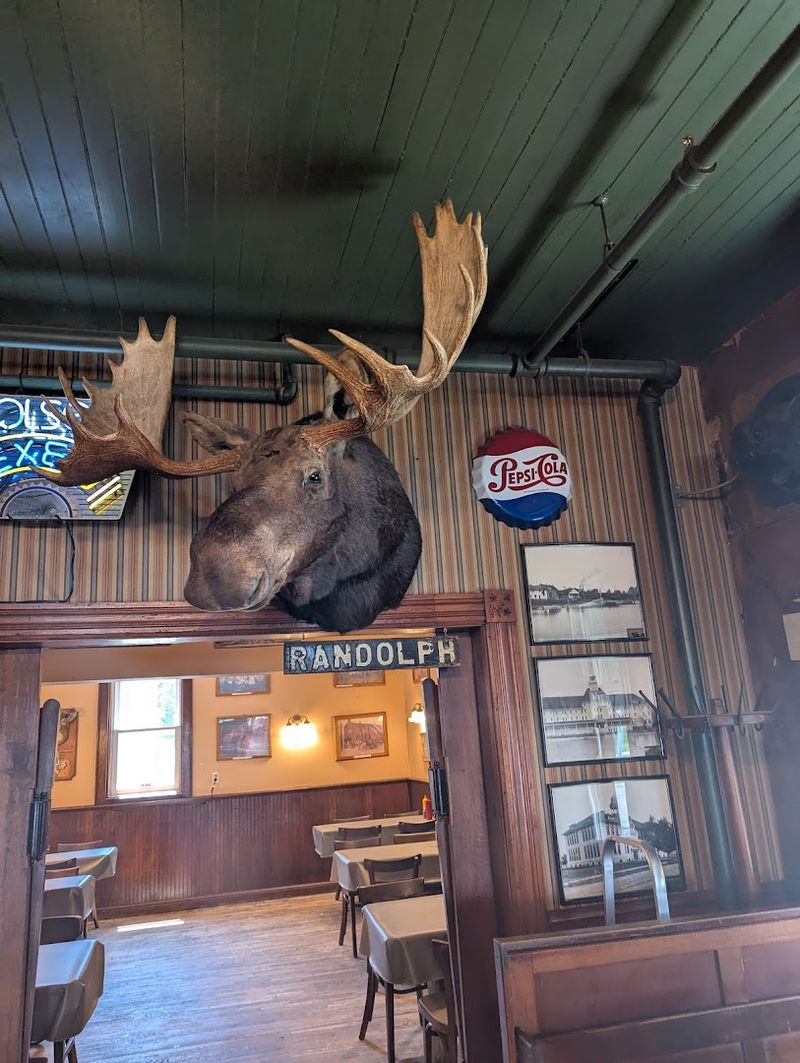
Every enduring restaurant seems to keep one odd little custom alive, and Sleder’s has a famously photogenic one. Randolph the moose hangs over the entrance to the back room, and visitors are invited to kiss the moose for luck.
It is delightfully strange, a little silly, and exactly specific enough to become memorable. The best part is that the ritual suits the room instead of distracting from it. In a place already filled with old photos, worn wood, and accumulated history, Randolph feels less like a gimmick than a house tradition that simply stuck.
That difference matters. People remember meals for many reasons, but shared rituals give a restaurant social glue. Even if you arrive mainly for lunch, the moose turns an ordinary stop into a story worth repeating later, which helps explain the continuing crowds.
The Fish Has Hometown Staying Power
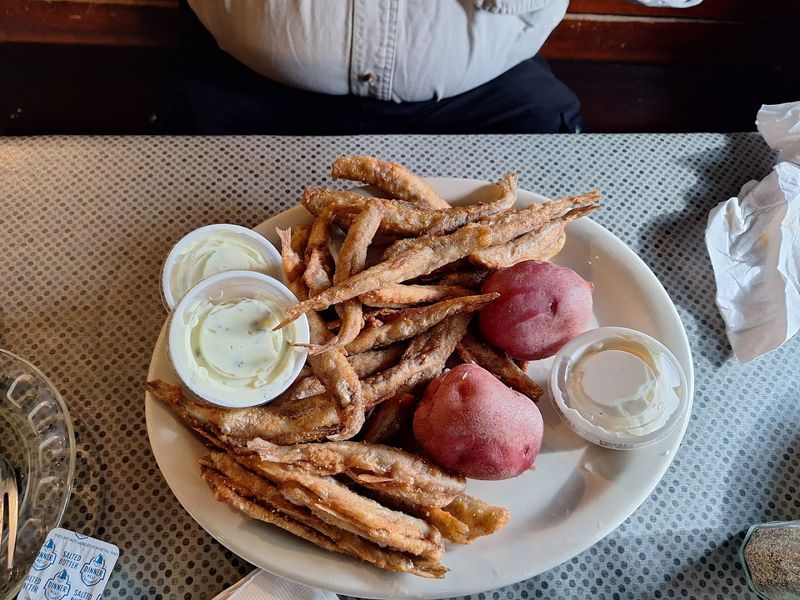
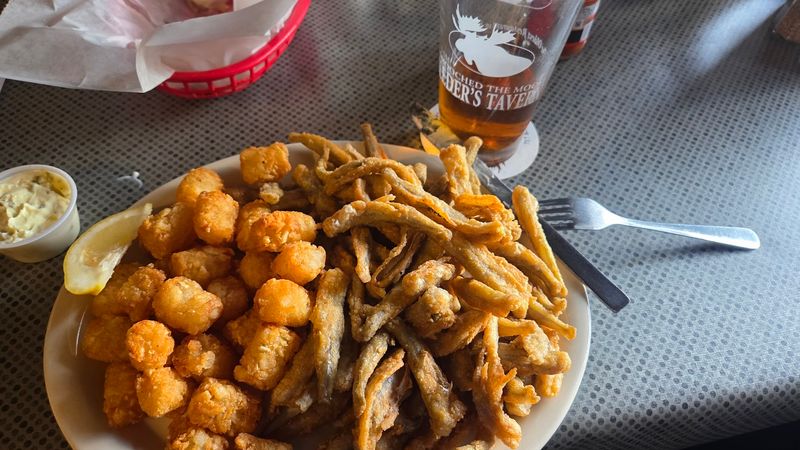
For a place with this much history, the food that gets talked about most often is refreshingly plainspoken. Sleder’s is especially known for its fish fry, with cod, smelt, and perch regularly singled out, and that matters in northern Michigan where fish on a menu needs to feel like more than filler.
These are the kinds of dishes that invite regulars, not just tourists collecting old addresses. What keeps that appeal going is the tavern’s commitment to hearty portions and straightforward preparation. When a restaurant has been feeding people for generations, abundance becomes part of the promise.
You notice it in baskets, platters, and the general sense that lunch here should actually carry you through the afternoon. If a crowd still forms around old-fashioned fish and fries, it is because the craving itself never went out of style.
The Ham And Bean Soup Tells You What Kind Of Place This Is
Some signature dishes announce themselves loudly, while others quietly reveal a restaurant’s values. Sleder’s famous ham and bean soup belongs to the second category. It is practical, warming, and deeply in character for a tavern born in a working-class neighborhood, where comfort would have mattered more than culinary showmanship.
That kind of dish also explains why older places retain loyalty. A bowl of soup with real staying power makes the room feel useful, not preserved behind glass.
Even when the menu includes burgers, ribs, chicken, and baskets, soup can still be the emotional center because it carries the oldest hospitality code of all. I like that this signature is not flashy. It suggests a kitchen interested in continuity, the sort of place where returning for something familiar is not a failure of imagination but the entire point of going back.
Slabtown History Still Shapes The Mood
Sleder’s makes the most sense when you remember where it began. Founded by Bohemian immigrant Vencil Sleder in the heart of Slabtown, it served a working-class area where people needed a place to gather after long days.
That origin story is not decorative trivia. It still helps explain the tavern’s directness, warmth, and lack of fuss. The atmosphere feels social rather than curated, which is harder to fake than reclaimed wood or vintage signs.
There is a useful sturdiness to the place, as if the room expects conversation, regulars, families, and the occasional celebratory table without needing to rebrand itself for each one.
When crowds keep returning to a century-old restaurant, neighborhood memory usually has something to do with it. Even first-time visitors can sense that Sleder’s belongs to Traverse City in a way chain polish never could.
Good Will Still Feels Like Part Of The Service
Restaurants last this long only if the service philosophy survives along with the building. Sleder’s has long been associated with the saying “good will is good business,” a phrase tied to its early owners, and the line neatly captures why the place still feels welcoming rather than merely historic.
Hospitality here is part of the institution, not a decorative afterthought. That matters especially in an old room, because history can either invite people in or make them feel like intruders.
Sleder’s generally lands on the comfortable side of that line. Families, locals, and out-of-towners all fit the space, which is one reason the crowd remains broad instead of niche.
Plenty of restaurants can offer a memorable ceiling or a famous relic on the wall. Fewer keep alive the softer tradition of making guests feel at ease, and that is often what builds the longest loyalty.
The Building Keeps Its Quirks Instead Of Sanding Them Away
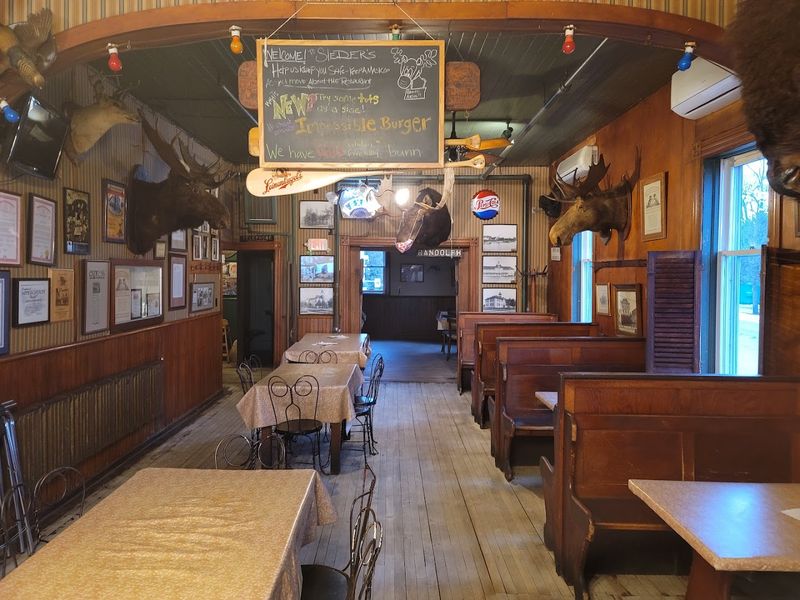
Not every old restaurant improves by looking newly polished, and Sleder’s seems to understand that. Its antique details, old photographs, century-old tables, ice cream parlor chairs, and weathered wooden surfaces create a room that feels accumulated rather than staged.
The result is imperfect, but it is also vivid. That lived-in character changes how the crowd behaves. People settle in, point things out, trade bits of local history, and absorb the place as much as the meal. The tavern becomes a shared object of attention, which is useful social energy for any long-running restaurant.
There is also something honest about a landmark that still looks like it has been used. Too much restoration can flatten a place into museum neatness. Sleder’s keeps enough of its quirks visible to remind you that continuity is messier, and far more interesting, than a perfect makeover.
Its Resilience Became Part Of The Legend
A century-old restaurant earns attention partly by surviving the eras that should have knocked it out. During Michigan’s Prohibition period, Sleder’s stayed open, and that resilience is now part of its local legend. The exact details belong to the tavern’s history, but the larger point is simple: this place adapted when it had to, and continuity became part of its identity.
That history adds weight to an ordinary lunch. You are not just eating in an old building that happened to remain standing. You are stepping into a business that found ways to endure shifting laws, ownership changes, tastes, and generations of customers while holding onto its place in town.
I find that especially compelling because resilience often leaves traces in a room. At Sleder’s, the stubborn persistence feels built into the walls, and people respond to that kind of earned longevity.
It Works For Groups Without Losing Its Personality
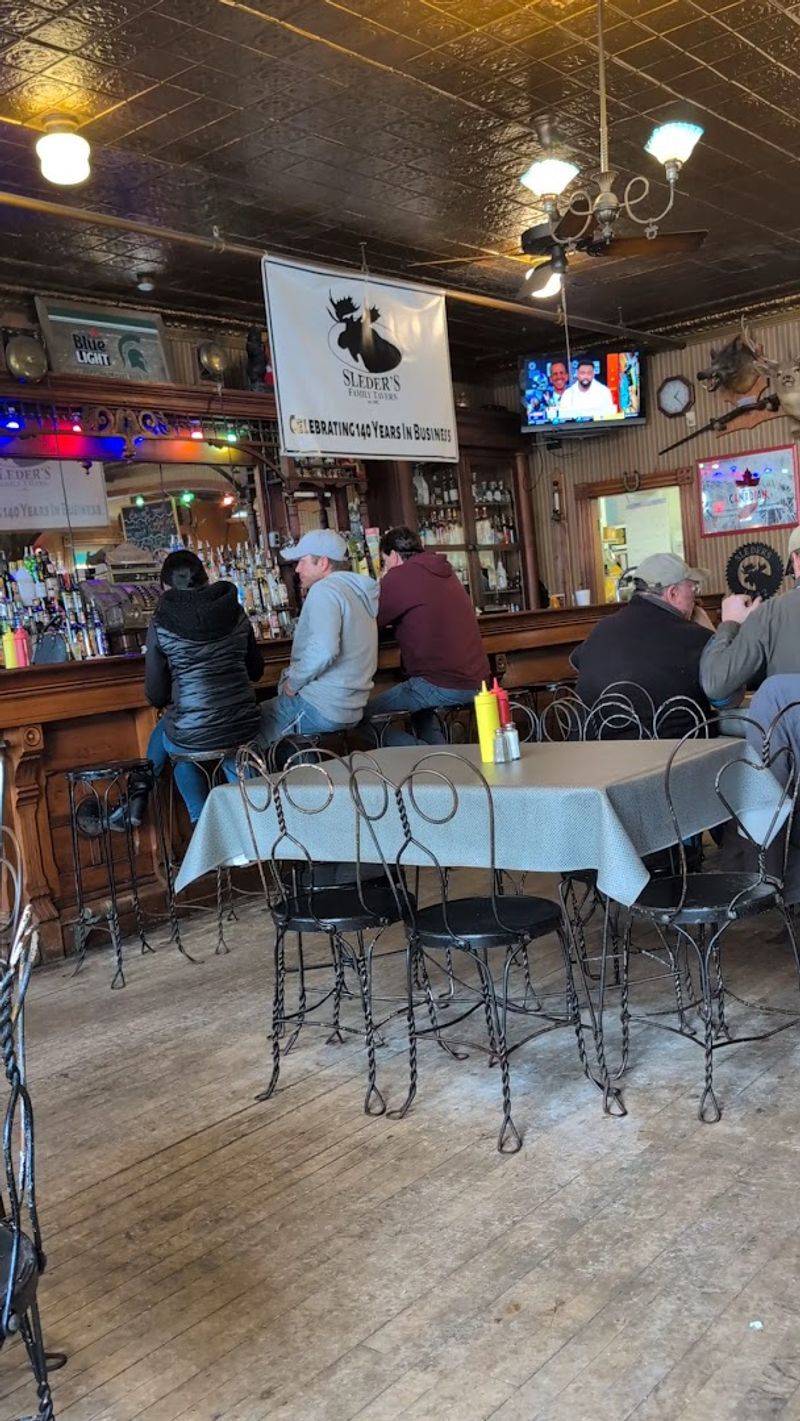
Some landmarks are best in theory but awkward in practice once you arrive with family or a mixed-age group. Sleder’s avoids that trap. It is known as a family-friendly destination, with a kid-friendly menu and ample parking, so the historic atmosphere does not come at the expense of usefulness.
That practical side keeps a restaurant in regular circulation. The room also has enough personality to make gatherings feel distinctive.
Birthdays, lunch stops, and casual dinners gain a little extra texture when they happen beneath a tin ceiling or near old memorabilia instead of inside a generic suburban box. History gives the event shape.
What keeps the crowds steady is that Sleder’s can be both a local landmark and an easy choice. A place that works for ordinary plans tends to last longer than one reserved only for special occasions, however charming those occasions might be.
The Back Room History Says More Than You Might Expect
One of the more revealing pieces of Sleder’s history has nothing to do with a recipe. Before the 1930s, women were restricted to a separate back room with its own entrance, and later owner Louie Sleder opened the spaces up into a more integrated social environment.
It is an important reminder that even beloved institutions carry the habits of their era. That change matters because it shows the tavern evolving without severing itself from the past.
The back room still holds part of the place’s identity, especially with Randolph the moose hanging nearby, but its meaning is larger once you know the social history attached to it.
Crowds keep coming to restaurants that feel layered, and Sleder’s certainly qualifies. The building tells stories about food, community, and changing public life all at once, which gives a visit more depth than nostalgia alone ever could.