
This Brooklyn, New York Restaurant Makes Dinner Feel Like A Wood-Fired Mediterranean Celebration
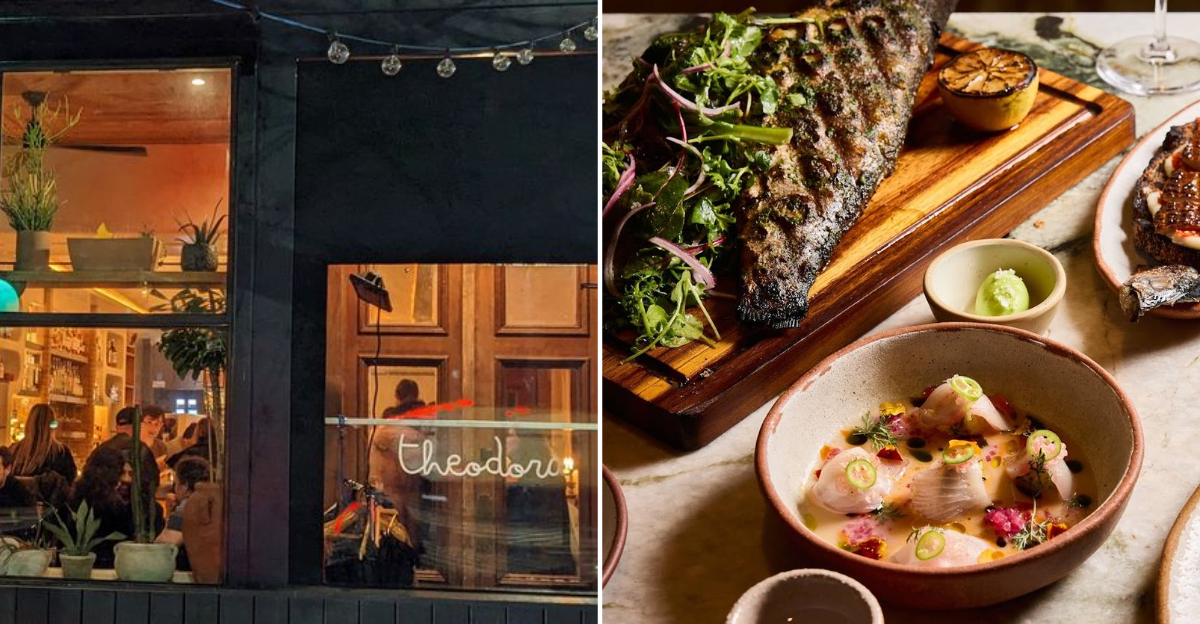
One bite, and you’re gone. Not metaphorically, properly gone.
Back to something older, warmer, familiar in a way you can’t quite place. The kind of feeling you don’t expect from a night out in Brooklyn, New York.
You walk in and it hits you first: fire. Real fire. Wood smoke curling through the room like it’s part of the design. It smells ancient.
Intentional. Like someone rediscovered the obvious. Fire makes food better. This place isn’t chasing trends. It’s chasing truth. Open flame. Sharp ingredients. No shortcuts.
The menu leans into the sea, into seasons, into bold flavors that stop conversation mid-sentence. Dry-aged fish.
Charred bread. Desserts kissed by embers. Nothing feels extra. Everything feels essential.
Tables disappear fast. For good reason.
If you get in, don’t overthink it. Just show up hungry.
The Wood-Fired Cooking Philosophy
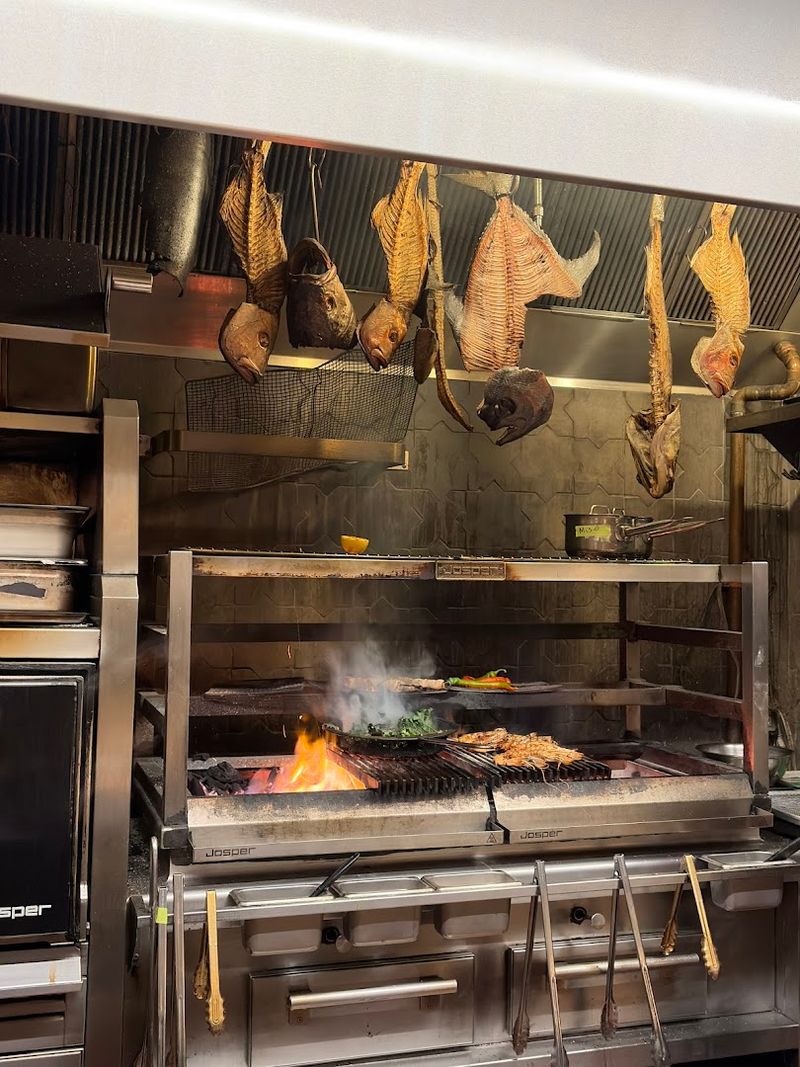
Fire is the oldest cooking tool on the planet, and Theodora treats it like the star of the show. Every dish that comes out of this kitchen carries the fingerprint of an open flame, whether it is a direct char or a subtle smokiness absorbed from the wood-fired oven humming in the open kitchen.
The result is food that tastes alive in a way that gas burners simply cannot replicate.
The wood smoke does not overpower the ingredients. Instead, it amplifies them.
Greens become earthy and bold.
Proteins develop a crust that locks in flavor. Even the oil drizzled over the hummus gets a quick pass through the fire, adding a depth that makes you rethink every dip you have eaten before.
That detail alone is the kind of thing that separates a good restaurant from a genuinely great one.
Watching the open kitchen in action is half the fun. The cooks move with confidence around the flames, and the rhythm of the kitchen feels almost theatrical.
Sitting at the counter gives you a front-row seat to the whole production. Wood-fired cooking at Theodora is not a technique, it is a commitment, and every plate arriving at the table makes that commitment feel completely worth it.
The Address That Started A Brooklyn Obsession
Hidden into the Fort Greene neighborhood at 7 Greene Ave, Brooklyn, NY 11238, Theodora sits in a part of Brooklyn that already knows good food. But even in a neighborhood full of solid spots, this restaurant manages to stand out in a way that gets people talking.
The building itself has a warm, understated presence that does not scream for attention, which somehow makes it more appealing.
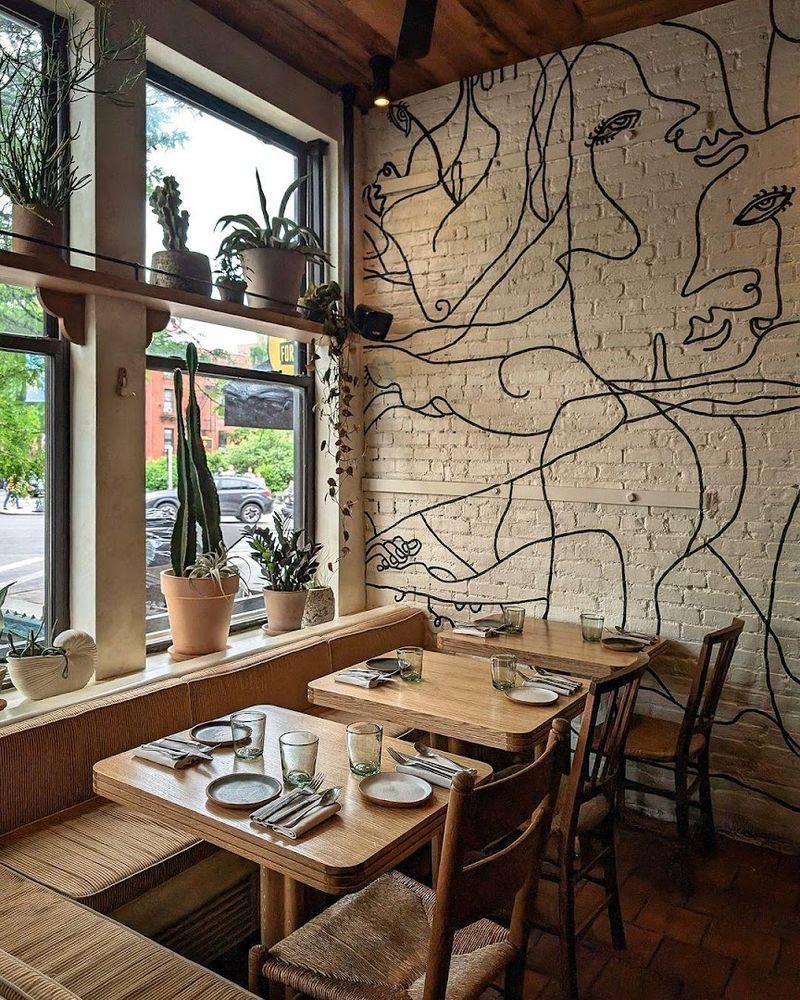
Inside, the design feels like someone took the Mediterranean coast and filtered it through a Brooklyn sensibility. Warm whites and beiges cover the walls.
Pendant lighting creates soft pools of warmth across the room. Curved booths and arched seating areas give the space an architectural personality that feels both modern and timeless.
The scent of wood smoke lingers in the air from the moment you walk in, setting expectations high before a single dish arrives.
The restaurant seats around 80 guests across the bar, the main dining room, and a small counter that overlooks the kitchen.
Each section offers a slightly different experience. The counter is for people who want to feel the heat of the kitchen and watch the whole operation unfold.
The booths are for settling in for a long, leisurely meal. No matter where you sit, the atmosphere wraps around you like a warm evening on a Spanish coastline.
Dry-Aged Fish That Will Reframe Your Entire Seafood Worldview
Most people associate dry-aging with steak, so the first time you hear that Theodora dry-ages fish, your brain might need a moment to catch up.
The technique works by drawing out moisture from the fish over a controlled period, concentrating the natural flavors and creating a texture that is remarkably different from fresh-caught seafood. The skin becomes almost glass-like when cooked, shattering into crispy perfection with every bite.
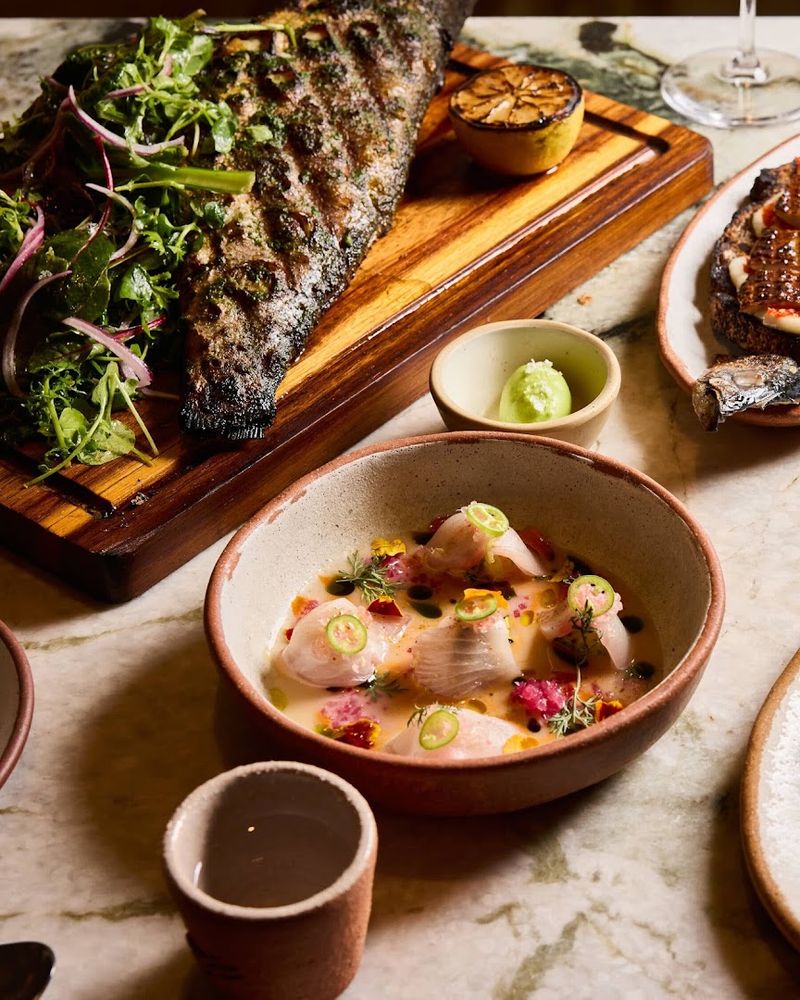
The dry-aged branzino is the dish that people come back for repeatedly. Infused with rosemary and finished with salmoriglio, it arrives at the table looking deceptively simple and then delivers a flavor intensity that is anything but.
The black cod with miso beurre blanc is another standout, layering umami on top of umami until the result feels almost indulgent. Both dishes showcase why the dry-aging program at Theodora is considered a point of serious culinary pride.
Chef clearly believes that fish deserves the same level of craft and attention that fine meat cookery has always received.
The dry-aging refrigerators are visible from the dining room, a quiet reminder that the process is always happening, always evolving. Seafood lovers who think they have tried everything should make a reservation at Theodora as quickly as possible, because this is genuinely new territory worth exploring.
The Pita And Bread Program
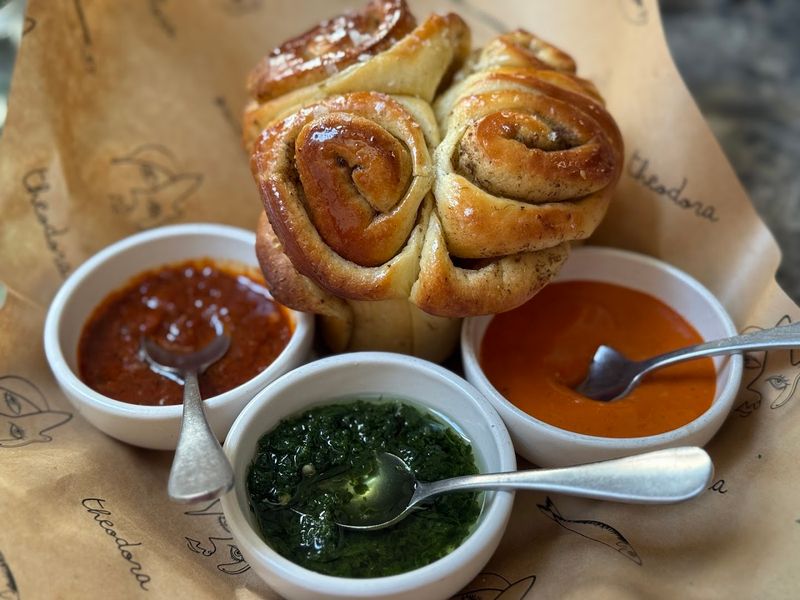
Bread at most restaurants is the thing you eat while you wait for the real food to arrive. At Theodora, it IS the real food, or at least it competes fiercely for that title.
The wood-fired pita emerges from the oven with a blistered, chewy exterior and a soft interior that pulls apart in a deeply satisfying way. Paired with the monkfish liver nduja hummus, it becomes one of those combinations that rewires your expectations of what a simple bread course can be.
The Za’atar Kubaneh is another bread worth knowing about. Warm, fluffy, and fragrant with za’atar, it comes with schug, tomato aioli, and harissa on the side.
Each condiment adds a different dimension, and the bread itself is rich enough to anchor all of them without getting lost. It is the kind of dish that makes the table go quiet for a few minutes while everyone figures out their favorite combination.
The sourdough with whipped ricotta, brown butter, honey, and sage is the sleeper hit of the bread lineup. It sounds simple, and in execution it is, but the quality of every component is so high that the simplicity becomes the point.
Across the street from Theodora sits Thea, a sister bakery where you can actually buy the bread to take home. That detail might be the most Brooklyn thing about this entire restaurant.
Signature Dishes That Keep People Coming Back For More
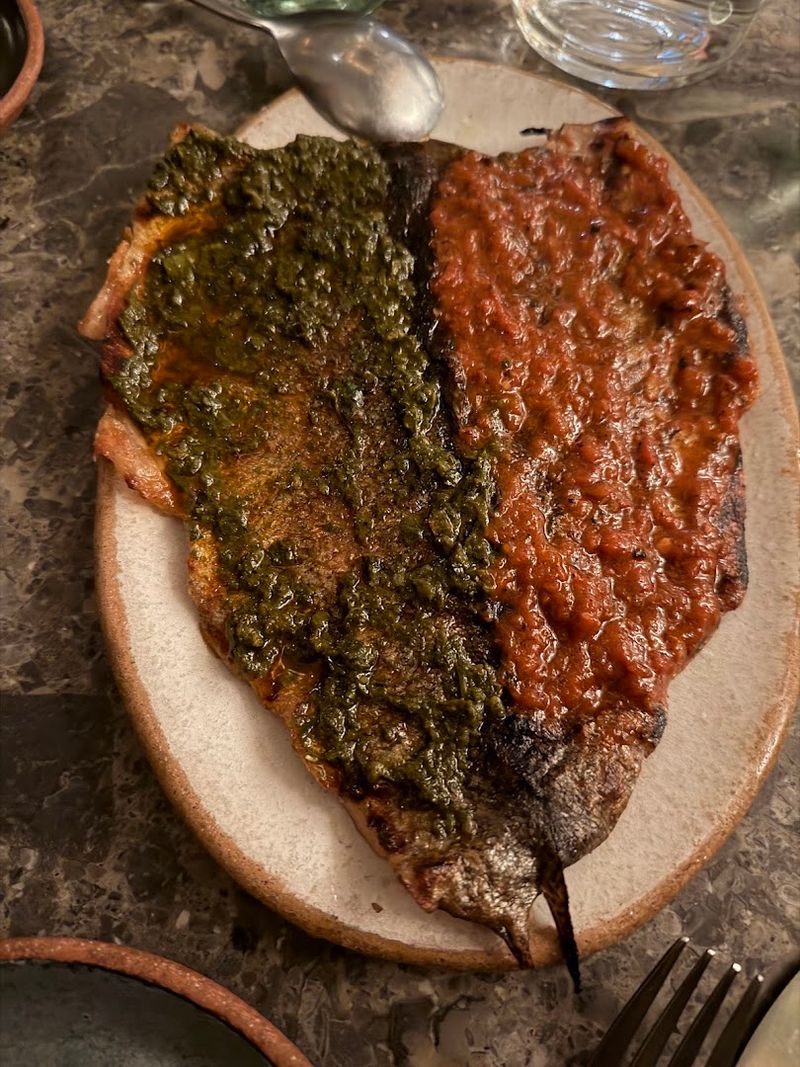
The menu at Theodora reads like a love letter to the Mediterranean, but with enough unexpected twists to keep things exciting. The whole butterflied trout is the dish that shows up in almost every conversation about this restaurant.
Cooked Mexico City style with harissa on one side and chermoula on the other, it sits on a base of pil pil sauce that ties everything together in a rich, silky finish. The crispy skin from the dry-aging process adds a textural element that makes each bite feel complete.
Octopus charred over the wood fire arrives with crispy potatoes and a smoky depth that the open flame brings to every element of the dish.
The striped bass ceviche is bright and citrusy, a refreshing counterpoint to the heavier, fire-kissed plates. Wood-fired greens might sound like a side thought, but they carry enough character to hold their own as a centerpiece.
The Calabrian chili butter situation happening in that cabbage dish is something worth planning your meal around.
Hiramasa crudo, yellowfin tuna, salmon king crudo, and mackerel toast round out a menu that rewards adventurous ordering.
The mackerel toast in particular surprises people who assume they do not love mackerel. Served on sourdough made fresh in-house, it converts skeptics into regulars.
Every dish at Theodora feels like a considered decision rather than a menu filler.
Desserts That Prove The Meal Should Never End Early
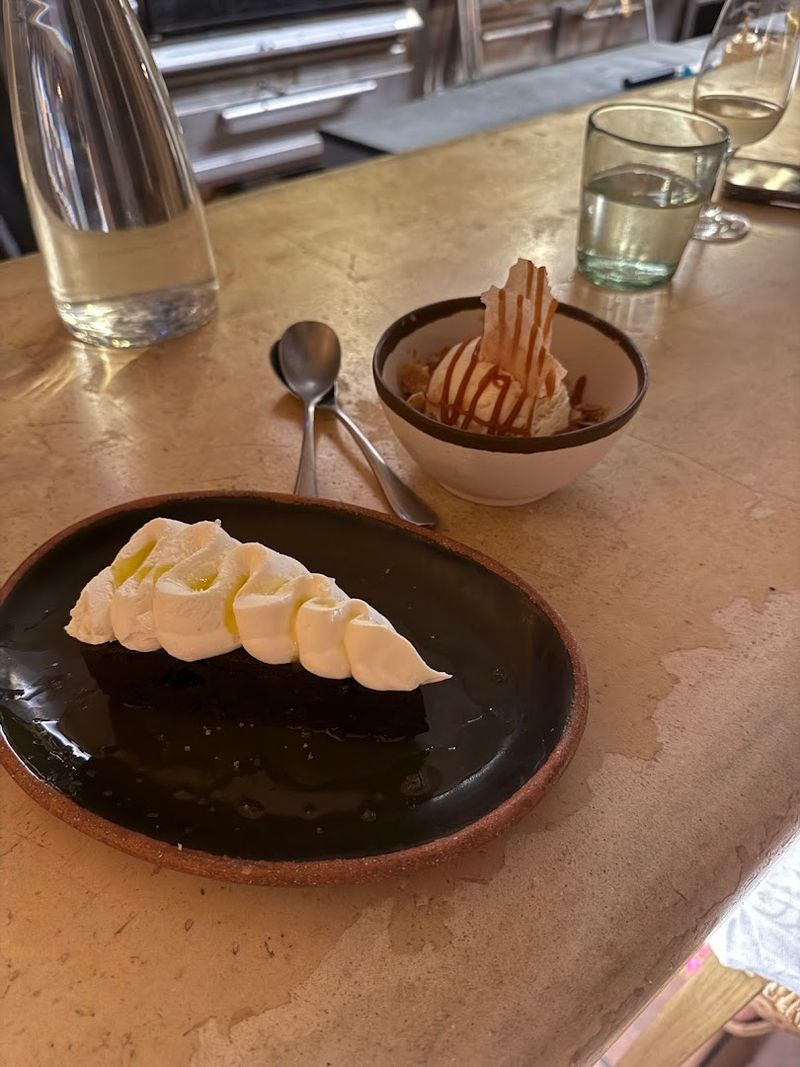
Skipping dessert at Theodora would be a genuine mistake, and not just a small one. The pastry program here is built with the same intention and craft that defines the savory menu.
The Basque cheesecake arrives with a deeply caramelized exterior and a whey caramel sauce that pools around the base. Flaky sea salt is scattered across the top, and the contrast between the salty, sweet, and slightly bitter notes is exactly as satisfying as it sounds.
The baklava sundae with tahini ice cream is the kind of dessert that makes you reconsider everything you thought you knew about baklava.
The tahini ice cream is nutty and complex, and the combination with the flaky, syrupy baklava creates a textural experience that is hard to stop eating. It manages to feel both familiar and completely original at the same time, which is a difficult balance to achieve.
Baked Alaska, finished in the wood-fired oven, brings the whole fire philosophy full circle in the most theatrical way possible. The flourless chocolate cake with mascarpone and olive oil is rich without being heavy, and the whipped feta honey toast offers something lighter for those who want a sweet finish without committing to a full dessert.
Theodora understands that the last bite of a meal shapes how you remember the entire evening, and these desserts make sure that memory is a good one.
The Atmosphere That Makes You Forget You Are In Brooklyn
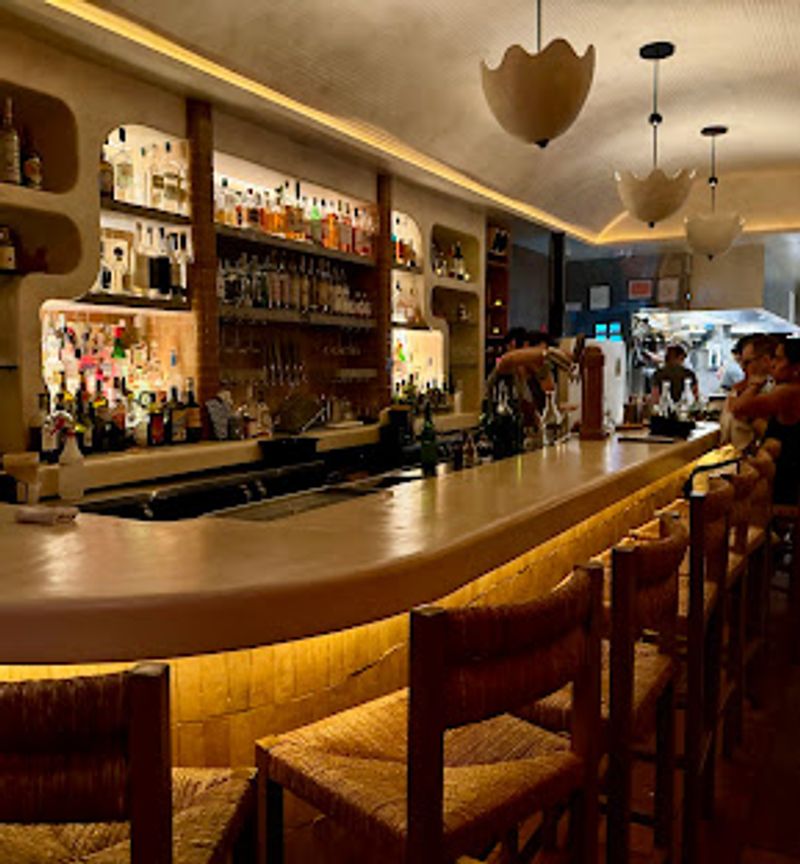
Walking into Theodora feels like the city outside suddenly gets quieter. The warm beige palette, the candlelight, the arched seating areas, and the pendant lights overhead create a space that feels genuinely transportive.
Multiple guests have described it as stepping into Spain in the middle of New York, which is a bold claim that the room somehow manages to earn every single night it opens.
The open kitchen is not just a design choice. It is a functional part of the experience.
Watching the cooks work around the wood-fired ovens, plating dishes with precision and moving in a coordinated rhythm, adds an energy to the room that makes dinner feel like an event.
The dry-aging refrigerators visible from the dining area serve as a quiet reminder that the work happening here goes far beyond what shows up on the plate.
The restaurant opens at 5 PM Tuesday through Sunday, reservations open 30 days in advance and fill up quickly, though a handful of bar seats are kept for walk-ins.
The space accommodates around 80 guests across the bar, dining room, and kitchen counter. Whether you land a curved booth in the center of the room or a stool at the counter with the cooks, the atmosphere at Theodora makes one thing clear: this is a place built for people who believe dinner is worth celebrating.
Why Getting A Reservation Is Absolutely Worth The Effort
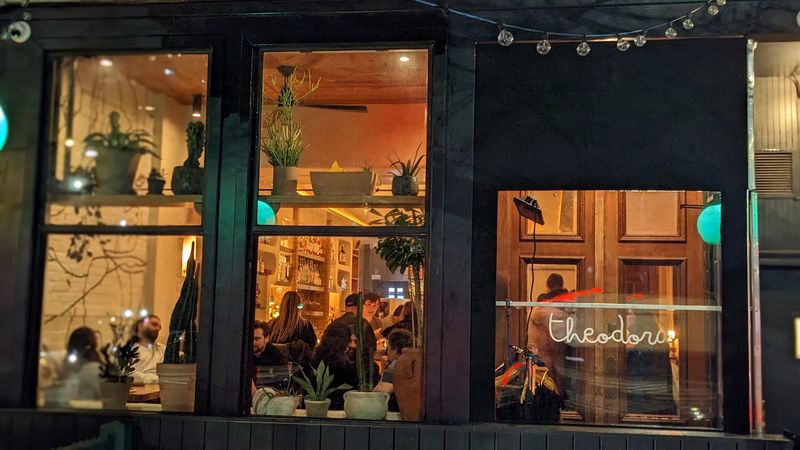
Getting a table at Theodora is famously difficult, and that reputation is entirely earned. Reservations open 30 days in advance, and they disappear fast.
People have described the booking process as winning the lottery, which sounds like an exaggeration until you try it yourself and realize they were not joking.
The demand says everything about how the neighborhood and the broader New York dining community feel about what is happening at 7 Greene Ave.
The effort is worth it because the meal delivers on every expectation the hype creates. That is rarer than it sounds.
Many highly anticipated restaurants stumble under the weight of their own buzz, but Theodora seems to thrive on it.
The kitchen operates with a consistency that makes each visit feel as considered as the last, which is why people who manage to get a table often book again before they leave for the night.
If the reservation calendar feels impossible, the bar offers some walk-in availability, and sitting there with a plate of wood-fired greens and a bowl of dry-aged branzino is not exactly a consolation prize.
Theodora proves that some restaurants are worth planning around, worth adjusting a schedule for, and worth returning to as often as reservations allow.
The question is not whether a meal here is worth the chase. The question is how soon you can make it back after the first one.