
This Hidden Michigan Cairn Holds Stones From Every County And A Sealed Time Capsule
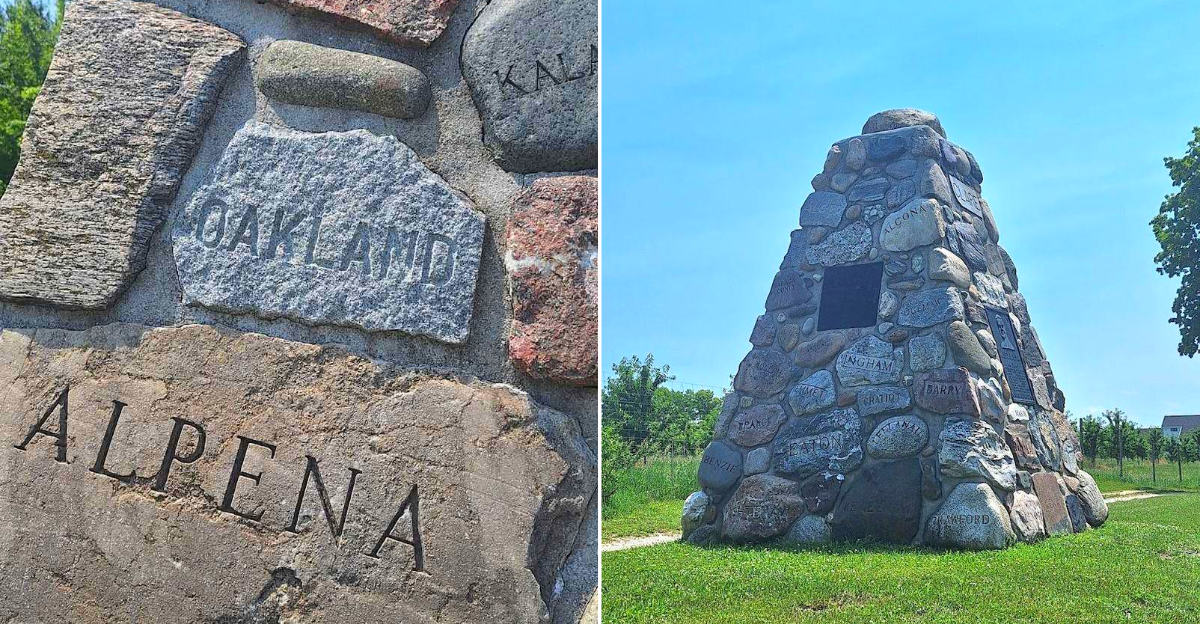
Roadside history is best when it looks like nothing at first. That is the trick here. You pull over in Kewadin expecting a quick glance, maybe one respectful nod, and then the little monument starts behaving like a puzzle box.
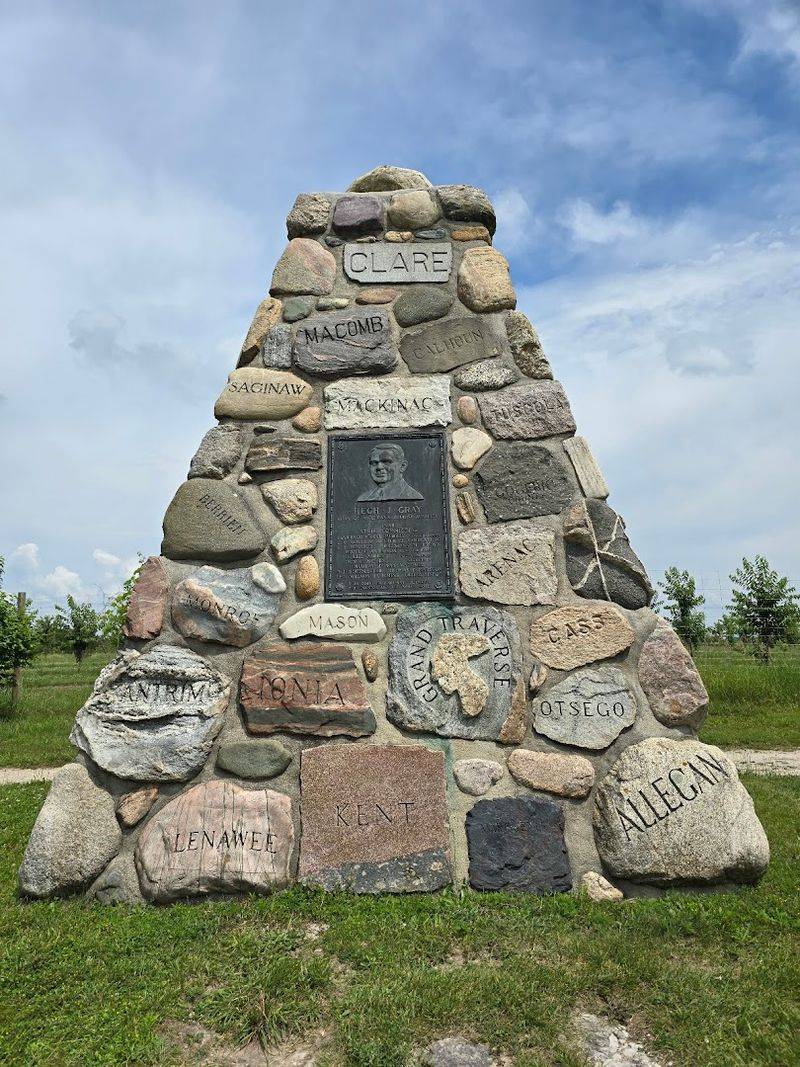
Every stone has a job. Every county gets a place. The sealed crypt adds just enough mystery to make your imagination stand up straighter. Even the nearby 45th parallel feels like Michigan leaning in to say, “Yes, there is more going on here.”
A quiet stop in Michigan becomes unexpectedly rich with county-by-county symbolism, early tourism history, 45th parallel charm, and a monument built for patient travelers.
I love places like this because they do not beg for attention. They reward the person who pauses anyway. It is not dramatic, but it has that satisfying hidden-weight feeling, like a footnote that deserves its own chapter.
Arrive Expecting Quiet, Not Spectacle
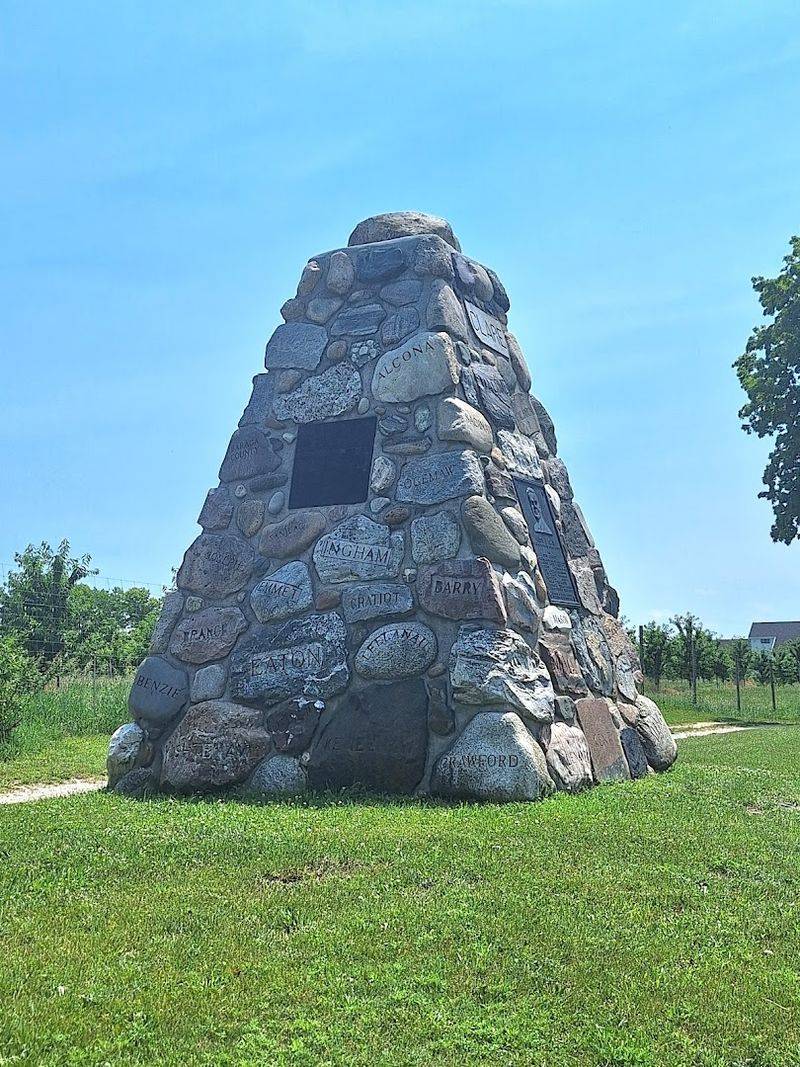
The first surprise is how calm the place feels. The Hugh J. Gray Cairn sits beside Cairn Highway with none of the theatrical buildup some landmarks get, yet that understatement is part of its charm. You are not walking into a busy attraction so much as stepping into a thoughtful roadside pause.
Because the monument is only 16 feet high, it rewards close attention more than distant admiration. Built in 1938 and set on what was once old US-31, it belongs to an older style of travel when motorists actually stopped to look around.
Give yourself ten unhurried minutes instead of two. That small shift changes the visit from a box checked on a drive to a genuinely memorable encounter with Michigan history.
Getting There Before The Roadside Monument Starts Looking Stranger
Hugh J. Gray Cairn, 5899 Cairn Highway, Kewadin, MI 49629 sits just north of Kewadin on old US-31, in the quieter south end of Antrim County. It is not the kind of stop that announces itself with big attraction energy, which is exactly why it works.
You are driving a country road, then suddenly there is a stone pyramid carrying a surprisingly large Michigan story. The route is simple, but you should treat it like a roadside pause rather than a full destination with lots of built-in structure.
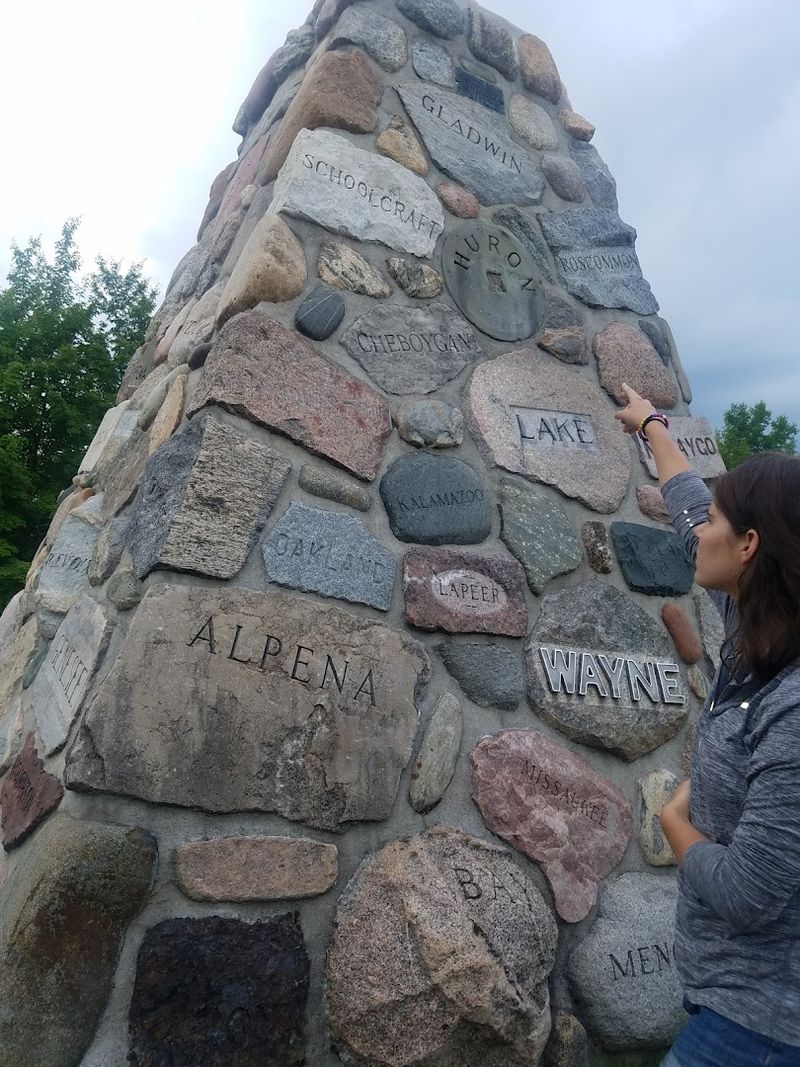
Once you arrive, give yourself a few quiet minutes instead of just snapping the obvious photo and leaving. Walk around the cairn, look for county names in the stones, and let the odd little setting do its work, because the appeal is less about spectacle and more about finding an overlooked Michigan landmark hiding in plain sight.
Do Not Miss Wexford County’s Rubber Block
The oddest detail here is also one of the most revealing. Wexford County did not contribute a conventional stone at all, but a two-foot-square piece of rubber with its county name on an attached steel plate, a nod to Cadillac’s rubber industry at the time.
That single substitution gives the cairn a nice jolt of personality. It also reminds you that monuments are not always solemn in the same way. Sometimes they preserve economic history, local pride, and a bit of practical wit all at once.
If you enjoy the quirky edge of regional history, spend an extra moment on this contribution. It turns the cairn from a simple list of counties into a sharper snapshot of Michigan in the late 1930s.
Remember Who Hugh J. Gray Was
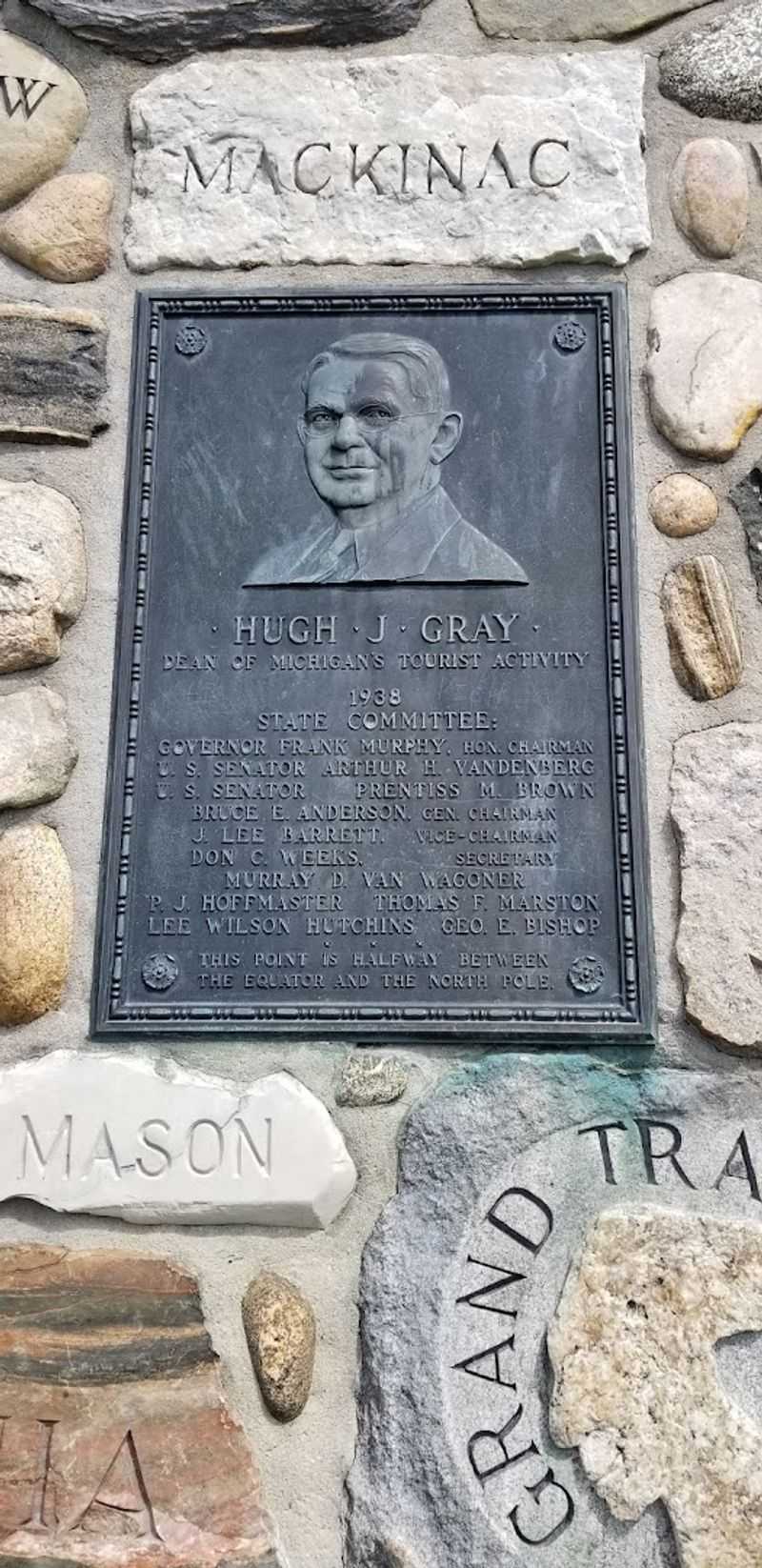
A lot of roadside monuments honor names that blur together after a while. This one lands differently because Hugh J. Gray had a direct role in shaping how Michigan presented itself to travelers, earning recognition as the Dean of Michigan’s tourist activity.
The cairn is not random local boosterism. It marks a real statewide legacy. Gray helped found the West Michigan Tourist Association and was active in the broader push that made tourism a serious public priority.
By 1929, state funding for tourism advertising had been secured, and by 1937 tourism had become Michigan’s second-largest industry. Knowing that context makes the monument feel less like decoration and more like a durable thank-you note to someone who changed the state’s economic story.
Picture The 1938 Dedication Crowd
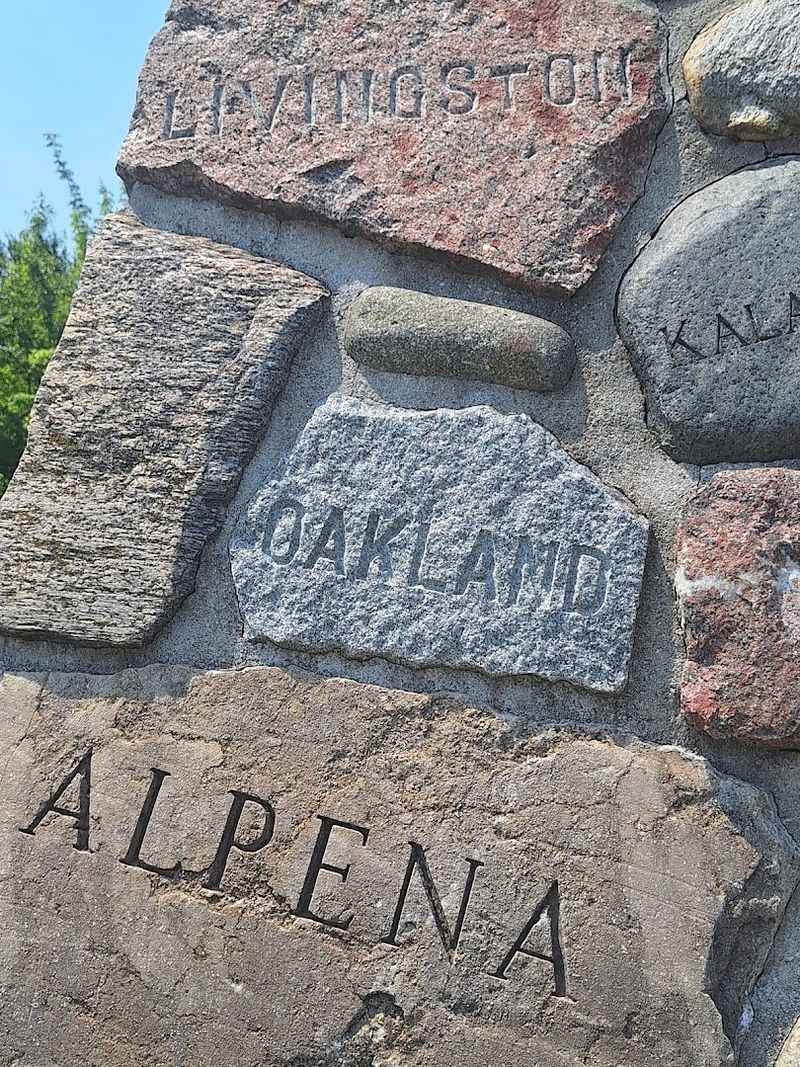
Standing beside the cairn now, it can be hard to imagine the energy of its dedication. More than 1,000 people attended on June 28, 1938, which says a lot about how seriously Michigan took tourism, roads, and civic celebration during that period.
The monument may look quiet today, but it was born in a crowd. That contrast is part of what makes the visit interesting. You are seeing a public statement from an era when roadside travel was central to the state’s identity, yet the site now feels almost private.
I like that tension because it lets the place operate on two scales at once, as both a historical event frozen in stone and a peaceful present-day stop where the noise has fully drained away.
Think About The Sealed Crypt Inside
One of the cairn’s best details is invisible. Inside the structure is a sealed crypt containing resort booklets, brochures from around Michigan, and newspapers covering the monument’s dedication and Gray’s tourism work, which gives the cairn a hidden interior life beyond its rough exterior. It is part monument, part time capsule.
That knowledge changes how you stand in front of it. Instead of seeing only masonry, you start imagining stacks of paper, dated headlines, and the language Michigan once used to invite travelers north.
There is something moving about a monument that stores not treasure but promotional ephemera. Those materials capture how the state wanted to be seen, which makes the cairn both historical marker and sealed archive of Michigan’s self-image.
Use The 45th Parallel As Part Of The Stop
Geography adds a second layer of fun here. The site is noted as being around the 45th parallel, roughly halfway between the Equator and the North Pole, and that fact gives the stop a faintly schoolbook pleasure without making it feel overly packaged. It is the kind of detail that sharpens your attention.
Even if you normally roll your eyes at latitude trivia, this one works because it suits the cairn’s personality.
The monument already gathers the whole state into one structure, so a midway point on the globe feels oddly fitting. Treat the visit as both historical and geographic. You leave with more than a photo because the location itself becomes part of the story you remember from this quiet turnout.
Notice The Setting And The Old Road Logic
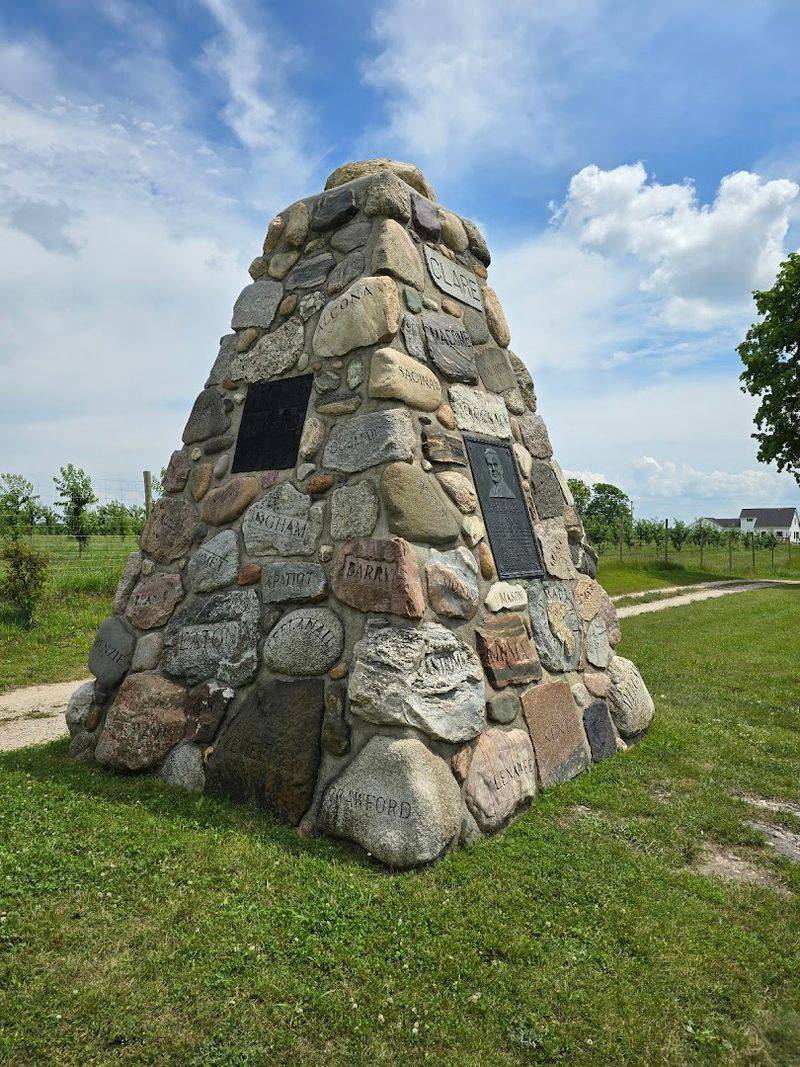
The surrounding road tells part of the story if you pay attention. The cairn stands on what used to be old US-31, and after the highway was rerouted in 1955, this section became Cairn Highway, a renaming that preserved the monument’s presence even as traffic patterns changed. That is a small but telling act of memory.
Roadside places often lose meaning when the main route shifts away from them. Here, the quieter setting actually helps because it lets the cairn breathe and makes the old travel logic easier to imagine.
You are not just stopping at a monument. You are stepping onto a leftover piece of a former north-south corridor, where Michigan’s automobile-era identity still feels legible in the landscape.
Look Up At The Masonry Before You Look Around
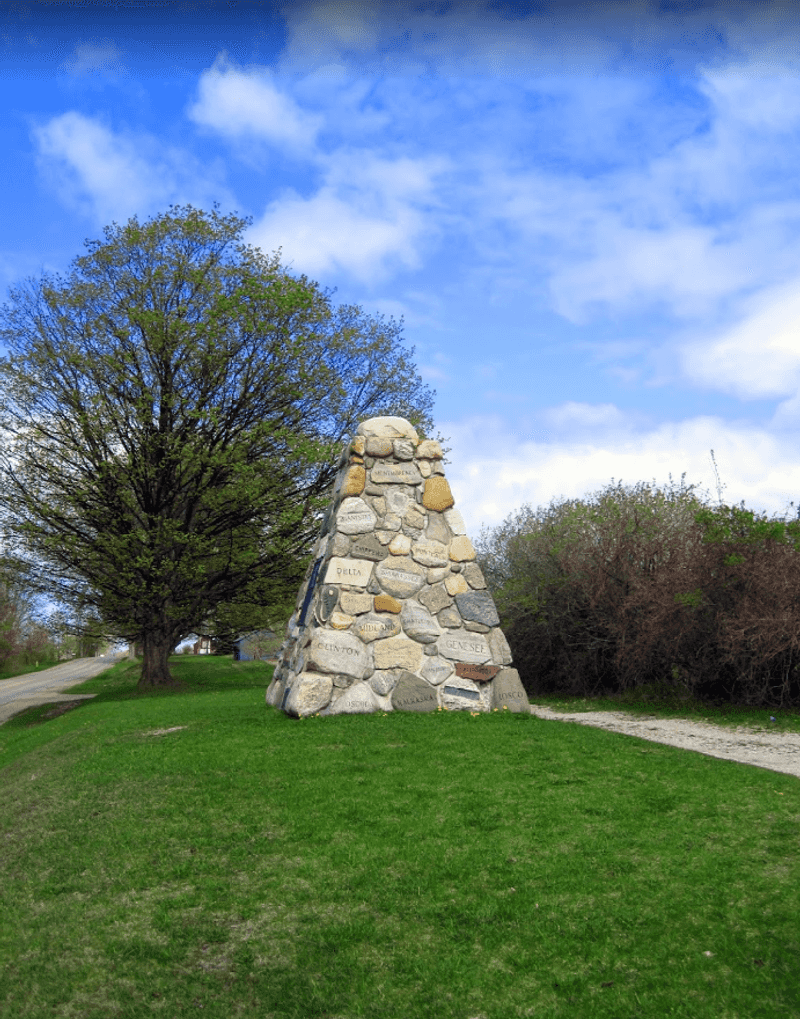
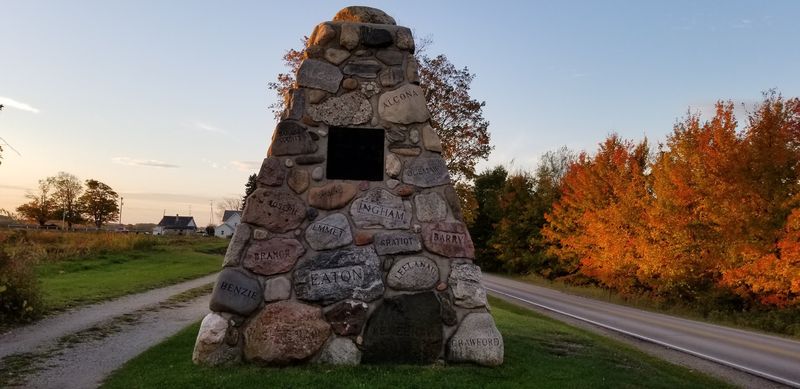
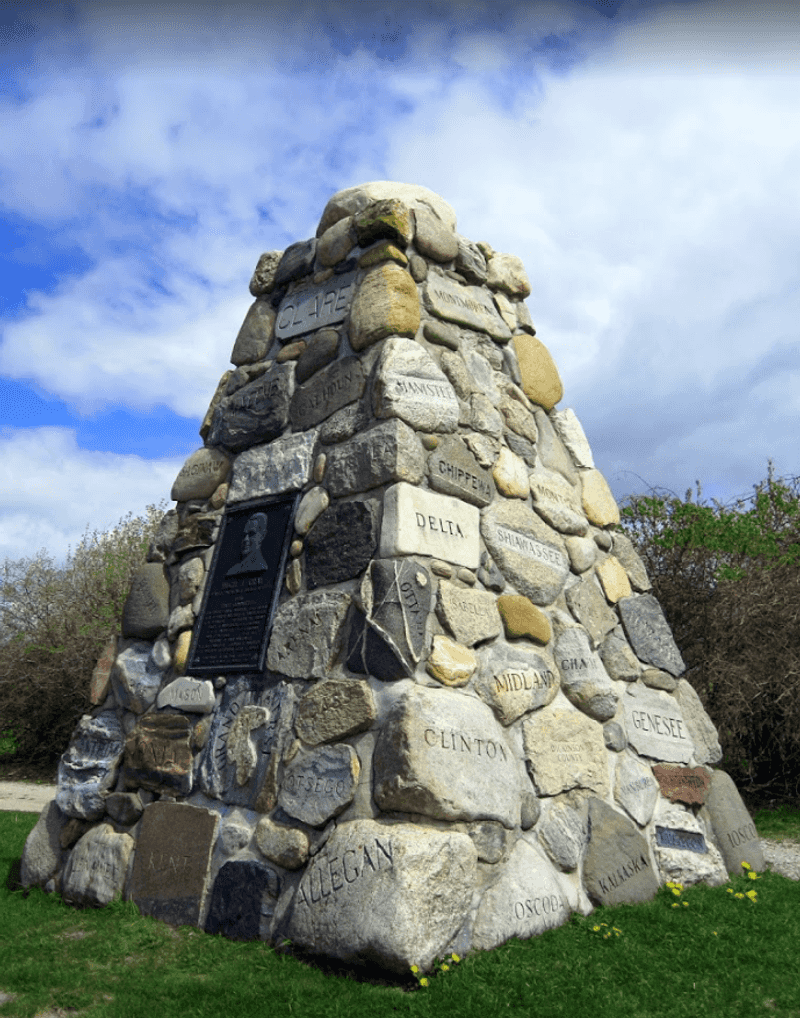
Before scanning for county names, take in the structure itself. The cairn has a compact pyramid-like form, measuring 12 feet square at the base and 16 feet high, and its proportions give it a sturdy, almost ceremonial presence without slipping into grandiosity.
It feels built to endure weather, not to impress from a distance. The stonework is part of the pleasure. Up close, the monument reads as assembled rather than polished, which suits a memorial made from county contributions instead of uniform material.
That rough coherence is exactly why it sticks in the mind. If you care about craft, walk all the way around and notice how the individual pieces hold together. The cairn is modest architecture, but it is architecture with a clear idea.
Plan For A Short Stop With A Longer Impression
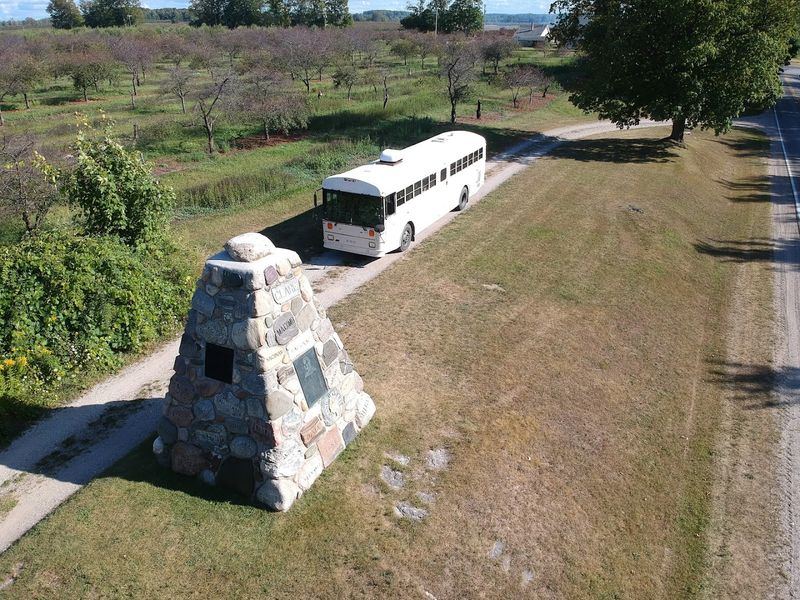
This is not a place that demands half a day, and that is part of its appeal. The stop is brief, easy to access, and best approached with realistic expectations: you are coming for a monument, a story, and a handful of details that deepen as you notice them.
That compactness suits the site perfectly. Because there is not much else competing for your attention, the cairn can leave a surprisingly long aftertaste. A few minutes of careful looking gives you Michigan geography, tourism history, highway history, and one excellent rubber oddity.
I would pair it with a larger drive rather than build a full day around it. Seen in that spirit, the monument becomes exactly what it should be, a meaningful pause that enriches the road.
Treat It As A Lesson In How States Tell Stories
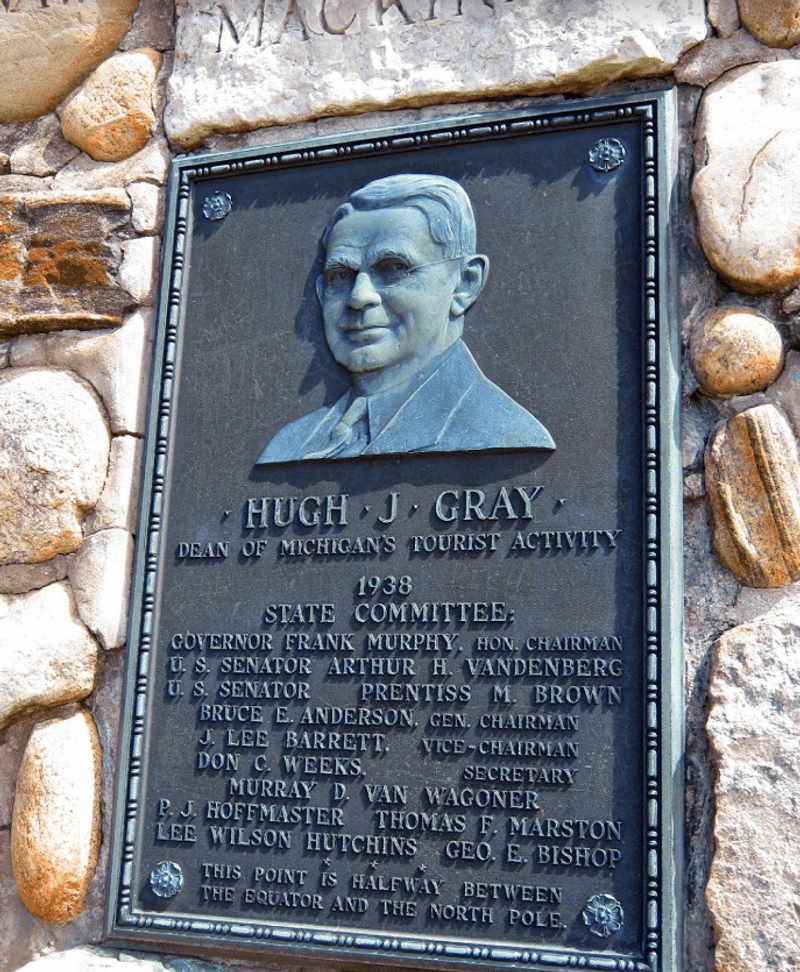
What stays with you most may be the idea behind the cairn. By gathering a contribution from every county and sealing contemporary materials inside, the monument turns Michigan into both object and narrative, a physical statement about shared identity, travel, and self-promotion during a formative period.
It is clever without being flashy. That combination makes the site more than a curiosity. The cairn shows how states build memory through roads, symbols, and carefully chosen artifacts, and it does so in a way that still feels approachable from the shoulder of a small highway.
When I left, the monument seemed less like a relic and more like a compact essay in stone. Few roadside stops manage that much substance with such restraint.