
An Ancient Arizona Civilization Left Behind This Mysterious Pueblo Tucked Into The Badlands
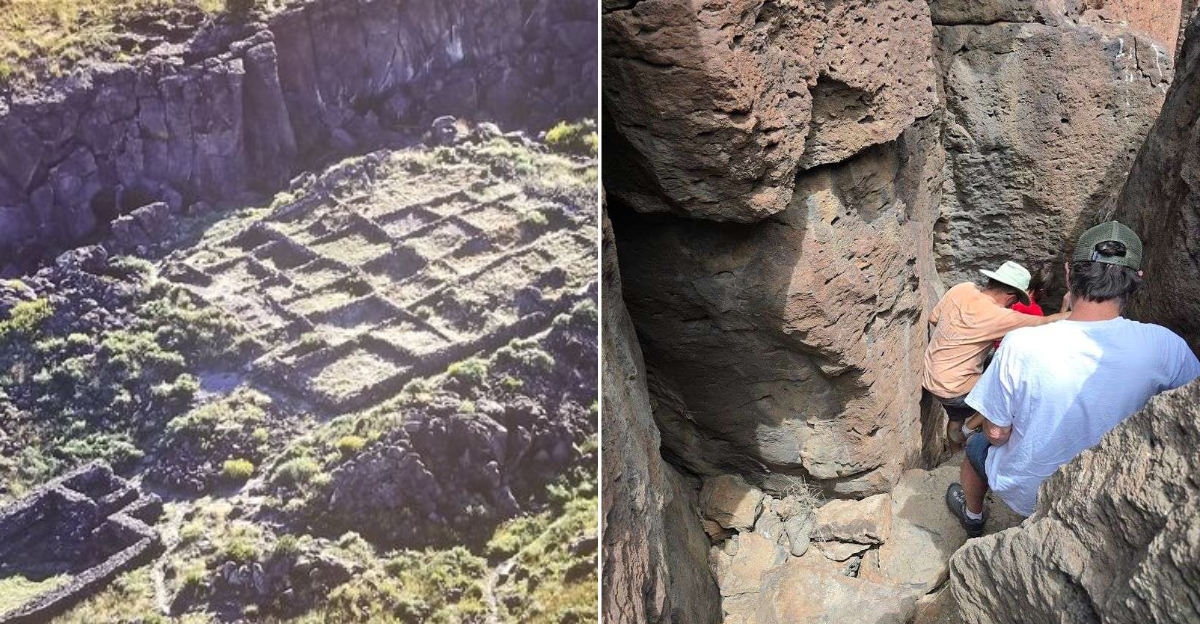
I used to think ancient history felt distant until I stood in front of a place like this and realized people once built entire lives into these Arizona badlands. There is something humbling about seeing a mysterious pueblo tucked into such rugged terrain, especially when I can barely assemble a basic bookshelf without questioning every life choice that led me there.
These ancient builders were working with volcanic rock, tough land, and no modern shortcuts, yet they created something that still feels strong, intentional, and quietly impressive.
The silence out here gets to you in the best way. It makes the past feel close, like the people who lived here did not vanish into a textbook but simply stepped away for a moment. I love places that make me feel tiny in the timeline of everything, and this one does exactly that while also making my DIY skills seem deeply unserious.
An ancient Mogollon pueblo site that was built around 1240 CE and quietly abandoned before 1400 CE, leaving behind a puzzle that archaeologists and visitors are still piecing together today.
The House Of The Badlands: Setting And Geological Context
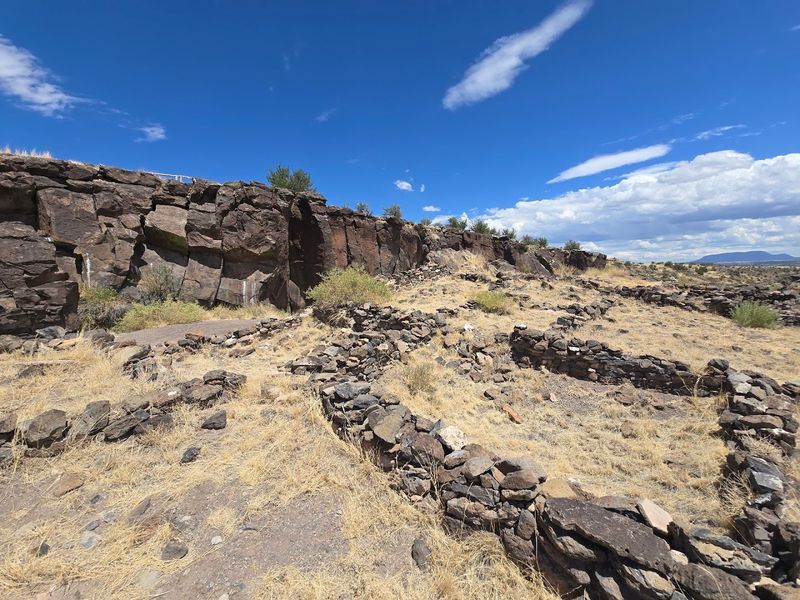
Perched on volcanic basalt terraces overlooking the Little Colorado River valley, Casa Malpais earns its Spanish name every single day. The phrase “House of the Badlands” is not poetic license but a straightforward description of a rugged, otherworldly landscape that somehow became home to hundreds of people centuries ago.
The site sits at an elevation of approximately 7,000 feet within the Springerville volcanic field, which ranks as the third-largest volcanic field in the continental United States. That geological backdrop is not just scenery.
The ancient builders used the basalt rock directly beneath their feet as construction material, carving stairways into cliff faces and laying cobblestone walls that have endured for nearly 800 years.
When I first arrived at the museum located at 418 East Main Street in Springerville, Arizona, I had no idea the landscape itself would feel like such a main character.
The badlands setting gives the site a raw, unfiltered atmosphere that no photograph fully prepares you for. Standing there, I could see why this place was chosen, because the same rough volcanic terrain that looks so unforgiving also offered protection, materials, and a view that stretches forever.
The Mogollon Builders: Who Actually Lived Here
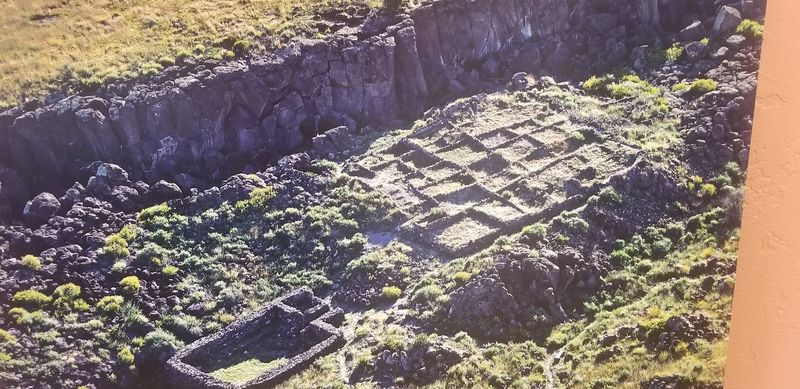
Most people who visit ancient Southwest sites immediately think of the Ancestral Puebloans, but Casa Malpais tells a different story. The primary builders here belonged to the Mogollon culture, a group of skilled farmers and craftspeople who constructed this pueblo between roughly 1240 and 1260 CE.
What makes the Mogollon story at Casa Malpais especially compelling is the layering of cultural influences. While the site is primarily Mogollon, there are clear architectural and artifact connections to Ancestral Puebloan traditions as well, suggesting a lively exchange of ideas, trade, and possibly people across the region.
Both the Hopi and Zuni peoples today recognize Casa Malpais as a sacred ancestral place, and that living connection to modern Native communities adds real depth to every room you walk through on the guided tour. The Mogollon did not simply vanish.
Their descendants, their ceremonies, and their knowledge carried forward through generations, and standing in the ruins, that continuity feels remarkably present and tangible.
That connection changed the way I looked at the site, because suddenly the stone walls felt less like ruins and more like part of a much longer story that is still being honored today.
The Great Kiva: A Ceremonial Heart Carved From Volcanic Rock
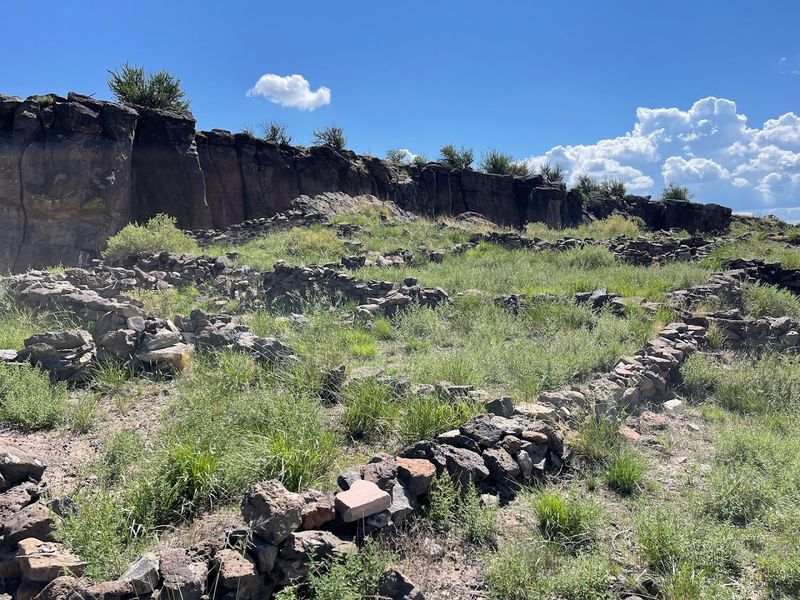
Not every ancient site has a space that stops you mid-step, but the Great Kiva at Casa Malpais is exactly that kind of place. This large, square ceremonial chamber was meticulously constructed from volcanic rock and served as the spiritual and social center of the entire community.
What sets this kiva apart from others I have seen across the Southwest is that it is not simply a relic. Native American communities, including Hopi and Zuni representatives, still hold ceremonies here today.
That ongoing use transforms the space from a museum exhibit into something far more alive and meaningful. The craftsmanship involved in building the kiva is striking up close.
Each basalt block was carefully selected and placed, and the overall structure has held its form through centuries of harsh weather and seismic activity in this volcanically active region.
Spending time near the Great Kiva, even as a respectful outside observer, left me with a quiet sense of having been near something genuinely important. It is the kind of space where I naturally lowered my voice without even thinking about it, as if the place itself was gently reminding me to pay attention.
Cosmic Observatory: Solar Calendars And Astronomical Pictoglyphs
Here is something that genuinely surprised me on my visit: Casa Malpais was not just a place where people lived, it was also a working observatory. The site contains structures and pictoglyphs specifically designed to track the movements of the sun, moon, and stars, including precise markers for solstices and equinoxes.
The pictoglyphs carved into the basalt surfaces are not random decoration. Archaeologists have identified specific rock art panels that align with sunrise and sunset positions on key dates in the solar year.
The people who built this place understood the sky in sophisticated ways that were deeply tied to agriculture, ceremony, and community planning. Walking past these carved markers with a knowledgeable guide, I kept thinking about the patience and observation required to create a functioning calendar from stone and sunlight alone.
There is something quietly brilliant about engineering cosmic precision into a volcanic landscape, and that combination of science and ceremony makes Casa Malpais one of the more intellectually fascinating sites in all of Arizona.
The Only Prehistoric Catacombs In The American West
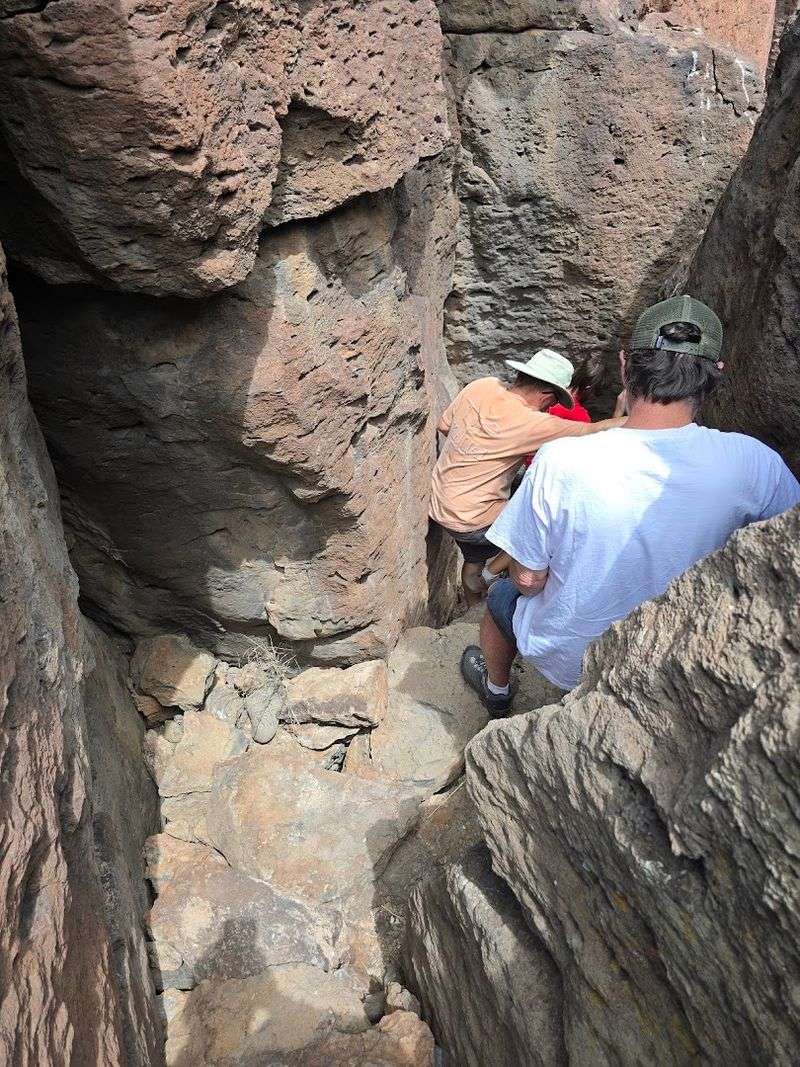
Of all the remarkable features at Casa Malpais, none captured my imagination quite like the catacombs. Beneath the ruins, archaeologists discovered a network of underground burial chambers that hold the unique distinction of being the only known prehistoric catacombs in the entire American West.
The pueblo builders used natural fissures in the volcanic basalt as the foundation for these burial spaces, creating chambers that were intentionally sealed and protected.
The discovery sent ripples through the archaeological community because nothing quite like it had been found anywhere else in the region.
In the 1990s, out of respect for the Hopi and Zuni peoples, who consider the individuals buried there to be their direct ancestors, the catacombs were permanently sealed.
That decision reflects a broader shift in how archaeological sites are managed in partnership with living Indigenous communities, and I found that story of respect and collaboration to be just as compelling as the physical discovery itself.
The sealed catacombs now represent both a mystery and a boundary that deserves to stay honored.
Ancient Engineering: Staircases, Irrigation, And Basalt Architecture
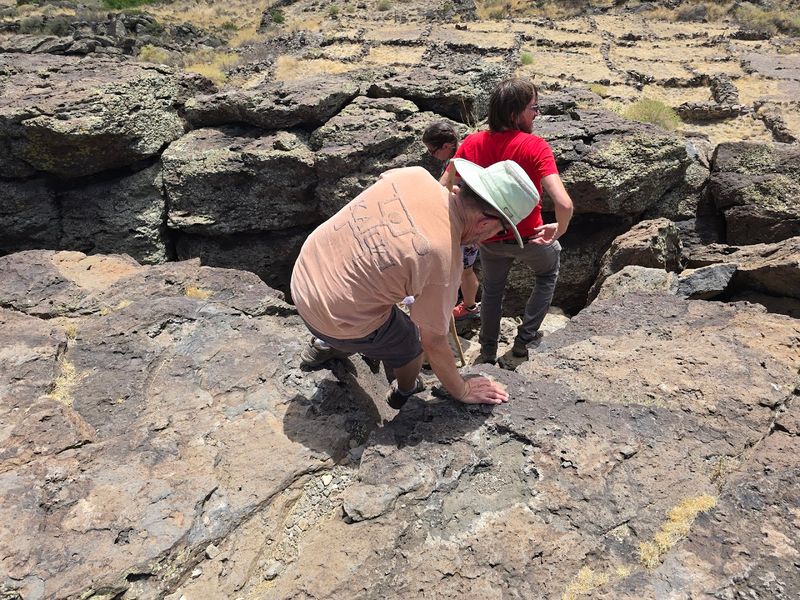
There is a moment on the guided tour when you stand at the base of the ancient basalt staircase and look up at the steep, narrow steps carved directly into the cliff face, and you feel a sharp respect for the people who cut those stairs by hand.
This carved passage leads from the lower terraces up to the mesa top, and it remains the same route the original inhabitants used daily.
The engineering ambition at Casa Malpais extended well beyond the staircase. The inhabitants designed and built a network of irrigation canals in the Little Colorado River valley below, channeling water to support agriculture at high elevation.
That kind of hydraulic planning required both technical knowledge and serious community coordination. The approximately 50 to 60 rooms constructed from local basalt cobbles also show clever adaptation to the environment.
Some lower rooms were built directly over natural fissures in the rock, effectively creating basement-level storage spaces that kept food and materials at a more stable temperature year-round, a smart solution in a landscape of dramatic seasonal swings.
Planning Your Visit: The Museum, Guided Tours, And What To Expect
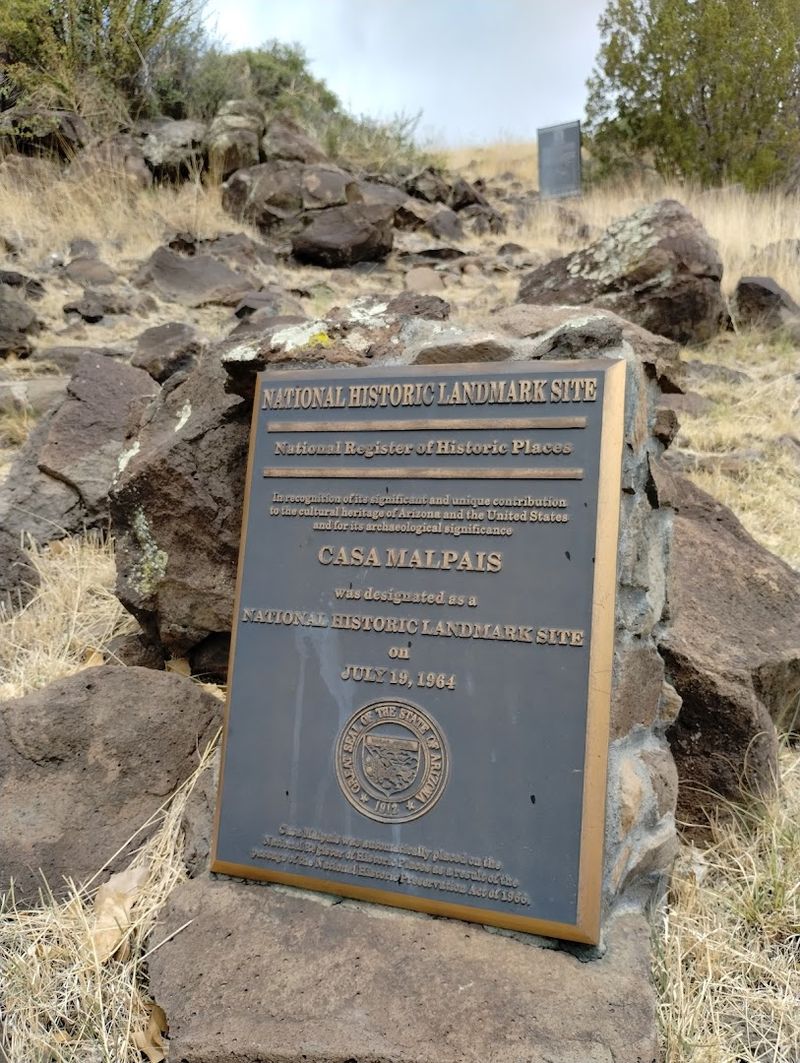
Casa Malpais was designated a National Historic Landmark in 1964, and today the Casa Malpais Archaeological Park and Museum at 418 East Main Street in Springerville, Arizona, serves as the official starting point for all visits.
You cannot simply walk up to the ruins on your own. Access to the archaeological site is exclusively by guided tour, which departs from the museum.
That guided-tour-only policy is genuinely worth embracing rather than resisting. The guides bring context that transforms a pile of basalt walls into a coherent story about astronomy, ceremony, trade, and migration.
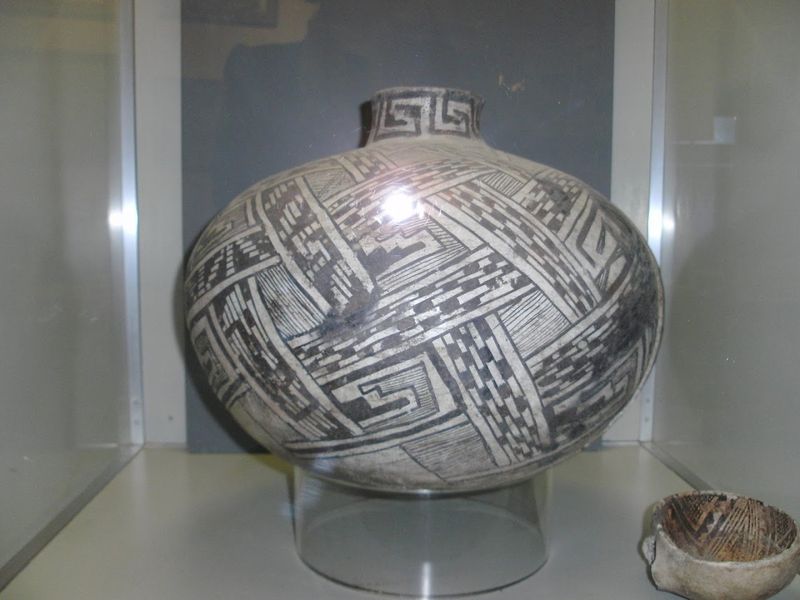
The museum itself houses artifacts recovered from the site along with a film that provides helpful background before you head out to the ruins.
Wear sturdy shoes because the terrain is uneven volcanic rock, and bring water since the high desert sun is serious even at 7,000 feet. The best times to visit are spring and fall when temperatures are comfortable.
Plan to spend at least a half day here, because rushing through a site this layered would genuinely shortchange the experience.