
This Quiet Washington Forest Walk Suddenly Becomes A Whimsical Outdoor Art Gallery
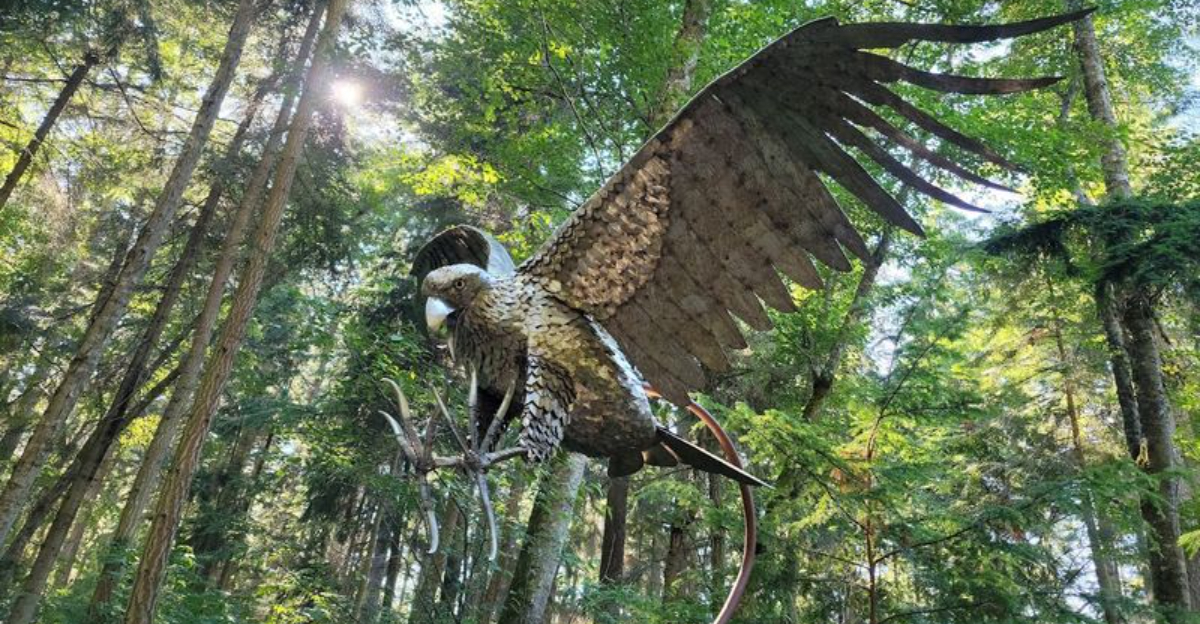
Here’s a confession: I once judged a book by its cover, assumed a forest was just a forest, and went on with my very ordinary expectations.
That innocence died a quick death during my latest Washington outdoor adventure, where what started as a straightforward nature walk rapidly evolved into an art treasure hunt that would make Indiana Jones trade in his whip for a museum membership. One trail revealed a shiny interpretation of a deer.
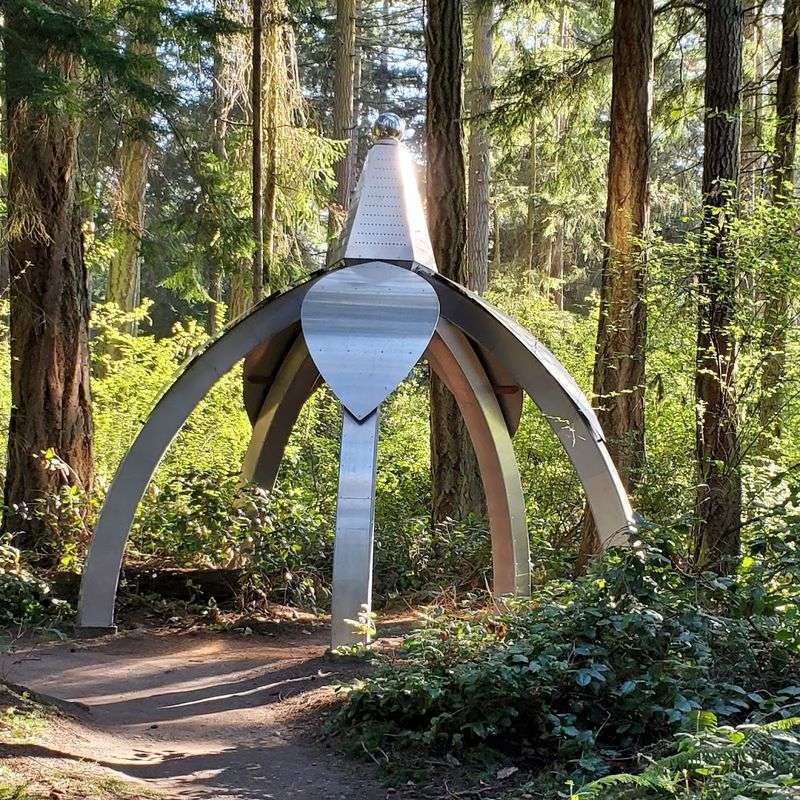
Another clearing showcased something Abstract Expressionist that honestly could’ve been alien communication devices.
The squirrels here apparently live like royalty, surrounded by multimillion-dollar art installations while we humans pay admission fees to galleries smelling of fancy candles. Take that, conventional art world.
The Forest Setting That Sets The Stage
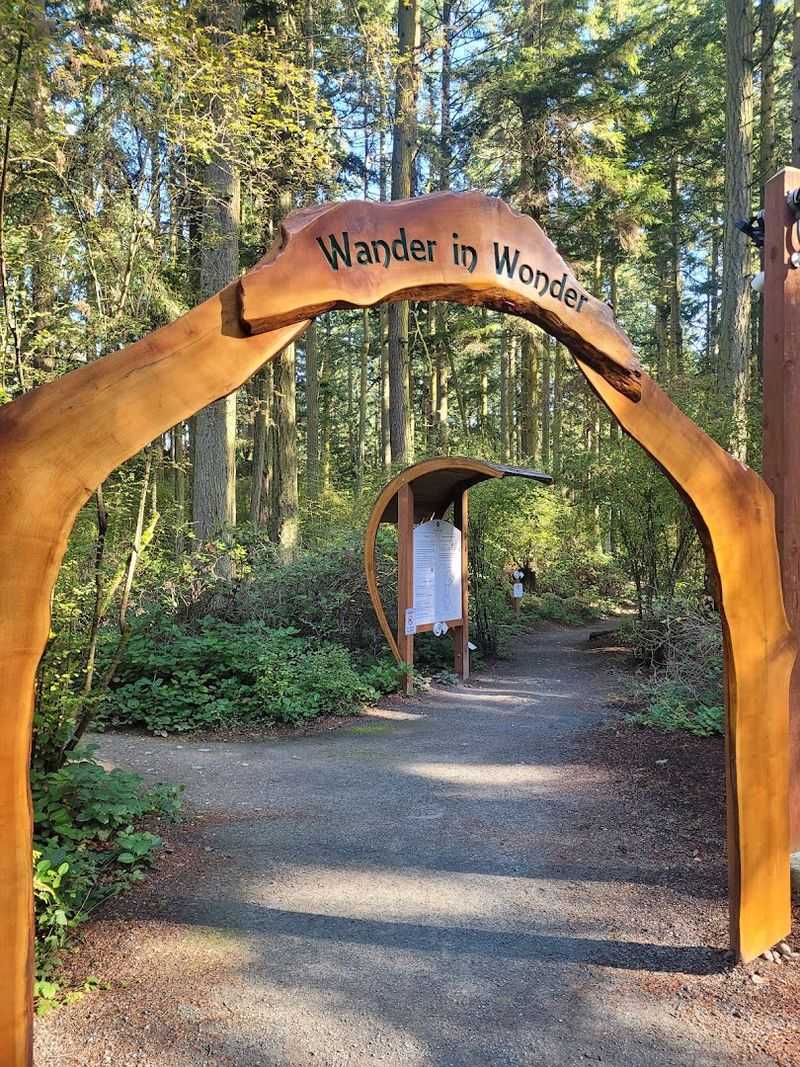
Some places earn their magic before you even see the main attraction, and the forested trail at Price Sculpture Forest does exactly that. The moment you step onto the path at 1001 S Main St, Coupeville, WA 98239, the outside world gets muffled by a thick canopy of Douglas firs and cedars.
The ground is soft underfoot, covered in a patchwork of moss and fallen needles that makes each step feel quieter than the last. Birdsong carries through the trees, and the air smells like rain-damp earth even on dry days.
This setting is not just a backdrop for the sculptures. It is an active part of the experience, shaping your mood before the art even comes into view. The trail is well-maintained and easy to walk, making it accessible for families, older visitors, and anyone who prefers a relaxed pace.
You do not need hiking boots or special gear, just comfortable shoes and a willingness to slow down and look around carefully.
A Brief History Behind The Land
The story behind this forested art space is rooted in generosity and a genuine love of the arts. The Price family donated the land to create a public space where sculpture and nature could exist side by side, and that vision has shaped every element of how the forest feels today.
Whidbey Island has long attracted artists, writers, and creative thinkers drawn to its quiet beauty and slower pace of life. The sculpture forest fits naturally into that tradition, giving local and visiting artists a place to display work in an environment that no gallery wall could replicate.
Knowing this history adds a layer of meaning to the walk. You are not just passing through a pretty stretch of trees. You are moving through a space that someone cared deeply about and chose to share with the public at no cost.
That kind of generosity is rare, and it gives the whole experience a warmth that you carry with you long after you leave the trail behind.
The Sculptures Themselves: Unexpected And Unforgettable
Nothing quite prepares you for the first sculpture you encounter. One moment you are watching the trail, and the next, a carved wooden face is peering at you from behind a cedar trunk with an expression somewhere between curiosity and mischief.
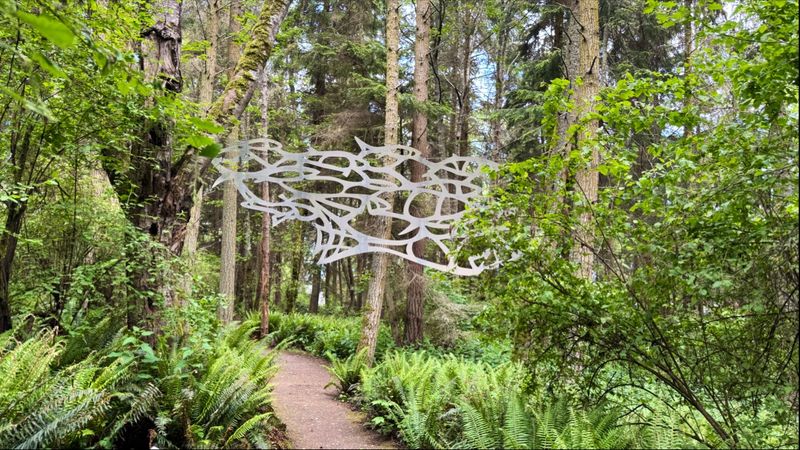
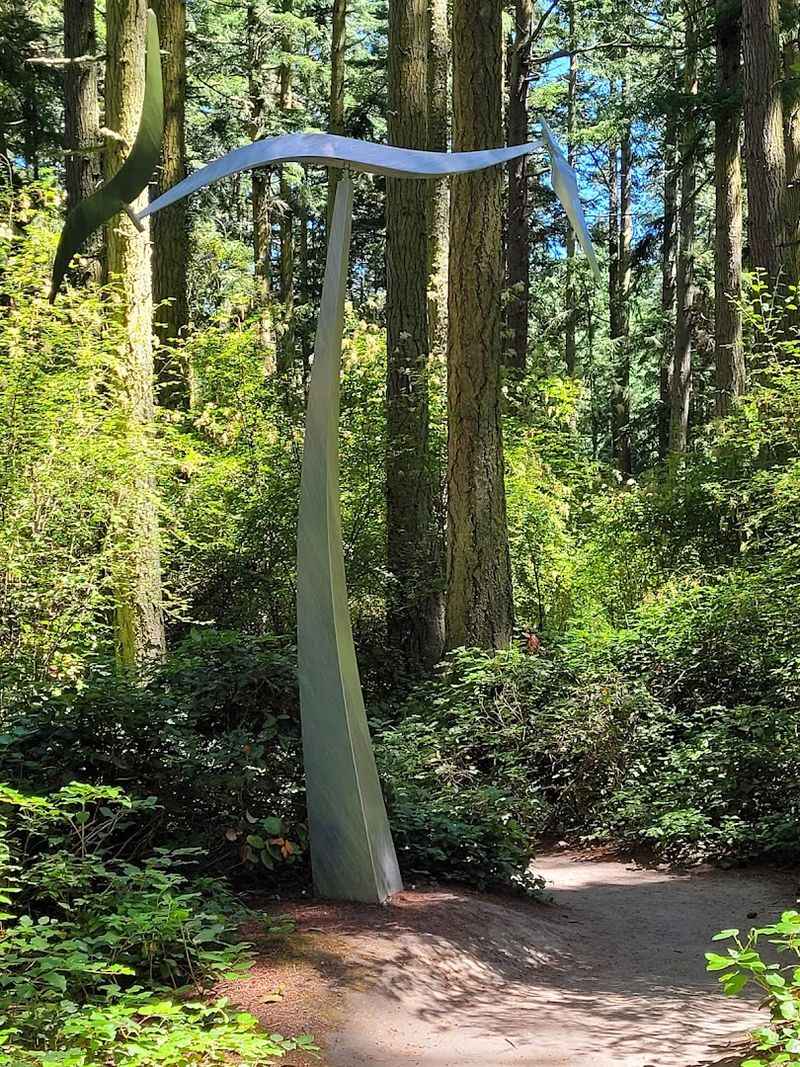
The collection spans a wide range of styles and materials, from smooth stone forms to rough-hewn wood carvings and abstract metal pieces. Some sculptures feel ancient and rooted, as if the forest grew up around them over centuries.
Others look freshly placed, their surfaces still catching light in sharp, modern angles. What makes this collection special is its variety. There is no single artistic voice dominating the space, which means every few steps bring a genuinely new visual surprise.
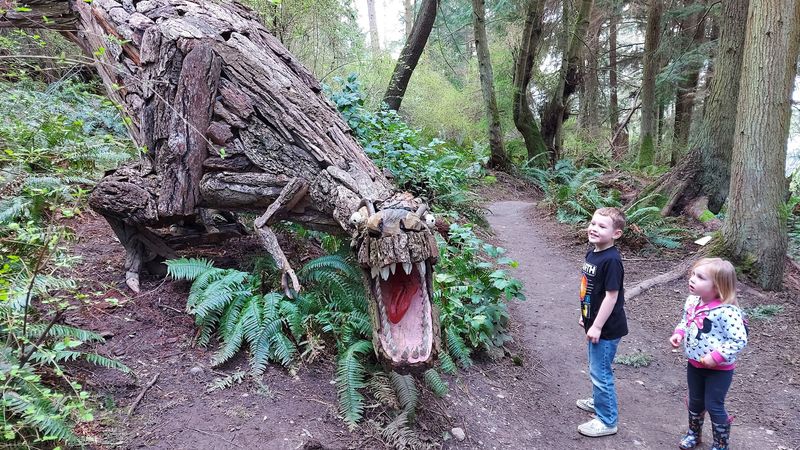
Children tend to spot pieces that adults walk right past, which makes exploring with younger visitors particularly rewarding. The sculptures are placed with enough distance between them that each one gets its own moment, its own patch of light, and its own quiet conversation with the trees.
Wildlife And Natural Details Along The Trail
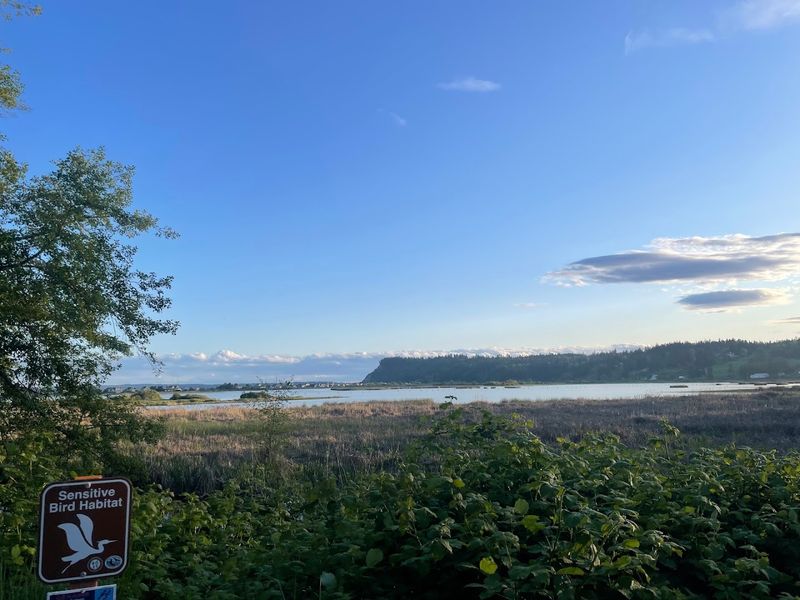
Keep your eyes open beyond the sculptures, because the forest itself is putting on a show. Whidbey Island sits in a region rich with wildlife, and the trail at Price Sculpture Forest is no exception to that abundance.
Deer are spotted here with surprising regularity, often standing just off the path with the calm confidence of animals that know they are not being chased.
Woodpeckers drum against high branches, and small songbirds flit between the ferns in bursts of color and sound. If you visit in the early morning, the forest feels especially alive, with mist still clinging to the lower growth and the light arriving in long, golden streaks through the canopy.
These natural details do not compete with the art. They actually complement it, giving the sculptures a living context that changes with the seasons and the weather.
A carved owl looks entirely different when a real bird calls from somewhere nearby, and that kind of layered experience is exactly what makes this place worth visiting more than once.
Visiting With Kids: A Trail That Keeps Them Engaged
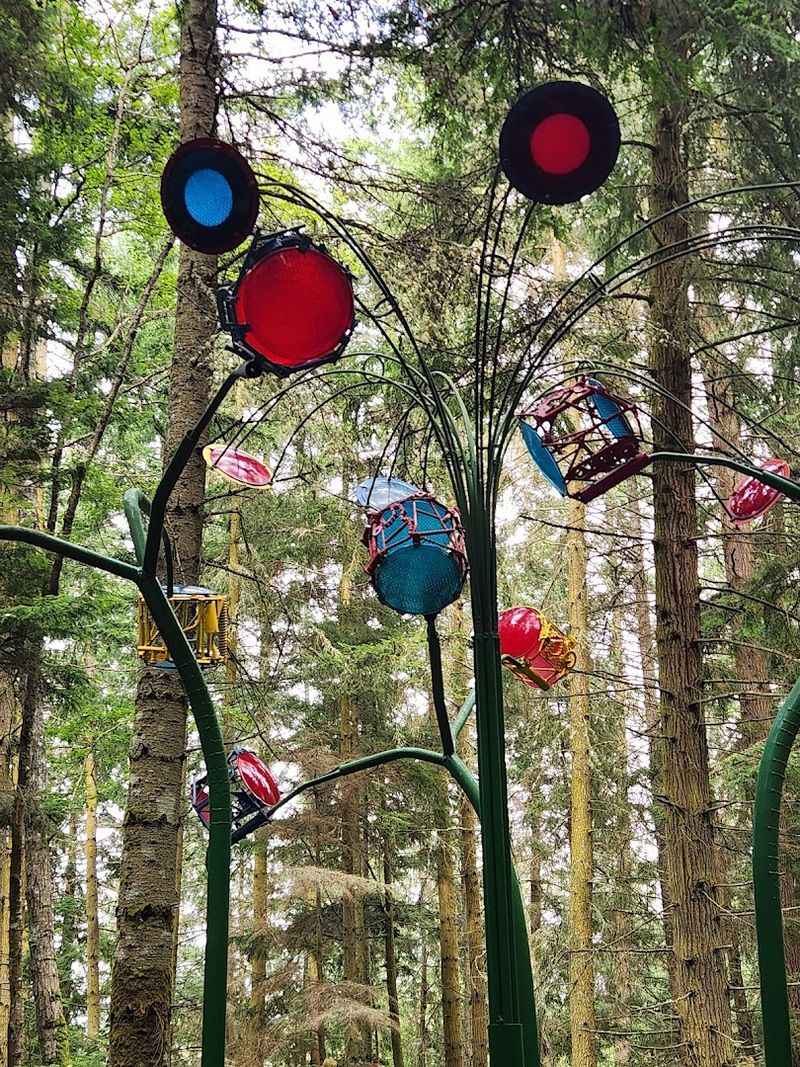
Getting kids genuinely excited about art can feel like a tall order, but this forest trail sidesteps the usual resistance entirely. When art is hidden in a forest and you have to find it, the whole experience becomes a kind of treasure hunt, and children respond to that framing with real enthusiasm.
The trail is short enough that younger kids can complete it without getting tired or frustrated, and the flat, well-cleared path means strollers and small legs handle it equally well.
Each sculpture becomes a discovery, and kids tend to assign personalities and backstories to the figures they encounter, which turns the walk into a collaborative storytelling adventure.
Parents get something out of this too. The pace is relaxed, the setting is beautiful, and there is no admission fee to worry about. Bring a small snack for after the walk and plan to spend at least an hour, because children will want to circle back to their favorite pieces before heading to the exit.
That return trip almost always reveals something new.
Best Times To Visit And What to Expect Seasonally
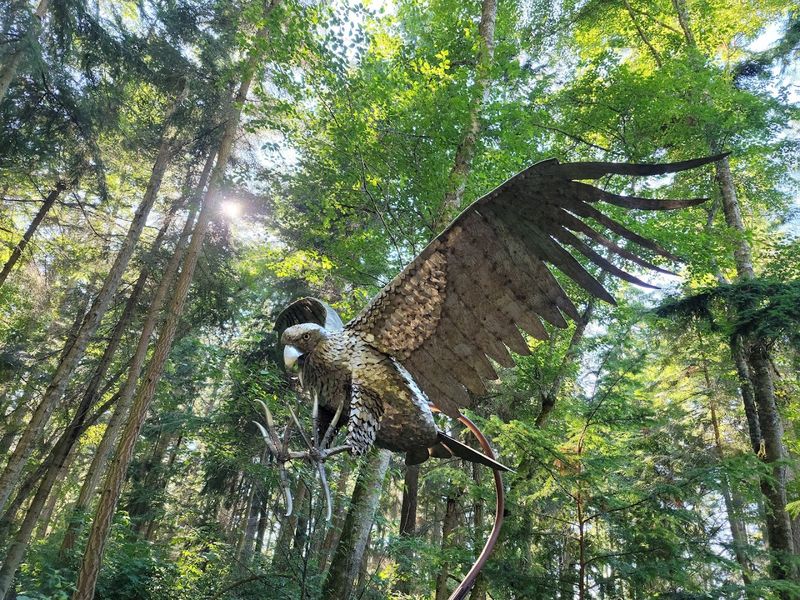
The forest changes personality depending on when you visit, and each season brings its own version of the experience. Summer draws the most visitors, and the long Pacific Northwest days mean you can walk the trail in golden evening light that makes every sculpture look like it was carved specifically for that hour.
Spring brings a burst of green that feels almost theatrical, with ferns unfurling around the bases of sculptures and wildflowers appearing in the clearings between trees. Autumn turns the forest floor into a carpet of amber and copper, and the cooler air adds a crispness to the walk that feels refreshing after a warm season.
Winter visits are quieter and surprisingly beautiful, with the bare branches opening up views deeper into the forest and the occasional frost adding a delicate texture to stone and wood surfaces.
Rain is common on Whidbey Island year-round, so a light waterproof layer is a smart addition to your bag no matter when you plan to go. The trail handles wet weather well.
The Atmosphere Of Quiet Discovery
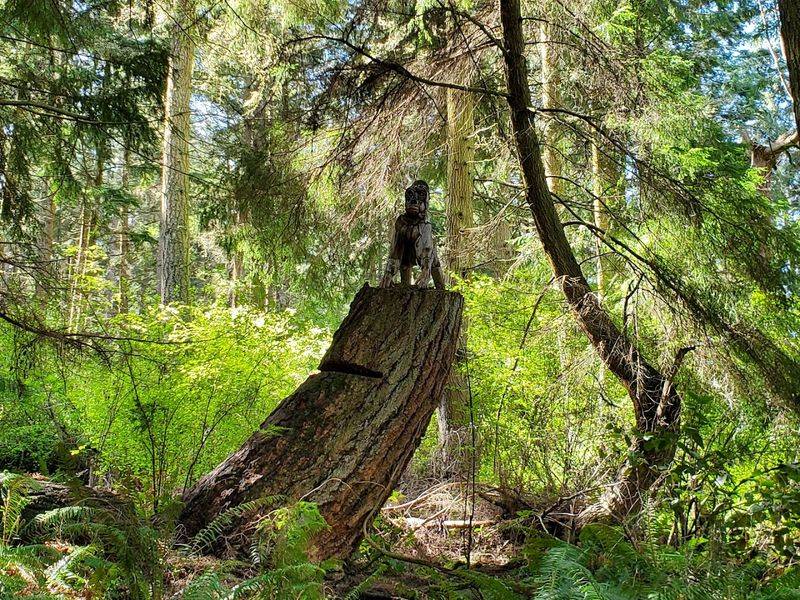
There is a particular kind of quiet that settles over you in this forest, the kind that feels earned rather than forced. Unlike a museum where silence is expected and enforced, the quiet here is organic, shaped by the trees and the distance from the road and the soft sounds of the natural world doing its thing.
That atmosphere changes how you look at the art. You slow down. You notice the grain of the wood in a carving, or the way a stone piece has been positioned so it catches the light at a specific angle in the afternoon.
Small decisions by the artists and the people who placed the work become visible in ways they might not in a busier setting. Visitors often describe the walk as meditative, and that word fits.
You arrive carrying the usual mental clutter of a busy day and leave feeling like something has been gently rearranged inside your head. The forest does some of that work, and the art does the rest, and together they make something genuinely restorative.
Practical Tips For Making The Most Of Your Visit
A little preparation goes a long way toward making this visit as enjoyable as possible. The trail itself is free and open to the public, which is one of the best things about it, but a few small details will help you get more out of the experience.
Wear shoes with some grip, since the path can be slippery after rain, which on Whidbey Island means fairly often. Bring a camera or make sure your phone is charged, because you will want to photograph the sculptures in their natural settings.
Cell service can be spotty in the forest, so downloading a basic map of the area beforehand is a practical move.
Arriving early in the morning gives you the best chance of having the trail mostly to yourself, and the light at that hour is genuinely spectacular.
There is no official parking lot, so street parking near the trailhead requires a bit of patience on busy weekends. Coupeville itself is worth exploring after your walk, with a charming historic waterfront just a short drive away from the forest entrance.
Why This Place Deserves A Spot On Your Whidbey Island Itinerary
Whidbey Island already earns its reputation as one of the most rewarding day trips from Seattle, with its ferry crossing, farm stands, and sweeping views of Puget Sound. Price Sculpture Forest adds something to that mix that is harder to find: a place that feels genuinely unhurried and quietly extraordinary.
Most visitors to the island stick to the waterfront and the well-known lookout points, which means the sculpture forest tends to attract people who are curious enough to seek out something a little off the main path.
That self-selection creates a visitor base that tends to be respectful, attentive, and genuinely engaged with what they are seeing. If you are building an itinerary for Whidbey Island, pairing the sculpture forest with a walk along the Coupeville waterfront and a stop at one of the local bakeries makes for a day that covers history, art, nature, and food without ever feeling rushed.
The forest is the kind of place that stays with you, not because it is loud or dramatic, but because it is quietly and completely itself.