
This Hidden Colorado Mountain Town Is A Dream Escape For Nature Lovers
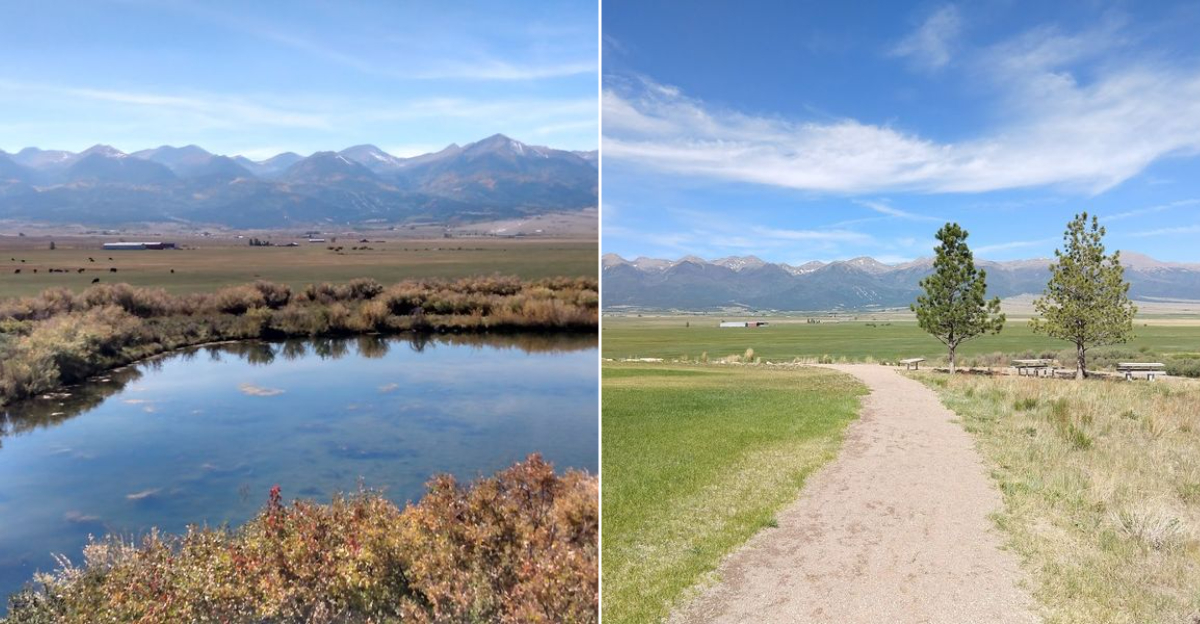
Tucked into a broad mountain valley where the peaks rise like they are guarding a secret, this tiny town feels like a reward for travelers who prefer wonder over crowds. With only a few hundred residents, life moves at a pace slow enough for porch conversations, wandering deer, and skies that seem to stretch forever.
Colorado has plenty of famous escapes, but this one wins hearts by staying quiet, honest, and refreshingly unpolished. After sunset, the stars come out with such dramatic sparkle that you may forget your phone exists, which is basically a vacation miracle.
Trails fan out in every direction, inviting muddy boots, deep breaths, and that smug little feeling you get after finding somewhere truly special. Bring curiosity, a jacket, and maybe a snack you are willing to share with your future self.
Colorado’s mountain hush feels especially powerful here, turning simple silence into the main attraction.
The Sangre de Cristo Mountains: A Backdrop That Earns Its Name
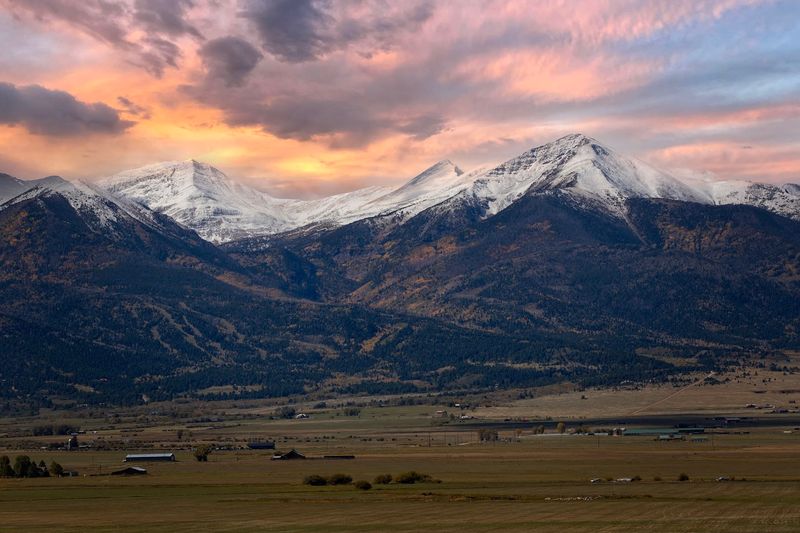
There are mountain views, and then there are the Sangre de Cristo Mountains as seen from this place. The name translates to “Blood of Christ” in Spanish, and at sunset, when the peaks glow deep red and amber, you understand exactly why someone felt that strongly about naming them.
This range forms one of the most dramatic backdrops of any small town in the American West.
Standing at over 14,000 feet, several peaks here qualify as Colorado “fourteeners,” drawing serious hikers and peak-baggers from across the country. The Wet Mountain Valley floor sits at roughly 7,900 feet, which means the visual drama between valley and summit is extraordinary.
You are not squinting at a distant smudge on the horizon; these mountains are right there, filling your entire field of view.
For families, couples, or solo visitors who simply want to feel genuinely small in the best possible way, the view alone justifies the drive. Pro Tip: Position yourself on the east side of town near open fields at golden hour for unobstructed photography.
The light hits the peaks in a way that no filter can improve.
Dark Sky Country: Stargazing That Resets Your Entire Perspective
Westcliffe and neighboring Silver Cliff hold the distinction of being among the first communities in Colorado to receive an International Dark Sky designation. That is not a marketing tagline; it is a measurable scientific classification based on light pollution levels so low that the Milky Way appears as a dense, textured band across the sky rather than a faint smear.
On a clear night, the sheer number of visible stars can feel genuinely disorienting at first, like your brain is recalibrating what a sky is supposed to look like. Most people raised near cities have simply never seen it like this.
Bring a blanket, a reclining chair, and patience, and the universe will handle the rest.
Families with curious kids will find this experience delivers more genuine wonder than most planned attractions. Couples looking for a quietly spectacular evening need nothing else.
Insider Tip: New moon weekends offer the darkest skies. The Smoky Jack Observatory area and open meadows outside town provide excellent unobstructed viewing.
Arrive after dusk, let your eyes adjust for at least twenty minutes, and resist the urge to check your phone.
Hiking the Wet Mountains: Trails That Match Every Pace
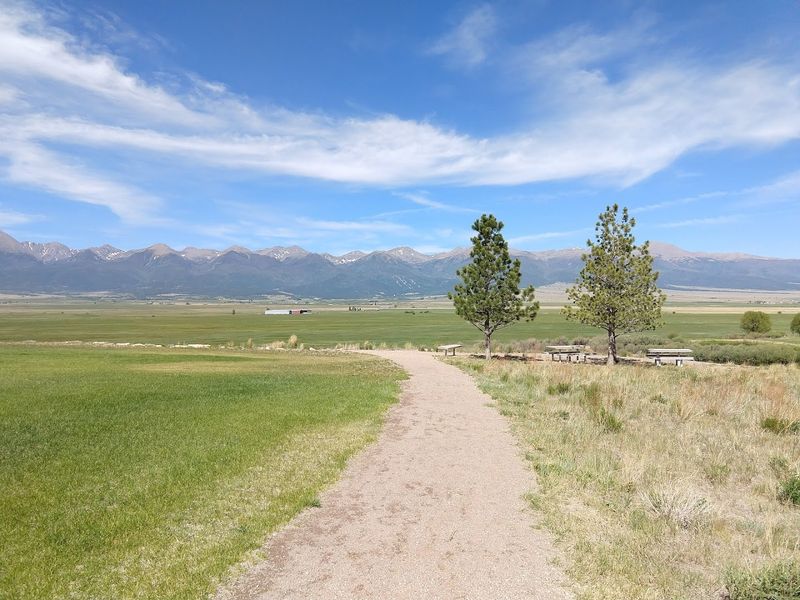
The trail system accessible from Westcliffe covers a remarkable range of difficulty levels, which means nobody in your group gets left staring at the parking lot. The San Isabel National Forest surrounds the area, offering well-maintained paths through aspen groves, alpine meadows, and rocky ridgelines.
The Humboldt Peak Trail is one of the more celebrated routes, gaining serious elevation and rewarding hikers with panoramic summit views that stretch into New Mexico on clear days.
Shorter, lower-elevation options wind through meadows thick with wildflowers in summer, making them genuinely enjoyable for families with younger children or visitors who prefer a scenic walk to a demanding climb. Mule deer, elk, and the occasional black bear share the landscape, so wildlife sightings are common enough to feel exciting without being alarming.
The trails here do not feel manufactured or manicured. They feel like actual wilderness, which is increasingly rare and genuinely valuable.
Best For: Hikers of all experience levels, wildlife watchers, wildflower enthusiasts, and anyone who needs a legitimate excuse to be outside for several hours. Bring water, layers, and snacks regardless of the forecast; mountain weather shifts faster than most people expect.
Wildlife Watching: Where the Animals Have Not Gotten the Memo About Crowds
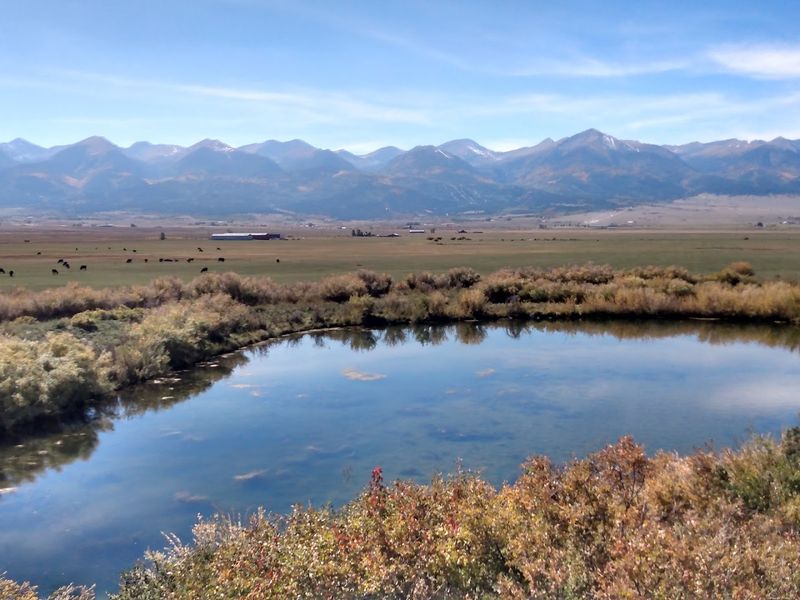
One of the quieter pleasures of the Wet Mountain Valley is how casually wildlife appears here. Elk herds move through the valley floor in numbers that would seem implausible if you had not seen it yourself.
During the fall rut, the sound of bull elk bugling carries across the open fields in a way that genuinely stops conversations mid-sentence.
Mule deer are a near-constant presence, often grazing close to the road with a calm indifference to passing vehicles that suggests they have assessed the situation and found humans largely unthreatening. Pronghorn, hawks, eagles, and occasionally black bear round out a wildlife roster that rivals many formal nature reserves.
The valley’s open terrain and relatively low human traffic create conditions where animals behave naturally rather than retreating. That makes observation richer and more memorable than staged wildlife experiences.
Quick Tip: Early morning and the hour before sunset are peak activity windows. Keep binoculars in the car; the distances across the valley floor are wide enough that good optics make a meaningful difference.
Stay in your vehicle when observing elk during the fall rut, as bulls can be unpredictable and impressively large up close.
Small-Town Main Street: Where 435 People Keep Things Genuinely Charming
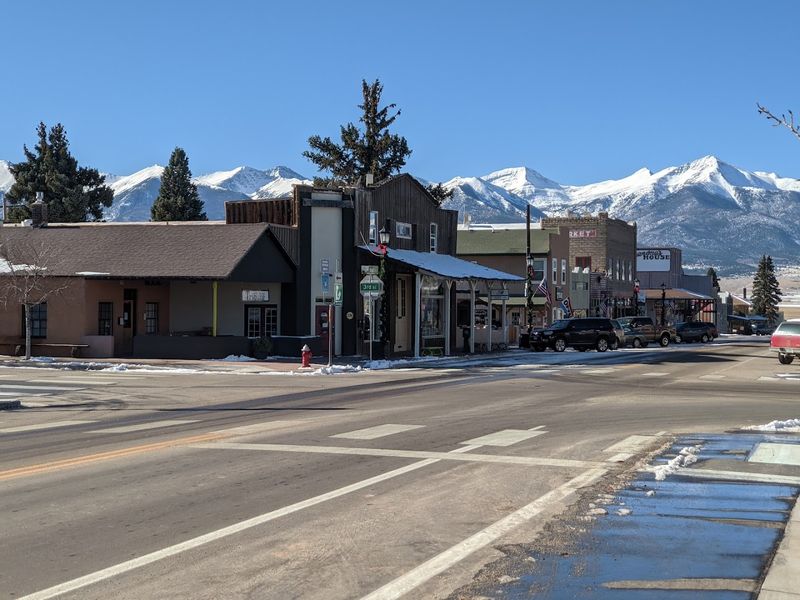
A town of 435 people should not be able to maintain a Main Street worth strolling, and yet Westcliffe manages it with a certain unhurried confidence. The commercial district is compact enough to cover on foot in under twenty minutes, which is either its limitation or its greatest feature depending on your mood.
Local shops, a hardware store, and small eateries line the street with the kind of authenticity that staged tourist towns spend millions trying to replicate.
The pace here is genuinely different. Nobody is rushing.
Conversations happen between strangers because the town is small enough that unfamiliar faces are mildly interesting rather than ignored. It functions as a real community first and a visitor destination second, which gives the whole place a grounded, lived-in quality that is harder to find than most people realize.
A short Main Street stroll after arriving is the best way to orient yourself and get a read on the town’s rhythm. Who This Is For: Travelers who are tired of “charming” towns that feel like theme parks.
Westcliffe operates on the logic of a place where people actually live, and that realness is the attraction. Grab a coffee, walk slowly, and resist the urge to optimize your time.
Photography Paradise: Landscapes That Make Amateur Shots Look Professional
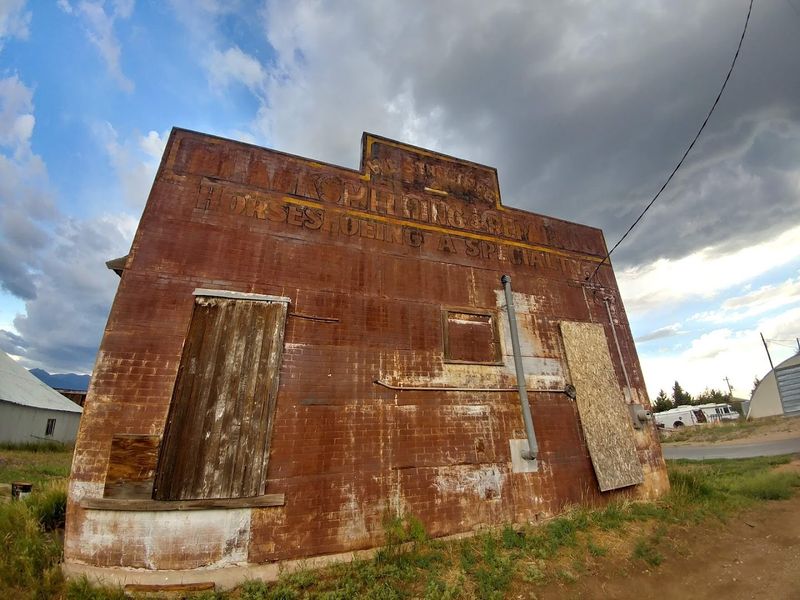
Few places in Colorado offer the combination of open valley floor and immediate dramatic mountain backdrop that Westcliffe delivers. The visual geometry here is almost unreasonably cooperative.
You can stand in a wildflower meadow, frame the Sangre de Cristo peaks behind you, and produce images that look like they required a helicopter and a professional crew.
The changing seasons add significant variety. Summer brings wildflowers and thunderstorm light that photographers specifically travel to Colorado to capture.
Fall turns the aspen groves into dense columns of gold. Winter covers the valley in snow while leaving the sky an almost aggressive shade of blue.
Each season offers a completely different visual palette without requiring you to find a new location.
The dark sky designation also opens up astrophotography possibilities that dedicated photographers find genuinely significant. Long-exposure Milky Way shots from the valley floor with mountain silhouettes are achievable with standard equipment and basic technique.
Planning Advice: The eastern edge of town near open ranch land offers the cleanest mountain foreground compositions. Midday light is flat and unflattering; aim for the first and last two hours of daylight for images that justify the drive home.
The Custer County Courthouse: A Small-Town Anchor With Genuine Character
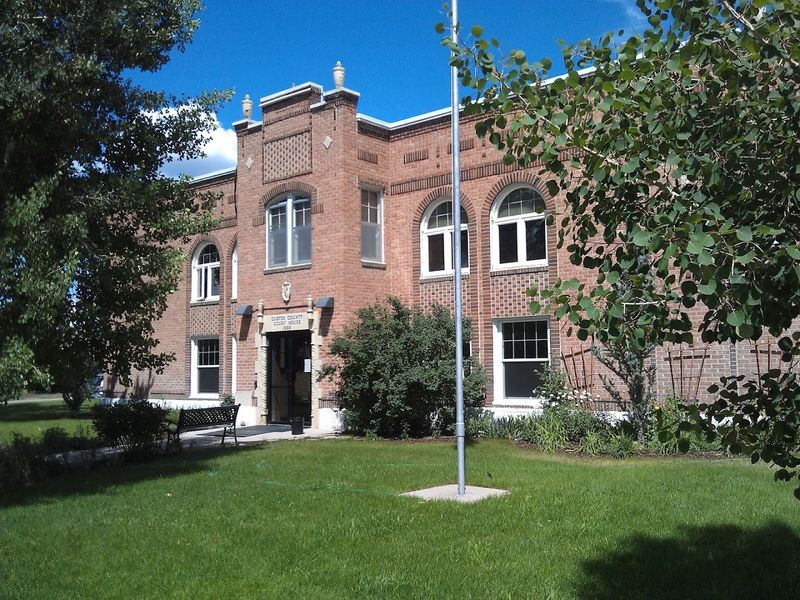
Westcliffe serves as the county seat of Custer County, which means the Custer County Courthouse anchors the town with a sense of civic weight that feels slightly larger than the population would suggest. The building is a functional piece of local government and a visual landmark that grounds the town center with the kind of permanence small communities tend to build their identity around.
Custer County itself covers a wide swath of southern Colorado, and Westcliffe as its seat means the town punches slightly above its residential weight class in terms of services and infrastructure. For visitors, that translates to a town that feels organized and navigable despite its size.
The courthouse square area makes for a natural gathering point and a good reference landmark when orienting yourself on foot. Why It Matters: Understanding that Westcliffe is a working county seat rather than simply a scenic hamlet helps set expectations correctly.
This is a town with real civic function and a permanent community, not a seasonal resort that empties in October. That distinction matters if you are considering a longer stay or exploring the area as a potential base camp for multi-day outdoor adventures in the surrounding national forest.
Four-Season Appeal: Why Winter Visits Deserve More Credit Than They Get
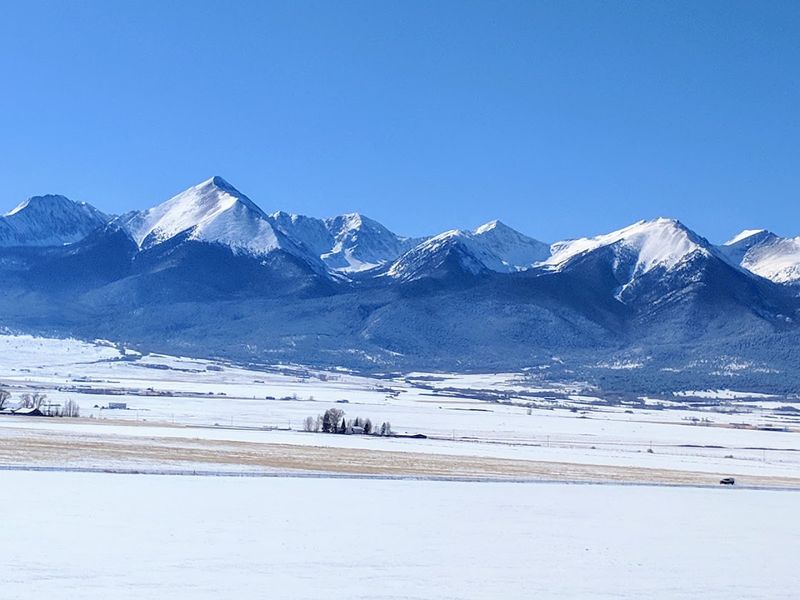
Most people discover Westcliffe in summer and assume that is the only season worth the trip. Those people are missing something.
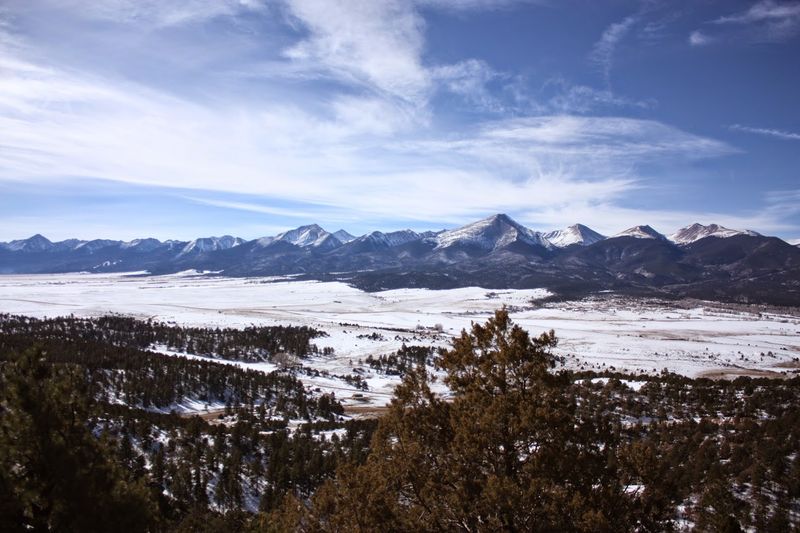
Winter in the Wet Mountain Valley transforms the landscape into a scene that requires no Instagram filter and very little imagination. Snow settles across the open fields, the mountains sharpen against cold blue skies, and the town quiets to a frequency that summer simply cannot replicate.
Cross-country skiing and snowshoeing become legitimate activities in the surrounding San Isabel National Forest, and the reduced visitor numbers mean trails feel genuinely private. The dark skies, already exceptional, become even more striking in the dry, clear winter air.
Cold temperatures keep atmospheric moisture low, which is exactly what astronomers and stargazers want.
For couples or solo travelers who prefer solitude over social scenes, a winter weekend in Westcliffe delivers a quality of stillness that is increasingly difficult to find within a reasonable drive of most Colorado cities. Common Mistakes to Avoid: Do not underpack for temperature swings.
Winter nights at this elevation drop sharply, and daytime warmth is unreliable. Layer aggressively, check road conditions on Colorado 69 before departing, and embrace the slower pace rather than trying to schedule it into submission.
The Mountain Escape That Does Not Require an Explanation
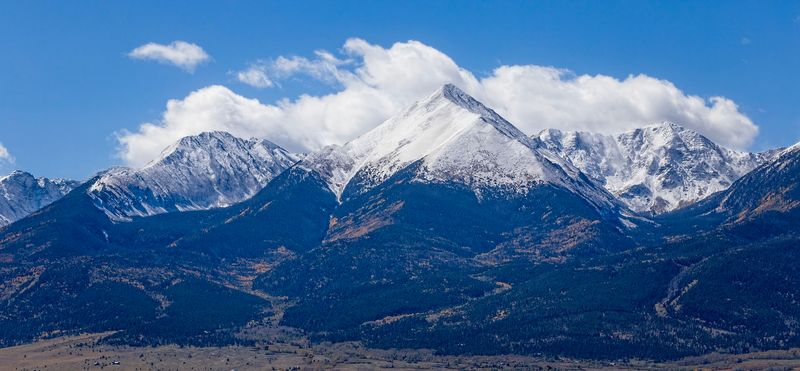
Westcliffe, Colorado sits at the intersection of accessible and genuinely wild in a way that most mountain towns have traded away in exchange for amenity upgrades and parking structures. The town itself is real, small, and unhurried.
The landscape surrounding it is dramatic, varied, and largely uncrowded. That combination is rarer than it should be.
Whether you arrive chasing a fourteener summit, a Milky Way photograph, an elk herd at dusk, or simply a weekend that does not feel like a scheduled production, Westcliffe delivers without requiring you to manage expectations downward. It is the kind of place that earns a return visit not because it promises everything but because it delivers what it actually has, and what it has is substantial.
Key Takeaways: International Dark Sky designation makes stargazing world-class. The Sangre de Cristo mountain views are immediate and dramatic.
Wildlife is abundant and observable year-round. The town is authentic, small, and genuinely functional as a community.
Four seasons each offer distinct value. Westcliffe is located at Colorado 81252, roughly two and a half hours from Denver.
Visit the town website at townofwestcliffe.com for current local information before your trip.