
This Haunted Trail In South Carolina Leads Through Mysterious Fort Ruins
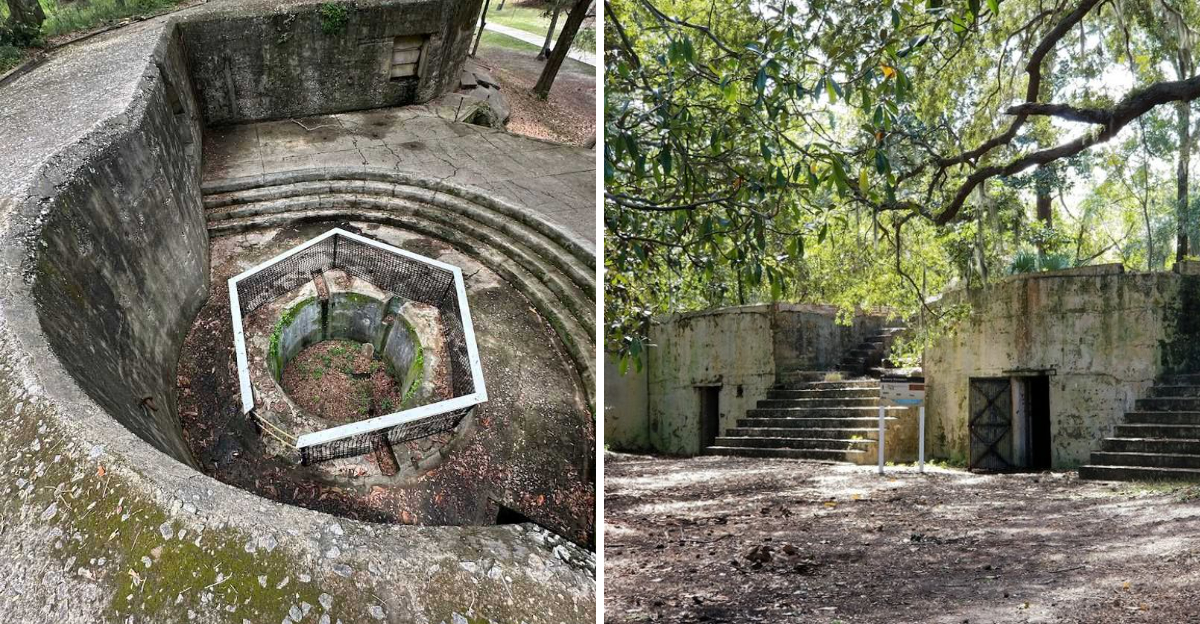
The farther you drive along the South Carolina coast, the more it starts feeling like the modern world quietly disappears behind you.
Marshes stretch toward the horizon, Spanish moss hangs low over the road, and hidden among the trees on St. Helena Island sits a crumbling fort that feels frozen in another century.
South Carolina hides places so atmospheric that they barely feel real once you finally see them in person.
Fort Fremont is not polished or crowded like a typical tourist stop. The old concrete walls are cracked by time, narrow passages disappear into shadow, and the silence around the ruins somehow makes the history feel even heavier.
I came expecting a quick walk and a few photos.
Instead, I spent hours wandering the grounds, staring out across the water, and trying to imagine what this lonely stretch of coastline looked like during the Spanish-American War.
There is something eerie, peaceful, and strangely addictive about this place all at once.
And honestly, that feeling is what makes this hidden corner of South Carolina so unforgettable.
The Fort That Time Almost Forgot
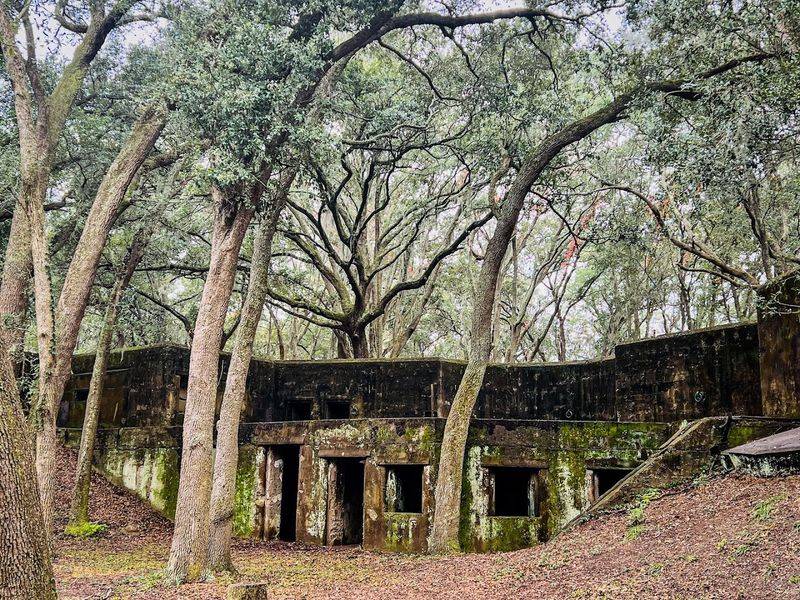
Back in 1898, the United States was in the middle of the Spanish-American War, and military planners were scrambling to protect the southeastern coastline from potential naval attacks.
Fort Fremont was one of several coastal defense installations built during that anxious period, and it was positioned strategically along Port Royal Sound in South Carolina.
Named after Major General John C. Fremont, the fort was constructed with thick concrete batteries designed to hold massive artillery guns capable of stopping enemy ships.
What makes this place so quietly eerie is that it was never actually used in combat, which means everything here froze in place the moment the military walked away.
The walls still stand after more than a century, holding their ground against time, weather, and the creeping coastal vegetation that has slowly made itself at home in every crack and corner.
Standing inside those rooms, I genuinely felt like I had stepped into a forgotten chapter of American history.
A Trail That Feels Like A Ghost Story
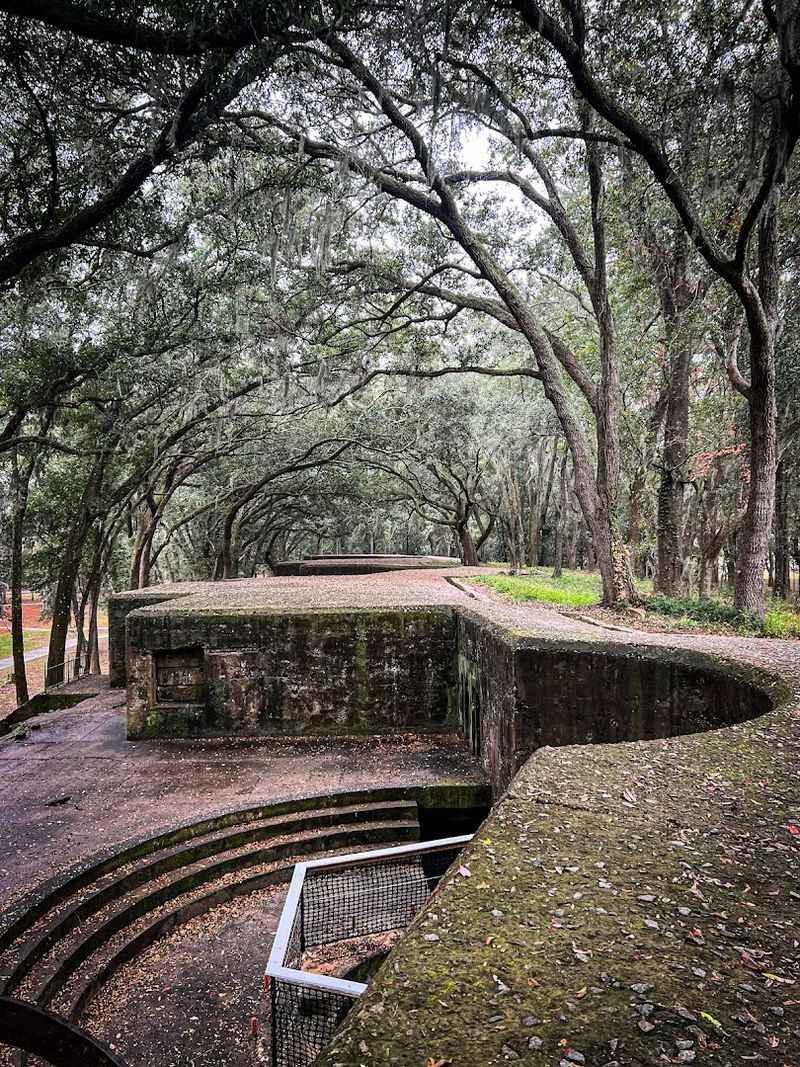
The trail system at Fort Fremont Preserve is not long by any measure, but every step feels loaded with atmosphere that most hiking trails simply cannot match.
Thick trees close in on both sides of the path, and the combination of Spanish moss, salt air, and crumbling concrete creates a mood that is hard to shake even after you leave.
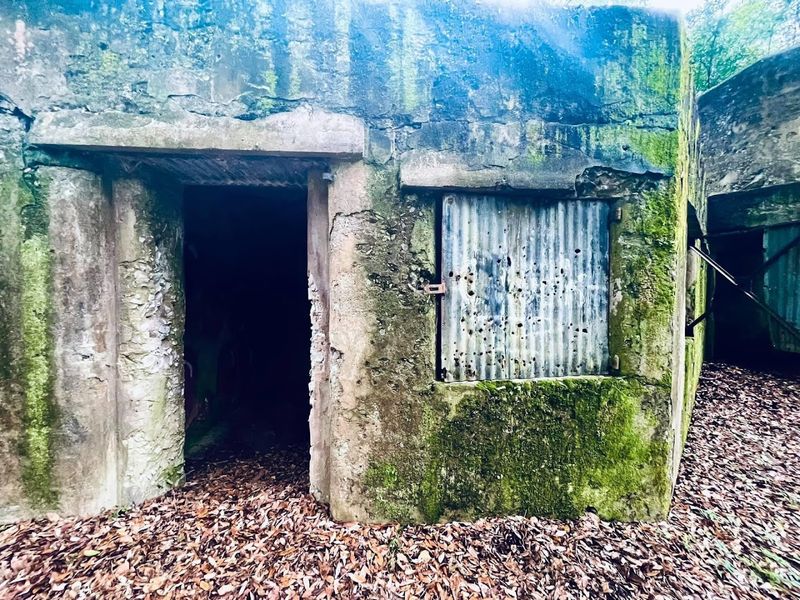
Visitors have described an odd sense of unease while walking through certain sections of the fort, particularly near the old ammunition storage rooms where the walls feel especially close and the light barely reaches inside.
I personally noticed how sound changed inside those chambers, growing muffled and strange in a way that made the hair on my arms stand up.
Whether you chalk that up to acoustics or something else entirely is your call, but the trail absolutely earns its reputation for being one of the more unsettling walks in the state.
Wear good shoes, because leaf-covered concrete gets slippery fast.
Concrete Batteries Built To Stop A Navy
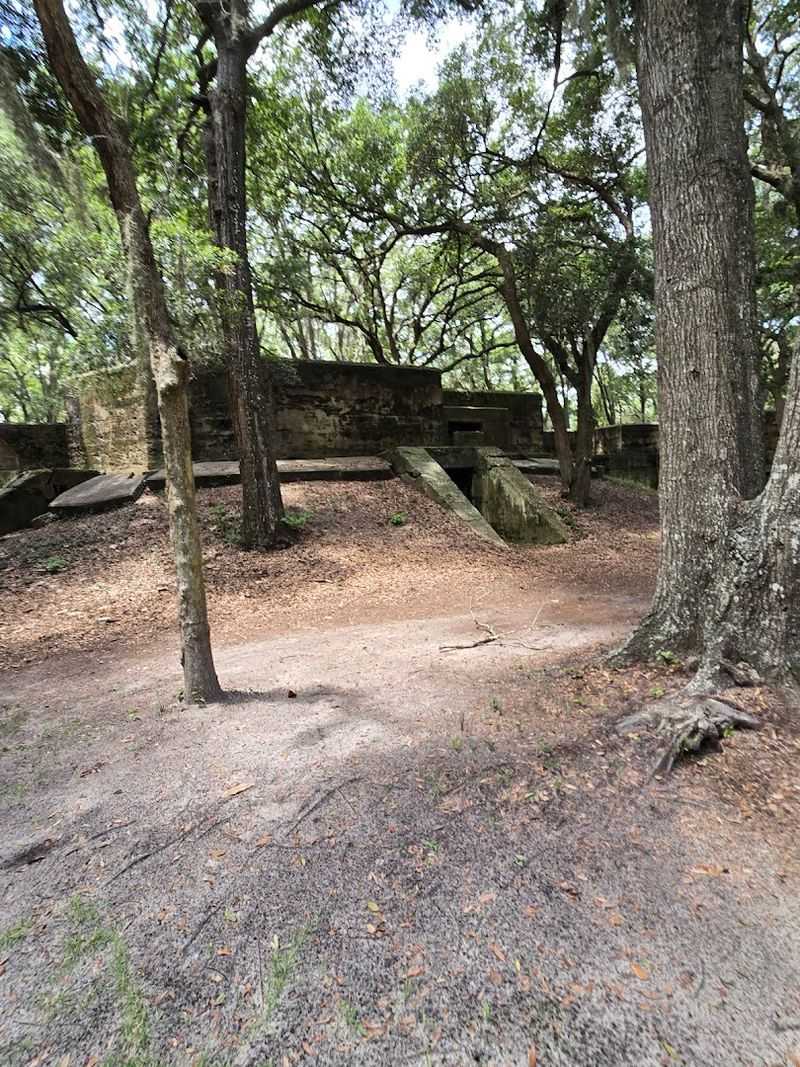
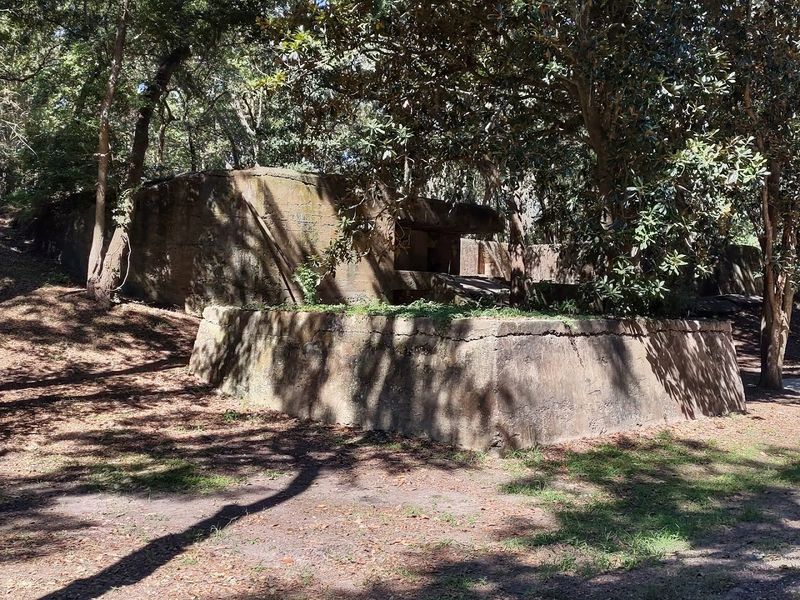
The most visually striking features at Fort Fremont are the concrete gun batteries, which were engineered to hold large-caliber disappearing guns that could rise, fire, and drop back below the parapet before enemy ships could return fire.
This disappearing gun technology was cutting edge for 1898, and the fort was equipped with ten-inch rifles that could hurl a projectile several miles out into Port Royal Sound.
Walking up on top of the ramparts today, you can still see the circular platforms where those massive guns once sat, and the views of the water from that vantage point are genuinely impressive.
The concrete is thick enough that even after more than a hundred years of coastal weather, the basic structure remains solid and climbable, though visitors should stay alert since there are no guardrails along the higher sections.
One reviewer described the height as a potential eight-foot drop onto concrete, so this is a place where watching your step is not just a suggestion but an actual safety priority.
Free to Enter And Open Every Day
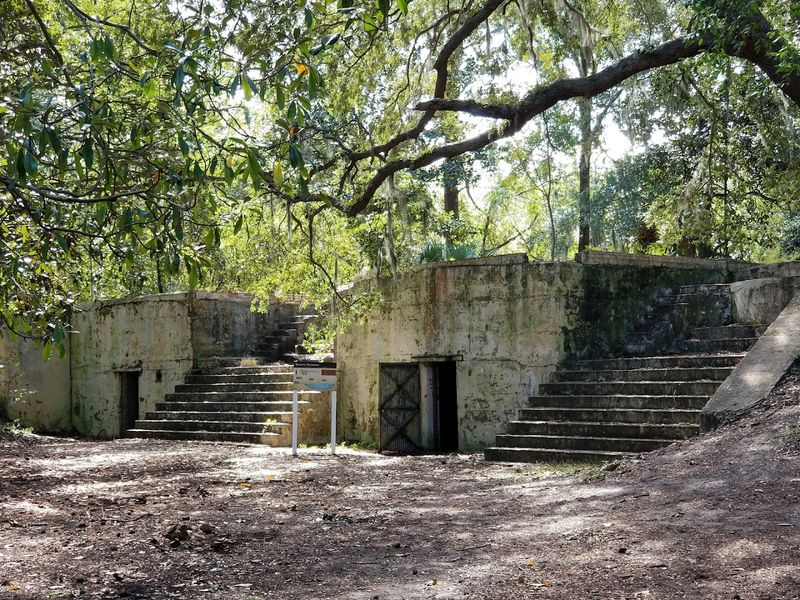
One of the most refreshing things about Fort Fremont Preserve is that it costs absolutely nothing to visit, which is increasingly rare for a historical site with this much to offer.
The preserve is open seven days a week from 7 AM to 7 PM, giving visitors plenty of time to explore the ruins, walk the trail, and catch a coastal sunset without feeling rushed.
The interpretive center, which houses displays, models of the original fort layout, and a short film about the fort’s history, is open Thursday through Saturday from 1 to 4 PM, so planning your visit around those hours adds a richer layer to the experience.
Clean restrooms and a water fountain are available at the interpretive center building every day of the week, which is a small but genuinely appreciated detail when you are out exploring in South Carolina heat.
The picnic area has also been praised by multiple visitors as one of the nicest they have encountered, making this a solid choice for a full afternoon outing with family.
The Beach Behind The Fort
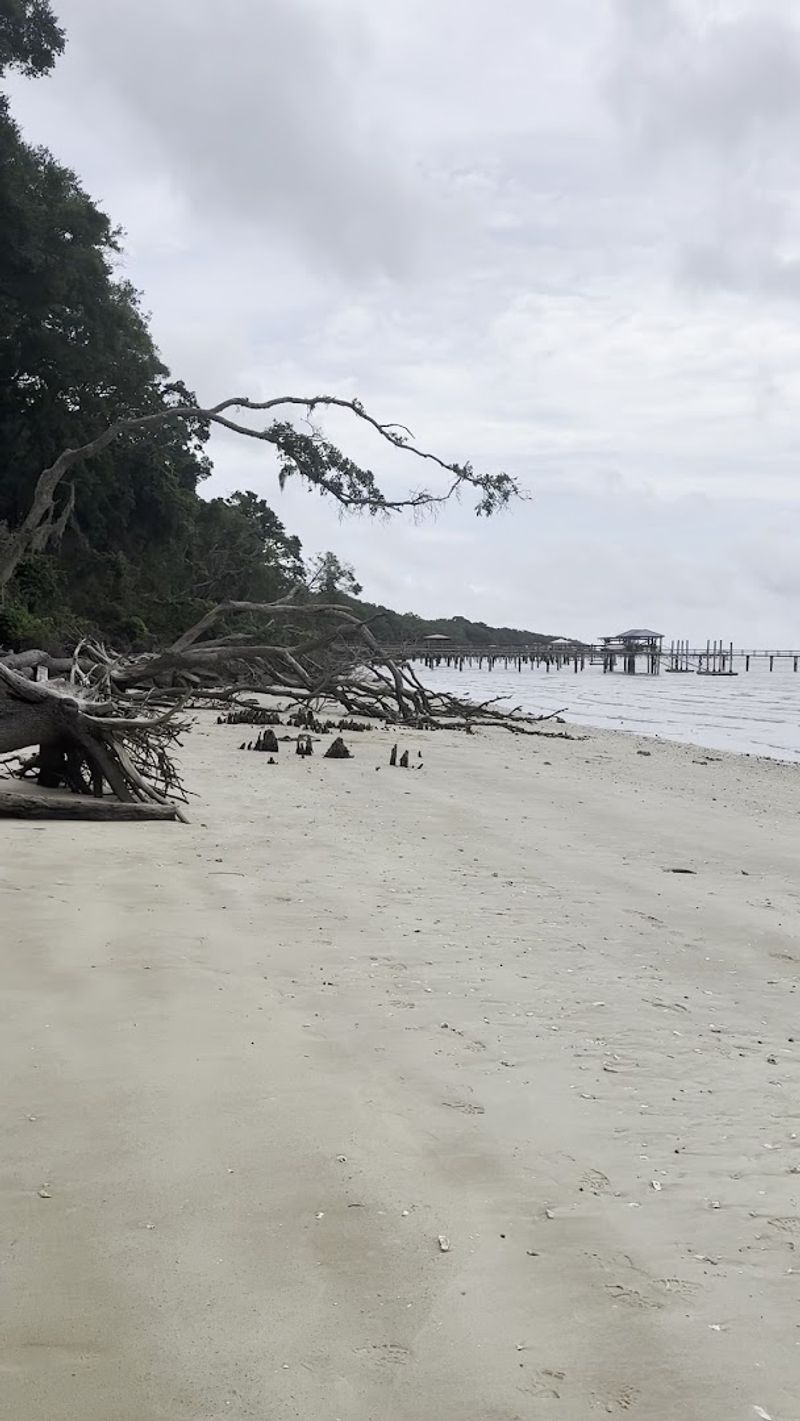
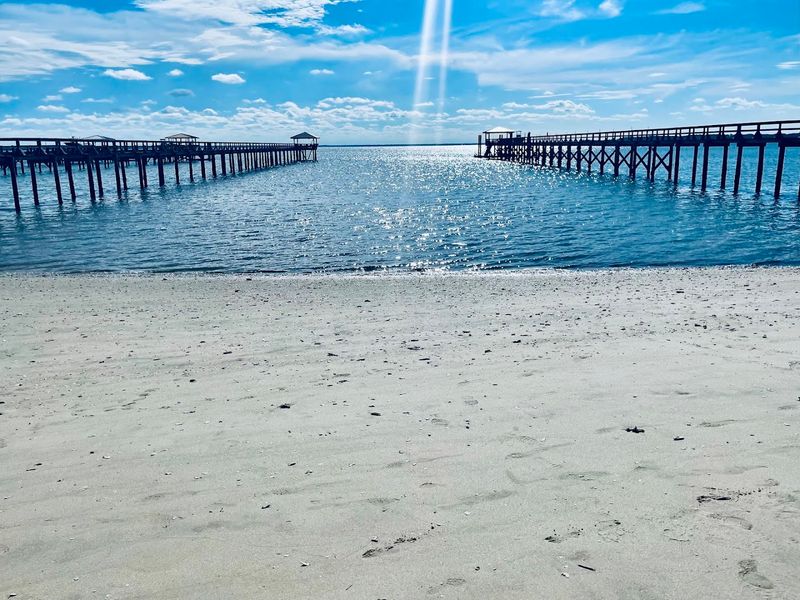
Most people come to Fort Fremont for the ruins, but the small beach tucked behind the fortifications is the kind of surprise that turns a good visit into a great one.
The shoreline sits right along Port Royal Sound, and the combination of driftwood scattered across the sand and the old fort walls rising nearby creates a scene that one reviewer compared to something straight out of a Pirates of the Caribbean set.
Shell hunters will find the beach more rewarding for interesting rocks and natural debris than for classic seashells, but the atmosphere more than makes up for any shortage of conch shells.
I spent a solid twenty minutes just standing at the water’s edge, watching the light shift over the sound while the ruins loomed quietly behind me, and the whole scene felt almost cinematic.
The beach is a short walk from the main fort area, and the path to reach it passes through some genuinely beautiful coastal scenery that adds to the overall sense of discovery.
Guided Tours And Knowledgeable Staff
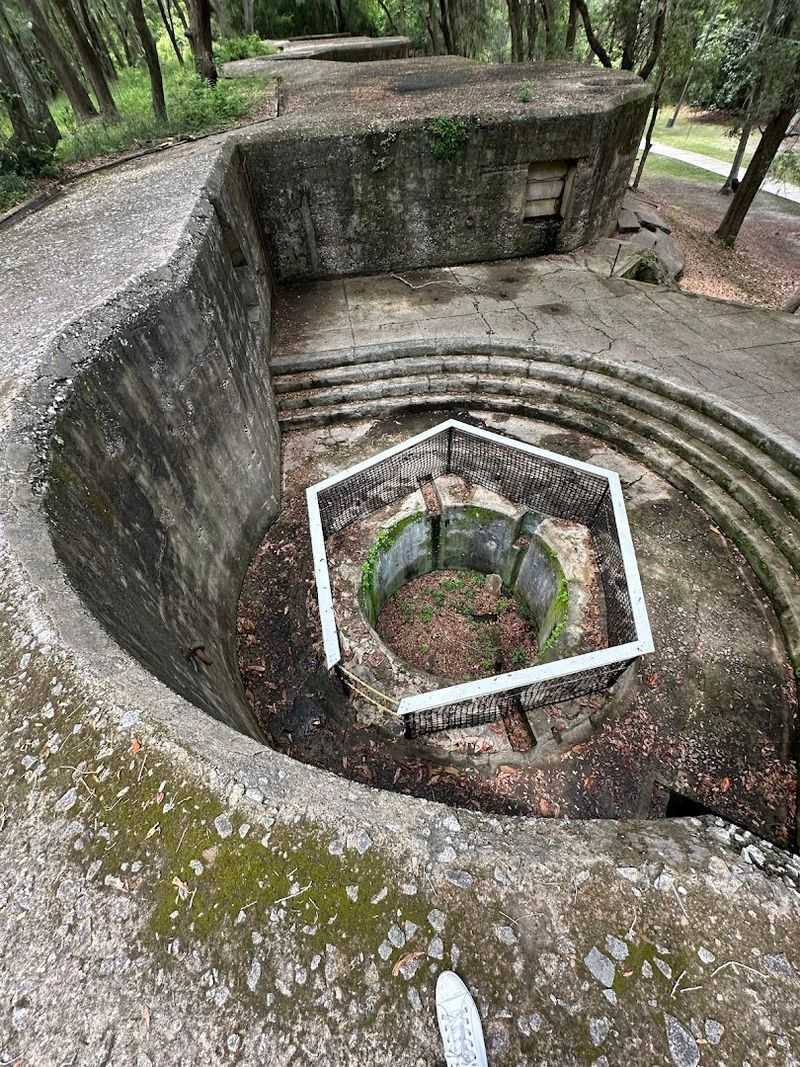
For visitors who want more than a self-guided wander through the ruins, Fort Fremont offers guided tours that bring the history of the fort to life in ways that reading a plaque simply cannot.
The staff at the interpretive center have been consistently praised in visitor reviews for being knowledgeable, enthusiastic, and genuinely happy to answer questions about the fort’s construction, armament, and eventual decommissioning.
Tour guides are available on weekends, so if you are the type who likes to ask questions and get real answers, a Friday through Sunday visit is the way to go.
The interpretive center itself features models showing how the original fort looked when it was fully operational, including scale recreations of the surrounding support buildings that no longer exist.
A short film shown at the center walks visitors through the full story of Fort Fremont in a way that is engaging and easy to follow even for younger visitors.
Good information makes old ruins feel alive again.
Graffiti, History, And The Tension Between Them
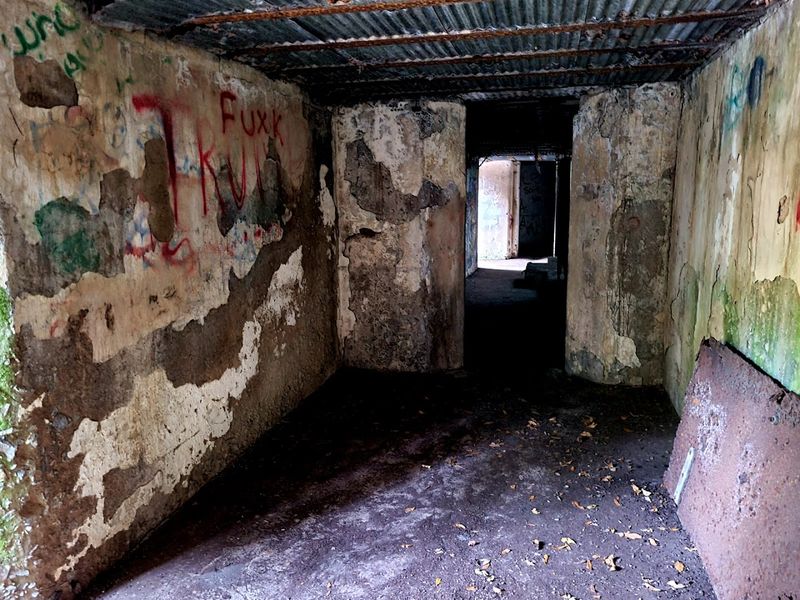
There is an uncomfortable truth sitting inside the ammunition storage rooms at Fort Fremont, and it takes the form of graffiti that has accumulated on the interior walls over many years.
Multiple visitors have noted the graffiti with a mix of disappointment and understanding, acknowledging that it detracts from the pristine historical experience while also recognizing that the fort’s open access makes it difficult to fully prevent.
Interestingly, several reviewers have pointed out that the graffiti does not ruin the overall experience, and that the sheer weight of the history surrounding you is strong enough to push past the visual noise.
Standing in those dark, narrow rooms where soldiers once stored artillery shells, it is easy to feel the original purpose of the space even through the modern scrawl on the walls.
The fort remains open to the public largely because visitors continue to treat it with general respect, and the hope among the local community is that future guests will help preserve what remains.
History is only as safe as the people who choose to protect it.
A Sunset Worth Planning Around
A few visitors have specifically made the trip to Fort Fremont in the late afternoon, and the consensus is that watching the sun drop toward Port Royal Sound from the top of the ramparts is one of those experiences that stays with you.
The drive to the preserve along Lands End Road during golden hour has also drawn praise, with one visitor noting that even dashcam footage of the journey looked stunning, which says a lot about the quality of the scenery.
The fort faces the water in a way that frames the sunset almost perfectly, with the thick concrete walls creating a natural foreground that makes for incredible photographs.
A recently added gazebo near the picnic area gives visitors a comfortable spot to sit and enjoy the view without having to perch on the edge of a concrete rampart.
Paved accessibility paths have also been added in recent years, making the preserve more welcoming to visitors of all mobility levels who want to experience that golden hour magic.
Few places reward an evening visit quite like this one does.
Safety Tips Every Visitor Should Know
Fort Fremont Preserve is a genuinely exciting place to explore, but it comes with a few physical realities that every visitor should be aware of before they start climbing around.
The ramparts reach heights where a fall could mean dropping more than eight feet onto solid concrete, and there are no guardrails or safety barriers along the top edges, so keeping a close eye on children at all times is non-negotiable.
Fallen leaves cover much of the concrete surface during cooler months, and that combination of smooth stone and wet leaves creates slipping hazards that have caught more than one visitor off guard.
Solid, closed-toe footwear with good grip is strongly recommended by experienced visitors, and sandals or flip flops are a genuinely bad idea for anything beyond the flat picnic area.
The preserve also has clean restrooms and a water fountain available daily, so staying hydrated during warmer months is easy enough if you remember to take advantage of those facilities before heading out on the trail.
Prepared visitors always have more fun.
Why Fort Fremont Deserves More Visitors
Fort Fremont Preserve is one of those places that genuinely punches above its weight, offering a rich historical experience, a beautiful natural setting, beach access, and free admission all in one compact location.
Rated 4.6 stars across more than 570 reviews, the preserve has built a loyal following among history enthusiasts, families, photographers, and anyone who appreciates the kind of quiet, unhurried exploration that feels increasingly hard to find.
Located at 1124 Lands End Rd, St Helena Island, SC 29920, the preserve is a short drive from Beaufort, making it an easy addition to any Lowcountry itinerary without requiring a full day’s commitment.
The site is maintained thoughtfully, with upgraded paved areas, a well-kept picnic space, and a visitor center that adds real educational depth for those who seek it out.
For a destination that charges nothing at the gate and delivers this much atmosphere, character, and history, Fort Fremont Preserve is simply one of South Carolina’s most underappreciated spots.
Once you visit, skipping it on your next trip through the Lowcountry will feel genuinely impossible.