
This Former Pennsylvania Asylum Is Considered One Of America’s Most Haunted
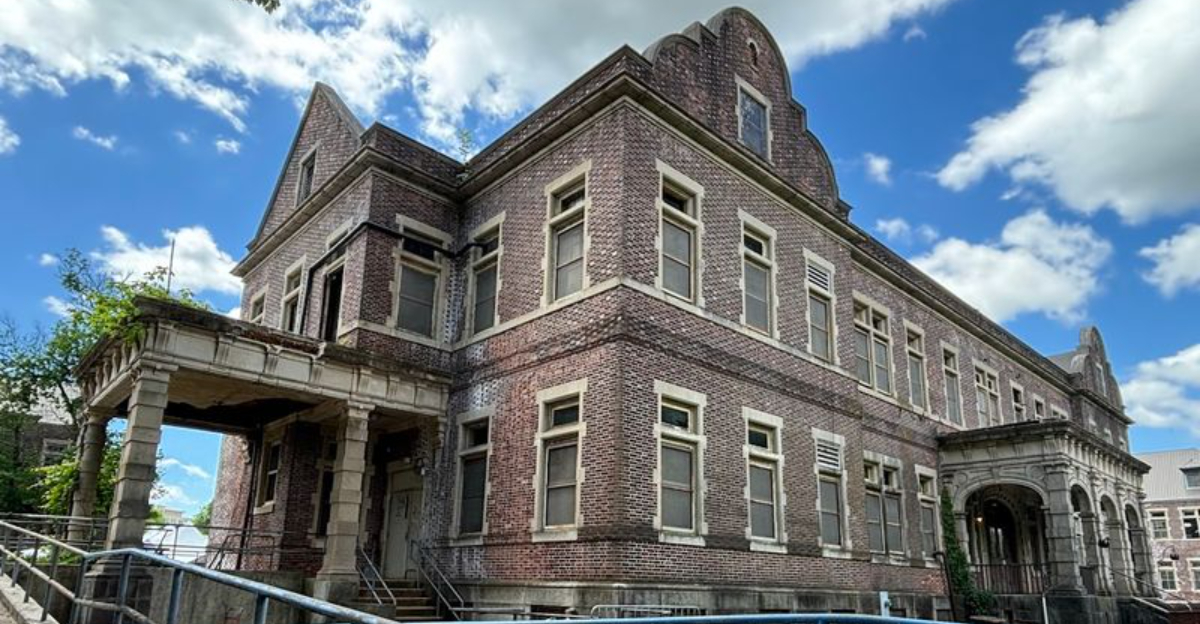
Some places carry a chill before the ghost stories even begin.
A former Pennsylvania asylum with a haunted reputation brings that uneasy mix of history, mystery, and shadowy atmosphere that makes people both curious and nervous to step closer.
Empty halls, old rooms, and whispered accounts give the site a heavy feeling, like the past never fully packed up and left.
This is the kind of destination that pulls in paranormal fans, history lovers, and anyone who enjoys a scare with real weight behind it. The fascination is not just in the legends.
It is in the way a place can feel frozen between memory and mystery, daring visitors to keep walking even when every instinct says to slow down.
I have always been drawn to places that make my imagination work overtime, and this Pennsylvania site sounds haunting in every possible sense.
Pennhurst Was Built To House Thousands But Quickly Became Overcrowded
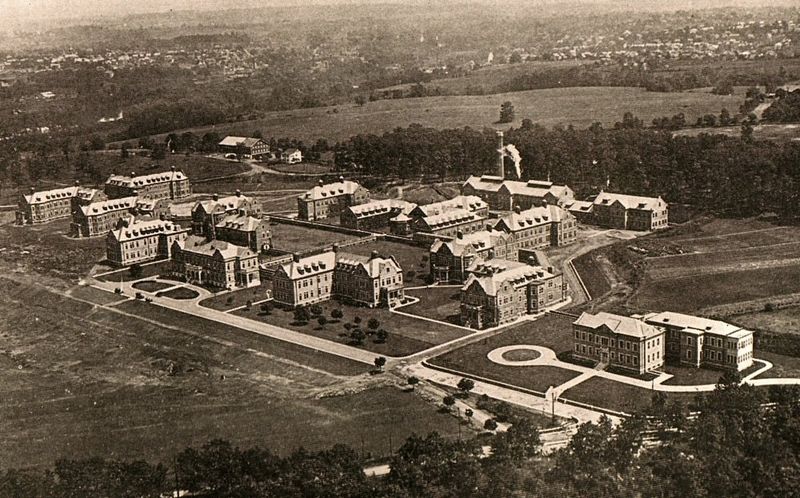
When Pennhurst State School and Hospital first opened its doors in 1908, it was designed with a hopeful, if misguided, purpose.
Pennsylvania lawmakers believed that gathering people with intellectual and physical disabilities into one central location would allow the state to care for them more efficiently.
The original plan called for a self-sustaining campus where residents would grow their own food, work in laundries, and live in structured routines.
It sounded organized on paper. In reality, the population grew far beyond what the buildings could handle.
By the mid-twentieth century, Pennhurst Asylum was holding nearly 2,800 residents in a space designed for far fewer.
Overcrowding meant that staff were stretched thin, resources were scarce, and the quality of care dropped dramatically.
That dangerous imbalance between the number of residents and available support became one of the earliest warning signs that something had gone very wrong inside those walls.
A Shocking TV Expose In 1968 Changed Everything
Sometimes a single news report can shake an entire country awake, and that is exactly what happened in 1968 when Philadelphia television journalist Bill Baldini aired a five-part investigative series called “Suffer the Little Children.”
The footage he captured inside Pennhurst Asylum was so disturbing that viewers across Pennsylvania and beyond were left speechless.
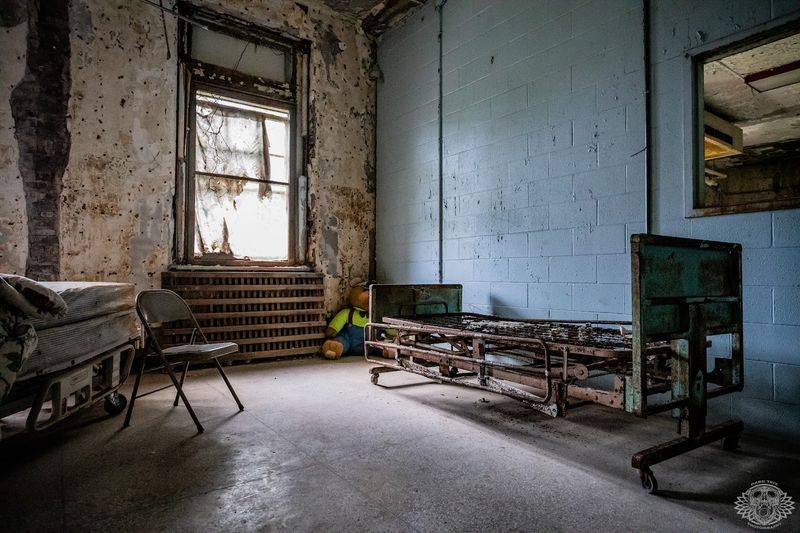
Baldini’s cameras showed residents lying on bare floors, children with no stimulation or care, and staff overwhelmed by impossible conditions.
The series sparked immediate public outrage and forced politicians to pay attention to what had been happening behind closed doors for decades.
Many historians consider this broadcast a turning point not just for Pennhurst State School and Hospital, but for disability rights across the United States.
It proved that exposing institutional abuse through media could create real political pressure.
The footage remains one of the most powerful examples of journalism driving meaningful social change in American history.
Pennhurst Finally Closed Its Doors In 1987 After Decades Of Controversy
After years of lawsuits, public protests, investigative journalism, and political debate, Pennhurst State School and Hospital officially closed in 1987.
The closure did not happen overnight. It was the result of a slow, court-mandated process that involved relocating hundreds of residents into community group homes across Pennsylvania.
For many former residents, the move brought a better quality of life with more personal space, individualized care, and greater freedom. For others, the transition was difficult and disorienting.
The closure of large state institutions like Pennhurst Asylum marked a major shift in how America approached care for people with intellectual and developmental disabilities.
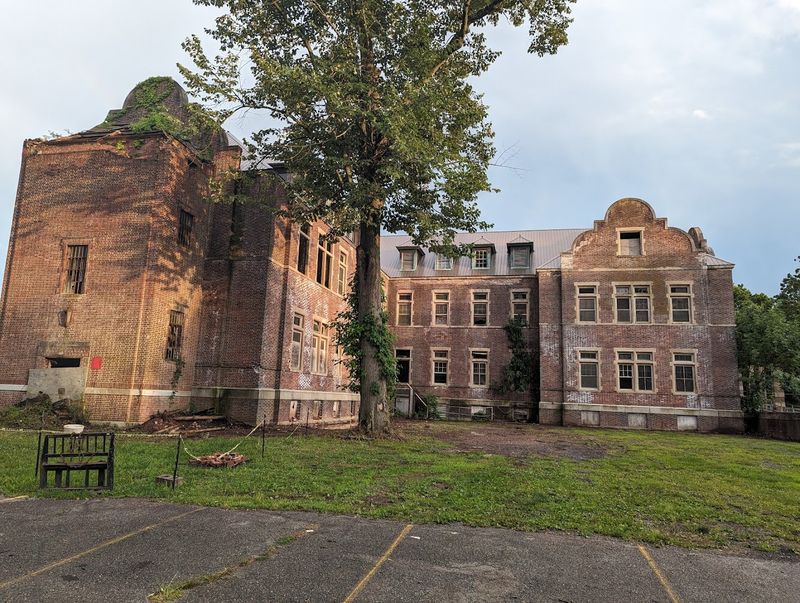
The buildings themselves were left largely intact after the closure, and the sprawling campus in Spring City began its long transformation into the historically significant and reputedly haunted landmark it is today.
The silence that settled over the grounds after 1987 only deepened the sense of mystery that surrounds the place to this day.
The Landmark Halderman v. Pennhurst Lawsuit Reshaped Disability Law
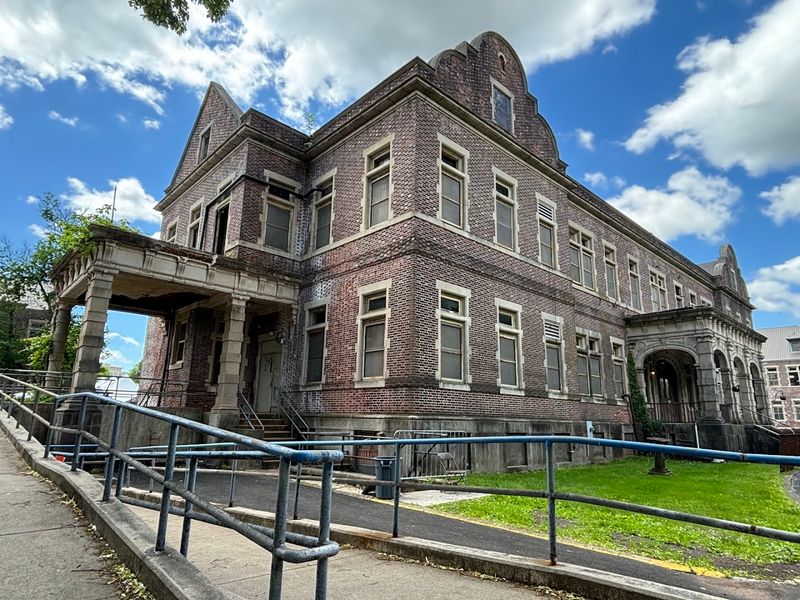
Few legal battles in American history have had as lasting an impact on disability rights as the case of Halderman v. Pennhurst State School and Hospital.
Filed in 1974 by attorney David Ferleger on behalf of resident Terri Lee Halderman, the lawsuit argued that conditions at the facility violated residents’ constitutional rights.
Federal Judge Raymond Broderick ruled in 1977 that Pennhurst Asylum was an environment so harmful that it could not be reformed.
He ordered that all residents be moved into smaller, community-based homes where they could receive proper care and live with greater dignity. That ruling was groundbreaking.
The case went all the way to the United States Supreme Court multiple times throughout the late 1970s and early 1980s. Although the legal journey was long and complicated, its legacy is clear.
The Pennhurst case helped establish that people with disabilities have the right to receive care in the least restrictive environment possible.
The Tunnels Beneath The Campus Are Among Its Most Unsettling Features
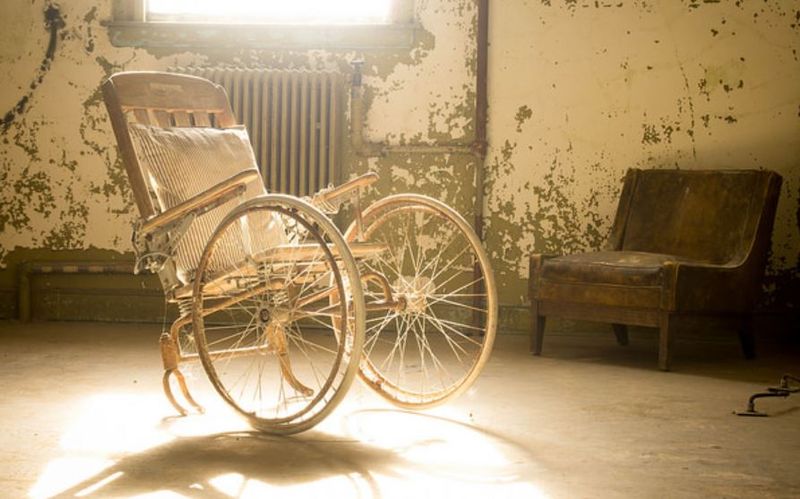
Stretching beneath the Pennhurst Asylum campus like a hidden nervous system, the underground tunnel network is one of the most talked-about features of the entire property.
These tunnels were originally built for practical purposes, connecting the various buildings so that staff could move patients, supplies, and equipment without going outside in harsh weather.
Over the decades, however, the tunnels took on a much darker reputation.
Former staff members and visitors have reported strange sounds, unexplained cold spots, and feelings of intense unease when walking through them.
Their low ceilings, crumbling walls, and near-total darkness make them deeply atmospheric even before any paranormal element is considered.
Paranormal investigation groups have recorded unusual audio and equipment readings in the tunnels more than almost anywhere else on the campus.
Whether you are a true believer in the supernatural or simply someone who appreciates genuinely creepy architecture, the underground passages of Pennhurst State School and Hospital are not easy to forget once you have seen them.
Ghost Hunters And Paranormal Investigators Have Made Pennhurst Famous
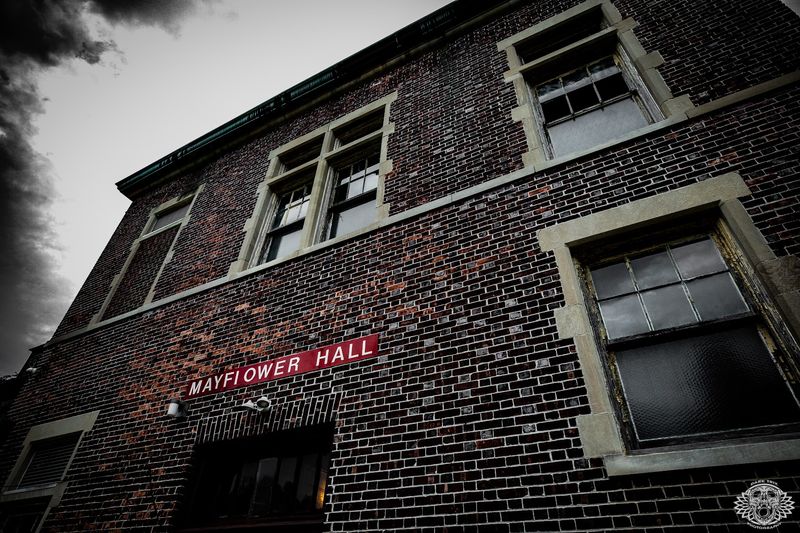
Long before Pennhurst Asylum became a commercial haunted attraction, it had already developed a reputation among paranormal enthusiasts as one of the most active locations in the northeastern United States.
The Mayflower Building in particular gained widespread attention after it was featured on the popular television program Ghost Hunters, which brought the site to a national audience.
Since then, countless paranormal investigation groups have booked overnight sessions at Pennhurst State School and Hospital, armed with EMF meters, audio recorders, and infrared cameras.
Many have reported capturing unexplained voices, strange shadows, and equipment malfunctions that they believe cannot be explained by ordinary means.
The facility now offers structured paranormal investigation experiences for the public, ranging from group sessions to private overnight bookings.
Visitors consistently describe the experience as genuinely unnerving, with the combination of real history, atmospheric decay, and reported supernatural activity creating something that feels unlike any staged haunted house.
The grounds have a weight to them that is hard to shake.
The Kirkbride Architecture Gives The Campus Its Iconic Brooding Look
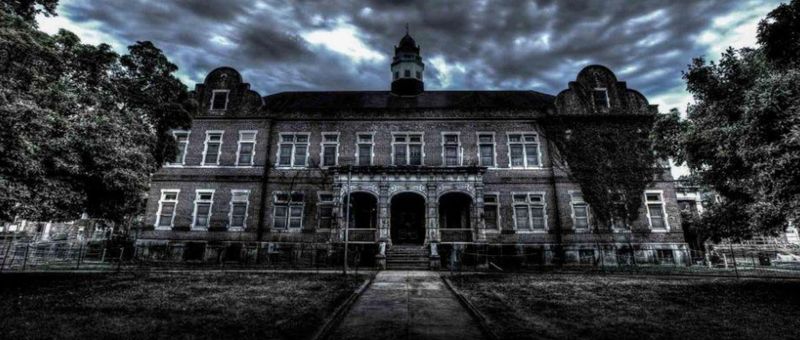
One of the first things that strikes visitors about Pennhurst State School and Hospital is its architecture.
The campus was built in a sprawling institutional style that emphasized separation, structure, and self-contained daily life, with multiple red-brick buildings spread across the grounds and linked in part by underground tunnels.
From the outside, the scale and symmetry still create an imposing visual effect, even after years of partial decay.
The contrast between the institution’s original stated mission of care and what actually happened inside over the decades makes the architecture feel deeply ironic to many who study the site.
Even now, the surviving buildings at the Spring City campus retain a striking visual presence.
The stone details, grand entry features, and long brick facades all contribute to an appearance that is simultaneously beautiful and deeply unsettling.
It is the kind of place that photographs seem unable to fully capture.
Pennhurst Became A Haunted Attraction That Draws Thousands Every Halloween Season
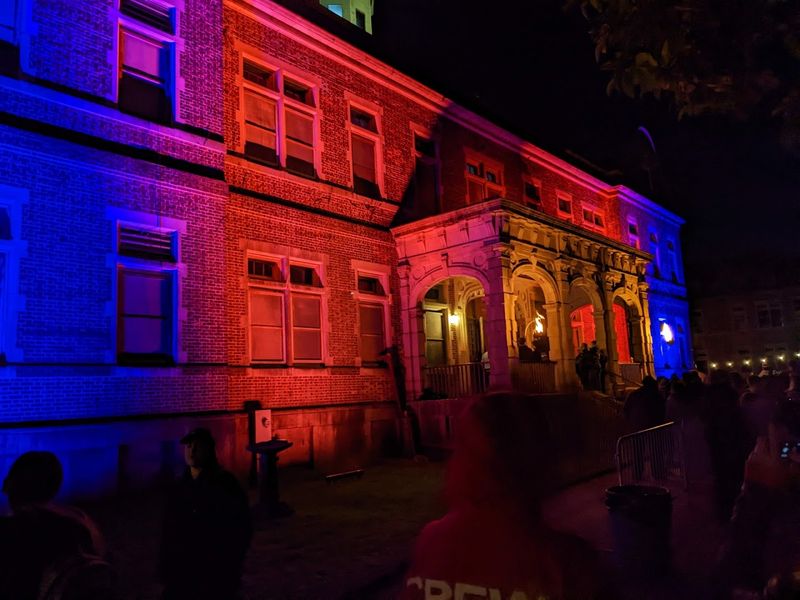
Starting in 2010, the Pennhurst campus was reimagined as one of the most unusual haunted attractions in the United States.
Rather than building a generic haunted house from scratch, the operators leaned into the property’s real and deeply unsettling history, using surviving sections of the former campus as the backdrop for a Halloween experience unlike anything else in the region.
Visitors move through parts of the site, including attraction areas and themed spaces, encountering professional actors in detailed costumes along the way.
The combination of authentic institutional architecture and theatrical horror creates an atmosphere that many guests describe as genuinely overwhelming in the best possible way.
Over the years, the attraction has evolved significantly, adding more elaborate props, themed rooms, and surrounding event features.
While some longtime fans miss the rawer, less produced version of the early years, the current Halloween experience at Pennhurst State School and Hospital still consistently ranks among the most talked-about haunted attractions on the East Coast.
History Tours Reveal The Painful Stories Of Former Residents
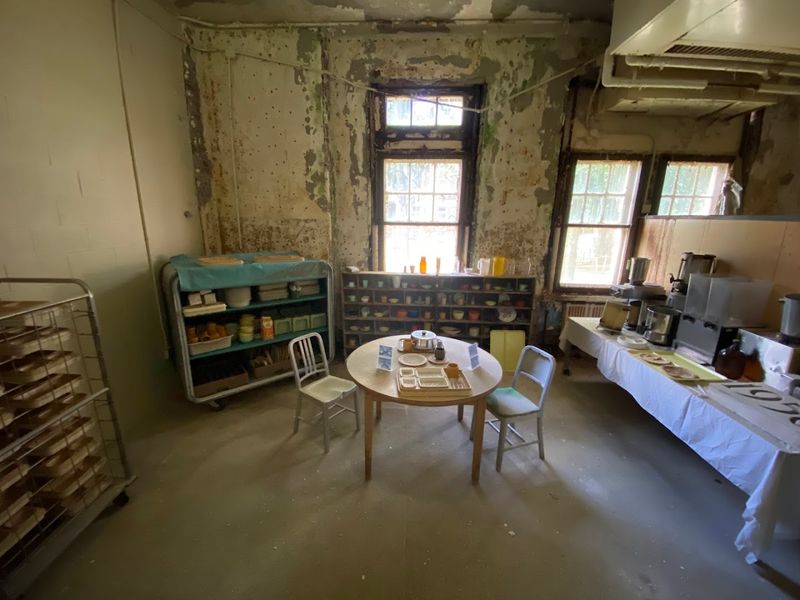
Beyond the paranormal events and Halloween thrills, Pennhurst offers something that many visitors find equally powerful: a serious, respectful history tour that tells the stories of the people who actually lived and worked there.
These guided experiences cover the full arc of the institution’s history, from its optimistic founding in 1908 to its troubled decades and eventual closure.
Tour guides share accounts of individual residents, explain how the facility operated day to day, and lead guests across the grounds while discussing the buildings and the people connected to them.
Many visitors, including healthcare workers and educators, have described these tours as genuinely moving and important for understanding how society has treated vulnerable populations throughout history.
Pennhurst State School and Hospital has also welcomed former staff members and historians who have shared firsthand memories, adding a deeply human dimension to the historical record.
For anyone who wants to understand the full story behind one of Pennsylvania’s most complex landmarks, the history tours are absolutely worth the time.
Preservation Efforts Are Racing Against Time To Save The Remaining Buildings
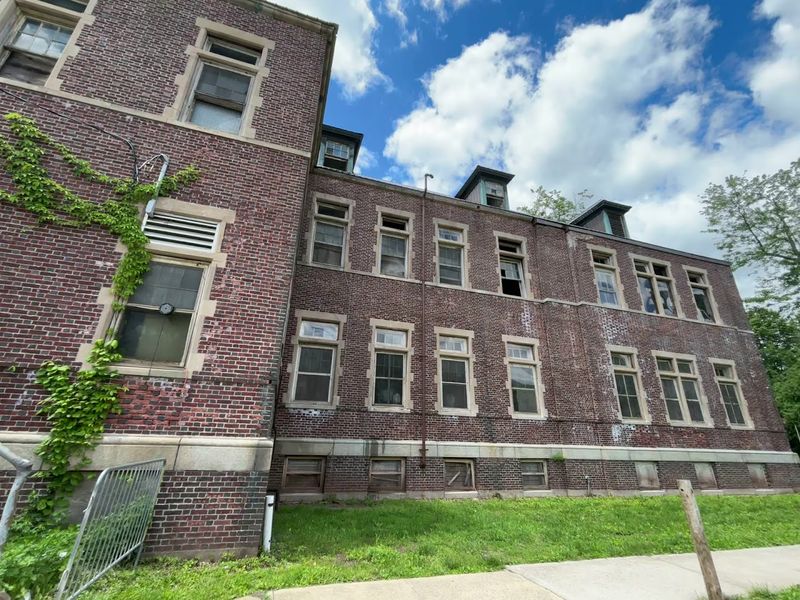
Several buildings on the Pennhurst campus have already been torn down over the years, and the ones that remain are in a constant battle against time, weather, and the natural process of decay.
The current caretakers of Pennhurst Asylum have made preservation a central mission, working hard to stabilize structures, maintain the grounds, and document as much of the site as possible before more is lost.
Visitors who have come to the Spring City campus in recent years frequently note how well-kept the grounds look compared to what might be expected from a facility that closed nearly four decades ago.
The cherry blossoms that bloom on the campus each spring offer a striking visual contrast to the weathered brick buildings, creating a scene that feels both beautiful and bittersweet.
Preserving Pennhurst State School and Hospital is about more than saving old buildings.
It is about keeping a complicated chapter of American history visible and accessible so that future generations can learn from it, reflect on it, and carry its lessons forward.