
This Illinois Arboretum Makes A Peaceful Day Trip For Nature Lovers
Some places lower your pulse before you even reach the first trail. Mine appeared on a quiet Tuesday morning in Illinois, behind a parking lot framed by towering oaks and the kind of silence that makes you forget your phone exists.
I expected a pleasant walk. Instead, I stepped into a 1,700-acre world of forests, gardens, meadows, and winding paths that felt both beautifully planned and a little wild around the edges.
This hidden-feeling outdoor escape near Lisle has a rare mix of calm and discovery. Serious hikers can chase longer routes, plant lovers can linger over labeled collections, and anyone craving fresh air can simply wander under the trees.
It is the kind of place that quietly turns one quick visit into a whole afternoon.
1,700 Acres Of Tree Magic

Most nature preserves give you a few trails and call it a day. The Morton Arboretum, located at 4100 IL-53, Lisle, IL 60532, offers something on an entirely different scale.
Spread across 1,700 acres, this living collection contains trees, shrubs, and plants gathered from all over the world.
Walking through different sections feels like flipping through chapters of a global botany textbook, except you are outside and the air smells wonderful. Scientists and horticulturists here actively study plant diversity, conservation, and tree resilience, making this much more than a pretty park.
The sheer size means you could visit a dozen times and still discover a grove or meadow you have never seen before. First-time visitors often underestimate how long it takes to truly explore even a fraction of the grounds.
Comfortable walking shoes are absolutely the right call here, and arriving early on weekends helps you claim quieter trails before the crowds settle in.
Where Arbor Day Roots Run Deep

Joy Morton, the salt magnate behind the Morton Salt Company, founded the arboretum in 1922 with a clear and personal mission: to plant and study trees for science and education. His family already had deep roots in tree appreciation, as his father Julius Sterling Morton created Arbor Day back in 1872.
That tree-planting spirit clearly ran in the family, and Joy took it to a spectacular level by dedicating his entire Lisle estate to the cause.
The founding vision was never just about creating a beautiful landscape but about building a serious scientific institution that would advance the understanding of woody plants worldwide.
Today, the arboretum holds true to that original purpose while also welcoming more than 1 million visitors each year.
Knowing this backstory while walking the grounds adds a whole new layer of appreciation. You are not just strolling through a park; you are walking through more than a century of intentional, passionate work.
Pick A Path, Any Path

Sixteen miles of maintained trails crisscross the arboretum, ranging from flat, easy loops to longer routes that take you through prairies, wetlands, and dense woodland canopies.
Trail maps are available at the visitor center, and clear signage throughout the property makes it surprisingly easy to navigate such a large space.
I personally spent about three hours on a combination of the Meadow Lake Loop and the East Woods trails, and I still felt like I had only scratched the surface. The paths are wide enough for strollers and wheelchairs in many areas, which makes this a genuinely inclusive outdoor experience for families of all kinds.
Service dogs are welcome daily, while non-service dogs are allowed only on designated Dog Admission Days and Tails on the Trails events with advance dog admission.
Bicycling is permitted on the Arboretum’s paved roads only, not on walking paths, wood-chipped trails, service roads, or off-road areas. The variety here keeps every visit feeling fresh.
A Backyard For Big Imaginations

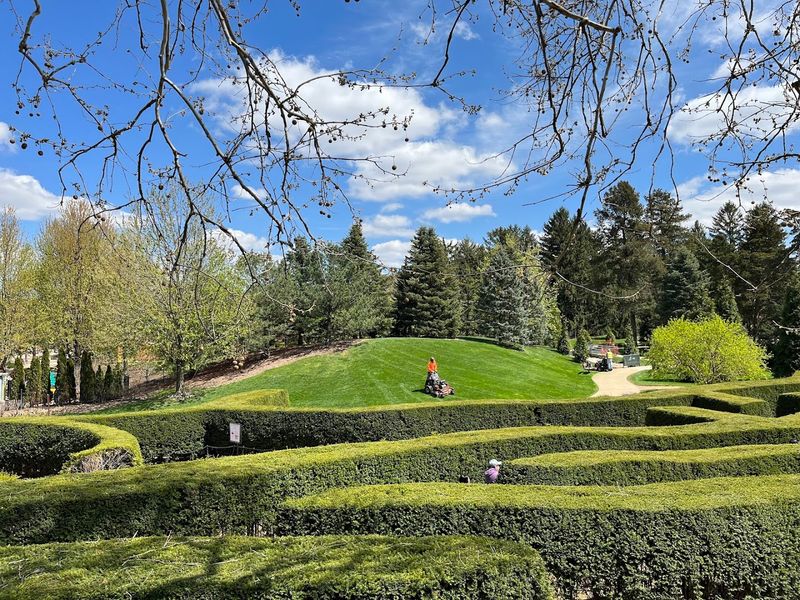
Tucked within the arboretum grounds, the Children’s Garden transforms a nature walk into a hands-on adventure for younger visitors. This dedicated space is filled with interactive features, climbing areas, water play elements, and plant-based discovery stations designed to spark curiosity in kids of all ages.
The hedge maze is the undisputed highlight for most young visitors, and honestly for plenty of adults too. It is large enough to feel genuinely adventurous without being so complex that it turns into a stressful puzzle.
Kids can run, explore, and burn off energy while parents get to enjoy the surrounding scenery at a slower pace.
Families visiting for the first time often say the Children’s Garden alone justifies the trip, and I completely understand why.
The design is thoughtful, the space is well-maintained, and the whole area feels like it was built with genuine enthusiasm for connecting young people to the natural world. Plan to spend at least an hour here if you have little ones in tow.
Four Seasons, Four Different Parks

One of the most compelling reasons to keep coming back to this arboretum is that it genuinely transforms with the seasons. Spring brings flowering crabapples and magnolias that paint the landscape in soft pinks and whites.
Summer fills the grounds with lush, dense canopies that make even the hottest days feel several degrees cooler under the trees.
Autumn is widely considered the most spectacular season here, when the maple and oak collections ignite in shades of orange, crimson, and gold. I visited in October and spent a long time simply standing in one grove of sugar maples, watching the light filter through the leaves.
Winter has its own quiet magic too, especially with the annual Illumination light event that draws large crowds each year. Snow-dusted branches and frozen meadows offer a stark, beautiful contrast to the warmer months.
No matter when you plan your trip, the arboretum will have something worth seeing that you simply cannot experience anywhere else nearby.
When The Trees Start Glowing
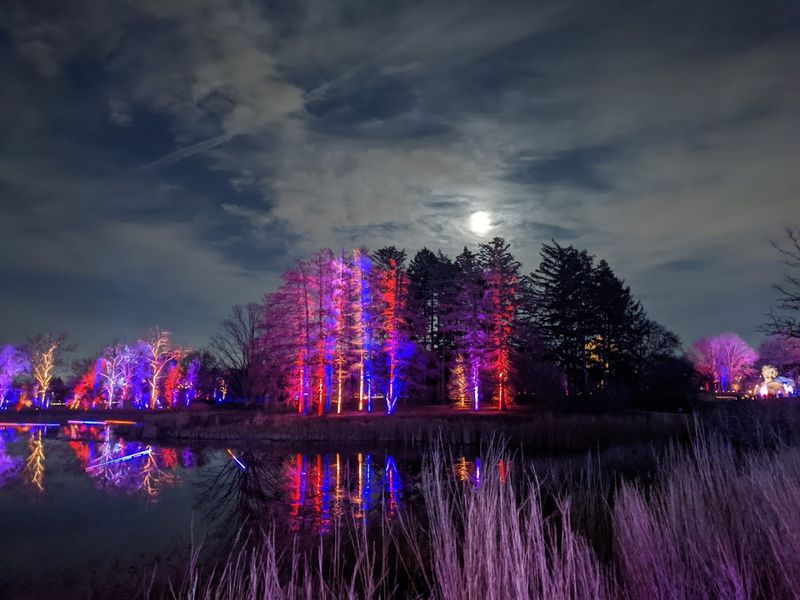
Every winter, the arboretum hosts its Illumination event, turning a one-mile paved walking route into a glowing, music-filled wonderland after dark. Thousands of lights are woven through the trees, creating themed display areas that shift in color and intensity as you walk the one-mile route.
Fire pits stationed along the path offer warm spots to pause and gather, and warm beverages are available for purchase to keep the cold at bay.
The combination of bare winter trees wrapped in light, crisp air, and soft music playing in the background creates an atmosphere that feels genuinely different from any typical holiday light show.
Tickets for Illumination sell out quickly, so booking well in advance through the arboretum’s website is strongly recommended. The event typically runs on select evenings from mid-November through early January.
Going earlier in the evening on weekdays tends to mean shorter waits and more breathing room on the trail. It is a seasonal experience that families return to year after year with real anticipation.
See It All From The Tram

For anyone who wants to get a full overview of the arboretum without committing to an entire day of walking, the tram tour is a genuinely smart option. The narrated ride covers a wide sweep of the property, pointing out major collections, landmarks, and seasonal highlights that would take hours to reach on foot.
First-time visitors especially benefit from taking the tram early in their trip, since it helps you mentally map the layout and identify which areas you most want to explore more closely afterward. The tram requires a separate ticket beyond general admission, but the added cost is reasonable for what you get.
Keep in mind that tram availability can vary depending on the season and staffing, so checking ahead on the arboretum’s website before your visit is a good habit.
On my visit, the tram was running and the guide was genuinely knowledgeable and engaging. It turned a potentially overwhelming 1,700-acre property into something that felt navigable and exciting from the very start.
World-Class Tree Collections
The arboretum holds one of the most impressive tree collections in North America, with more than 4,000 taxa and plants from 40 countries. Walking from one collection to the next feels like a quiet world tour conducted entirely through branches and bark.
The oak collection alone contains hundreds of species and varieties, which makes sense given that oak research is one of the arboretum’s core scientific focuses.
There are also dedicated collections for conifers, maples, hawthorns, and flowering trees, each labeled with informative signage that adds educational depth to your walk.
Photography enthusiasts will find endless subjects here, from the dramatic silhouettes of dawn redwoods to the delicate structure of Japanese maples.
Even on a gray November afternoon, the textures and forms of the tree collections make for compelling images. This is the kind of place where you start noticing details in bark and branching patterns that you never paid attention to before.
Wild Art Among The Trees

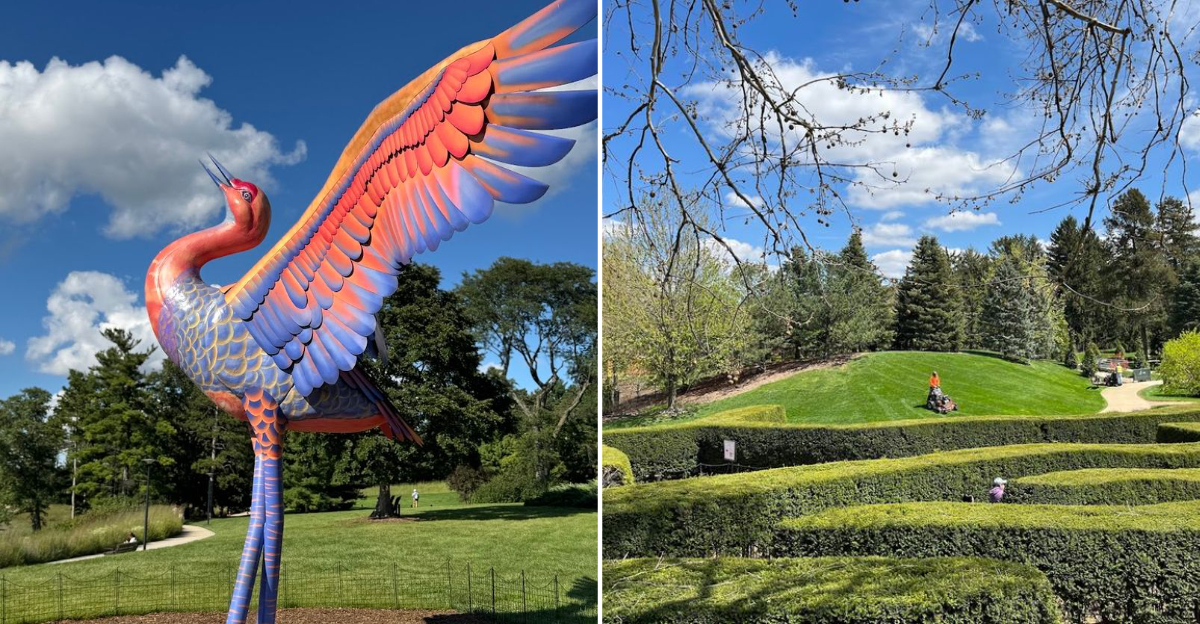
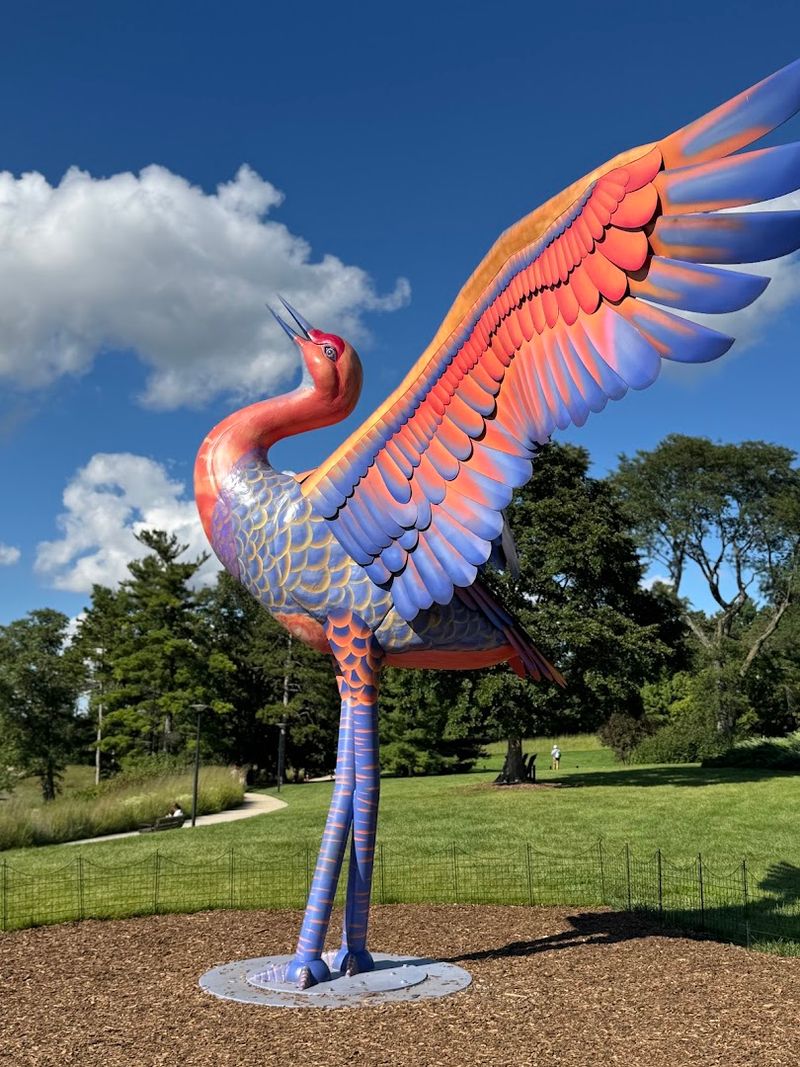
One of the more delightful surprises waiting at the arboretum is its rotating collection of outdoor art installations. Sculptures and large-scale works are placed throughout the grounds, often in unexpected spots that reward curious walkers who wander off the main paths.
The giant brittle button snail sculpture, Spectra, has become a memorable part of the Vivid Creatures exhibition, positioned on a berm near I-88 rather than directly beside the Visitor Center.
That sense of playful discovery runs through the entire art program, which typically features work from regional and national artists across multiple mediums.
The installations change over time, which gives returning visitors something new to find even in areas they have explored before. Combining nature appreciation with art viewing creates a layered experience that appeals to a much wider audience than a traditional botanical garden might.
I found myself spending far more time in certain meadow sections than I planned, simply because a sculpture had caught my eye and pulled me in.
What To Know Before You Wander
The grounds are open daily from 9 AM to 7PM, with last entry one hour before sunset, and you can reach the arboretum at +1 630-968-0074. Admission can add up for non-members, so buying tickets online ahead of time is usually the easiest move, especially on busy weekends when the entrance can get crowded.
An annual membership may be worth it if you think you will visit more than a couple of times. The Visitor Center has Ginkgo Restaurant and Ginkgo Café, so you do not have to pack a full picnic unless you want to.
There is also plenty of outdoor seating, and honestly, the views make even a simple lunch feel a little special.
Parking is free and the lots are large, but getting there before 10 AM on weekends makes the whole visit feel smoother. Bring layers in spring or fall, and do not forget a reusable water bottle.
For a place this big, you will be glad you have it.