
This Tiny Arizona Town Is The Kind Of Peaceful Place Where Life Feels A Little Slower
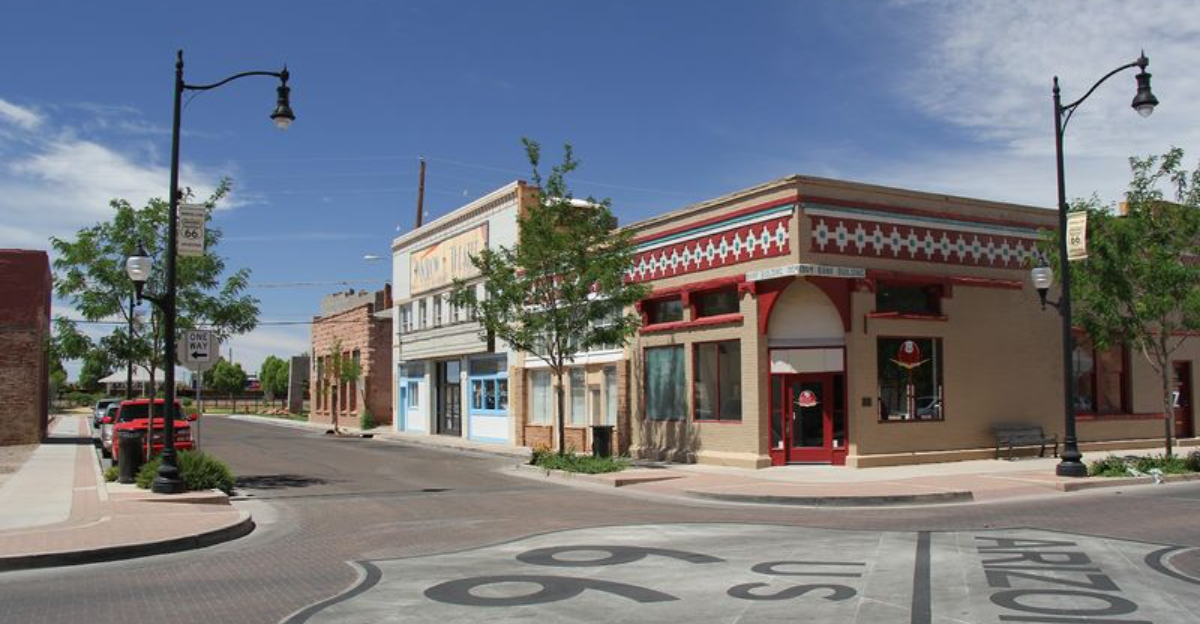
They don’t make maps detailed enough for this corner of Arizona, where the town exists more as a feeling than a coordinate. You know you’ve arrived when the Wi-Fi signal becomes a suggestion rather than a lifeline and the local diner knows your order before you’ve sat down.
Everything here operates on what I call “Arizona time”-a beautiful concept where “in a while” could mean fifteen minutes or three hours, depending on how interesting the clouds look.
Peaceful places like this are rare relics, tiny time capsules where life hasn’t received the memo about needing to be busy. The desert seems to whisper that most of what we’re rushing toward can wait. I’d stay an extra hour just to watch the sun turn the road the color of warm copper.
There’s something strangely comforting about a place that doesn’t ask you to explain why you came alone or why you needed quiet.
By the time I left, my shoulders had dropped, my phone felt less important, and the whole town had somehow slipped into my memory like a secret I wasn’t supposed to rush past.
Where A Song Became A Landmark
Few places in America can claim they became famous because of a single lyric, but Winslow pulled it off beautifully.
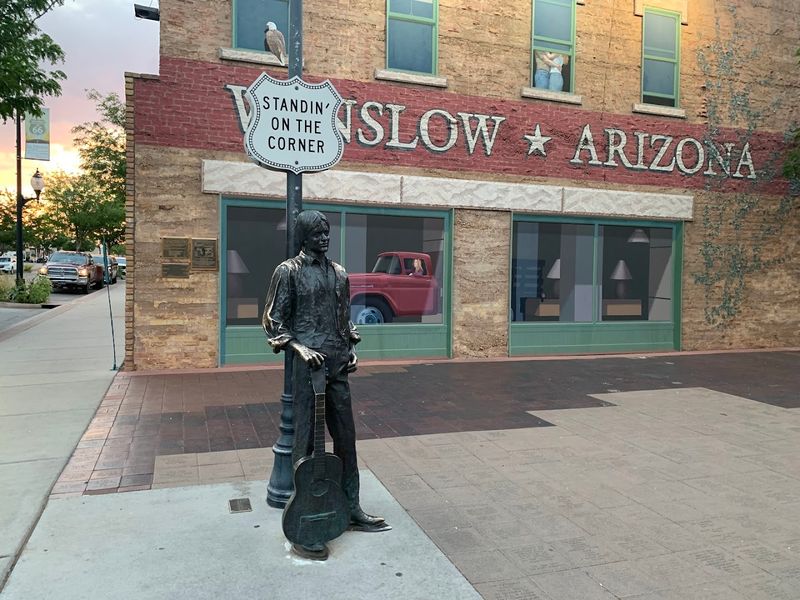
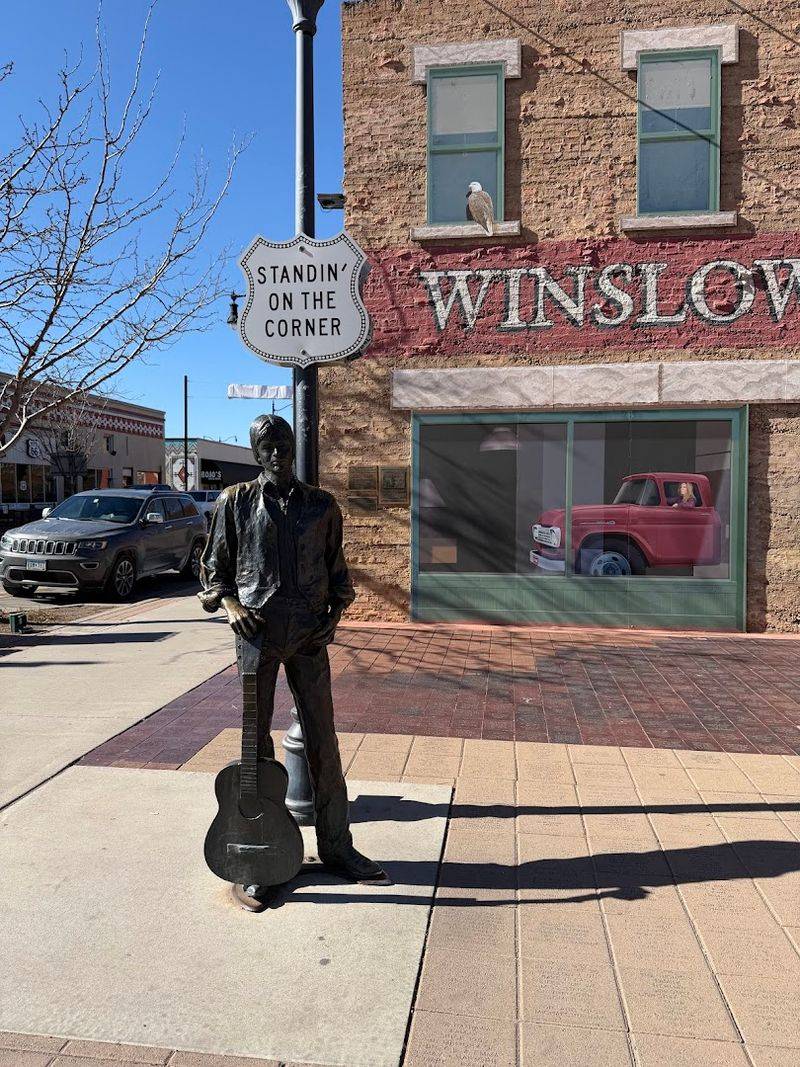
The corner of Second Street and Kinsley Avenue, known simply as Standin’ on the Corner Park, draws visitors from all over the world thanks to the Eagles’ 1972 hit “Take It Easy,” co-written by Jackson Browne, who was inspired by Winslow itself.
A life-sized bronze statue of a hitchhiking musician stands on the corner, and a painted mural of a girl in a flatbed Ford decorates the brick wall behind him. The scene is playful and surprisingly moving.
You can almost hear the song playing as you stand there squinting in the Arizona sun. The park is free to visit and open year-round.
Early mornings offer the best light for photos without crowds. It is one of those quirky American roadside moments that somehow manages to feel completely genuine rather than touristy.
A Masterpiece That Refused To Be Forgotten
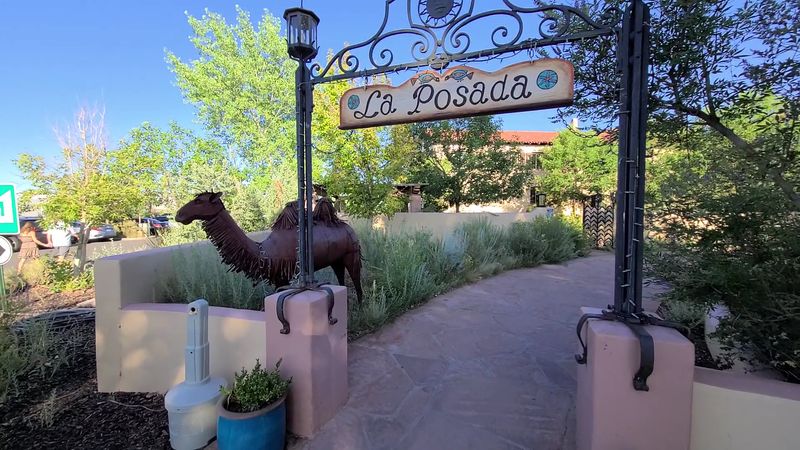
Some buildings have a personality so strong they feel like characters in a story rather than structures on a map. La Posada Hotel on 303 East Second Street is absolutely one of those places.
Designed by legendary architect Mary Colter for the Fred Harvey Company and opened in 1930, it stands as one of the last great railroad hotels built in the American Southwest.
After years of neglect, the hotel was lovingly restored by owners Allan Affeldt and artist Tina Mion, who brought it back to life with hand-painted ceilings, curated antiques, and sprawling gardens that bloom with desert color.
It feels like traveling through time without any of the inconveniences. The on-site Turquoise Room restaurant is widely considered one of the best dining spots in northern Arizona.
Staying overnight here is not just accommodation, it is a full sensory experience that lingers in your memory long after checkout.
Homolovi State Park: Ancient Ruins With A View
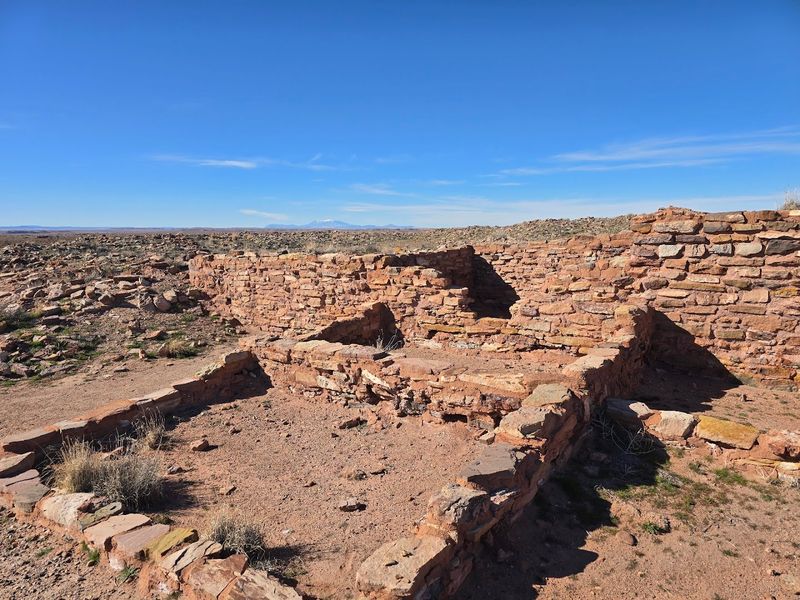
Just a few miles outside of town, Homolovi State Park holds the remains of ancestral Hopi villages that date back to the 14th century.
The name Homolovi means “place of the little hills” in the Hopi language, and the landscape lives up to that description with low mounds of earth and stone stretching across a wind-swept plateau above the Little Colorado River.
Hiking the trails here feels genuinely meditative. The silence is thick, the desert air smells of sage, and the sheer age of what surrounds you creates a kind of quiet reverence that is hard to put into words.
Pottery shards scattered along the trails serve as small, humbling reminders of the people who called this land home centuries ago.
Rangers lead guided tours on weekends, and the park also has a campground for those who want to spend the night under an absolutely spectacular starry sky. Admission is very affordable for families.
Route 66 Nostalgia: The Mother Road Still Lives Here
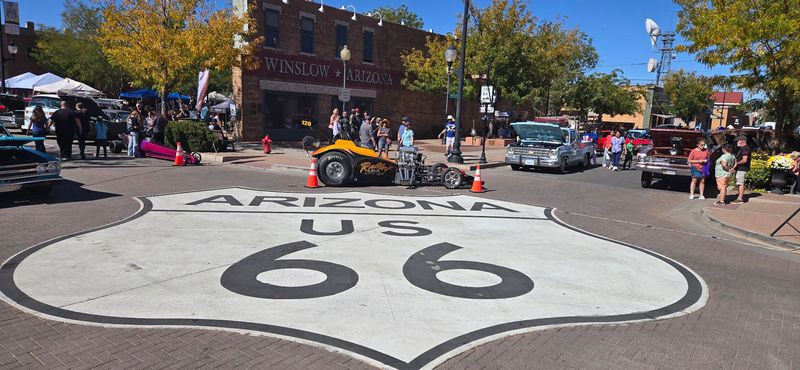
Winslow sits along one of the best-preserved stretches of old Route 66, the legendary highway that once connected Chicago to Los Angeles and carried generations of Americans westward in search of something new.
Driving through town on the original alignment feels wonderfully different from a modern interstate, with vintage motels, neon signs, and storefronts that have barely changed since the 1950s.
The Old Trails Museum on Kinsley Avenue documents the town’s deep connection to Route 66 history through photographs, maps, and artifacts that tell the story of travelers, traders, and dreamers who passed through over the decades. It is a small museum with a big heart.
Cruising slowly down the main stretch at sunset, windows down and radio up, is one of those travel moments that feels almost cinematic. Route 66 nostalgia is alive and well in Winslow, and the town wears that history proudly without making it feel forced or commercialized.
Big Sky Country With A Southwest Twist
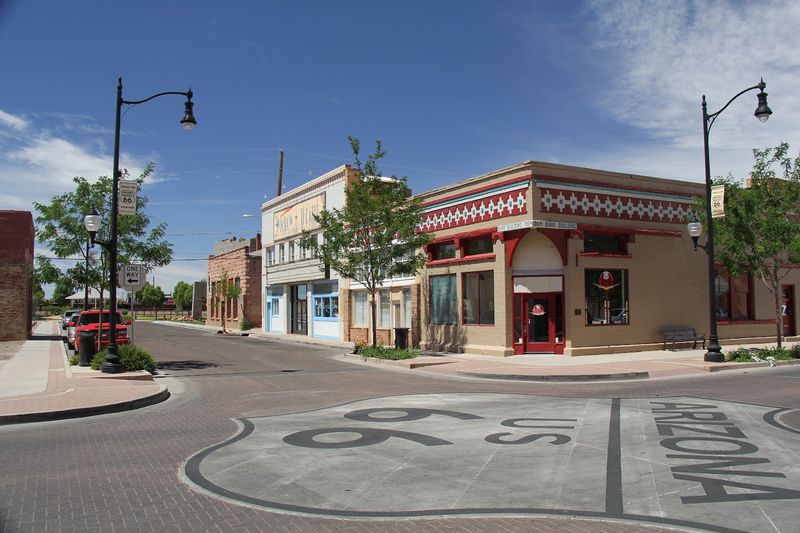
The land around Winslow is the kind of scenery that makes you pull over your car just to stare. The Colorado Plateau stretches out in every direction, painted in shades of rust, tan, and dusty gold, broken up by juniper trees and distant mesas that seem to float above the horizon on hot afternoons.
Sunrises and sunsets here are genuinely jaw-dropping. The sky turns into a slow-motion painting of color, and because the town has very little light pollution, the transition from day to night is something you feel as much as see.
Photographers tend to arrive early and stay late for good reason. The surrounding desert also offers excellent birdwatching, with red-tailed hawks, ravens, and various sparrow species commonly spotted along roadsides and near the river.
You do not need to be a dedicated naturalist to appreciate what the landscape offers here. Simply being present is enough.
The People Who Make Winslow What It Is
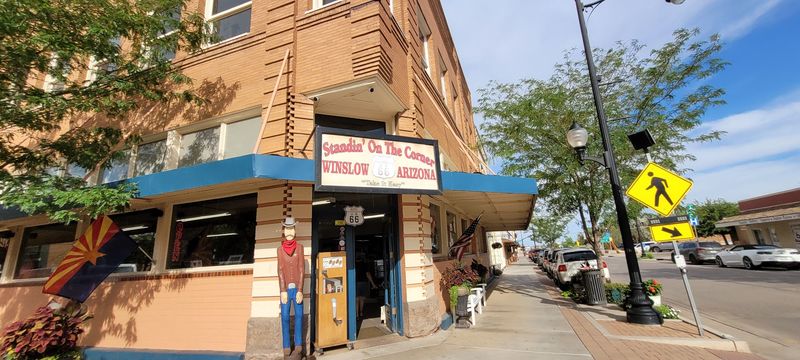
One of the first things you notice when you slow down long enough to actually talk to people in Winslow is how genuinely welcoming they are. This is not the performative hospitality of a tourist-driven resort town. It is the real, unhurried kindness of a small community that takes quiet pride in where it lives.
Shop owners will chat with you about local history without you even asking. The woman at the diner might recommend a hiking trail that is not in any guidebook.
The guy at the gas station will tell you the best time of day to visit the corner park if you want good photos without the midday crowd.
That texture of everyday human connection is something increasingly rare in popular travel destinations. Winslow still has it in abundance. Coming here feels less like visiting a destination and more like being temporarily adopted by a community that genuinely enjoys sharing its home.
Meteor Crater: A Cosmic Detour Just Down The Road
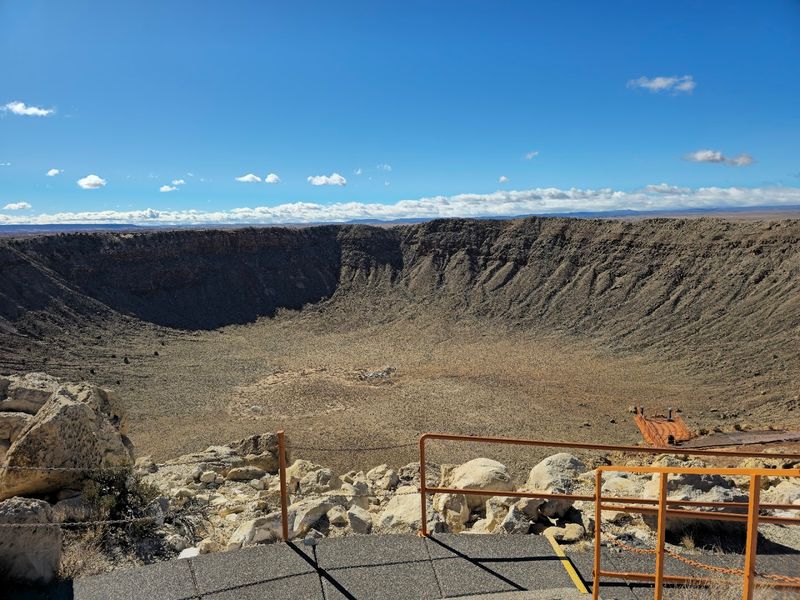
About 35 miles west of Winslow along Interstate 40 sits one of the most perfectly preserved meteorite impact craters on Earth.
Meteor Crater, also known as Barringer Crater, measures nearly a mile across and 550 feet deep, the result of a nickel-iron meteorite slamming into the Arizona desert roughly 50,000 years ago.
Standing on the rim and looking down into that enormous bowl is a perspective-shifting experience. The scale of it takes a moment to fully register, and once it does, you feel very small in the most fascinating way possible.
The visitor center inside is surprisingly well-designed, with interactive exhibits about impact science, space exploration, and the history of the site.
NASA actually used this crater to train Apollo astronauts for lunar missions, which adds a whole extra layer of cool to the visit. It makes for a perfect half-day side trip from Winslow that the whole family will talk about afterward.
Tips For Making The Most Of Your Trip
Spring and fall are hands-down the most comfortable seasons to visit Winslow. Temperatures between March and May, and again from September through November, tend to hover in the 60s and 70s Fahrenheit, making outdoor exploring genuinely pleasant.
Summer temperatures can push well above 95 degrees, so if you visit in July or August, early mornings are your best friend. Winslow is small, which means you can realistically see the main highlights in a long weekend.
Two to three nights gives you enough time to explore the corner park, visit La Posada, take a morning hike at Homolovi, and still leave room for a spontaneous detour or two. Accommodation options are limited but charming, with La Posada being the clear standout.
Pack sunscreen, a reusable water bottle, and comfortable walking shoes. Cell service can be spotty in some areas, so downloading offline maps before you arrive is a smart move that will save you frustration on the road.
Bring a light layer too, because desert evenings can cool down quickly once the sun starts fading. It is also worth leaving your schedule a little loose, since Winslow is the kind of place where an unplanned roadside stop often becomes the part you remember most.