
This Unbelievable Kinetic Sculpture Park In Colorado Is Hiding In Plain Sight
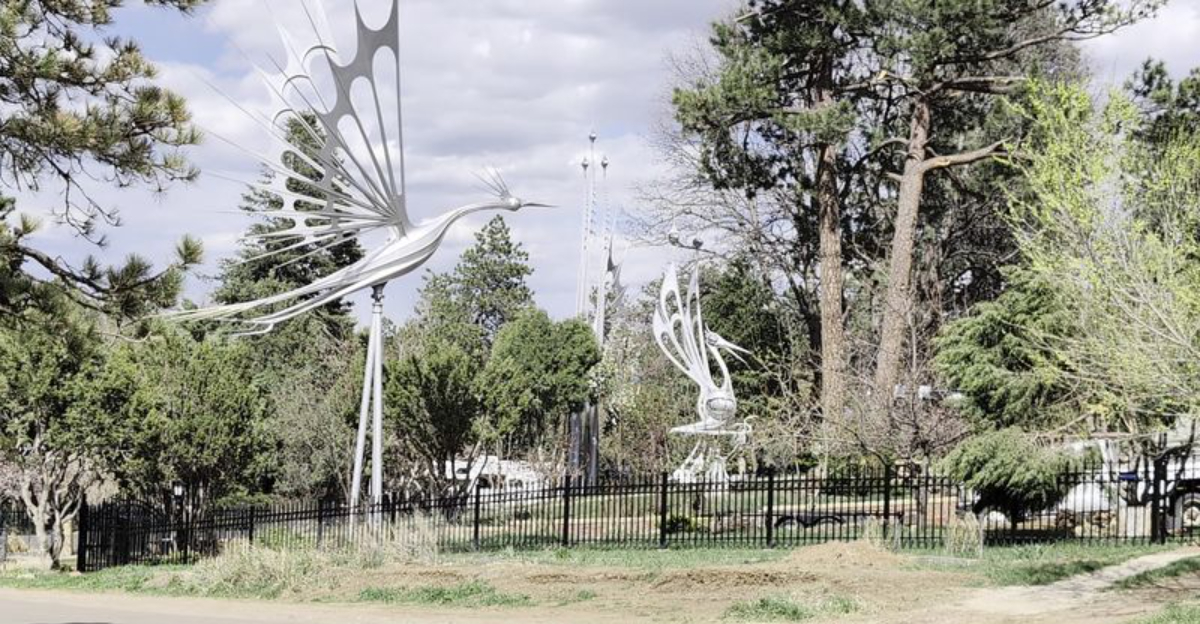
Some roadside discoveries do not ask for attention, they earn it the moment the wind starts moving. In a quiet neighborhood in Colorado, a collection of towering kinetic sculptures has been turning ordinary breezes into something strangely hypnotic for decades.
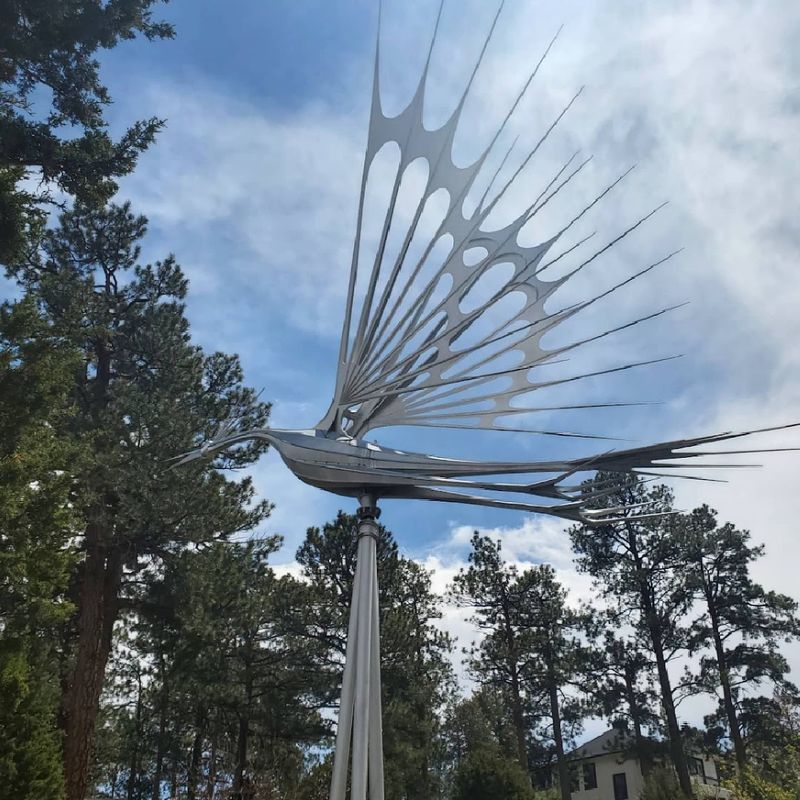
These massive metal forms rise like futuristic windmills, shifting, spinning, and balancing with a grace that feels almost impossible for steel.
What makes them unforgettable is the combination of precision and surprise: one moment they seem still, the next they are alive with motion, catching sunlight and air like the landscape is part of the artwork.
This is the kind of stop that rewards people who love finding beauty where no flashy sign points the way. Colorado’s public art surprises can be wonderfully unconventional, and this one feels both playful and profound.
Drive by slowly, look twice, and let the sculptures prove that wind can be a storyteller.
The Artist Behind The Metal Magic
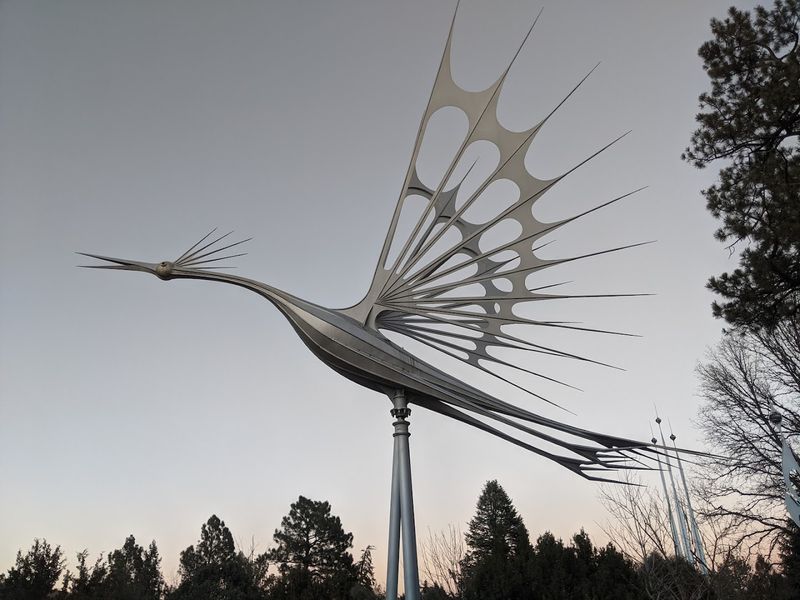
Before the sculptures ever caught the wind, there was the man who imagined them. This place was a Colorado Springs artist who began building his large-scale kinetic windmill sculptures in 1977, and what he created in that yard at the base of Cheyenne Mountain became something far bigger than a backyard project.
His work sits at the crossroads of engineering and fine art. The sculptures are constructed from metal and designed to move with wind currents, each one catching air in a slightly different way, creating a slow, hypnotic rotation that visitors consistently describe as peaceful and awe-inspiring.
Kempf’s daughter has worked to preserve his legacy, keeping the remaining sculptures maintained at the Pine Grove Avenue location. His work also appears in downtown Colorado Springs, meaning the city carries his artistic fingerprint in more than one spot.
Why It Matters: Understanding who built these sculptures adds a layer of meaning to the visit. This is not a commissioned public installation.
It is one person’s creative obsession turned into a lasting landmark, which makes every spin of those metal arms feel a little more personal.
What Kinetic Sculptures Actually Are
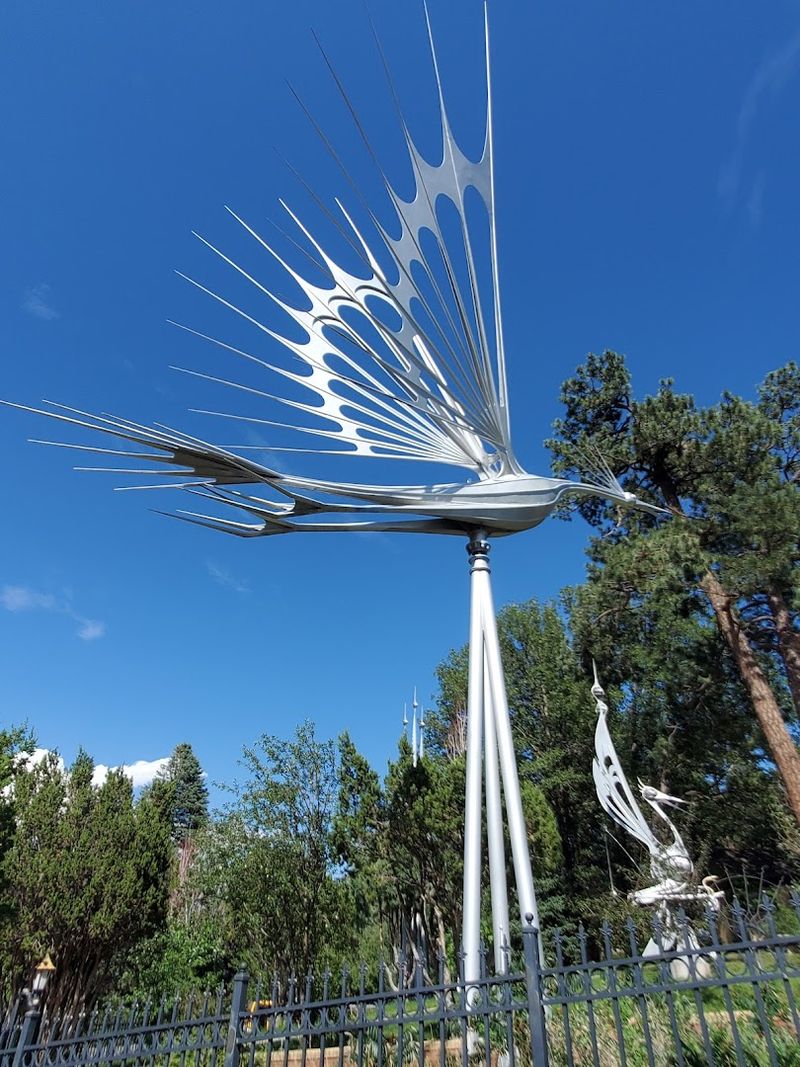
Not everyone arrives at Starr Kempf’s property knowing exactly what a kinetic sculpture is, and that gap between expectation and reality is where the magic lives. Kinetic sculptures are works of art designed to move, typically powered by wind, water, or mechanical energy rather than sitting still on a pedestal.
Kempf’s versions are wind-driven, built from metal with arms, fins, and rotating elements that respond to even gentle breezes.
On a calm day they may sit mostly still, but on a windy Colorado afternoon they come fully alive, each piece spinning and turning at its own rhythm like a mechanical ballet you did not know you needed to watch.
The sculptures at this location stand quite tall, making them visible from the road even before you fully register what you are looking at. That first glance is genuinely disorienting in the best way possible.
Quick Tip: Check the weather before you go. Visitors consistently report that a windy day transforms the experience entirely.
A still day offers a nice look at the structure and craftsmanship, but moving sculptures are the full show worth planning around.
Finding The Location Without Losing Your Mind
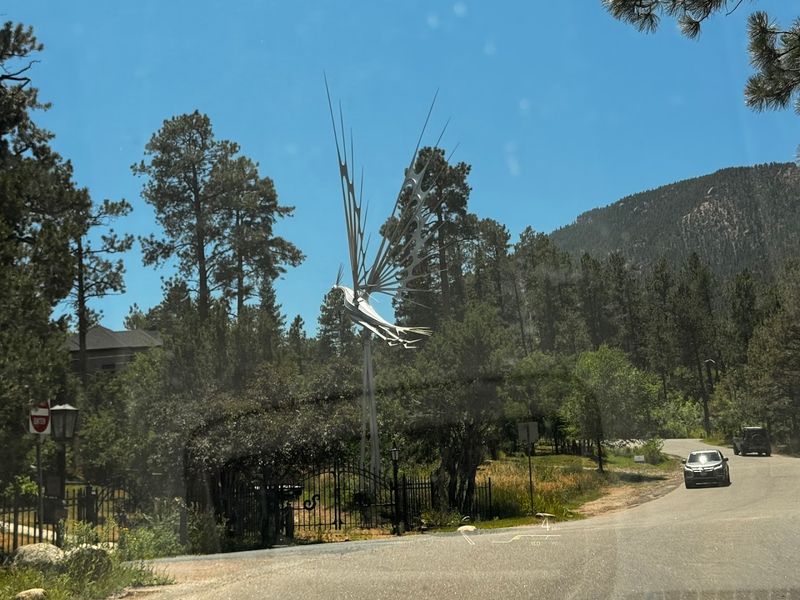
Getting to Starr Kempf’s sculptures is one of those navigational adventures that feels slightly more dramatic than it should be, mostly because the winding terrain near Cheyenne Mountain does not exactly advertise itself as a route to outdoor art. A GPS is genuinely useful here.
The residential streets are narrow, hilly, and lined with trees that hide the sculptures until you are almost right on top of them.
The sculptures are located on private property, so the viewing experience happens from the road. There is a pull-off area across the street where visitors can park and take in the view without blocking traffic or trespassing.
A small parking lot a short distance down the road offers additional space when the pull-off fills up.
Expect to spend roughly 15 to 20 minutes here. That is not a criticism.
Some of the best stops on any road trip are the ones that deliver maximum impact in minimum time, and this one absolutely qualifies.
Planning Advice: Arrive knowing it is a roadside viewing experience, not a walk-through park. Setting that expectation before you leave the house means you will enjoy exactly what is there rather than searching for a gate that does not exist.
Private Property, Public Wonder
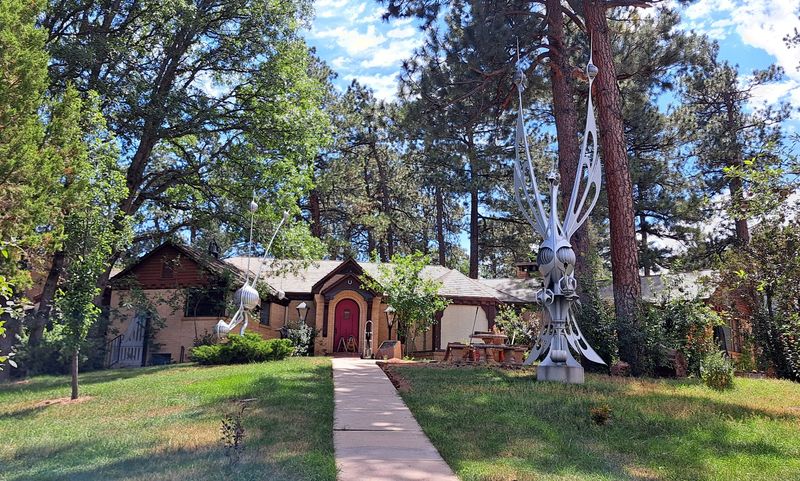
Here is the detail that trips up first-time visitors more than any other: this is a private residence. The sculptures stand in the front yard of a home, enclosed by an iron fence.
There are no tours, no admission booth, no docent with a laminated badge waiting to walk you through Kempf’s artistic philosophy.
What you get instead is a roadside encounter with genuine large-scale art, which honestly has its own kind of appeal. You pull over, you look up, and if the wind cooperates, you watch something extraordinary happen in someone’s front yard on a quiet Colorado street.
It is unexpectedly moving in the most literal sense.
Visitors who have stopped here over the years note that the property’s current residents have generally been gracious about curious passersby, though that courtesy deserves to be met with equal respect. Stay on the public side of the fence, keep noise reasonable, and do not block the driveway.
Common Mistakes to Avoid: Do not assume you can walk onto the property or peek through the fence up close. Treat it the way you would any private home with something remarkable in the yard: admire it, photograph it from the road, and be a considerate guest in the neighborhood.
Why Windy Days Are Non-Negotiable
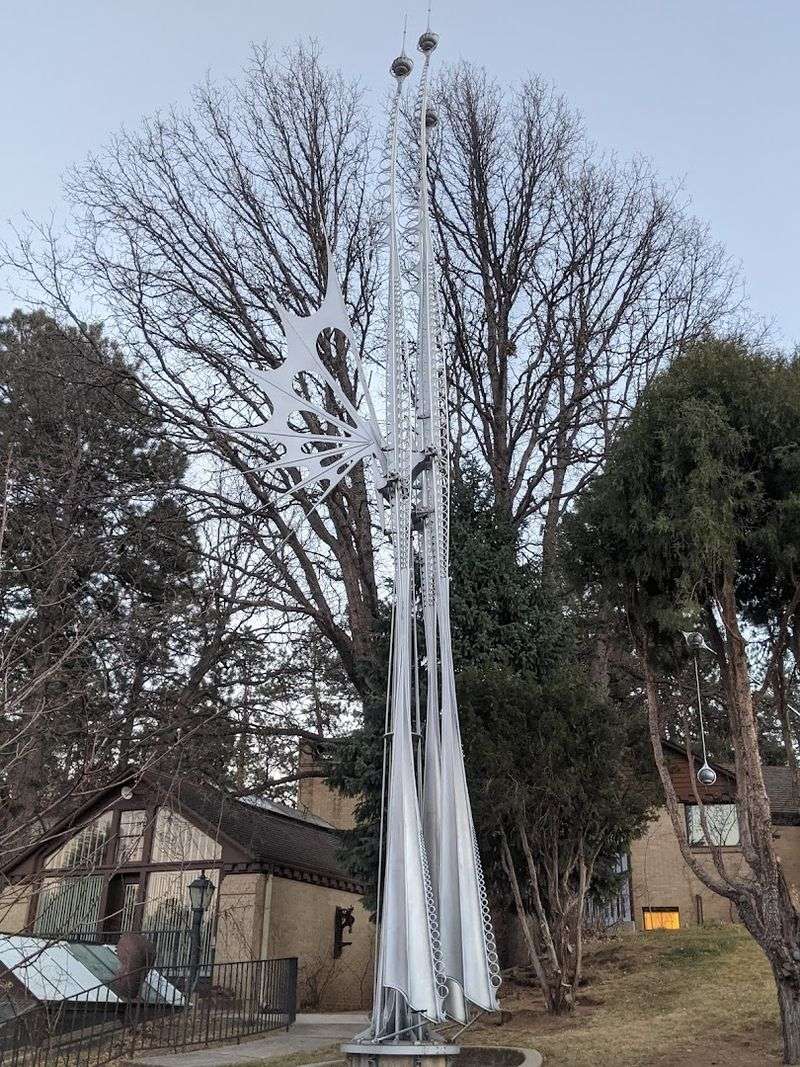
Every single visitor who caught these sculptures on a windy day tells essentially the same story: they were not prepared for how good it would be. The sculptures are impressive at rest, all geometric precision and scale, but wind is the ingredient that turns an interesting roadside stop into something genuinely unforgettable.
When a proper Colorado breeze rolls down from Cheyenne Mountain, each sculpture begins rotating at its own pace. The movement is smooth and deliberate rather than frantic, which gives the whole scene a meditative quality that is hard to describe without sounding slightly dramatic.
You find yourself just standing there, watching metal spin, and somehow that is completely satisfying.
Colorado Springs is no stranger to wind, especially near the mountain base, so the odds of catching movement on any given visit are reasonably good. Still, checking a local forecast before heading out is the kind of small effort that pays off significantly.
Best For: Anyone who wants the full artistic experience Kempf intended. The sculptures were designed to move, and seeing them do exactly that on a gusty afternoon near Cheyenne Mountain is the version of this visit worth telling people about afterward.
How Many Sculptures Are Still There
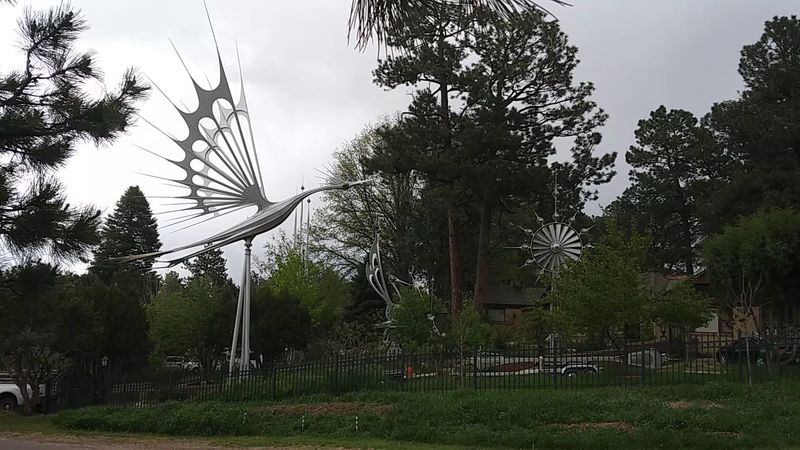
At its peak, the Kempf property held more sculptures than it does today. Neighborhood concerns about traffic eventually led to a court order requiring the family to remove several pieces, which means the current collection is smaller than what earlier visitors experienced.
That context matters when you set your expectations.
Roughly four to five large sculptures remain at the Pine Grove Avenue location, each standing quite tall and distinct in its design. They are not identical windmills lined up in a row.
Each one has its own shape, proportion, and movement pattern, which gives the yard a genuine gallery feel even from across the street.
Additional Kempf sculptures can be found in downtown Colorado Springs, so motivated fans of his work can actually build a small self-guided tour across the city. That is not a bad way to spend a Saturday afternoon when the weather cooperates.
Insider Tip: If you find yourself wanting more after the roadside stop, the downtown pieces offer a chance to see Kempf’s work in a different urban context. Same artist, same kinetic philosophy, completely different setting, and worth the short drive across town to complete the picture.
The Neighborhood That Surrounds The Sculptures
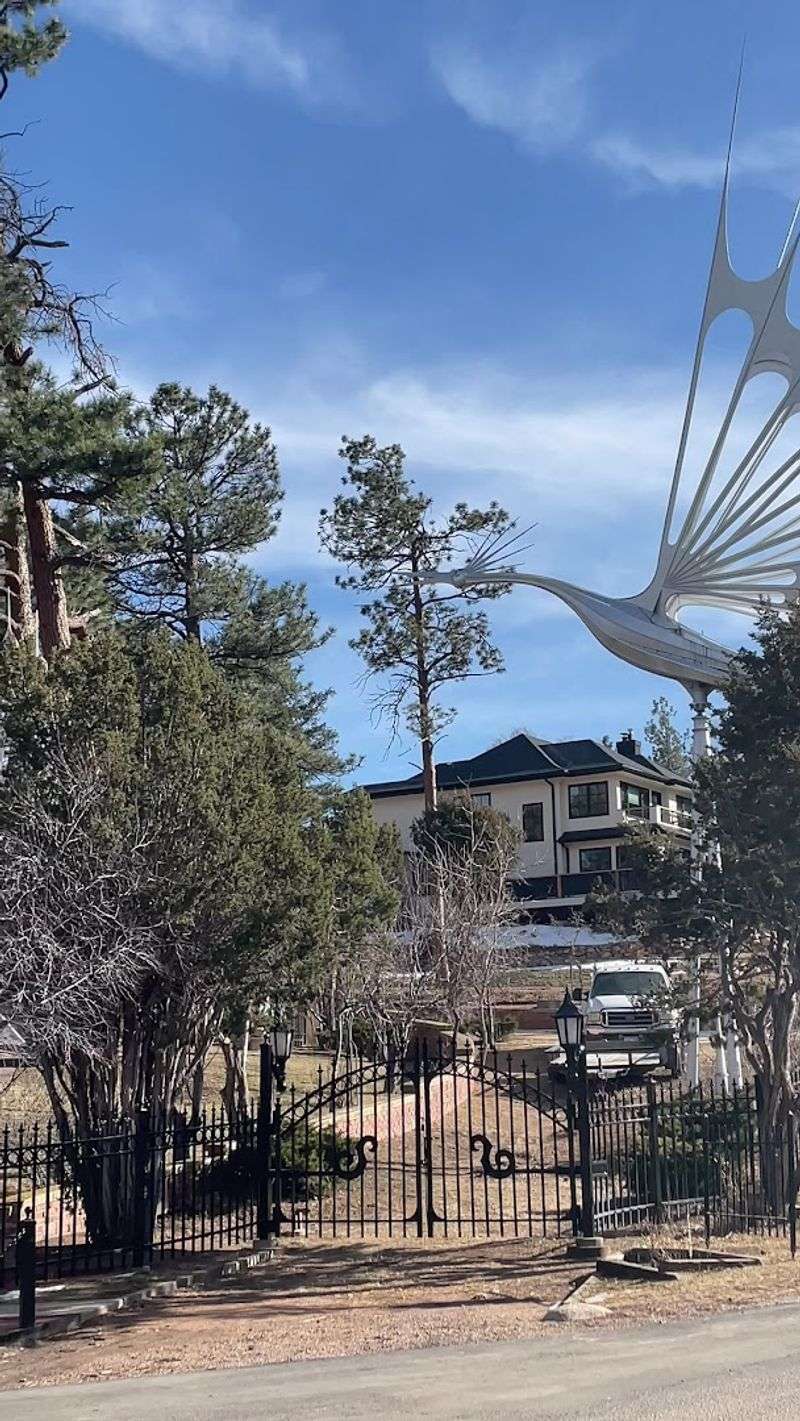
The neighborhood surrounding the Kempf property is the kind of place that feels completely ordinary right up until it does not. Modest homes, mature trees, winding streets that climb gently toward the mountain, and then suddenly there are towering kinetic sculptures spinning in someone’s front yard.
The contrast is half the charm.
Sitting in the pull-off across the street with the window down on a breezy day, listening to wind move through the pines while deer occasionally pass through the area, is an experience that several longtime visitors have described as genuinely calming.
That is not the kind of thing you expect to stumble into on a neighborhood drive.
The residential setting also means this spot rewards a certain kind of visitor: the one who is not in a hurry, who does not need a gift shop or an interpretive panel to feel like the trip was worthwhile. Sometimes the best version of a place is the one that asks almost nothing of you except attention.
Who This Is For: Curious travelers who enjoy the discovery of unexpected art in everyday settings. If you like the feeling of finding something real rather than curated, this neighborhood stop will land exactly right.
What Visitors Consistently Say About The Experience
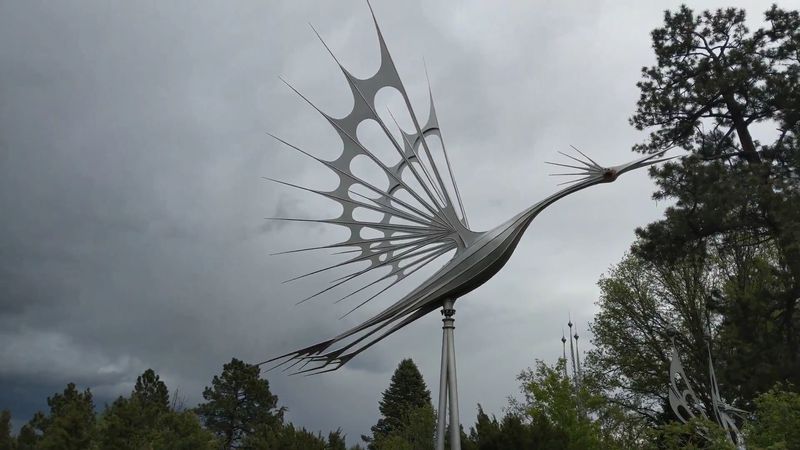
Across many visits spanning years, a clear pattern emerges in what people take away from this stop. The sculptures themselves earn near-universal praise.
Words like magnificent, awe-inspiring, and ethereal come up repeatedly, and visitors who caught them in motion tend to use language that sounds almost poetic for a roadside stop near a residential fence.
The most common source of surprise is the private property aspect. Visitors who arrive expecting a public park occasionally feel caught off guard, while those who knew it was a drive-to-and-look destination tend to leave fully satisfied.
Managing that single expectation is genuinely the key to a good experience here.
The location earns strong ratings overall, sitting comfortably above four stars across a meaningful number of visitor responses. That kind of sustained appreciation for a free, low-key roadside attraction says something real about the quality of what Kempf built and what his family has maintained.
Quick Verdict: Worth the detour for anyone in Colorado Springs, especially on a windy afternoon. Keep your expectations calibrated to a 15 to 20 minute roadside experience and you will almost certainly leave impressed.
Arrive expecting a full park and you might feel slightly puzzled.
Pairing The Visit With Other Nearby Stops
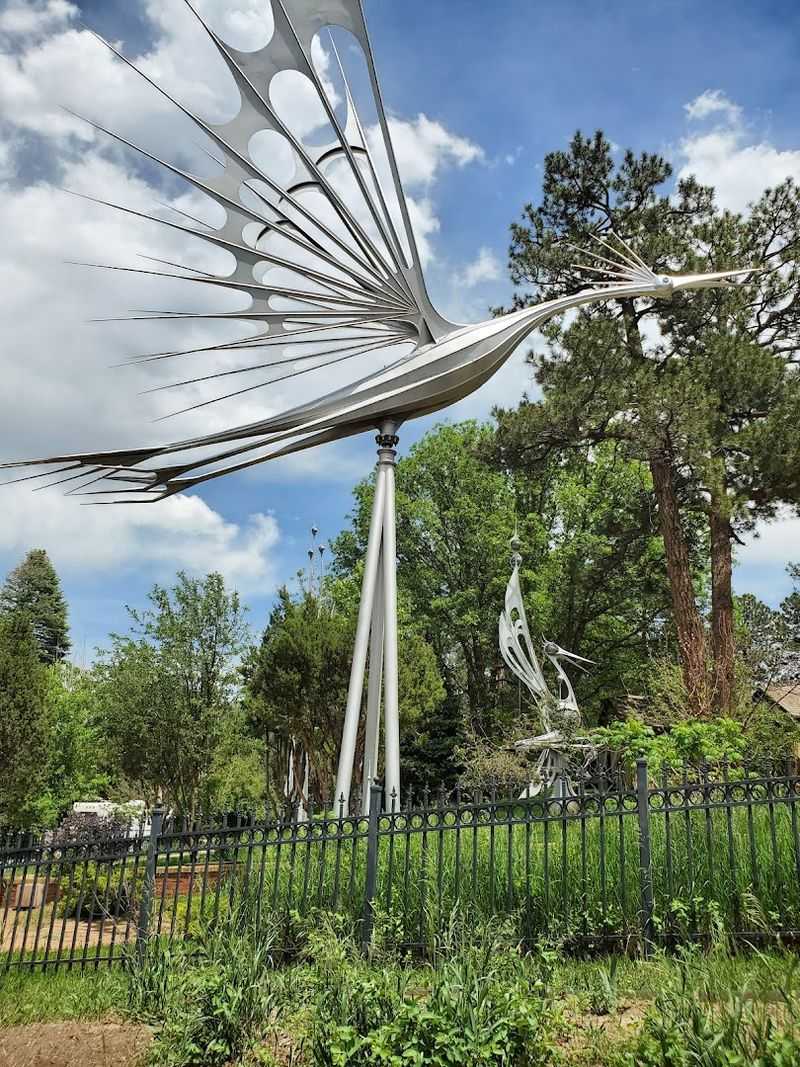
One of the smarter ways to approach the Kempf sculptures is to fold them into a larger Colorado Springs outing rather than making them the sole destination.
The location near the base of Cheyenne Mountain puts several well-known attractions within easy driving distance, which makes the stop feel naturally integrated into a fuller day rather than a detour that requires justification.
Garden of the Gods is a short drive away, and the visual contrast between those ancient red rock formations and Kempf’s modern spinning metal is actually a pretty good argument for Colorado Springs as a place with serious artistic and geological range. Cheyenne Mountain Zoo sits nearby as well, making it a logical add-on for families who are already in the area.
For those who want to extend the Kempf experience itself, the downtown Colorado Springs sculptures offer a second chapter to the story. A quick stop in the city center after the Pine Grove Avenue visit turns a 15-minute roadside encounter into a small self-guided art tour with genuine narrative arc.
Best Strategy: Build the Kempf stop into a morning that starts at Garden of the Gods, swings by the sculptures, and ends with a walk through downtown Colorado Springs to find the additional pieces.
Bringing Kids To See The Sculptures
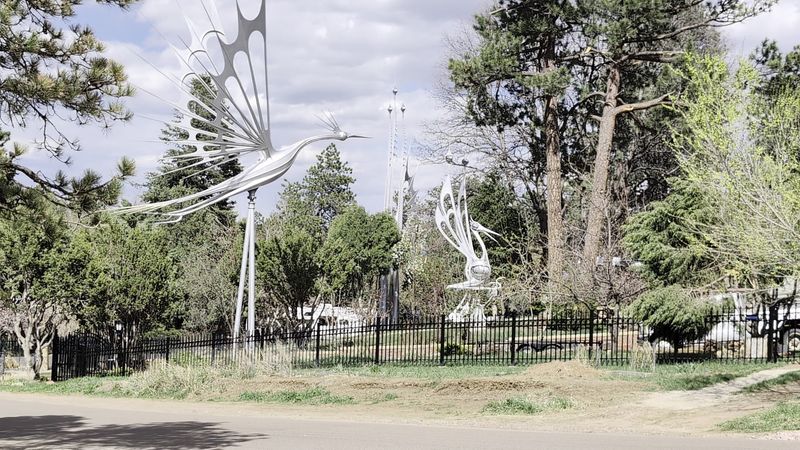
Children and kinetic sculptures are a natural pairing, and this stop has the kind of immediate visual payoff that tends to hold young attention spans without requiring any setup or explanation. Big metal things spinning in the wind is, it turns out, genuinely compelling to a seven-year-old.
And to most adults, if we are being honest.
The roadside format actually works well for families with younger kids. There is no long trail to walk, no crowd to navigate, and no admission fee to calculate.
You pull over, everyone gets out, and the sculptures do the work. On a windy day, the movement alone generates the kind of spontaneous commentary that makes a family outing feel memorable.
Older kids who have any interest in engineering, physics, or art will find extra material here. How does wind power something that large?
Why do different parts spin at different speeds? The sculptures invite questions that do not have obvious answers, which is exactly the kind of thing that sticks in a curious mind.
Best For: Families with kids of any age who respond well to unexpected, visually striking experiences. No stroller terrain issues, no long waits, and the whole visit fits neatly inside a short attention span without feeling rushed.
Photography Tips For Getting The Best Shots
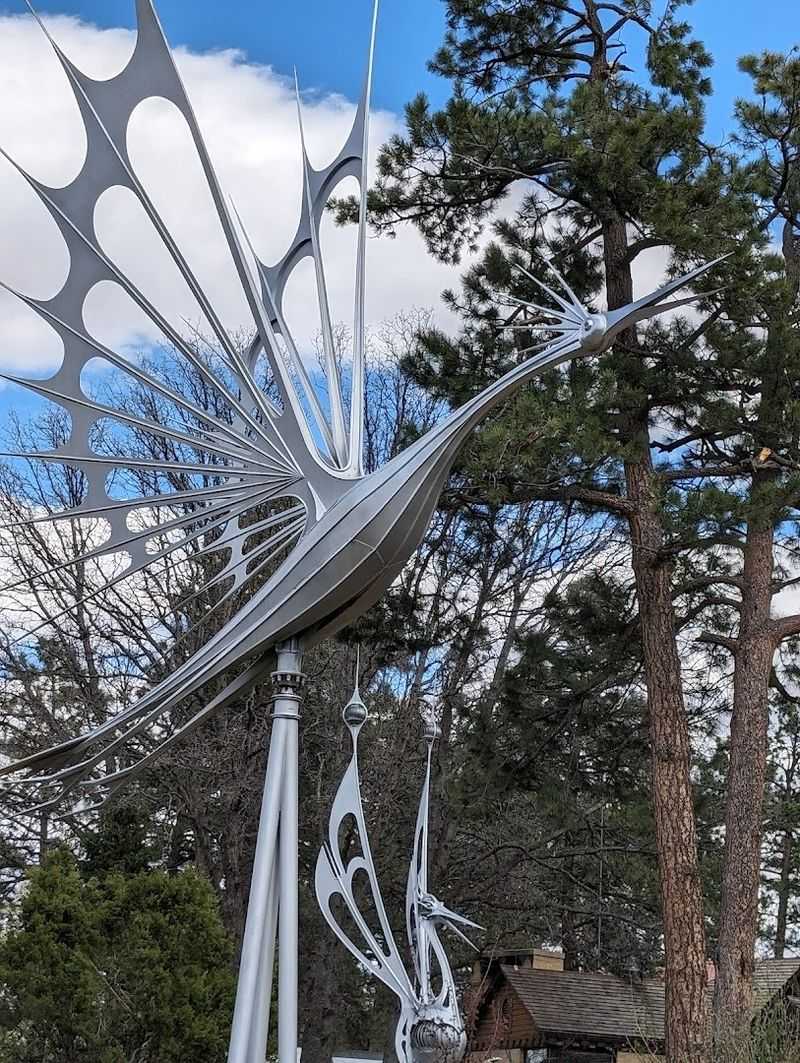
The sculptures are photogenic in a way that rewards a little patience and positioning. From the road, the challenge is that trees and the fence line can interrupt sightlines depending on where you stand along the pull-off.
Moving a few feet in either direction often opens up a cleaner frame, so take a moment to walk the length of the pull-off before settling on your spot.
Overcast days produce soft, even light that flatters the metal surfaces and eliminates harsh shadows. Bright sunny days create more dramatic contrast but can blow out the lighter parts of the sculptures if you are shooting into the sky.
Late afternoon light, when the sun is lower and warmer, tends to give the metal a particularly striking glow that makes the geometric shapes pop.
If the sculptures are moving, a slightly slower shutter speed will capture motion blur on the spinning elements while keeping the static base sharp. That combination communicates movement in a single still image far better than a frozen frame does.
Pro Tip: Shoot vertical frames as well as horizontal. The sculptures are tall, and portrait orientation captures their full height against the sky in a way that landscape framing simply cannot match from a road-level position.
Why This Place Deserves More Attention Than It Gets
There is a particular category of place that locals quietly treasure and visitors almost always stumble upon by accident, and the Kempf sculpture site fits that description precisely. It does not advertise itself.
It does not have a logo or a social media account. It simply exists at the base of a mountain, spinning when the wind decides, waiting for people curious enough to pull over.
The fact that a court order removed several sculptures over the years adds a layer of fragility to the experience. What remains is a smaller collection than what Kempf originally created, which means visiting now is also a small act of witnessing something that exists in a reduced form from its original vision.
That is worth something.
Colorado Springs has no shortage of dramatic natural scenery, famous attractions, and well-marked destinations. The Kempf sculptures occupy a different lane entirely: quiet, residential, slightly hidden, and completely genuine.
That combination is rarer than it sounds, and rarer still is the fact that it delivers so consistently for visitors who find it.
Who This Is Not For: Anyone who needs a structured, guided, or fully accessible public attraction. But for the curious, the patient, and the wind-lucky, this is the kind of hidden-in-plain-sight discovery that Colorado Springs does not always get credit for having.