
This Washington Lookout Really Feels Like You’re Standing Face-To-Face With Mount Rainier
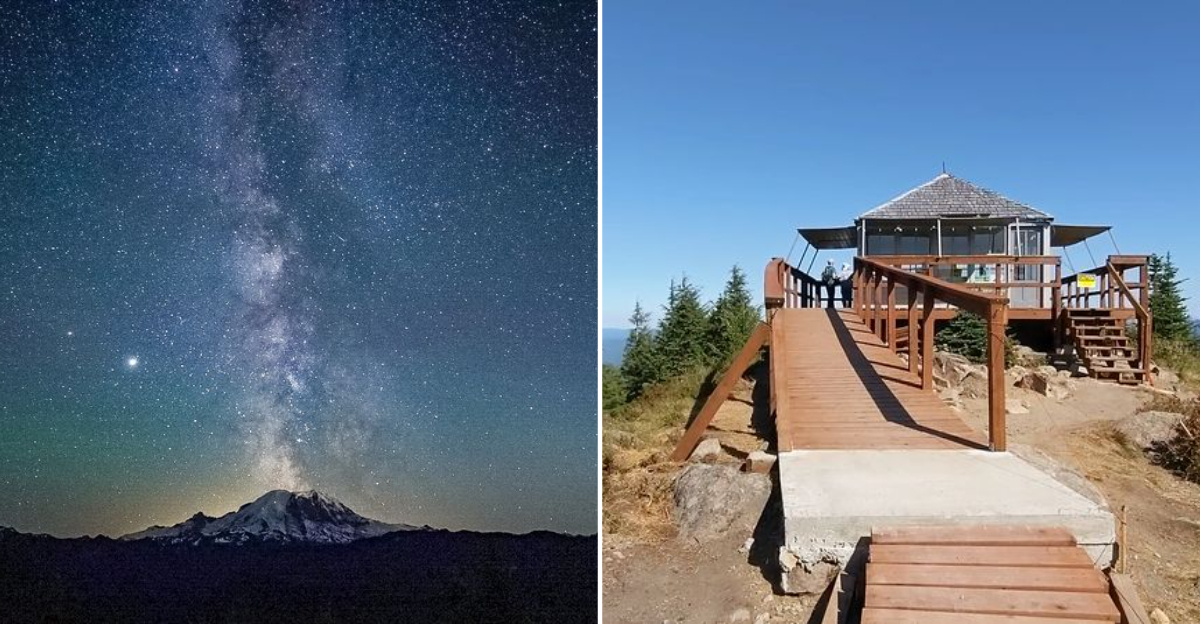
My legs were still shaking from the final push up the hill when I rounded the last bend and stopped dead in my tracks-because nothing prepares you for a mountain that fills the entire sky.
This hidden Washington viewpoint delivers what every mountain lover searches for: a front-row seat to raw, unfiltered wilderness where Mount Rainier dominates everything, utterly unapologetic in its scale.
The peak towers above in crystalline white, looking close enough to touch even though it’s still miles away.
Something shifts inside you when you stand here, face-to-face with a giant that has watched thousands of years of seasons come and go. In that moment, I’m not just a visitor passing through, I’m a witness to something timeless, and that feels like exactly where I need to be.
A Mountain View Like No Other
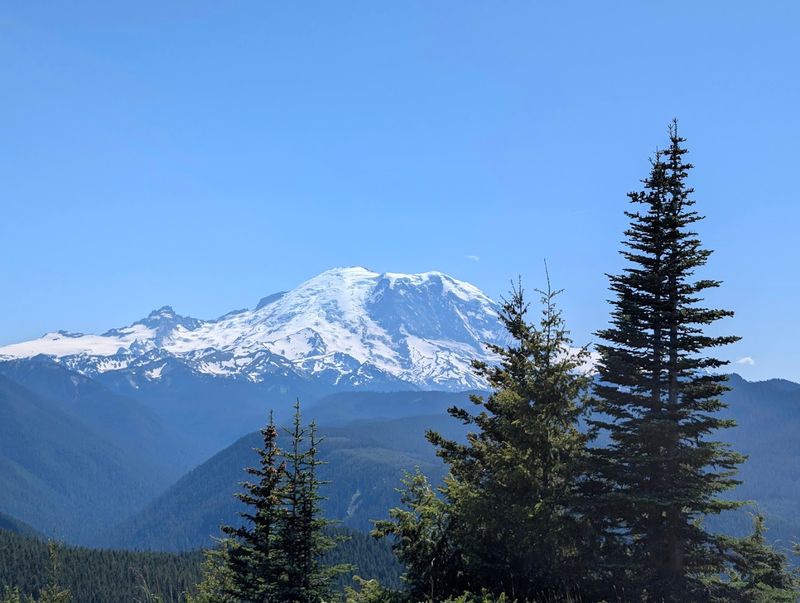
Most mountain viewpoints offer a distant, postcard-style glimpse of a peak. Sun Top Lookout does something completely different.
Standing on the deck of this historic structure, you are just 10 miles north of Mount Rainier, and that closeness is something your eyes and your brain have to negotiate for a few seconds before it all sinks in.
The northern face of Rainier fills your field of vision in a way that feels almost theatrical. Glaciers catch the morning light, ridgelines carve dramatic silhouettes, and the sheer mass of the volcano commands every corner of your attention.
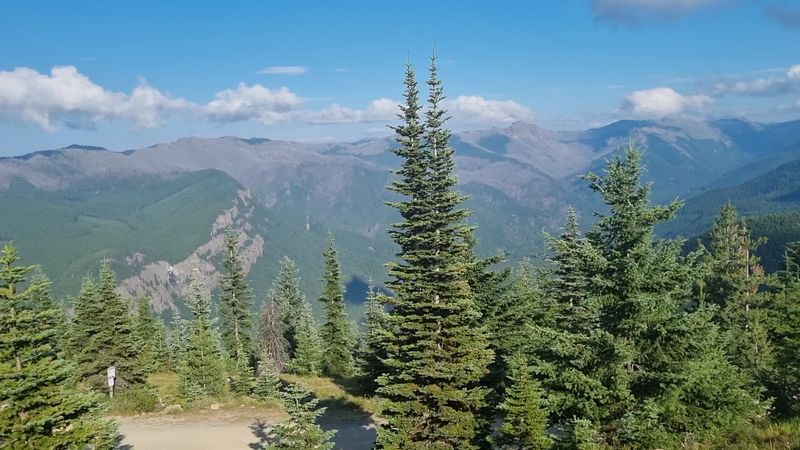
It is not a background detail here. It is the whole show. On exceptionally clear days, you can also pick out the Olympic Mountains to the west, Mount Baker far to the north, and the rolling waves of the central Cascades spreading out in every direction.
Few lookouts in Washington deliver this kind of visual reward so consistently, making Sun Top a genuinely special stop for anyone chasing big mountain views.
The History Behind The Cabin
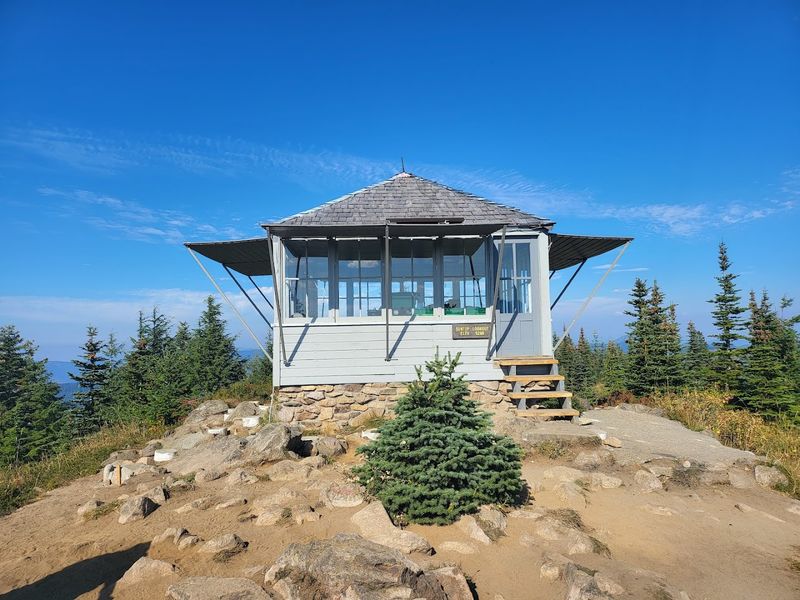
Built in 1932 or 1933, Sun Top Lookout has spent nearly a century keeping watch over the forests of central Washington. It was originally constructed as a fire lookout, giving rangers an elevated perch to spot smoke and coordinate responses across a vast stretch of wilderness.
That original purpose still shapes the way the cabin feels when you step inside. During World War II, the lookout took on a new role as a U.S. Army Aircraft Warning Service site.
Volunteers and staff used it to monitor the skies for enemy aircraft, turning this quiet mountain outpost into a small but serious piece of wartime infrastructure.
It is a detail that adds unexpected depth to what might otherwise seem like a simple wooden cabin.
Today, Sun Top Lookout is listed on the National Register of Historic Places, having earned that designation on July 14, 1987. It is also one of only two L-4 ground house structures still standing in the old Snoqualmie National Forest, making it a rare and well-preserved piece of Pacific Northwest history.
Getting There: Your Options Explained
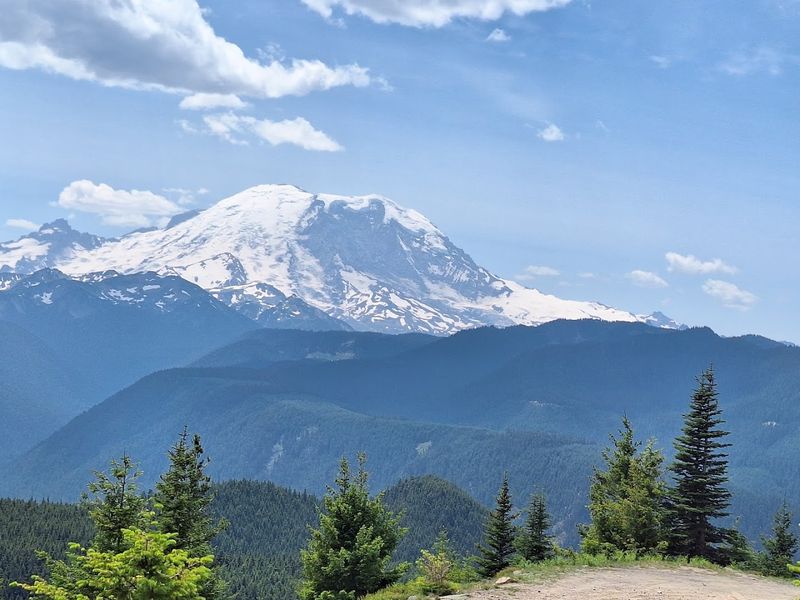
One of the best things about Sun Top Lookout is that it does not require elite athleticism to reach. You can hike, bike, or simply drive up Forest Road 7315, a gravel road that winds its way to the summit when the gates are open during summer months.
That flexibility makes it welcoming to a much wider range of visitors than most high-elevation destinations in the Cascades. Hikers will enjoy the steady climb through dense forest, with the anticipation building as the trees thin near the top.
Mountain bikers find the road a satisfying challenge, with enough elevation gain to make the downhill ride feel like a proper reward. Drivers who prefer to save their legs can park near the summit and walk the final short stretch to the lookout itself.
An accessible low-incline gravel trail has also been built near the lookout, and efforts are ongoing to add an ADA-accessible ramp to the observation deck. That kind of thoughtful planning means more people get to experience this extraordinary view, and that is something worth celebrating.
What The 360-Degree Panorama Actually Looks Like
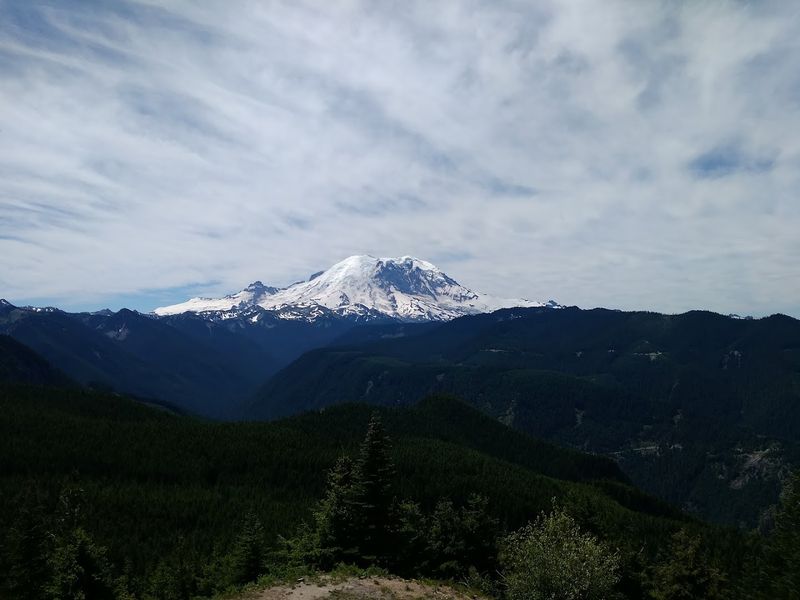
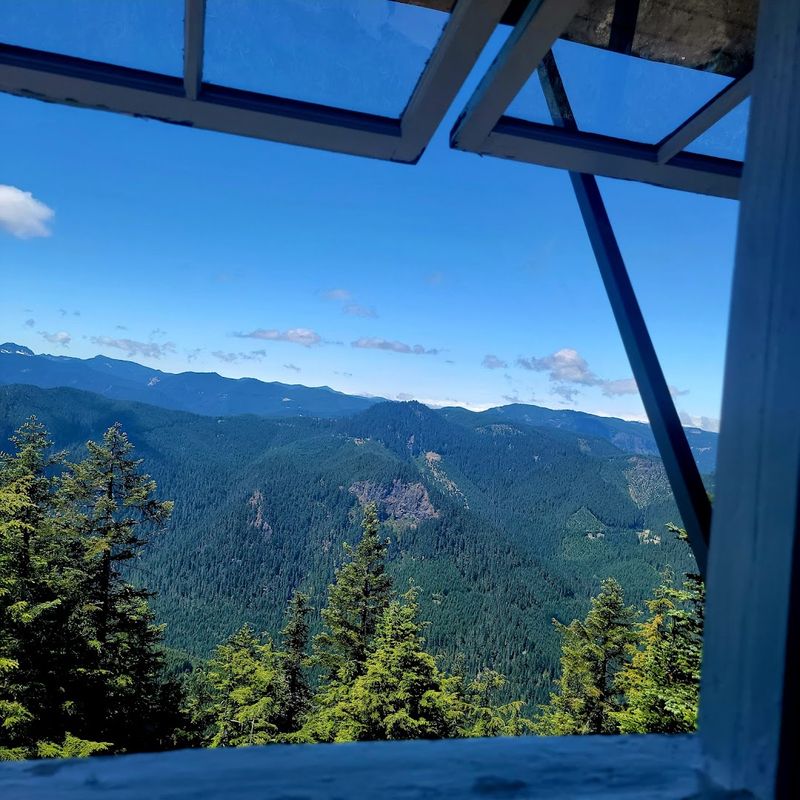
People use the phrase “360-degree view” so often that it starts to lose its meaning. At Sun Top, it earns every degree. From the small observation deck, you can pivot slowly and watch an entirely new landscape reveal itself with each turn.
The northern face of Mount Rainier dominates the south, but the view does not stop there. Swing your gaze to the west and the Olympic Mountains appear as a faint but unmistakable ridge on the horizon.
Look north on a particularly clear morning and Mount Baker shows up like a white thumbprint against the sky. The central Cascades spread out to the east in layer after layer of forested ridges, fading from dark green to soft blue as they recede into the distance.
The whole experience has a kind of quiet drama to it. There is no single moment where you think you have seen enough, because every direction offers something worth studying.
Bring a good pair of binoculars and plan to stay longer than you originally intended, because you will want to.
The Volunteer Staffers Who Make It Special
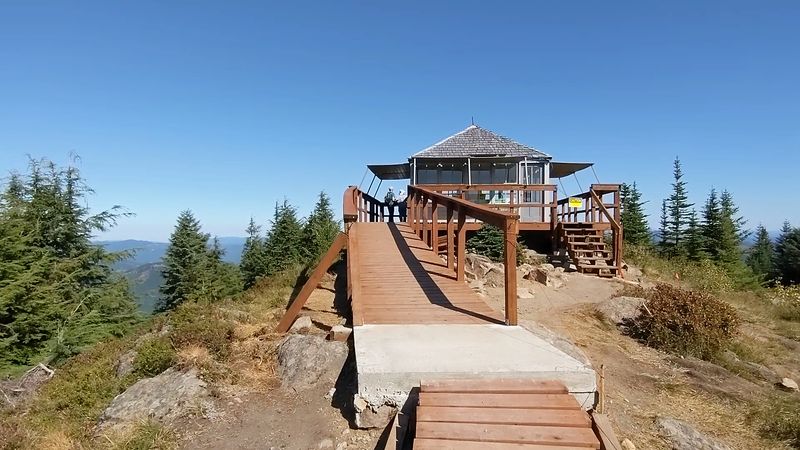
From late June through late September, Sun Top Lookout is staffed by volunteers who give the place a warm, lived-in energy that most trailheads simply cannot match.
These dedicated individuals spend their days at 5,271 feet, welcoming curious hikers, answering questions, and keeping the cabin in good shape for everyone who makes the trip up.
Visitors are welcome inside the cabin between 8 am and 5 pm when volunteers are present. Stepping through that door feels like crossing into a different era.
The interior still holds the character of a working fire lookout, with equipment, maps, and furnishings that tell the story of a long and purposeful life on the mountain.
The volunteers themselves are often the highlight of a visit. Many of them have deep knowledge of the area’s history, wildlife, and weather patterns, and they share that knowledge freely with anyone who asks.
If you time your visit right and catch them during their shift, you will leave with a much richer understanding of what this little cabin has meant to the region over the decades.
Best Time Of Year To Visit
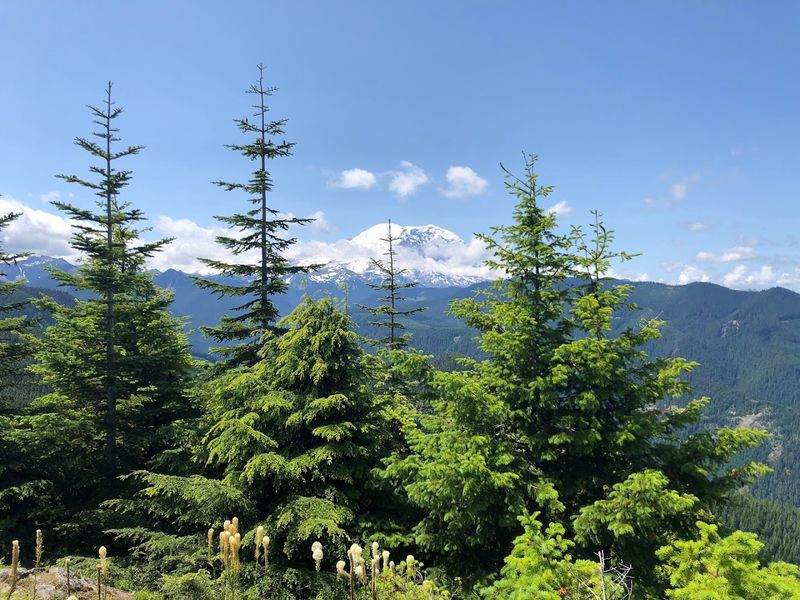
Timing your trip to Sun Top Lookout matters more than you might expect. The gates on Forest Road 7315 are typically open during summer, which generally means late June through early fall depending on snowpack and road conditions that particular year.
Checking with the Mount Baker-Snoqualmie National Forest before heading out is always a smart move. Summer visits offer the clearest skies, the warmest temperatures, and the best chance of catching Mount Rainier fully revealed rather than buried in clouds.
Wildflowers add color to the open areas near the summit, and the light in the early morning or late afternoon turns the whole scene golden in a way that photographers tend to remember for a long time.
Fall is also worth considering. The crowds thin out noticeably after Labor Day, and the changing colors in the forested slopes below add a new layer of visual interest to the panorama.
If you prefer a quieter, more contemplative visit with that same sweeping view, an early September or October morning at Sun Top is hard to beat.
Winter At Sun Top: A Completely Different Adventure
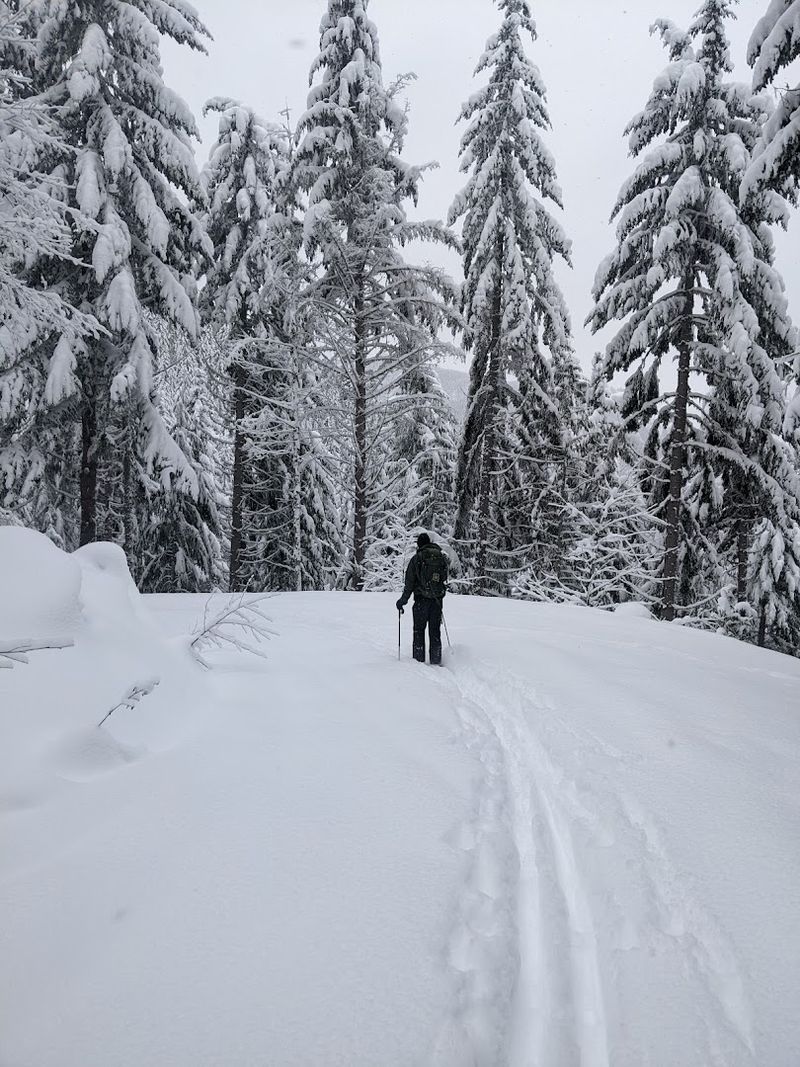
When the summer gates close and the road disappears under snow, Sun Top does not go quiet. The area transforms into a popular destination for snowshoers and cross-country skiers, accessed through the Sun Top Sno-Park.
The landscape shifts into something almost surreal, with the same forested ridgelines now draped in white and the air carrying a sharpness that feels completely different from the warm season version of this place.
Snowshoeing up toward the lookout in winter requires more preparation and physical effort than a summer drive, but the payoff can be extraordinary.
On clear winter days, Mount Rainier appears even more dramatic when everything around it is covered in snow, the contrast between the white foreground and the volcanic giant to the south creating a scene that feels almost too beautiful to be real.
A Discover Pass or appropriate Sno-Park permit is required for winter access, so make sure you have the right paperwork before you go. Dress in layers, bring traction devices for icy sections, and let someone know your plans.
Winter mountain conditions can change quickly, and a little preparation goes a long way.
Practical Tips For Planning Your Visit
A Northwest Forest Pass is required for parking at Sun Top Lookout, so make sure you have one before you arrive. You can purchase a pass online through the U.S. Forest Service website or at various outdoor retailers in the area.
Showing up without one can result in a fine, and the nearest place to buy one may be quite a distance from the trailhead. There are picnic tables near the lookout, making it a perfectly reasonable spot to spread out a lunch and soak in the view without rushing back down.
A vault toilet is also available on-site, which is a small but meaningful comfort at this elevation. Camping is not permitted directly at the lookout, so if you want to spend more time in the area, you will need to look at established campgrounds lower in the forest.
Cell service is limited to nonexistent at the summit, so download offline maps before you go and let someone know your itinerary. Arriving early on summer weekends helps you beat the crowds and snag a picnic table with that perfect Rainier view all to yourself.
The Hike Itself: What To Expect On The Trail
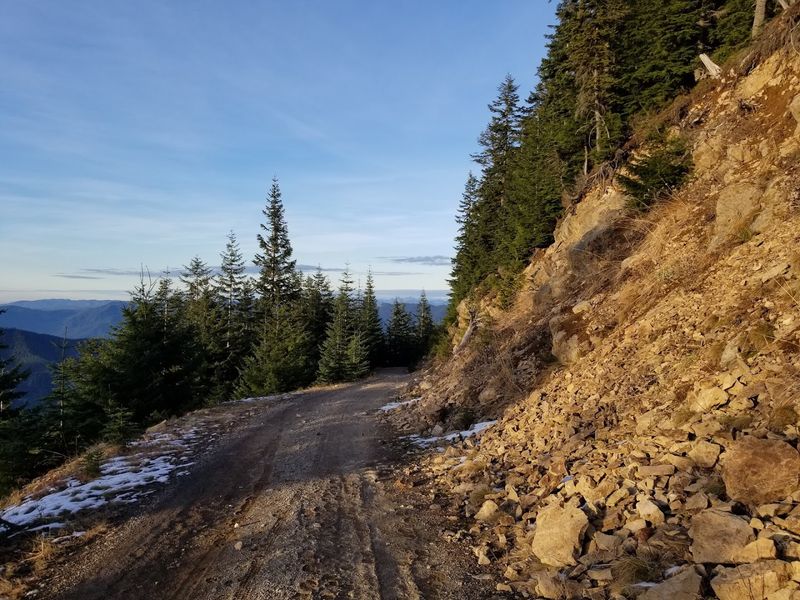
Hiking to Sun Top Lookout follows Forest Road 7315, which doubles as the driving route when the gate is open. The trail is not a traditional footpath through the woods but rather a steady climb along a gravel road that gains elevation at a consistent rate.
That makes it easier to pace yourself, and the surface is firm and well-maintained throughout most of the season. The round trip covers roughly 6 miles with about 1,100 feet of elevation gain, depending on where you park.
Most hikers with a moderate fitness level find it manageable, though the final stretch near the summit does kick up a bit steeper. The payoff, of course, is waiting at the top in the form of that jaw-dropping panorama.
Wildlife sightings along the route are not uncommon. Deer are frequently spotted grazing near the road, and birdsong fills the forest on calm mornings.
The walk itself is pleasant and shaded for much of the way, which makes the sudden opening at the summit feel like a grand reveal after a long buildup. Bring water, wear comfortable footwear, and enjoy the journey.
Photography Tips For Capturing The Views
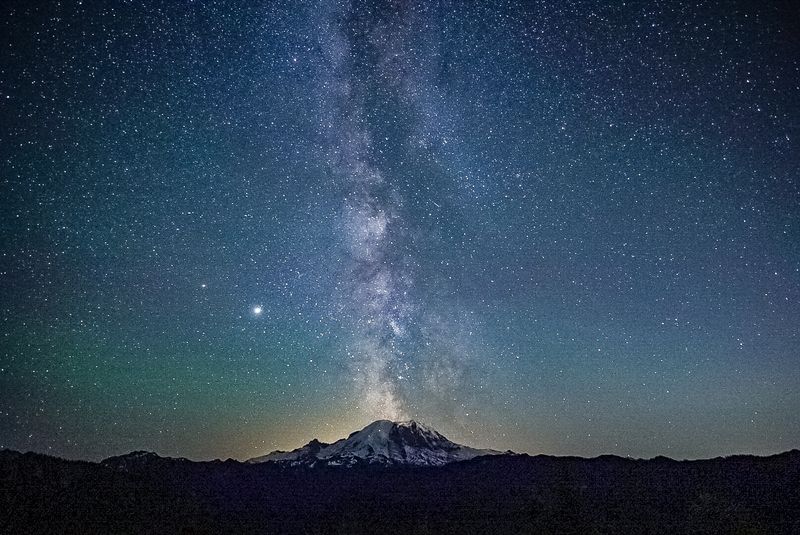
Sun Top Lookout is a photographer’s dream, but getting the best shots takes a little strategy. The northern face of Mount Rainier catches the most flattering light in the early morning, when the low angle of the sun creates soft shadows across the glaciers and ridgelines.
Arriving at or just after sunrise gives you the best window before midday haze softens the definition. A wide-angle lens is your best friend on the observation deck, where the panorama is wide enough that a standard focal length will always leave something out of the frame.
If you want to pull in fine details on Rainier’s glaciers or distant peaks, a telephoto lens lets you compress the layers of the landscape into striking compositions that convey the scale of what you are seeing.
Cloudy days are not necessarily a loss. Partial cloud cover can add drama and mood to images, especially when beams of light break through and spotlight sections of the mountain.
Shooting in RAW format gives you the most flexibility in post-processing, and a polarizing filter can help manage reflections and deepen the blue of a clear sky.
Why Sun Top Belongs On Your Washington Bucket List
Washington State has no shortage of spectacular viewpoints, but Sun Top Lookout earns its place near the top of that list for reasons that go beyond the obvious.
The combination of genuine historical significance, remarkable accessibility, and an up-close view of Mount Rainier that rivals anything in the region makes it a destination that delivers on every level.
You do not need to be a seasoned mountaineer or a hardcore backpacker to experience what this lookout offers. Families with kids, older visitors, casual hikers, and dedicated peak-baggers all find something here that speaks to them.
That kind of broad appeal is rarer than it sounds in a region full of destinations that require significant effort or experience. The lookout also carries a quiet sense of purpose that many viewpoints lack.
Knowing that this cabin has watched over the forest since the 1930s, served a wartime role, and earned a place on the National Register of Historic Places gives every visit a layer of meaning that the view alone could not provide. Sun Top is the full package, and it is absolutely worth the trip.