
12 Hidden Ohio Adventures You All Wish You Knew About Sooner
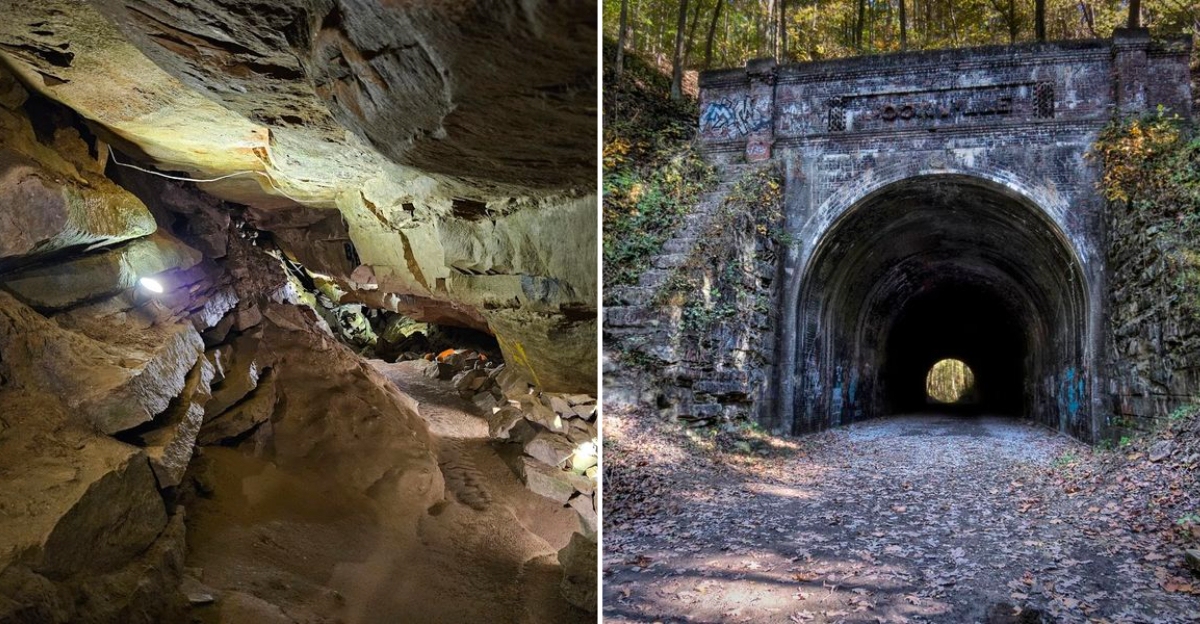
Ohio has a habit of hiding its weirdest, coolest adventures in places you would never think to check.
One minute you are driving past quiet roads and familiar small towns, and the next you are looking at mossy ledges, underground caverns, blue quarry water, or a tunnel that feels like it wandered out of a ghost story.
That is the fun of this list. These are not the obvious stops everyone has already posted from twelve different angles.
They are the places that make you pause, pull out your phone, and wonder how something this interesting has been sitting in Ohio the whole time.
Consider this your permission slip to take the stranger road, follow the trail a little farther, and give your weekend plans a plot twist. Some adventures shout for attention.
These quietly wait for the curious people who know where to look.
1. Nelson-Kennedy Ledges State Park, Nelson Township
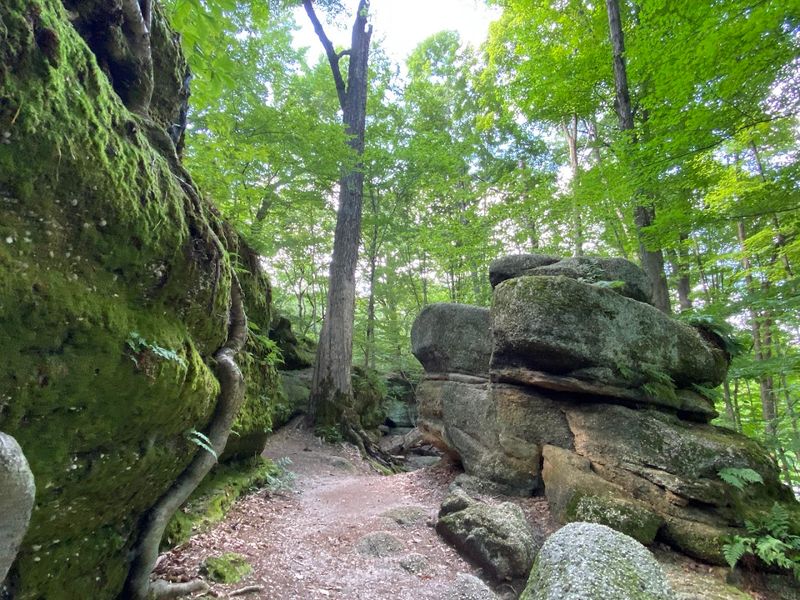
Picture squeezing through narrow rock passageways while towering sandstone walls loom on either side of you.
That is exactly what waits at Nelson-Kennedy Ledges State Park, located along State Route 282 in Nelson Township, Ohio.
The park is made up of ancient rock formations carved over millions of years, and walking through them feels like stepping into a completely different world. The ledges feature crevices with names like “Fat Man’s Peril” and “Squeeze” that add a playful challenge to the hike.
The trails here are short but surprisingly dramatic, winding through mossy boulders, small waterfalls, and shaded ravines. It is a fantastic spot for families, photographers, and anyone who wants to feel like an explorer without needing serious gear.
Spring and fall are the best times to visit, when the foliage adds rich color to the already stunning rock formations. Admission is free, parking is easy, and the whole experience takes about two to three hours.
It is one of those places you will immediately want to share with everyone you know.
2. Worden’s Ledges, Hinckley
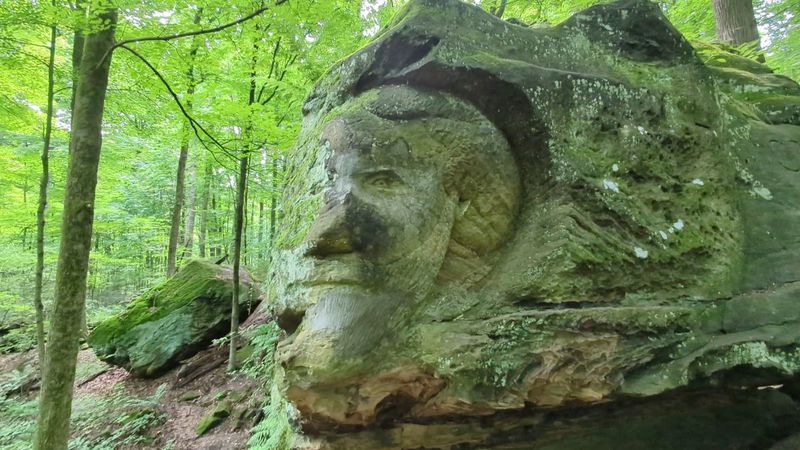
Somewhere between a hiking trail and an outdoor art gallery, Worden’s Ledges in Hinckley, Ohio, delivers one of the most unexpected experiences in the entire state.
Hidden along a forested path off Ledge Road, these sandstone boulders are carved with mysterious faces, figures, and symbols.
The carvings were created in the 1940s by a local man named Noble Stuart, who chiseled images directly into the rock. Some faces are small and subtle, while others are large and strikingly expressive.
Finding each carving feels like a scavenger hunt, and the wooded setting makes the whole thing feel wonderfully eerie in the best possible way.
The trail itself is relatively easy and connects to the broader Hinckley Reservation trail system, so you can extend your walk if you want more nature time.
There are no crowds, no entry fees, and no gift shops here. Just you, the trees, and a collection of stone faces watching quietly from the boulders.
Early morning visits reward you with golden light that makes the carvings especially photogenic.
3. White Star Quarry Beach, Gibsonburg
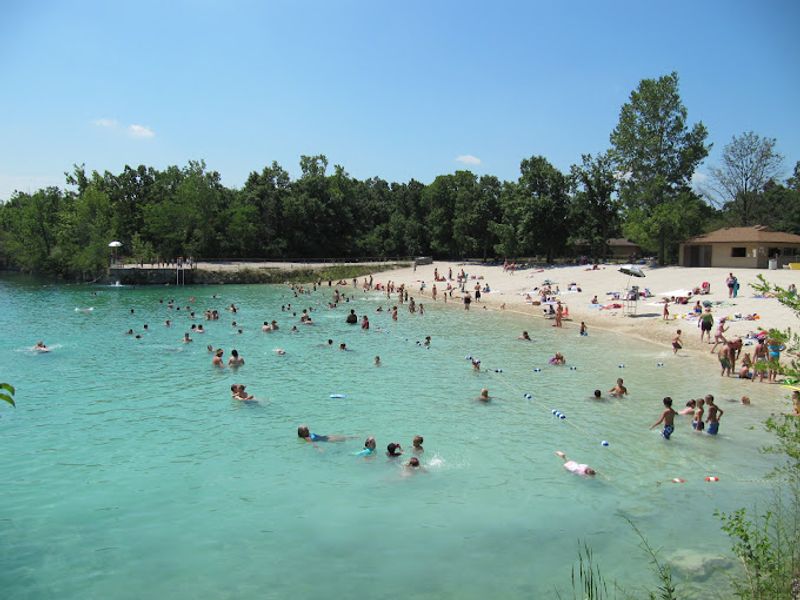
Not many people expect to find Caribbean-blue water in the middle of northwest Ohio, but White Star Quarry in Gibsonburg delivers exactly that kind of surprise.
This former limestone quarry has filled with strikingly clear water over the decades, creating one of the most unique swimming and diving spots in the Midwest.
Located at 925 South Main Street in Gibsonburg, the site draws both scuba divers and casual swimmers who come for the unusually transparent water and the novelty of swimming in a flooded quarry. Visibility underwater is exceptional, which is why it has become a training favorite for certified divers.
The beach area is well-maintained and family-friendly, with plenty of space to spread out on warm days. Shallow entry points make it accessible even for younger swimmers.
Fees apply for both swimming and diving, and the site has basic facilities including restrooms and picnic areas. Summer weekends can get busy, so arriving early on a weekday will give you a more relaxed experience.
The color of the water alone makes the trip worth every mile of the drive.
4. Seneca Caverns, Bellevue
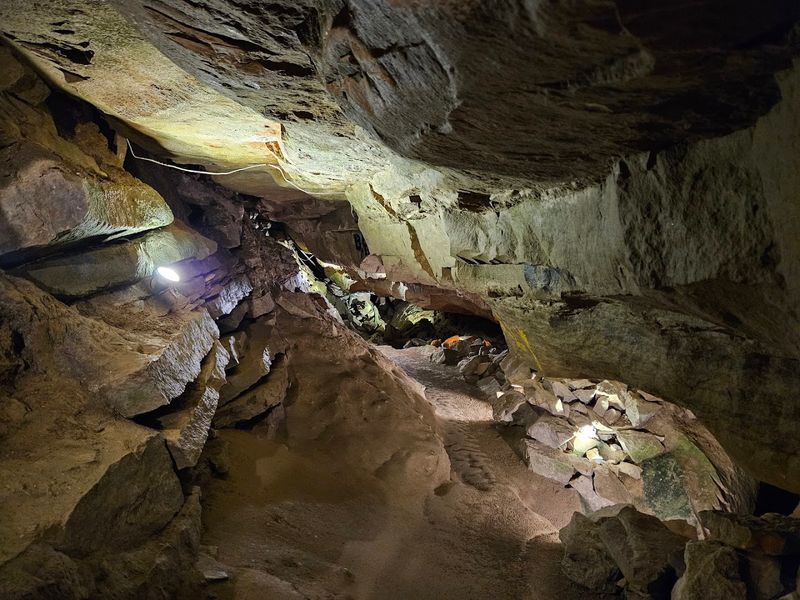
Deep beneath the farm fields of Bellevue, Ohio, lies one of the most fascinating underground attractions in the entire Midwest.
Seneca Caverns, located at 15248 East Township Road 178, is known as an earth crack cavern, with natural stone steps and pathways leading visitors through a dramatic underground fracture system.
Tours wind through a series of connected chambers that descend about 110 feet underground, and the temperature stays at a cool 54 degrees Fahrenheit year-round. The highlight of the tour is “Ole Mist’ry River,” a crystal-clear underground stream that flows at the lowest level of the cavern.
Guides are knowledgeable and entertaining, making the experience genuinely educational without feeling like a classroom lecture.
The cavern was discovered in 1872 by two boys, Peter Rutan and Henry Komer, who were hunting rabbits with their dog when they found the natural opening that led into the cave.
Plan for about an hour underground, and dress in layers since the cave is noticeably cooler than surface temperatures. It is open seasonally, so checking ahead before your visit is a smart move.
5. Ohio Caverns, West Liberty
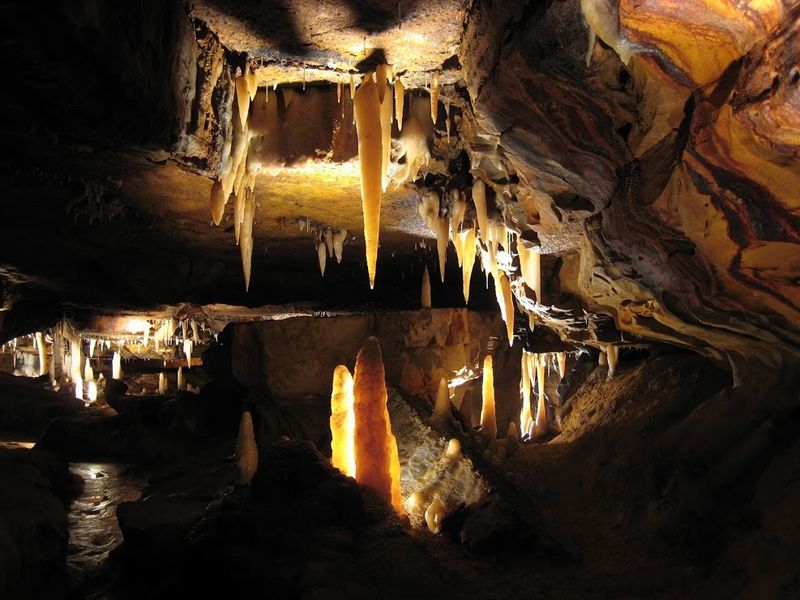
Billed as America’s most colorful caverns, Ohio Caverns in West Liberty, Ohio, absolutely earns that title.
Located at 2210 East State Route 245, this underground world is packed with formations in deep oranges, bright whites, and pale crystals that look almost too vivid to be natural.
The caverns were discovered in 1897 by a farm worker who noticed water disappearing into the ground, and they have been wowing visitors ever since.
Two tour options are available: a natural wonder tour and a historic tour, both of which take you through different sections of the cave system.
The star of the show is a stalactite called the “Crystal King,” a massive five-foot formation that took an estimated 200,000 years to grow to its current size. That number alone puts the whole experience in a humbling perspective.
The grounds above the caves are pleasant too, with picnic areas and a small gift shop. Tours run year-round, and the cave temperature holds steady at about 54 degrees, so bringing a light jacket is always a good idea regardless of the season outside.
6. Moonville Tunnel, Zaleski
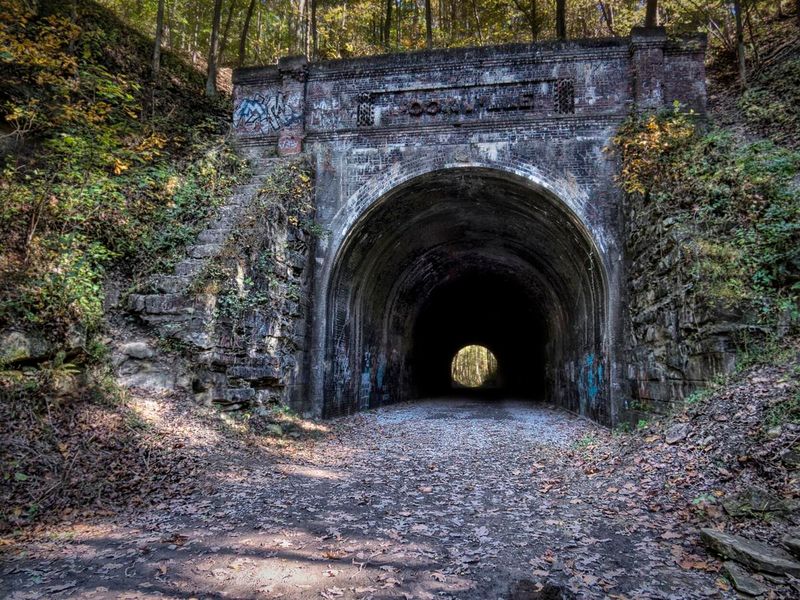
There is an old railroad tunnel sitting in the middle of the Zaleski State Forest area near Zaleski, Ohio, and it has been drawing curious visitors for generations.
The Moonville Tunnel, accessible from Hope-Moonville Road, is one of the most famous remnants of a once-busy railroad community that vanished from the map.
The tunnel itself is a striking brick-lined structure, with the word “MOONVILLE” marked above the entrance. The trail to reach it follows an old rail bed through dense forest, making the approach feel appropriately atmospheric.
Local legend gives the tunnel its spooky reputation, and the isolated setting certainly does nothing to discourage that story.
Whether you believe in ghost stories or not, the history of the former town and railroad corridor around this tunnel is genuinely fascinating and worth reading up on before your visit.
The walk from the main trail access can be quite short, though the broader Moonville Rail Trail stretches for miles through southeast Ohio forest.
Fall is a spectacular time to visit when the surrounding hardwood forest turns brilliant shades of red and gold around the old brick arch.
7. Rockbridge State Nature Preserve, Rockbridge
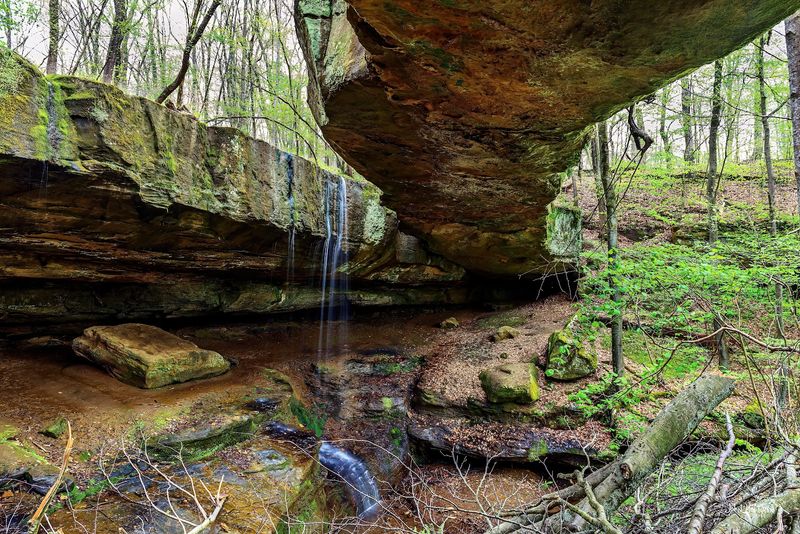
Ohio’s largest natural bridge is hiding in plain sight in the small town of Rockbridge, and most people drive right past without ever knowing it exists.
Rockbridge State Nature Preserve, located at 11475 Dalton Road, protects a stunning sandstone arch that stretches more than 100 feet long and arches about 50 feet across a ravine.
The arch was formed over thousands of years by water carving through the soft rock, and standing near it gives you a real sense of just how patient nature can be. The preserve itself is compact, but the trail system covers about 2.8 miles, so the visit feels more like a real hike than a quick roadside stop.
What makes this spot extra special is how quiet it tends to be. Unlike some of Ohio’s more famous nature spots, Rockbridge rarely draws large crowds, so you can often have the arch almost entirely to yourself.
Stay on the designated trails while visiting, since this is a protected state nature preserve and the terrain can be uneven, muddy, and slippery in spots.
The best photo of the arch is taken from a safe trail viewpoint where you can capture its full span with the surrounding forest as a backdrop.
Morning visits in spring offer the most dramatic lighting.
8. Conkles Hollow State Nature Preserve, Rockbridge
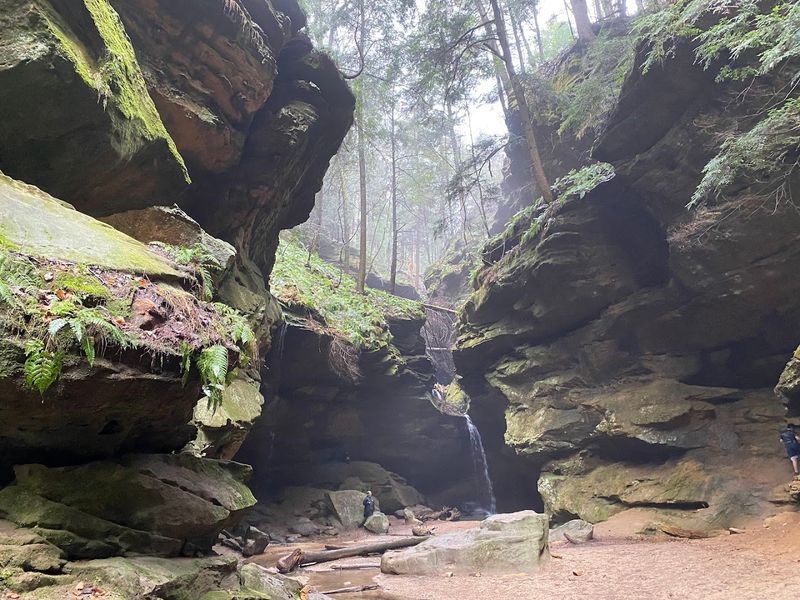
Standing at the bottom of Conkles Hollow feels like being at the base of a canyon that somehow ended up in Ohio.
Located at 24858 Big Pine Road in Rockbridge, this state nature preserve features one of the deepest gorges in the entire state, with sheer sandstone walls rising nearly 200 feet above the trail.
Two trails offer very different experiences here. The gorge trail follows the creek along the canyon floor, surrounded by ferns, mossy boulders, and dramatic black-streaked cliff faces.
The rim trail climbs to the top of the canyon walls and rewards hikers with sweeping views over the Hocking Hills region.
The hollow is also a botanically rich environment, home to rare plant species that thrive in the cool, shaded microclimate of the gorge. That protected status is part of what makes the place feel so wild and carefully preserved at the same time.
Pets are not permitted at Conkles Hollow, so plan accordingly before you arrive. Visiting in late spring means the ferns are at their lushest, turning the canyon floor into a vivid green carpet that is genuinely hard to photograph without smiling.
9. Clifton Gorge State Nature Preserve, Yellow Springs
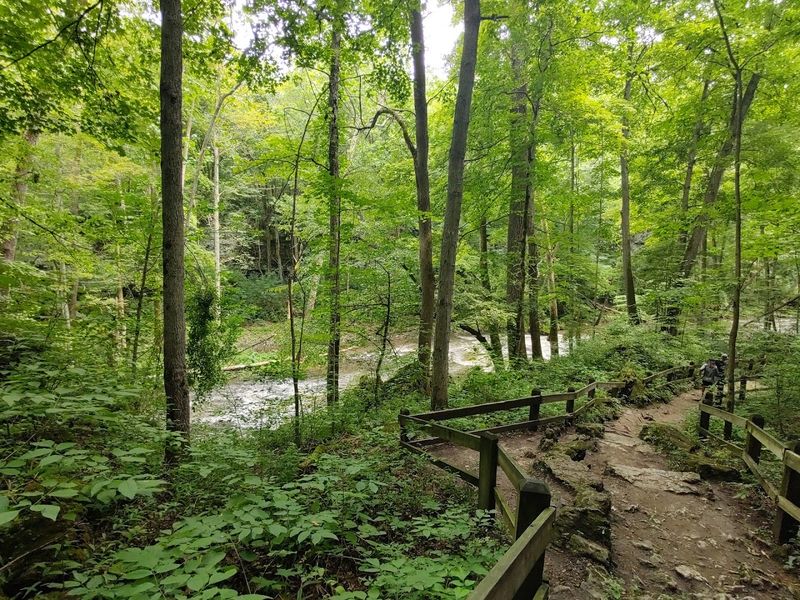
Just outside the charming village of Yellow Springs, Ohio, the Little Miami River has carved one of the most dramatic limestone gorges in the entire state.
Clifton Gorge State Nature Preserve, located at 2381 State Route 343, packs an enormous amount of natural drama into a relatively short stretch of trail.
The water moves fast through the narrow gorge, crashing over ledges and swirling through tight channels in a way that makes you want to stop and stare at every turn.
The preserve protects rare plant communities that have survived here since the last ice age, including species found almost nowhere else in Ohio.
The trail system connects directly to John Bryan State Park next door, giving you the option to extend your hike significantly if the mood strikes.
The gorge is beautiful in every season, but spring runoff makes the water levels especially high and dramatic, while fall coats the limestone walls in warm amber light.
Stay on the marked trails here, as the gorge edges can be dangerously steep. The preserve is free to visit and is one of those places that genuinely rewards a slow, unhurried walk with eyes wide open.
10. Fort Hill Earthworks and Nature Preserve, Hillsboro
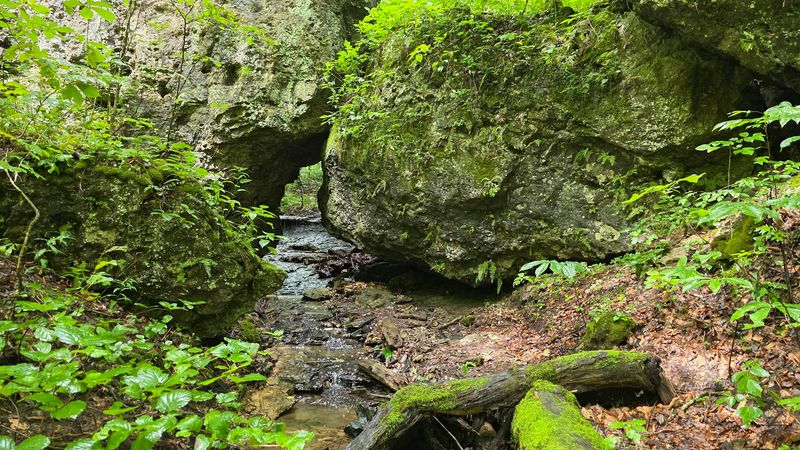
Around 2,000 years ago, the Hopewell people built a massive ceremonial earthwork on top of a hill in what is now Highland County, Ohio.
Fort Hill Earthworks and Nature Preserve, located at 13614 Fort Hill Road near Hillsboro, preserves that ancient structure within one of the most botanically diverse forests in the entire state.
The earthwork itself consists of over a mile of earthen walls enclosing the hilltop, and while the walls are now covered in centuries of forest growth, they are still clearly visible as you hike the ridge trail. The sheer scale of the construction, built entirely without modern tools, is quietly staggering.
Beyond the archaeology, the preserve is a plant lover’s paradise. Over 650 plant species have been recorded here, including many rare wildflowers that bloom in spectacular fashion during April and May.
The trail system covers several miles of varied terrain, from ridgeline walks to creek-side paths through the gorge below the hill. A small museum on-site provides excellent context for the earthworks and the people who built them.
This is the kind of place where history and nature blend so completely that you almost forget to check the time.
11. Cedar Bog Nature Preserve, Urbana
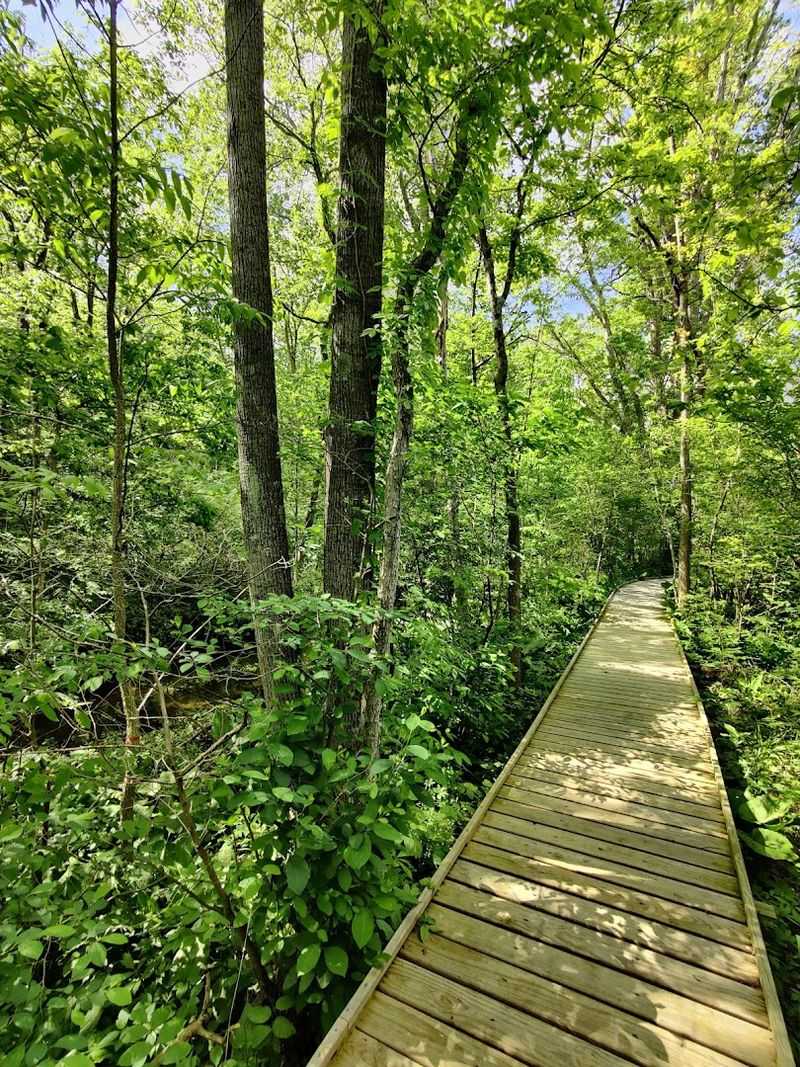
Despite its name, Cedar Bog near Urbana, Ohio, is technically not a bog at all. It is a fen, which means it receives water from underground springs rather than rainfall alone, and that distinction makes it one of the most ecologically rare habitats in the entire state.
Located at 980 Woodburn Road, this preserve protects a relict ecosystem left over from the last ice age.
Plants and animals that normally live much further north have survived here for thousands of years because the cold spring water keeps the habitat unusually distinctive year-round.
A wooden boardwalk winds through the preserve, keeping visitors on the path while protecting the sensitive habitat below. Along the way, you can spot carnivorous plants, rare orchids, and wildlife that you simply will not encounter anywhere else in Ohio.
Guided tours are offered regularly and are highly recommended for first-time visitors, as the ecology here is complex enough that a good guide genuinely transforms the experience.
Entry fees are modest, and the boardwalk makes the preserve easier to experience, though visitors with mobility concerns should call ahead with specific questions.
Cedar Bog proves that the most extraordinary places do not always announce themselves with dramatic scenery.
12. Honey Run Waterfall, Howard
Knox County, Ohio, keeps one of its best secrets tucked along a quiet forested road outside the small town of Howard.
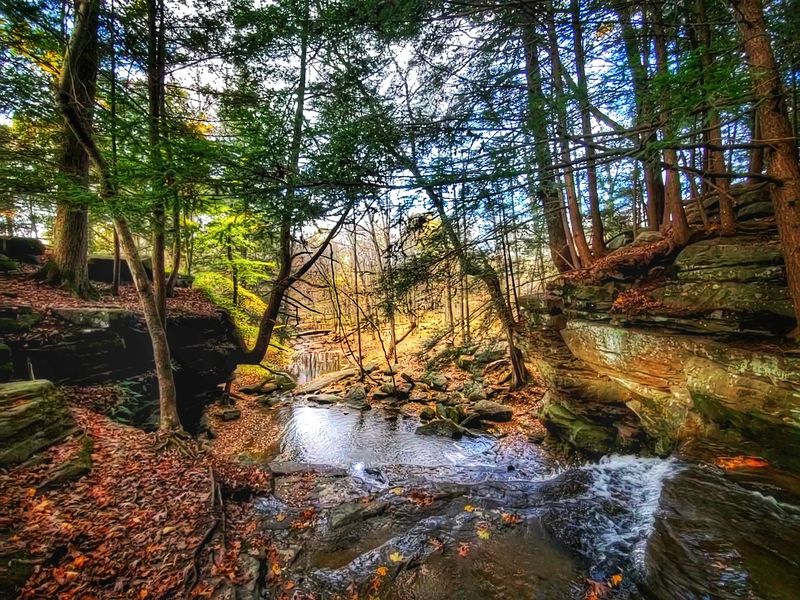
Honey Run Waterfall, accessible via Hazel Dell Road, is a layered sandstone waterfall that drops in stages over mossy ledges into a shallow pool below, and the whole scene is framed by dense woodland on all sides.
The hike to the falls is short and pleasant, passing through a shaded forest that stays cool even on warm summer days. The waterfall itself changes character dramatically with the seasons: thundering after spring rains, delicate and glassy in summer, and often edged with ice formations in the colder months.
The surrounding area sits within the broader Kokosing River watershed, which adds to the lush, well-watered feel of the landscape.
The spot is popular with local families but rarely overcrowded, giving it a relaxed, unhurried atmosphere that is increasingly hard to find at natural attractions.
Nearby Mohican State Park is just a short drive away, making it easy to combine both destinations into a full day of outdoor exploring.
Pack a lunch and plan to linger, because Honey Run Waterfall is the kind of place that rewards patience with unexpected moments of pure quiet beauty.