
This Washington Trail Lets You Crawl Through An Ancient Tree That Is Perfectly Preserved By Lava
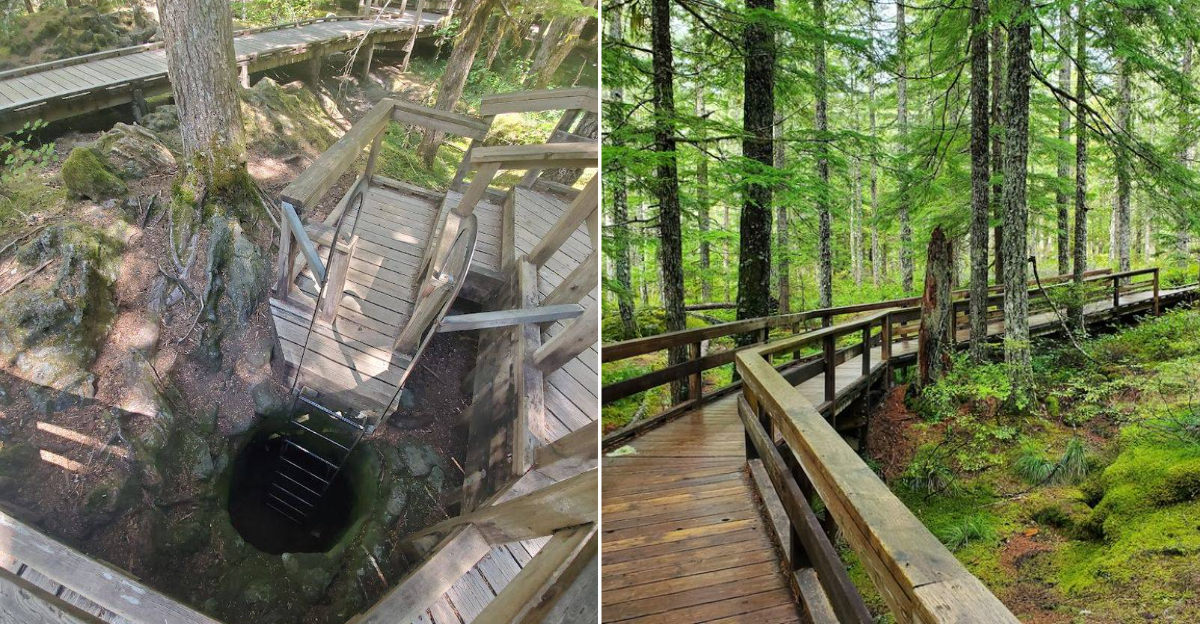
Have you ever wanted to step back in time and walk where dinosaurs might have roamed? Deep in the forests of Washington, nature has crafted something straight out of a fantasy novel.
Here, an ancient Giant Sequoia stands frozen in place, preserved by molten lava that flowed through this valley thousands of years ago.
What makes this spot truly remarkable is the tunnel that runs through its massive trunk-a passage that visitors can actually crawl through, hands brushing against bark that has stood for centuries.
The trail weaves through a landscape shaped by fire and time, where every step tells a story of survival and natural wonder. Standing there, squeezed through that ancient wooden corridor, feels like receiving a secret from the earth itself.
This short, fascinating trail lets you walk, and even crawl, through the ghostly impressions left behind when ancient trees were swallowed by lava.
The Story Behind The Trail Of Two Forests
About 1,900 to 2,000 years ago, a lava flow from Mount St. Helens crept through an ancient forest, wrapping itself around standing tree trunks like a slow-moving blanket of fire and rock.
The trees themselves burned and rotted away over time, but the lava hardened around them first, leaving behind hollow impressions in the rock called lava tree molds or lava casts. These eerie voids are the stars of this trail.
The name “Trail of Two Forests” comes from a clever idea: two forests exist here at once. The first is the living forest you can see today, full of fir, cedar, and hemlock trees reaching toward the sky.
The second is the invisible forest frozen in lava, preserved as underground tunnels and upright casts scattered across the forest floor.
Educational interpretive panels along the trail explain all of this in clear, engaging language that makes the science feel approachable and exciting. Even visitors who are not geology fans tend to leave feeling genuinely impressed by the story this ground tells.
What The Lava Casts Actually Look Like Up Close
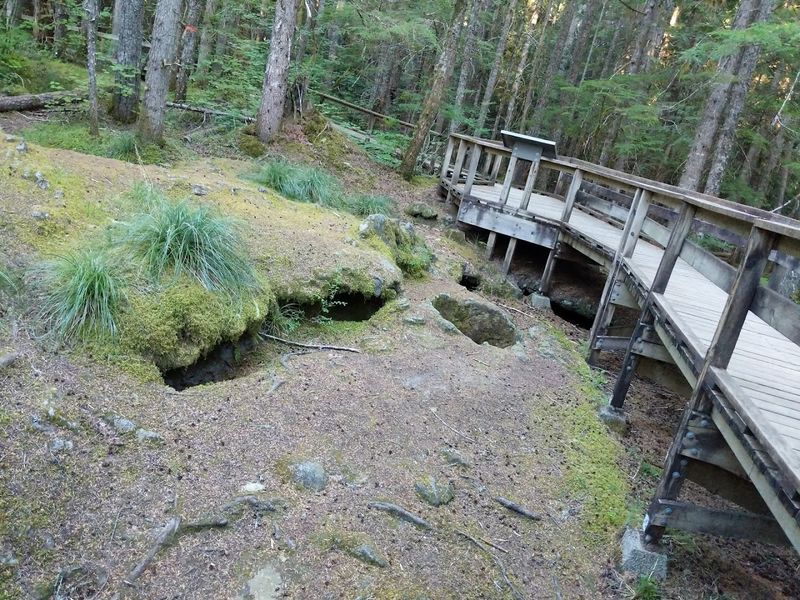
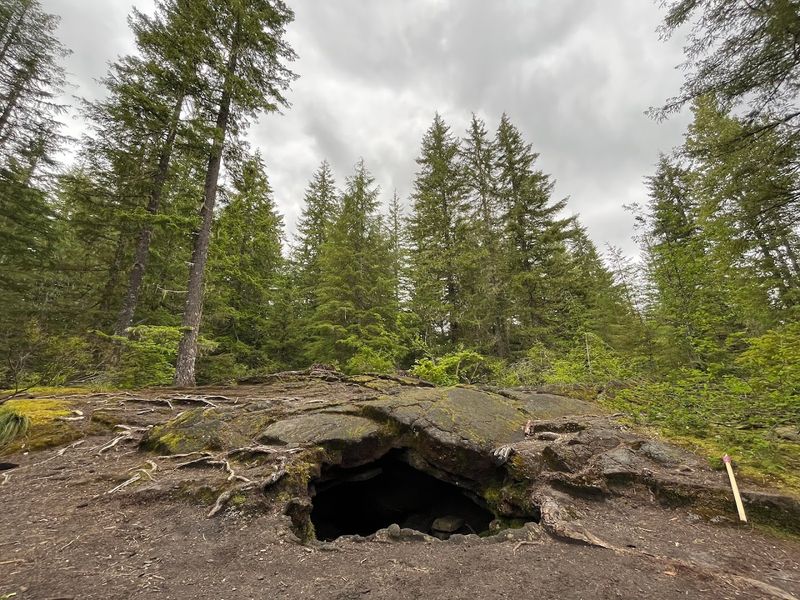
Walking along the boardwalk, you will start noticing the lava casts scattered around the forest floor like strange stone cylinders.
Some stand upright, showing the exact shape of a tree trunk that no longer exists. Others are horizontal, running along the ground like rocky hallways just waiting to be explored.
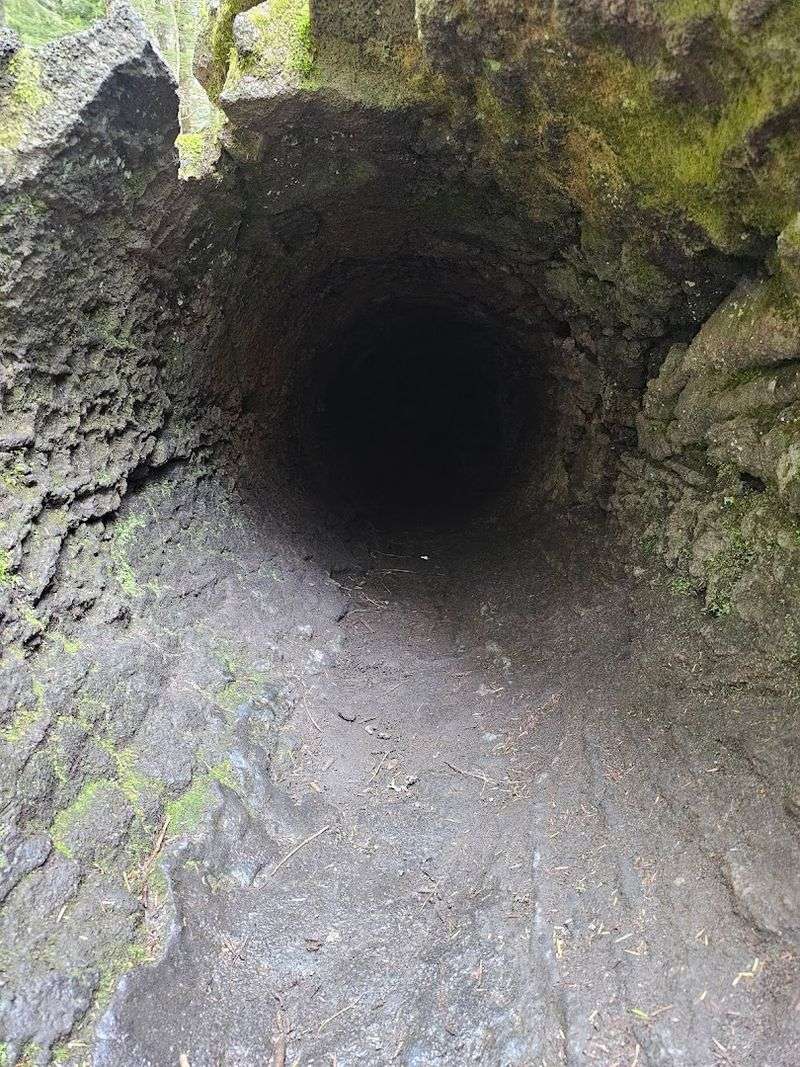
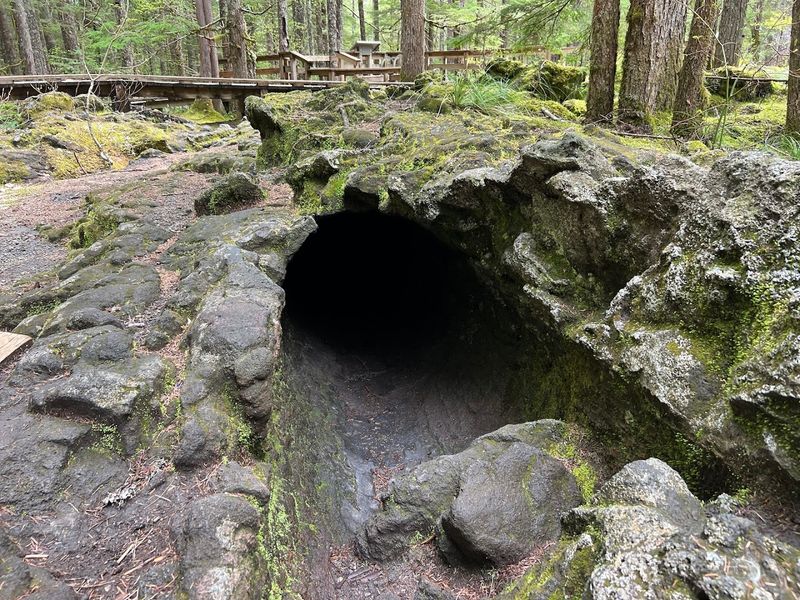
The texture of the rock is rough and porous, typical of basaltic lava, and you can actually see the impression of ancient bark preserved in the stone. It is one of those moments where touching something feels like reaching back through thousands of years of history.
The detail in the rock is surprisingly clear, almost like a fossil record of an entire forest. Kids and adults alike tend to crouch down and peer into the openings with wide eyes.
Some casts are small, others are wide enough to crawl through comfortably. Seeing these formations in person hits differently than reading about them, because the scale and the silence of the forest around them make the whole experience feel quietly spectacular.
The Famous Crawl-Through Tunnel Experience
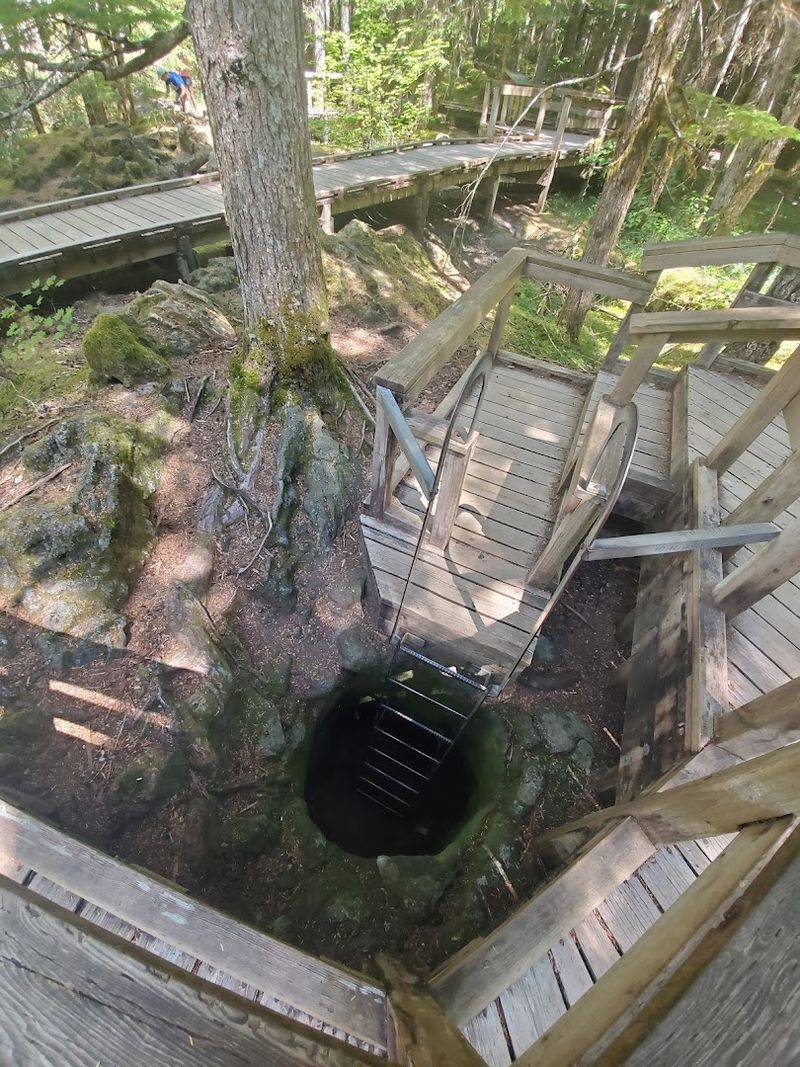
Here is the part that makes this trail genuinely unforgettable: there is a spot where you can climb down a ladder and crawl through an actual horizontal lava cast tunnel.
The tunnel is the mold of an ancient tree, and it runs underground for a short stretch that feels surprisingly long once you are inside it. Bringing a flashlight or headlamp is strongly recommended, because the tunnel gets dark quickly and navigating it without light is no fun at all.
The floor can be damp and muddy, so waterproof pants or clothes you do not mind getting dirty are a smart choice. The tunnel is tight but manageable for most adults, and kids absolutely love the adventure of it.
Coming out the other end with muddy knees and a huge grin on your face is basically a rite of passage at this trail.
Not everyone chooses to crawl through, and that is perfectly fine, but those who do tend to call it the highlight of their entire visit to the Mount St. Helens area. It is genuinely a one-of-a-kind experience you will not find at many places on Earth.
The Boardwalk Trail And Who It Is Perfect For
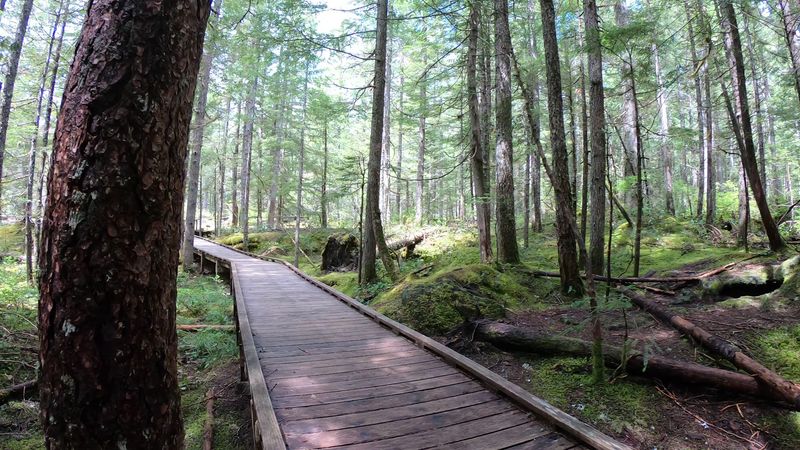
One of the best things about this trail is how accessible it is. The main loop is only about 0.25 miles long and follows a raised wooden boardwalk that works well for wheelchairs, strollers, and anyone who prefers a smooth, flat surface.
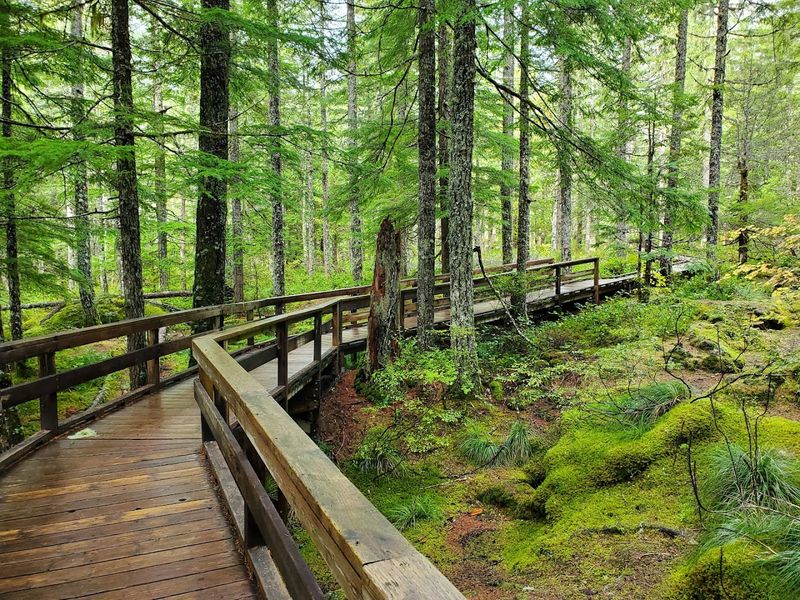
Families with young children will find the whole setup easy and stress-free. The boardwalk winds through a beautiful second-growth forest that feels calm and cool, even on warmer days.
Tall fir, cedar, and hemlock trees create a canopy overhead that filters the light into soft green tones. The whole trail has a peaceful, almost meditative quality that makes it enjoyable even before you spot the first lava cast.
Because the loop is so short, most visitors finish it in about 20 to 30 minutes at a relaxed pace. That said, curious visitors who stop to read every interpretive panel and peer into every cast opening often linger much longer.
The trail rewards those who slow down and pay attention, turning a quick walk into something that genuinely sticks with you.
Location, Nearby Attractions, And Getting There
The Trail of Two Forests Interpretive Site sits on the south side of Mount St. Helens within the Mount St. Helens National Volcanic Monument, which is part of the Gifford Pinchot National Forest in Washington State.
The trailhead is located near Ape Cave Road, making it easy to combine with a visit to the famous Ape Caves lava tube system just down the road. Getting there requires a drive through winding forest roads, but the scenery along the way is worth every curve.
The area is remote enough to feel like a real adventure without being so far off the beaten path that it becomes difficult to reach with a regular vehicle.
Pairing this trail with Ape Caves makes for an excellent full day of volcanic exploration. Both sites are managed by the Forest Service and share a similar theme of lava-shaped landscapes.
If you are planning a trip to the Mount St. Helens area, putting both of these on the same itinerary is one of the smartest moves you can make.
Permits, Passes, And Best Times To Visit
Planning ahead for permits is important at this site. From April 1 through November 30, a valid recreation pass or day permit is required for parking at the trailhead. From December 1 through March 31, a Washington State Sno-Park Permit is needed instead.
These passes can be purchased online through the Forest Service or at local ranger stations and outdoor retailers.
The best time to visit is late spring through fall, roughly May through October. Snow can linger on the access roads well into spring, so checking current road conditions before heading out is a smart habit.
Summer weekends can get busy, especially since Ape Caves nearby draws large crowds, so arriving early in the morning is a good way to enjoy a quieter experience.
Fall visits offer a lovely bonus: the surrounding forest turns golden and russet as the season changes, adding a warm, colorful backdrop to the already striking volcanic scenery.
Visiting on a weekday in September or early October might just be the sweet spot for beating the crowds while catching the forest at its most photogenic. It is one of those places where a little planning makes the whole outing feel smoother, especially because the permit rules change with the season.
What To Bring And Tips For A Great Visit
A headlamp or flashlight is the single most important thing to pack for this trail, full stop. Without one, the crawl-through tunnel is dark, disorienting, and honestly not that fun.
Clip-on headlamps are easy to carry and leave your hands free for the crawl, which makes them a better choice than a handheld flashlight. Wear clothes you are comfortable getting muddy, especially if you plan to crawl through the lava cast tunnel.
Waterproof pants or old hiking clothes work well. Sturdy shoes with good grip are also helpful, since the ladder descent into the tunnel can be slippery when wet. Packing a small bag with water, snacks, and a light layer is always a good idea in the forest, even on a short trail.
The trailhead has picnic tables and vault toilets, so you can arrive, settle in, and take your time without rushing. Bringing a camera or making sure your phone is fully charged is worth doing, because the lava casts and forest scenery offer genuinely photogenic moments at almost every turn on this trail.
It is also smart to check current trail and forest conditions before heading out, since wet weather can make the tunnel messier and less comfortable to explore.