
This Hidden Library In Washington Feels Like It’s From Another World
They told me about a place in Washington where books could make you cry, laugh, and fall in love-all before lunch. I dismissed it as overzealous local mythology, the kind of tall tale tourists exchange on ferry rides.
Then I stepped inside and understood immediately why people speak of this hidden sanctuary with reverent hushed tones. Towering shelves created labyrinthine pathways that demanded exploration. Grand architecture declared that knowledge deserves the finest surroundings.
Hours slipped away like minutes, and when I finally emerged into the afternoon light, the ordinary world felt somehow less magnificent than it had before.
I can honestly say no library has ever made me feel so small and so inspired at the same time.
The Gothic Exterior That Stops You In Your Tracks
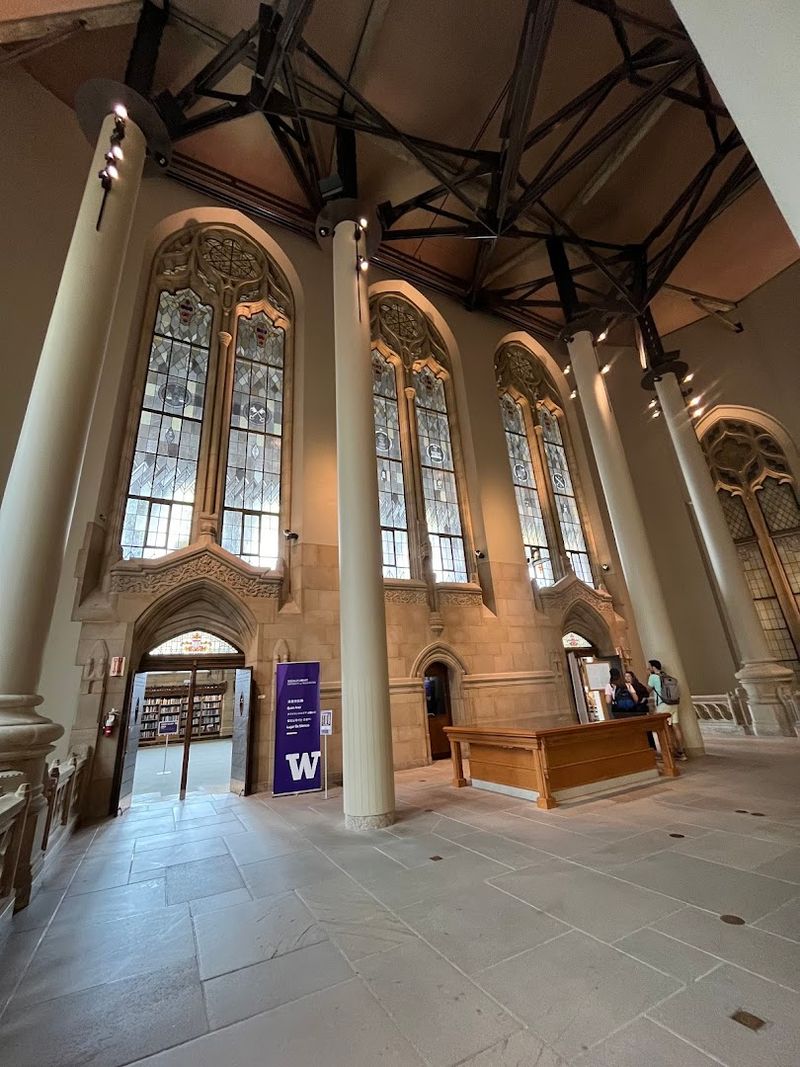
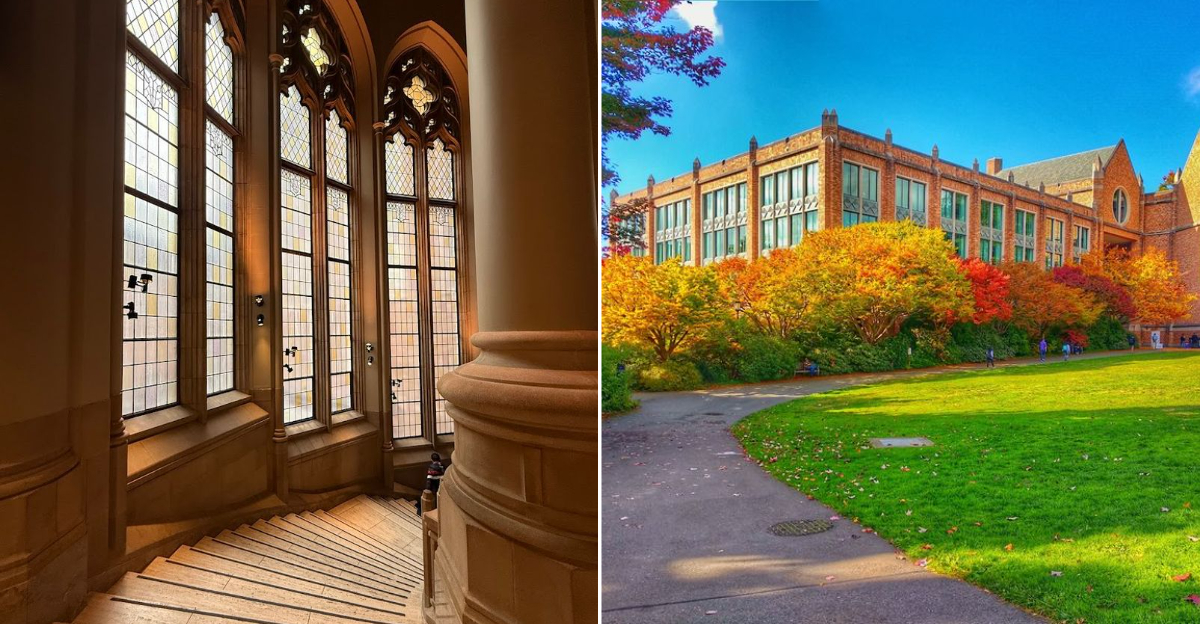
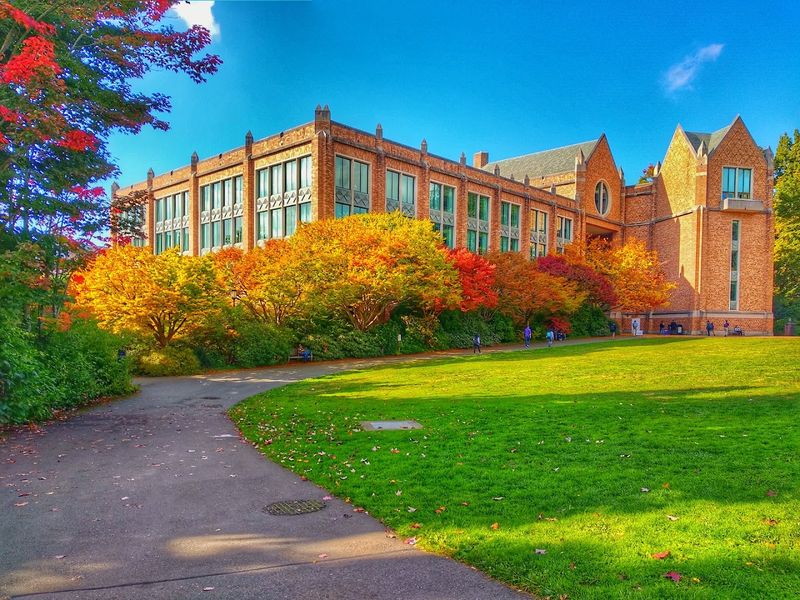
Standing outside Suzzallo Library for the first time, I genuinely forgot I was on a college campus. The building’s facade is draped in cream-colored terra cotta stone, carved with intricate figures representing great thinkers, scientists, and artists.
Eighteen scholarly figures line the entrance portal, each one detailed enough to make you stop and stare. Built in the early 1920s and designed by architects Bebb and Gould, the library was envisioned by University of Washington president Henry Suzzallo as a “cathedral of learning.”
That phrase is not just marketing language. Every arch, every carved relief, and every decorative detail was chosen to inspire reverence for knowledge.
The building sits at the heart of the university’s central plaza, so it commands attention from every angle on campus. Even on a gray Seattle day, the stonework seems to glow.
Visitors who wander onto the University of Washington campus at 4000 15th Ave NE, Seattle, WA, often say this building alone was worth the trip.
Walking Into The Reading Room For The First Time
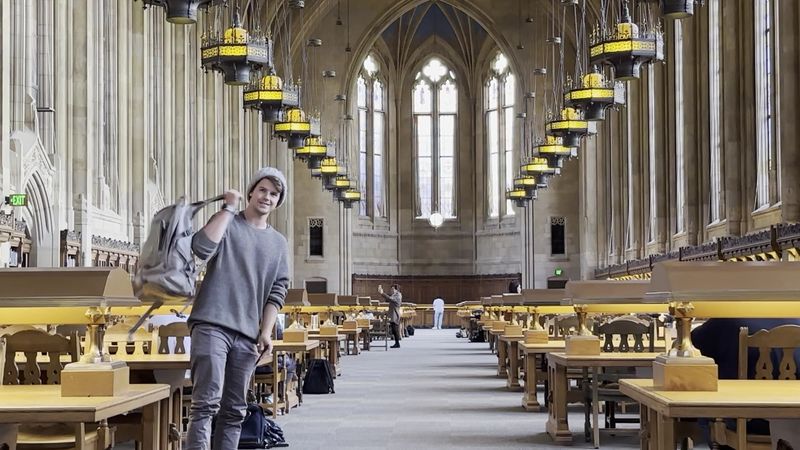
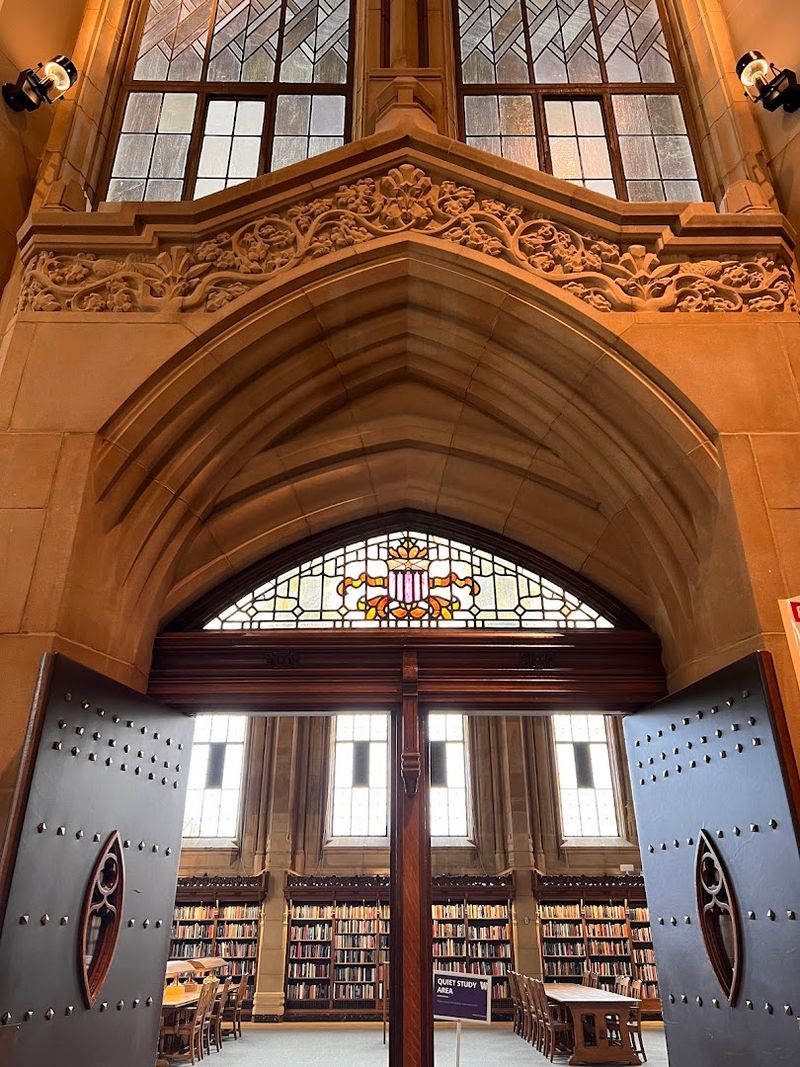
Nothing quite prepares you for the moment you push open those heavy doors and step into the Graduate Reading Room. The ceiling vaults nearly 65 feet above your head, and the room stretches roughly 250 feet from end to end.
Rows of long wooden tables with warm reading lamps line the floor, and everything feels hushed and sacred. Tall stained glass windows filter the Seattle light into soft, colorful patterns across the stone walls.
The warm tones of amber and gold make even a rainy Tuesday afternoon feel like golden hour. Students sit quietly with their books and laptops, and somehow everyone seems to be sitting up a little straighter than they would in an ordinary library.
I sat down at one of those long tables and opened a book I had no intention of reading just to feel like I belonged there. The atmosphere alone nudges you toward focus and wonder. It is the kind of room that makes thinking feel like a privilege rather than a chore.
The Story Behind The Name And The Vision
Henry Suzzallo served as president of the University of Washington from 1915 to 1926, and he had a bold, almost stubborn belief that a great university needed a great library at its center. He pushed hard for a building that would be more than a storage facility for books.
He wanted it to feel like a place where the act of learning was treated as something worth celebrating. His vision was so grand and so expensive that it eventually contributed to his dismissal by the university board.
The irony is that the completed library now bears his name, a quiet acknowledgment that he was right all along. Allen Library, the connected modern addition completed in 1990, was named after Paul G. Allen, the Microsoft co-founder and Seattle native who helped fund its construction.
Together, the two buildings form a system that holds millions of volumes and serves thousands of students daily. Knowing the backstory makes every corner of the building feel a little more personal and a little more earned.
Stained Glass Windows And The Art Hidden In Plain Sight
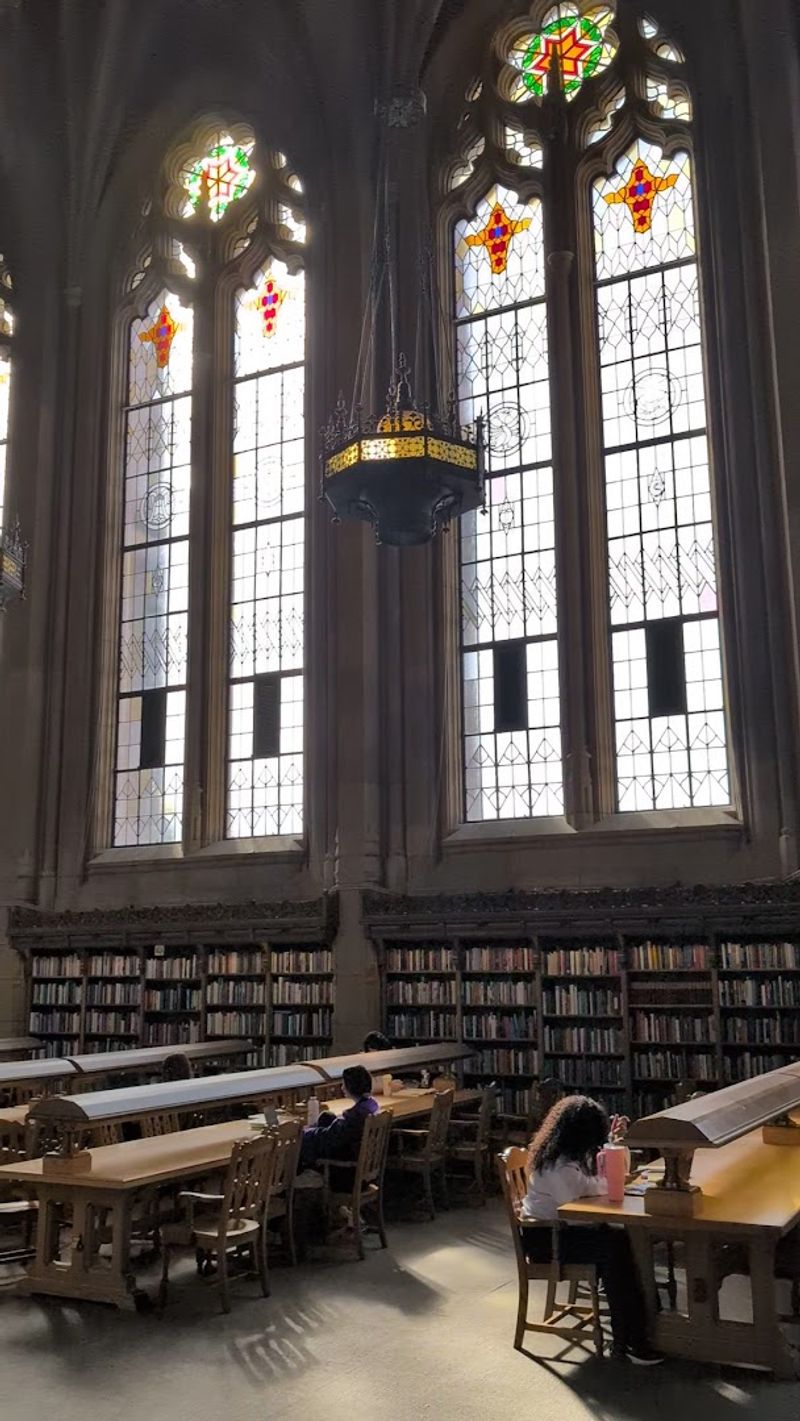
Most people walk into the Reading Room and immediately look up at the ceiling, which is fair because it is stunning. But if you slow down and look sideways, the stained glass windows along both walls deserve serious attention.
Each window features detailed geometric and botanical patterns that shift in color depending on the time of day and the angle of the light outside. On a bright afternoon, the windows cast pools of amber and sage green across the stone floors.
On an overcast morning, the light turns softer and almost blue-gray, giving the room a completely different mood. The same space genuinely feels like two different places depending on when you visit.
The decorative program throughout the building was designed to reinforce the idea that beauty and scholarship belong together.
Carved medallions, painted ceiling ribs, and ornamental tile work appear in corners that most visitors never notice. Bringing a camera and taking your time is the only way to catch all of it. I left with over a hundred photos and still felt like I missed things.
Allen Library And The Modern Side Of The Equation
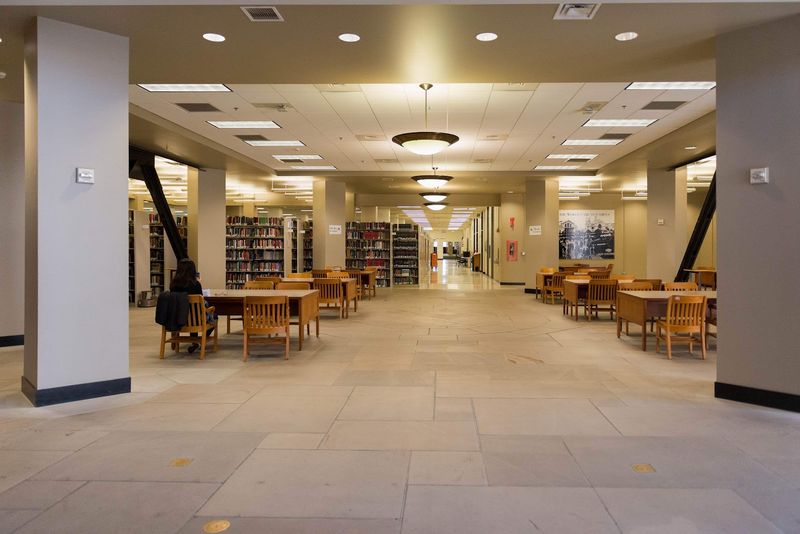
Right next door to the grand Gothic drama of Suzzallo sits Allen Library, and the contrast is striking in the best possible way. Completed in 1990, Allen Library was designed to complement rather than compete with its older neighbor.
The architecture is modern and clean, with open floor plans, natural light, and plenty of collaborative study spaces. Where Suzzallo feels like a place for quiet, solitary reflection, Allen Library feels energetic and practical.
Group study rooms, computer terminals, digital archives, and special collections all live here. The Special Collections division holds rare manuscripts, historical photographs of the Pacific Northwest, and materials that researchers travel from across the country to examine.
The two buildings are connected by a shared entrance hall, so moving between them feels seamless. Most students use both spaces in a single visit, shifting from Allen’s buzzing collaborative energy to Suzzallo’s cathedral calm depending on what their afternoon requires.
For a visitor, walking through both gives you a full picture of what a world-class research library actually looks like in practice.
Best Times To Visit And Practical Tips For Getting There
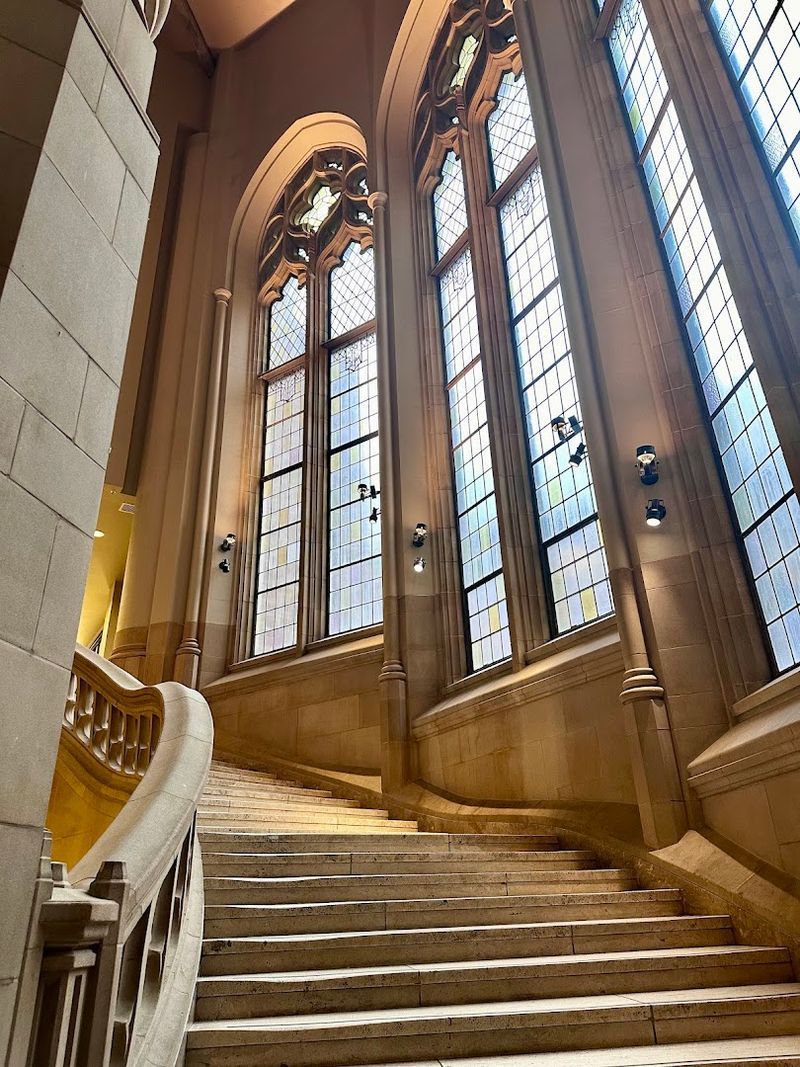
Visiting Suzzallo and Allen Libraries is free and open to the public, though hours vary depending on the academic calendar. During the school year, the libraries typically open early in the morning and stay open late into the evening.
Summer hours are reduced, so checking the UW Libraries website before you go saves a wasted trip. Fall is my favorite season to visit.
The university campus fills with turning leaves, the air carries that satisfying cool edge, and the golden light through the Reading Room windows is at its absolute best.
Spring is equally beautiful when the famous UW cherry blossoms are blooming along Rainier Vista, just a short walk from the library entrance.
Getting there is straightforward. The University of Washington Link Light Rail station drops you practically at the campus gates, making it an easy and car-free visit from downtown Seattle.
Parking on campus is limited and expensive, so the train is genuinely the smarter choice. Plan to spend at least an hour inside and bring something to read.
It Belongs In A Different Century
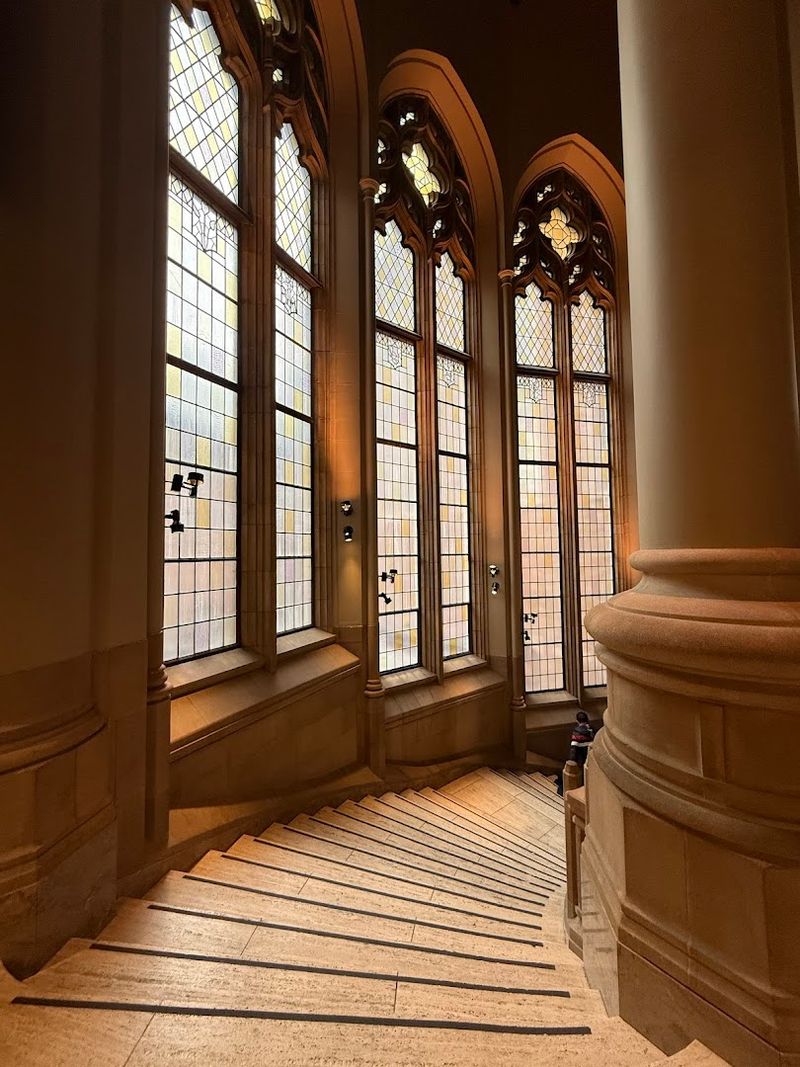
There is something genuinely disorienting about sitting in the Suzzallo Reading Room with a modern laptop open in front of you.
The space around you belongs to an era of quill pens and candlelight, yet the Wi-Fi works perfectly and the outlets are easy to find. That collision of centuries is part of what makes the experience so memorable.
The building was deliberately designed to feel timeless, to signal that the pursuit of knowledge is not a trend but a permanent human project.
Suzzallo himself believed that students would work harder and think more clearly if their surroundings communicated that their work mattered. Research suggests he was not wrong.
Students and visitors alike report feeling more focused and more inspired inside this room than almost anywhere else on campus.
By the time I finally gathered my things and walked back out into the Seattle afternoon, I felt a little reluctant to leave. Some places make you want to be a better version of yourself, and this library is quietly, confidently one of them.
The Secret Collections And Rare Treasures
Most visitors get so caught up in the architecture that they almost forget Suzzallo is an actual working library. Tucked behind those grand arched doorways are millions of volumes, rare manuscripts, and special collections that span centuries of human knowledge.
The Pacific Northwest Collection alone holds maps, photographs, and documents that tell the region’s story in stunning detail.
Students and researchers travel from across the country just to access materials you cannot find anywhere else. There is something quietly thrilling about sitting at one of those long carved oak tables, surrounded by history you can actually hold in your hands.
It gives the whole place a deeper kind of magic, beyond the stained glass, vaulted ceilings, and cathedral-like reading room.
You are not just looking at a beautiful building, you are sitting inside one of Washington’s great centers of learning. Every shelf and quiet corner seems to hold another piece of the past, waiting for someone curious enough to find it.
That balance of beauty and purpose is what makes Suzzallo feel so special, because it is both a landmark and a place still very much alive.