
This Oklahoma Salt Plain Lets Visitors Dig For Rare Crystals Found Nowhere Else On Earth
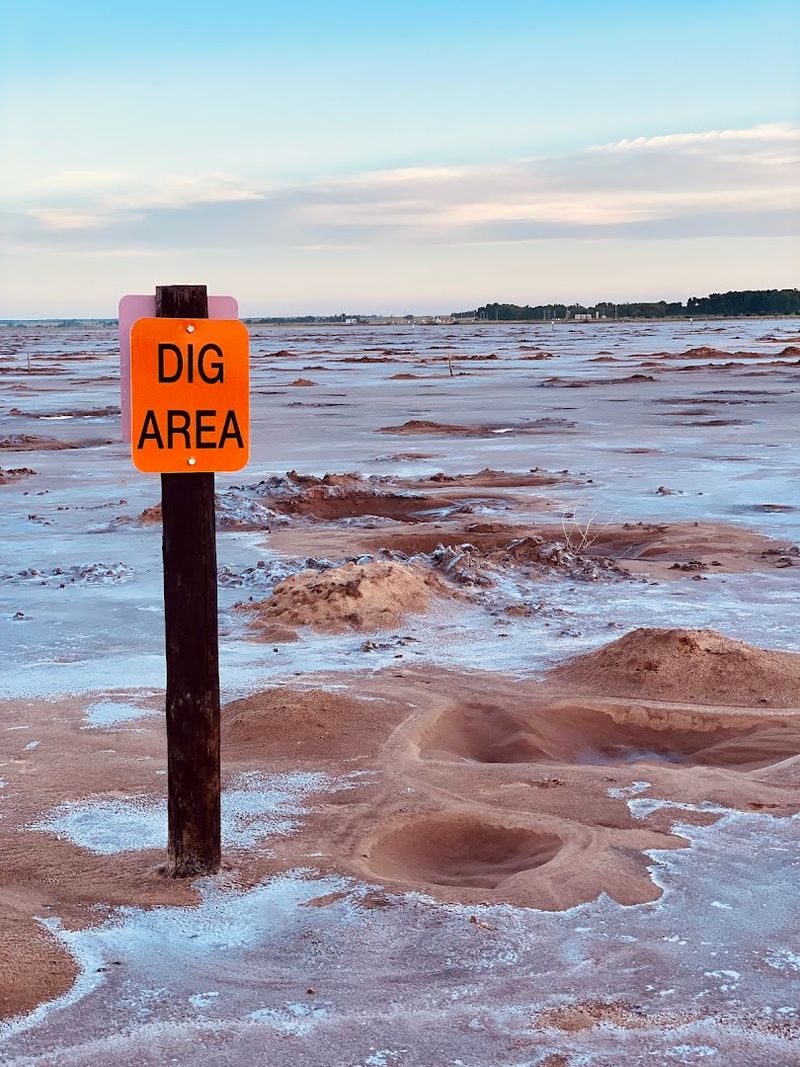
It looks like a scene borrowed from a sci-fi set. A blinding white desert stretches under the Oklahoma sun, so bright it almost feels unreal.
And then you realize you can actually dig into it. Welcome to one of Oklahoma’s most unexpected landscapes.
A place that doesn’t behave like most nature spots. The ground here hides something rare. Hourglass selenite crystals.
Naturally formed, perfectly strange, and found almost nowhere else on Earth. It’s the only spot where “digging in the dirt” turns into a real treasure hunt.
Every scoop of salty sand might reveal a crystal shaped like it was designed by nature just to mess with your expectations. From spring through mid-October, the digging area opens up to everyone.
No permit. No ticket.
Just a shovel, a bit of patience, and the Oklahoma heat reminding you who’s really in charge. The flats themselves look otherworldly.
Empty. Bright. Almost cinematic. Like a desert that forgot how to add color.
And that’s the magic. It turns ordinary visitors into explorers, even if just for an afternoon.
What Are Hourglass Selenite Crystals And Why Are They So Special
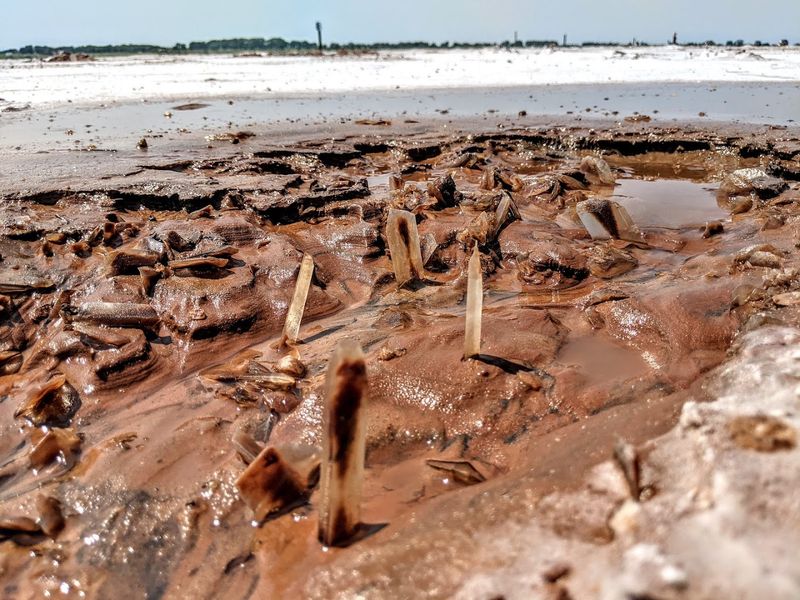
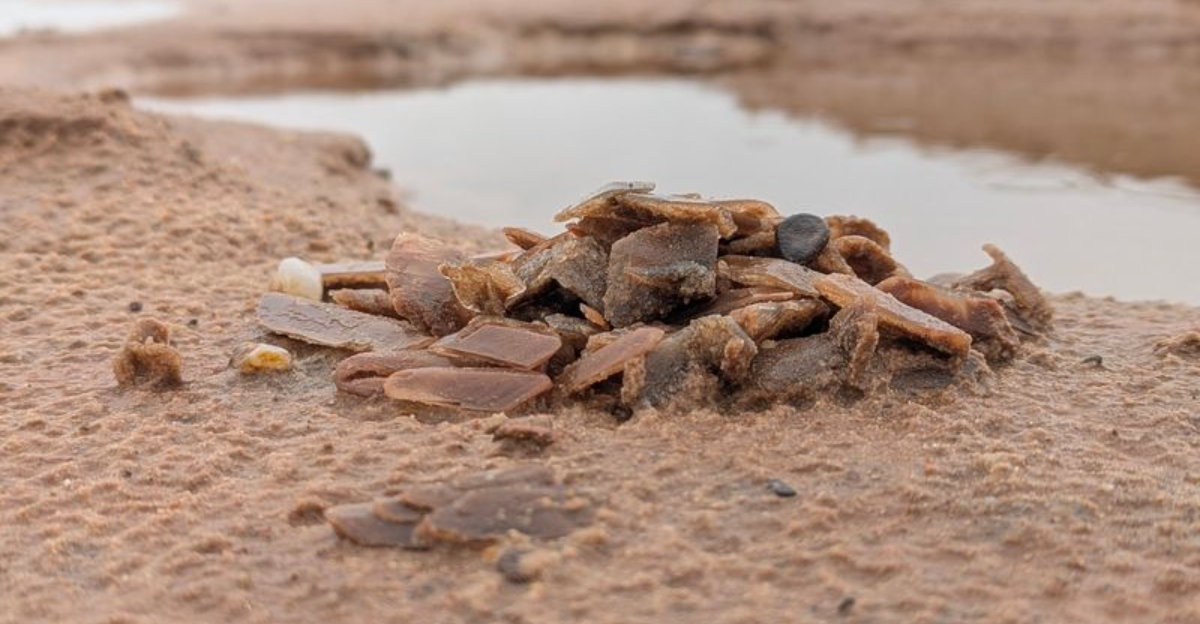
Not all crystals are created equal, and the hourglass selenite crystal is proof of that. These translucent gems are a special form of gypsum, and inside each one you can spot a tiny brown hourglass shape trapped within the crystal itself.
That shape forms because particles of sand, clay, and iron oxide get caught inside the crystal as it grows, creating a natural pattern that looks almost intentional.
The crystals form when gypsum in the soil mixes with salty groundwater sitting beneath the flats, then slowly evaporates under the relentless Oklahoma sun.
Over time, the process creates these one-of-a-kind formations you literally cannot find anywhere else on the planet. Scientists and geology lovers alike get giddy about this place for exactly that reason.
Most crystals you will find range from one to three inches, but seasoned diggers have pulled out blades reaching seven to ten inches long.
The largest clusters ever found weighed up to 38 pounds, which is basically a small dog made entirely of crystal. On the Mohs hardness scale, they score a soft two out of ten, so handle them with care once you find them.
Where Exactly You Are Going And How To Get There
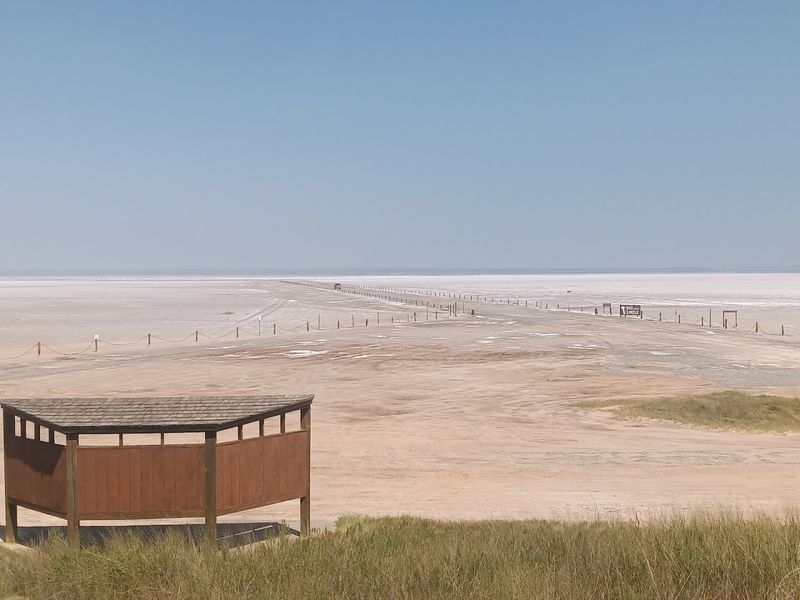
The crystal digging area sits at the Great Salt Plains National Wildlife Refuge, located near Cherokee, Oklahoma, at 66003 Garvin Rd, Cherokee, OK 73728. Getting there feels like driving into another world entirely.
The roads leading in are dirt and gravel for the last stretch, so expect a little dust and a few bumps along the way.
The refuge itself covers an impressive 32,197 acres, with roughly 12,000 of those acres made up of salt flats. The salt flat landscape is genuinely breathtaking in a way that photos cannot fully capture.
It looks like a field of snow in the middle of summer, which is a visual you will not forget anytime soon.
Most standard vehicles handle the drive just fine, though you will want to take it easy on those final gravel stretches.
The nearest towns are small, so plan ahead and bring everything you need before you arrive. There are no convenience stores nearby, and the remote setting is honestly part of what makes this place feel so special and untouched.
When To Go And What The Digging Season Actually Looks Like
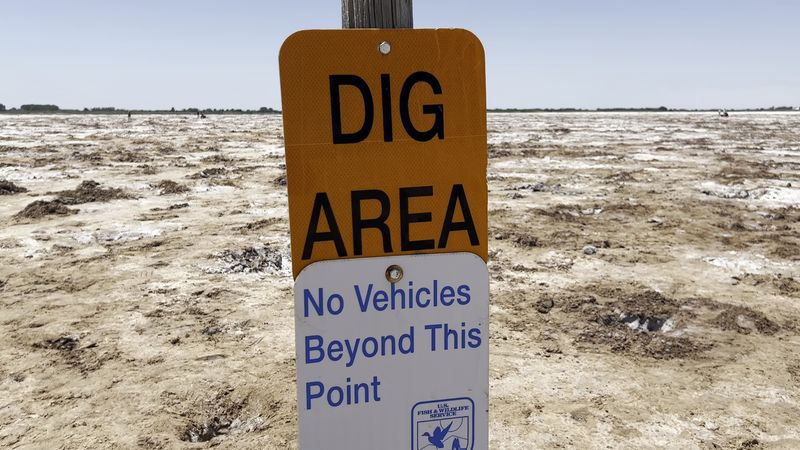
Timing your visit matters a lot here. The crystal digging season runs annually from April 1 through October 15, and the area is open from sunrise to sunset every single day during that window.
Show up outside those dates and you will find a closed gate instead of sparkling crystals.
Early in the season tends to be a sweet spot for finding larger and more intact crystals. As the season rolls on and more visitors dig through the area, the surface-level gems get picked over pretty quickly.
Going in April or May gives you a real advantage if you are hoping to find impressive specimens.
The Oklahoma summer heat is no joke out on those open flats. There is zero shade on the salt plain itself, and the white surface reflects sunlight right back at you from below.
Midday heat can feel absolutely brutal, so many experienced visitors head out early in the morning or time their arrival for late afternoon. Either way, sunscreen is non-negotiable, and a wide-brimmed hat is your best friend out there.
The Rules Of The Dig And What You Are Allowed To Take Home
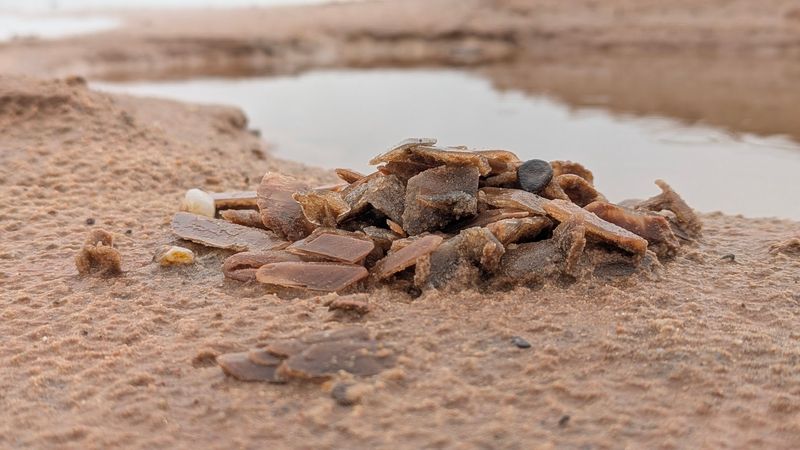
One of the best parts about this whole experience is that it costs absolutely nothing to participate. No permit is required, no entry fee, and no reservation needed.
You just show up, grab your shovel, and start digging like a treasure hunter who finally found the map.
Visitors are allowed to take up to ten pounds of crystals plus one large cluster per visit for personal use. That is a generous allowance and more than enough to fill a bucket with genuinely cool specimens.
The key rule to remember is that selling the crystals is strictly prohibited, so these beauties are for personal enjoyment only.
Respecting the site is important because it ensures future visitors get to enjoy the same experience. Digging responsibly and not disturbing areas beyond what is needed keeps the ecosystem balanced.
Interestingly, the spoil mounds left behind by diggers actually create nesting habitat for snowy plovers, and the holes provide shelter for brine flies that feed migratory birds.
Your digging inadvertently helps wildlife, which makes the whole experience feel even more worthwhile.
What To Pack And How To Dig Like A Pro
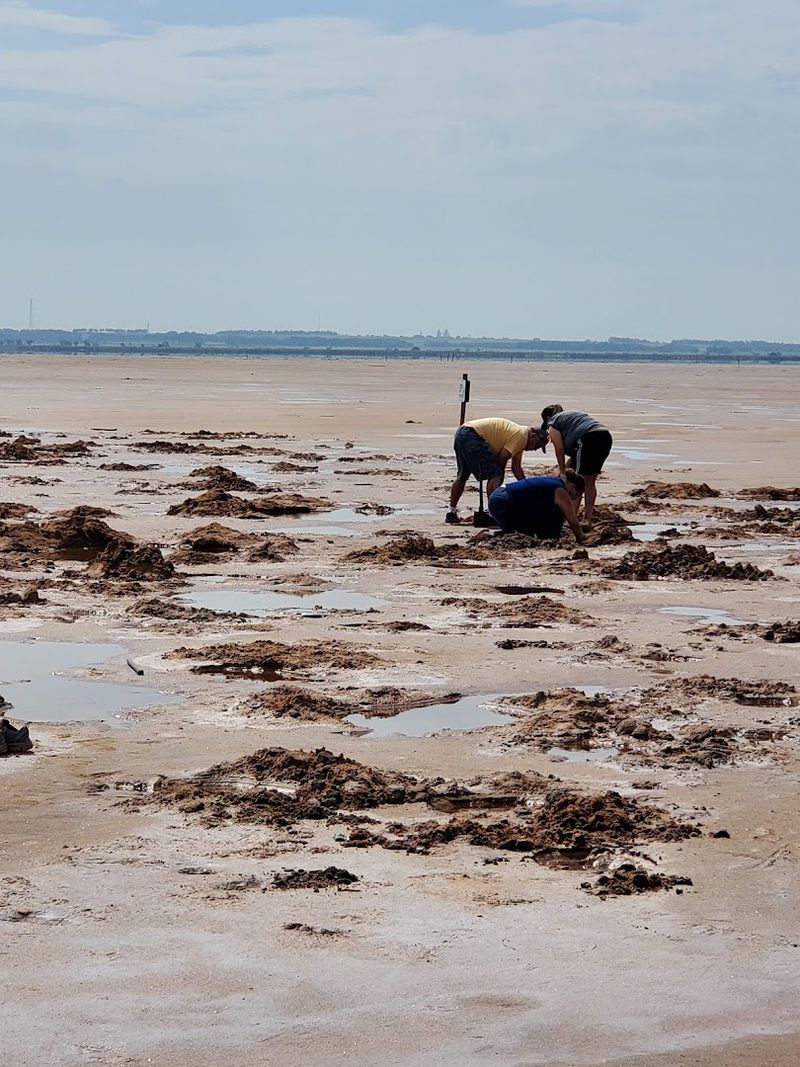
Coming prepared makes the difference between a frustrating outing and an absolute blast. A sturdy shovel is your most essential tool, full stop.
A smaller hand trowel is great for careful extraction once you feel resistance in the soil that suggests a crystal is hiding nearby.
Bring buckets to collect your finds, and pack plenty of water, not just for drinking but for rinsing crystals as you find them. Water helps you spot the crystals much more easily since the brown hourglass pattern becomes visible once the mud is washed away.
Some experienced diggers bring mesh screens to sift through the muddy soil and catch smaller gems they might otherwise miss.
Gloves are genuinely worth bringing because the crystal edges can be surprisingly sharp once you start handling them. Wear clothing you do not mind getting completely coated in red-tinged salt mud, because that is exactly what will happen.
A towel or two, a change of clothes, sunscreen, and bug spray round out the perfect packing list. The salt flats are wide open and windy, so weigh down any loose items or they will disappear across the plain in seconds.
The Wildlife Refuge Beyond The Crystal Digging Area
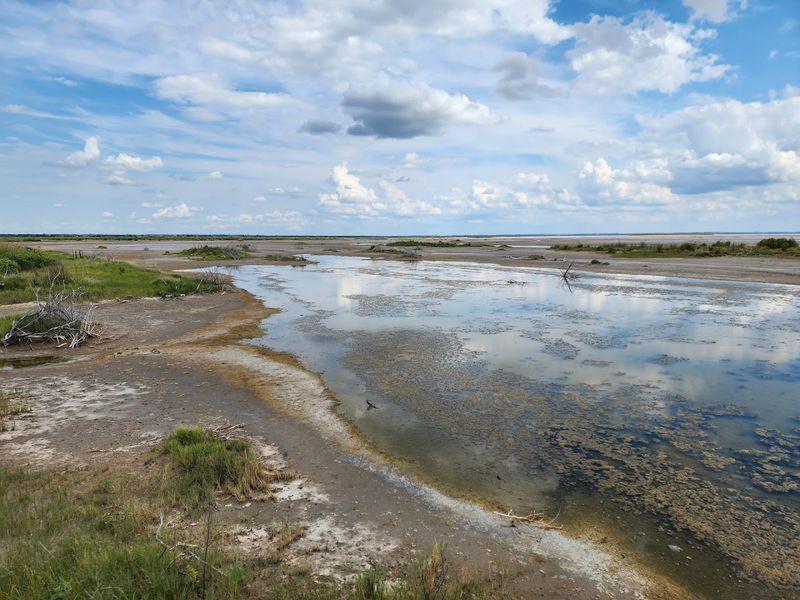
The crystal digging area gets most of the attention, but the rest of the refuge is absolutely worth exploring before or after your dig.
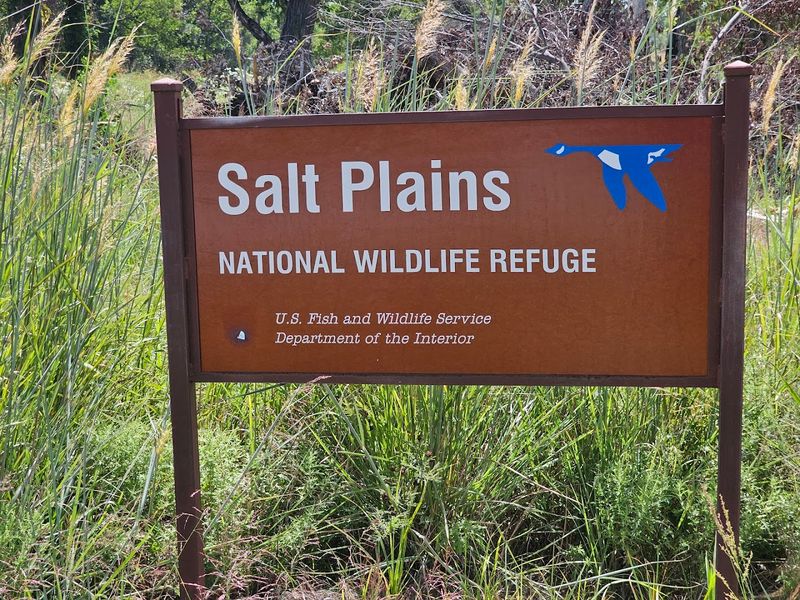
The Salt Plains National Wildlife Refuge was established in 1930, and it has been a sanctuary for birds and wildlife ever since. The refuge encompasses 32,197 acres of diverse habitat including salt flats, wetlands, prairie, and open water.
Bird watchers lose their minds over this place, and rightfully so. Hundreds of species pass through during migration, making it one of the premier birding destinations in the entire central United States.
Whooping cranes, American avocets, and white pelicans are just a few of the remarkable species that stop here during their annual journeys.
The Harold F. Miller Auto Tour Route lets you cruise through the refuge without leaving your car, which is perfect for spotting deer, shorebirds, and other wildlife at a relaxed pace.
The Big Marsh Boardwalk and the Sandpiper Nature Trail offer peaceful walking options with stunning views of the wetlands. This refuge genuinely delivers on multiple levels, making it a full-day destination rather than just a quick stop.
The Science Behind The Salt Flats And Why Oklahoma Has Them
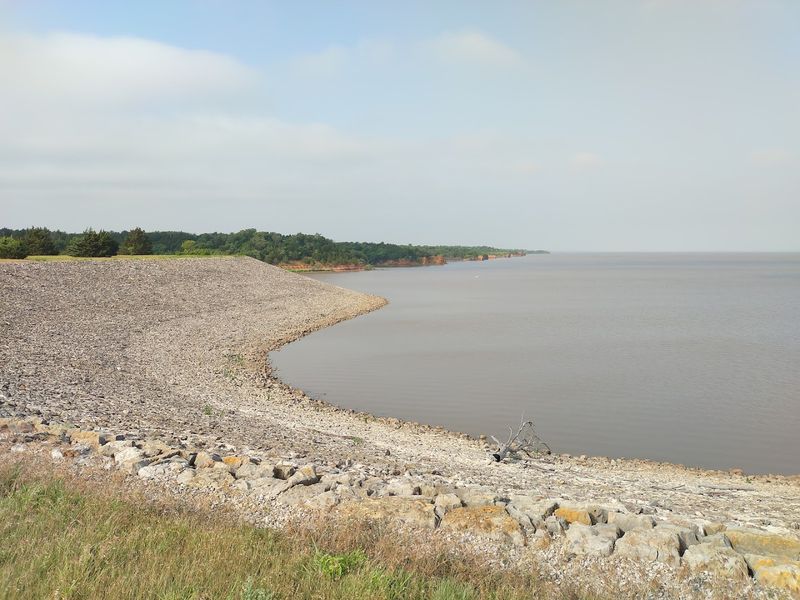
Oklahoma is not the first place most people think of when they picture dramatic geological wonders, but the Great Salt Plains will absolutely change that assumption.
The salt flats here exist because ancient sea beds once covered this region millions of years ago, leaving massive deposits of salt and gypsum buried beneath the surface. Over time, groundwater dissolved those underground salt layers and carried the brine up toward the surface.
As that salty water reaches the surface and evaporates under the hot Oklahoma sun, it leaves behind a crust of salt crystals that gives the flats their signature blinding white appearance.
The same evaporation process is responsible for the hourglass selenite crystals forming just below the surface of the mud. It is basically nature running its own crystal-growing experiment right under your feet.
The result is a landscape that genuinely looks like it belongs on another planet. Walking out onto the salt flats for the first time is a surreal experience, the ground crunches under your feet, the horizon seems impossibly far away, and the silence is almost otherworldly.
Understanding the geology behind it makes the whole experience richer and more fascinating.
Oklahoma’s Official State Crystal And Its Cultural Significance
In 2005, Oklahoma made it official by designating the hourglass selenite crystal as the state crystal. That recognition was well earned.
No other place on Earth produces this specific crystal formation, which makes Oklahoma the exclusive home of something truly rare and geologically significant. It is a point of genuine state pride.
The crystal’s distinctive hourglass inclusion has made it a beloved symbol of Oklahoma’s unique natural heritage. Rockhounds, geology students, and casual collectors from across the country make the pilgrimage to the salt flats specifically because of the crystal’s legendary status in the mineral collecting world.
Finding one feels like holding a piece of Oklahoma history in your hands.
Local geology teachers often bring groups to the refuge because the crystal formation process is a perfect real-world example of mineralogy in action.
The site bridges science, history, and hands-on exploration in a way that classroom textbooks simply cannot replicate. Owning a crystal you personally dug from the only place on Earth where it exists is a story worth telling for years.
How many souvenirs can actually say that?
Tips For Making The Most Of Your Visit From Start To Finish
Planning your trip with a little intention goes a long way at the Great Salt Plains. Arriving early in the morning is the smartest move, both for cooler temperatures and for getting to dig areas before other visitors.
The open season starts April 1, and those early weeks offer some of the most rewarding digging of the entire season.
After digging, make time to walk the Sandpiper Nature Trail or drive the auto tour route through the refuge. The contrast between the stark white salt flats and the lush green wetlands on the other side of the park is striking.
Packing a lunch is a great idea since there are no food vendors anywhere near the site, and a proper meal break in the middle of a dig day is genuinely satisfying.
Once you head home, rinse your crystals thoroughly with fresh water to reveal the full beauty of those hourglass inclusions.
The red clay can cling stubbornly, so a soft brush helps clean delicate specimens without scratching them. Fair warning: the salt gets everywhere, including inside your car, so a trash bag for your muddy gear saves a lot of cleanup later.
This place earns its reputation every single visit.