
This Remote New Mexico Wilderness Looks Like Another Planet Hidden In The Desert
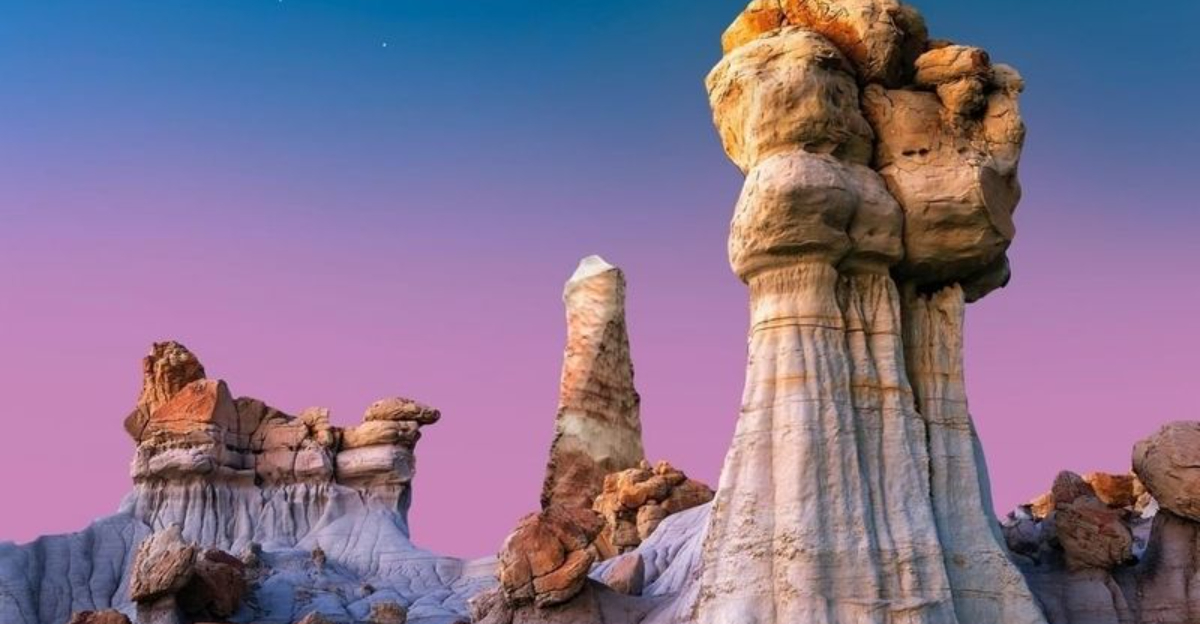
Imagine stepping into a landscape so strange it feels like a glitch in reality. Like a deleted scene from Star Wars where Luke never made it back.
That’s New Mexico. Out in the remote desert, a 45,000-acre stretch of badlands unfolds like another planet hiding in plain sight.
No signs. No trails. No noise except wind cutting through stone. The earth here doesn’t sit still.
It rises. It twists.
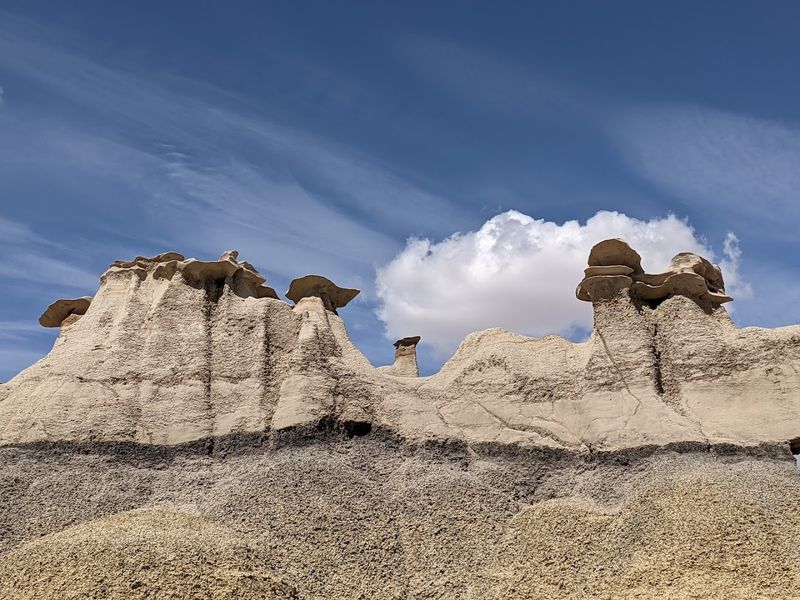
It forms hoodoos like alien totems, mushrooms, eggs, even ghost-like figures frozen mid-motion. The colors shift with the sun, bone white, burnt umber, dusty rose, like the terrain is breathing.
It’s 85 million years of deep time exposed, raw and unfiltered. A place where navigation feels optional and imagination takes over.
You don’t really “hike” here. You drift through a geological hallucination.
There are no crowds. No cell signal.
Just silence and scale so vast it messes with your sense of direction. And somehow, it still feels familiar.
Like Earth remembering it used to dream bigger.
Earth’s Wildest Sculptures
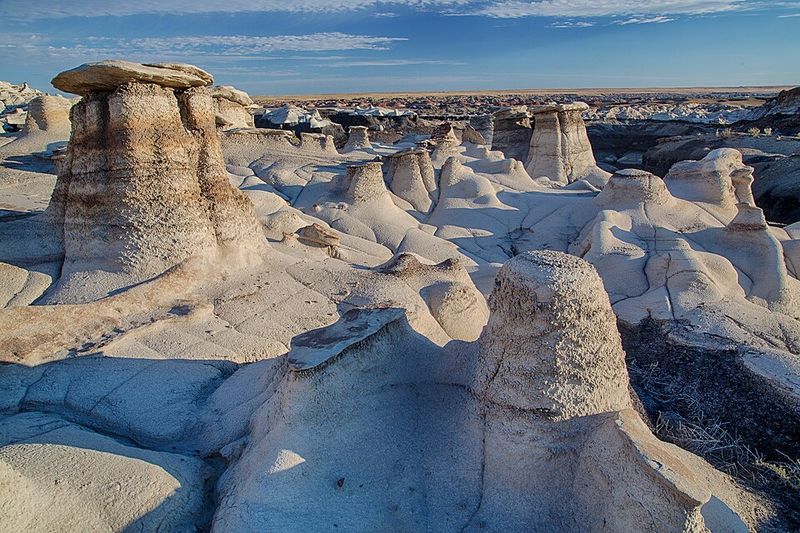
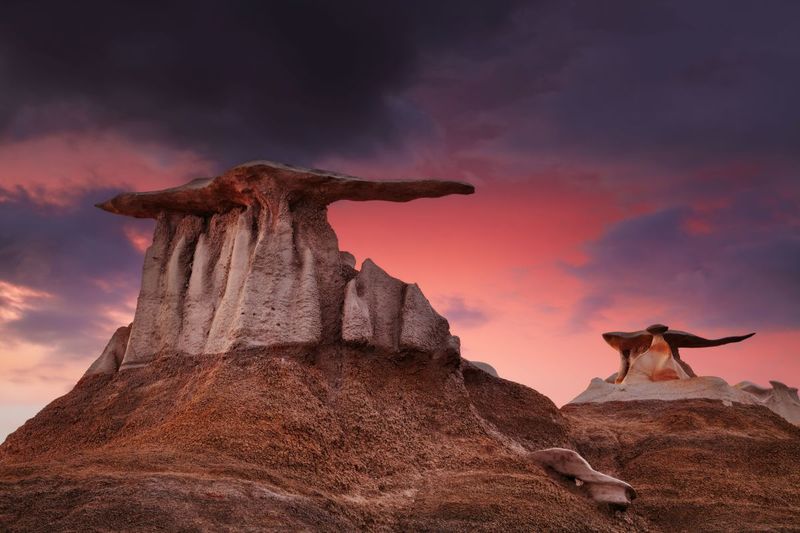
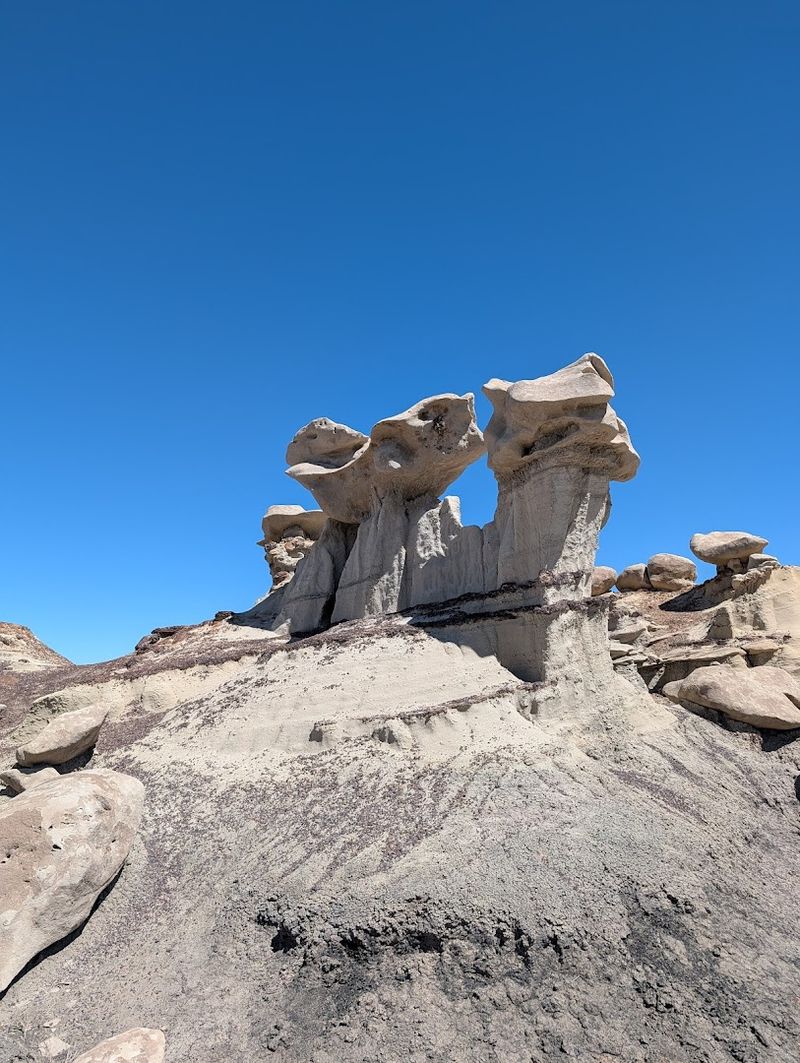
Nothing quite prepares you for your first hoodoo sighting. These towering, weather-carved rock formations rise from the desert floor like something a giant sculptor left behind after a very creative afternoon.
At Bisti, hoodoos come in every wild shape imaginable. Some look like mushrooms balancing impossibly on thin stems.
Others resemble cloaked figures frozen mid-stride across the badlands.
The science behind them is just as fascinating as the shapes themselves. Softer rock erodes faster than harder cap rock sitting on top.
Over millions of years, wind and rain carve away the base while the tough cap holds firm. The result is these dramatic, top-heavy pillars that look structurally impossible but are completely real.
Colors range from chalky gray-white to burnt orange to deep chocolate brown. Early morning and late afternoon light turn the whole scene golden and surreal.
Photographers absolutely lose their minds out here, and honestly, rightfully so.
The hoodoos shift in appearance depending on the season, the weather, and the time of day. No two visits ever look exactly the same, which makes returning to Bisti feel like discovering a brand-new planet all over again.
Nature’s Strangest Nursery
Out in the middle of the Bisti Badlands, scattered across the cracked desert clay, sit clusters of round, smooth boulders that look exactly like a nest of alien eggs. No, seriously.
They even get called that by visitors, geologists, and pretty much anyone who stumbles across them with their jaw already on the floor. These formations are technically called concretions, and they form when minerals gradually harden around a central core over millions of years.
The surrounding softer rock erodes away, leaving behind these perfectly rounded, almost polished spheres resting on the ground.
Some are the size of softballs. Others are closer to the size of watermelons.
They sit in clusters that genuinely look staged, like a prop department went wild before filming a sci-fi blockbuster out here.
Finding the egg formations requires some navigation since there are no marked trails. Most visitors use GPS coordinates shared in hiking communities to locate them.
The walk to reach them crosses clay hills, ravines, and sandstone outcrops that feel increasingly alien with every step.
When you finally spot them sitting there in the open desert, the reaction is always the same: pure, wide-eyed disbelief that this place actually exists on Earth.
85 Million Years Underfoot
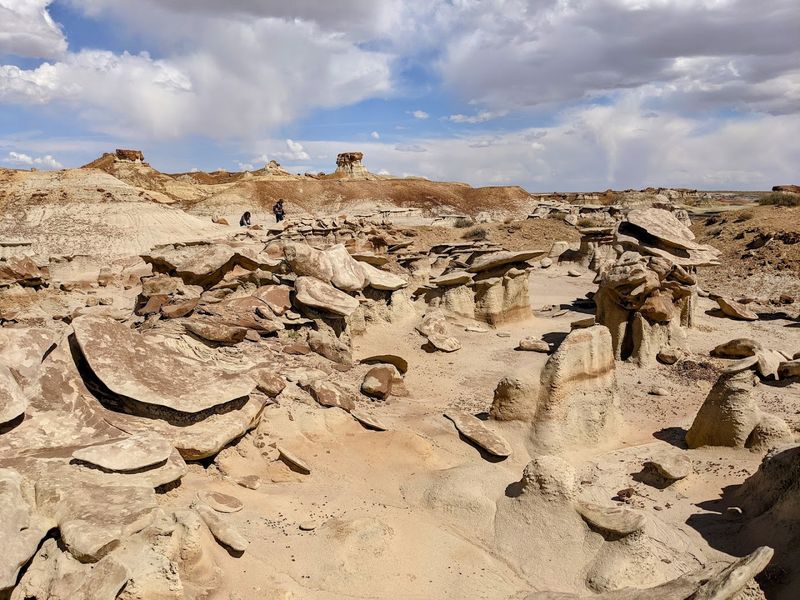
Walking through the Bisti Wilderness in New Mexico is basically hiking through a prehistoric museum, except the exhibits are lying right at your feet. This area was once a coastal swamp bordering an ancient inland sea roughly 60 to 85 million years ago.
Dinosaurs roamed here. Primitive mammals wandered through lush vegetation.
Today, what remains of that world erodes slowly out of the shale and mudstone with every passing rainstorm.
Petrified wood is surprisingly common across the badlands floor. You will spot chunks of ancient trees that have turned to stone over millions of years, their original wood grain still visible in stunning detail.
Dinosaur bone fragments occasionally surface too, though they blend into the landscape in ways that make them easy to miss if you are not looking carefully.
Collecting fossils or petrified wood is strictly prohibited, which is an important rule to respect. The preservation of these materials is what keeps the site scientifically valuable and visually spectacular for every future visitor.
The thrill is entirely in the discovery and the photography. Knowing you are standing on ground where Cretaceous-era creatures once lived adds a layer of awe that no theme park could ever replicate.
Bisti is the real prehistoric experience, no ticket required.
Hidden Wonders Between The Walls
Most people associate slot canyons with Antelope Canyon in Arizona, but Bisti has its own quieter, less crowded version tucked between its eroded ridges.
Narrow passages cut through sandstone and shale, creating tight corridors where the walls press close and the colors deepen into rich layers of orange, gray, and rust. Walking through them feels secretive, like finding a hidden room inside the Earth itself.
Alongside the slot canyons, you will find formations called fins. These are thin, blade-like ridges of harder rock standing upright from the desert floor.
They stretch in long rows, creating natural walls and mazes that make navigation feel like a puzzle.
The fins cast dramatic shadows in directional light, which is why photographers aim to visit during the golden hours around sunrise and sunset.
These features are scattered without a map or trail to guide you directly to them. Part of the joy is the wandering, the unexpected discovery of a hidden canyon you were not expecting to find.
The silence inside those narrow walls is profound. Wind drops away.
Sound muffles.
It feels like the landscape is holding its breath. Bisti has a way of making you feel genuinely alone on the planet in the most peaceful, grounding way possible.
The Sky Puts On A Show
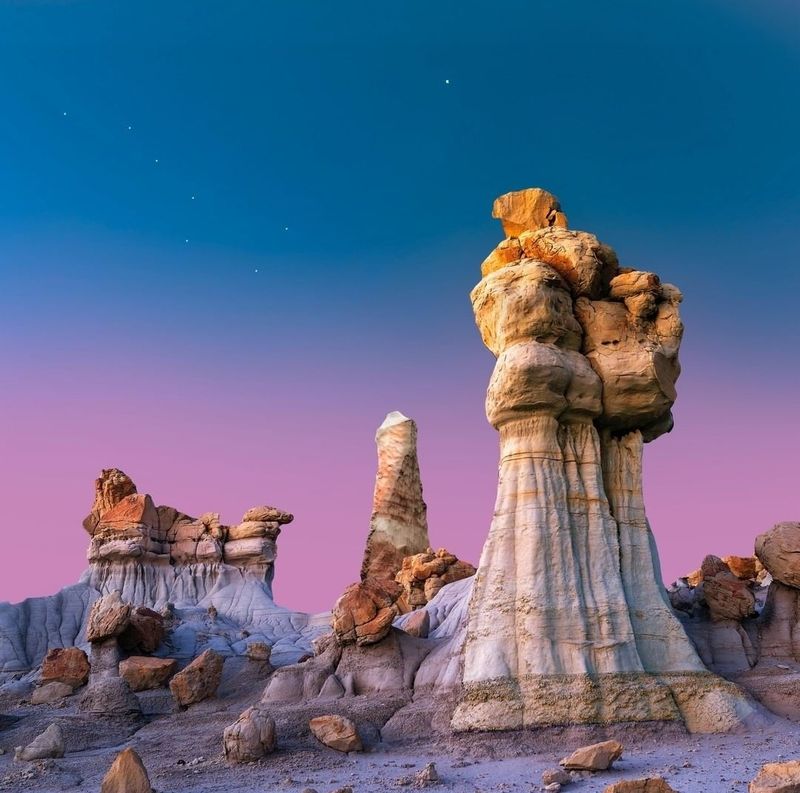
When the sun drops behind the horizon at Bisti, something remarkable happens overhead. The remoteness that makes this wilderness feel inconvenient during the day becomes its greatest gift at night.
With zero light pollution for miles in every direction, the night sky transforms into something that looks almost too beautiful to be real. The Milky Way arches overhead in full, glorious detail.
Star clusters, nebulae, and shooting meteors appear with a clarity that city dwellers simply never experience.
The dark sky combined with the surreal silhouettes of hoodoos below creates a scene that looks like concept art for a fantasy novel. Astrophotographers make special trips to Bisti specifically for this experience, and the results are consistently stunning.
Primitive camping is allowed in the wilderness, which means you can set up a tent, watch the stars emerge, and wake up to a desert sunrise over the badlands.
There are no campfire restrictions waived here, but the experience of sleeping under that sky more than compensates. Bring a warm sleeping bag because desert nights drop in temperature fast, even in warmer months.
The contrast of cold night air and that blazing cosmic display above you is something that stays with you long after you have driven back to civilization.
The Thrill Of Going Trailless
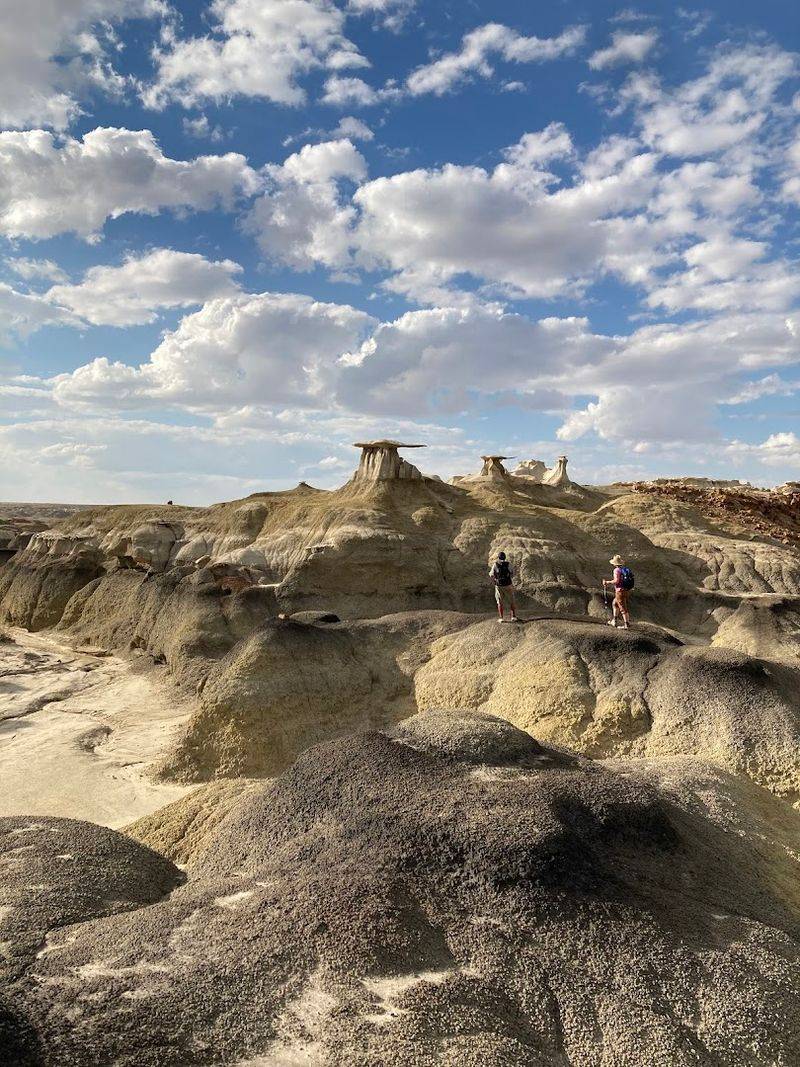
There is something deeply exhilarating about arriving at a wilderness area and realizing there are absolutely zero marked trails. No signs.
No paved paths.
No helpful arrows pointing you toward the good stuff. At Bisti, navigation is entirely your responsibility, and that is exactly what makes it feel like a genuine adventure rather than a guided tour.
The terrain consists of rolling clay hills, sandstone outcrops, crumbling shale ridges, and winding ravines. It all looks similar from ground level, which is precisely why getting turned around happens to even experienced hikers.
Downloading offline maps before you leave cell service range is non-negotiable. Many visitors also use GPS devices or share coordinates for specific formations through hiking communities online.
The reward for embracing this challenge is enormous. You will find formations that feel entirely personal, like you discovered them yourself.
The silence, the total absence of other people for long stretches, and the raw landscape all combine into something that feels genuinely wild.
Bisti does not hold your hand, and that is the point. The wilderness respects those who come prepared, curious, and willing to wander without a safety net of signage telling them exactly where to look.
Bisti’s Equally Bizarre Neighbor
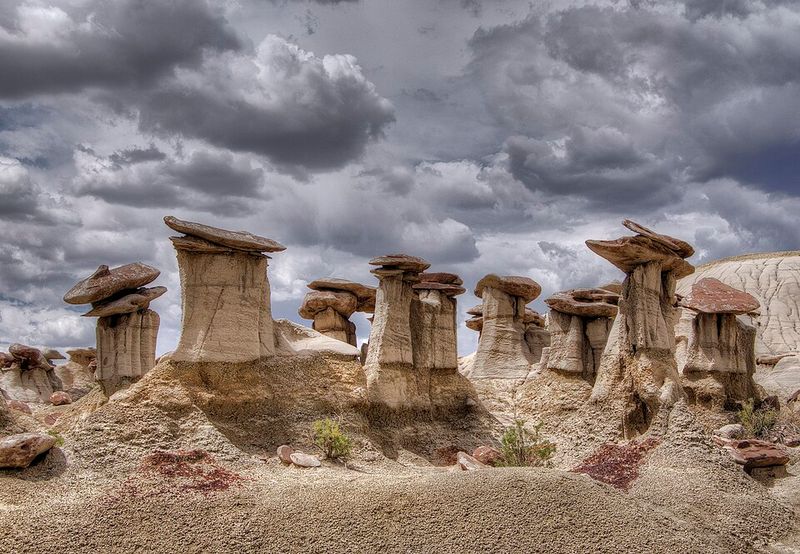
About 60 miles south of Farmington, the Ah-Shi-Sle-Pah Wilderness Study Area sits quietly waiting for the adventurers who venture beyond Bisti. Covering 7,242 acres of sculpted sandstone, mudstone, and shale, this place has an entirely different personality from its famous neighbor.
The colors here are more muted, leaning toward pale tans and cool grays, giving it an eerie, almost lunar quality.
The name translates roughly from Navajo as “gray salt,” which perfectly captures the washed-out, mineral-rich palette of the landscape.
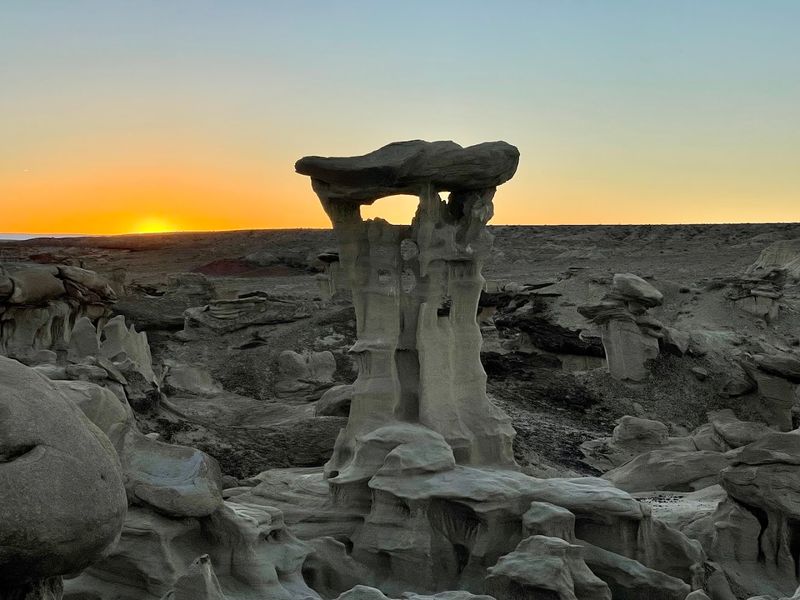
Hoodoos here are often described as enormous alien trees, with wide mushroom caps perched on slender columns. The famous Alien Throne formation, a cluster of connected columns that looks architecturally impossible, is one of the most photographed geological features in all of New Mexico.
Like Bisti, there are no official trails, no facilities, and no cell service. Primitive camping is allowed and free.
The area is rich with Late Cretaceous fossils, including prehistoric crocodile and turtle remains, as well as important dinosaur discoveries.
Visiting both Bisti and Ah-Shi-Sle-Pah in the same trip creates a full picture of just how extraordinarily strange northwestern New Mexico truly is beneath its quiet desert surface.
Timing Is Everything Out Here
Showing up to Bisti in the middle of a July afternoon is a humbling experience in all the wrong ways. Summer temperatures in this high desert can climb past 100 degrees Fahrenheit, and there is virtually no shade anywhere in the entire wilderness.
The clay ground also becomes slippery and unstable after rain, which can make hiking genuinely treacherous. Timing your visit well is not optional, it is essential.
Spring and fall are the golden windows for exploring the Bisti Badlands. Temperatures stay comfortable for hiking, typically ranging from the 50s to the 70s Fahrenheit.
The light during these seasons is also softer and more flattering for photography, especially in the early morning and late afternoon hours when shadows stretch long across the hoodoos.
Winter visits are possible on clear days and come with the added bonus of occasional light snow dusting the formations, which creates an absolutely surreal visual contrast against the dark shale and pale sandstone.
Just be aware that dirt roads leading to the trailhead can become impassable when wet. Checking weather forecasts and road conditions before heading out is a simple step that saves enormous frustration.
The right timing transforms a challenging visit into one of the most unforgettable desert experiences in the American Southwest.
Your Survival Checklist For An Alien World
Bisti does not forgive the unprepared, and that is not a dramatic statement. It is just the truth of a remote wilderness with no water sources, no cell service, no amenities, and no marked trails to follow back to your car.
Packing correctly is the single most important thing you can do before setting foot on that cracked desert clay.
Water is the absolute top priority. Bring far more than you think you need, at least one liter per hour of hiking in warm weather.
Sunscreen, a wide-brimmed hat, and UV-protective clothing are non-negotiable for any visit.
Sturdy, ankle-supporting hiking boots handle the uneven terrain far better than trail runners or casual sneakers. A physical map and a GPS device or downloaded offline map on your phone are essential for navigation.
Snacks that hold up in heat, a basic first aid kit, and a fully charged portable battery pack round out the essentials.
A camera or a phone with solid camera capabilities will also serve you well, because the regret of visiting Bisti without documentation is very real. Tell someone your plan before you go, including where you are parking and when you expect to return.
Bisti rewards the well-prepared with an experience that genuinely has no comparison anywhere else on Earth.