
This Peaceful Montana Garden Hides One Thousand Buddhas In A Mountain Valley
Montana is the kind of place people go when they want raw nature, open space, and a break from everything loud and fast. Wide skies, quiet valleys, and that feeling of being far away from it all.
But what most visitors don’t expect is that tucked inside all that wilderness, there’s a place built not just for peace, but for something deeper.
A place where silence isn’t empty, but full. Where stillness feels intentional.
Where you don’t need to believe anything specific to feel grounded. It welcomes everyone the same, whether you come with faith, questions, or nothing at all. That’s the idea behind this garden.
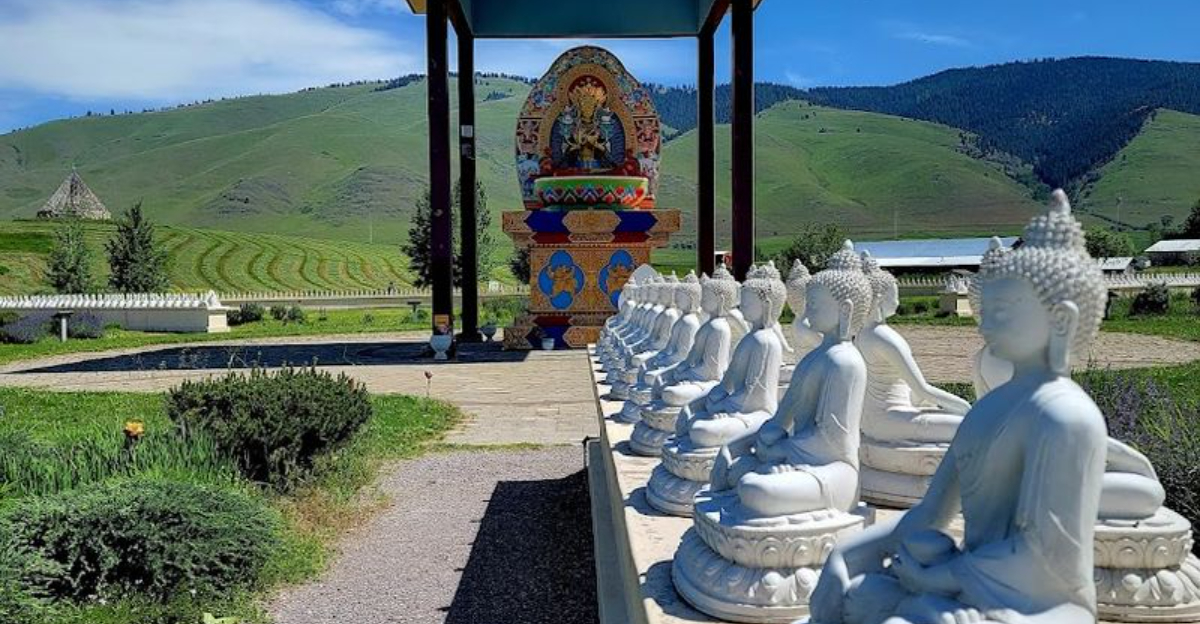
A vast, open sanctuary arranged in the middle of a mountain valley, designed in a way that naturally slows you down the moment you enter it.
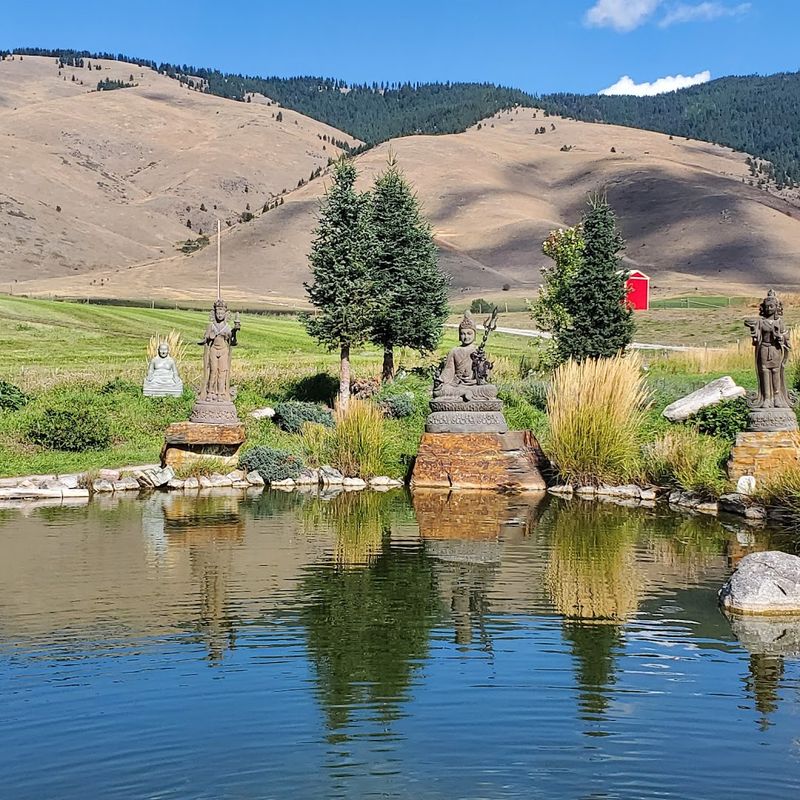
Rows of statues stand quietly across the landscape, not demanding attention, but gently holding space.
Mountains surround the valley like a natural boundary between the outside world and this unusual kind of calm. Maybe that was the intention from the beginning.
Not to impress, but to soften you. Not to explain, but to let you feel it.
The Dharma Wheel Layout That Will Make Your Jaw Drop
Some places look amazing from the ground, but from above, they become something else entirely. The Garden of One Thousand Buddhas is designed in the shape of an eight-spoked Dharma wheel, a sacred Buddhist symbol representing the Noble Eightfold Path and the cycle of transformation.
That design is not just decorative, it is intentional down to every single detail.
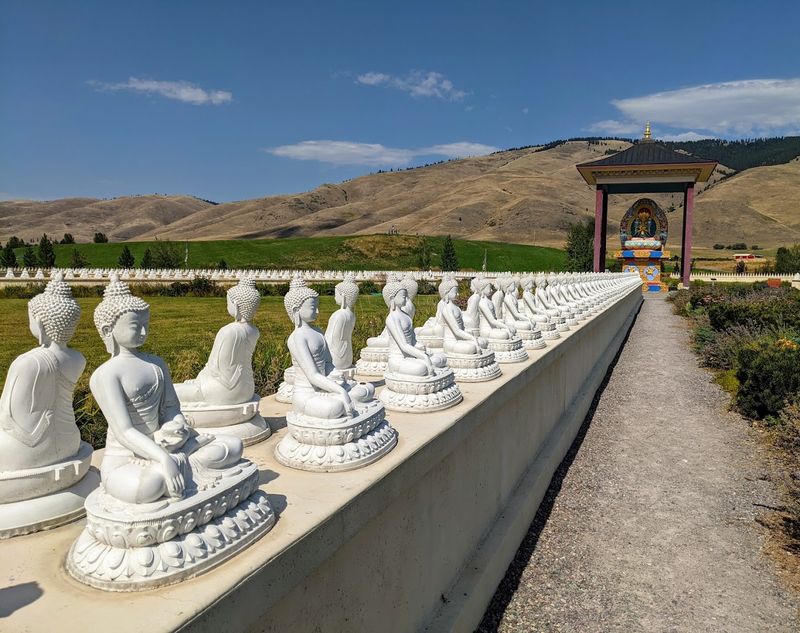
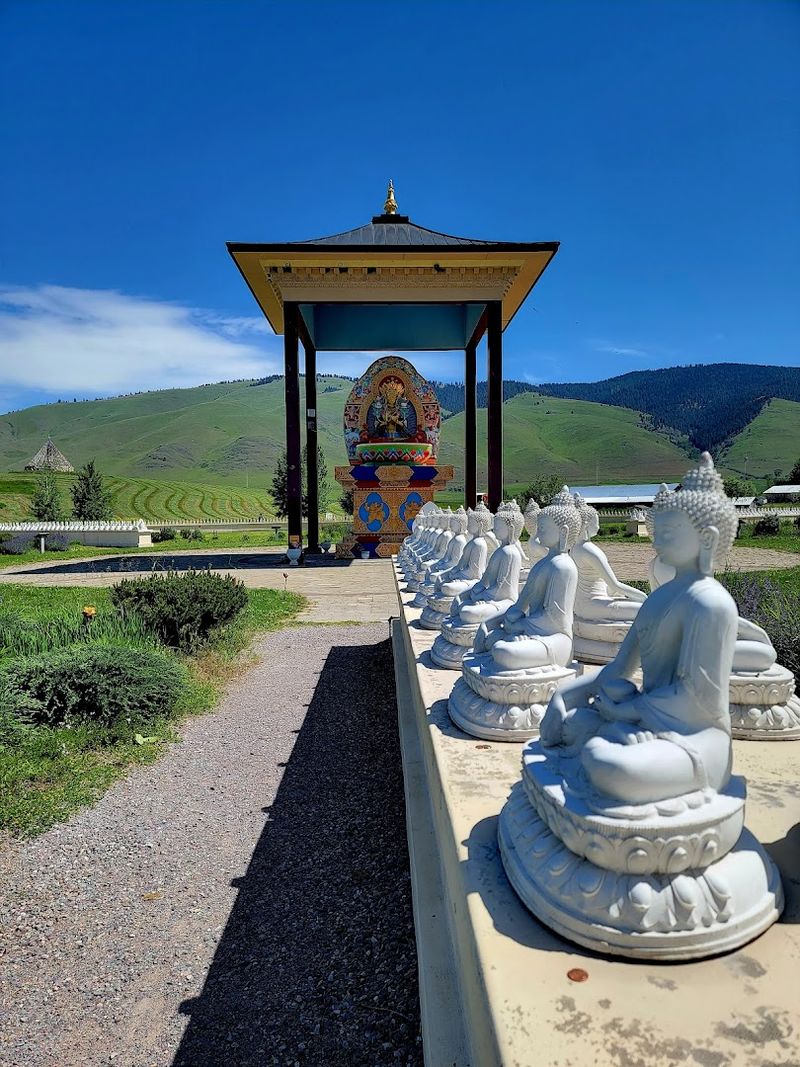
Each spoke of the wheel is lined with rows of hand-cast Buddha statues, and walking along them feels like moving through a living mandala.
The layout guides visitors naturally, encouraging a clockwise path through the garden. Every turn reveals a new angle, a new statue, and a new mountain view framing it all.
The Dharma wheel is one of Buddhism’s oldest and most powerful symbols. Having an entire 10-acre garden built in that shape is a bold, beautiful statement about purpose and meaning.
The wide-open Montana sky above makes the whole design feel even more expansive. Standing at the outer edge and looking inward toward the center statue is one of those rare moments that genuinely takes your breath away.
Where Exactly You Will Find This Hidden Montana Gem
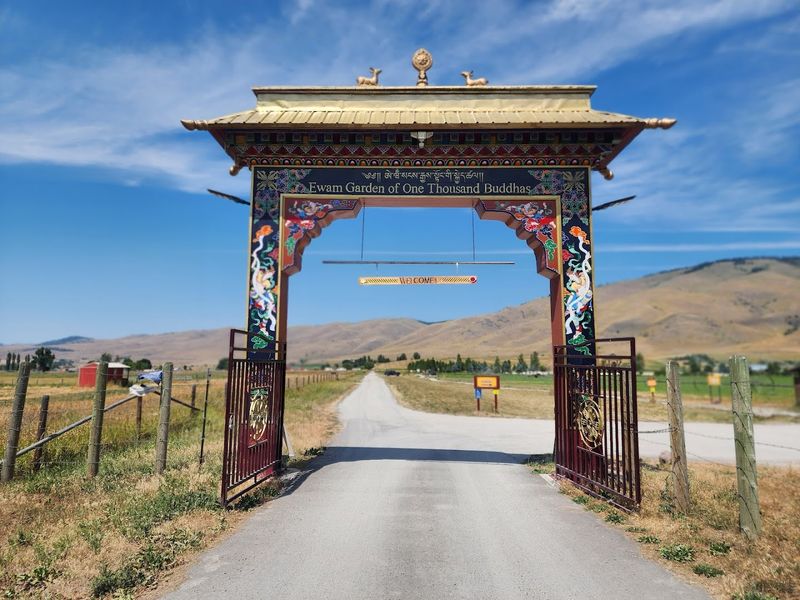
Finding a hidden gem sometimes feels like solving a riddle, and this one is worth every twist in the road. The Garden of One Thousand Buddhas sits at 34574 White Coyote Rd, Arlee, MT 59821, tucked inside the Jocko Valley on the Flathead Indian Reservation.
It is located between Missoula and Kalispell, making it a perfect stop on a Montana road trip.
The surrounding landscape is pure Montana magic. Rolling hills, wide valley floors, and snow-capped peaks form a natural frame around the garden on all sides.
Visitors often describe the drive in as part of the experience itself, with scenery that builds anticipation beautifully.
A few visitors have noted the entrance is not heavily marked from the main road, so keeping your GPS handy is a smart move. The garden sits on a 60-acre former sheep farm, which adds a wonderfully unexpected layer to its story.
You pull up expecting a quiet patch of land, and instead you find one of the most visually striking spiritual sites in the American West. Parking is available and easy to navigate once you arrive.
One Thousand Hand-Cast Buddhas And The Story Behind Them
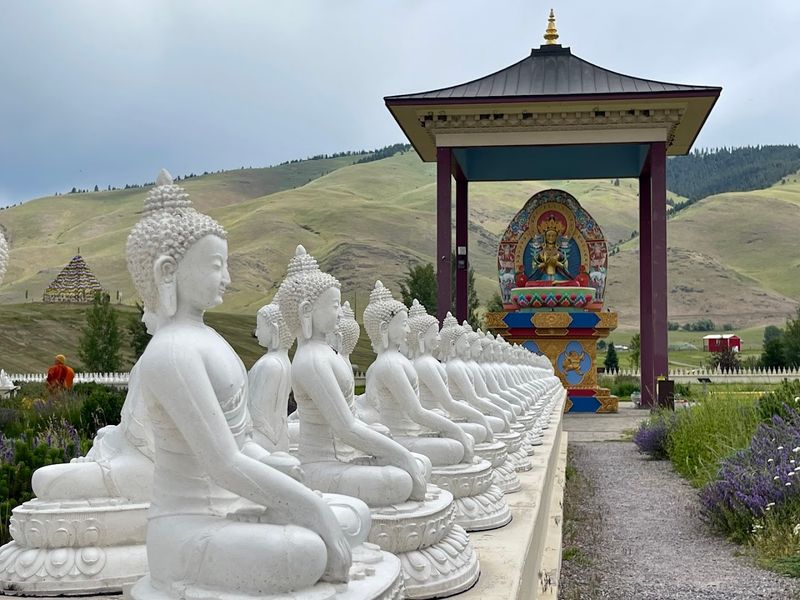
One thousand is a number that sounds impressive on paper, but standing among all those statues in person is a completely different experience. Each Buddha is hand-cast and placed along the eight spokes of the Dharma wheel.
They represent the 1,000 Buddhas prophesied to appear in our world to guide humanity toward wisdom and compassion.
Gautama Buddha, the historical Buddha most people recognize, is considered the fourth of these thousand. That context adds a whole new layer of meaning to every statue you walk past.
You are not just looking at art, you are walking through a prophecy made physical.
Construction of the garden began in 2000, and placing all one thousand statues took about fifteen years of dedicated work.
The fact that volunteers managed this entire project makes it even more remarkable. Each statue is identical in form but feels personal in context, especially as the light shifts throughout the day and casts different shadows across their faces.
Walking the full perimeter means covering roughly a mile, so wear comfortable shoes and give yourself plenty of unhurried time to take it all in.
The Towering Central Statue That Commands The Whole Garden
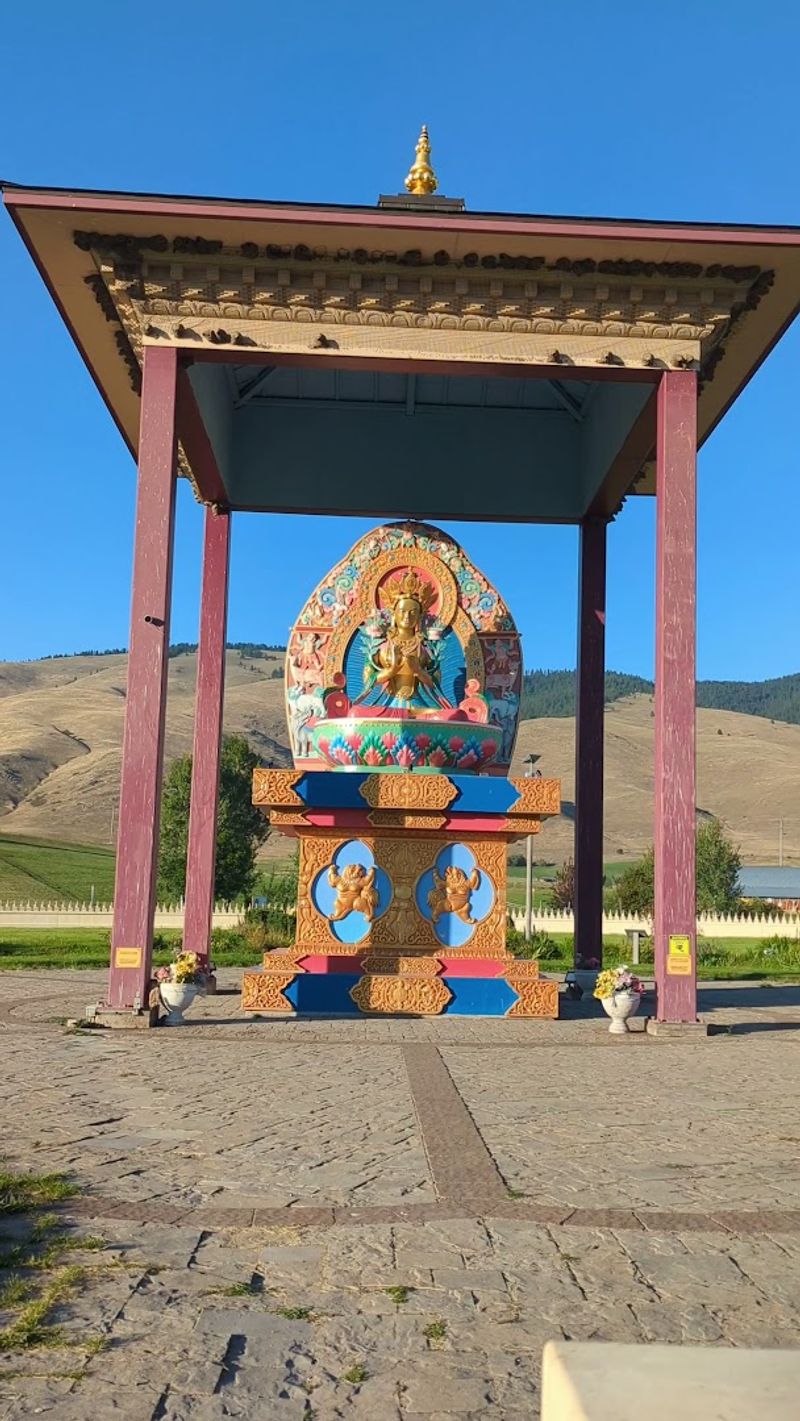
Right at the heart of the Dharma wheel stands something that stops every single visitor mid-step. The central figure is a 24-foot colorful statue of Yum Chenmo, also known as Prajnaparamita or the Great Mother.
She embodies the perfection of wisdom, compassion, and transcendent understanding in Tibetan Buddhist tradition.
The statue is vivid and detailed, with rich colors that pop beautifully against the wide Montana sky. Whether you visit at midday when the sun hits it directly or near sunset when the golden light wraps around it, the visual impact is undeniable.
It feels like the entire garden breathes around her.
Yum Chenmo is not a figure many Western visitors will recognize immediately, but the informational signs throughout the garden do a wonderful job of explaining her significance.
Understanding even a little bit of her story transforms the experience of standing before her.
She is not just a sculpture, she is a symbol of the wisdom that the entire garden was built to honor. Many visitors spend long quiet moments at the center of the wheel, and it is easy to understand why once you are standing there yourself.
The One Thousand Stupas Lining The Outer Circle
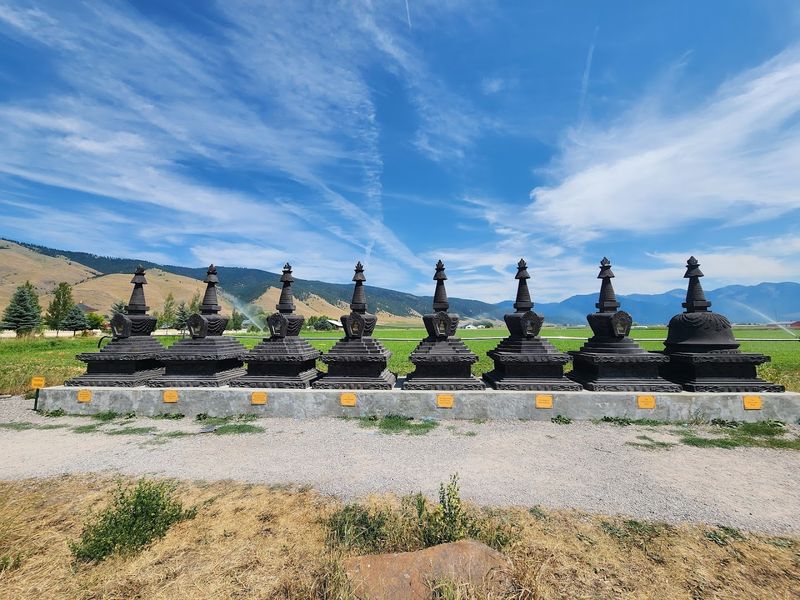
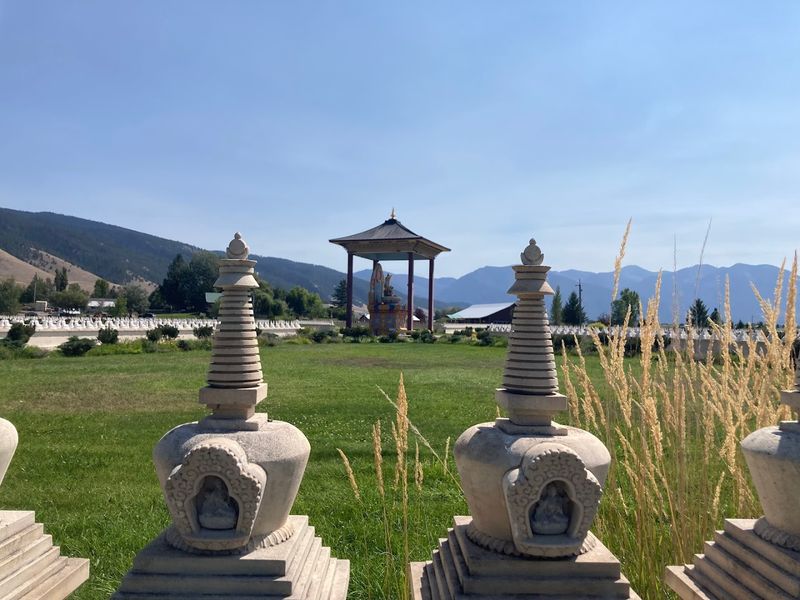
Beyond the Buddha statues, there is another layer of meaning built into the outer edges of this garden. One thousand stupas line the outer circle, each one representing the enlightened mind and each containing an image of Tara, a beloved female deity in Tibetan Buddhism.
Tara is known as a protector and guide, offering compassion to those who call on her.
Stupas are among the oldest Buddhist structures in the world, traditionally used to house sacred objects and honor enlightened beings.
Having one thousand of them forming the outer ring of the garden creates a kind of spiritual boundary, a circle of protection and intention around the entire space. It is a deeply thoughtful architectural choice.
Walking along the outer circle and noticing each individual stupa is a meditative experience all on its own. They are elegant in their simplicity, and knowing that each one holds a sacred image inside adds a quiet sense of depth to the walk.
The combination of stupas, Buddhas, mountains, and sky creates a layered visual experience that rewards slow and attentive visitors far more than those who rush through. Take your time here, this outer circle deserves it.
The Spiritual Vision That Brought This Garden To Life
Every great place has an origin story, and this one starts with a dream. The garden was founded by Gochen Tulku Sang-ngag Rinpoche, a Tibetan master of the Nyingma school of Tibetan Buddhism.
He had envisioned a peace garden in the mountains since childhood, and during a teaching trip to Montana, he recognized the Jocko Valley as the landscape from that very vision.
The land itself was donated anonymously by one of his students, which feels like its own kind of miracle. What began as a dream became a decade-and-a-half-long construction project, built almost entirely through volunteer effort and spiritual dedication.
The garden officially serves as a pilgrimage destination for the Western Hemisphere.
Its purpose goes beyond beauty. The garden was created to inspire Buddhist ideals of joy, wisdom, and compassion, and to offer a counter to global negativity through the power of collective intention.
Interestingly, destroyed weapons and symbols of conflict are buried beneath some of the statues, symbolizing the triumph of compassion over harm.
That detail alone changes how you walk through the space. Knowing what lies beneath makes every step feel intentional and meaningful.
The Cultural Connection With The Confederated Salish And Kootenai Tribes
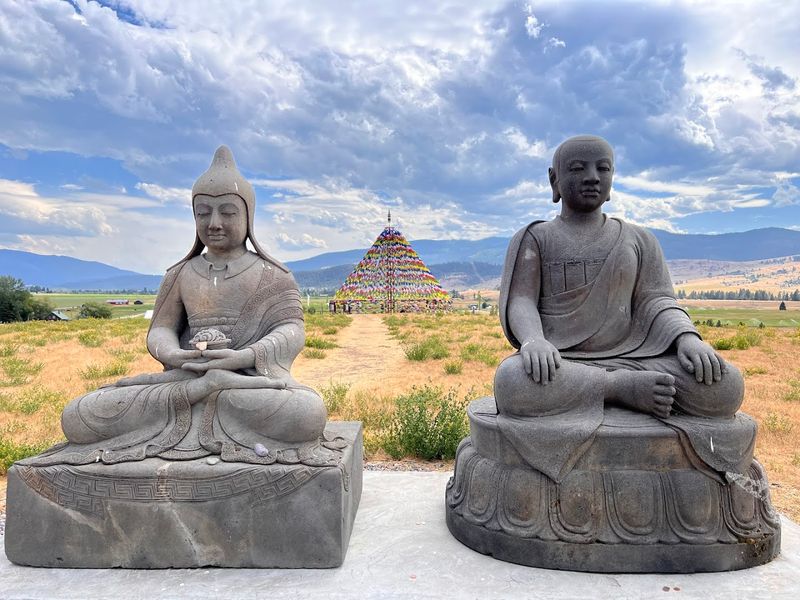
The Garden of One Thousand Buddhas does not exist in isolation. It sits on the land of the Confederated Salish and Kootenai Tribes, and that relationship is one the garden takes seriously and honors openly.
The two communities share values around respect for the land, balance, and living in harmony with the natural world.
Cooperative events between the garden and tribal community reflect a genuine cultural exchange rather than a surface-level gesture.
The Ewam Buddhist Institute, located within the garden grounds, plays a role in fostering those connections and hosting educational programs that bring people of different backgrounds together.
Each year, the garden hosts an annual Tibetan Cultural Festival and a Festival of Peace, both of which draw visitors from across the region and beyond.
These events celebrate the overlapping values of two very different traditions finding common ground in one beautiful valley. For visitors who arrive without much background in either culture, the experience can be genuinely eye-opening.
Montana is often thought of as a place of wide open wilderness, and discovering this depth of cultural richness tucked into the Jocko Valley is one of those surprises that sticks with you long after you have driven away.
What To Expect When You Arrive
Showing up prepared makes any experience better, and this garden is no exception. The Garden of One Thousand Buddhas is open daily from 9 a.m. to 7 p.m., year-round, with free admission.
A suggested donation of five to ten dollars helps support grounds maintenance, and given what volunteers have built here, that feels like the least you can do.
Plan to walk at least a mile to see everything properly. The grounds are spread across 10 acres, and rushing through would genuinely shortchange the experience.
Comfortable walking shoes are a must, and if you are visiting in winter, bundle up because the valley wind is real and enthusiastic.
The garden also has a gift shop on-site, stocked with prayer flags, candles, books, and handmade items. It is not overpriced and makes for a meaningful souvenir stop.
Vault toilets are available on the grounds, and handicapped parking is provided near the entrance. Informational signs are placed throughout, written clearly enough that visitors of any background can follow along easily.
The whole experience takes anywhere from one to two hours depending on how long you linger, and lingering is absolutely encouraged here.
Why This Garden Belongs On Every Montana Road Trip Itinerary
Montana road trips are famous for glacier views, bison ranges, and big sky scenery, but the Garden of One Thousand Buddhas offers something those experiences rarely do: genuine stillness.
Sitting on a bench inside the Dharma wheel while mountains rise in every direction is the kind of moment that rewires your sense of what a trip can be.
The garden sits conveniently between Missoula and Kalispell, making it a natural midpoint stop. Whether you are heading toward Glacier National Park or winding your way south, this is the kind of detour that becomes the highlight of the whole journey.
The koi pond, the native plantings, and the planned waterfall add natural beauty to the spiritual architecture.
Sunset visits are especially stunning, with warm light washing over the statues and the mountains turning shades of amber and rose.
The garden welcomes people of all faiths and no faith at all, because beauty and peace have no prerequisites. If you have ever wanted to feel genuinely small in the best possible way, standing at the center of one thousand Buddhas in a Montana mountain valley will deliver exactly that.