
This Kansas Space Museum Holds One Of The World’s Most Surprising Space Race Collections
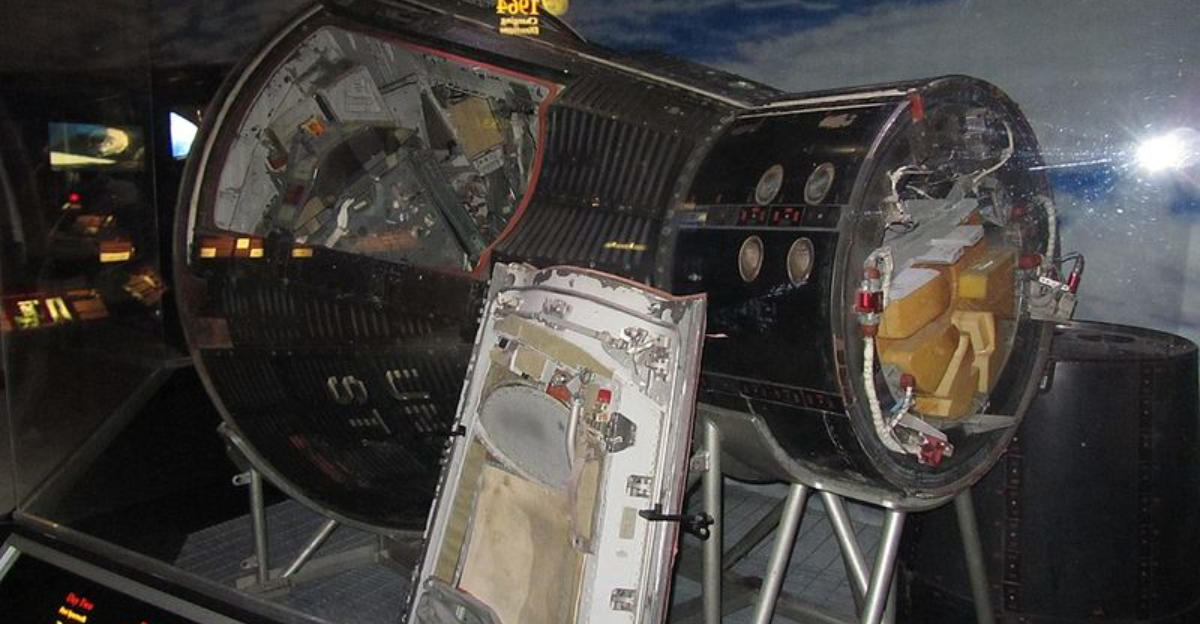
Most people don’t expect one of the world’s most impressive Space Race collections to be hiding in Kansas. That’s exactly why it works.
From the outside, it seems almost too quiet. Flat roads.
Big skies. Small-town America.
Then suddenly, you’re standing inches away from artifacts built for the Cold War, the Moon landing, and humanity’s greatest cosmic flex. This isn’t just a museum.
It’s a time capsule from the age when the future felt nuclear-powered. Real spacecraft.
Soviet relics. Apollo-era technology that somehow looks both impossibly advanced and hilariously retro at the same time.
One hallway feels like NASA. The next feels like a sci-fi movie directed by engineers.
And somehow, in the middle of Kansas, the Space Race still feels alive. Turns out the state isn’t only famous for tornadoes.
It also knows a thing or two about things leaving the atmosphere.
The Apollo 13 Command Module Odyssey
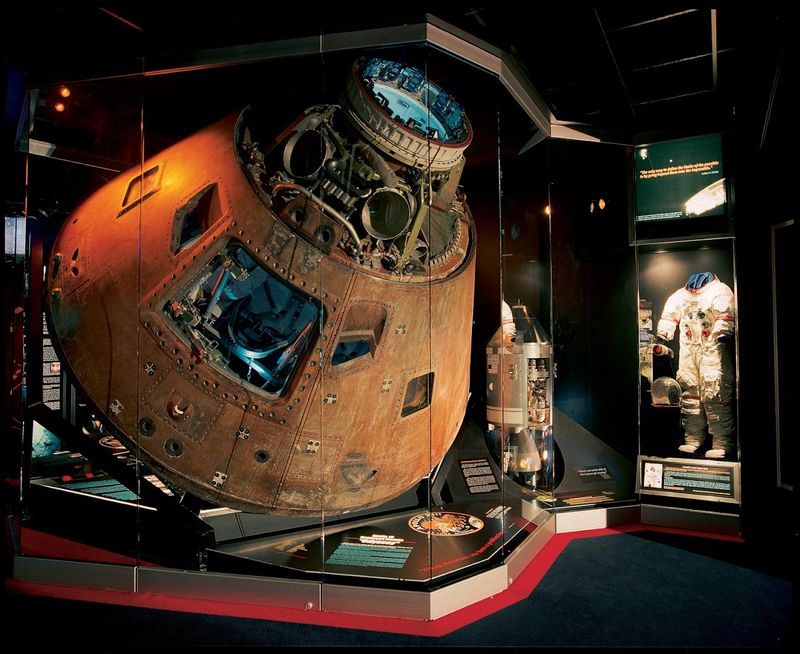
There are moments in history that make your jaw drop, and standing in front of the actual Apollo 13 Command Module Odyssey is absolutely one of them.
This is not a replica, not a model, and not a Hollywood prop. This is the real capsule that carried three astronauts around the Moon and brought them safely back to Earth in April 1970.
The Cosmosphere didn’t just acquire Odyssey and slap it on a pedestal. The museum’s own SpaceWorks division performed a meticulous, months-long restoration of the capsule, making it one of the most carefully preserved spacecraft in the world.
Every scorch mark and worn surface tells a story of survival against impossible odds.
Here’s a fun fact that makes this even more mind-bending: the Cosmosphere’s SpaceWorks team also created roughly 80% of the artifacts and props used in Ron Howard’s 1995 blockbuster film Apollo 13.
So the same hands that restored the real capsule also built the Hollywood version.
Seeing Odyssey up close feels less like visiting a museum and more like stepping directly into one of history’s most dramatic moments.
The Liberty Bell 7 Mercury Spacecraft
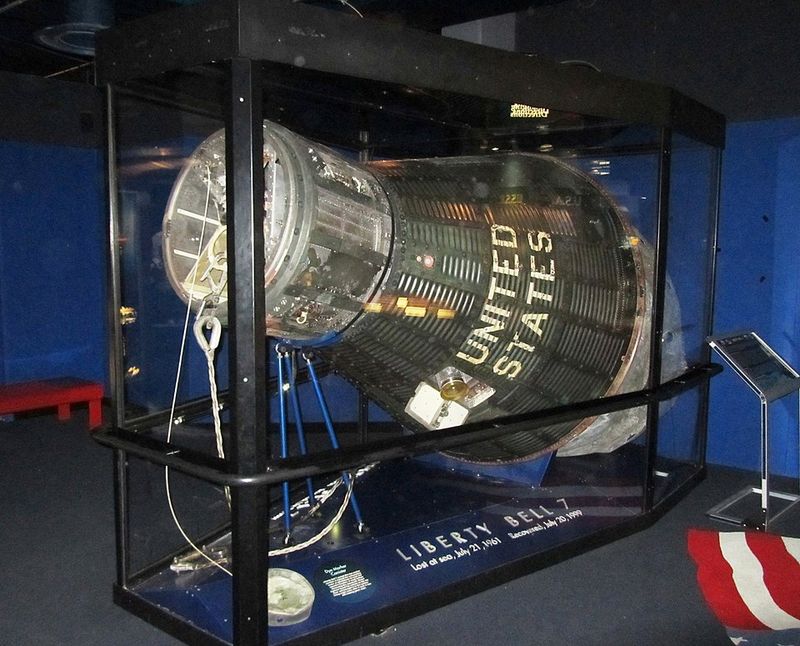
Some treasures come from the depths of the ocean, and Liberty Bell 7 is one of the most remarkable recovery stories in space history.
This tiny Mercury capsule, flown by astronaut Gus Grissom in July 1961, spent nearly 38 years sitting on the floor of the Atlantic Ocean before anyone brought it back up.
A partnership involving the Cosmosphere helped recover the capsule in 1999, and the six-month restoration process happened right there at the museum in Hutchinson, located at 1100 N. Plum St.
Visitors could actually watch the restoration unfold in real time, which is the kind of behind-the-scenes access that most museums never offer.
The result is a spacecraft that looks remarkably preserved for something that spent decades underwater.
Liberty Bell 7 is one of the rarest objects in American space history, and the Cosmosphere is one of only three museums in the world displaying flown spacecraft from all three early U.S. manned programs: Mercury, Gemini, and Apollo.
That trio alone makes this place worth a very long road trip through Kansas.
The Gemini 10 Space Capsule
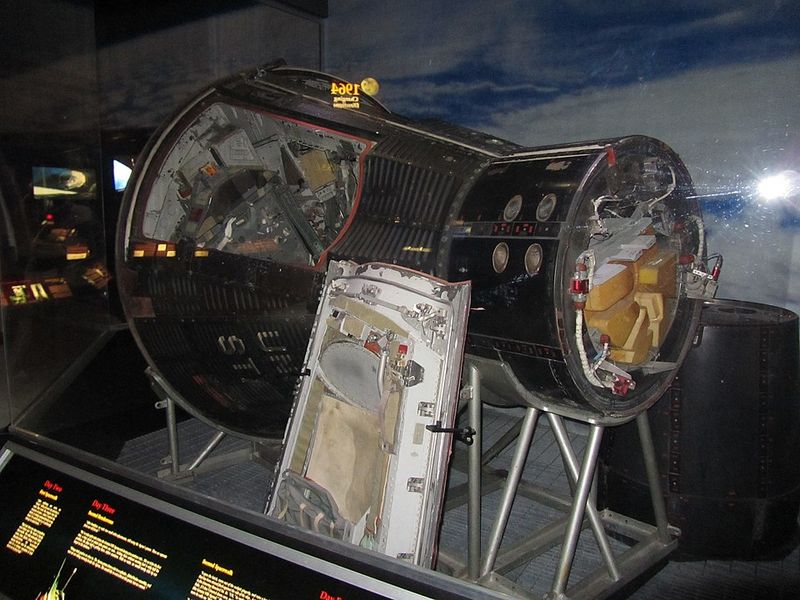
Most people know Mercury and Apollo, but the Gemini program was the critical middle chapter that made Moon missions actually possible.
The Gemini 10 capsule on display at the Cosmosphere represents one of the most technically ambitious missions of the entire Space Race era.
Launched in July 1966, Gemini 10 accomplished two separate rendezvous maneuvers with different target vehicles during a single mission.
That kind of orbital gymnastics was exactly the training NASA needed before attempting lunar orbit. The capsule you see at the Cosmosphere flew through all of that, and it carries the quiet authority of something that genuinely changed history.
What makes the Cosmosphere special is context. The Gemini 10 capsule isn’t just floating in an empty room.
It sits within a narrative that connects the earliest Mercury flights to the eventual Moon landing, giving visitors a sense of the massive, decade-long effort that the Space Race actually required.
Seeing Mercury, Gemini, and Apollo capsules together in one building creates a timeline you can walk through physically. That experience is genuinely rare and surprisingly emotional for anyone who appreciates what those missions meant.
The V-1 And V-2 Rocket Exhibit
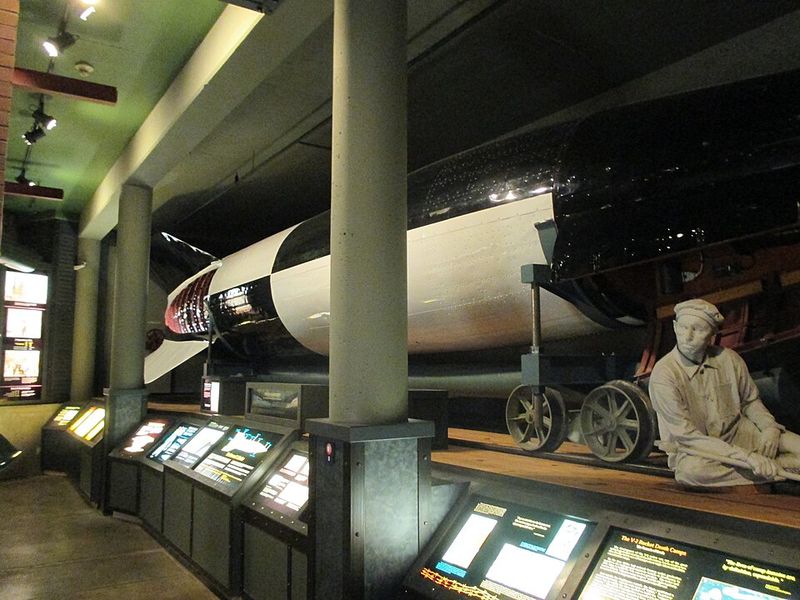
Before there were astronauts, there were engineers working in secret underground facilities, and the Cosmosphere takes that history seriously. The German Gallery features genuine V-1 and V-2 rockets, and the exhibit design does something most museums wouldn’t dare attempt.
It recreates the atmosphere of a World War II bunker, complete with the kind of shadowy, underground aesthetic that makes history feel uncomfortably real.
The V-2 rocket on display was discovered in an abandoned warehouse and restored by the Cosmosphere’s SpaceWorks division.
That restoration process required serious expertise, and the finished result is one of the most visually striking objects in the entire building. Standing next to a V-2 is a reminder that the technology powering the Space Race had complicated and sobering origins.
The exhibit doesn’t shy away from that complexity. It acknowledges the forced labor used in V-2 production, including a seated figure representing those who endured dangerous conditions during the program’s development.
This gallery manages to honor scientific history while holding space for the full human story behind it. That balance is genuinely rare in museum storytelling, and the Cosmosphere pulls it off with real care and intention.
The Largest Russian Space Artifact Collection Outside Moscow
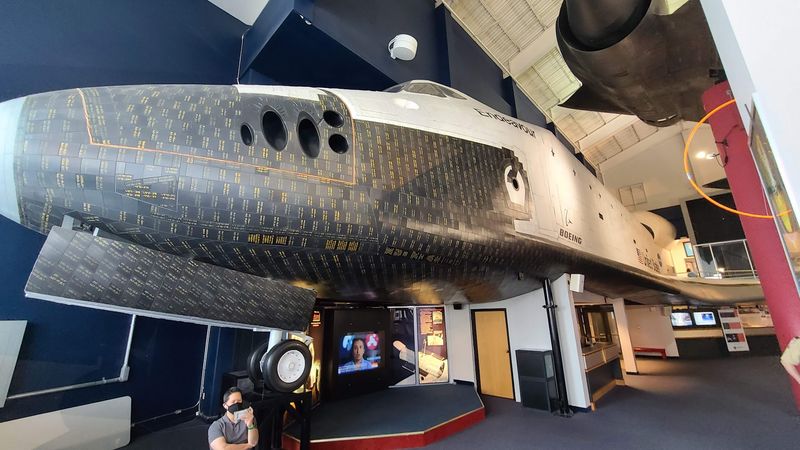
Most American space museums tell one side of the Space Race story. The Cosmosphere tells both, and that’s what separates it from almost every other institution in the country.
The museum holds the largest collection of Russian space artifacts found anywhere outside of Moscow, which is an absolutely wild thing to encounter in the middle of Kansas.
The Soviet collection includes items like a genuine Sputnik 1 backup, Soviet spacesuits, and hardware from missions that most Americans have never heard of.
Seeing these objects in person reframes the entire Space Race narrative. It wasn’t just an American achievement story.
It was a global competition that pushed both nations to accomplish things that seemed physically impossible.
There’s something quietly powerful about standing in front of Soviet space hardware in a heartland American museum.
The objects themselves carry no political agenda. They’re just engineering, ambition, and the universal human desire to reach beyond what’s comfortable.
The Cosmosphere presents the Russian collection with the same care and respect given to the American artifacts, which creates a surprisingly balanced and thoughtful experience.
Space, it turns out, has always been bigger than any single nation’s story.
The Restoration Lab Behind The Magic
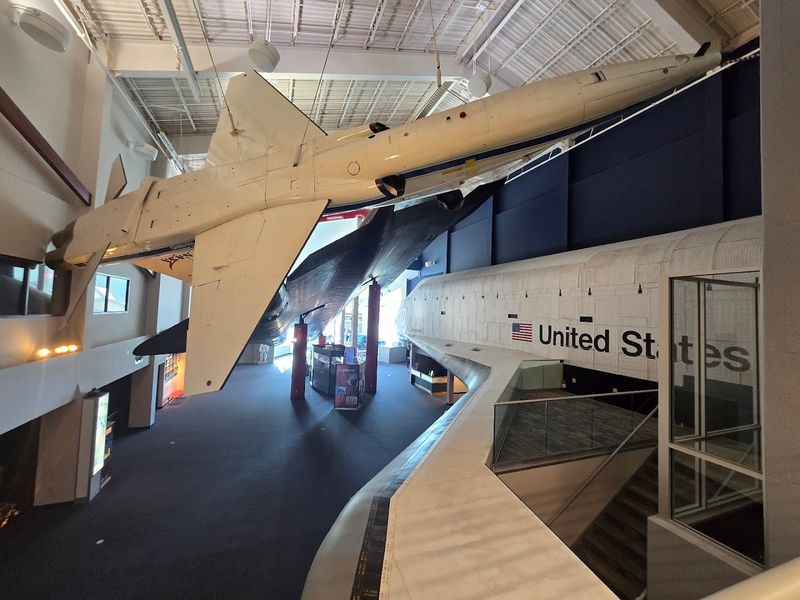
Behind every perfectly preserved spacecraft at the Cosmosphere is a team of specialists who do work that most people never think about.
The SpaceWorks division is the Cosmosphere’s in-house restoration powerhouse, and its reputation extends far beyond Hutchinson, Kansas.
SpaceWorks has restored flown spacecraft for institutions including the Smithsonian Institution’s National Air and Space Museum, which is about as prestigious as museum work gets.
The division applies conservation techniques to objects that are both historically irreplaceable and physically fragile, requiring a combination of engineering knowledge and artistic precision that is genuinely rare in any field.
The Hollywood connection makes SpaceWorks even more fascinating. The same team that preserves real space history also built approximately 80% of the props and artifacts used in the 1995 film Apollo 13.
That overlap between authentic preservation and cinematic recreation says a lot about the level of detail SpaceWorks brings to every project.
When you walk through the Cosmosphere and marvel at how pristine everything looks, you’re seeing the results of a world-class restoration operation that happens to be headquartered in a mid-sized Kansas city.
That’s the kind of unexpected excellence that makes this museum so genuinely exciting.
The SR-71 Blackbird In The Lobby
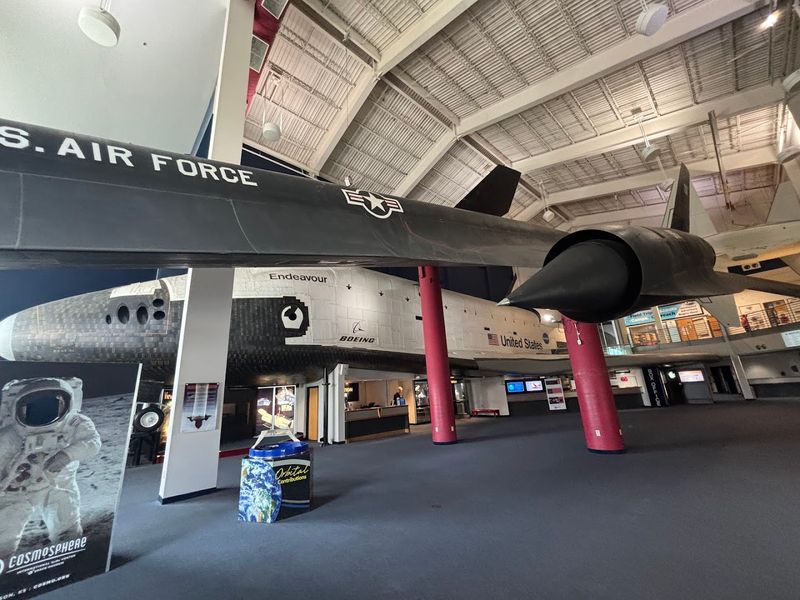
Walking into the Cosmosphere lobby and being greeted by an actual SR-71 Blackbird is the kind of opening statement that sets the tone for everything that follows.
This aircraft is one of the most visually dramatic objects ever built by human hands, and seeing it indoors at close range hits completely differently than spotting one behind a fence at an air show.
The SR-71 was the fastest air-breathing aircraft ever flown, capable of cruising at over Mach 3 at altitudes above 85,000 feet.
It flew so high and so fast that the primary defense against missile attacks was simply to outrun them. That’s not a metaphor.
The plane literally just sped away from threats.
Having this as the first thing visitors encounter sets an immediate tone of jaw-dropping ambition. The Cosmosphere isn’t easing you into the experience with informational placards and gentle background music.
It’s opening with one of the most extraordinary machines ever created and essentially saying, welcome, things only get better from here. That curatorial confidence is part of what makes this museum feel so different from anything else you’ll find in the American Midwest.
The Moon Rock From Apollo 11
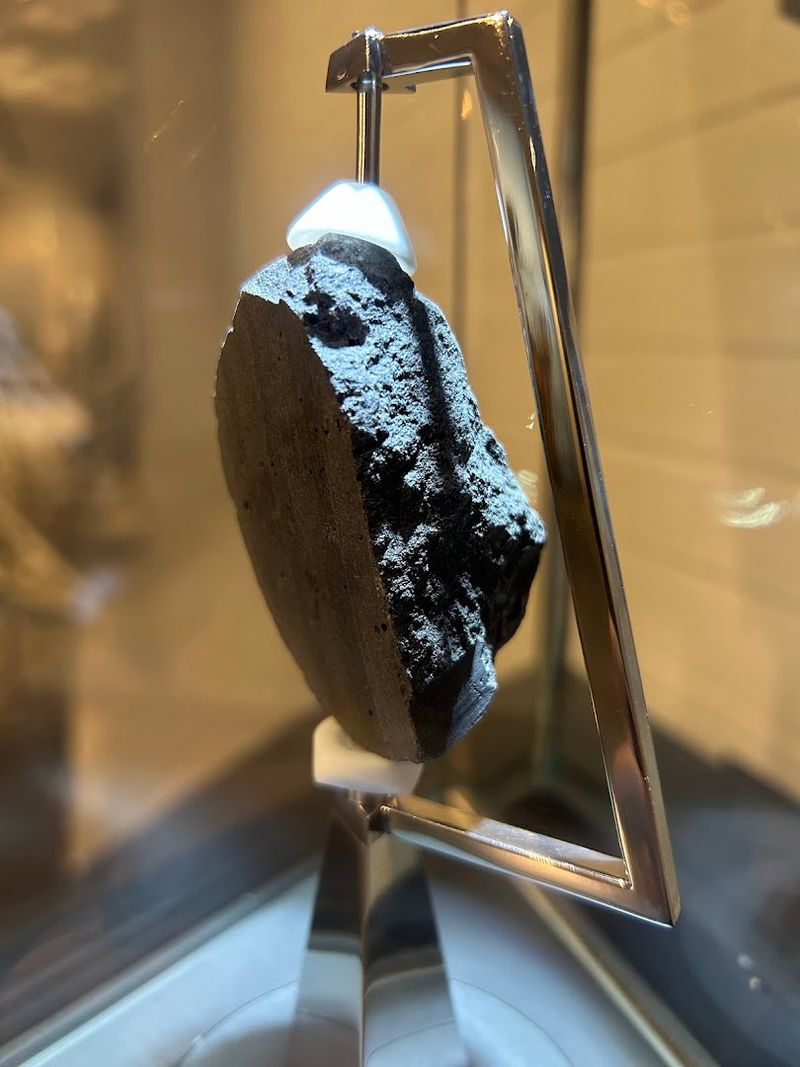
There are roughly 842 pounds of Moon rocks on Earth, collected across six Apollo missions, and most people will never get within a hundred feet of any of them.
The Cosmosphere has one, collected during Apollo 11, and it’s available for visitors to get genuinely close to in person.
A Moon rock from Apollo 11 is not just a geological sample. It’s a piece of another world, touched by the first humans who ever walked somewhere other than Earth.
The symbolic weight of that object is almost impossible to fully articulate. It’s older than almost anything you’ll ever encounter, formed billions of years before the first dinosaurs existed.
The Cosmosphere treats this artifact with the reverence it deserves while keeping the experience accessible and engaging.
Seeing a Moon rock isn’t a distant, roped-off encounter. It’s an intimate moment that connects visitors directly to one of the most significant achievements in human history.
For anyone who has ever looked up at the Moon on a clear night and felt that peculiar pull of curiosity, standing this close to a piece of it is a genuinely moving experience that no photograph can fully replicate.
The Planetarium And Dome Theater Experience
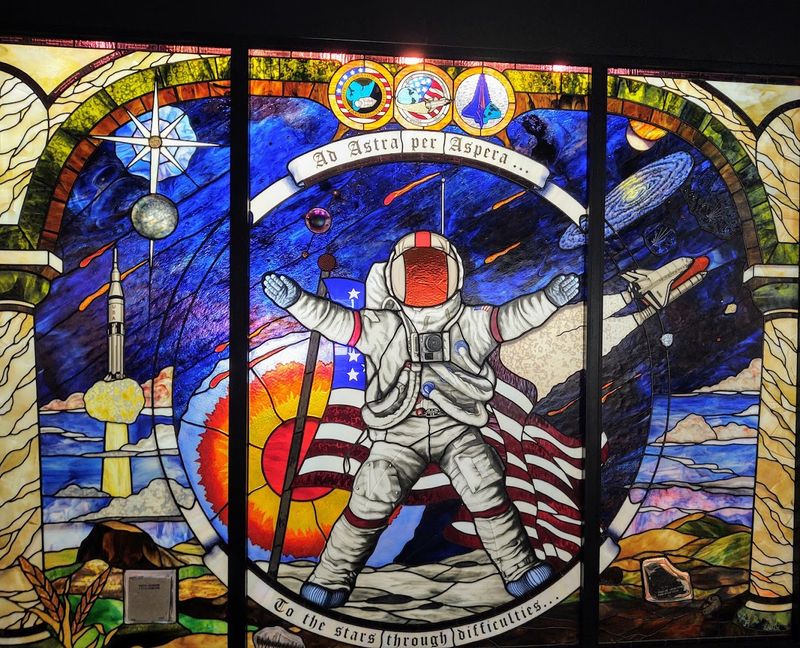
Not every remarkable thing at the Cosmosphere is behind glass. The planetarium and dome theater experiences bring the universe to life in a completely different way, wrapping visitors in immersive visuals that make the exhibits feel even more meaningful by comparison.
The dome theater is the kind of place where a show about the formation of galaxies makes you forget you’re sitting in a chair in Kansas.
The curved screen surrounds your entire field of vision, and the scale of what you’re watching creates a genuinely physical sensation. Space feels enormous in a way that flat screens simply cannot deliver.
The planetarium shows add an educational layer that complements the artifact collection beautifully.
You can spend the morning standing next to an actual Apollo capsule and then spend the afternoon watching a program that explains the orbital mechanics that made those missions possible.
That combination of physical artifact and immersive storytelling creates a full-day experience that works for curious adults and wide-eyed first-timers equally well. The Cosmosphere clearly understands that the best museums don’t just display history.
They make you feel it from the inside out, and these theaters are a big reason why that mission succeeds so completely.