
This Iconic South Carolina Roadside Stop Has Been An American Obsession For 70 Years
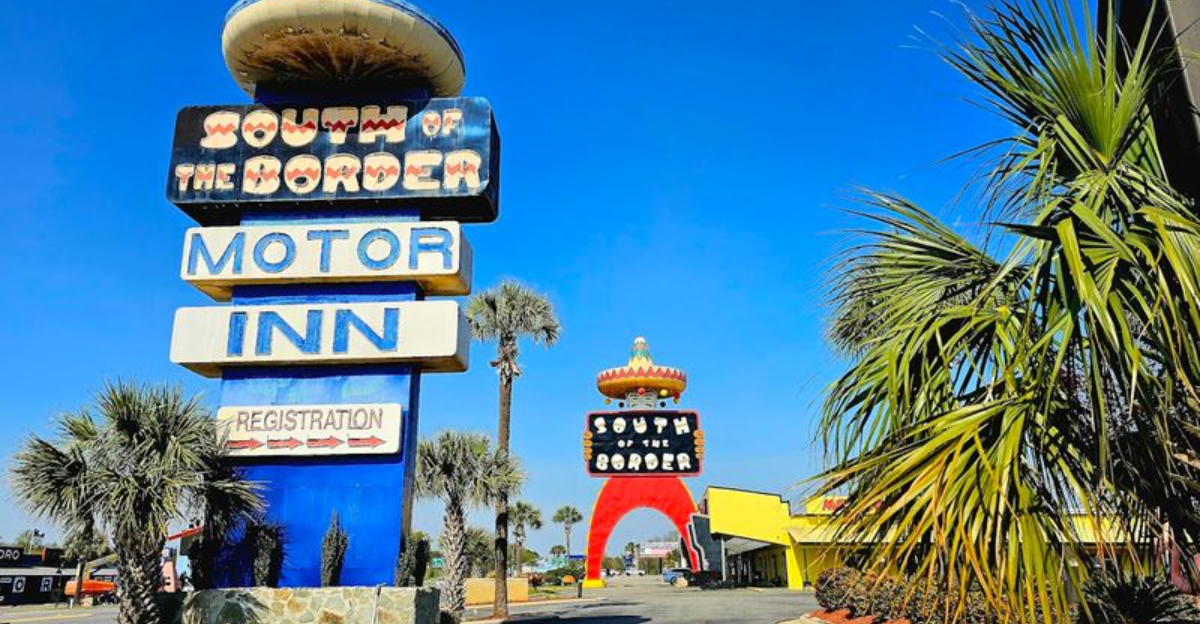
You don’t plan to stop here.
It just… happens.
Somewhere along the highway, the signs start showing up. One.
Then another. Then too many to ignore.
By the time you reach the exit, curiosity wins.
This South Carolina roadside stop has been pulling people in for decades.
And somehow, it still works.
Neon lights. Giant shapes.
Jokes that should not land, but do. Everything feels a little too much, and that is exactly the point.
You either get it right away.
Or you don’t.
There is not much in between.
But once you stop, you stay longer than you expected. Walk a little further.
Look a little closer.
And then you realize something.
This place is not trying to make sense.
That is why people keep coming back to South Carolina just to see it again.
A Roadside Empire Built On Puns and Prohibition
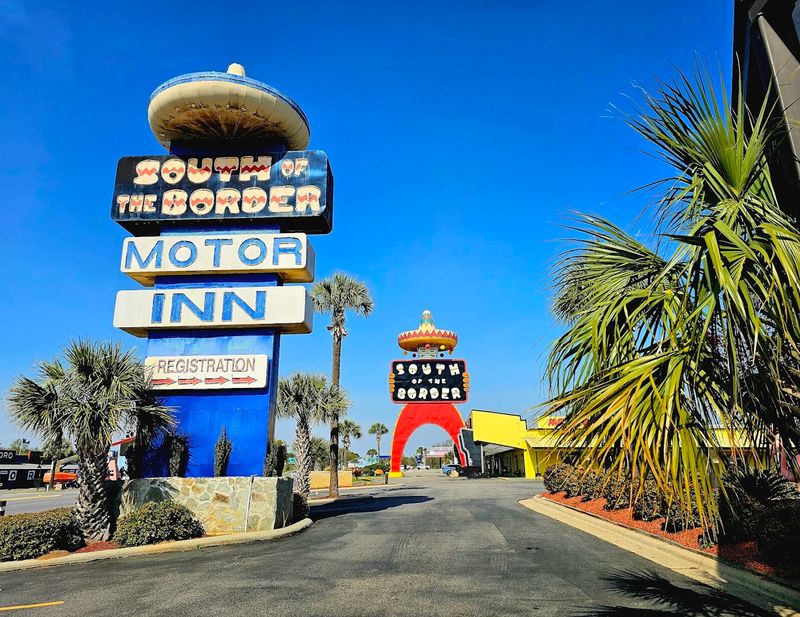
Alan Schafer opened a small drink stand in 1949 just below the North Carolina state line, capitalizing on South Carolina’s more relaxed laws at the time.
He chose a Mexican theme partly because it stood out in rural Carolina landscape and partly because he could plaster the highways with pun-heavy billboards that made travelers groan and grin in equal measure.
Schafer kept adding buildings, shops, and attractions as traffic on I-95 swelled through the 1960s and 70s, transforming a single roadside shack into a sprawling complex that now covers several acres.
I walked past the original site marker on my last visit, tucked near the main gift shop, and marveled at how one man’s knack for wordplay and timing created an American roadside legend.
The empire still runs on that same formula today, mixing nostalgia, novelty, and enough neon to guide planes.
Every corny slogan and fiberglass statue traces back to Schafer’s gamble that travelers would stop for a laugh and stay for a souvenir.
Pedro the Mascot Who Conquered The Interstate
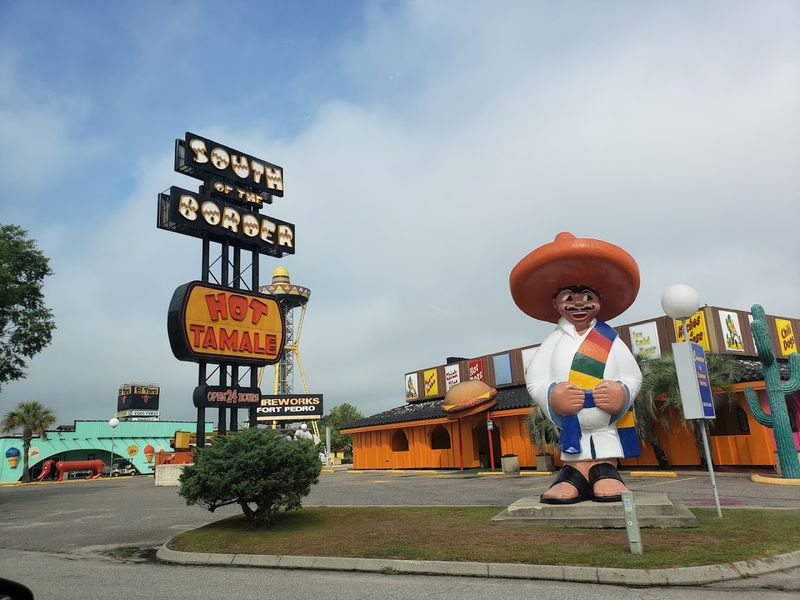
Pedro became the face of South of the Border sometime in the early years, a cartoon character with a sombrero, serape, and a smile that promised cheap thrills and cheaper souvenirs.
You’ll see his likeness on billboards stretching hundreds of miles in both directions, each one counting down the distance to the complex with slogans that range from clever to cringe.
I remember my father reading them aloud during childhood road trips, and now I catch myself doing the same thing with my own passengers, which proves Pedro’s marketing magic spans generations.
The mascot appears on keychains, shot glasses, T-shirts, and even the side of the sombrero-shaped observation tower, cementing his role as the unofficial ambassador of kitsch tourism.
Pedro never ages, never changes his outfit, and never stops grinning, which feels oddly comforting in a world that moves too fast.
His image is so ingrained in East Coast travel culture that spotting the first Pedro billboard has become a ritual for anyone heading south on I-95.
The Sombrero Tower That Dominates The Skyline
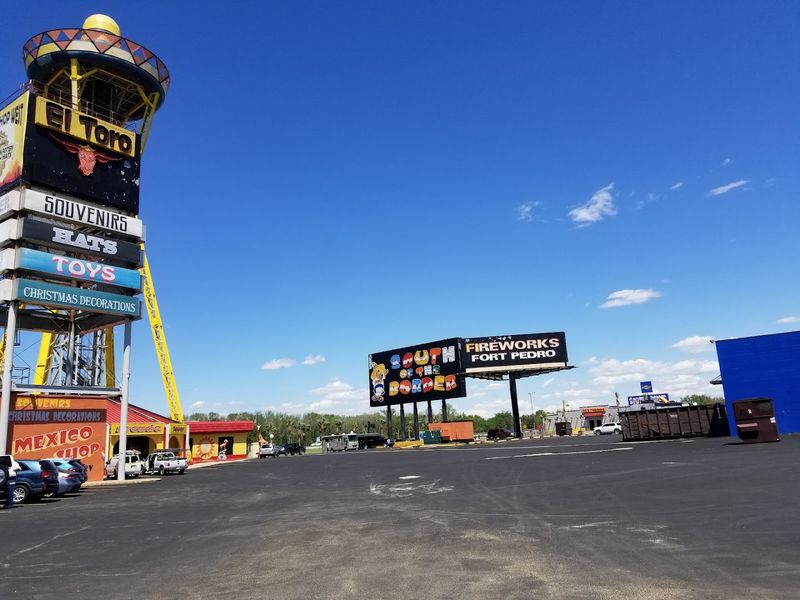
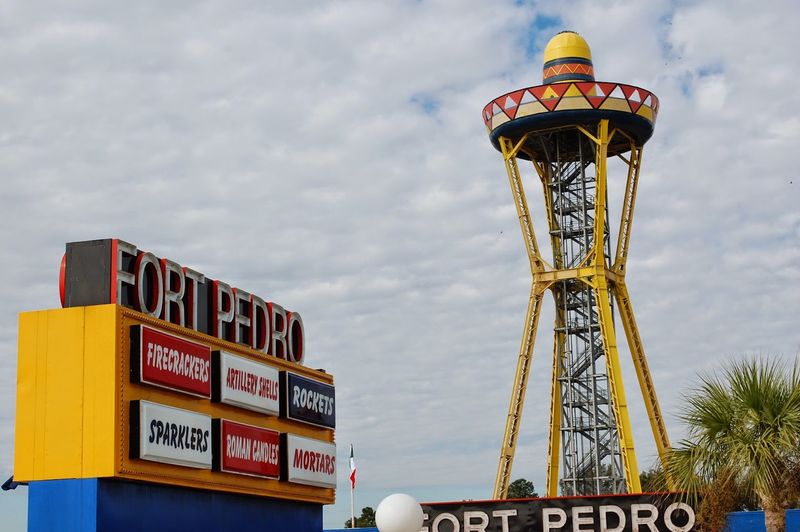
Rising 200 feet above the flat Carolina farmland, the sombrero-shaped observation tower is the single most recognizable feature of South of the Border and visible from miles away on I-95.
I climbed it once on a humid afternoon, paying a few dollars for the privilege of riding an elevator to the top and stepping out onto an observation deck that offers sweeping views of absolutely nothing but pine trees and asphalt.
The structure was built in the 1960s during the golden age of roadside architecture, when builders competed to create the tallest, weirdest, most photographable landmarks along America’s highways.
Inside, the walls are lined with faded photographs and newspaper clippings documenting the tower’s construction and the crowds it drew in its heyday.
The deck itself is small, hot, and slightly claustrophobic, but standing up there gives you a sense of how audacious this whole project was from the start.
I left the tower with windblown hair and a renewed respect for anyone who dared to build a giant hat in the middle of nowhere.
Gift Shops Packed With Souvenirs Nobody Needs
Walking into any of the gift shops at South of the Border feels like stepping into a time capsule where rubber whoopie cushions, personalized keychains, and airbrushed license plates still reign supreme.
I’ve lost entire afternoons browsing aisles stocked with everything from inflatable sombreros to ceramic burros, each item more gloriously unnecessary than the last.
One reviewer mentioned finding perfect rubber whoopie cushions that still produce authentic squeaks, and I can confirm that the toy section delivers on that nostalgic promise.
The stores carry a bizarre mix of fireworks, hot sauces, beach towels, and home decor, as if the buyers simply ordered one of everything from a 1980s novelty catalog and never stopped.
Checkout lines can stretch long, especially during peak travel season, but the wait gives you more time to second-guess that sombrero-shaped salt shaker you grabbed on impulse.
I always leave with at least three items I swore I wouldn’t buy, which I suppose is exactly the point of a well-executed tourist trap.
Motor Inn Rooms That Mix Vintage Charm With Modern Updates
Recent guests have praised the motor inn rooms for being surprisingly spacious, clean, and equipped with modern touches like Roku TVs, mini-fridges, and updated showers that replace the dated fixtures of years past.
I stayed in a king room last spring and found it larger than many chain hotel rooms, with fresh linens, comfortable pillows, and a bathroom that showed signs of recent renovation.
The best feature remains the parking setup, where you pull right up to your door and unload luggage without hauling it across a sprawling parking lot in the rain.
Some older reviews mention hard beds and thin towels, but my experience suggested the management has been steadily upgrading the property to meet modern expectations while keeping prices reasonable.
The rooms aren’t luxury suites, but they deliver exactly what road-trippers need after eight hours behind the wheel: a clean bed, a hot shower, and enough space to stretch out.
I appreciated the old-school motor lodge vibe that feels increasingly rare as bland chain hotels multiply along every interstate exit.
Restaurants Serving Mexican Food And Diner Classics
The complex houses multiple dining options, including a Mexican restaurant under the sombrero tower and a diner that serves breakfast and American comfort food for travelers who need eggs and hash browns more than enchiladas.
I ordered a steak at the Mexican restaurant on my second visit and found it perfectly serviceable, cooked to order and served with enough sides to justify the price.
Another guest raved about the breakfast spot next to the gift shop, which apparently delivers solid diner fare without pretense or delay.
Operating hours can be unpredictable, especially during off-season months when some restaurants close earlier than expected, so calling ahead or arriving before 7 p.m. saves disappointment.
The food isn’t destination-worthy on its own, but it hits the spot after hours on the road, and the kitsch atmosphere adds entertainment value that most highway restaurants lack.
I’ve learned to manage expectations and treat the dining experience as part of the overall South of the Border adventure rather than a standalone culinary event.
Amusement Park And Attractions For Family Fun
During warmer months, South of the Border operates a small amusement area with rides, an arcade, a reptile exhibit, and other attractions that give kids a chance to burn energy while parents recover from driving.
I wandered through the arcade on a Saturday afternoon and found it surprisingly active, with families feeding quarters into claw machines and skee-ball lanes that looked original to the 1970s.
The reptile house offers a quick, air-conditioned break where you can view snakes, lizards, and other creatures behind glass, though it’s more educational pit stop than world-class zoo.
Some reviewers lamented the absence of mini-golf, which does feel like a missed opportunity given the property’s commitment to classic roadside entertainment.
The amusement area operates on a seasonal schedule, so winter visitors might find most attractions closed, leaving only the shops and restaurants open.
I recommend timing your visit for late spring or summer if you’re traveling with kids who need more than shopping to stay entertained during a road trip break.
Fireworks Superstore Open Around The Clock
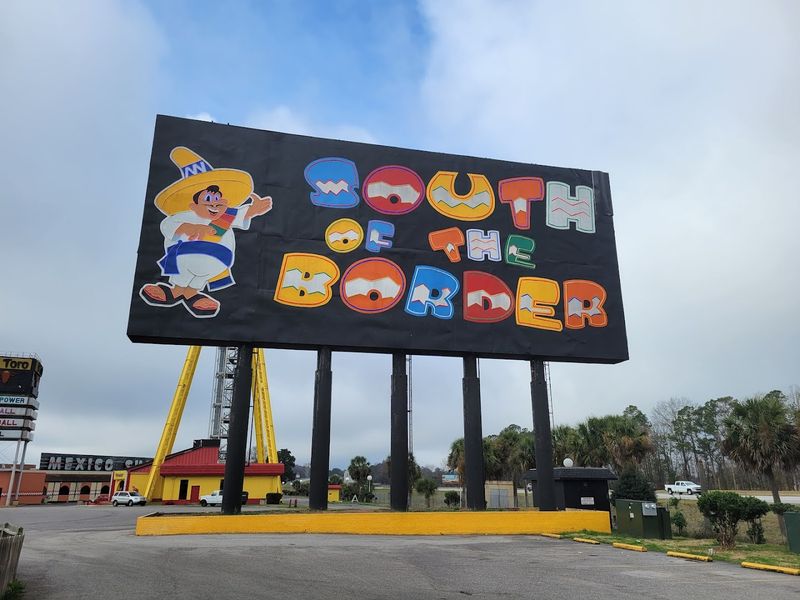
One of the most popular stops at South of the Border is the fireworks superstore, which operates nearly 24/7 and stocks everything from sparklers to artillery shells that would make your local fire marshal nervous.
I’ve watched families load shopping carts with enough pyrotechnics to stage a small celebration, taking advantage of South Carolina’s more permissive fireworks laws compared to neighboring states.
The store layout is surprisingly organized, with products grouped by type and intensity, and staff members who can answer questions about legality and safety if you bother to ask.
Prices are competitive, and the selection is vast, which explains why cars with out-of-state plates routinely pull into the lot just to stock up before continuing their journey.
I never leave without grabbing at least a few sparklers, even though I have no immediate plans to use them, because buying fireworks at South of the Border feels like a tradition unto itself.
The 24-hour availability means you can satisfy your pyrotechnic cravings at 3 a.m. if the mood strikes during a late-night drive.
Impeccably Clean Restrooms With Attendants
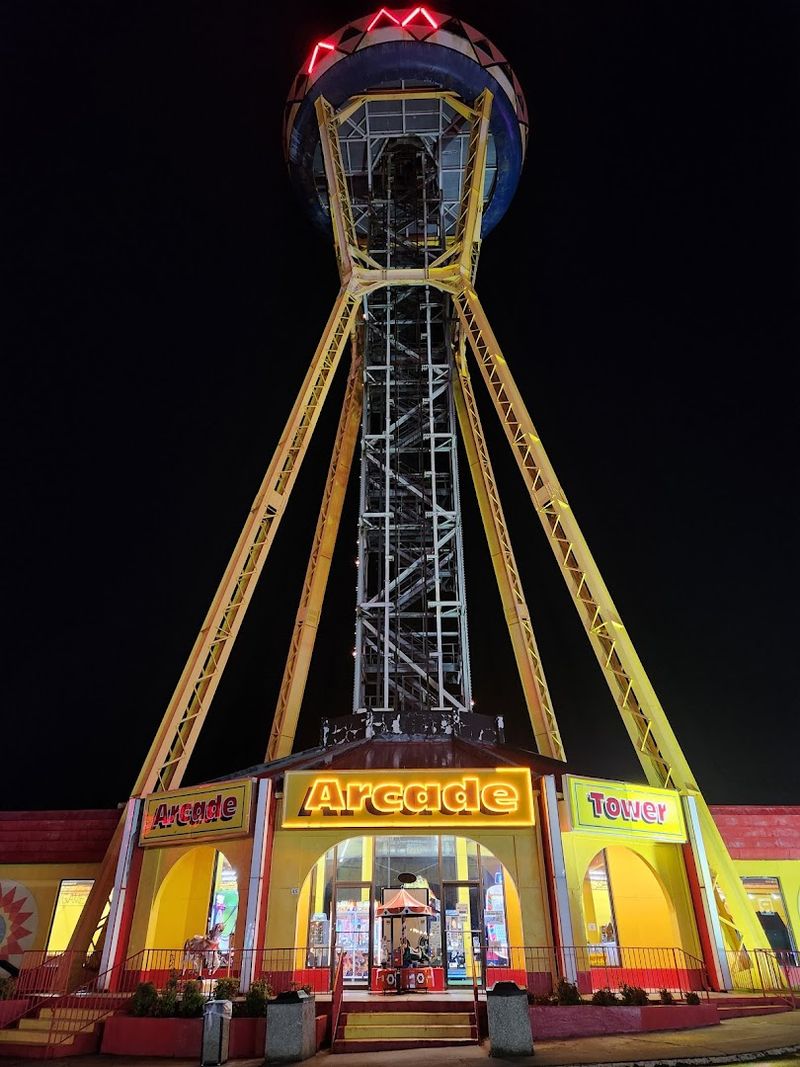
Multiple reviews highlight the cleanliness of the restrooms, which are staffed by attendants who keep the facilities spotless even during peak traffic times when hundreds of travelers pass through each hour.
I’ve used the restrooms on three separate visits and always found them remarkably clean, with attendants restocking supplies and wiping down surfaces in real time.
One guest mentioned an uncomfortable encounter with an attendant requesting tips in exchange for functional hand dryers, which management addressed by clarifying that such behavior isn’t policy or training.
The presence of attendants is a throwback to an earlier era of travel when rest stops and service stations employed people specifically to maintain public facilities to high standards.
You’ll never wait in a long line here, thanks to the sheer number of stalls available, which makes South of the Border a strategic bathroom break for families traveling with young children.
I’ve come to appreciate this attention to restroom cleanliness as a small but significant detail that separates this stop from the average highway rest area where cleanliness is hit or miss.
Billboard Campaign That Became A Cultural Phenomenon
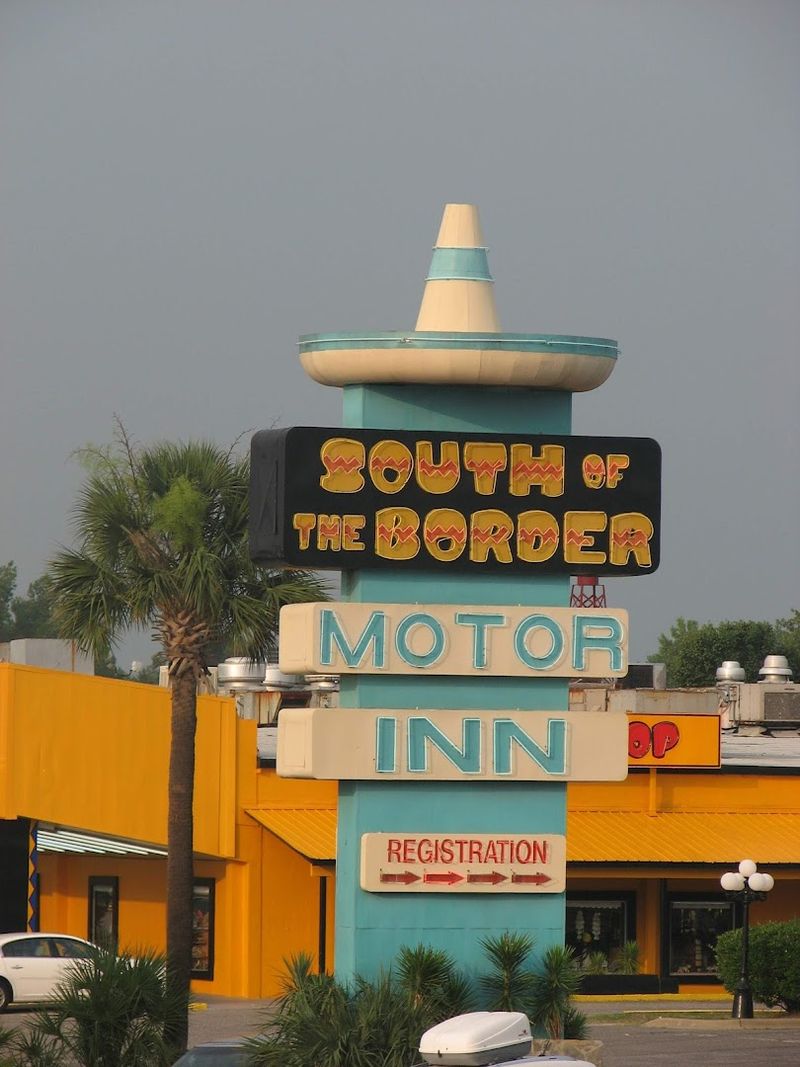
The billboard campaign for South of the Border stretches hundreds of miles along I-95, with signs appearing as far north as Virginia and as far south as Georgia, each one featuring Pedro and a pun that grows more groan-worthy the closer you get.
I started counting billboards on my last trip and gave up somewhere around thirty, realizing that the sheer volume of signs is part of the marketing strategy that keeps this place lodged in travelers’ minds.
Slogans range from mildly clever to aggressively corny, but they all serve the same purpose of building anticipation and making the stop feel inevitable rather than optional.
The billboards have become a cultural touchstone for anyone who has driven the East Coast, spawning countless photographs, social media posts, and nostalgic conversations about childhood road trips.
I find myself looking forward to the signs now, treating them as mile markers that measure progress toward the Florida border or home, depending on which direction I’m traveling.
The campaign proves that relentless, consistent advertising can create a landmark out of thin air if you commit to the bit hard enough and long enough.