
Ohio’s Dreamiest Tree Tunnel Hike Feels Like A Secret Woodland Escape
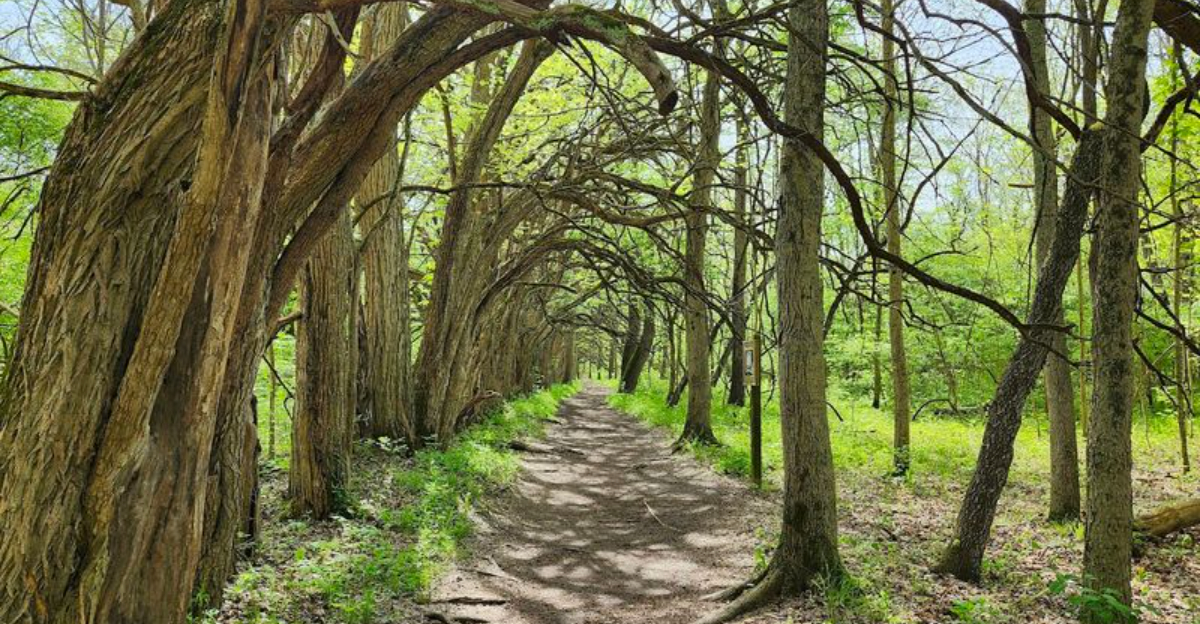
The best woodland walks do not always announce themselves with dramatic cliffs or postcard overlooks. Sometimes they begin with a quiet trail, a few leaning branches, and the sudden realization that the trees ahead have formed something that feels almost too perfect to be accidental.
At this Bellbrook park, the Osage Orange tree tunnel is the scene-stealer, but it is not the whole story. Old-growth oaks, prairie blooms, soft dirt paths, wildlife, family-friendly features, and peaceful creekside moments all make the hike feel richer than a quick photo stop.
Come for the green tunnel, then give the rest of the park time to surprise you. This is the kind of Ohio trail that rewards slow walking, curious looking, and a temporary break from checking your phone every five minutes.
Where the Magic Starts: Finding the Park
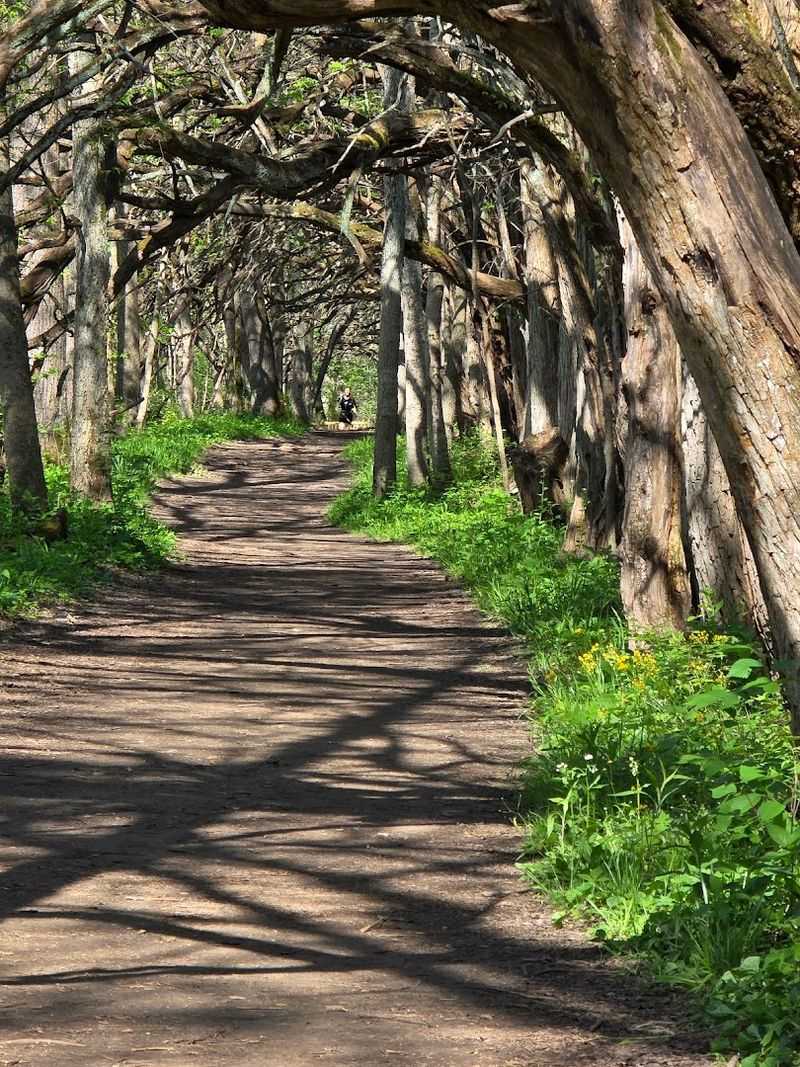
My GPS took me right to 4178 Conference Rd, Bellbrook, OH 45305, and I almost missed the entrance because it blends so naturally into the surrounding landscape.
The parking lot is small but free, which is always a pleasant surprise. There are maps posted near the trailhead, water fountains, and pit toilets available, so you are reasonably set before you even take your first step.
Sugarcreek MetroPark sits in the outer edges of the Dayton metro area, tucked into a stretch of countryside that feels genuinely removed from city noise. The drive there already starts to decompress you.
The park is generally open from 8 AM to 10 PM from April through October and from 8 AM to 8 PM from November through March, with holiday closures to keep in mind. The phone number to reach the park is +1 937-275-7275 if you need any details before heading out.
Arriving on a weekday afternoon, I had the parking lot mostly to myself, and that calm set the perfect tone for everything that followed.
The Osage Orange Tree Tunnel That Started It All
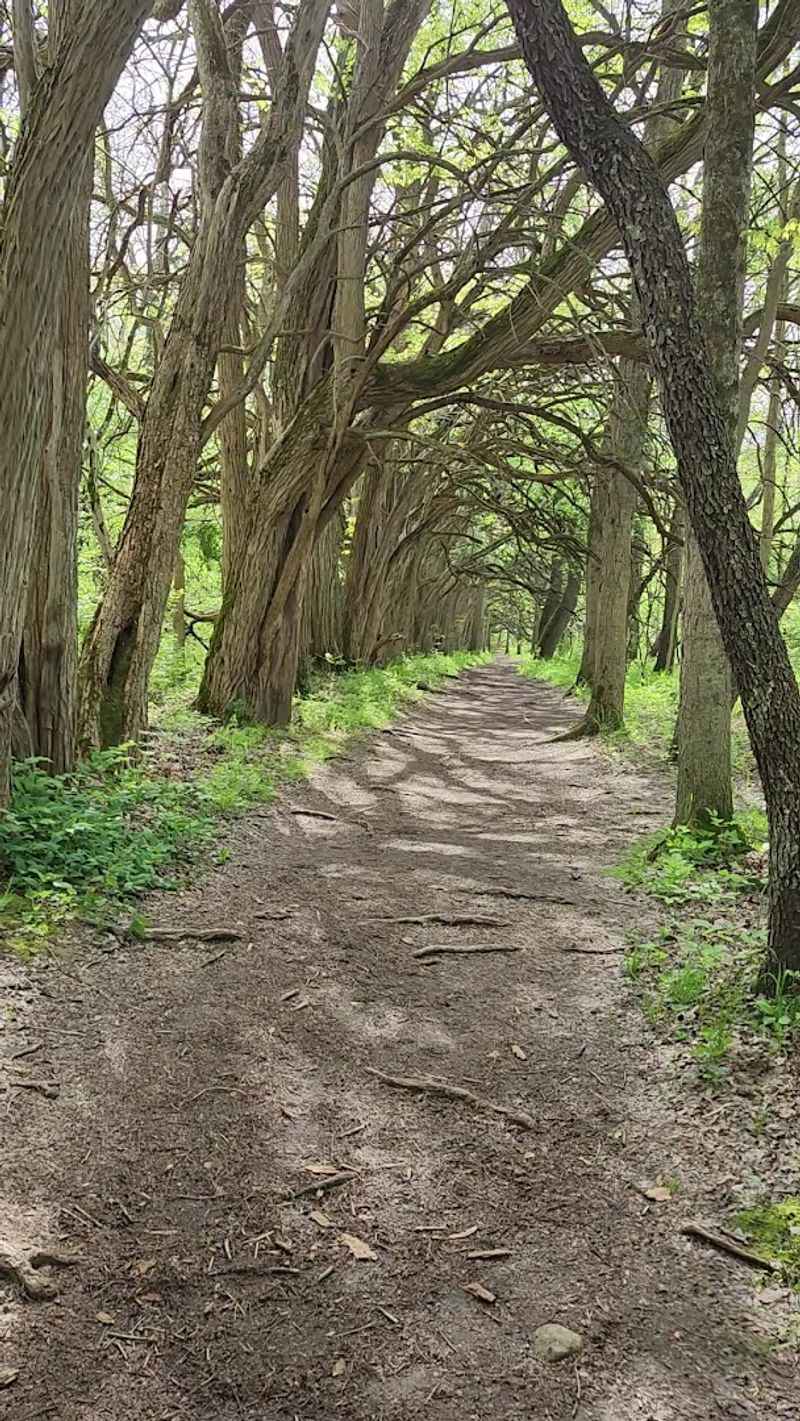
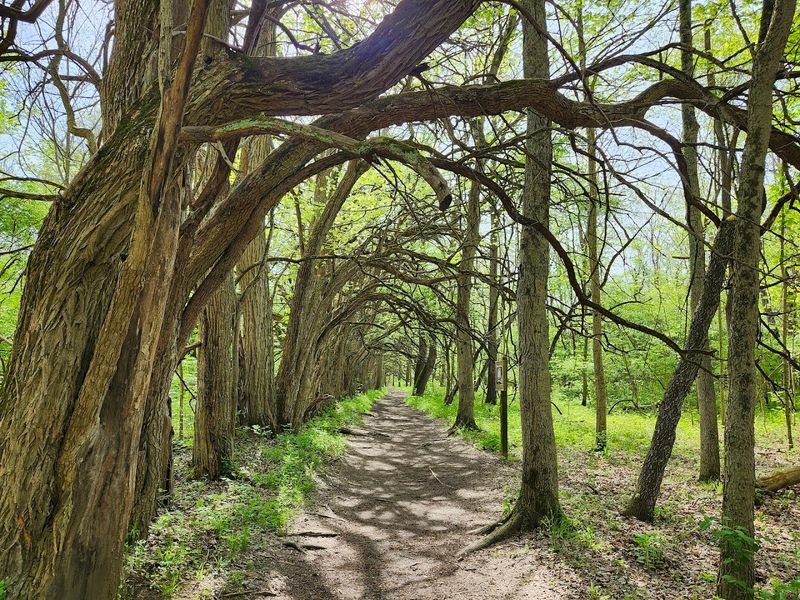
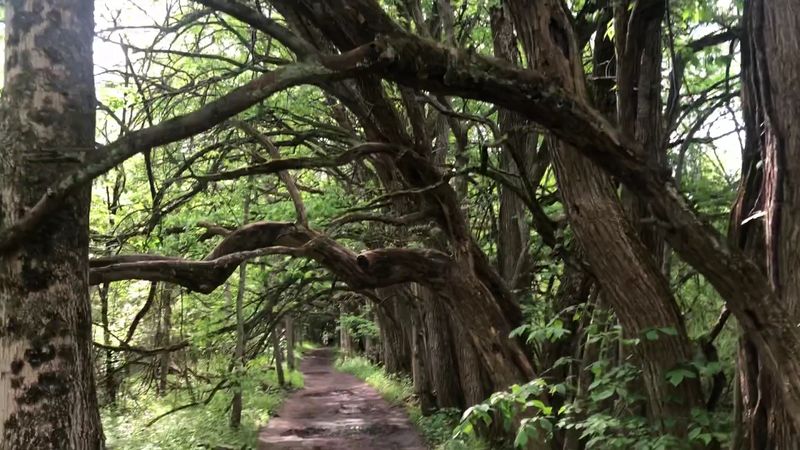
Nothing quite prepares you for the moment the Osage Orange trees close in overhead and the trail transforms into a living green corridor.
The branches arch and interlock like a cathedral ceiling made entirely of wood and leaves.
This tunnel is found along the orange trail, and it earns every bit of the reputation that brings hikers here from across the region. The filtered light plays tricks on you, casting soft patterns across the dirt path that shift as you move forward.
Osage Orange trees are fascinating on their own. Their bumpy green fruit, about the size of a softball, litters the ground in season, and locals swear placing the fruit around your home keeps spiders out.
The deeper you walk into the tunnel, the cooler the air becomes, even on a warm summer day. That natural temperature drop is one of those small sensory rewards that makes the hike feel almost cinematic.
I stopped several times just to look back and forward at the same time, trying to memorize the scene, and honestly, no photo I took came close to capturing it.
Ancient Oaks and the Three Sisters
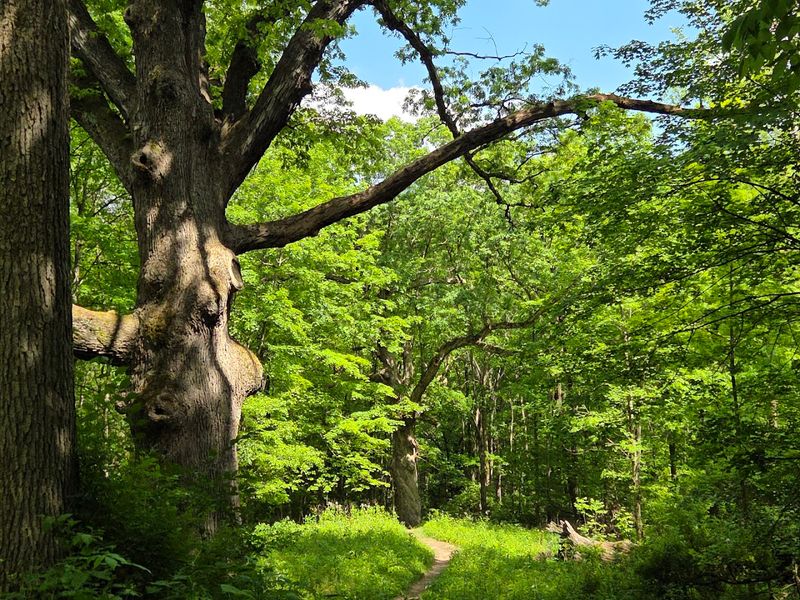
Some of the oak trees here are over 550 years old, which means they were already standing long before Ohio became a state. Standing next to one of those trunks puts time in a very humbling perspective.
A beloved feature of the park is the area known as the Three Sisters, named after three enormous trees that stood close together for generations. One of the sisters has fallen, but the remaining two still command serious attention and make for a striking photo stop.
The sheer scale of these old-growth trees changes the feeling of the forest around them. The canopy spreads so wide that the light beneath has a greenish, underwater quality that feels genuinely otherworldly.
I found myself circling one of the big oaks slowly, just trying to get a sense of its full circumference. My arms barely reached a quarter of the way around.
These trees are not just scenery. They are a quiet reminder that this landscape has been here far longer than any trail map, and that kind of history is worth walking slowly through.
Trail Options for Every Kind of Hiker
The trail system here is genuinely well thought out, with routes ranging from about 0.9 miles to 3.1 miles, so you can pick your adventure based on how much energy you brought with you that day.
The green loop stretches 3.1 miles and delivers a diverse mix of woodland scenery, rolling hills, and a few steep inclines that give your legs a real workout.
The orange trail is shorter and more accessible, making it a solid choice for families with young kids or anyone easing back into hiking.
Each trail is clearly marked with color-coded signs, and I never once felt lost or confused about where I was going. That kind of thoughtful trail design makes a real difference when you just want to enjoy the walk instead of stressing over navigation.
There are benches scattered throughout the trails, which I appreciated more than I expected. A quiet seat in the middle of the woods, with nothing but birdsong around you, is its own kind of reward.
The blue and orange trails have been updated in recent years, so checking the current map on the metroparks website before visiting is a smart move.
Prairie in Bloom: The Yellow Trail Surprise
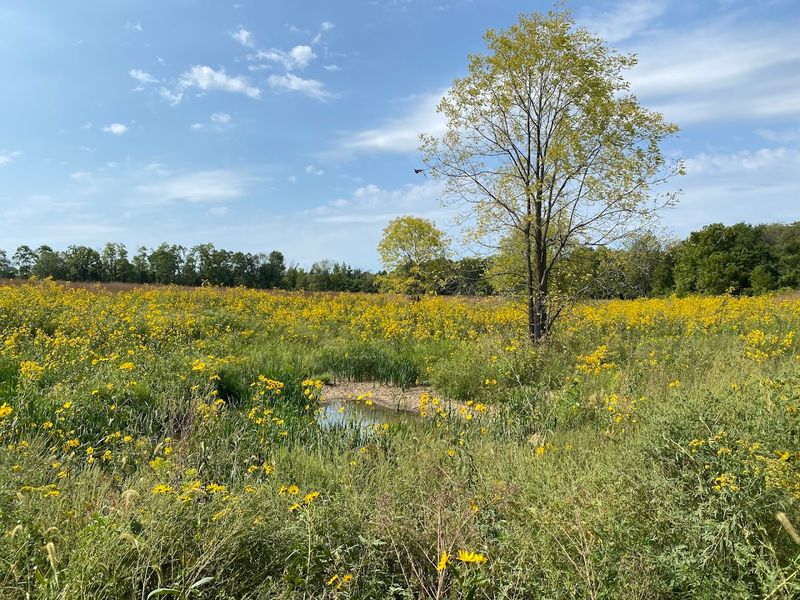
The prairie section absolutely erupts with color in the warmer months, and it caught me completely off guard the first time I saw it.
In July, coneflowers, sunflowers, compass plants, bee balm, rosinweed, and blazing star can turn the prairie into something that looks more like a painting than a park. By September, taller sunflower stalks add even more drama, which gives the whole section a slightly surreal, fairy-tale quality.
The Yellow Trail loops through open prairie after passing through wooded areas, while the park also has a paved prairie loop near the entrance that works especially well for families with strollers. That accessibility is a genuinely thoughtful touch that makes the park welcoming to a wider range of visitors.
I walked this section slowly, stopping to watch bees move between the flowers and to listen to the different sounds the open prairie makes compared to the dense forest nearby.
The contrast between the two environments within one park is part of what makes this place feel so layered and interesting.
Bring a camera with a decent zoom if wildflower photography is your thing, because the blooms here are worth the effort.
Wildlife and the Naturalist’s Playground
The park is genuinely alive with wildlife, and paying attention to the trees and underbrush rewards you with sightings you would not expect from a park this close to a suburban area.
Woodpeckers are a regular presence here, drumming away at the older trees with impressive dedication. I also spotted several spiders doing their geometric best in the morning light, which thrilled me far more than it probably should have.
Insects, birds, and small mammals move through the diverse landscape of woods, prairie, and creek corridor, making the park a solid destination for anyone who enjoys nature observation. You do not need to be a trained naturalist to appreciate it, just a willingness to move slowly and look closely.
The creek crossing areas are particularly interesting for wildlife activity. Muddy banks near water crossings often show animal tracks, and the creek itself supports its own small ecosystem of frogs, insects, and plant life.
I kept stopping to crouch down and look at things at ground level, which is probably why my hike took twice as long as it should have. No regrets at all about that extra time.
Dog Walking Heaven on Soft-Surface Trails
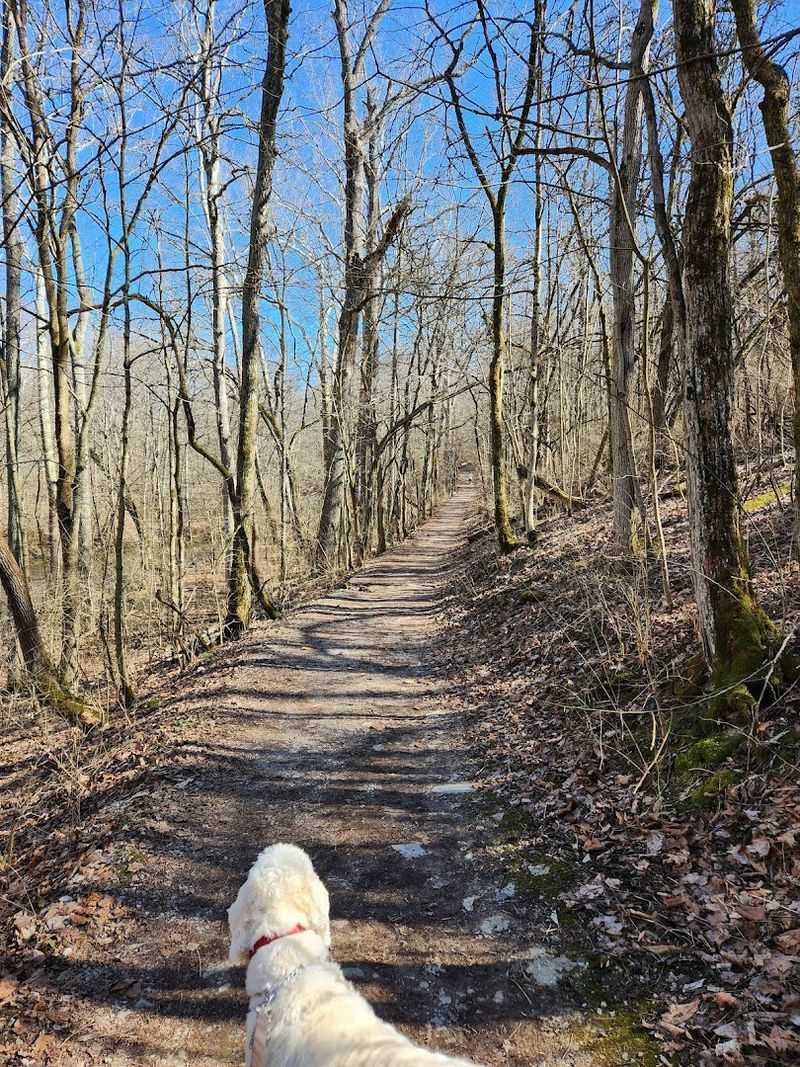
My dog would rate this park a perfect score without hesitation, and honestly, watching her react to every new smell along the trail was one of the highlights of the visit.
Dogs are welcome throughout the park as long as they are kept on a short leash, which keeps the trails safe and comfortable for everyone sharing the path.
The soft dirt surface is easy on paws compared to paved trails, and the shade from the tree canopy keeps the temperature manageable even on warmer days.
The dog-friendly water fountain near the parking lot means you do not have to carry extra water for your pet, which is a practical convenience that frequent dog walkers will genuinely appreciate.
The trails are wide enough in most sections for two people and a dog to pass each other comfortably without anyone stepping off into the brush. A few narrower spots exist, but they are short and easy to navigate.
Trash cans are placed around the park, so there is no excuse for leaving anything behind. The community here takes park cleanliness seriously, and the trails show it in the best possible way.
Seasonal Visits and the Best Times to Go
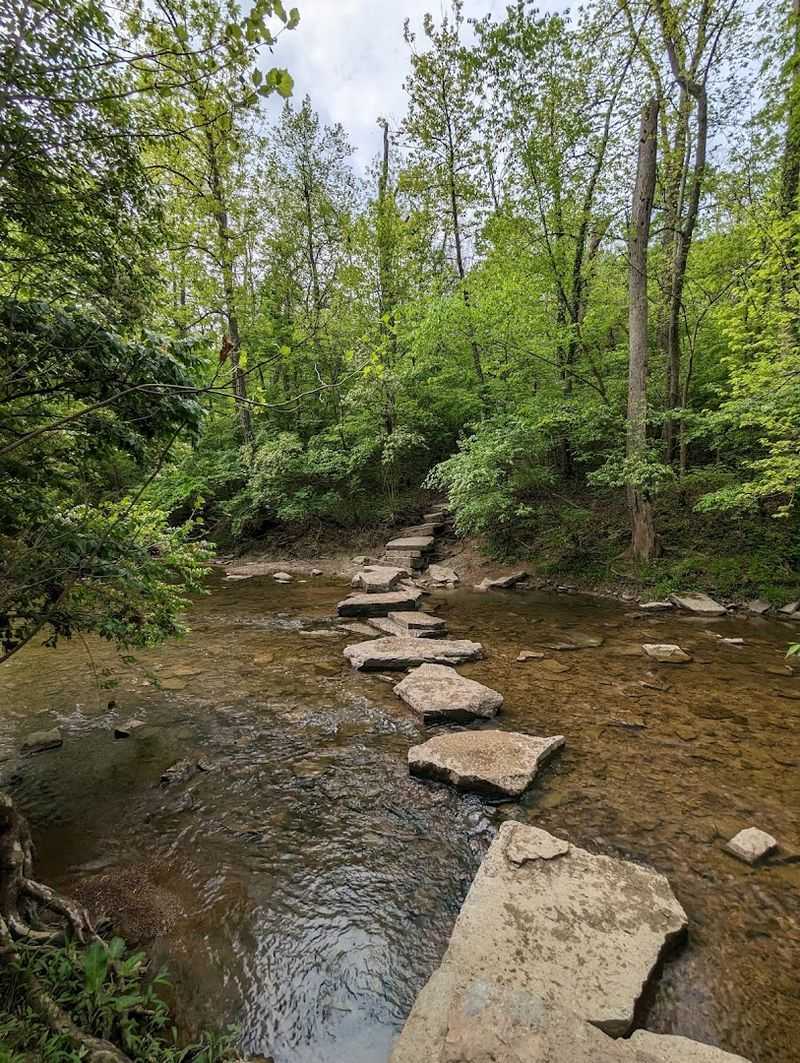
Every season brings a completely different personality to this park, and regulars here will tell you that no single visit is quite like another.
Summer delivers the full green tunnel experience, with dense canopy overhead and wildflowers blazing across the prairie section. Fall transforms the woods into a patchwork of orange and red, and the light through the thinning leaves has a warm, golden quality that photographers chase specifically.
Winter strips everything back to bare branches and quiet, which creates its own kind of stark beauty. The trails take on a different texture after snowfall, and the absence of crowds makes the whole place feel even more personal and private.
Spring brings the creek levels up and fills the understory with early wildflowers and fresh green growth that feels almost electric after months of bare branches. It is also a great season for spotting migratory birds moving through the area.
The park can get busy during peak weekend hours, so weekday afternoons are the best strategy for anyone who prefers a quieter experience.
The park opens at 8 AM daily, making early morning visits a genuinely peaceful option worth setting the alarm for.
Practical Tips Before You Lace Up
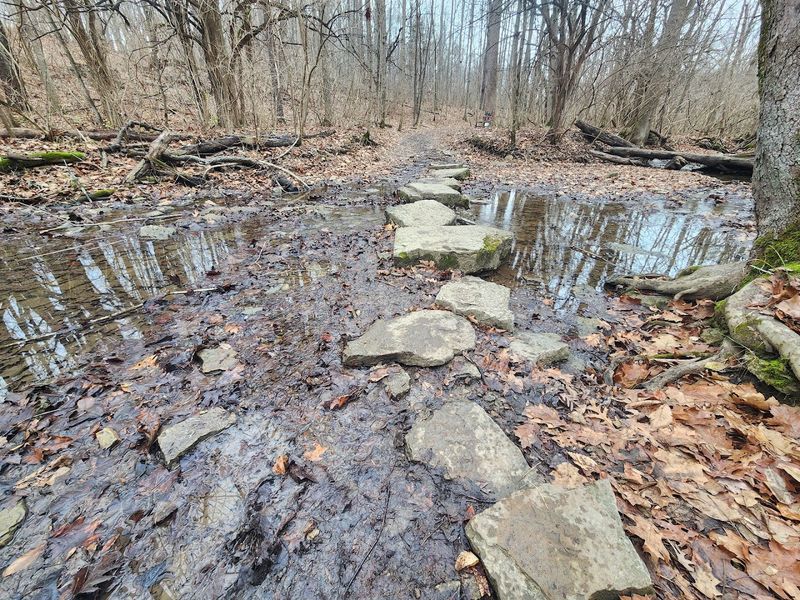
A few practical notes can make the difference between a great visit and a frustrating one, so consider this the honest pre-hike briefing I wish someone had given me before my first trip.
Many of the wooded trails have soft dirt surfaces, which means rain and snowmelt can turn them genuinely muddy. Waterproof trail shoes or boots are a smart choice any time outside of a dry summer stretch, and gaiters are useful after a wet week.
The restroom facilities are pit toilets without running water, which is worth knowing ahead of time. They serve their purpose in a pinch, but planning accordingly before you arrive makes the experience smoother.
Cell service can be inconsistent in the wooded sections, so downloading the trail map from the metroparks website at www.metroparks.org before you leave home is a genuinely useful step. The posted maps along the trails may show older versions of the routes.
Bring more water than you think you need, especially on the longer green loop.
Strong visitor feedback makes it clear that Sugarcreek MetroPark is worth preparing for properly, especially if you want to enjoy the tree tunnel, prairie, creek crossings, and old-growth trees without feeling rushed.