
This Georgia Beach Looks Like A Natural Sculpture Garden Left Behind By The Sea
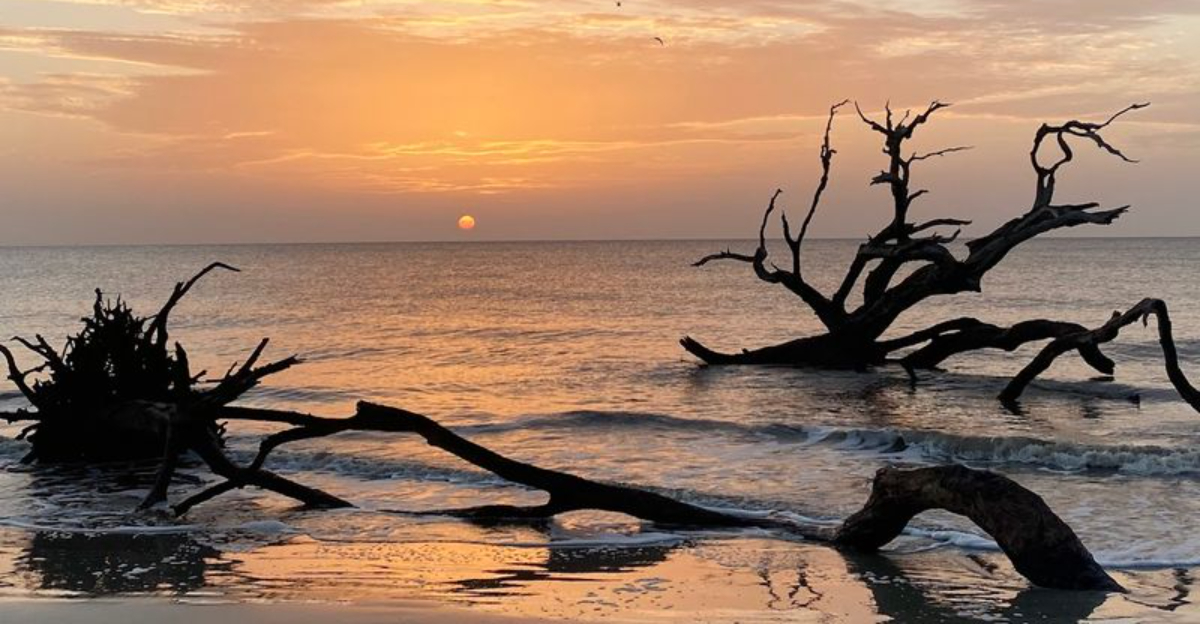
Georgia’s coastline doesn’t always behave like a beach. Sometimes it feels more like a dream that forgot to end.
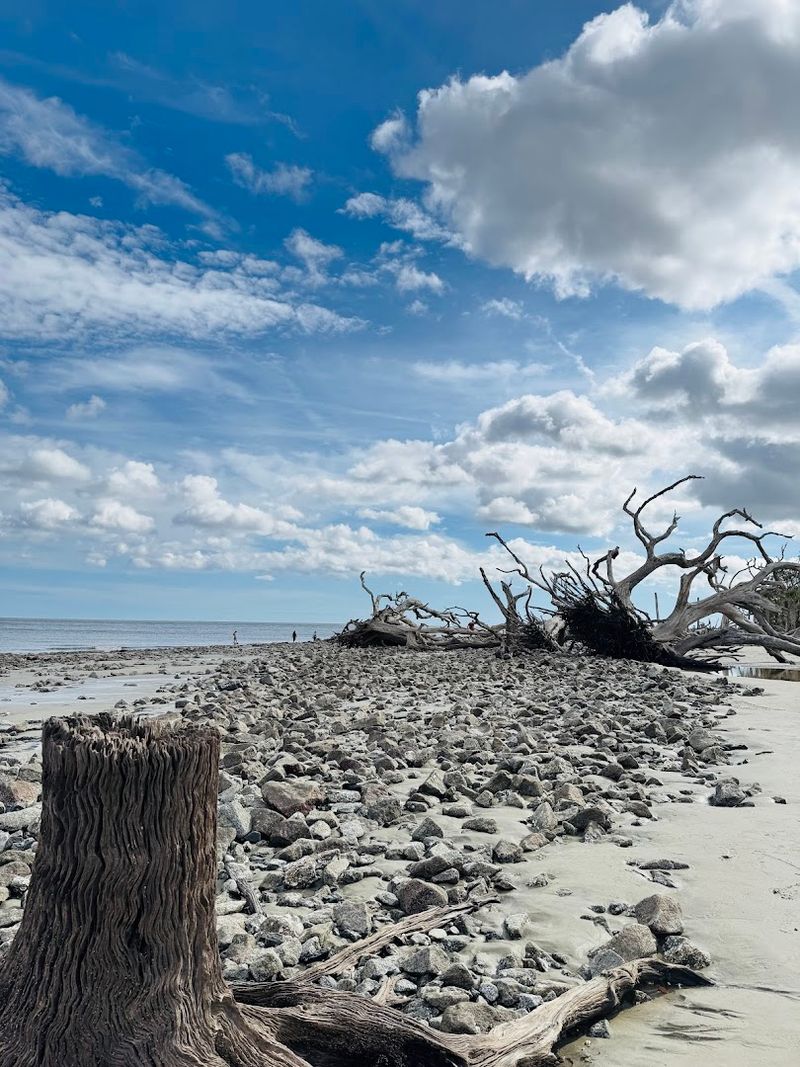
Here, the sea has turned artist. It left behind a field of twisted oaks and weathered driftwood, standing like sculptures in an open-air gallery. Some look like bones.
Some look like stage props from a forgotten film set. And some just look like they’re waiting for the tide to finish the story.
It’s giving post-apocalyptic poetry. A little Pirates of the Caribbean, a little “end of the world but make it aesthetic.” Waves roll in.
Time slows down. And the shoreline feels less like a place you visit, and more like something you accidentally walked into.
The Otherworldly Landscape That Stops You In Your Tracks
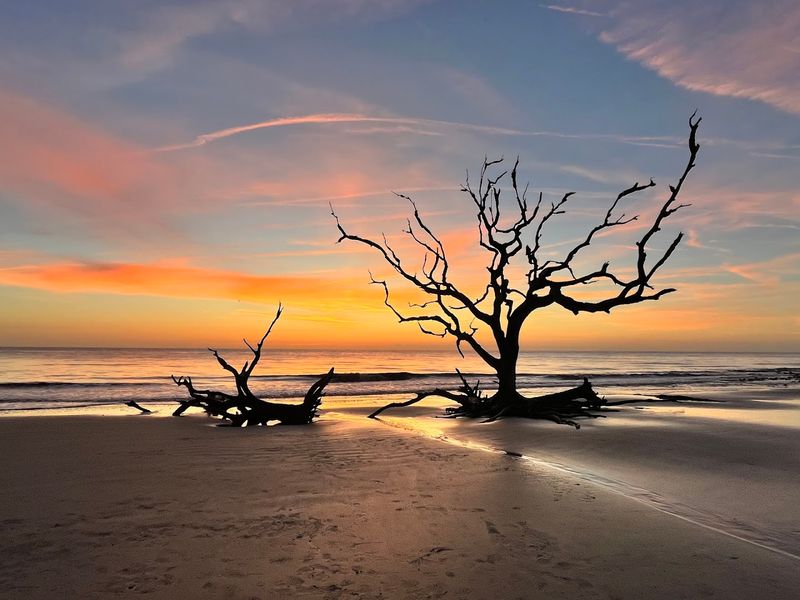
Nothing prepares you for the first moment you step onto Driftwood Beach. You round a sandy path, and suddenly the ordinary world disappears, replaced by hundreds of sun-bleached tree trunks rising from the sand like ancient sentinels.
It is surreal, cinematic, and completely unforgettable.
The landscape here is the result of centuries of erosion eating away at Jekyll Island’s northern shoreline. Live oaks, pines, and other maritime trees slowly lost their footing as the ocean pulled sand from beneath their roots.
What remained is this astonishing graveyard of timber, frozen mid-fall along the coastline.
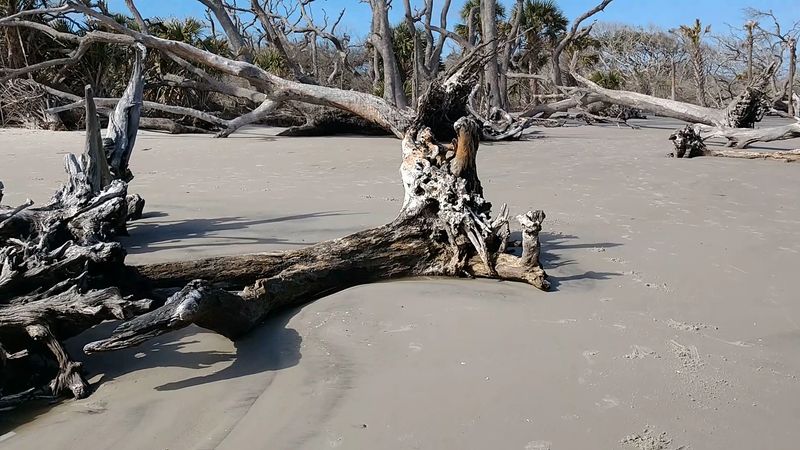
Some trunks still stand upright, their bare branches reaching skyward like outstretched arms. Others have collapsed into dramatic horizontal sculptures half-buried in sand.
Many are covered in barnacles, giving them an ancient, textured quality that no human artist could replicate.
The scale of it is what really gets you. This is not a few scattered logs.
It stretches for miles along the northern end of the island, creating a landscape so visually rich that every single angle offers a new composition.
Driftwood Beach does not just impress you, it genuinely humbles you.
How To Find Your Way To This Hidden Coastal Treasure
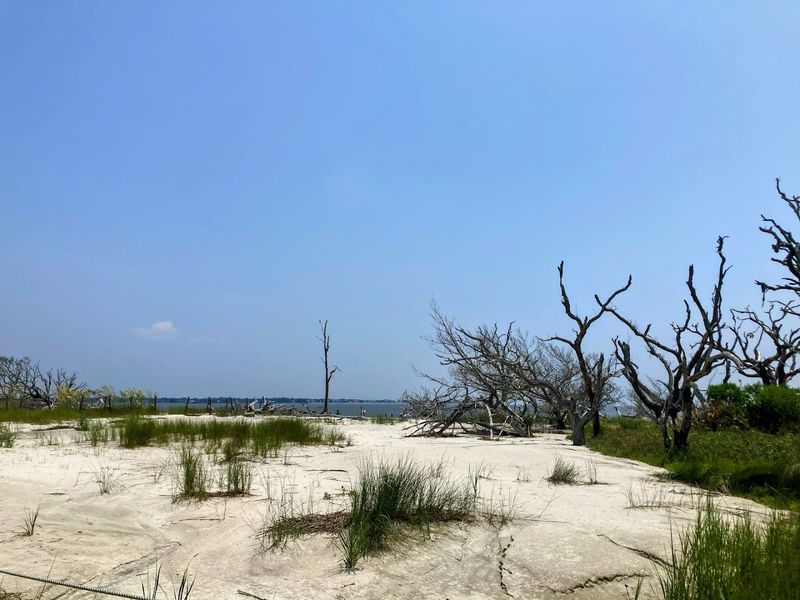
Getting to Driftwood Beach is surprisingly straightforward, which makes it even better. Located along North Beachview Drive on Jekyll Island, Georgia 31527, the beach sits on the island’s northern tip near the Clam Creek Picnic Area.
You will need to pay a small vehicle fee to access Jekyll Island itself, but the beach has no additional entry cost once you are on the island.
Parking is limited, especially during peak seasons and weekend mornings. Arriving early is genuinely the smartest move you can make.
A handful of street parking spots sit less than a hundred yards from the beach access point, so you will not need to hike far with your gear.
The walk from the parking area to the beach is short and easy, passing through a brief stretch of coastal scrub before opening onto the stunning shoreline. There are no facilities directly on the beach, so pack water and any snacks you plan to bring along.
Jekyll Island itself is a Georgia State Park, and that public stewardship means the beach remains beautifully unspoiled. No hotels crowd the coastline, no commercial strips interrupt the view.
Just pure, open, breathtaking nature waiting at the end of that sandy path.
The Best Times To Visit For Maximum Magic
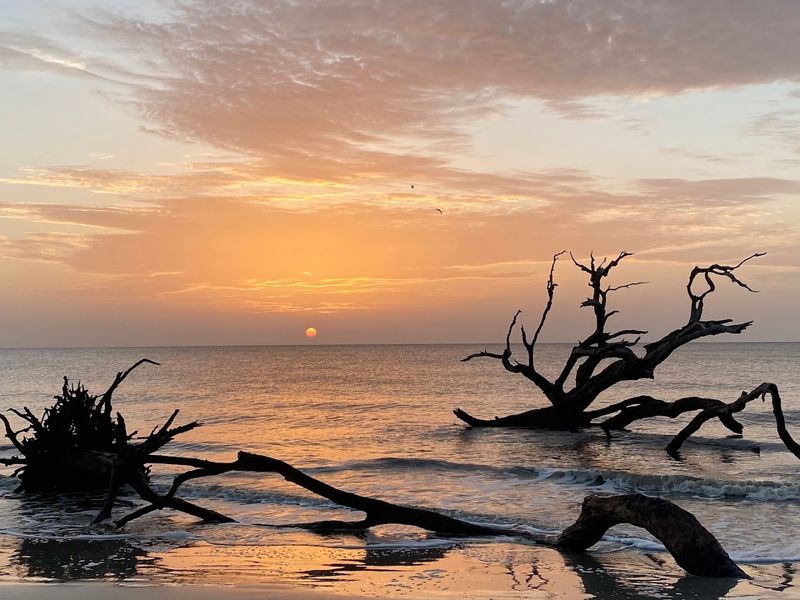
Timing your visit to Driftwood Beach is genuinely an art form, and getting it right transforms a great trip into an unforgettable one. Sunrise is widely considered the crown jewel of visiting hours.
The soft pink and amber light paints the bleached wood in warm tones that no Instagram filter could ever improve upon.
Sunset runs a very close second. The low-angle golden light casts dramatic shadows between the twisted trunks, creating a moody, cinematic atmosphere that feels straight out of a fantasy novel.
Photographers specifically plan entire trips around these two windows of light.
Beyond lighting, tide timing matters enormously here. Low tide reveals the full expanse of the beach, exposing more driftwood sculptures and making the area far easier to explore on foot.
High tide can submerge significant portions of the beach, limiting your access and hiding some of the most spectacular formations.
Checking a tide chart before you go is not optional, it is essential. Many visitors combine a sunrise arrival with a low tide schedule to hit the absolute sweet spot.
January through early spring tends to offer quieter crowds and cooler temperatures that make long exploratory walks genuinely enjoyable. Plan smartly and Driftwood Beach will reward you generously.
Why Photographers Are Completely Obsessed With This Beach
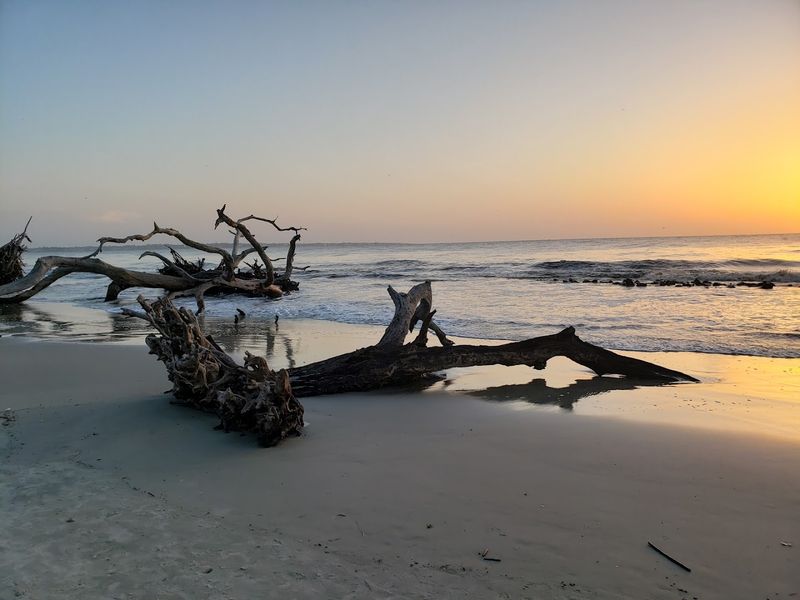
Ask any landscape photographer about Driftwood Beach and watch their eyes light up immediately. This place is a compositional dream.
Every direction you point your camera offers something extraordinary, from towering upright trunks framing the horizon to low-lying roots curling across the sand like abstract calligraphy.
The textures here are phenomenal. Barnacle-encrusted bark, smooth salt-polished wood, and rough eroded stumps create a visual variety that keeps a photographer busy for hours without repeating a single shot.
Black-and-white photography absolutely thrives in this environment, though the golden-hour color palette is equally spectacular.
Wide-angle lenses capture the sweeping scale of the landscape beautifully. Macro lenses reveal the incredible surface detail of individual pieces of wood.
Portrait photographers love using the dramatic backdrops for engagement shoots, wedding photos, and editorial portraits that look genuinely unlike anything staged in a studio.
USA TODAY has featured Driftwood Beach among the most beautiful beaches in America, and TripAdvisor’s Travelers Choice Awards have consistently recognized it as a top-tier destination. The photography community has embraced it wholeheartedly for good reason.
Every single visit yields completely different images depending on tide, season, and light. Driftwood Beach is essentially a location that never gives the same photograph twice.
The Fascinating Science Behind How This Beach Was Formed
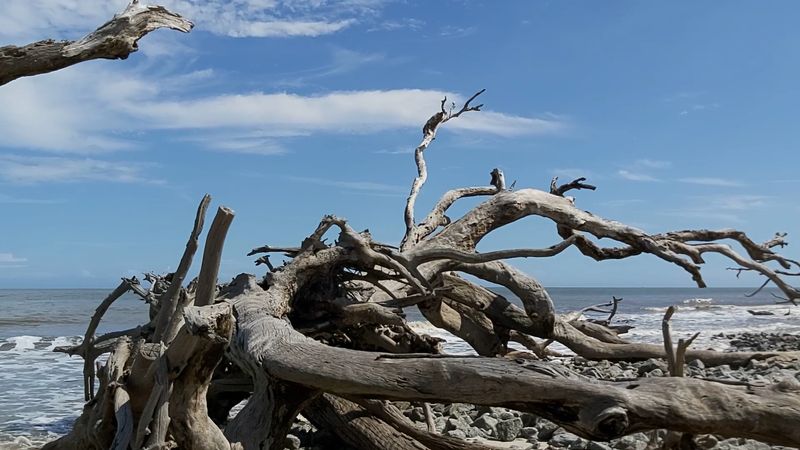
There is a whole compelling story happening beneath the surface of what you see at Driftwood Beach, and understanding it makes the landscape even more fascinating.
The beach exists because of a process called coastal erosion, which has been actively reshaping Jekyll Island’s northern shoreline for centuries.
As ocean currents gradually stripped sand away from the northern tip of the island, the root systems of the maritime forest lost their anchor. Live oaks, slash pines, and palmetto trees that once stood tall inland found themselves teetering on the edge of the waterline.
Eventually they toppled, one by one, over hundreds of years.
Here is where things get genuinely interesting. The shallow offshore waters surrounding this part of the island prevent waves from carrying the fallen trees out to sea.
Instead, the trunks and branches settle onto the beach, where salt water, sun, and barnacles slowly transform them into the sculptural forms you see today. Some of these formations are estimated to be over five hundred years old.
The erosion is still actively happening, meaning the beach is constantly evolving. New trees fall, old ones shift, and the entire composition changes with every storm season.
Driftwood Beach is not a static museum exhibit. It is a living, breathing geological process playing out in real time right before your eyes.
Wildlife Encounters That Will Genuinely Surprise You
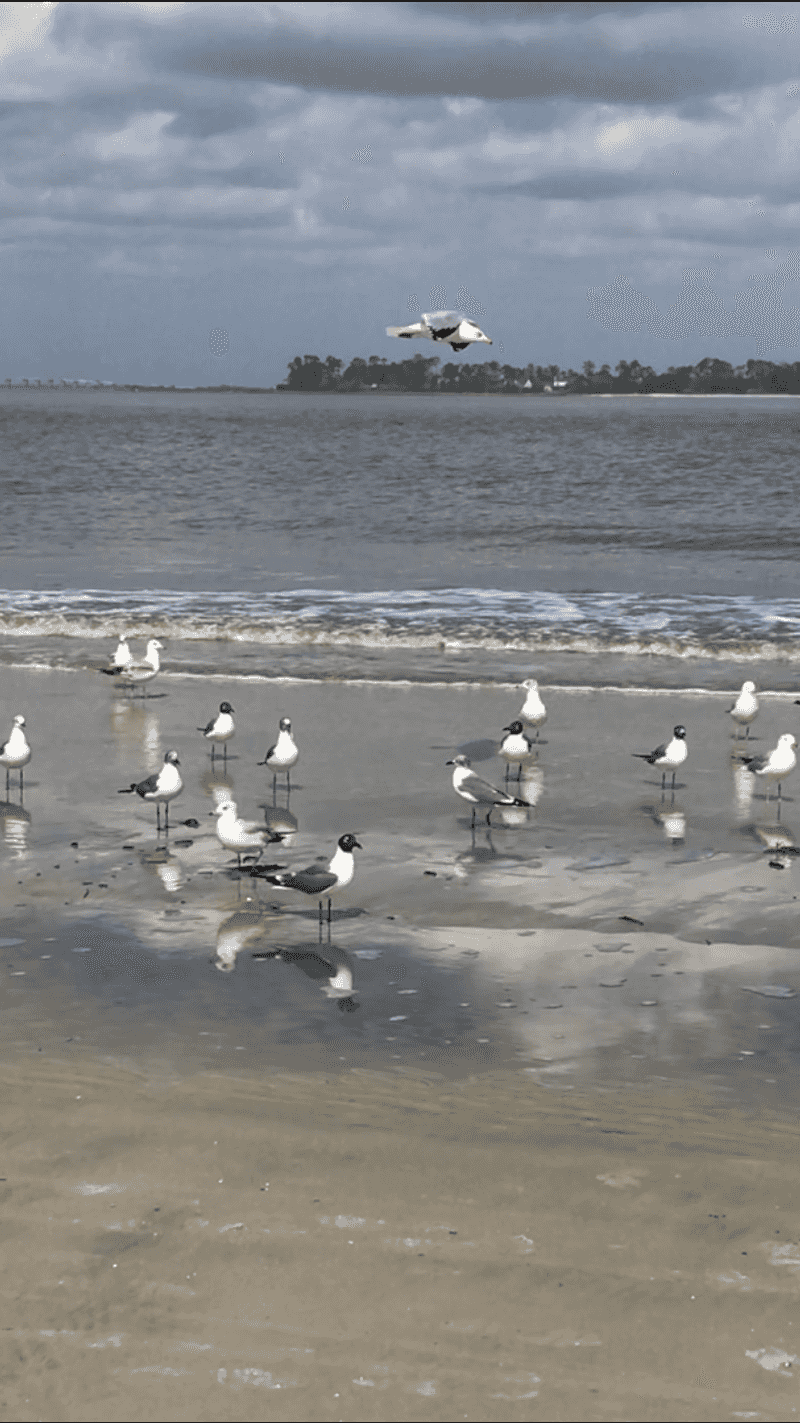
Most people arrive at Driftwood Beach expecting trees and sand, and they leave having also spotted an impressive roster of wildlife that honestly steals the show.
The beach and its surrounding tidal zones support a surprisingly rich ecosystem that rewards patient and observant visitors.
Crabs are everywhere. Multiple species navigate the sand and shallow tide pools, including fiddler crabs that wave their oversized claws with hilarious enthusiasm.
Shrimp dart through clear shallow pools left behind by receding tides, and seagulls patrol the shoreline with their characteristic confidence.
Dolphins are a genuine highlight. Visitors frequently spot bottlenose dolphins swimming just offshore, especially during early morning low tides when the water is calm and clear.
Watching a dolphin surface against a backdrop of twisted driftwood is one of those moments that feels almost too cinematic to be real.
Dragonflies swarm the beach in impressive numbers during warmer months, adding an unexpected magical quality to the atmosphere. The barnacle-covered trunks also attract a variety of small coastal birds that use the wood as perching and feeding stations.
Driftwood Beach is technically a nature lover’s playground disguised as an art installation. Bring binoculars and you will be genuinely rewarded with sightings that go far beyond what you planned for.
Shell Hunting And Beachcombing Adventures Along The Shoreline
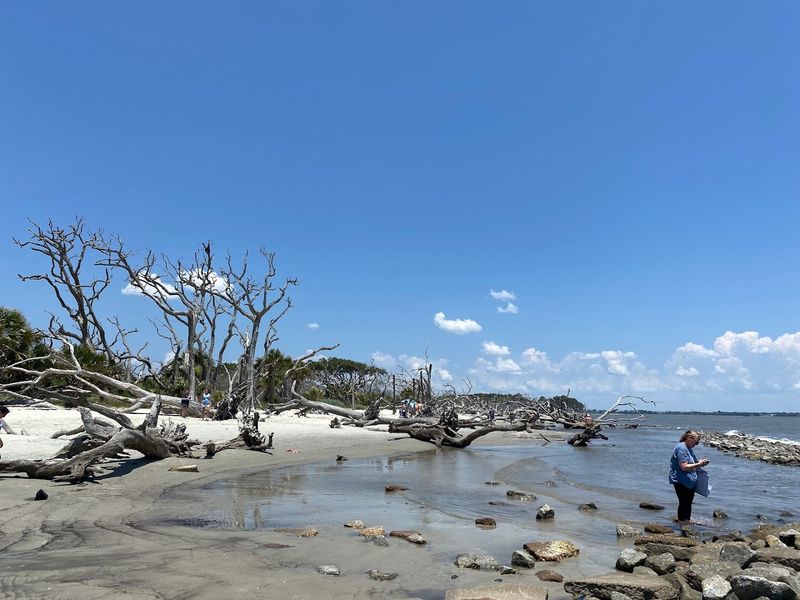
Beyond the dramatic tree sculptures, the sand at Driftwood Beach hides a treasure chest of natural finds that beachcombers absolutely love.
The shoreline is consistently rich with shells, and the unique tidal patterns of the area make it particularly rewarding for those willing to walk slowly and look carefully.
Shark teeth are among the most sought-after finds here, and while they require a sharp eye and a bit of luck, they do turn up with enough regularity to keep hunters motivated.
The dark triangular shapes contrast beautifully against the pale sand, especially during low tide when fresh deposits are exposed.
Shells range from delicate sand dollars to larger whelks and clam shells that arrive in impressive variety. The area between the driftwood trunks often collects interesting debris carried in by tidal movement, making those pockets worth checking carefully during your walk.
The key to successful beachcombing here is the same as everywhere on this beach: low tide is your best friend.
More sand is exposed, more deposits are accessible, and the whole shoreline feels like it has been freshly laid out just for you. Pack a small bag, wear comfortable shoes, and plan to walk slowly.
The beach rewards the unhurried explorer more than anyone else here.
Why This Beach Has Become A Dream Wedding Destination
Somewhere along the line, couples discovered that Driftwood Beach might be the most cinematic wedding backdrop on the entire East Coast, and the word spread fast.
The combination of twisted sculptural wood, open sky, and ocean horizon creates a setting that no florist or event designer could manufacture from scratch.
Sunset ceremonies here are particularly magical. The warm light catches the bleached wood and turns everything golden, creating a natural warmth and drama that photographers chase for years.
The lack of commercial development on the surrounding coastline means your ceremony backdrop is pure, uninterrupted nature in every direction.
The ever-changing nature of the beach means no two weddings look identical. A ceremony held at low tide in October looks completely different from one staged at sunrise in April, even at the exact same spot.
That organic unpredictability is part of the appeal for couples who want something genuinely unique.
Jekyll Island requires event permits for organized gatherings on the beach, so planning ahead is essential. But those who do the paperwork and coordinate timing around the tides are rewarded with wedding photos that genuinely look like they were shot on a fantasy film set.
This beach does not just host weddings, it elevates them into something truly extraordinary.
How To Explore Responsibly And Respect This Natural Wonder
Driftwood Beach is the kind of place that feels like a gift, and the best way to honor a gift is to treat it with genuine care.
Jekyll Island is a protected Georgia State Park, and the rules around visiting Driftwood Beach exist specifically to preserve this extraordinary landscape for future generations.
The most important guideline is simple: leave the driftwood exactly where you find it.
Every piece of wood is part of the living ecosystem here, providing habitat for insects, birds, and small marine creatures. Removing even a single branch disrupts something that took nature decades to arrange.
Wearing shoes is strongly recommended, especially if you plan to climb or step between the larger formations.
Barnacle-covered surfaces and sharp broken branches are common, and bare feet can get into trouble quickly on rougher sections of the beach.
Bug spray with DEET is also a genuinely smart addition to your pack, particularly during warmer months when insects are active.
Walking with awareness rather than rushing through is the most rewarding approach anyway. The beach stretches for miles, and there is no finish line to reach.
Slow down, look closely, and let the landscape tell its story at its own pace.
Driftwood Beach has been shaped by centuries of patience, and it deserves a visitor who brings at least a little of that same quality along for the walk.