
This Historic Ohio Mill Still Grinds Grain Like It Did Generations Ago
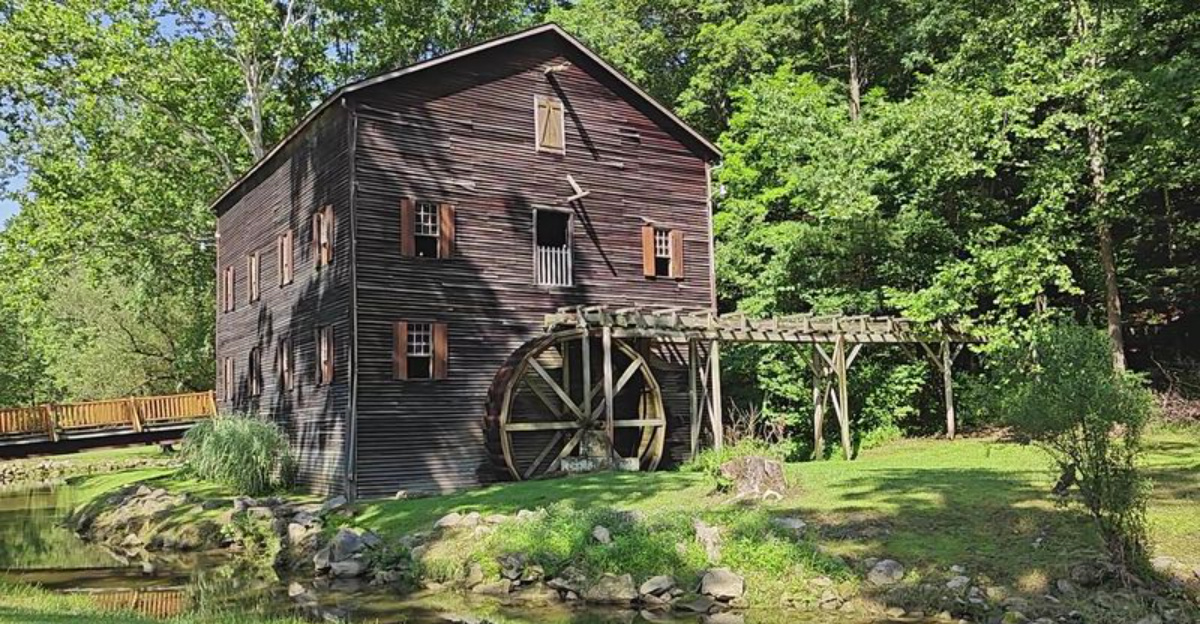
A working grist mill has a rhythm you do not hear much anymore. Water turns, wood creaks, stones move, and suddenly history feels less like something behind glass and more like something still doing its job on a quiet Ohio afternoon.
This Loudonville stop brings that old machinery back to life in the best way. The mill still grinds grain, the water wheel still earns its keep, and the surrounding pioneer village adds cabins, antique farm equipment, walking paths, and volunteers who make the whole place feel personal instead of scripted.
It is the kind of weekend detour that asks you to slow down before you even realize you needed it.
Spend a little time by the stream, listen to the wheel, and let this preserved piece of Ohio history remind you how much story can fit inside one humble wooden building.
First Look at a Living Piece of History
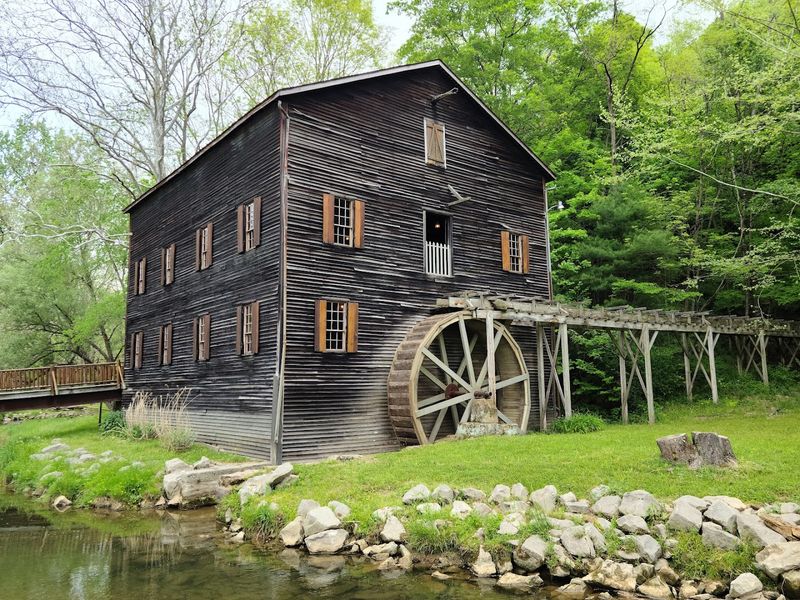
Some historic places need big signs to get your attention, but Wolf Creek Grist Mill makes a quieter and much better introduction.
The sound of water moving past weathered wood sets the mood before you even start reading the signs, and the whole scene feels wonderfully removed from modern hurry.
The mill sits in Loudonville, tucked into a calm landscape with a small stream running in front of the building.
It has that almost cinematic Ohio backroad quality, where the setting looks so peaceful you start wondering why your own afternoon schedule ever seemed important.
The structure itself is not a replica or a dressed-up photo prop.
It is a real working mill, preserved with obvious care by people who understand how much history can live inside old boards, beams, gears, and stone.
Signage around the property helps explain what you are seeing, so the visit feels approachable even if your knowledge of grist mills begins and ends with “grain goes in, flour comes out.”
I arrived expecting a pleasant historic stop and left feeling like I had stepped into a small, living piece of Ohio’s past.
You can find Wolf Creek Grist Mill at 3175 OH-3, Loudonville, OH 44842.
The Story Behind the Stones
Grist mills were the beating heart of early American communities.
Every farm family depended on them to grind corn and wheat into the flour and meal that kept households fed through long winters.
Wolf Creek Grist Mill carries that legacy forward in a way that feels completely genuine. The mill was moved to its current location and carefully preserved, which means the machinery you see inside is the real thing, not a reproduction put together for atmosphere.
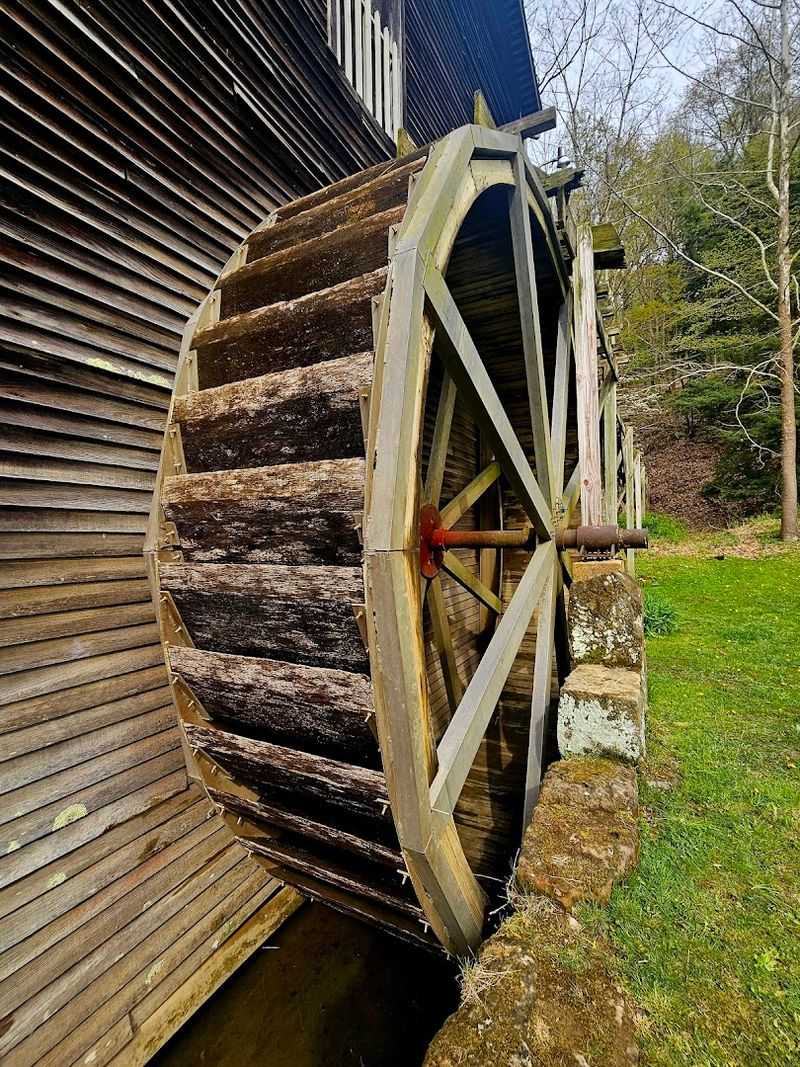
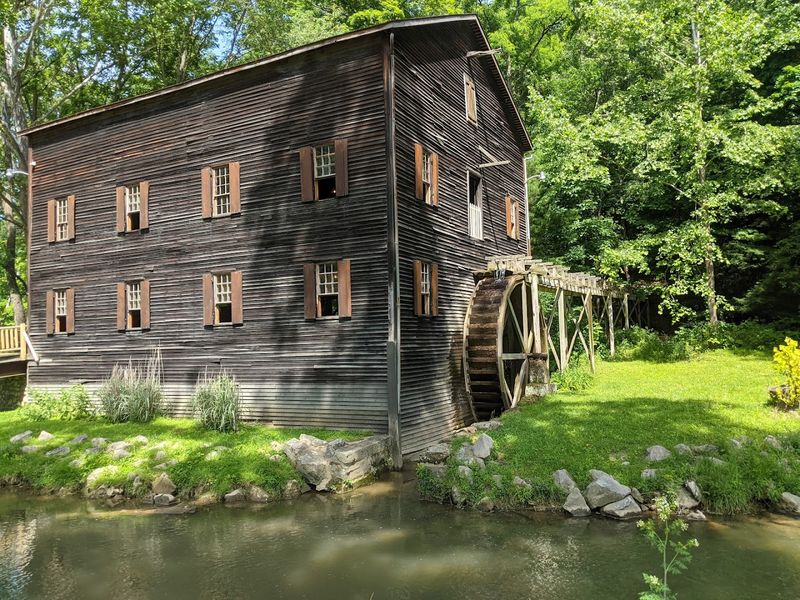
Water moves through the restored system to power the wheel, which drives the gears, which turn the millstones, and the whole sequence happens right in front of you with a satisfying mechanical logic that no modern appliance can match.
It is the kind of process that makes you realize how much engineering knowledge existed long before electricity became common.
Volunteers on site are knowledgeable and enthusiastic, and one of them walked me through exactly how the grinding process works.
By the end of that conversation, I understood grain milling better than I ever expected to, and I found myself genuinely impressed by the ingenuity behind every moving part.
The Water Wheel That Makes It All Work
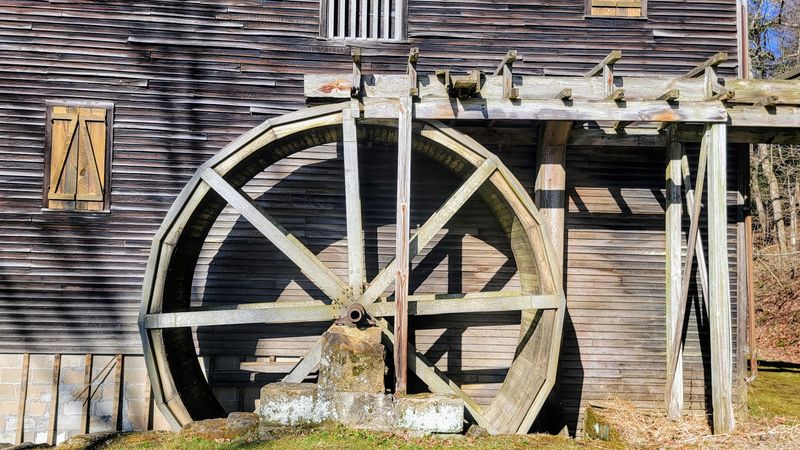
There is a particular kind of satisfaction in watching a water wheel turn.
It is slow, deliberate, and powered by a restored system that lets visitors see old milling technology in motion.
The wheel at Wolf Creek Grist Mill is the kind of sight that makes you stop mid-sentence. I was talking to a volunteer when I first noticed it moving, and I genuinely forgot what I was saying.
The water catches the paddles, the wheel rotates, and somewhere inside the building, the restored machinery shows how the milling process worked.
What strikes you most is how quiet the whole operation is compared to what you might imagine. There is no roar, no industrial noise, just the steady sound of water doing its work and wood creaking softly under the load.
The stream in front of the mill is shallow and clear, and it adds a visual element that photographs exceptionally well. Whether you are a history enthusiast or just someone who appreciates the beauty of functional old things, the water wheel alone makes the trip worthwhile.
It is, without question, the soul of this entire property.
A Pioneer Village Hiding in Plain Sight
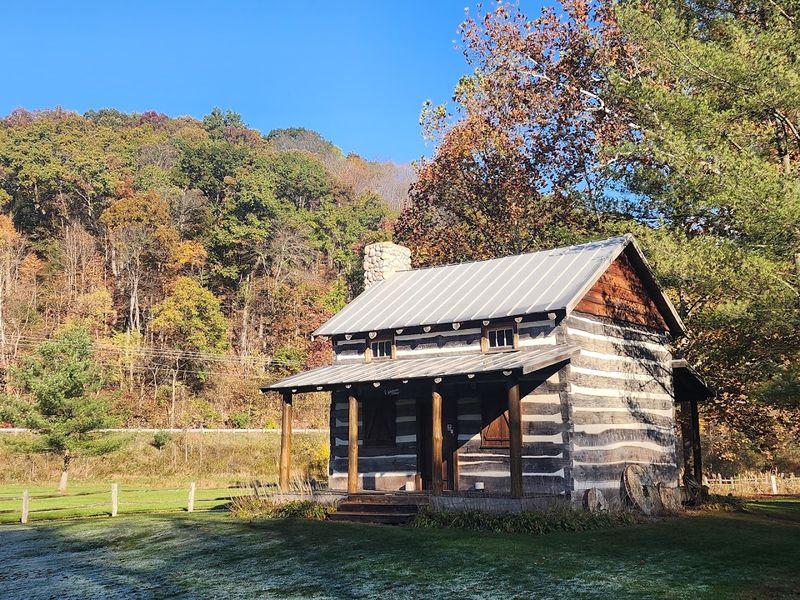
Most people come expecting just a mill, and then they discover that the property is actually a small pioneer village.
Log cabins, a corn crib, a barn, and other outbuildings from the 1800s are arranged around the grounds in a way that feels organic rather than staged.
Each building has its own character and its own story. The main cabin looks sturdy enough to have survived every hard winter since it was built, and the details inside, when the doors are open during events, give you a real sense of how frontier families organized their daily lives.
I wandered from building to building at my own pace, reading the educational signs posted near each structure. The information is clear and well-written, aimed at curious visitors of all ages without being condescending or overly academic.
Children especially seem to love this part of the property. There is something about seeing an actual outhouse or a hand-hewn corn crib that makes history feel less like a school subject and more like a story someone lived.
The whole village layout gives the visit a depth that you simply do not get from a single exhibit.
Tours Run on Goodwill and Good Volunteers
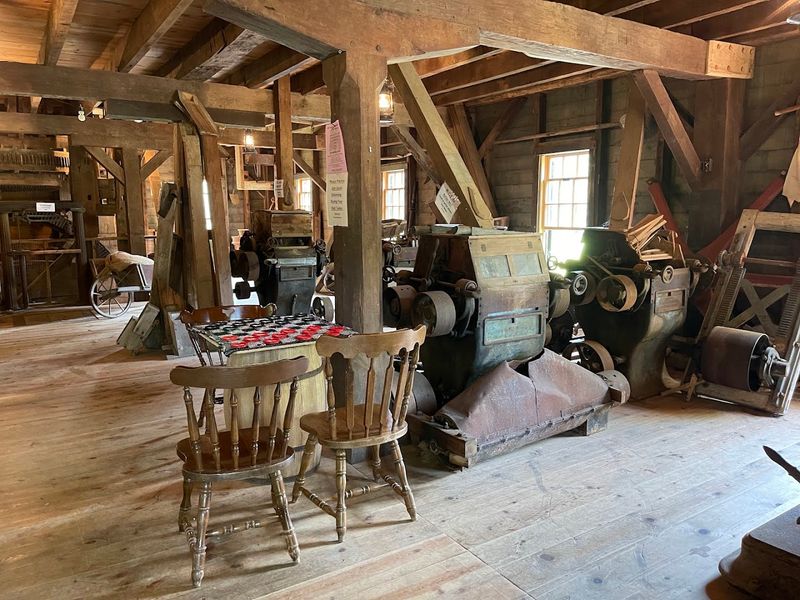
Not every great experience comes with a ticket price. Wolf Creek Grist Mill operates with support from donations, which is one of the most refreshing things about the whole visit.
The mill and visitor center are generally open for self-guided tours during regular summer weekend hours, and volunteers help keep the experience welcoming and informative.
When I was there, one volunteer spent nearly twenty minutes explaining the mechanics of the mill without once looking at a script or repeating himself.
That kind of knowledge comes from real passion, not a training manual.
The donation model means that your generosity directly supports the preservation of the site. Bringing cash is a practical idea if you want to contribute on-site, though checking the official website before visiting is always smart.
Even a modest contribution helps keep the wheel turning, both literally and figuratively.
The staff is friendly without being pushy, and the pace of the visit adjusts naturally to whoever is visiting that day. Families with young children get a slightly more animated explanation, while history-focused adults tend to get pulled into longer conversations about the technical details.
It feels personal in a way that overly scripted tours rarely manage to achieve.
When to Visit for the Full Experience
Timing matters when you visit Wolf Creek Grist Mill.
The mill and visitor center buildings are generally open during the summer for self-guided tours on Saturdays and Sundays from noon to five in the afternoon, Memorial Day through Labor Day.
Weekday visitors may still find the grounds accessible for photography and quiet exploration, but the buildings may be closed and no tour access may be available.
Several visitors have noted that the property is still beautiful and worth a stop even when nothing is officially open, but the fullest experience happens during posted weekend hours or special events.
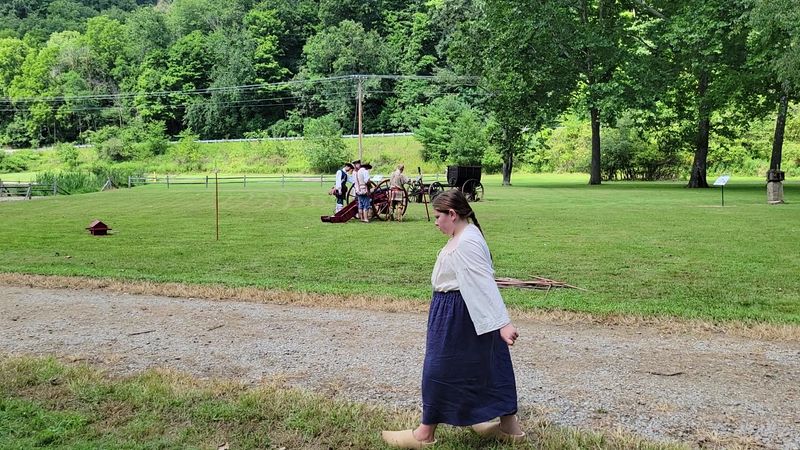
Special events throughout the season bring the pioneer village fully to life. I visited on a weekend when a historical festival was underway, and the energy was completely different from a quiet weekday stroll.
Costumed demonstrators, the mill in full operation, and a steady stream of curious families made the whole property feel genuinely alive.
My honest advice is to check the website at wolfcreekmill.org before you go, since hours and events can vary depending on volunteer availability. A little planning goes a long way toward making sure you catch the mill at its best.
A Hiking Trail That Adds to the Adventure
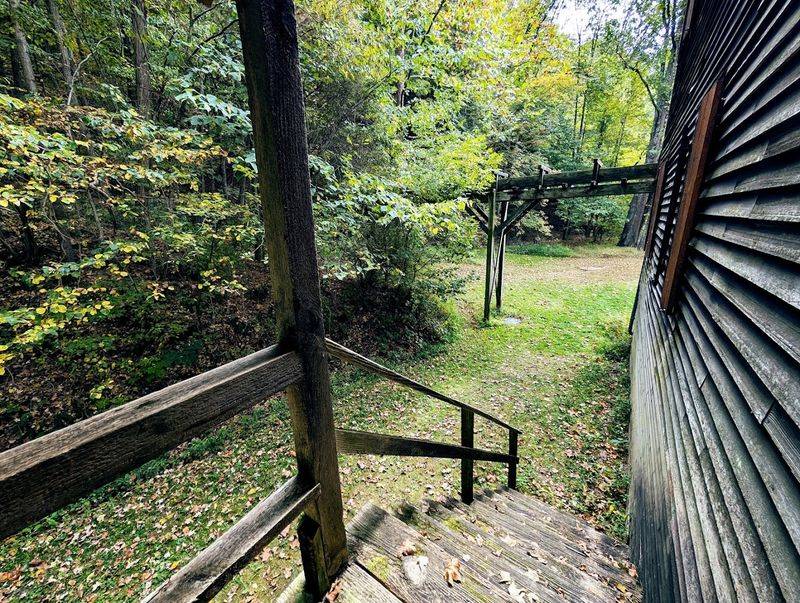
Behind the mill, a short and well-marked hiking trail winds through the surrounding landscape, giving visitors a chance to stretch their legs and see the natural setting that makes this location so appealing in the first place.
The trail is not long or demanding, which makes it accessible for families with younger children or visitors who are not looking for a strenuous outing.
It follows a natural path through the trees, and the sounds of the stream accompany you for part of the walk, which adds a genuinely peaceful quality to the experience.
I took the trail after finishing my tour of the buildings, and it worked perfectly as a way to process everything I had just seen. There is something about walking quietly through the woods after absorbing a lot of history that helps it all settle into place.
The trail connects well with the overall atmosphere of the property, reinforcing the sense that this is a place where nature and history coexist without competing.
Picnic tables near the stream offer a spot to sit, eat something, and listen to the water before heading back to the parking area and the modern world waiting outside.
The Setting That Steals the Show
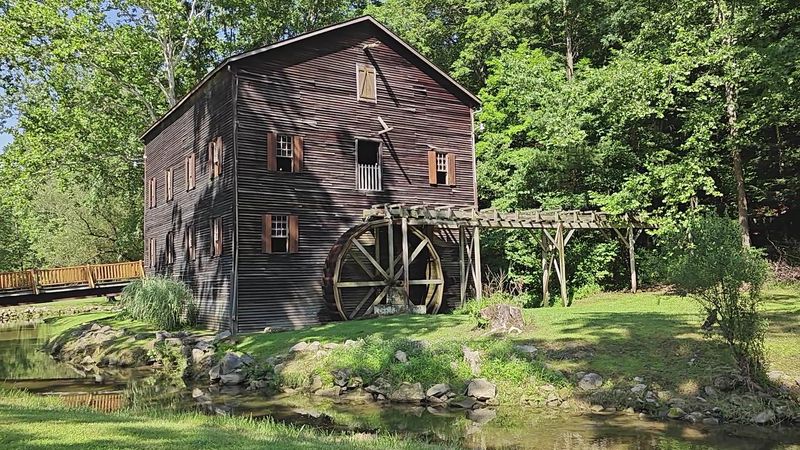
Even if the mill were never open, the setting alone would justify the drive.
The property sits in a natural hollow where the land folds gently around the stream, creating a sense of enclosure that feels more like a painting than a roadside stop.
The stream in front of the mill is shallow enough to see the bottom and clear enough to reflect the sky on a calm day. Tall trees frame the entire scene, and in late summer the green is so deep and layered that the whole place looks almost unreal in the best possible way.
Photographers, both casual and serious, will find no shortage of angles worth capturing. The mill, the wheel, the cabins, the stream, and the surrounding trees all combine into a composition that changes beautifully with the light throughout the afternoon.
I spent a good stretch of time just standing near the water, not taking pictures, not reading signs, just listening. The quiet at Wolf Creek Grist Mill is a specific kind of quiet, layered with birdsong and moving water, and it makes the rest of the world feel very far away.
That, honestly, is worth a lot.
Antique Farm Equipment and Mechanical Curiosities
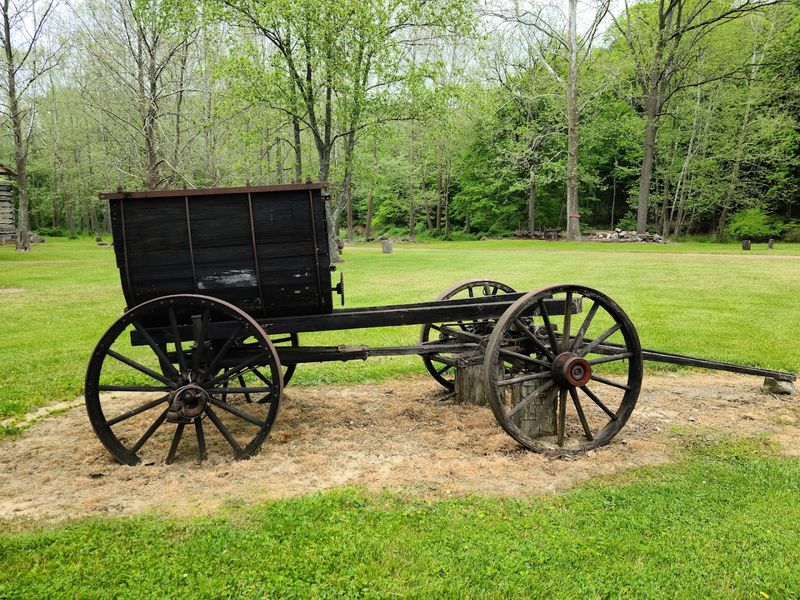
Beyond the mill building and the log cabins, the property also features antique farm equipment displayed around the grounds.
These pieces of old machinery add another layer of historical texture to an already information-rich visit.
Seeing a rusted piece of equipment up close, with a sign explaining exactly what it was used for and how, has a way of making agricultural history feel surprisingly immediate. These were not decorative objects; they were working tools that shaped the rhythms of daily life for generations of Ohio families.
I found myself spending more time at these displays than I originally planned. There is something about old machinery that invites close inspection, the way gears fit together, the way handles are worn smooth from years of use, the way engineers solved practical problems with materials that had to last.
Children who visit with a sense of curiosity will find plenty to examine and ask questions about. The displays are spaced out enough that you can move through them at your own pace without feeling rushed or crowded.
Each piece adds a small but meaningful detail to the larger story the whole property is trying to tell.
Why This Place Deserves a Spot on Your Weekend List
A place rated 4.7 stars across nearly 175 reviews is clearly doing something right.
Wolf Creek Grist Mill earns that rating not through flashy attractions or polished marketing, but through the kind of authentic, unhurried experience that is genuinely hard to find anymore.
The combination of a working mill, a pioneer village, a nature trail, antique equipment, and knowledgeable volunteers creates a visit that covers a surprising amount of ground in a short amount of time.
You can spend anywhere from thirty minutes to several hours here depending on how deep you want to go.
It is a strong choice for families, history enthusiasts, photographers, and anyone who simply wants to spend a weekend afternoon somewhere that feels real and grounded.
The Mohican area of Ohio is already a popular destination for outdoor recreation, and the mill fits naturally into a day that might also include time at Mohican State Park.
The experience stays with you in a quiet way. Days after my visit, I found myself thinking about the sound of the water wheel and the smell of old wood inside the mill building, and I already know I will be back before the season ends.